The Bougainvillea Pruning Trick Arizona Gardeners Use For Twice The Blooms In The Heat
Bougainvillea puts on one of the most dramatic color shows in any Arizona yard, but getting that wall of bracts to really fill in takes more than just planting and walking away. Two targeted techniques, pinching a young shoot tip and guiding a flexible branch outward, can encourage more flowering growth over time.
Neither is a magic fix, but together they give a well-established vine a better framework for a fuller display in Phoenix or Tucson.
What the technique can—and cannot—do
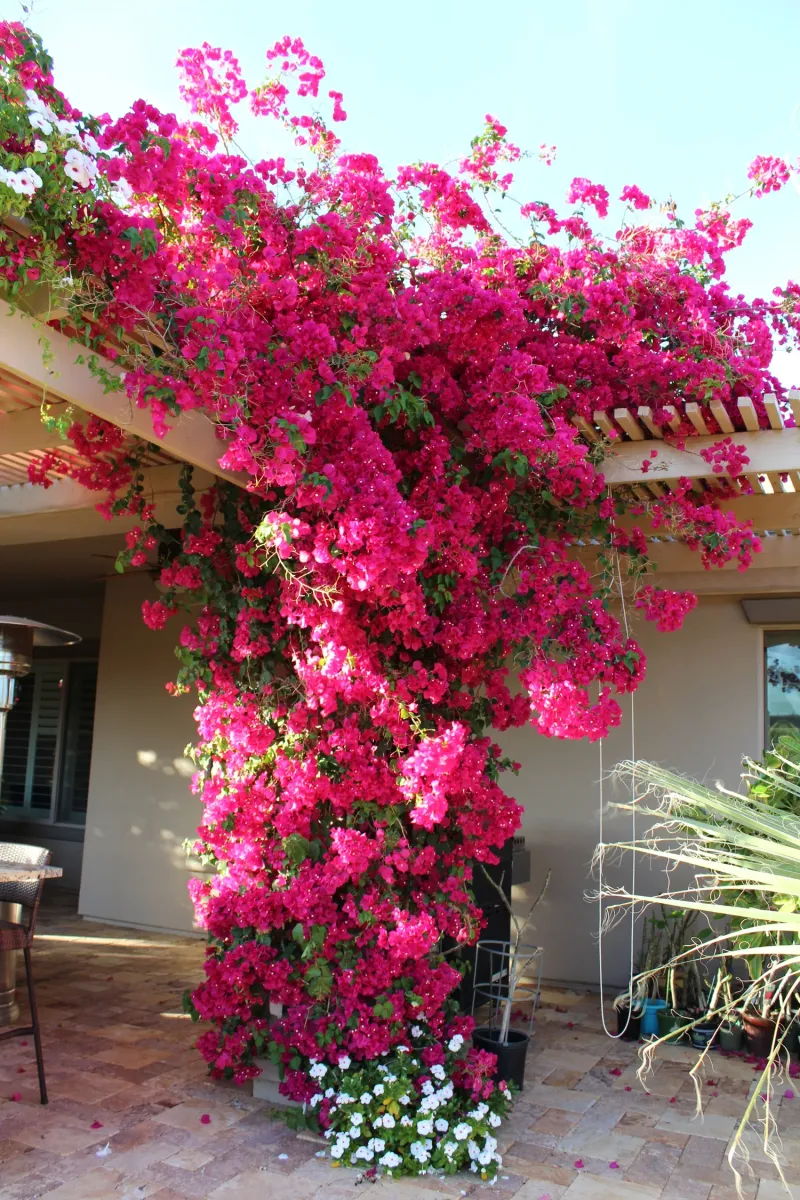
Bougainvillea is a vigorous, thorny, shrubby vine that most Arizona homeowners know from walls, fences, and trellises draped in brilliant color. What many people may not realize is that the color itself comes primarily from bracts, the papery modified leaves that surround small true flowers.
Understanding that distinction matters when evaluating what any pruning method can realistically deliver.
Two techniques are worth knowing: selectively pinching a soft young shoot tip to encourage lateral branching, and guiding a young flexible branch outward or at an incline to potentially increase flowering sites.
What the evidence does not support is a reliable doubling of blooms from one snip, continuous color all summer, or a guaranteed low-stress outcome. Extreme Arizona heat, irrigation patterns, shade, cultivar differences, and timing all affect the result.
A more accurate goal is a fuller bract display and more flowering sites over successive growth cycles, not a measured twofold increase in flower count.
Why a selective pinch can build more flowering tips
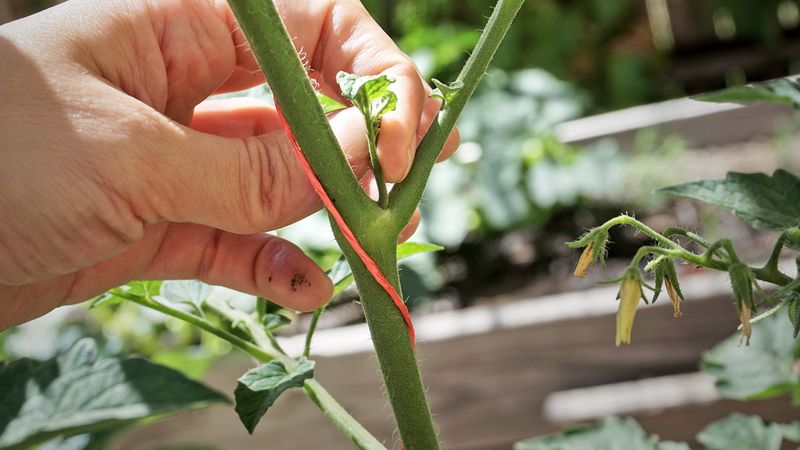
Every growing shoot has a terminal bud at its tip that releases hormones keeping the side buds below it suppressed. Remove that tip and the suppression lifts, allowing lateral shoots to push out from the nodes lower on the stem.
For bougainvillea, which flowers on current-season growth, more lateral shoots can mean more potential flowering sites and a denser overall framework.
UC Cooperative Extension guidance on bougainvillea bloom specifically recommends pinching soft growing tips and pruning after a flowering cycle to encourage fuller growth and the next flush of bracts. The University of Hawaii extension similarly advises cutting lateral shoots back to two or three buds of the main stems when shaping and renewing growth.
Both sources treat selective pinching as a practical way to build branching structure.
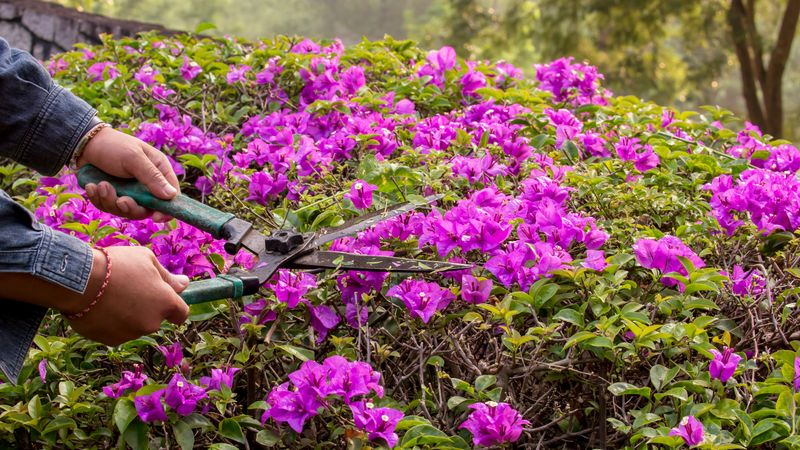
A targeted pinch above a node is not the same as shearing the whole plant. Running hedge trimmers across an entire bougainvillea removes developing flowering growth indiscriminately and can set the plant back.
The goal of a selective pinch is to redirect energy into side shoots, not to cut the vine down. Light, plant vigor, cultivar, water management, and timing all influence whether those new laterals go on to produce a meaningful number of bract clusters.
Select young growth after a flowering cycle
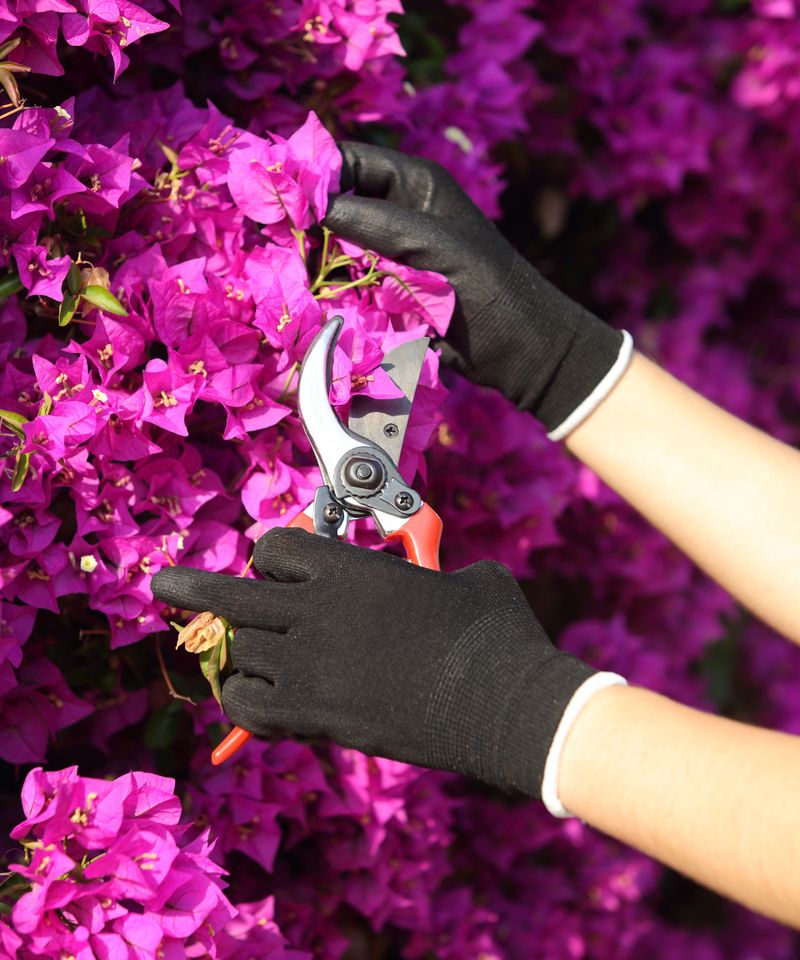
Choosing the right shoot makes a real difference. A soft, actively growing tip on a vigorous young lateral is the correct target for pinching.
An old, hardened, woody cane will not respond the same way, and trying to force a branch cut on mature wood can damage the plant without producing the lateral growth you are after. Look for growth that is still pliable and green, not gray or bark-covered.
Your Arizona Garden Changes Every Week. Your Plan Should Too.
Gardening in Arizona changes quickly throughout the season. Every Friday you’ll receive a simple weekly plan showing exactly what to plant, prune, fertilize, harvest, and protect so you never miss the right timing.
Timing matters just as much as shoot selection. Pinching during an active flowering display removes developing bract clusters that are already on their way.
The better window is right after a flowering cycle ends, when the plant is ready to push new vegetative growth. Light selective pruning is reasonable during vigorous growing periods, but University of Arizona Cooperative Extension guidance on pruning desert shrubs recommends reserving major shaping for after flowering or before a new growth cycle begins, with frost risk factored in for Tucson and higher-elevation Phoenix areas.
Before touching any bougainvillea, gear up properly. Heavy leather gloves, long sleeves, and eye protection are not optional suggestions.
Many cultivars carry sharp thorns that can cause serious puncture wounds, and a branch that springs back unexpectedly can do real damage. The University of Florida IFAS extension specifically flags thorn hazard as a handling concern for this plant, so treating it casually is a mistake you only make once.
Make one careful pinch above a node
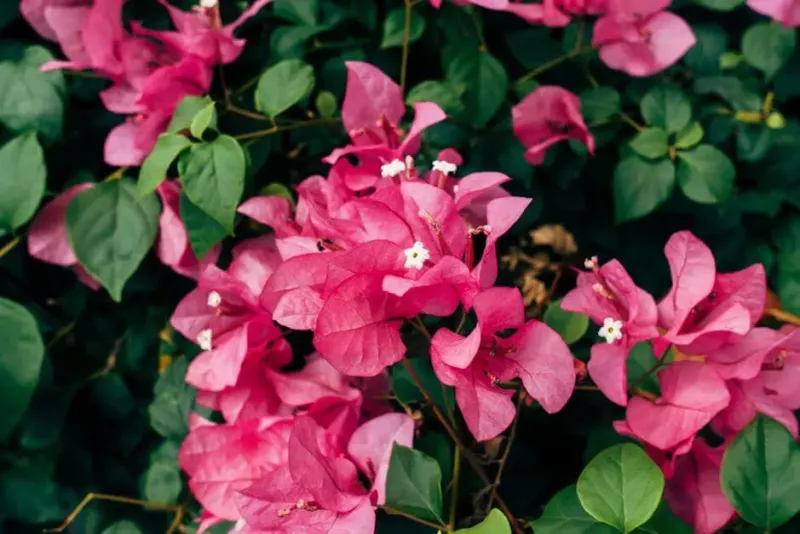
Once you have identified a suitable soft shoot on a well-established plant after a flowering cycle, the actual pinch is straightforward. Use your thumb and forefinger to nip off just the soft terminal tip, or use clean, sharp pruners if the stem is slightly firmer.
Either way, make the cut just above a node, the small bump or joint where a leaf attaches and where lateral growth can emerge. Cutting above a node gives the new side shoots a clean starting point.
Keep the action selective. Removing only the terminal tip of one or a few targeted shoots is the goal, not trimming back large sections of active flowering wood.
The UC Cooperative Extension and University of Hawaii extension both emphasize post-cycle selective cuts rather than wholesale shearing. Cutting too much at once, especially during a display, removes bract clusters that are already forming and delays the next flowering push.
The expected result after a careful pinch is not an immediate surge of color. New side shoots will emerge from the nodes below the cut over the following weeks, gradually building a denser branch framework.
Over successive growth cycles, that fuller structure can support more flowering tips and a more complete bract display across the plant. Think of it as investing in the vine’s architecture rather than triggering an instant bloom response.
Train a flexible lateral outward with a soft tie
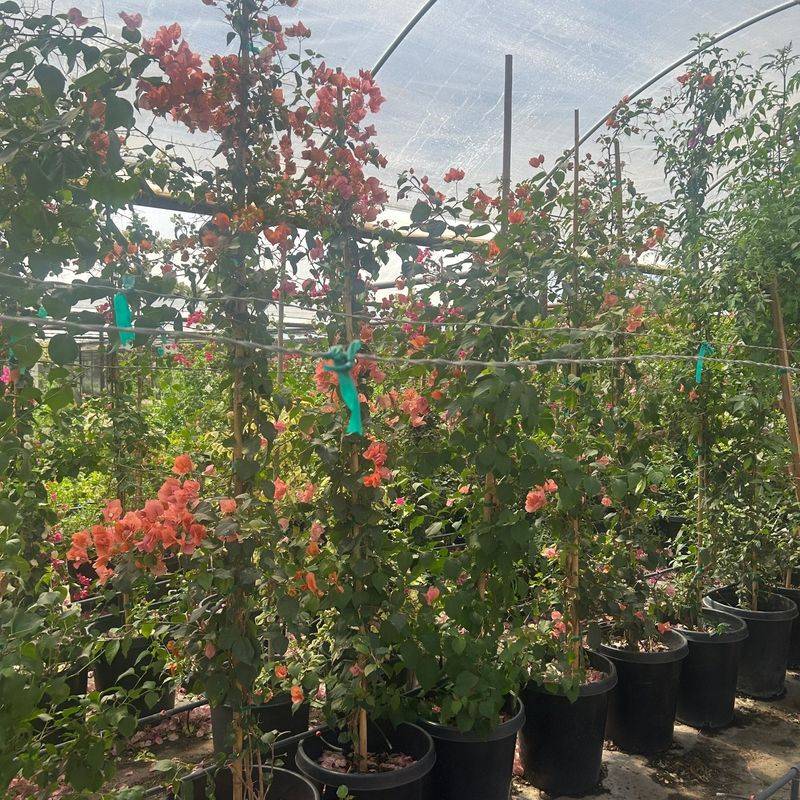
Branch positioning is a separate technique from pinching, and it works on a different principle. Instead of removing growth to trigger branching, you redirect an existing young shoot so it grows outward or at a gentle incline rather than straight up.
The idea is to spread the vine across a wall or trellis more evenly, filling horizontal space instead of sending one vertical whip toward the roofline.
There is limited but relevant research behind this approach. A 2011 controlled study of potted Taipei Red bougainvillea found that horizontal and inclined shoots grew more slowly and formed flower buds sooner and in greater numbers than vertical shoots.
However, that study used potted plants under specific research conditions, not mature landscape vines growing against a Phoenix block wall. The finding is useful context, not a promise that one bent branch will produce twice the color in your yard.
Practical application means using soft plant ties, old strips of fabric, or flexible garden tape to gently hold a young, pliable lateral at the angle you want. Fasten it loosely enough that the stem is not constricted.
Avoid forcing any mature, woody, or brittle cane into a sharp bend. Older wood does not flex the same way, and a forced sharp bend can crack the stem or restrict water and nutrient flow.
The Royal Horticultural Society’s bougainvillea growing guide similarly emphasizes gentle training on young growth rather than aggressive repositioning of established structure. Check the ties periodically and loosen them as the stem thickens.
Support new growth with sun, measured water, and moderate feeding
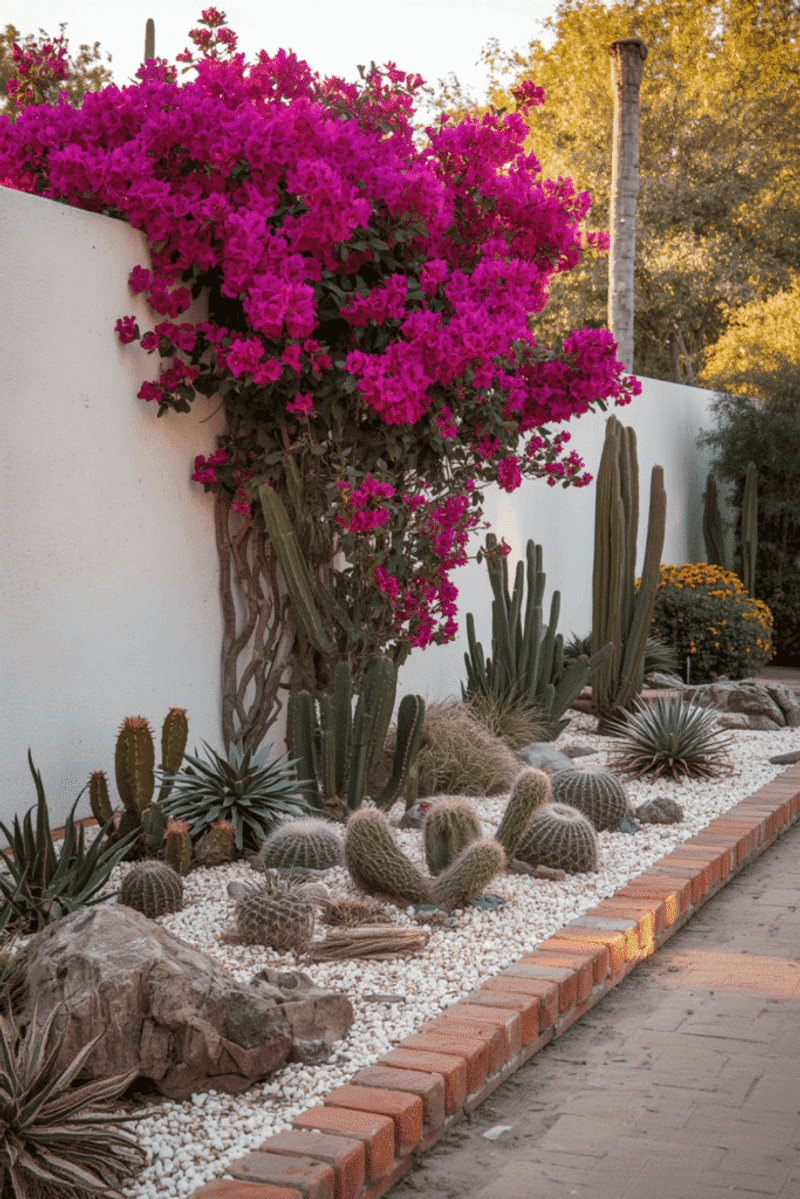
Pinching and branch training only pay off if the plant has what it needs to grow and flower. Full sun is the single most important environmental factor.
Bougainvillea planted in partial shade or where a building blocks afternoon light will push leafy vegetative growth at the expense of bracts. Six or more hours of direct sun daily is the baseline, and in the Phoenix metro that means choosing placement carefully so the plant is not shaded by a wall overhang, tree canopy, or neighboring structure during key hours.
Water management in Arizona requires more nuance than the common advice to keep bougainvillea dry. Established plants tolerate some dryness between waterings, but a vine facing 110-degree heat in a restricted root zone against a south-facing block wall still needs regular deep irrigation to survive.
University of Arizona Cooperative Extension guidance on summer irrigation recommends deep watering followed by partial drying, with frequency adjusted for soil type, sun exposure, plant size, and the intensity of summer heat. Deliberate severe drought stress is not a reliable bloom trick and can cause leaf drop, dormancy, or plant decline.
Fertilizer deserves a restrained hand. Excess nitrogen pushes lush leafy growth and can suppress flowering.
The University of Hawaii extension advises against overfertilizing and emphasizes balanced or controlled-release feeding applied in moderation. A light application of a balanced slow-release fertilizer in early spring and again after a major flowering cycle is a reasonable approach.
Skip heavy phosphorus bloom-booster products; the evidence does not support them as a reliable shortcut for bougainvillea in Arizona landscapes.
Adjust expectations for Arizona heat and frost
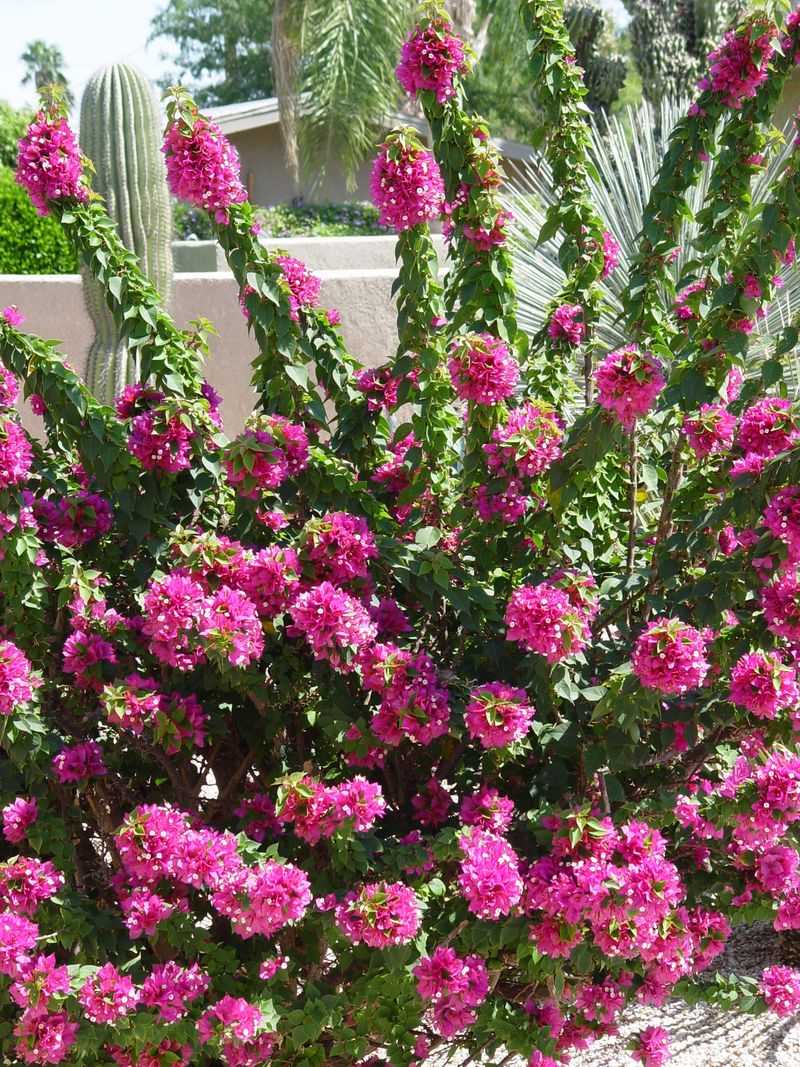
Arizona’s low desert sets real limits on what any pruning method can deliver. Summer temperatures regularly push past 110 degrees Fahrenheit in the Phoenix metro, and even heat-loving bougainvillea can slow or pause its flowering response under sustained extreme heat, irrigation stress, or the heavy humidity that arrives with monsoon season.
Shade from a nearby tree or structure, a less vigorous cultivar, or timing that puts new growth into the peak of summer heat can all interrupt the flowering cycle. No technique can guarantee color all summer under those conditions.
Frost adds another layer of complication, particularly in Tucson, higher-elevation Phoenix neighborhoods, and the East Valley. Bougainvillea is frost-sensitive, and a hard freeze can damage or kill back stems significantly.
University of Arizona Cooperative Extension guidance on frost protection advises waiting until regrowth begins and the danger of additional frost has clearly passed before cutting freeze-damaged wood. Cutting back too early risks removing stems that could still recover and exposes new growth to a second frost event.
For routine seasonal management, light selective pruning is appropriate when vigorous shoots are getting out of bounds during the growing season. Major reshaping generally belongs in a post-bloom window or before the next growth cycle begins, guided by Arizona climate zone realities rather than a generic calendar.
Tucson gardeners at higher elevations and those in frost-prone valley pockets should track overnight lows before any significant pruning in late fall or winter. A healthy, well-lit vine that receives consistent care and thoughtful pruning over several seasons is the realistic path to a fuller bract display, not a single cut taken on a hot July afternoon.