Tomatoes Still Green On Your Arizona Plants This Fall? 8 Reasons They Refuse To Ripen
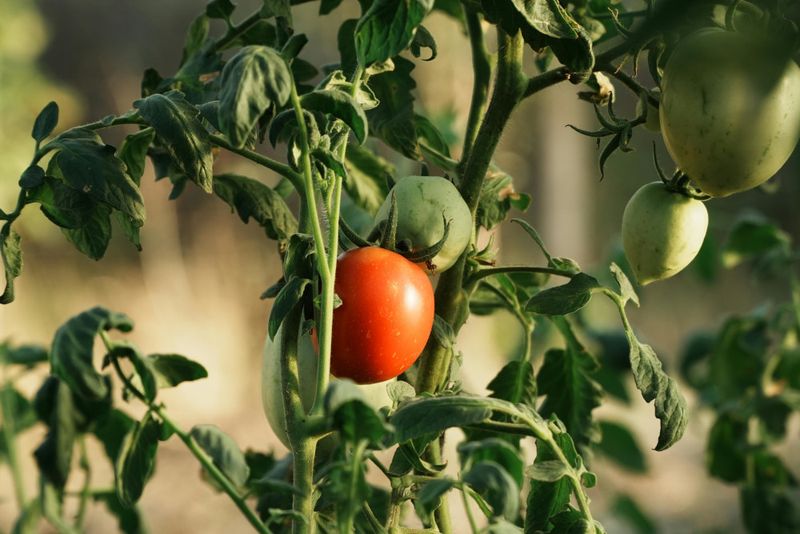
You worked hard to get your tomato plants through a brutal Arizona summer, and now fall is here with a plant full of big, beautiful green tomatoes that just will not turn red. Before you rip the plants out or start changing everything at once, there are eight specific reasons this happens in the low desert, and most of them are diagnosable just by looking closely at your plants.
Knowing which one applies to your garden can save you from making things worse.
Arizona heat can delay both the crop and its color
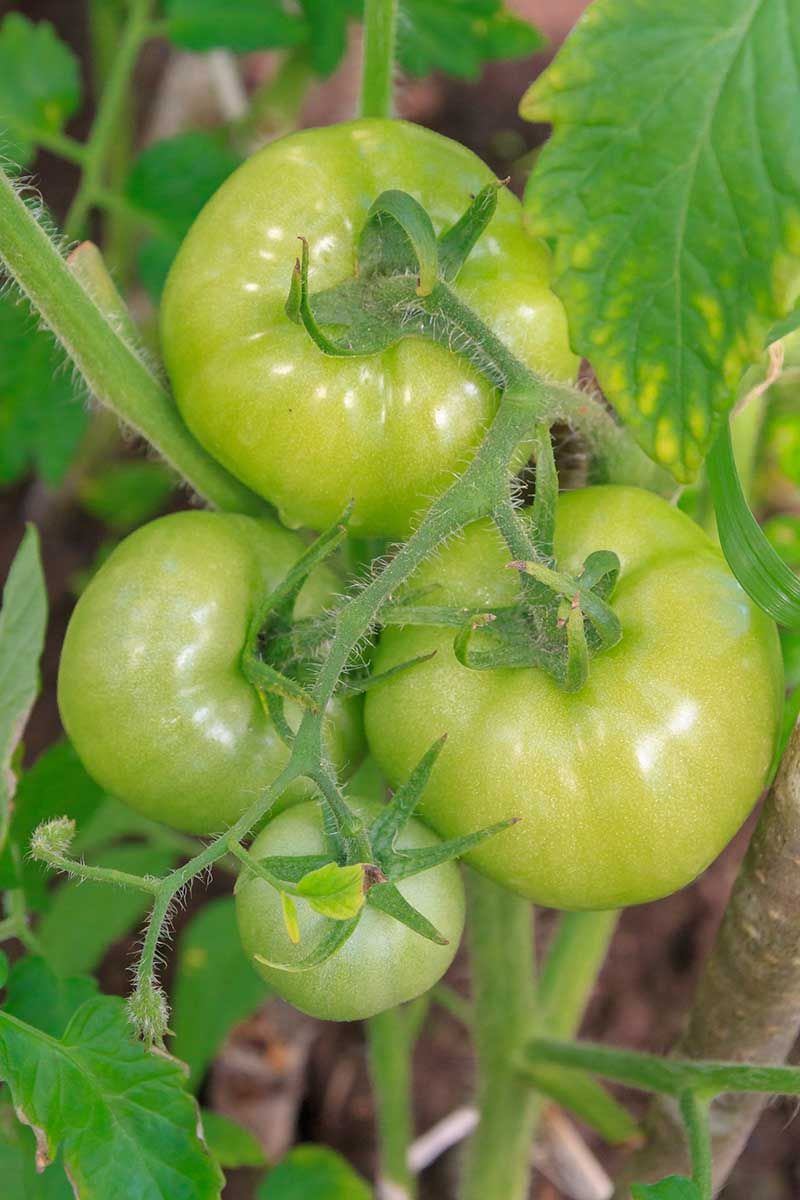
Heat in the low desert does two separate things to tomatoes, and understanding both helps explain why your fruit is green even in October. When temperatures climb above 90 degrees Fahrenheit during the flowering stage, pollen production and viability drop sharply, which means flowers open and fall without ever setting fruit.
The second heat problem is less obvious but just as important. Even after fruit has formed and reached full size, high fruit surface temperatures can slow or block the production of lycopene, the red pigment that gives tomatoes their color.
Research published in a peer-reviewed study on temperature and lycopene development in postharvest tomatoes found that temperatures above roughly 81 to 86 degrees Fahrenheit can reduce red-color intensity, while the 65-to-70-degree range is more favorable for normal color development.
Cooling nights in September and October help, but daytime fruit temperatures can still spike high enough to keep color from developing normally. The practical response is not to strip leaves and expose fruit to more sun.
Instead, preserve your foliage because leaves shade the fruit directly, and consider temporary 40 to 60 percent shade cloth during extreme heat spells without blocking light permanently.
Is the tomato actually mature enough to turn red?
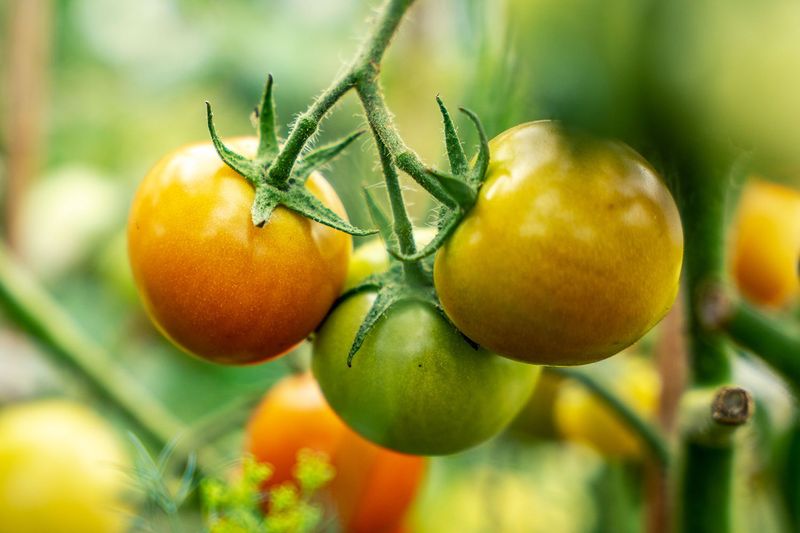
Before adjusting fertilizer, irrigation, or anything else, check whether the fruit itself is actually ready to ripen. A tomato that is still physiologically immature, meaning it formed recently and has not yet reached full internal development, may stay stubbornly green no matter what conditions you provide.
Full size alone is not enough to confirm maturity.
Look for a few key clues on the fruit. Oregon State University Extension describes a mature-green tomato as one with a filled fruit cavity and seeds that have developed a gel-like coating.
On the outside, mature-green fruit often shows a slight lightening of color, sometimes described as a whitish or pale cast near the blossom end, or the very first blush of pink or yellow. University of Minnesota Extension notes that mature-green tomatoes generally ripen satisfactorily indoors, while fruit that is picked or left on the plant in a truly immature state may develop poor flavor or fail to ripen at all.
UC IPM guidance on harvesting and storing tomatoes reinforces that the breaker stage, when color change has just started, gives the best results for off-vine ripening. If your fruit is full-sized and showing any of these signs, it has a reasonable chance of finishing indoors at around 65 to 70 degrees Fahrenheit, away from direct sun.
Your Arizona Garden Changes Every Week. Your Plan Should Too.
Gardening in Arizona changes quickly throughout the season. Every Friday you’ll receive a simple weekly plan showing exactly what to plant, prune, fertilize, harvest, and protect so you never miss the right timing.
If it is still small, uniformly dark green, and recently formed, changing your watering or feeding routine will not speed up a process that has not biologically started yet.
The fall growing window may be too short for the variety
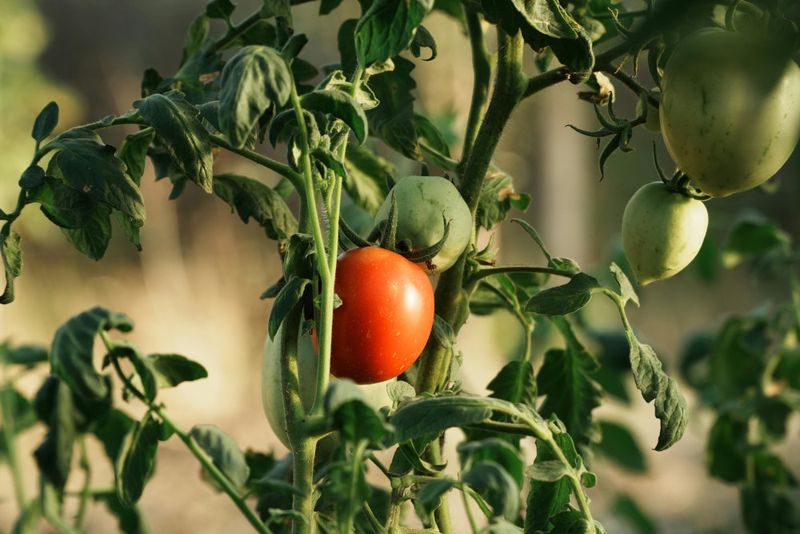
Low-desert Arizona gives fall tomato growers a tight window, roughly September through late November, before cold weather shuts things down. University of Arizona Cooperative Extension identifies this as the shorter of the two annual growing windows in southern Arizona, and it comes with a built-in timing problem: if the variety you planted needs more days to mature than the season allows, full-sized green fruit is the predictable result.
Count the days. Take your variety’s stated days to maturity, measure from transplant date, and then factor in that growth slows during temperature transitions in fall.
A variety rated at 80 or 85 days transplanted in mid-August may not reach full ripeness before November nights turn cold enough to halt progress. Long-season, large-fruited, and late varieties are especially vulnerable because they need more calendar time than the fall window typically provides, especially when summer heat has already disrupted early growth.
For future fall crops in Phoenix, Tucson, or Yuma, early varieties in roughly the 45-to-70-day range, along with cherry, grape, and plum types, tend to be safer bets than large heirlooms or indeterminate varieties with long maturity windows. That said, no variety is a guaranteed solution in the low desert, and your specific microclimate, elevation, and planting date all affect how the season plays out.
The key takeaway for this season is to match your remaining time against your variety’s needs before deciding whether to wait or harvest.
Too much nitrogen creates a leafy plant, not a ripening shortcut
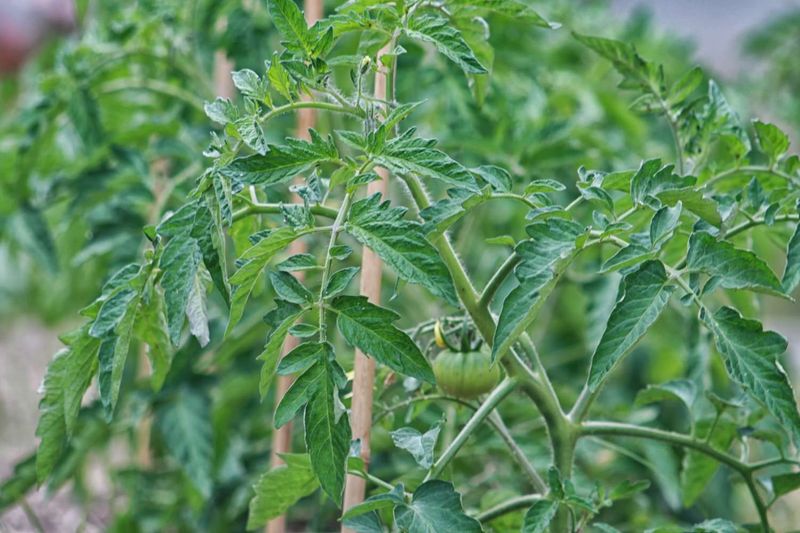
Nitrogen gets blamed for a lot of garden problems, and in this case the concern is real but narrower than most gardeners think. Excess nitrogen applied after a plant is established and fruiting can push the plant toward producing more stems and leaves rather than channeling resources into developing and ripening the fruit it already carries.
University of Arizona Cooperative Extension states clearly that excessive nitrogen increases vine growth at the expense of fruit production for several weeks after application.
Here is the important distinction: if your plant is already carrying full-sized green tomatoes, excess nitrogen is probably not the main reason those specific tomatoes are staying green. The energy-allocation problem tends to show up earlier, during flowering and early fruit set, not as a sudden ripening block in a plant that has already done the work of forming large fruit.
Adding more nitrogen now will not flip green tomatoes red and may make the vegetative problem worse.
Use the plant itself as your diagnostic tool. Thick stems, very dark green leaves, and vigorous new shoot growth are signs that nitrogen is already plentiful.
In that case, hold off on any additional fertilizer applications entirely. If the plant looks pale, thin, or genuinely stressed, a soil test is a better starting point than a guess.
Avoid high-nitrogen fertilizer as a reflexive response to green fruit; it addresses a different problem than the one you are likely facing in fall.
Uneven watering damages fruit before it can finish
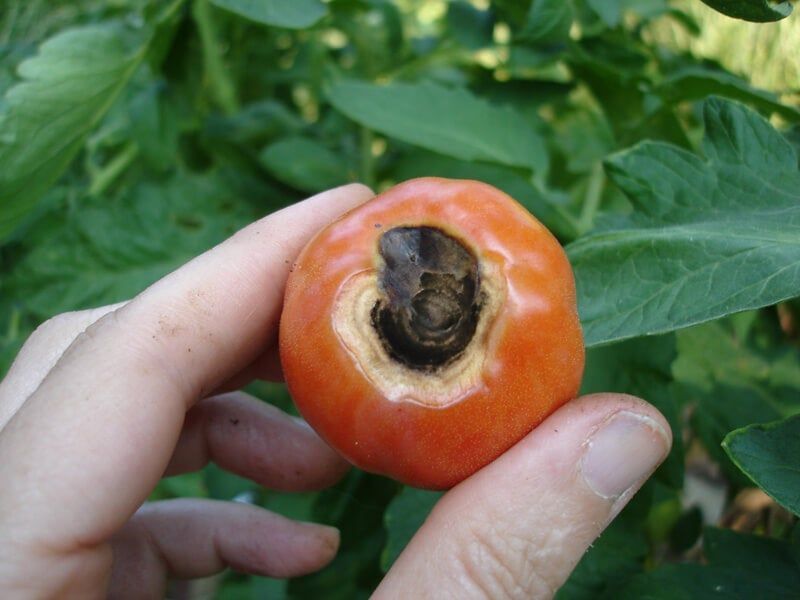
Arizona’s dry air, alkaline soils, and monsoon rain pattern create a watering challenge that can damage tomato fruit in ways that look a lot like stalled ripening. Two fruit problems are most common here, and they have different appearances.
Blossom-end rot shows up as a dark, sunken, leathery lesion on the bottom of the fruit, the end opposite the stem. University of Arizona Cooperative Extension links blossom-end rot to inconsistent water management, drought stress, and soil or water salts that interfere with calcium uptake, not simply a lack of calcium in the soil.
Cracking is the second issue, and it follows a different pattern. Fruit that has been developing under dry conditions and then receives a sudden surge of water, whether from monsoon rain or a heavy irrigation session, can split along the shoulders or develop concentric rings as the interior expands faster than the skin.
According to Arizona Extension guidance on tomato challenges, cracked green fruit may rot before it ever gets the chance to ripen. Checking soil moisture after a monsoon event before running your irrigation system again is a simple step that can prevent this cycle.
The fix for both problems is consistent, deep irrigation that keeps the root zone evenly moist without saturating it. Mulch around the base of the plant helps hold moisture and moderate soil temperature.
Heavy watering applied in a rush will not force red color development and can actively damage fruit that might otherwise have finished well. Resist the urge to flood the bed after a long dry stretch.
A missing canopy exposes fruit to Arizona’s worst conditions
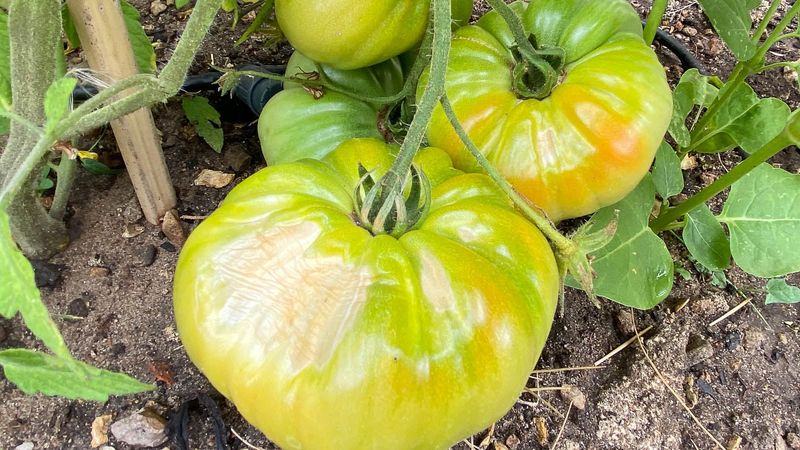
Stripping leaves to let more sunlight reach green tomatoes is one of the most common and most counterproductive responses in Arizona gardens. Healthy tomato foliage does not compete with fruit for ripening energy in any meaningful way in the low desert.
What it does do is shade the fruit from direct sun and moderate the fruit surface temperature, two things that matter enormously when daytime highs are still in the 90s.
When that canopy is removed or damaged, the exposed fruit becomes vulnerable to sunscald. UC IPM describes sunscald as pale, white, gray, or brown areas on the side of the fruit facing the sun, often with a papery or leathery texture.
Sunscald damage does not ripen; it stays discolored and can develop secondary rot. University of Arizona Cooperative Extension specifically advises low-desert gardeners to skip routine pruning because the leaves serve as the fruit’s primary heat shield in this climate.
Remove only growth that is clearly dead, severely diseased, or so damaged that it is contributing nothing to the plant. Healthy green leaves, even ones that look a little ragged from heat or age, should stay.
If your plant lost canopy to wind, insects, or disease, temporary 40 to 60 percent shade cloth placed over the plant, not directly on the fruit, can reduce heat load while the plant recovers. More direct sunlight does not make green tomatoes turn red faster in Arizona’s fall conditions; it often makes the problem worse.
Visible damage can signal a disorder rather than delayed ripening
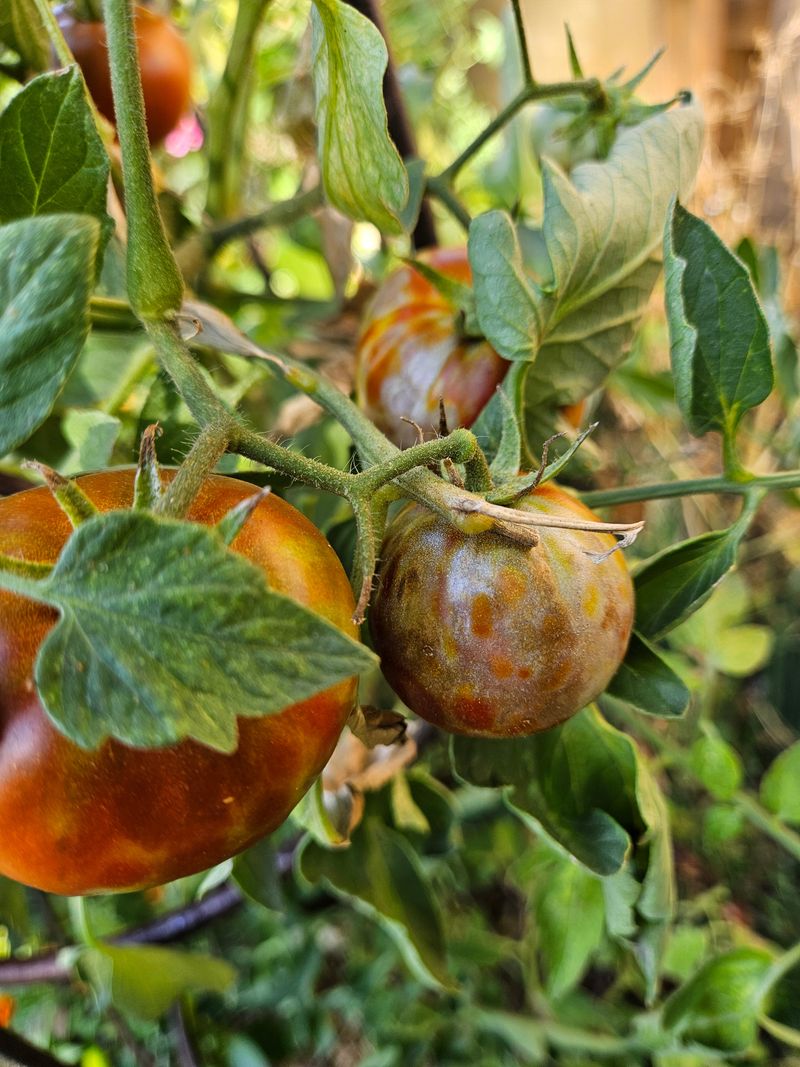
Some green tomatoes are not simply waiting to ripen. They are showing early signs of a plant disorder, and recognizing the difference matters before you decide how to respond.
Start with the fruit itself: a dark, sunken lesion on the blossom end points to blossom-end rot, which is a physiological problem tied to water and calcium uptake, not a disease you can spray away. The affected area will not ripen normally, and applying calcium supplements without addressing watering consistency is unlikely to help.
Sunscald creates a different kind of damage: pale, bleached, or brown areas on the sun-facing side of the fruit, sometimes with a papery texture. This is a physical response to heat and light exposure, not a pathogen.
Both of these disorders are diagnosable by appearance, though symptoms can overlap with other causes, so look at the whole plant, not just the fruit.
Viral diseases are the most important escalation point. Tobacco mosaic virus and tomato spotted wilt virus can both produce mottled, curled, or distorted leaves, bronzing, stunting, rings or bumps on fruit, and uneven or failed ripening.
UC IPM guidance on tomato spotted wilt virus notes that symptoms can resemble nutrient deficiency or heat stress, making visual diagnosis alone unreliable. If the entire plant shows severe distortion alongside these fruit symptoms, do not treat it as simple delayed ripening and do not take cuttings from it.
Remove or isolate the plant and contact your county Cooperative Extension office or a diagnostic lab before drawing firm conclusions. Green fruit alone does not justify pesticide use; diagnose visible pests or feeding damage first.
Cold weather makes the final harvest decision
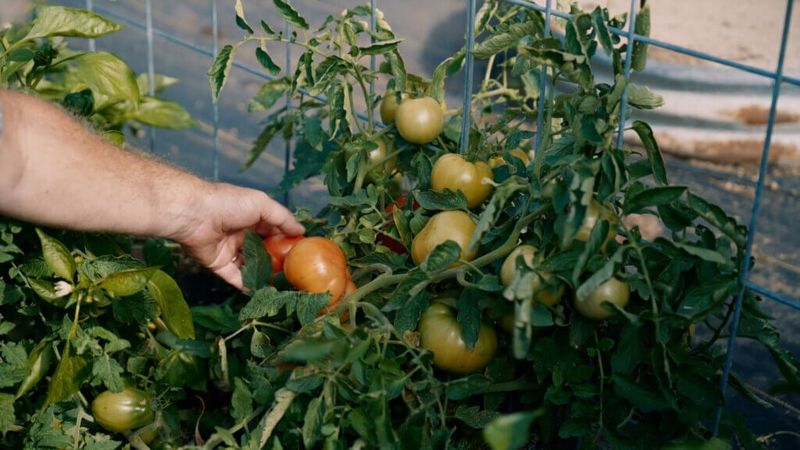
Fall tomatoes in the low desert do not always run out of heat gradually. Sometimes the season ends with a cold snap that settles the question for you.
University of Arizona Cooperative Extension notes that occasional freezes limit the low-desert tomato season, and the timeline differs meaningfully between Phoenix, Tucson, Yuma, and foothill or higher-elevation locations. Tucson sees earlier and harder freezes than central Phoenix; higher-elevation communities can lose their crop weeks before valley gardeners face the same risk.
Oregon State University Extension reports that several days of temperatures below about 50 degrees Fahrenheit can increase the likelihood of rot in fruit still on the vine, even before a killing frost arrives. A single light frost may damage foliage without killing the plant, but it signals that time is running short.
When a hard freeze is in the forecast, waiting to see what happens is rarely the right call.
Here is the practical sequence: if a cold snap of one or two nights is coming, cover the plant with frost cloth or a lightweight row cover and remove it during the day for ventilation. If a hard freeze is forecast or temperatures are expected to stay below 50 degrees for several days, harvest every full-sized tomato that shows signs of maturity, including a lighter cast, any blush of color, or a filled, firm feel.
Bring them indoors and ripen them at around 65 to 70 degrees Fahrenheit, away from direct sun. Warmth drives ripening at this stage, not sunlight.
Next season, matching your variety’s days to maturity and your transplant date to your specific Arizona elevation and frost window is the single most effective way to avoid the same situation.