Why Florida Bougainvillea Needs Sun More Than Another Dose Of Fertilizer
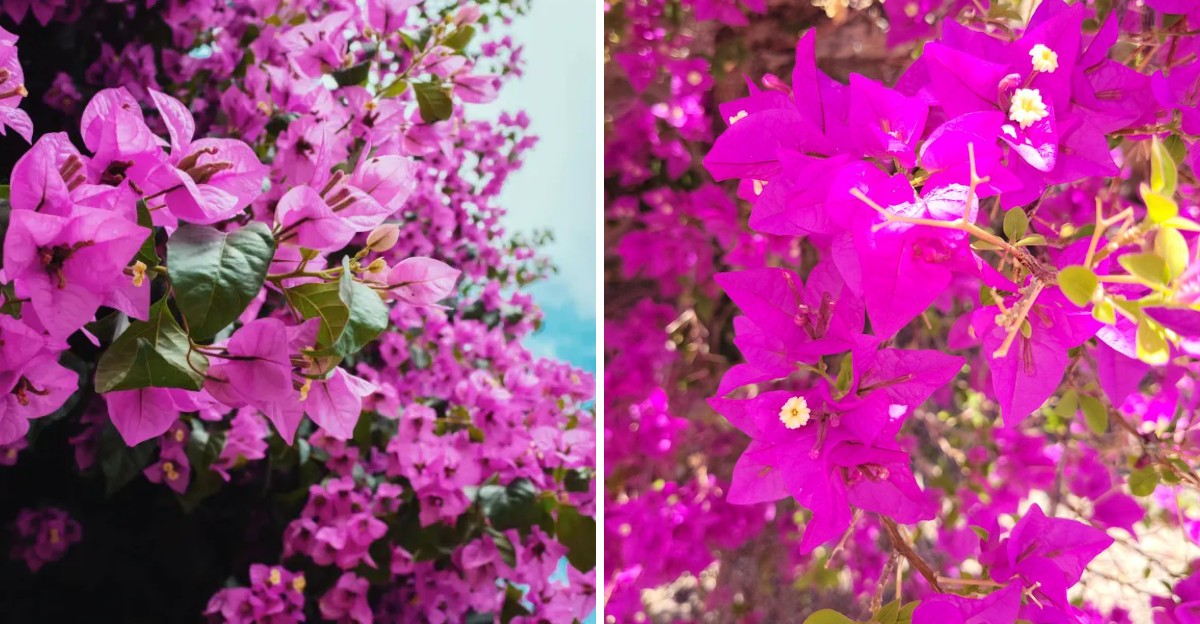
A bougainvillea sits beside a Sarasota driveway, six feet tall, glossy green, and stubbornly flowerless despite months of careful attention from its owner.
Its owner has fed it every three weeks since March, hoping the next scoop of granules will finally flip the switch and bring on that magenta show.
Instead, the plant keeps pushing new leaves and long whippy canes, looking more like a hedge than the firework of color the plant tag promised back at the nursery.
That scene plays out across Florida every single season, and the fix usually has nothing to do with fertilizer at all.
Most homeowners reach for the same bag of plant food every time, assuming more nutrients must be the missing piece somewhere in the equation.
The real answer usually sits somewhere much simpler, hiding in plain sight above the plant rather than buried in the soil beneath it.
1. Full Sun Triggers The Real Bloom Switch
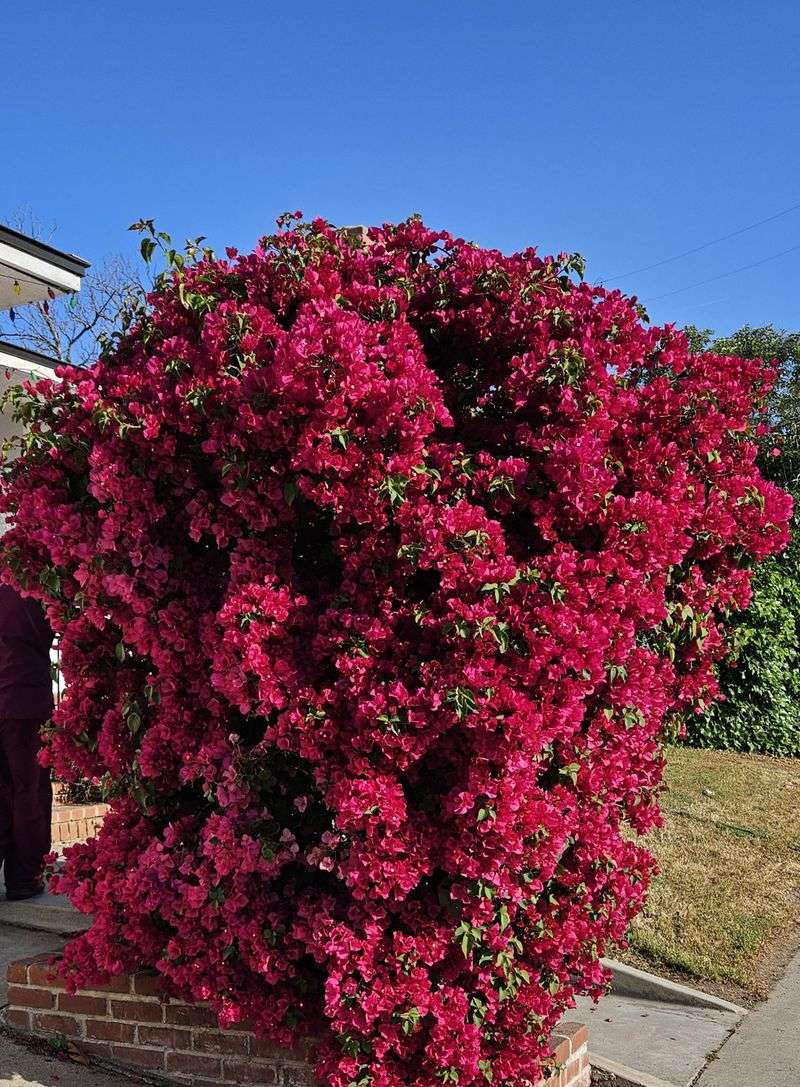
Light is the currency bougainvillea spends on flowers, more than any nutrient sitting in the soil below its roots.
Native to hot, bright regions of coastal South America, the plant evolved under blazing, unfiltered sun and responds to high light intensity by producing bracts, those papery colored leaves most people call petals.
University of Florida IFAS Extension consistently points to full sun as the single most important factor for heavy bloom production across the state.
Strong light fuels photosynthesis beyond what the plant needs for basic growth, and the surplus goes into reproductive tissue instead. Dim that light, and the surplus simply vanishes.
Florida makes this easy in theory and tricky in practice. Our sun is intense, but our landscapes are crowded with live oaks, screened enclosures, pool cages, and tall privacy fences everywhere.
A spot that blazed in January may be dappled by June once the canopy fills back in overhead.
Watch your plant for two full days before blaming nutrition entirely. Note the exact hours direct sunbeams strike the leaves, not just ambient brightness filtering through nearby trees.
Bloom also concentrates on the sunniest side of a plant specifically. If one half of your bougainvillea is loaded with color and the other stays bare green, you have your diagnosis without a soil test.
Chasing color with a feeding schedule while ignoring shade is like adding gas to a car with no key. The fuel was never the missing piece.
2. Extra Fertilizer Feeds Leaves, Not Flowers
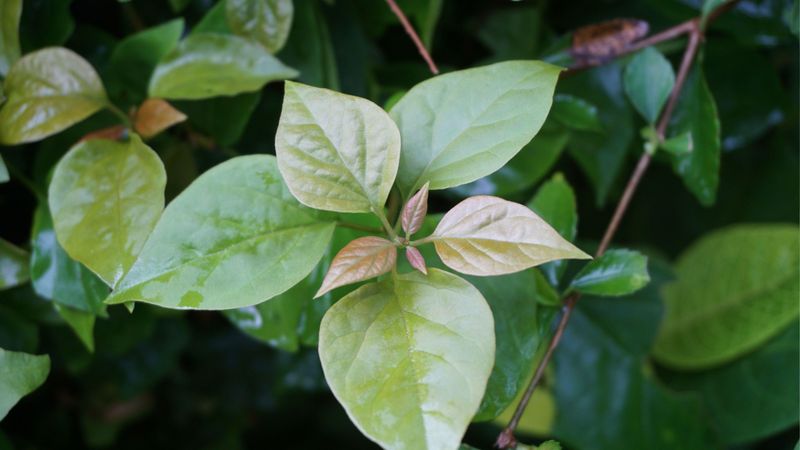
Nitrogen is a growth accelerator, and bougainvillea takes the offer seriously every time it gets one. Feed it generously, and it builds leaves, stems, and long thorny canes, because that is what nitrogen tells a plant to do.
Flowers get pushed to the back of the line entirely.
Gardeners often misread the result as progress. The shrub looks healthy, deep green, and fast-growing, so the next feeding seems justified in the moment.
Meanwhile the plant is stuck in permanent vegetative mode, spending every bit of energy on foliage instead of blooms.
Florida lawn care makes the problem worse too. Bougainvillea planted near turf catches runoff and drift from high-nitrogen lawn fertilizer, plus extra irrigation from the same zone nearby.
Your Florida Garden Changes Every Week. Your Plan Should Too.
Gardening in Florida changes quickly throughout the season. Every Friday you’ll receive a simple weekly plan showing exactly what to plant, prune, fertilize, harvest, and protect so you never miss the right timing.
Many flowerless plants in Florida yards are simply eating the lawn’s leftover nutrients without anyone realizing it.
Phosphorus and potassium support flowering, which is why bloom-oriented formulas run lower in nitrogen overall. UF IFAS guidance leans toward light, infrequent feeding with a balanced or bloom-type product rather than frequent heavy applications.
A practical reset worth trying: stop all feeding for six to eight weeks and move the plant’s irrigation off the lawn schedule entirely.
Restraint feels wrong, especially for gardeners who show love with a scoop and a hose. Bougainvillea reads generosity as a signal to grow taller, not brighter.
3. Lean Soil Actually Works In Its Favor
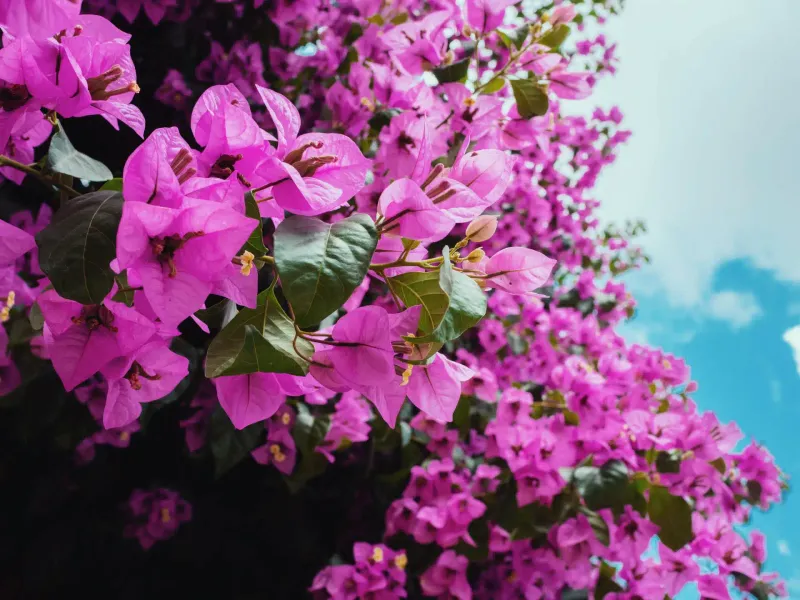
Sandy, unimpressive soil is a genuine gift here, not a problem to fix. Florida’s native sand drains fast, holds few nutrients, and keeps bougainvillea roots from sitting wet, which is exactly the setup that pushes flowering.
Plants that struggle slightly for resources tend to reproduce harder as a result.
Heavily amended beds work against that natural instinct. Pile in rich compost, peat, and manure, and you create a moist, nutrient-loaded root zone that reads as an invitation to grow foliage instead of flowers.
Drainage matters just as much as fertility here too. Bougainvillea roots are fine and fussy about standing water, and soggy soil invites root rot during our summer rainy season.
Raised beds, slopes, and mounded planting spots all help water move away from the roots quickly.
Skip the deep planting hole full of organic goodies entirely. Set the root ball at grade in native soil, backfill with the same sand you dug out, and water it in thoroughly.
Container growers should choose a gritty, fast-draining mix rather than a moisture-retentive potting soil for best results.
One caution worth repeating clearly. Lean is not the same as neglected. The plant still needs regular water during establishment and dry spells, plus occasional light feeding throughout the season.
4. Six Hours Of Direct Sun Is The Minimum
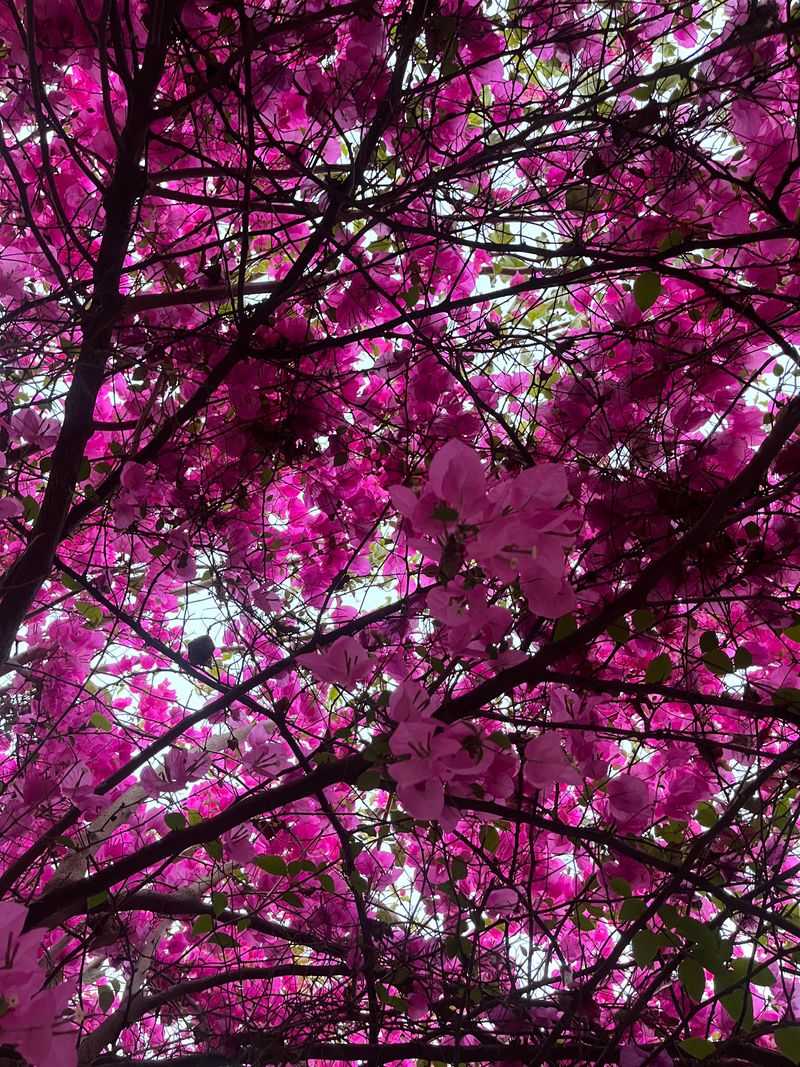
Six hours of direct sun is the floor here, not the target to aim for. Extension sources across the Southeast use that number as the minimum for reliable blooming, and Florida growers who hit eight or more hours usually get noticeably heavier color.
Measuring is simple and often eye-opening once you actually do it. Check the plant at 8 a.m., 10 a.m., noon, 2 p.m., and 4 p.m. on a clear day, and write down whether direct sunbeams hit the foliage each time.
Midday and afternoon light carries more punch than early morning rays ever will. A plant with six hours of strong afternoon exposure often outblooms one with the same hours filtered through morning tree cover instead.
South and west exposures generally win in Florida yards overall. North-facing beds and spots hugging a tall wall lose light fast, especially from fall through spring when the sun tracks lower across the sky.
Screened pool enclosures deserve a warning here too. Screening can cut usable light substantially, so a bougainvillea inside a cage may show the same flowerless behavior as one in tree shade.
Do the sun audit twice a year if you can manage it. Oak and ficus canopies expand, neighbors build fences, and palms fill out over time, so a sunny planting spot years ago can become a shady one now.
5. Stress Encourages More Not Fewer Blooms
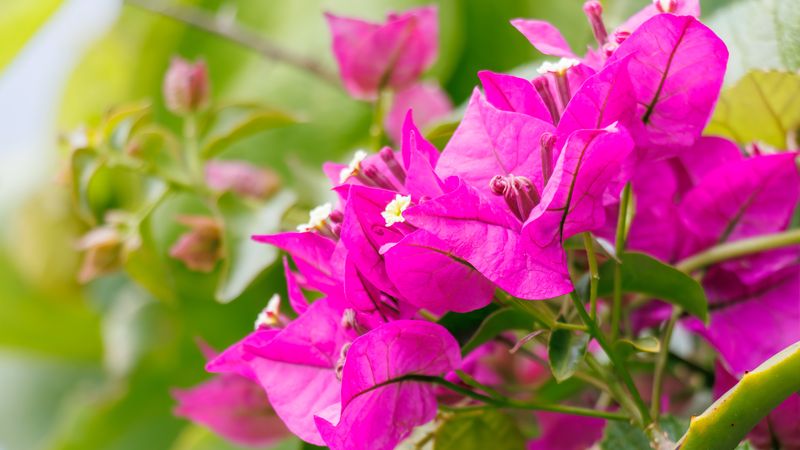
Gardeners who baby their bougainvillea usually get the fewest flowers of anyone growing this plant. Mild stress signals the plant to reproduce, and colored bracts are part of that reproductive push.
Comfort signals it to keep growing green instead of putting out color.
Controlled water is the classic lever here. Many Florida growers let container and in-ground plants dry until leaves just begin to look slightly limp, then water deeply all at once.
Repeating that cycle through the growing season often triggers a fresh flush of bracts within a couple of weeks.
Note the word controlled carefully though. Severe drought drops leaves, stalls growth, and stresses roots past the useful point entirely. The aim is a gentle nudge, not genuine hardship for the plant.
Root confinement works the same way as controlled watering does. Bougainvillea blooms famously well in pots that look too small for it, because restricted roots limit vegetative growth naturally.
Plants squeezed between a driveway and a wall often flower better than pampered specimens sitting in wide open beds.
Automatic irrigation is the sneaky saboteur in most Florida yards. Daily lawn zones keep the root zone constantly damp, which cancels every stress signal the plant might otherwise receive.
6. Overfeeding Explains A Leafy No Bloom Plant
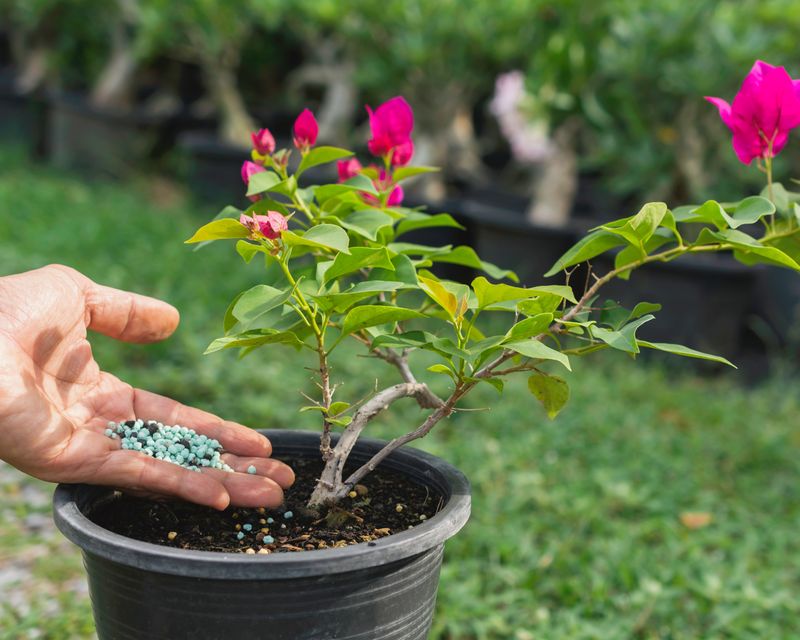
Picture the classic case gardeners run into constantly. A bougainvillea six feet wide, dense with glossy leaves, long whips reaching for the sky, and not one colored bract anywhere in sight.
Nine times out of ten, that plant has been fed too often, watered too much, or both at once.
Run the checklist before you reach for a bag again. How many hours of true direct sun does it actually get each day? When did you last fertilize, and with what nitrogen number specifically?
Vigorous, floppy new growth with big soft leaves points strongly to excess nitrogen in the soil. Bloom-ready bougainvillea tends to look slightly tougher instead, with shorter internodes and firmer foliage overall.
Pruning habits factor into this too. Bracts form on new growth, so constant shearing removes the very shoots that would have flowered eventually.
Pinch tips lightly after a bloom cycle instead of hedging the plant every few weeks throughout the season.
A reset plan that works well: pause fertilizer entirely, reduce watering frequency while keeping it deep when you do water, separate the plant from lawn irrigation, and give it a full sun season to respond.
Resist the urge to add one more product to the mix. An already overfed bougainvillea does not need a supplement. It needs an intervention instead.
7. Move It Before You Feed It Again
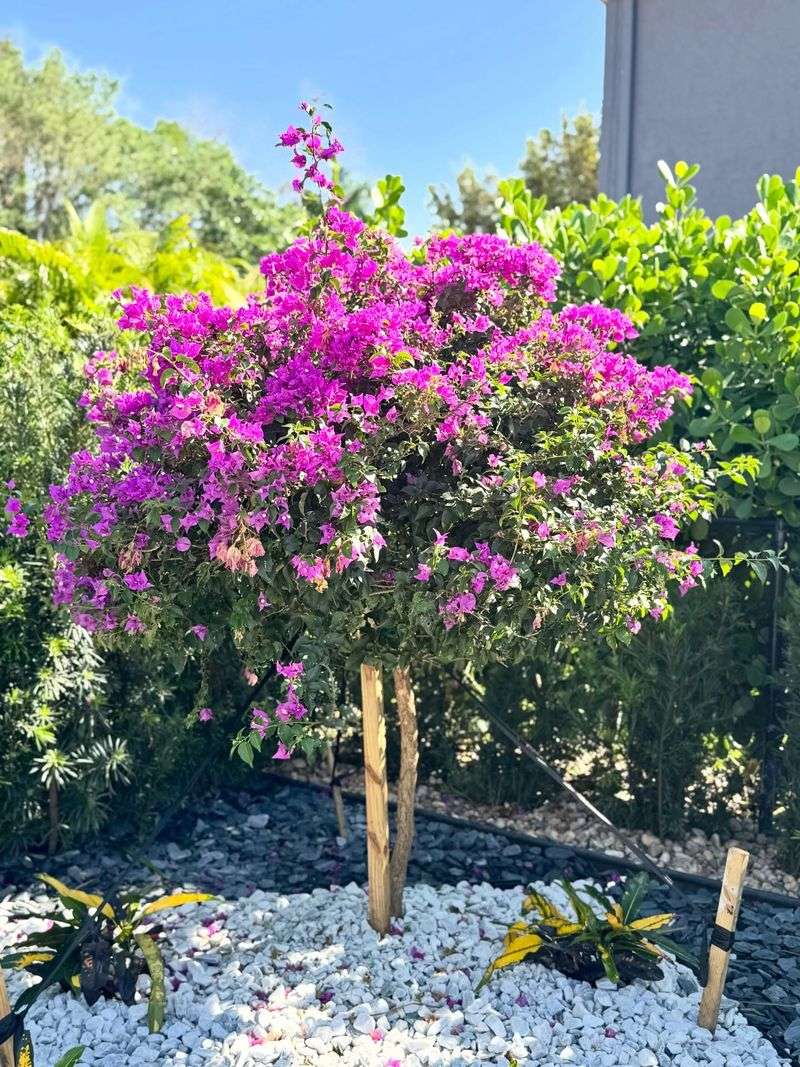
Relocation beats reformulation every single time with this plant. Before buying another product, consider whether the plant is simply standing in the wrong spot, because no nutrient blend substitutes for sunlight.
Timing helps considerably here. Florida’s cooler, drier stretch from late winter into early spring suits transplanting well, giving roots time to settle before summer heat arrives in full force.
Avoid moving plants during the hottest, wettest weeks of midsummer when root rot risk climbs sharply.
Handle the root ball with real care throughout the process. Bougainvillea roots are brittle and resent disturbance, so dig wide, keep as much soil intact as possible, and slide rather than lift when you can manage it.
Cut the top back by roughly a third to balance lost roots afterward.
Potted plants make life easier for this kind of experiment. Roll the container to a sunnier patio corner and watch for several weeks, since a mobile trial run costs nothing and tells you plenty.
Sometimes the sun problem is above your head rather than around the plant itself. Thinning a few oak limbs or removing an overgrown shrub can restore hours of light without touching the bougainvillea at all.
Water the moved plant steadily for the first month, then taper toward that lean, slightly dry routine discussed earlier. Hold off on fertilizer until new growth appears again.
8. A Simple Log Beats Relying On Memory
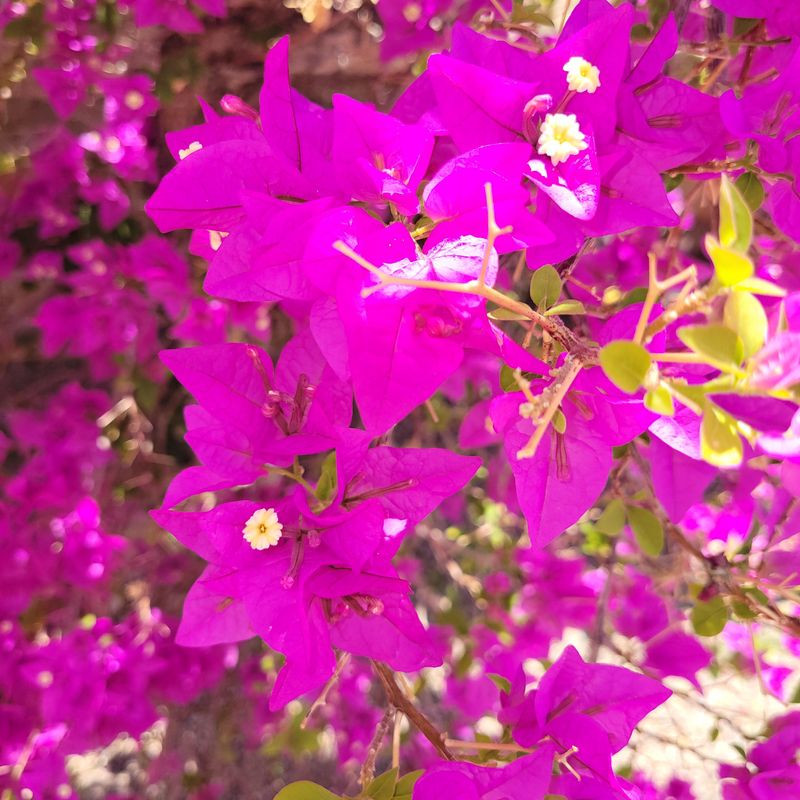
Many gardeners trying to fix a flowerless bougainvillea rely on vague impressions instead of actual data, which makes the whole troubleshooting process harder than it needs to be.
Keeping a short written log, even just a few lines jotted on a phone, turns guesswork into something closer to a real experiment with actual results to compare.
Note the date every time you water, fertilize, or prune, along with a quick estimate of how many hours of direct sun the plant received that particular day.
Add a line every week or two describing what the plant actually looks like. New leaf growth, bract color, cane length, and overall density all matter here as data points worth tracking.
Patterns that feel invisible day to day become obvious once several weeks of notes sit side by side on the same page or screen.
A gardener might discover, for instance, that blooms appeared roughly three weeks after a dry stretch, or that new leafy growth spiked right after a lawn service visit nearby that added fertilizer to the whole yard.
This kind of record also protects against the common trap of changing several variables at once. Adjusting sun exposure, water, and fertilizer simultaneously makes it impossible to know which change actually worked.
A log encourages one change at a time, watched patiently over several weeks, which is exactly the kind of disciplined approach bougainvillea rewards most consistently.
Before buying another product or moving the plant again, a few weeks of honest notes often reveal the real problem faster than any guess ever could.