Baby Rattlesnakes Are Easy To Miss In Arizona Yards This September – Here’s How To Spot Them First
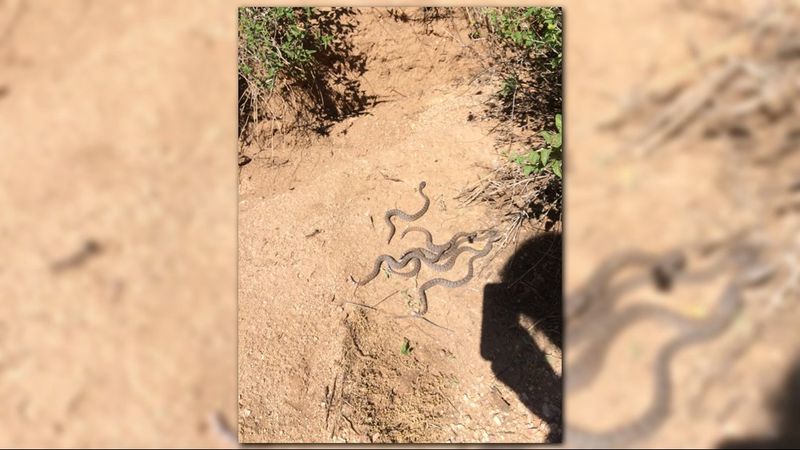
Every September, Arizona homeowners head outside without realizing that a young rattlesnake could be resting quietly just a few feet away. Late summer is when some rattlesnake populations give birth, and small snakes blend into gravel, leaf litter, and ground cover in ways that are easy to overlook.
Knowing what to watch for, and how to react, can make a real difference for your family and pets.
Late summer brings a reason to slow down in Arizona yards
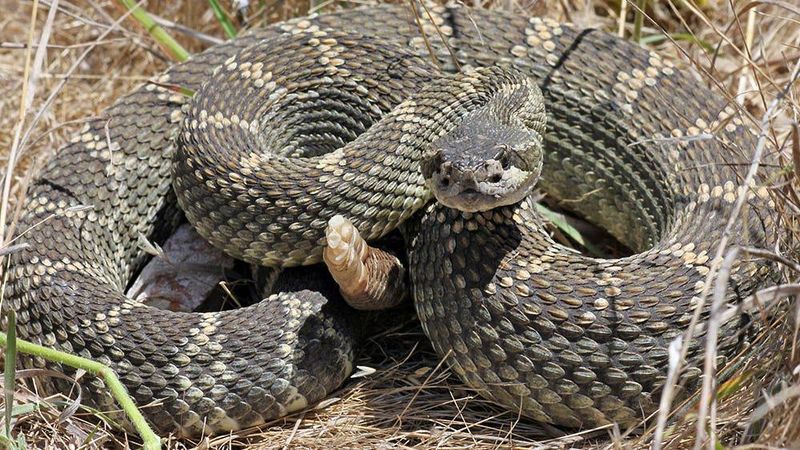
Rattlesnakes are a regular part of warm-season life in the low desert, and Arizona Game and Fish describes them as generally active from March through October. What makes late August and September worth extra attention is a combination of factors that do not apply to the rest of that long stretch.
Peer-reviewed research on western diamondbacks in Arizona documented births occurring from mid-August into mid-September in studied Sonoran Desert populations. One Arizona study found that 92.1% of observed births occurred in August, with the window extending into early September.
That timing applies specifically to the populations studied, not to every rattlesnake species, elevation, or community across the state.
Bite case data adds another layer. The Arizona Poison and Drug Information Center 2025 annual report recorded 38 reported rattlesnake-bite cases in September and 31 in August, with 66.3% of reported bites occurring at residences.
Those are reported cases from a single year, not proof of a long-term statewide peak or evidence that a particular yard currently contains a snake.
Together, these data points support one practical habit: slow down before moving through the yard during late summer, check before stepping, and give yourself a moment to look rather than assuming the path is clear.
Small or quiet snakes can be difficult to notice
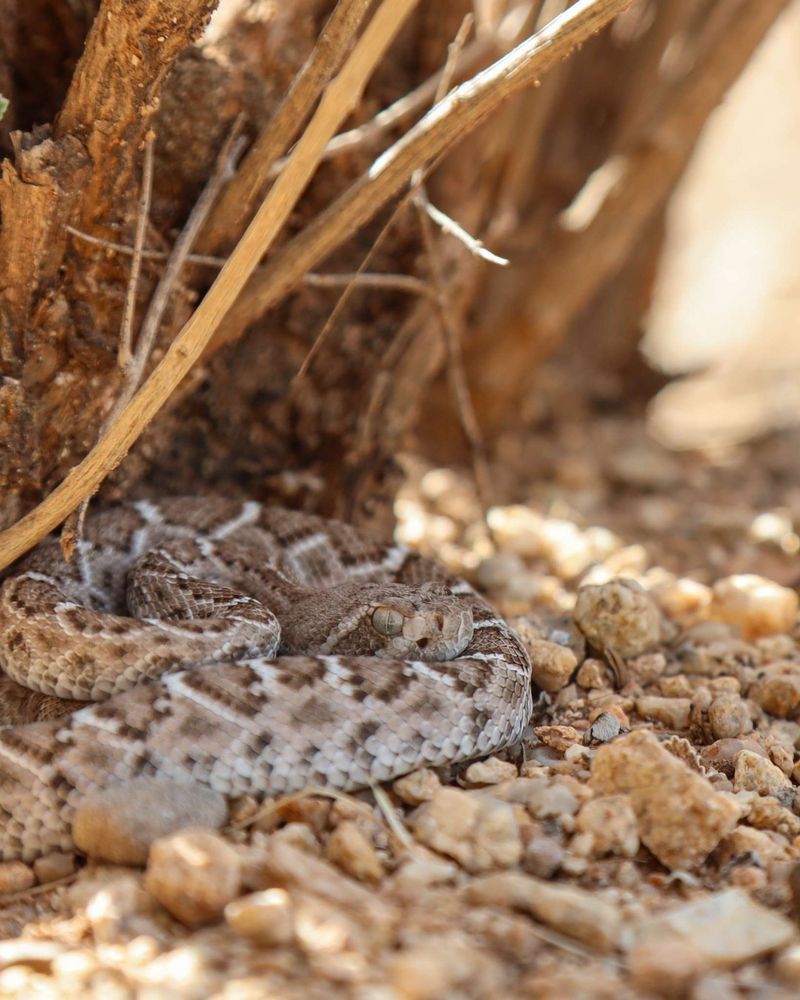
A newborn rattlesnake in Arizona can measure less than a foot long, and its patterned scales are designed to blend with gravel, sandy soil, dry leaves, and rocky surfaces. Staying motionless is a natural defense, which means a young snake may not move at all when you walk nearby.
One detail that catches many people off guard is the rattle. Newborn Mohave rattlesnakes, for example, emerge with a single silent button rather than a functional rattle, as noted in National Park Service information on the species.
Even adult rattles can break off or become damaged over time. Waiting for a rattling sound before reacting is not a reliable safety strategy.
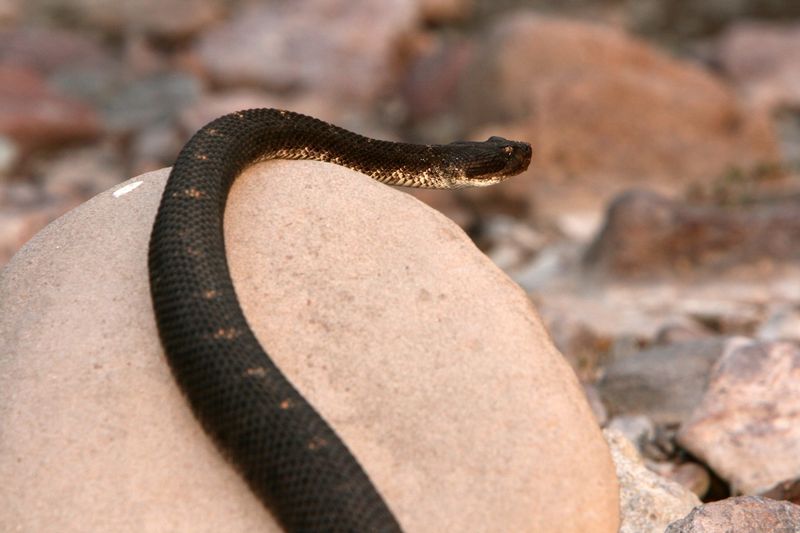
Appearance varies too. Young Arizona black rattlesnakes can look noticeably different from adults of the same species, and coloration shifts among Arizona’s multiple rattlesnake species.
University of Arizona Cooperative Extension guidance notes that camouflage makes rattlesnakes genuinely difficult to see in their natural surroundings.
None of this means readers need to learn to identify every species from a distance. The practical rule is simpler: if you see a snake, or something that might be one, give it space.
You do not need to confirm its identity before backing away.
Mulch can hide a snake without attracting one
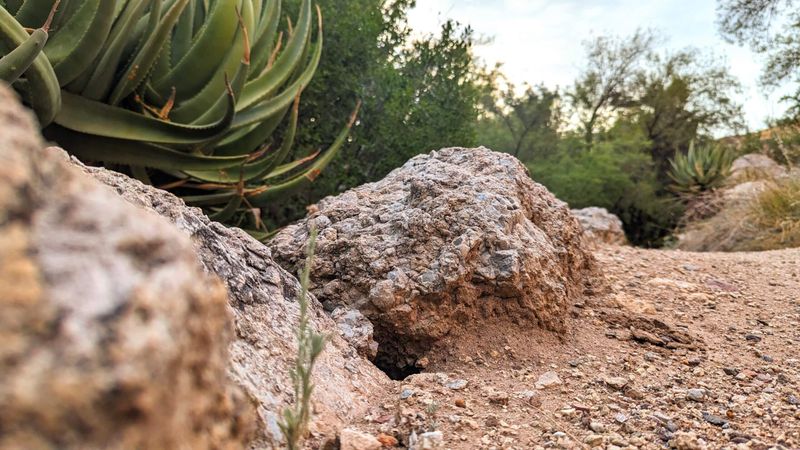
A common claim circulates every summer suggesting that baby rattlesnakes are drawn to mulch. The available evidence does not support that specific conclusion.
Your Arizona Garden Changes Every Week. Your Plan Should Too.
Gardening in Arizona changes quickly throughout the season. Every Friday you’ll receive a simple weekly plan showing exactly what to plant, prune, fertilize, harvest, and protect so you never miss the right timing.
What research and official guidance do describe is something more straightforward: snakes use cover.
Mulch, leaf litter, brush piles, dense low vegetation, rock borders, woodpiles, and burrows all create spaces where a snake can rest out of direct sun and out of plain sight. The University of Arizona Cooperative Extension identifies brush, woodpiles, rock crevices, and deep grass as areas where snakes may shelter.
The CDC similarly lists wood and rock piles as places where snakes may hide. Mulch belongs in that same category, not because it is uniquely attractive to young rattlesnakes, but because it reduces visibility.
For Phoenix and Tucson homeowners, the practical implication is about sightlines, not about choosing one ground cover over another. Pay closer attention near areas where a snake could rest without being easily seen: edges where mulch meets a wall, dense ground cover along a fence line, a stack of pots near the back door, or a pile of trimmings left from a pruning session.
Clearing unnecessary clutter near paths, play areas, and pet routes reduces the number of spots where a snake could go unnoticed. No landscaping choice eliminates the possibility entirely, but reducing hidden corners near high-use areas is a reasonable precaution.
Build a safer yard-checking routine
A repeatable habit matters more than any single precaution. During late summer in the low desert, rattlesnakes tend to move more at night when temperatures drop to manageable levels, though dawn and dusk activity is also common in spring and fall.
That means yard checks deserve extra care after dark and during those transitional hours.
University of Arizona Cooperative Extension guidance recommends using a flashlight outdoors on warm evenings, keeping walkways clear and well lit, and avoiding putting hands or feet into rock crevices, brush, woodpiles, or deep grass. Arizona Game and Fish echoes the recommendation to use a flashlight and to watch where you step, especially at night.
A few habits that translate directly to low-desert yards:
Wear closed-toe shoes or boots rather than sandals any time you go outside after dark or into areas with dense vegetation or rock borders. Look before stepping over a raised garden edge, a landscape timber, or a low wall.
Tap a long tool handle near a woodpile or debris pile before reaching in. Keep children and pets on clear, lit paths rather than letting them run through unlit corners of the yard.
On the yard-management side, removing unnecessary brush, leaf piles, and debris near frequently used routes limits the number of spots where a snake could rest unseen. Avoiding bird feeders placed directly against the house can also help reduce rodent activity that might draw snakes closer.
None of these steps guarantee a snake-free yard, but together they reduce avoidable surprises.
Give any snake room to leave
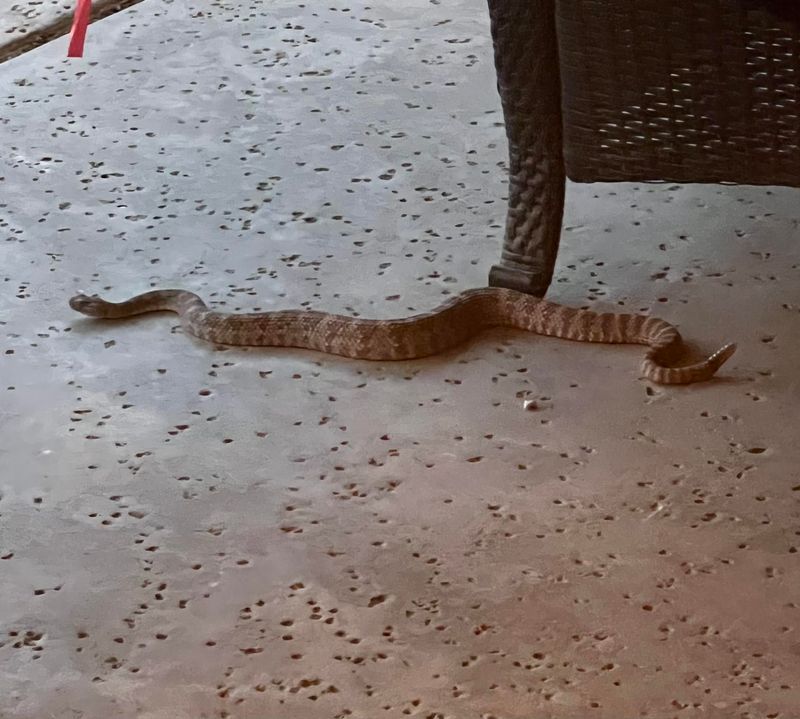
Spotting a snake in the yard can be startling, but the right response is the same whether the snake is large or small, patterned or plain. Stop moving, take several slow steps back, and put real distance between yourself and the animal.
Arizona Game and Fish notes that rattling and coiling are defensive behaviors, not signs of aggression. Most bites happen when people attempt to corner, capture, or handle a snake, or accidentally step on one.
Giving the snake a clear exit route, without crowding it or cutting off its path, is the single most effective thing a homeowner can do in that moment.
Keep children and pets away from the area until the snake has moved on or a professional has addressed the situation. Do not attempt to remove the snake yourself by sweeping, shoveling, trapping, or any other method.
Do not try to kill it. Beyond the safety risk, Arizona law protects native wildlife, and rattlesnakes play a role in controlling rodent populations in desert ecosystems.
When the snake does not move on its own, or when it is found in a high-traffic area, contact a qualified wildlife or snake-removal professional. Many Phoenix and Tucson metro communities have licensed removal services that can relocate the animal safely.
A local call is always a better option than a close-range confrontation.
Treat every suspected bite as an emergency
A suspected rattlesnake bite requires immediate emergency medical care. Do not wait to see if symptoms develop before acting.
Envenomation can begin causing tissue damage quickly, and antivenom is most effective when given promptly.
The steps are straightforward. Move everyone away from the snake.
Keep the person who was bitten as calm and still as possible, because movement can speed venom circulation. Before swelling begins, carefully remove rings, watches, tight clothing, or shoes from the affected limb.
Then call 911 or get to an emergency room right away.
According to Arizona Poison and Drug Information Center guidance on rattlesnakes, several common responses should be avoided entirely because they can worsen the injury or delay real treatment. Do not apply ice or cold packs.
Do not cut the wound or try to suck out venom. Do not use a tourniquet or any constricting band.
Do not apply electric shock. Do not give alcohol.
Do not attempt folk remedies of any kind.
If it is safe to do so without getting closer to the snake, a photograph taken from a distance may help emergency providers identify the species and guide treatment decisions. That step is entirely optional and must never delay transport or bring anyone nearer to the animal.
Young rattlesnakes are sometimes described as more dangerous than adults because of claims about venom control. That claim is not supported by current medical evidence, and it is beside the point.
Any suspected rattlesnake bite, regardless of the snake’s size or age, is a medical emergency that belongs in an emergency room.
Use distance as your first identification rule
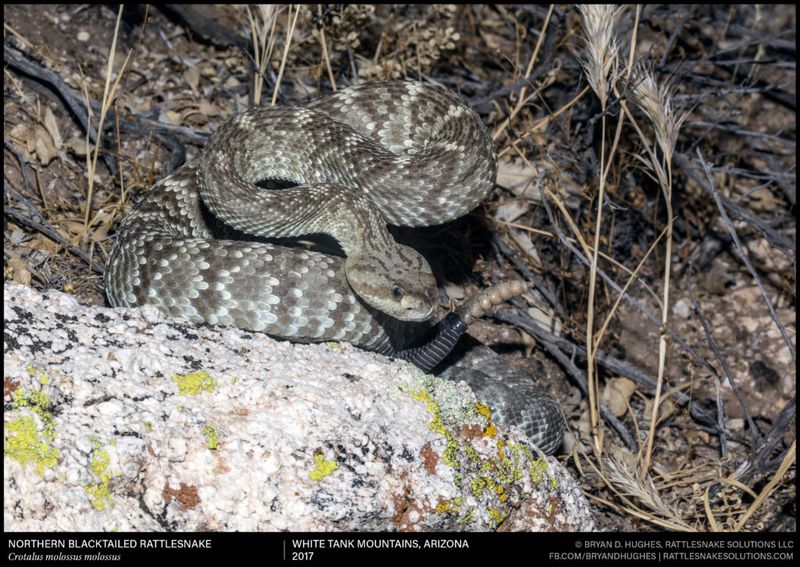
The clearest lesson from all of this is also the simplest one: distance comes before identification. You do not need to confirm whether a snake is venomous, young, or a specific species before backing away.
By the time you are close enough to make that call, you are already too close.
Late summer and September in the low desert justify slower, more deliberate yard scans because seasonal activity remains high, some western diamondback populations in Arizona have documented late-summer birth timing, and small or camouflaged snakes can be genuinely easy to miss. That is a reason for awareness, not alarm.
The data do not establish that every Arizona yard contains a young rattlesnake, or that any particular ground cover is a guaranteed hiding spot.
Wear boots, carry a flashlight after dark, look before you step, and keep clutter away from high-use paths. If you see a snake, give it space.
If someone is bitten, get to an emergency room immediately. Staying a few steps back and reacting calmly is what keeps a close encounter from becoming something worse.