The Fall Threat To Young New Jersey Trees That Most Homeowners Never See Coming
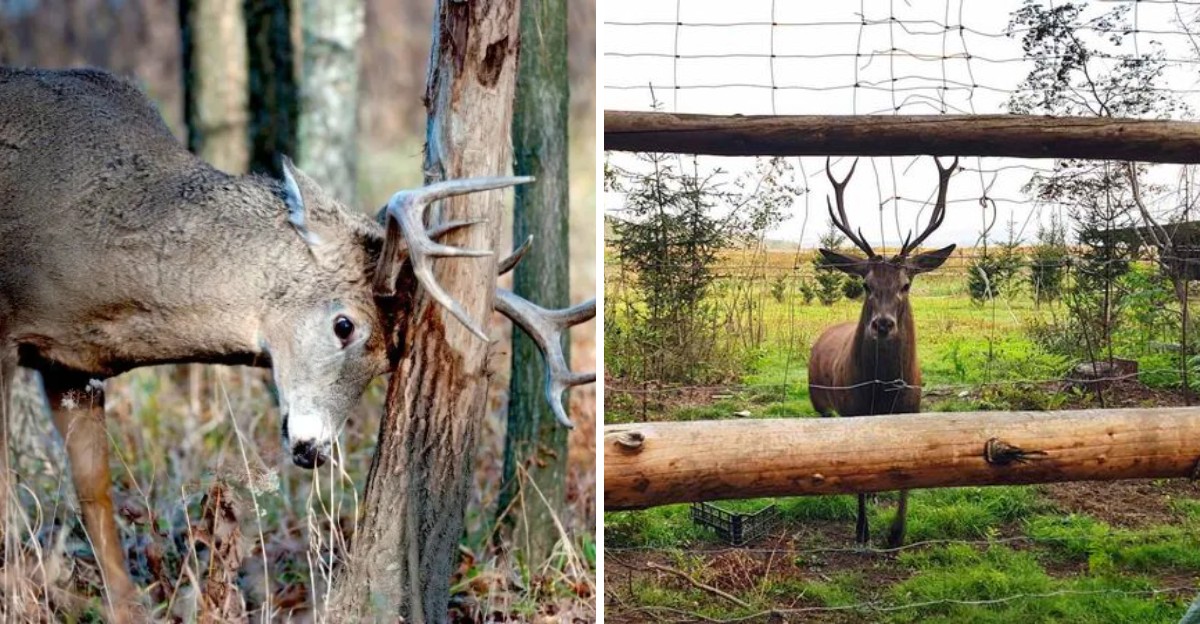
You just discovered a mystery, and the answer wears antlers. Peeled bark on your young tree points straight to a white-tailed buck.
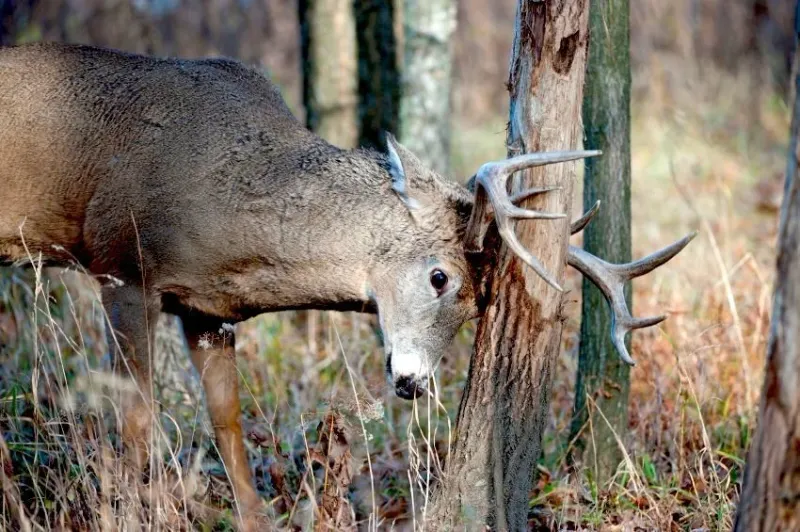
Each autumn, bucks in New Jersey rub their antlers against slender trunks. They shed itchy velvet and advertise themselves to competing males.
Scent glands on the buck’s forehead paint your sapling with a territorial message. Sadly, he prefers trees about as thick as your wrist.
Beneath the bark sits the cambium, the layer carrying water and nutrients. Rubbing through that layer around the trunk can cut off your tree’s food supply.
Bucks sometimes revisit a favorite rub, so tonight’s visitor may come back. Across New Jersey, growing deer numbers put backyard saplings in the spotlight.
Still, you hold the advantage once you understand how this buck thinks. A cheap plastic trunk guard can outsmart him before tomorrow’s sunrise.
Buck Antler Rubs On Young Trunks
Picture a buck, sometimes topping 200 pounds, with itchy antlers and rivals nearby. Your skinny backyard maple looks like the perfect tool for the job.
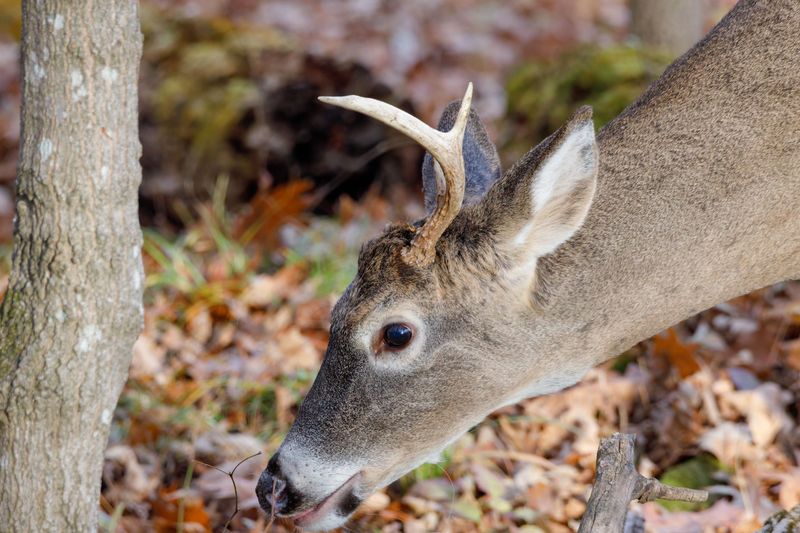
Each fall, male deer shed the fuzzy velvet that covered their growing antlers all summer. They scrape that velvet off by rubbing their antlers hard against small, smooth tree trunks.
The rubbing also sends a message to other deer in the area. Glands on a buck’s forehead leave scent on the bark, like signing his name on a wall.
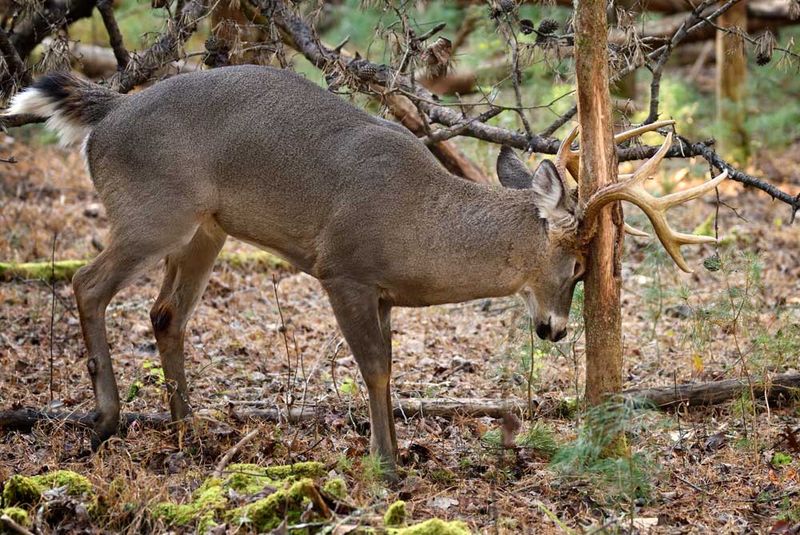
Young trees get picked because their trunks are the right size, usually one to four inches wide. Thin, smooth bark is easy to strip, and the tree bends without snapping.
Unfortunately, that bark is far more than decoration for your tree. Just under it sits a thin living layer that carries water and food up and down the trunk.
When a buck rubs through that layer, the tree loses its supply routes. Damage that wraps all the way around the trunk can seriously harm a healthy sapling.
New Jersey has a large deer herd, especially in suburban towns near parks and woods. Towns in Morris, Hunterdon, and Somerset counties have long dealt with high deer numbers.
Favorite targets include maples, cherries, dogwoods, and evergreens like arborvitae and spruce. If your tree is new, smooth, and near a wooded edge, it sits high on the list.
Knowing the cause is the first step toward saving your yard. The rest comes down to timing, quick action, and smart protection.
Rubbing Season Runs From September To November
Mark your calendar, because deer follow a surprisingly predictable schedule. In New Jersey, antler rubbing kicks off in early September and peaks through November.
Bucks lose their velvet first, usually in late August or the first weeks of September. Early rubs are about cleaning antlers, but the purpose shifts as autumn goes on.
By late October, the rut, or mating season, is in full swing. Bucks rub more often and more vigorously to show off and mark territory.
Shorter days are the main trigger for all this action. As daylight fades, hormones in bucks rise, and their behavior gets bolder around suburban homes.
Your New Jersey Garden Changes Every Week. Your Plan Should Too.
Gardening in New Jersey changes quickly throughout the season. Every Friday you’ll receive a simple weekly plan showing exactly what to plant, prune, fertilize, harvest, and protect so you never miss the right timing.
Much of the rubbing happens at dawn, dusk, and overnight, when deer feel safest moving around your neighborhood. That timing explains why homeowners seldom catch a buck in the act.
Research suggests a single mature buck can make an average of 300 to 400 rubs each fall. Most rubs get a single visit, but some become favorites that bucks return to again.
Some studies show rubbing can continue into mid-December, and bucks shed their antlers later in the winter. Winter brings a different deer problem, as herds browse buds and twigs instead.
Your best move is to protect young trees before Labor Day weekend. Getting guards up early beats reacting after you spot the first damaged trunk.
Think of it like putting on sunscreen before heading to the Jersey Shore. Waiting until you feel the burn is a little late.
Why Fall Action Beats Waiting Until Spring
Tree nursery workers in New Jersey hear a familiar story from customers each fall. Homeowners often notice torn bark in November, shrug, and plan to deal with it later.
That wait feels harmless because the tree has lost its leaves anyway. Winter makes everything look sleepy, so a scraped trunk blends into the gray landscape.
Meanwhile, the exposed wood is open to cold, drying winds, and wood-boring insects. Fungi and bacteria can enter the open wound and lead to internal decay over time.
Another problem is a repeat visit, since some rubs turn into favorites bucks check again. A lightly scraped tree in October can be heavily damaged by Thanksgiving.
Some people also make things worse with good intentions. Painting wounds with tar or sealant was popular years ago, but experts now say skip it.
Sealants can trap moisture and slow the tree’s own healing process. Wrapping the damaged area tightly with plastic tape can also hold in moisture and rot.
The bigger mistake is simply planting young trees with no protection at all. Many new homeowners assume deer only bother gardens, not trees in the front yard.
In spring, those owners find trees that leaf out weakly, then struggle by midsummer. By then, the effects of damage from the previous fall have finally become visible.
Acting in fall gives you the most options and the best odds. A quick evening check and a trunk guard can protect a tree worth hundreds of dollars.
Quick First Aid For Freshly Scraped Bark
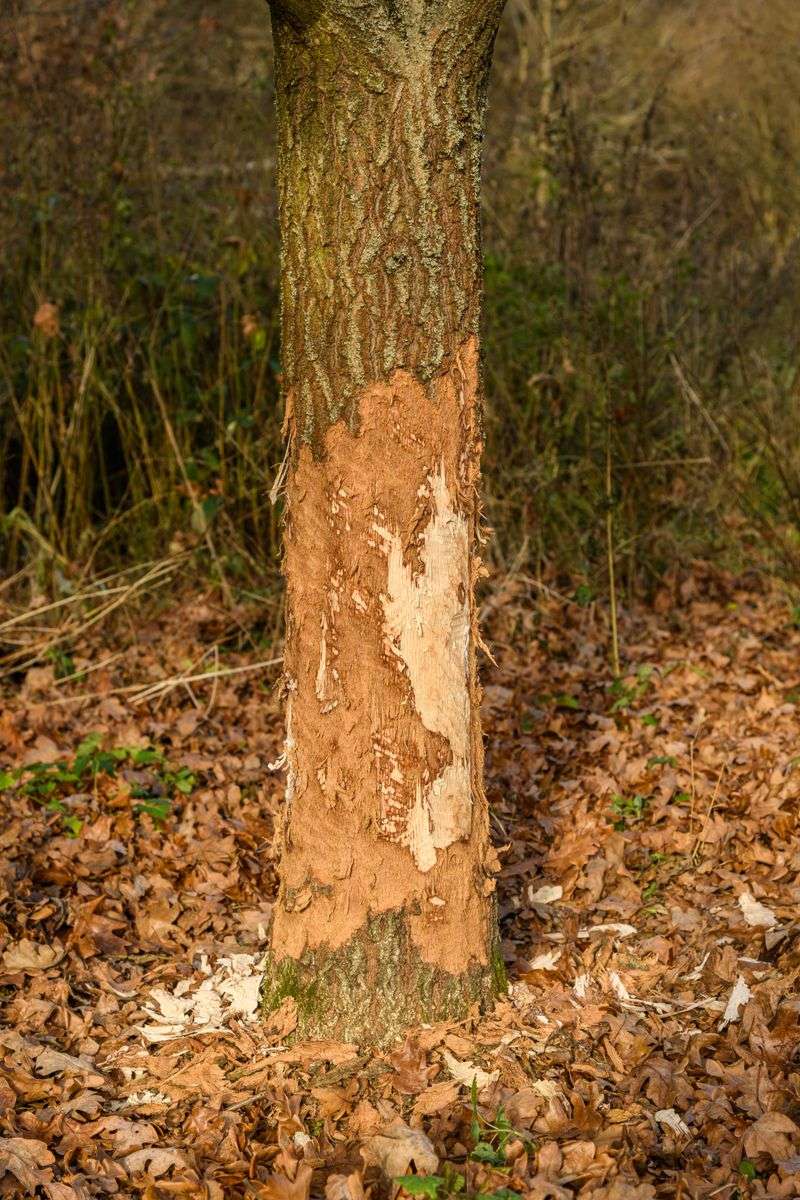
Grab a pocketknife, a flashlight, and a little patience, because it’s time to assess the damage. The first job is checking exactly how much of the trunk was scraped.
Look closely at the damaged area and estimate how far it wraps around. If less than a quarter of the trunk is hurt, your tree has a strong chance.
Next, trim away loose, ragged strips of bark with a clean, sharp knife. Smooth edges help the tree seal the wound faster, a bit like trimming a hangnail.
Be gentle and only remove bark that is already hanging off. Cutting into healthy tissue makes the wound bigger, which is the opposite of helpful.
Skip the paint, tar, or sprays that promise to heal wounds overnight. Trees seal themselves by growing a ridge of new tissue called callus around the edges.
Water matters a lot during this stressful time, especially in dry autumns. Give the tree a deep, slow soak once a week until the ground freezes.
A two-inch layer of mulch helps hold that moisture and keeps roots cozy. Keep mulch a few inches away from the trunk so it can breathe.
Hold off on fertilizer until spring, since pushing new growth now can backfire. Put up a guard right away so the buck cannot finish what he started.
If damage covers most of the trunk, call a certified arborist for advice. Sometimes a young tree can still regrow from its healthy roots.
The Long Road Ahead For A Rubbed Sapling
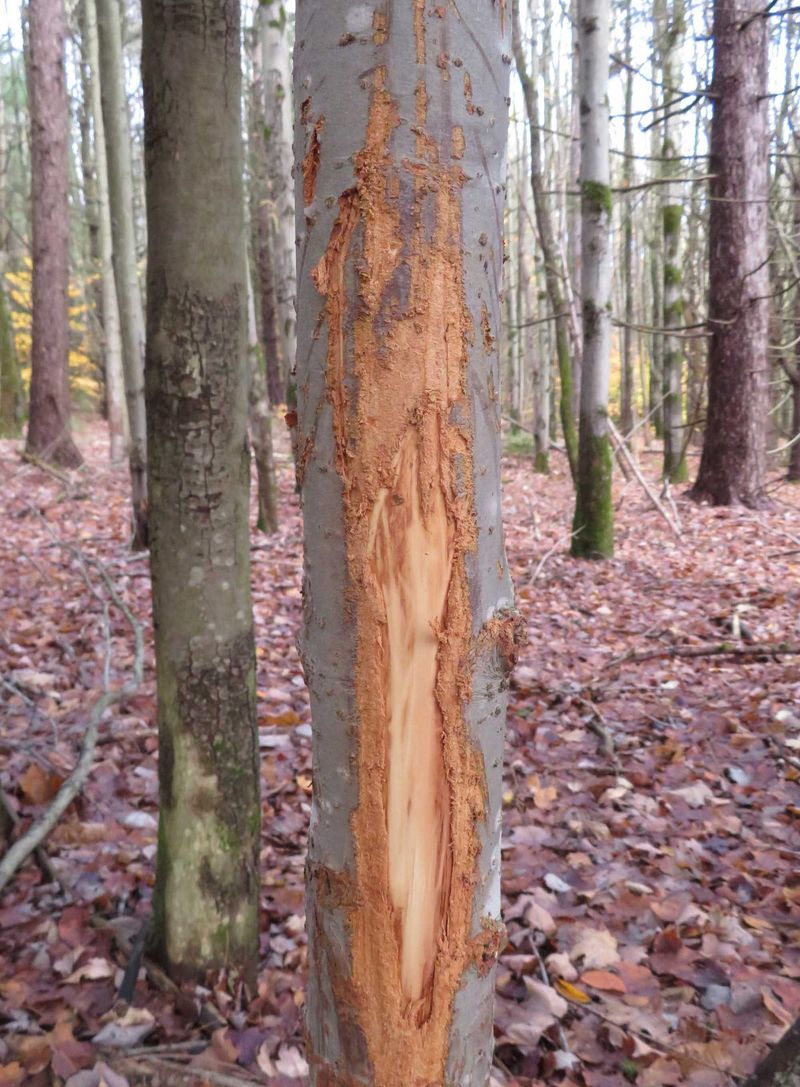
Trees are tougher than they look, but they heal on their own slow clock. Unlike your scraped knee, a bark wound does not fill in with fresh skin.
Instead, the tree grows new wood around the edges and slowly rolls it inward. Small wounds may close within a few growing seasons, depending on species.
Larger scrapes can take many years, and some leave a lasting scar. You might notice a bumpy ridge on the trunk long after the buck moves on.
Growth often slows during recovery, since the tree spends energy on repairs. A sapling might add just a few inches instead of a foot.
Leaves can look smaller or paler than usual the next summer. Early fall color in August is another clue that the tree feels stressed.
Trees rubbed all the way around have the lowest chance of recovery. Without a path for food to reach the roots, the top usually declines within a year or two.
Even then, the story may have a hopeful ending. Many maples, dogwoods, and cherries push up new shoots from the base, called suckers.
If your tree isn’t grafted, train the strongest sucker as a new trunk. It may look odd at first but grows fast. Grafted trees sprout rootstock shoots that grow into a different variety.
Keep an eye out for cracks, oozing sap, or mushrooms near the wound. Those signs suggest decay, and an arborist can tell you if the tree is safe.
Simple Barriers That Keep Bucks At Bay
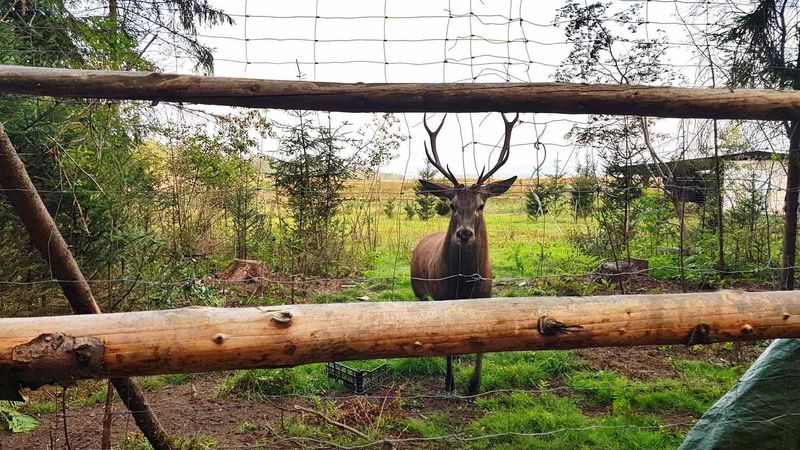
Protecting a young tree from antler rubs is simpler than you might think. Physical barriers really are the most dependable way to stop this damage.
Plastic trunk guards or spiral tree wraps are cheap and easy to install. Pick guards at least four feet tall, since a buck’s antlers reach higher than you think.
A cylinder of welded wire fencing works even better for bigger saplings. Stake it a foot or so away from the trunk so antlers cannot touch bark.
Three or four sturdy stakes pounded around the tree also discourage bucks. They make rubbing awkward, and deer tend to look for an easier target.
Repellent sprays with rotten egg or garlic scents mainly stop browsing and do little against rubbing. Use them for buds and twigs, and guards for trunks.
Plant smart, too, by placing new trees closer to the house and away from wooded edges. Lights, dogs, and busy driveways may discourage some deer, though suburban herds often adapt.
Remove plastic guards in late winter so they do not rub bark or trap moisture. Reinstall them each August until trunks grow thicker than about five inches.
Many young trees outgrow the risk after five to seven years in the ground. By then, the bark is rough and the trunk is too stiff to appeal to bucks.
An inexpensive guard beats paying hundreds for a replacement tree. With protection now, your sapling can grow into a shade tree for years to come.