Plant These Ohio Native Evergreens Instead Of Arborvitae Before The Ground Freezes
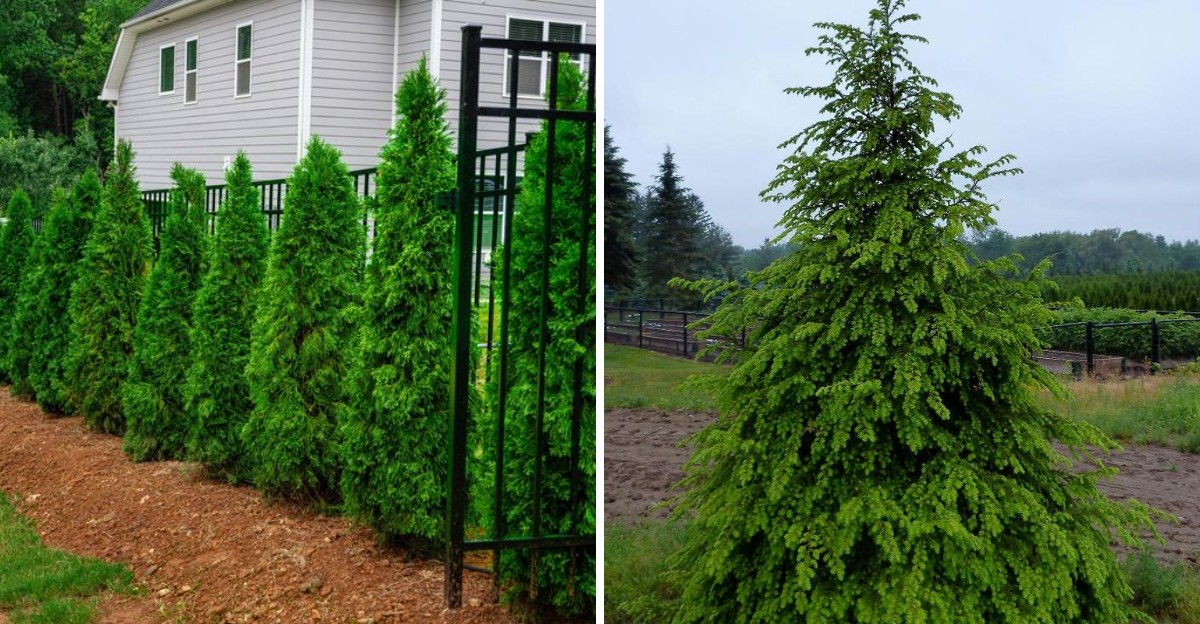
Arborvitae’s become the default pick for Ohio privacy screens, and that popularity is exactly why so many yards end up with the same problems down the line.
A handful of native evergreens do the same job without the deer damage and disease issues that plague arborvitae in yard after yard across the state.
These alternatives root into Ohio soil like they belong there, because they do, and mixing them in spares you the problems that come with one long row of a single shrub.
Timing matters here too. Ground that hasn’t frozen yet still gives roots a shot at settling in before real cold arrives, and that window closes faster than most people expect once temperatures start their real drop.
Swap your planting list before the ground locks you out of this season entirely. What goes in now beats scrambling for cover come spring.
1. Eastern Red Cedar Is Ohio’s Most Common Evergreen
Drive any back road in southwest region and you will spot little green spires dotting old fields. Those are eastern red cedars, and they are the most common evergreen in the whole state.
Here is a funny twist. Despite the name, this tree is a juniper, not a true cedar.
Snap a twig and you will smell that sharp, cozy scent of a cedar closet.
Red cedar is about as tough as trees get. It grows in clay, sand, rocky ground, and even thin, poor soil.
Dry spots and alkaline soil do not bother it one bit. Give it full or partial sun, and it settles in fast.
In an open yard, expect a tree about 30 feet tall and 15 feet wide. Young trees grow in a neat, pointed shape that works well for a screen.
Some trees live for hundreds of years, so you are planting for your grandkids too.
Birds go wild for the blue-gray, berry-like cones. Cedar waxwings even got their name from this tree.
Your yard could turn into a winter bird cafe.
Keep an eye out for bagworms and a few rust diseases, especially near apple trees. Pick off bagworm bags by hand in winter.
Space trees about 8 to 10 feet apart for a thick, natural-looking wall.
2. Eastern White Pine Makes A Year-Round Screen
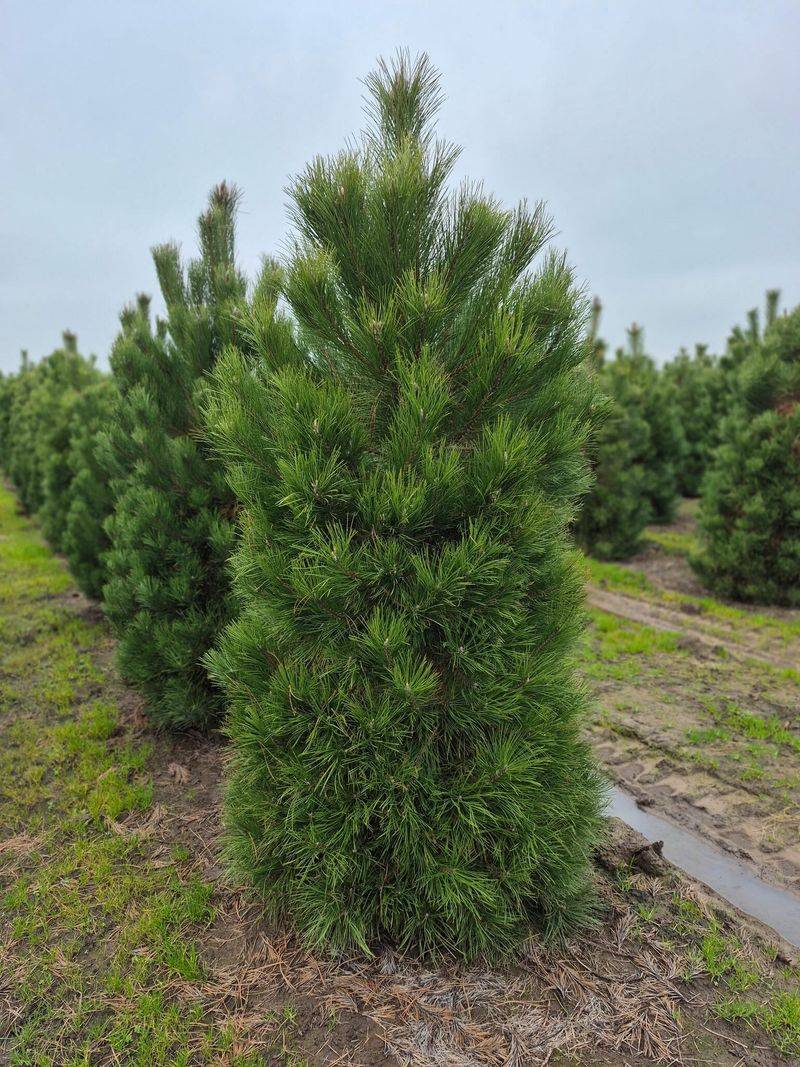
Run your hand along a white pine branch and it feels almost like a feather duster. The soft, bluish-green needles come in bundles of five.
An easy trick to remember is that W-H-I-T-E has five letters.
Eastern white pine grows all over the state, but it really loves the northeast part of the state. It is one of the tallest trees in the eastern United States.
Wild trees can top 80 to 150 feet and live 200 years or more.
Do not panic about that height in a home yard. Planted trees grow fast while young, giving you privacy sooner than most evergreens.
Young trees have a classic pyramid shape that fills in nicely along a property line.
Soil matters with this one. White pine likes moist, rich, well-drained ground that leans acidic.
Your Ohio Garden Changes Every Week. Your Plan Should Too.
Gardening in Ohio changes quickly throughout the season. Every Friday you’ll receive a simple weekly plan showing exactly what to plant, prune, fertilize, harvest, and protect so you never miss the right timing.
Heavy clay and alkaline soil, common in central and western region, can leave it yellow and unhappy. Do a cheap soil test first if you live in those areas.
Wildlife adores this pine. Birds tuck into the branches during storms, and squirrels feast on the seeds.
Deer may hang around too.
Plant trees about 10 to 15 feet apart in full sun. Mulch the roots well before the ground freezes to help them through their first winter.
3. Eastern Hemlock Is Native, But Check For Woolly Adelgid
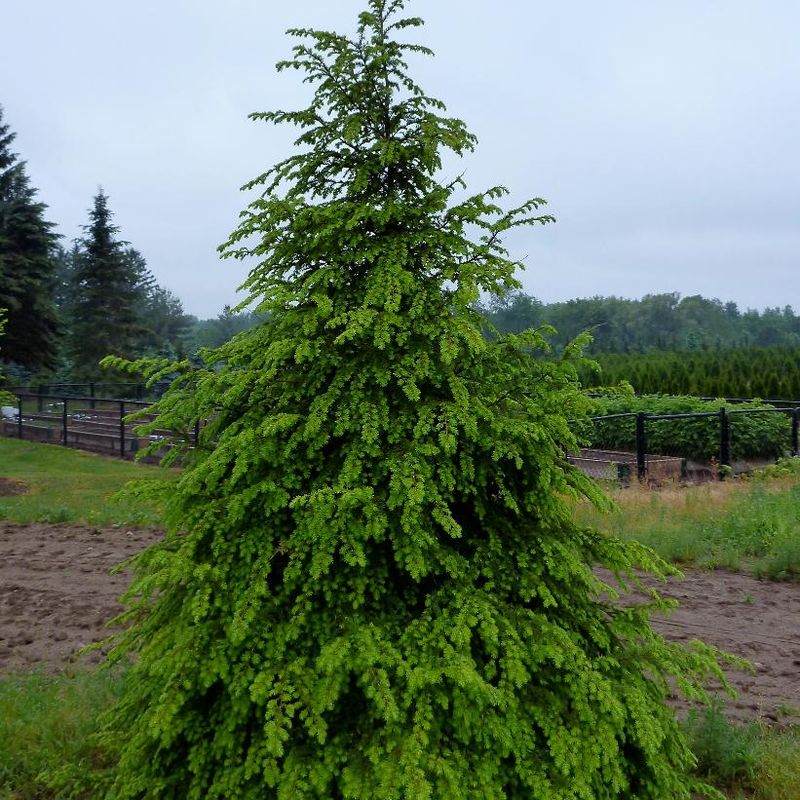
Walk into a cool Ohio ravine on a hot day and you might find yourself under a graceful hemlock. The flat, tiny needles and droopy tips make it one of the prettiest native evergreens around.
Places like Little Mountain at Holden Arboretum still shelter old hemlocks.
Sadly, there is a catch. A tiny invasive bug called the hemlock woolly adelgid has moved into the state.
It came from Asia and sucks sap from the base of the needles.
Infested trees turn grayish-green and drop needles early. New growth slows, and branches start to decline.
Heavy damage can show up in as little as four years.
Ohio first found this pest in Meigs County in 2012. Since then, it has spread through counties in the eastern and southern parts of the state.
The state now has quarantine rules to slow it down.
So how do you check? Flip a branch over and look at the underside.
White, cottony blobs at the needle bases are the giveaway, and they are easiest to see in spring and fall.
Buy hemlocks only from trusted nurseries that follow state rules. Plant them in shady, moist spots with good drainage.
Inspect them twice a year, and call a certified arborist if you spot the fuzzy white masses.
4. Virginia Pine Handles Poor, Dry Soil
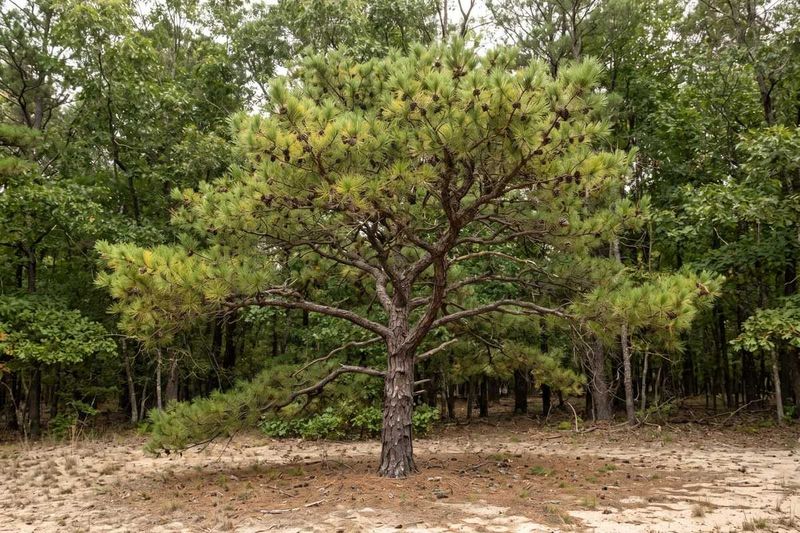
Got a patch of yard where grass gives up and weeds look tired? Virginia pine might be your new best friend.
Out in southeastern Ohio, it grows on rocky outcrops and rough, hilly ground where few evergreens can survive.
Think of this tree as the scrappy kid on the team. It handles sandy loam, heavy clay, and soils from quite acidic to slightly alkaline.
Once settled in, it shrugs off drought like a camel.
You will often see Virginia pine thriving on old, neglected banks along roads. That makes it great for slopes, ditches, and bare spots that wash out after storms.
Full sun keeps it happiest.
Size is another bonus. Most trees reach about 30 to 40 feet, which fits better in a typical yard than giant pines.
Young trees grow in a loose pyramid, then twist into a quirky, flat-topped shape with age.
Look closely at the needles. They are short, under 3 inches, and come in pairs that often twist like tiny corkscrews.
Kids love spotting that.
Like other pines, it can get common pine pests and diseases, so check it now and then. Plant several in a staggered row for a rugged, natural screen that asks for very little water or fuss.
5. Pitch Pine Grows Wild In Southern Region
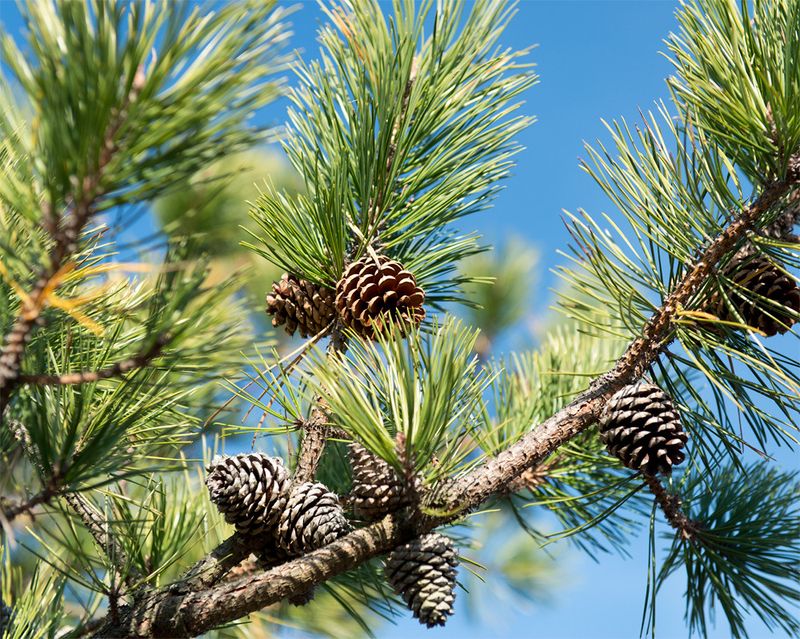
Colonists once boiled pitch pine sap to seal the wooden ships that crossed the ocean. That sticky history gave the tree its name.
Today it still grows wild across the Allegheny Plateau in southeastern region.
Pitch pine is a true toughie. In nature, it sits on dry ridges, steep slopes, and shallow sand or gravel.
It actually prefers poor, thin soil that would frustrate fussier trees.
Here is the coolest part. This pine is built for fire.
Its thick bark acts like armor, and it can sprout fresh tufts of needles right out of its trunk after flames pass.
Those trunk tufts give it a shaggy, wild look you will not find on a nursery hedge. The stiff, thick needles come in bundles of three and are about 3 inches long.
They often twist a bit too.
Height varies a lot, from about 20 feet on rough ground to much taller in better spots. Some trees live up to 200 years.
The resin-rich wood resists rot, which made it handy for crates and fuel.
Plant pitch pine in a sunny, sandy, or gravelly corner where drainage is quick. Skip the fertilizer, since it likes lean living.
It makes a bold, rugged accent instead of a tidy row.
6. Shortleaf Pine Rounds Out Native Pines
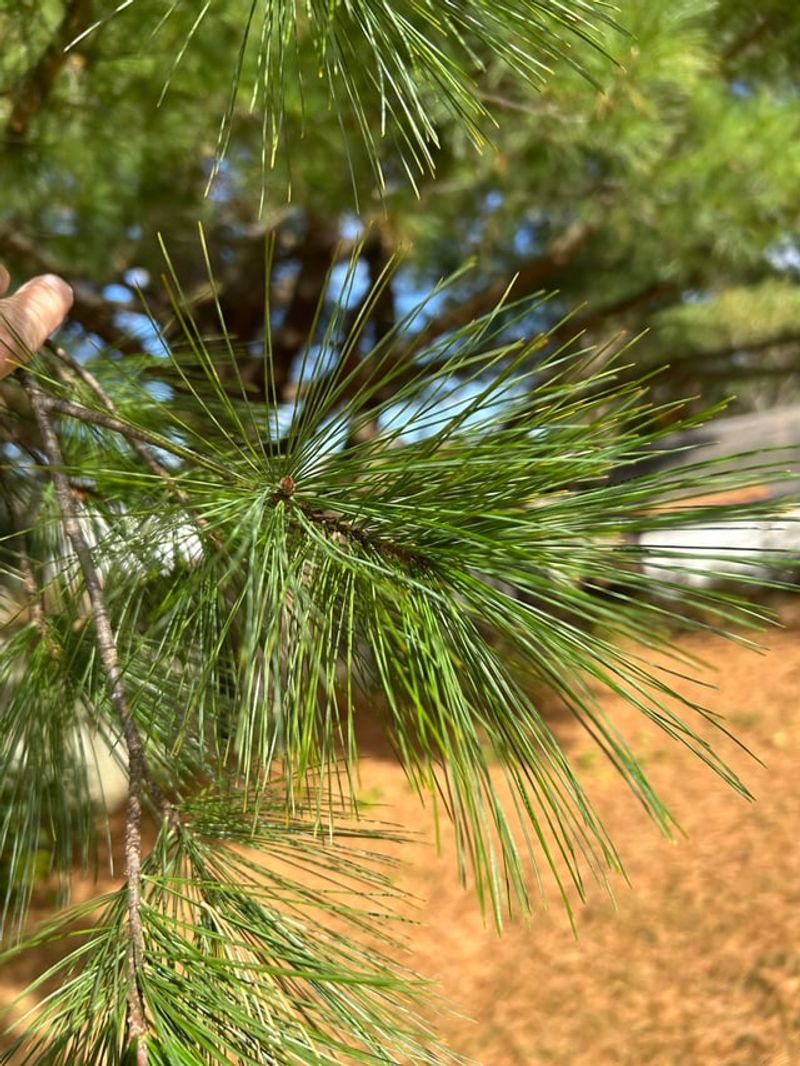
Ohio’s pine family would not be complete without shortleaf pine. It is a bit of a quiet local, found scattered on dry ridges in about a dozen southern counties.
Its range stretches from Lawrence County up toward Fairfield and west to Adams.
Want a fun way to identify it? Count the needles in each bundle.
Shortleaf pine mixes it up with both twos and threes, often on the same tree.
Those needles run about 3 to 5 inches, which is actually not that short for a pine. The bark is the real showstopper.
On older trees, it breaks into big, flat, scaly plates in shades of reddish-brown and dark yellow-brown.
This is a big tree that can grow 75 to 100 feet tall in the wild. Save it for larger properties, farm edges, or the back of a deep lot.
Plant it where it will not crowd your house or power lines.
Shortleaf pine likes light, well-drained, dry soil that leans acidic. Thin, rocky ridge soil suits it just fine.
Like pitch pine, it can handle fire and has long been valued as a timber tree.
Pair it with white or Virginia pine for a layered windbreak. Mixing species also lowers the chance that one pest wipes out your whole screen.
7. American Holly Brings Red Berries Into Winter
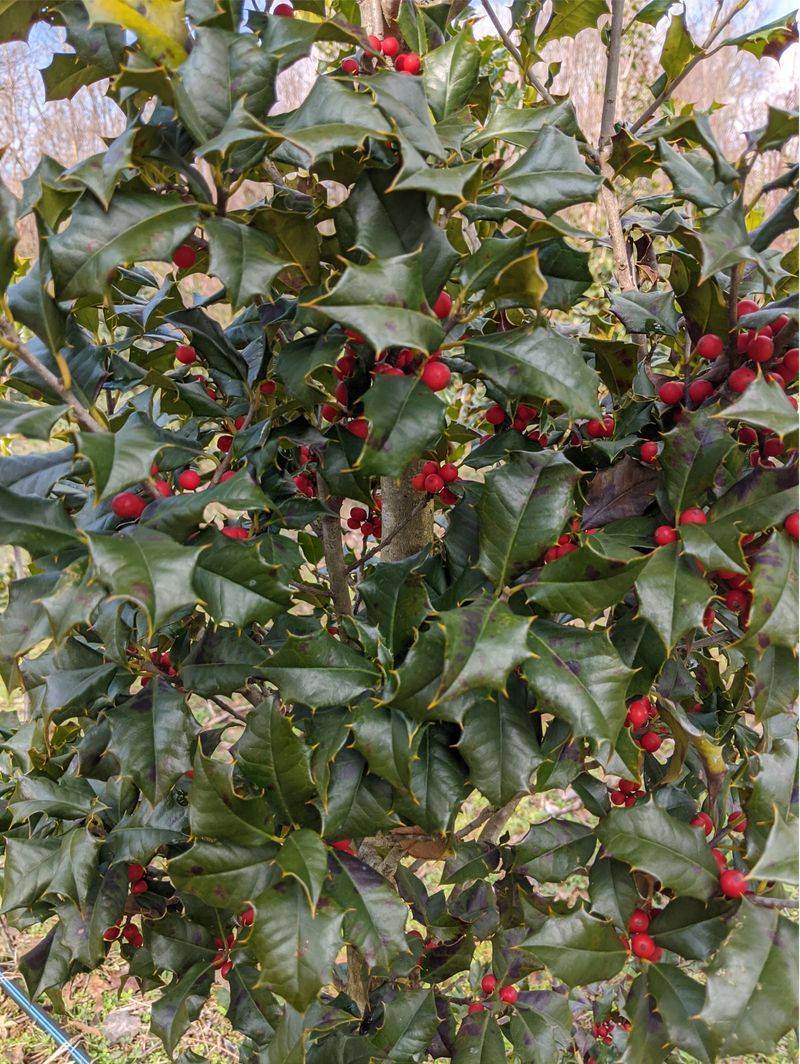
Imagine a snowy January morning with a cardinal perched on glossy green leaves and bright red berries. That holiday card scene can happen right in your yard.
American holly is a native broadleaf evergreen whose wild range reaches into Ohio’s southernmost counties.
It often grows as a large shrub or small tree around 15 to 25 feet tall. The stiff branches and spiny leaves stay dark green all winter.
That prickly foliage makes a living fence that most deer leave alone.
Now for the berry secret. Holly plants are either male or female.
Only females make berries, and they need a male plant nearby to do it.
When you buy, ask the nursery for at least one of each. The berries ripen from September to December and hang on most of the winter.
Birds and small mammals count on them when food runs low.
Keep little kids and pets away from the berries, though. They are considered poisonous to people.
Holly wants moist, well-drained, acidic soil with full sun to part shade. It does not like limestone soil and may sulk in heavy clay.
Mix in compost, mulch well, and water deeply until the ground freezes.
8. Canada Yew Fills Shady Spots
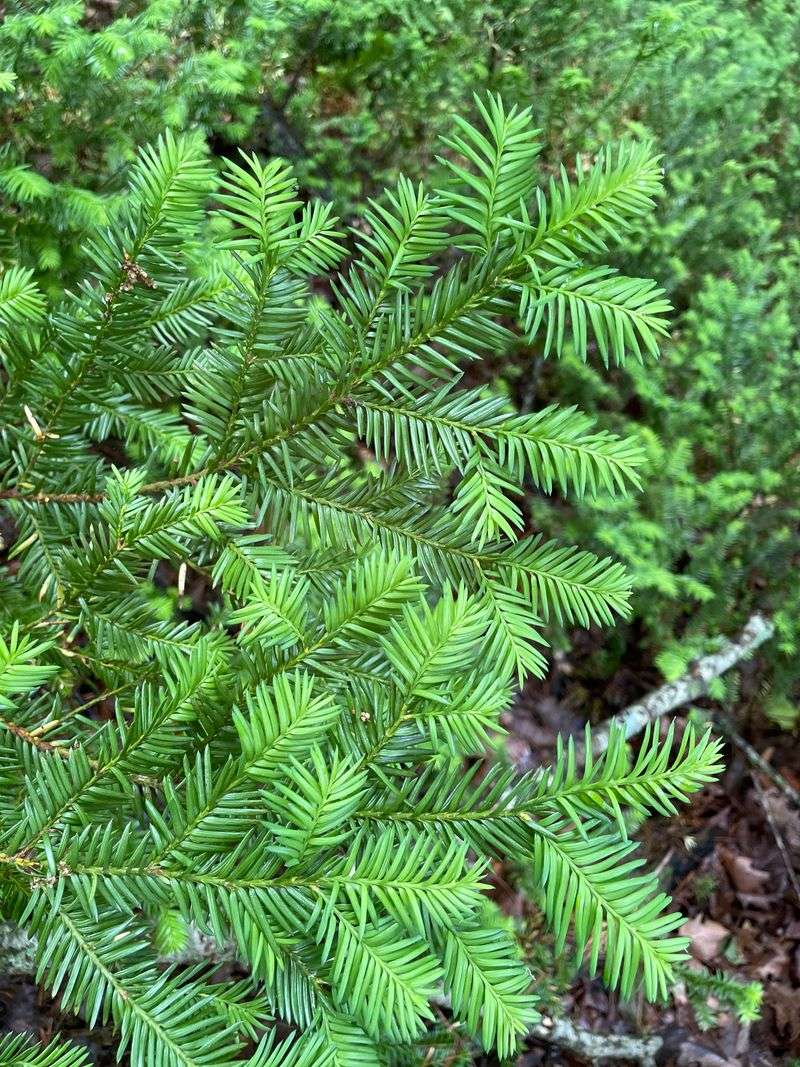
Long ago, when glaciers covered much of the state, Canada yew spread across the cool land. Today it hangs on as a rare ice age relict.
You may find it tucked onto chilly, north-facing slopes and shady ravines.
Most evergreens beg for sunshine. Canada yew happily goes the other way.
It thrives in part to full shade with moist soil, like the spots under tall trees where nothing else wants to grow.
Do not expect a tall hedge. This is a low, sprawling shrub that rarely tops 8 feet.
Its branches can root where they touch the ground, slowly forming a soft green carpet.
The flat, dark green needles look a lot like the yews sold at big box stores. In fall, soft red berry-like cups called arils appear.
Birds snack on them and carry the seeds away.
Here is a safety heads-up. Every part of the plant except the red flesh is toxic, including the seed inside.
Teach kids to look but not taste.
Deer find this shrub delicious, which is why wild ones often grow on cliffs. Protect young plants with fencing or netting through winter.
Plant along a shady foundation or under a hardwood canopy for evergreen color where grass struggles.
9. American Arborvitae Is An Ohio Native Too
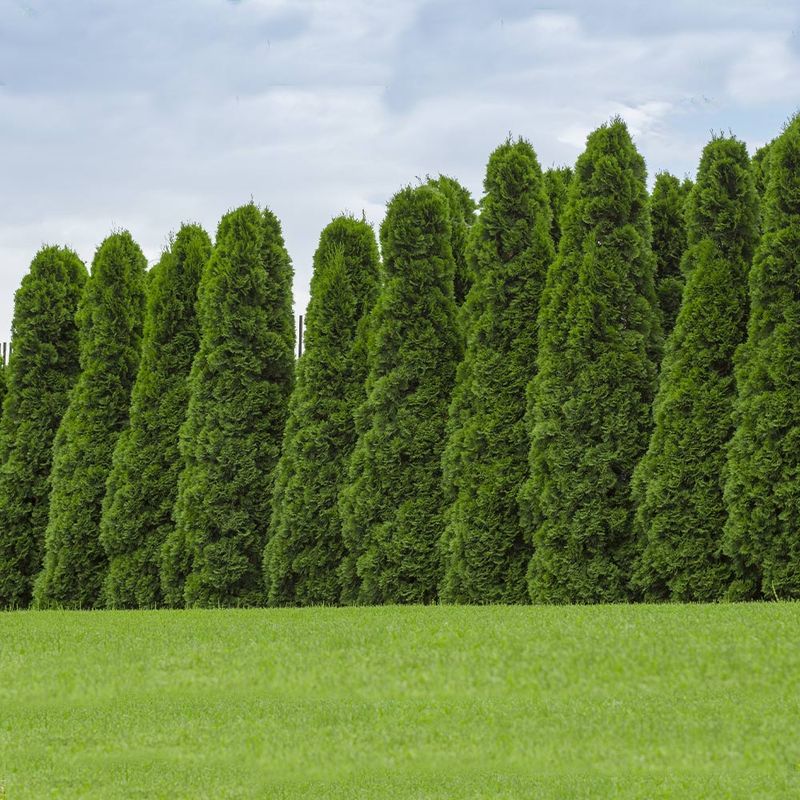
Plot twist time. The arborvitae everyone plants is actually a native.
In the wild, it grows near acidic bogs, and the state lists it as potentially threatened.
Its name means tree of life in Latin. Early French settlers learned from Native Americans that its leaves could help treat scurvy.
That is a pretty impressive resume for a backyard hedge.
So why the warning? The trouble is how we plant it.
Long rows of one plant become a buffet for bagworms and hungry deer.
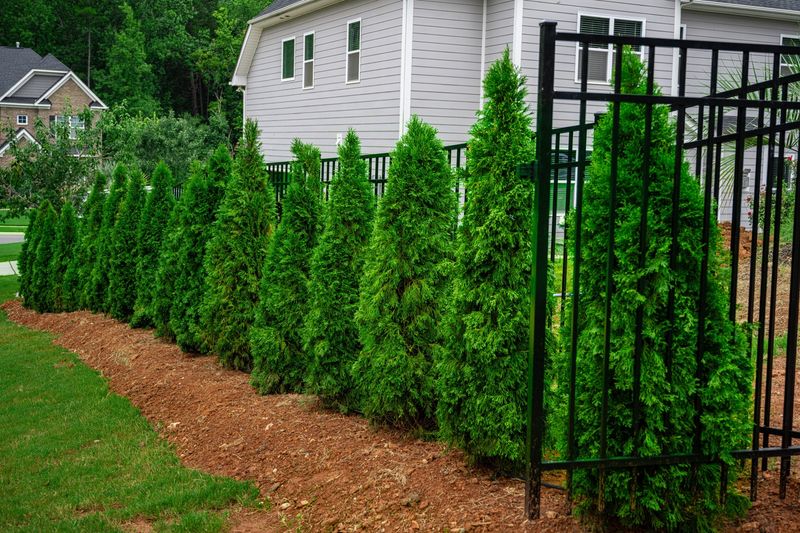
Arborvitae can reach about 30 feet tall and 10 feet wide, though many nursery types stay smaller. The soft, flat sprays of leaves feel nice to touch.
It likes full to part sun and moist soil, and it can handle many tough soil types.
Winter is its rough season. Heavy snow and ice can bend it, and harsh wind causes brown winter burn.
Too much or too little water can also stress the roots.
You can still use it wisely. Mix a few arborvitae in with cedars, pines, and hollies instead of planting one long wall.
Wrap young plants in burlap or deer netting, water deeply before the freeze, and pull bagworm bags whenever you spot them.