The One Thing You Must Do To Crape Myrtles In Texas Before Fall Ends
Crape myrtles are practically the official shrub of Texas summers. They line streets, shopping centers, and front yards from Dallas to Houston, blooming through heat that would flatten most plants. But fall is when the real work begins.
As the leaves start to drop, a crape myrtle’s trunk and branches come into full view. That’s important, because one of the biggest threats to these trees hides right there in plain sight.
It was first discovered in the U.S. right here in Texas, and it has been spreading ever since. Left unchecked, it can weaken trees, reduce blooms, and leave trunks looking grimy and stained.
A few minutes of attention this fall can stop small problems before they turn into big ones next summer. Your crape myrtles have worked hard all season. Now it’s their turn for a little care.
Inspect Your Crape Myrtles For Bark Scale
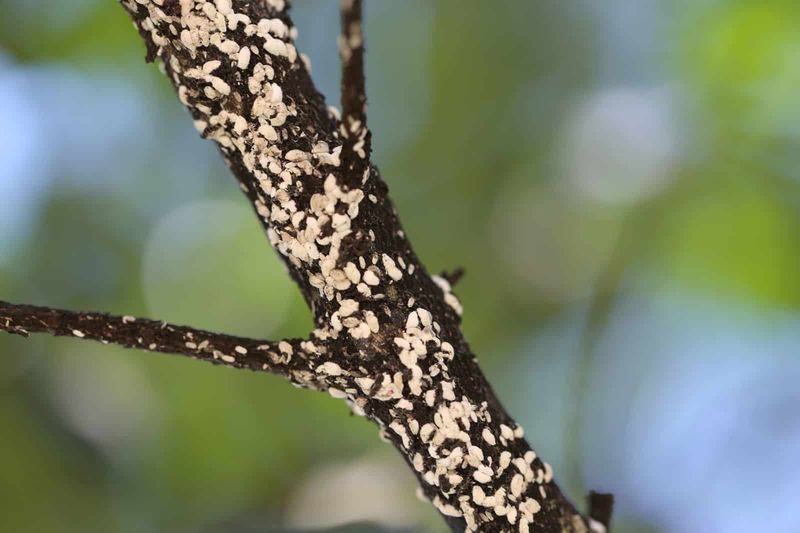
Ten minutes. That is about all it takes to protect a tree you’ve enjoyed for years. Before fall wraps up, walk out to your crape myrtles and give them a real, up-close look.
Start at the base of the trunk. Slowly move your eyes upward, checking the bark inch by inch. Pay extra attention to the spots where branches split off from the trunk, called branch crotches.
Those little nooks are favorite hiding places for crape myrtle bark scale. The pest likes tight, protected spaces where it can settle in and feed. Old pruning cuts are another hot spot, so check those too.
Why bother now? Bark scale is much easier to handle when there are only a few small patches.
Once it spreads, it can coat the trunk and branches like a crusty white blanket. At that point, getting it under control takes much more time and effort.
Think of it like a small leak in your roof. Catch it early and the fix is quick. Wait too long and you have a much bigger mess on your hands.
Bring a few simple things along. A pair of reading glasses or a small magnifying glass helps a lot. A step stool lets you see higher branches safely. Your phone camera is handy for snapping pictures of anything odd so you can compare later.
If you have several trees, check every one. Bark scale can move from tree to tree on birds, wind, and even your clothes. One clean tree doesn’t mean the others are clean.
Make it a yearly habit. Mark a date on your calendar each November. Your crape myrtles will thank you with brighter blooms next summer.
Why Late Fall Is The Perfect Time To Check
Leaves are lovely, but they are also great at hiding things. All summer long, thick green foliage covers the branches of your crape myrtles. Small pests can stay out of sight the whole season.
Fall changes everything. As the weather cools, crape myrtles drop their leaves one by one. By late fall, most trees are bare from top to bottom.
Your Texas Garden Changes Every Week. Your Plan Should Too.
Gardening in Texas changes quickly throughout the season. Every Friday you’ll receive a simple weekly plan showing exactly what to plant, prune, fertilize, harvest, and protect so you never miss the right timing.
Suddenly, you can see the whole tree. The smooth, peeling bark that makes crape myrtles so pretty is on full display. Every branch, twig, and crotch is open for inspection.
Here’s the fun part. Bark scale has a white, crusty coating. Against the tan, gray, or cinnamon-colored bark of a bare tree, that white stuff really pops. It’s almost like finding a white sock on a dark carpet.
Texas weather helps too. Late fall days are often mild and pleasant. You won’t be sweating through your shirt like you would in August. That makes it easier to take your time and do a careful job.
Timing also matters for your next steps. If you find scale now, you have the whole winter to plan. You can scrub the trunk on a nice day and get ready to apply dormant oil when the tree is fully asleep.
Waiting until spring cuts your options short. New leaves will soon cover the branches again. The pests will also become more active as temperatures rise.
So grab a jacket and head outside on a sunny afternoon. A bare tree is an honest tree. It shows you exactly what’s going on, and that makes late fall the smartest season to look.
How To Recognize Crape Myrtle Bark Scale
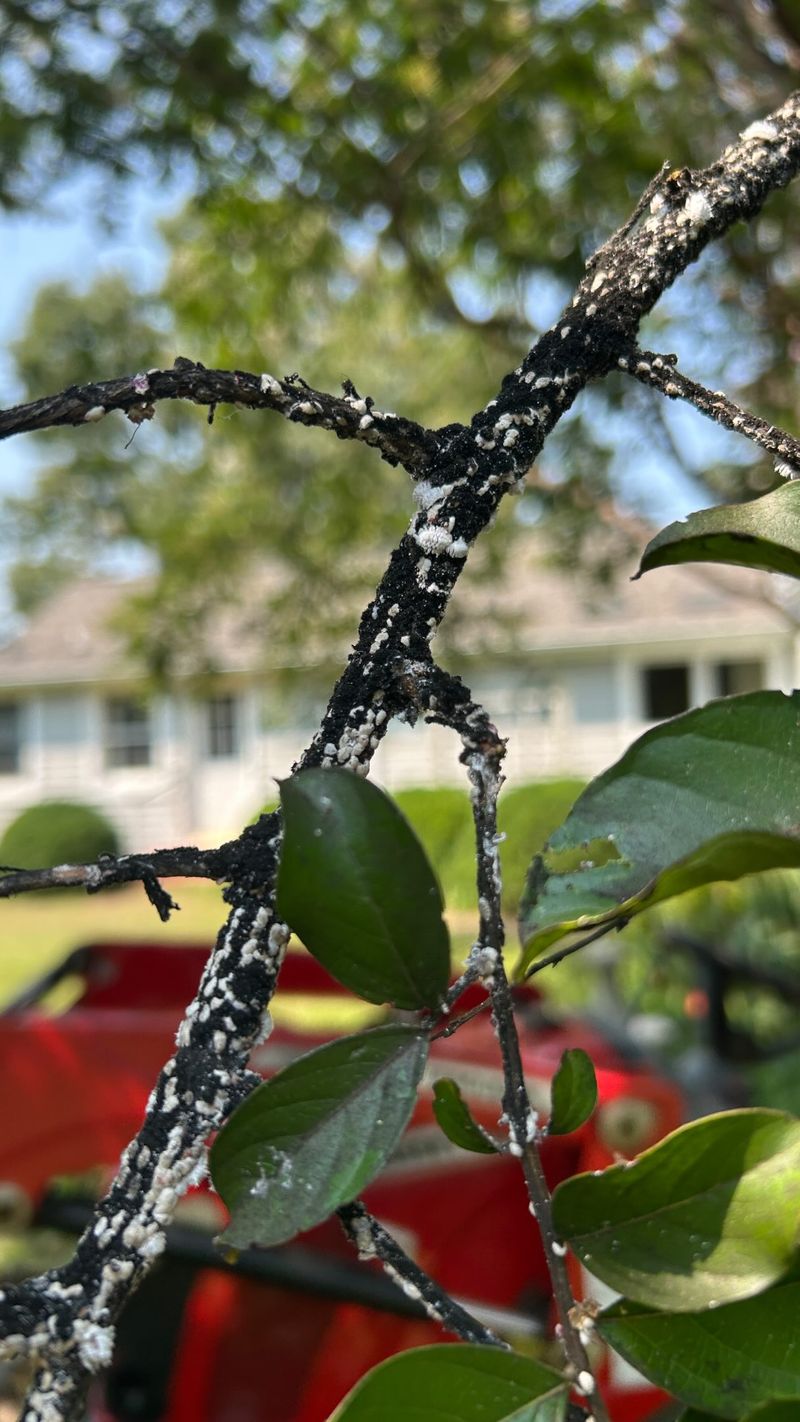
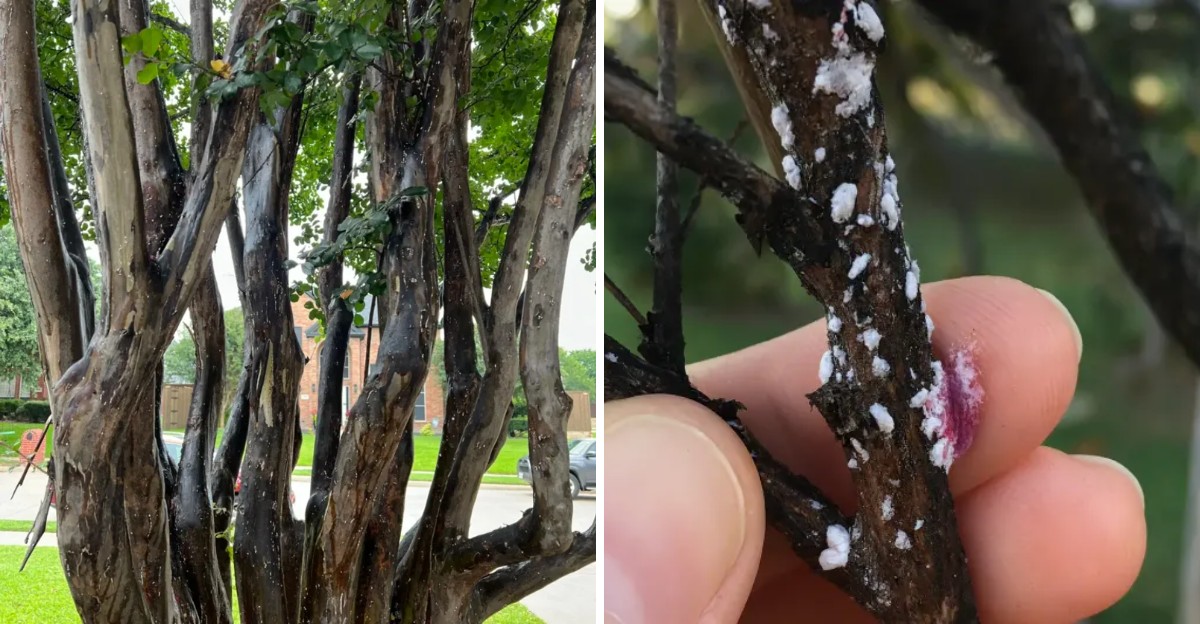
Quick question: have you ever noticed black stains on a crape myrtle trunk and thought it was just dirt? Lots of Texans have. That black film is often the very first clue that bark scale has moved in.
The black stuff is called sooty mold. It grows on a sticky liquid the scale insects leave behind, known as honeydew. The mold itself doesn’t harm the bark much, but it tells you something is feeding on your tree.
Once you spot sooty mold, look closer. You’re searching for small patches that are white to gray in color. They can look felt-like, almost fuzzy, or crusty like dried glue.
Check branch crotches first. Then look at old pruning wounds and rough spots on the bark. Scale often gathers in groups, so one patch usually means more are nearby.
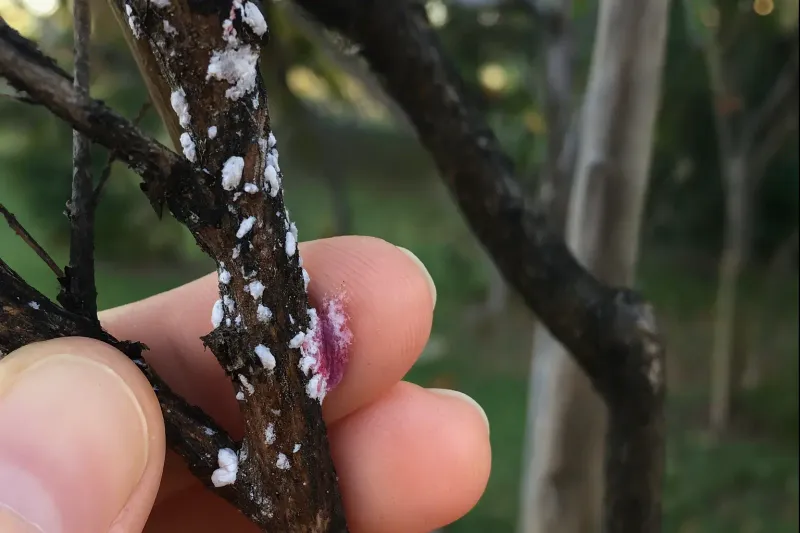
Want to be sure? Try the squish test. Use a fingernail or a toothpick to gently crush one of the white bumps. If pinkish-red fluid comes out, you have found crape myrtle bark scale.
Don’t confuse it with lichen. Lichen is often grayish-green, flat, and spreads in round shapes. It’s harmless and doesn’t bleed pink when pressed.
You might also see ants marching up and down the trunk. Ants love honeydew and will visit trees with scale. A busy ant highway is another warning sign.
Fun fact: the adult female scale covers herself with that waxy white shell for protection. Underneath, she lays lots of tiny pink eggs. That’s why catching her early makes such a big difference.
Snap a photo of what you find. Your local county extension office can help confirm it.
Why It Matters For Texas Crape Myrtles
Back in 2004, someone near Dallas noticed something strange on a crape myrtle. Experts took a look and confirmed it was crape myrtle bark scale, a pest never seen in the United States before. Nobody guessed how far it would travel.
Since then, the bug has spread across much of Texas. It has also popped up in many other southern states, from Louisiana to Georgia and beyond. Nurseries, moving plants, and even birds helped carry it along.
For Texas, that’s a big deal. Crape myrtles are everywhere here. They line city streets, shade parking lots, and brighten countless front yards. Some people call them the lilac of the South.
So what does the pest actually do? The good news is that it rarely takes a tree down completely. Most crape myrtles survive an attack.
The bad news is that they don’t look or act their best. Trees with heavy scale often produce fewer and smaller flowers. That burst of summer color you love can fade to just a few weak clusters.
Branches may also start to fail. Small twigs and limbs can dry out and turn brittle, which experts call dieback. Over time, the tree can look thin and tired.
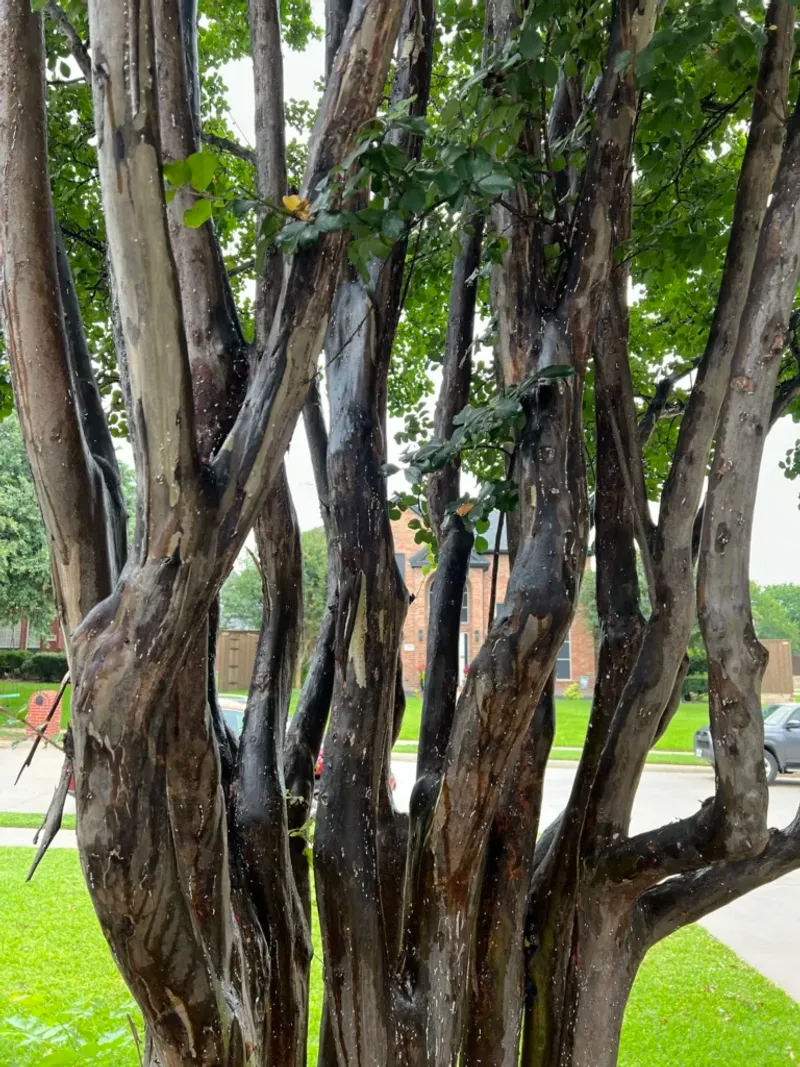
Then there’s the black mess. Sooty mold can stain trunks a dark, dirty color. The smooth, peeling bark that makes crape myrtles special gets covered up.
Stressed trees also have a harder time handling drought and heat. In a Texas summer, that matters a lot.
Your tree is an investment in beauty and shade. Protecting it now keeps that investment paying off for years to come.
What To Do If You Find It
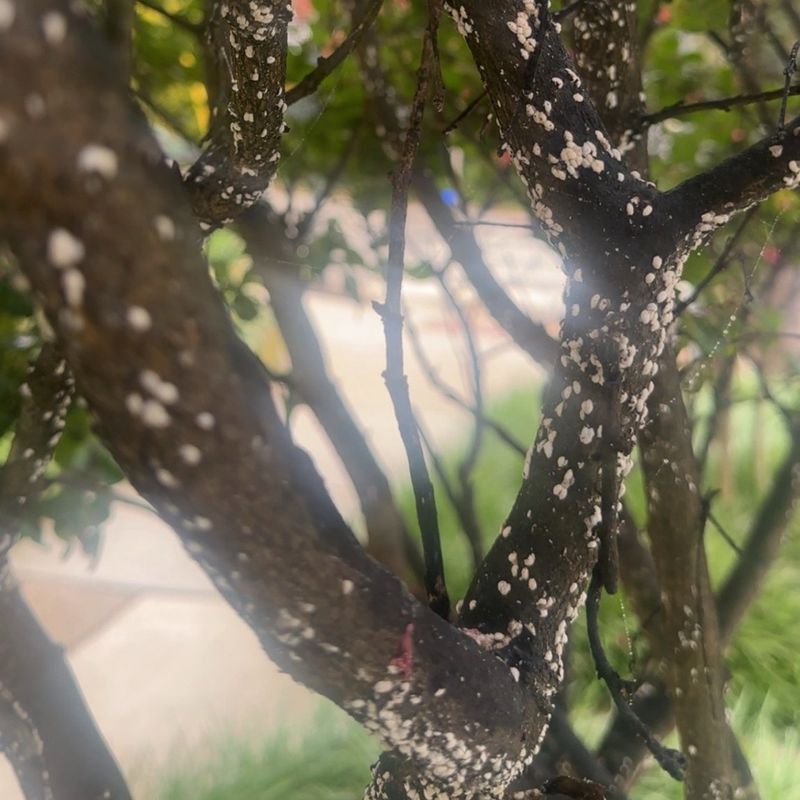
Found some white crust? Take a deep breath. You have solid options, and most of them are simple and affordable.
Start with a good scrub. Fill a bucket with water and add a little mild dish soap. Then grab a soft brush, like a car-washing brush or a soft scrub brush.
Gently scrub the trunk and lower branches. You’ll knock off many of the scale insects and wash away a lot of the black sooty mold.
Go easy, though. Crape myrtle bark is thin, and hard scrubbing can hurt it. Rinse with a hose when you’re done. Your tree will already look cleaner and happier.
Next comes winter. While the tree is bare and fully dormant, you can apply dormant oil, sometimes called horticultural oil. It coats and smothers the scale and its eggs.
Spray the trunk and branches well, getting into the crotches and cracks. Pick a day when temperatures are above freezing and no rain is coming. Always follow the label directions.
For bad cases, systemic insecticides can help. These are poured into the soil around the base of the tree. The roots soak them up and carry them through the plant to the feeding insects.
Timing is key here. Systemic soil treatments work best in late spring to early summer, when the tree is actively growing and drinking water. Applying them in fall usually won’t give the best results.
A quick tip: keep your tree healthy overall. Water deeply during dry spells and add mulch around the base. Strong trees bounce back from pests much faster. Keep checking every few months to track your progress.
Avoid Heavy Pruning Until Late Winter
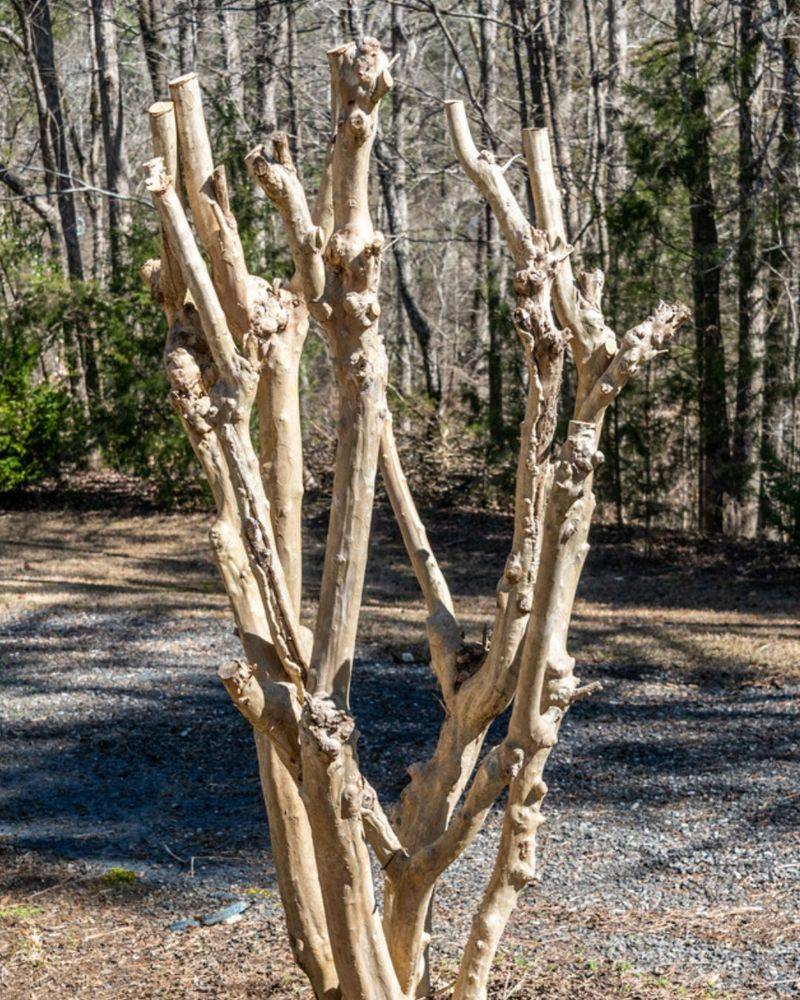
Put down those pruning shears, friend. Fall might feel like a good time to tidy up your crape myrtles, but cutting now can cause real trouble.
Here’s why. Pruning sends a wake-up signal to the tree. It may respond by pushing out soft, tender new shoots.
That new growth isn’t ready for cold weather. Texas can surprise everyone with an early freeze, even in places that usually stay mild. One cold snap can damage those fresh shoots and stress the whole tree.
Instead, wait until late winter. February is a great month in most parts of Texas. The tree is still dormant, and spring growth is right around the corner.
When you do prune, think about the scale. Any branches covered in that white crust should go straight into a trash bag. Tie it up tight and toss it out with the garbage.
Don’t put infested branches in your compost pile or leave them lying around. The scale can crawl or blow back onto your tree. Clean your pruning tools afterward too.
Now, a word about crape murder. That’s the funny name for chopping crape myrtles down to ugly stumps every year. You’ve probably seen rows of trees topped off like giant fists.
Sadly, it’s a bad habit. Severe topping weakens trees and creates lots of thin, floppy branches. Those big cuts also give pests like bark scale an easy place to settle.
Light pruning is much better. Remove dry wood, crossing branches, and suckers at the base. Let your crape myrtle keep its natural, graceful shape. A little patience now means a stronger, prettier tree come summer.