The Small Trees That Bring Big Shade To Virginia Yards
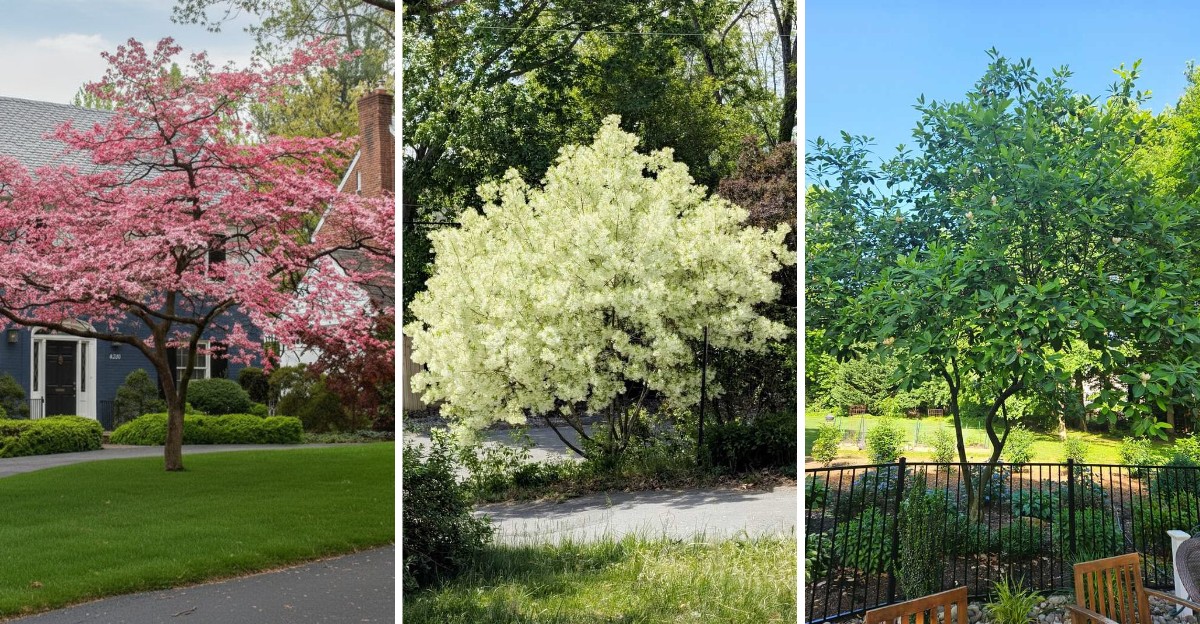
Nothing beats stepping out of the blazing sun and into a cool, leafy pocket of shade. With autumn air rolling in, it’s easy to forget how brutal those summer afternoons felt.
Come July, a sunny patio in Virginia can turn into a frying pan by noon. You don’t need a towering oak to fix the problem, though.
Plenty of small trees spread wide, leafy arms that cool your yard without crowding your house or power lines. They fit snugly into suburban lots, side yards, and cozy corners.
Some bring spring blooms, while others offer berries, fragrance, or a blaze of fall color. A few even shrug off heavy clay and dry spells like seasoned locals.
These eight compact trees can turn your hottest spot into a breezy retreat. Plant one while the weather is cool, and next summer will feel a whole lot better.
1. Eastern Redbud For A Spreading Umbrella Canopy
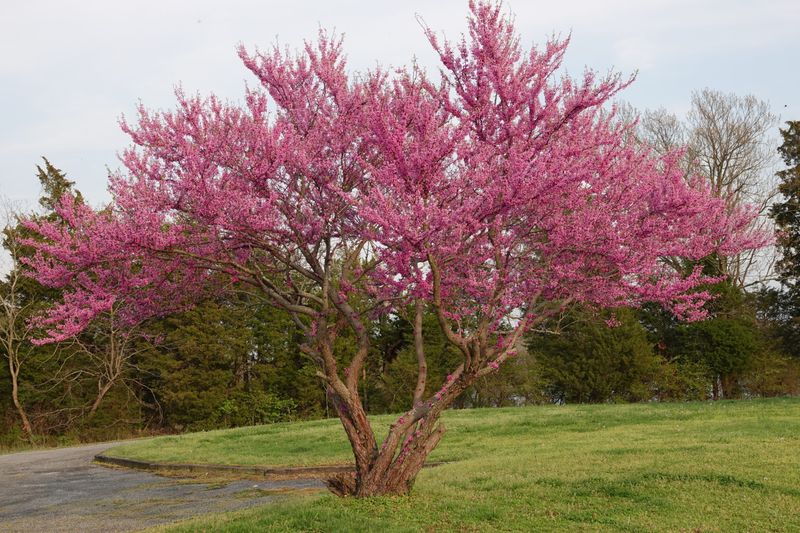
Picture a tree shaped like a giant green umbrella, tipped open over your patio chairs. Eastern Redbud does exactly that, with a rounded, vase-like form that spreads as wide as it grows tall.
Most redbuds reach about 30 feet tall with a similar spread. That size fits nicely in a typical Virginia backyard without towering over the roof.
Early spring brings the real show, when rosy pink, pea-like flowers cover the bare branches. Bees buzz in for an early meal, and neighbors tend to slow down on their walks.
Once the blooms fade, heart-shaped leaves fill in and create soft, steady shade. Come autumn, those leaves turn a warm buttery yellow before dropping.
Redbuds grow naturally at the edge of forests, so they handle partial shade quite well. They also adapt to full sun, which makes placement pretty flexible for most homeowners.
Plant your redbud near a deck or west-facing window for the best cooling effect. Leave about 15 feet between the trunk and your house so the canopy can stretch out.
Young trees settle in best when planted small, since redbuds dislike being moved later. Water deeply once a week during the first summer, especially through hot, dry stretches.
Here is a fun fact to share at your next cookout. Redbud flowers are edible and add a tangy, pea-like crunch to salads.
Native to the Old Dominion, this tree supports local wildlife and asks for little fuss in return.
2. Flowering Dogwood For Layered, Horizontal Branches
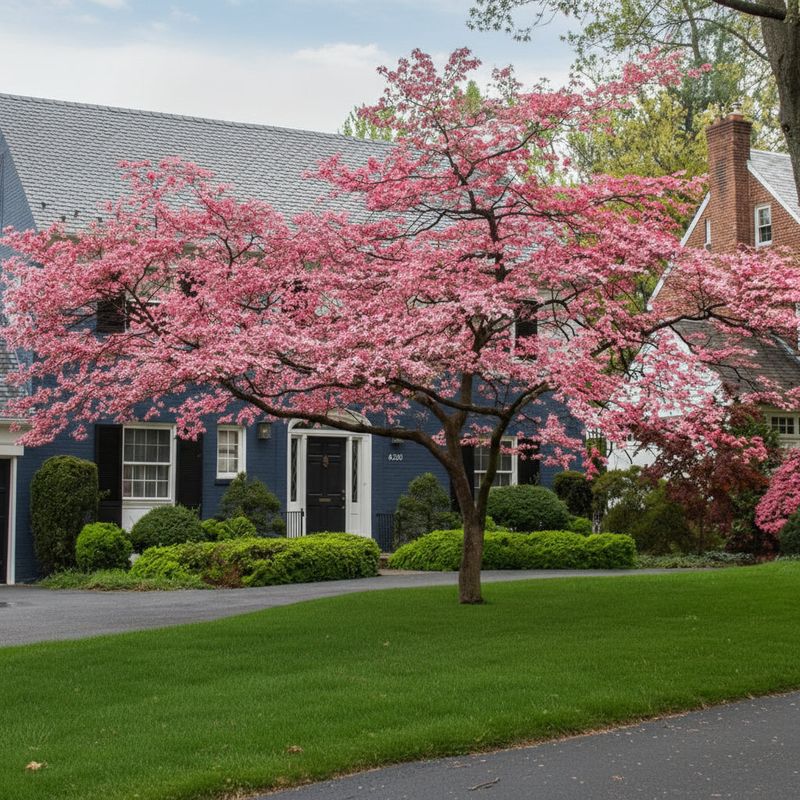
Ask any longtime Virginian about their favorite tree, and the dogwood often tops the list. It is the official state tree and state flower, so it carries a little hometown pride.
Flowering Dogwood grows in flat, tiered layers that look almost hand-arranged. Lower branches droop gently, giving the tree a graceful, stepped silhouette.
Those horizontal limbs work like shelves of leaves, casting broad shade below. Typical trees reach 15 to 30 feet tall and just as wide.
Spring brings creamy white or pink blooms that float along each layer. Red berries follow in fall, and songbirds gobble them up before winter arrives.
Your Virginia Garden Changes Every Week. Your Plan Should Too.
Gardening in Virginia changes quickly throughout the season. Every Friday you’ll receive a simple weekly plan showing exactly what to plant, prune, fertilize, harvest, and protect so you never miss the right timing.
Even in January, the branching pattern stays interesting to look at. Snow settles along each tier and creates a lovely winter scene from the kitchen window.
Dogwoods grow naturally beneath bigger trees, so they prefer some protection. Morning sun with afternoon shade usually keeps them happiest and healthiest.
Try planting one on the east side of your home or near the edge of tall oaks. Harsh afternoon heat can stress the leaves and cause scorched, crispy edges.
Spread two to three inches of mulch around the base, keeping it away from the trunk. Mulch holds moisture and protects shallow roots from lawn mower bumps.
Give it steady water during dry summers, and your dogwood will reward you for decades.
3. American Hornbeam For A Broad, Rounded Crown
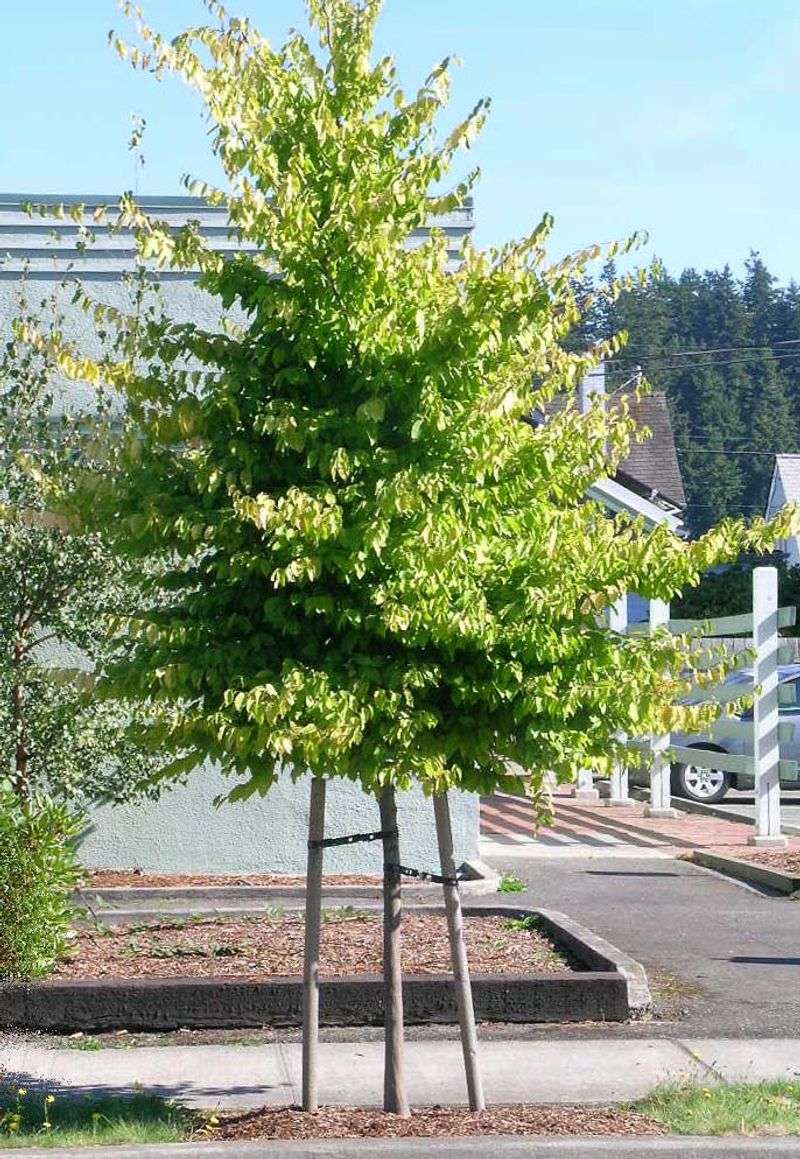
Some trees look like they spend their mornings lifting weights. American Hornbeam has a smooth, gray, fluted trunk that ripples like flexed muscles, earning it the nickname musclewood.
Above that sturdy trunk sits a broad, rounded crown. Many trees reach about 25 feet tall and 25 feet wide, giving you a tidy ball of shade.
Struggling with heavy clay in Northern Virginia? Hornbeam handles that sticky soil better than many other ornamental trees.
It also tolerates wet spots, since it grows wild along stream banks. A soggy corner of the yard could become its perfect home.
Light needs are easygoing too, ranging from full sun to nearly full shade. That flexibility makes it handy for tricky spots near fences or larger trees.
Growth tends to be slow and steady, so patience pays off here. A slower pace often means stronger wood and fewer broken branches after storms.
Fall color varies from yellow to orange and sometimes soft red. Small, papery seed clusters dangle from branches and feed birds through the colder months.
For a practical tip, prune young trees in late winter to shape a single strong trunk. Remove crossing branches early to keep the crown open and balanced.
Hornbeam rarely suffers from serious pests, which keeps maintenance low. Busy homeowners will appreciate a tree that mostly takes care of itself.
4. Serviceberry For Light Shade And Spring Berries
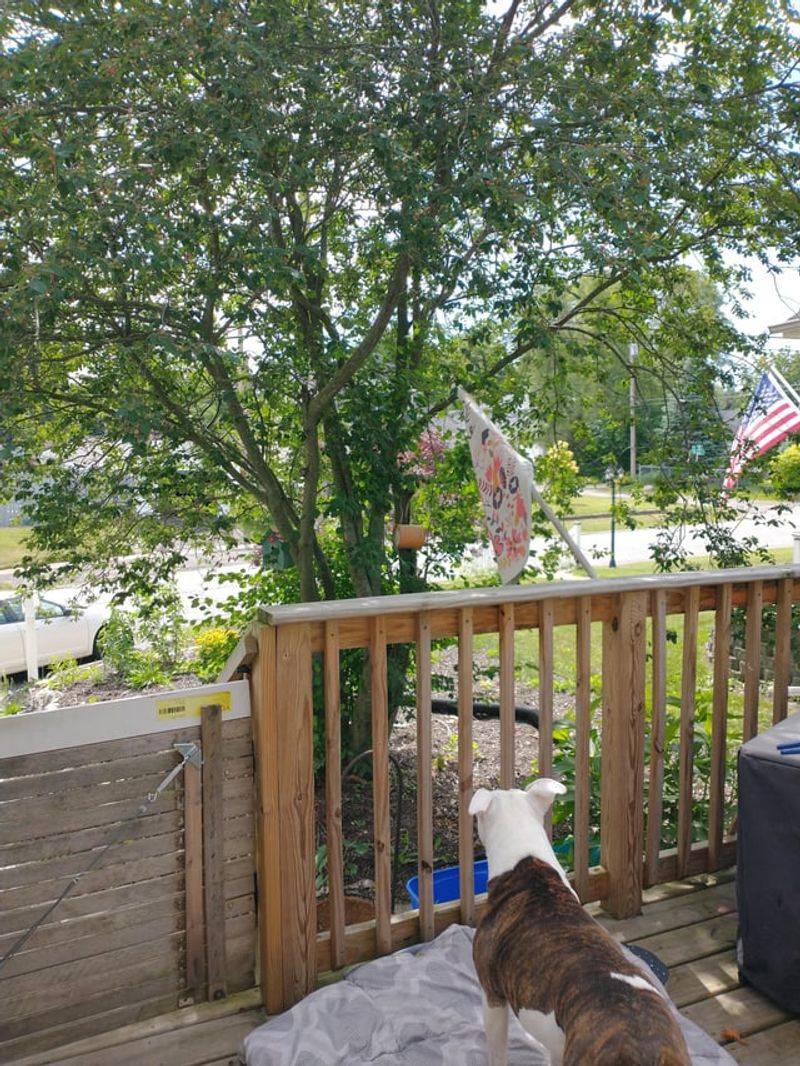
Imagine strolling outside in June and snacking on sweet berries straight from your shade tree. Serviceberry makes that tasty daydream a reality for many Virginia families.
Small red-purple fruits ripen in early summer and taste a lot like blueberries. Kids love picking them, though birds will happily compete for every handful.
Before the berries, white to pinkish-white flowers open in mid-spring. Clouds of blossoms brighten the yard while most trees are still waking up.
Many serviceberry species are native here and grow 15 to 30 feet tall. Their open branches create a light, gentle shade rather than a heavy dark canopy.
Lighter shade works nicely if you still want grass or flowers to grow underneath. Sun still filters through, keeping the ground below cheerful and green.
Roots stay well-behaved and noninvasive, so planting near walkways is usually fine. You will not need to worry much about cracked sidewalks.
Serviceberries tolerate full sun to light shade. More sunshine, however, means more flowers and a bigger berry harvest each year.
Fall arrives with leaves glowing orange to deep red. Few small trees offer interest across spring, summer, and autumn this reliably.
Want a quick tip for berry lovers? Toss lightweight netting over lower branches as fruit begins to color, saving some treats for yourself.
Fresh berries also make terrific muffins, jams, and pancake toppings.
5. Sweetbay Magnolia For Glossy Leaves And Cool Cover
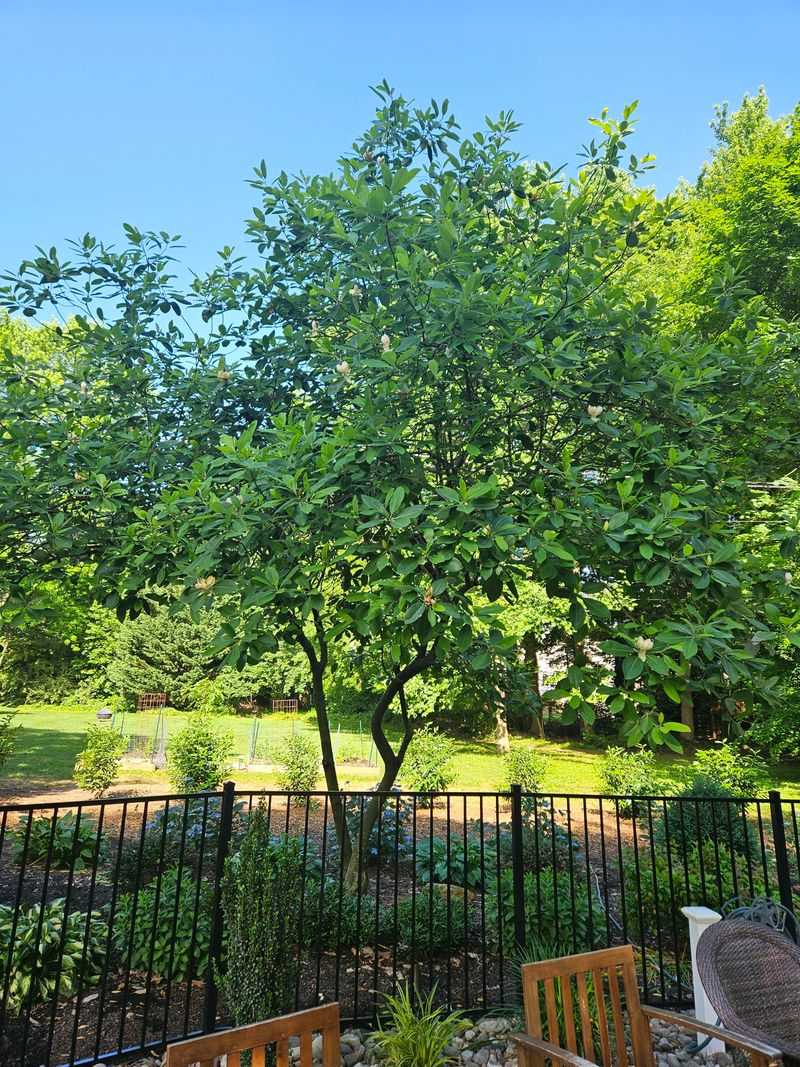
On a breezy summer day, Sweetbay Magnolia seems to sparkle. Its glossy, dark green leaves flip in the wind and flash silvery-white undersides.
That shimmering effect makes the tree feel cooler just to look at. Thick foliage adds real relief, too, shading benches and garden paths from harsh rays.
Native to coastal areas of Virginia, sweetbay loves moist ground. Low spots, rain gardens, and damp corners can suit it beautifully.
Expect a mature height of 20 to 30 feet, sometimes more, with a similar spread. In milder parts of the state, leaves may hang on through much of winter.
From late spring into summer, creamy white flowers open with a lemony fragrance. Plant one near a porch so you can enjoy the scent on warm evenings.
Partial shade works fine for this tree, but flowering needs sunshine. Aim for at least four hours of direct sun daily for the best blooms.
Bright red seeds pop out of cone-like pods in late summer. Mockingbirds and other birds quickly snatch them up as a seasonal snack.
For practical care, keep the soil evenly moist during its first few years. A soaker hose under mulch makes summer watering simple and efficient.
Sweetbay often grows with several trunks, giving it a soft, sculptural shape. Choose a single-trunk tree if you want more headroom underneath.
6. Eastern Hophornbeam For Tough, Compact Shade
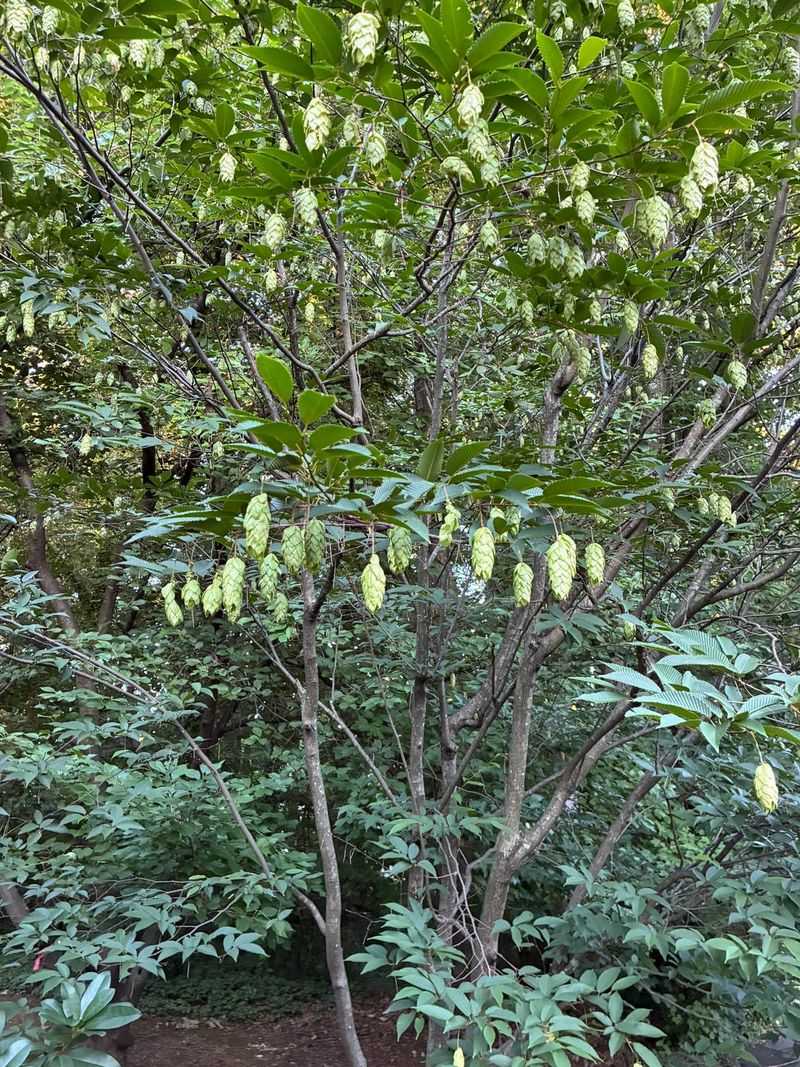
Here is a tree with a reputation for grit. Eastern Hophornbeam has some of the hardest, densest wood in North America, earning it the nickname ironwood.
Toughness carries over to its growing habits as well. Heavy clay, dry spells, and shady spots rarely slow it down.
Most trees reach 20 to 35 feet tall with a spread of 15 to 30 feet. In sunny locations, the canopy grows broader and denser, giving solid compact shade.
Got a stubborn patch where other trees have struggled? Hophornbeam might be the scrappy fix your yard has been waiting for.
Shaggy, plated bark peels in thin strips, adding texture during winter. Kids often enjoy running their hands over its rough, flaky surface.
Summer brings dangling seed clusters that look a lot like hops used in brewing. That quirky resemblance explains how the tree got its unusual name.
Planting tip: choose a small container-grown tree rather than a large one. Hophornbeam develops a deep taproot and settles in better when young.
Once established, drought tolerance makes it a smart pick for low-water landscapes. Occasional deep soaking during long dry spells keeps it looking its best.
Pests seldom cause major trouble, and storm damage is uncommon thanks to that strong wood. Few trees offer this much reliability in such a modest package.
7. Japanese Maple For Dappled, Elegant Cover
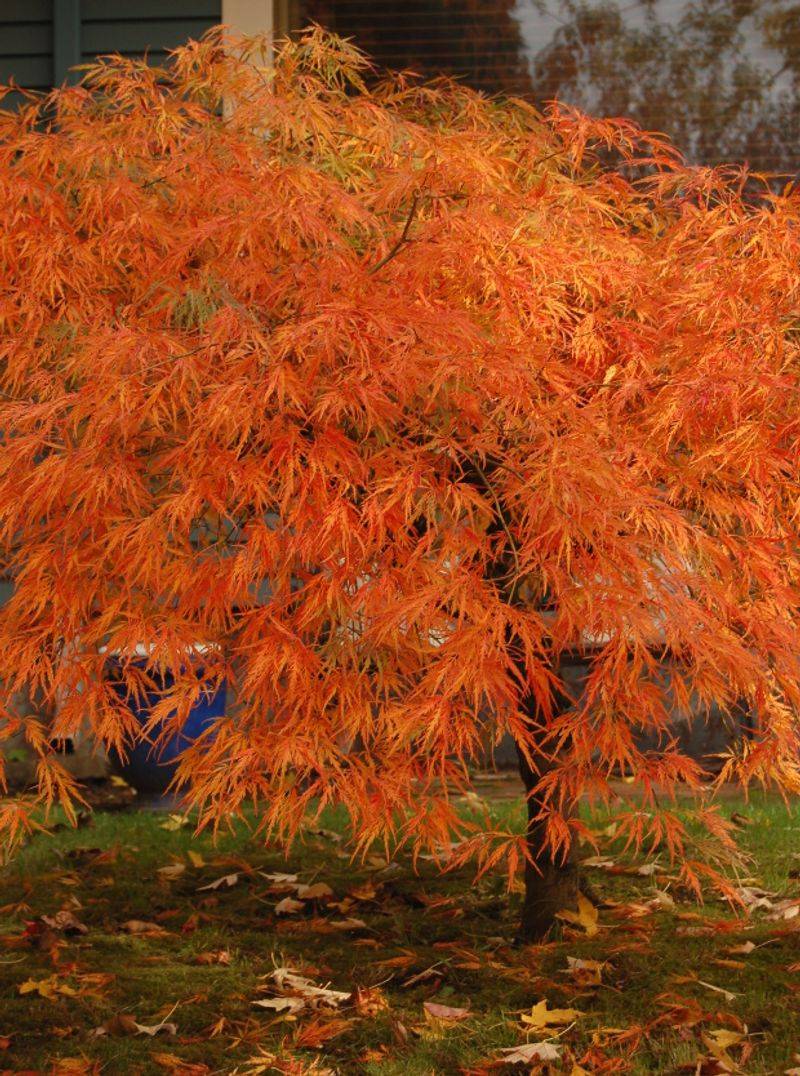
Walk past almost any garden in Northern Virginia, and you will likely spot a Japanese Maple. Lacy leaves and graceful branches give these trees a polished, artistic charm.
Fine-textured foliage breaks sunlight into soft, dancing spots on the ground. That dappled cover feels peaceful beneath a bench or beside a patio table.
Most varieties grow 12 to 25 feet tall, with a spread of 10 to 25 feet. Compact size makes them great for small lots and courtyard gardens.
Leaf colors range from bright green to deep burgundy. Fall turns many cultivars fiery red, orange, or gold, almost like a living bonfire.
Young trees appreciate afternoon shade, especially during hot summers. Filtered light helps protect delicate leaves from sunburn and crispy brown edges.
Still, some sun helps bring out the richest leaf color. Morning light paired with shade later in the day often hits the sweet spot.
Need a tree for a sunnier spot? Green-leaved cultivars usually handle full sun better than red or variegated types.
Shop thoughtfully, since sizes vary widely between varieties. Read plant tags for mature height and width before you buy one.
For care, water deeply during dry weeks and add mulch to cool the roots. Prune lightly in late winter to keep that elegant, airy shape intact.
One heads-up: Arlington County lists Japanese maple as invasive because it seeds into nearby woods, so a native like redbud or serviceberry is a safer pick near natural areas.
8. Fringetree For Airy Shade And Fluffy Blooms
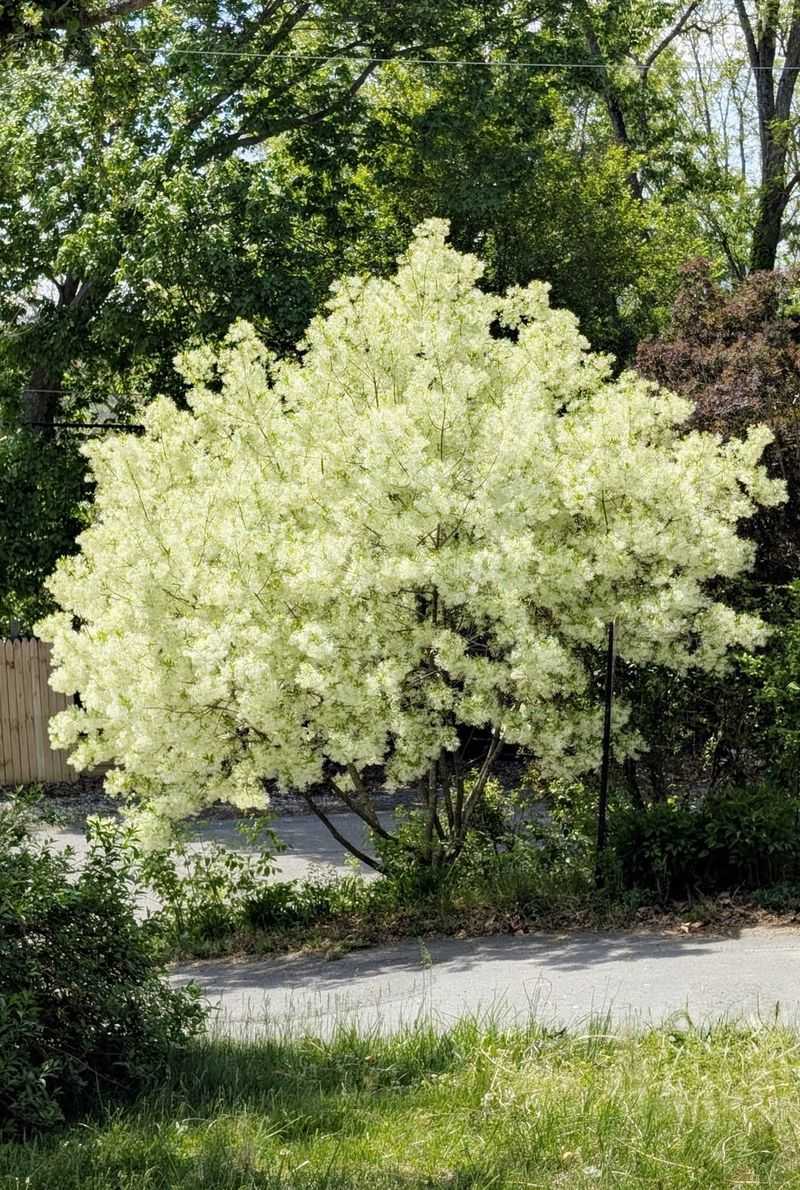
Some people call it Grancy Graybeard, and one look in late spring explains why. Fluffy white blooms hang like soft, wispy whiskers from every branch.
Fringetree carries the scientific name Chionanthus virginicus. That second word proudly points to its native roots right here in Virginia.
Fragrant flower clusters cover the tree and give it a cloud-like glow. A gentle, sweet scent drifts across the yard on warm evenings.
Most trees grow 12 to 20 feet tall and wide, though some reach 30 feet. An open canopy creates airy shade that feels light rather than gloomy.
Small yards benefit from that breezy quality. Flowers and grass underneath can still catch enough sunlight to grow well.
Fringetree prefers full sun to part shade with moist, fertile soil. Adding compost at planting time gives roots a healthy head start.
Patience helps, since leaves appear rather late in spring. Do not worry if your tree looks bare while neighbors are already green.
Female trees produce dark blue fruits in late summer. Birds love them, so expect cheerful visitors once the berries ripen.
Keep an eye on the trunk, though, since fringetree can be hit by the emerald ash borer, the same pest that destroys ash trees.
For extra drama, plant one in front of hollies or evergreen shrubs. Those dark backdrops make the white blossoms glow like fresh snow.
Gardeners across the state treasure this charming native as a perfect finishing touch.