Your Arizona Yard Already Has The Start Of A Food Forest, If You Know Where To Look
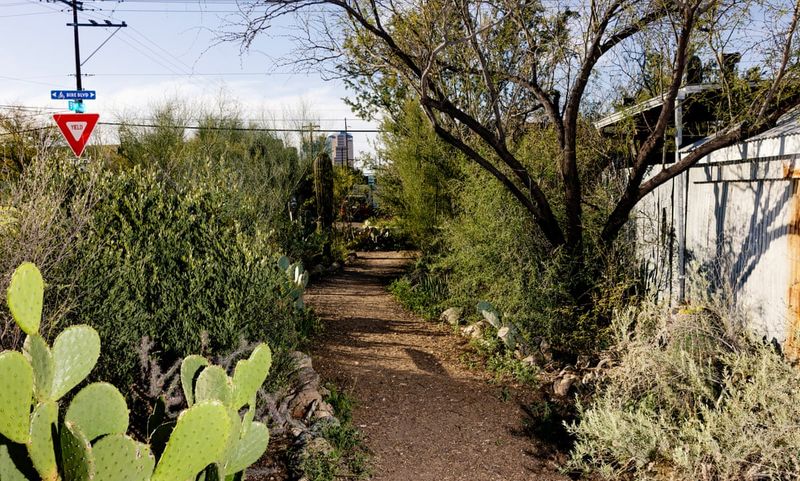
That old mesquite in the corner, the prickly pear by the wall, or the citrus tree by the patio may be worth more than you think. Each one can be the first piece of an edible yard that works with desert heat.
They do not make a finished food forest on their own, but they give you a head start. Here is how to read what you already have and build around it.
These plants are a starting framework, not a finished food forest
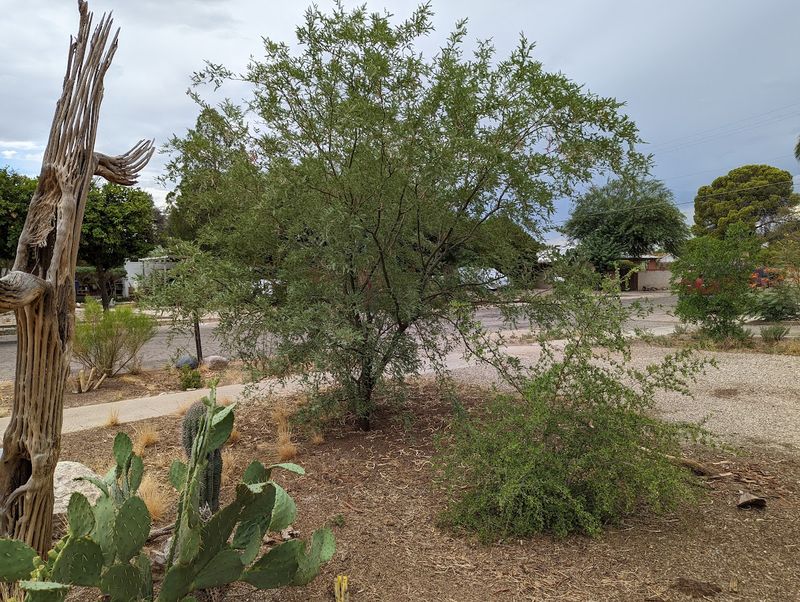
A food forest is usually described as a diverse planting of mostly perennial plants stacked in layers, from tall trees down to ground-hugging crops. A survey of Southwestern examples found that many sites were simpler than that ideal, and that reliable water and tough soils remain real challenges.
So an established mesquite, citrus tree, or prickly pear is best seen as a framework. Each one fills a different role, and none of them alone gives you a complete system.
Think of what you have as the first few posts of a fence. They tell you where shade falls, where roots already reach, and where water already goes.
Nothing here promises a self-running yard, lower water bills, or a set amount of harvest. What it does give you is a head start and a clear set of questions to answer before you plant anything else.
Velvet mesquite can provide filtered shade
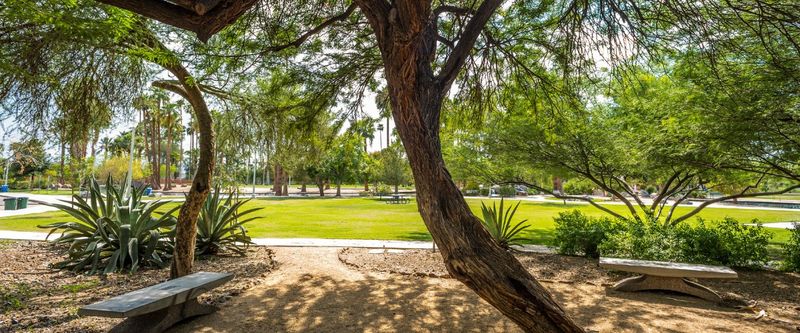
Mesquite is a native of the Sonoran Desert, and its pods are food. Extension guidance on mesquite as food notes that the pods can be ground into flour or cooked for drinks.
Shade is where the species matters. Velvet mesquite casts a light, filtered shade that can suit some slower-growing cacti and shrubs.
Honey and screwbean mesquite do not necessarily offer the same effect, so check which kind you have before planning beneath it.
Size matters too. Landscape guidance for mesquite gives 30 to 50 feet in height and spread for velvet mesquite, but that applies when it grows with adequate water and deep soil.
A tree on thin or shallow soil may stay smaller.
One mesquite is a single tree layer. It does not create a multilayered planting by itself, so treat it as the anchor and add the other layers around it.
Citrus adds fruit, but it changes the water equation
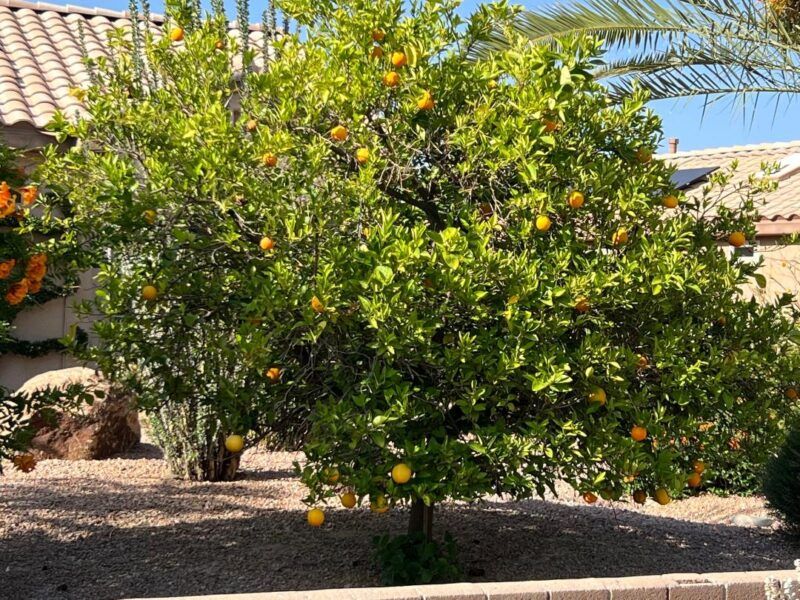
Got a citrus tree that already thrives? In suitable low-desert spots, it can be a productive part of the tree layer and a reliable fruit source.
The catch is water. Irrigation guidance for citrus reports that mature trees use about 60 inches of water per year on average in the research cited.
Your own tree could use more or less, depending on its size, species, climate, soil, and irrigation method.
That means citrus is not a low-water add-on, and it should not be counted as one when you plan the rest of the yard. Plan its watering as a separate need.
Location matters as well. Low-desert citrus variety guidance notes that frost tolerance differs by type.
Your Arizona Garden Changes Every Week. Your Plan Should Too.
Gardening in Arizona changes quickly throughout the season. Every Friday you’ll receive a simple weekly plan showing exactly what to plant, prune, fertilize, harvest, and protect so you never miss the right timing.
Frost exposure, elevation, soil, and water access all affect whether citrus suits a given Arizona yard, so do not assume what works in Phoenix works everywhere.
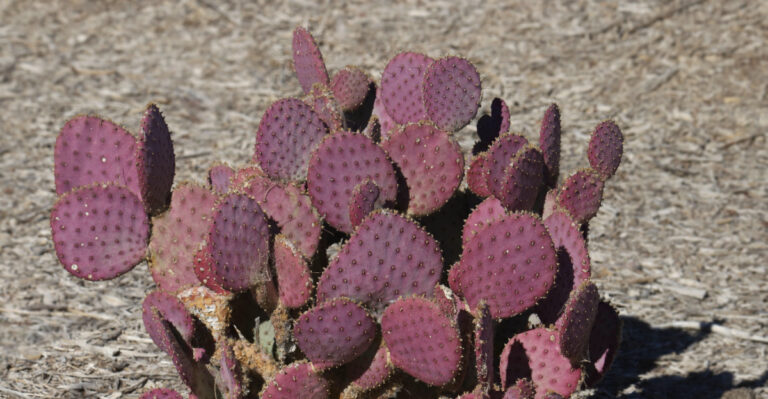
Prickly pear belongs in the lower layer
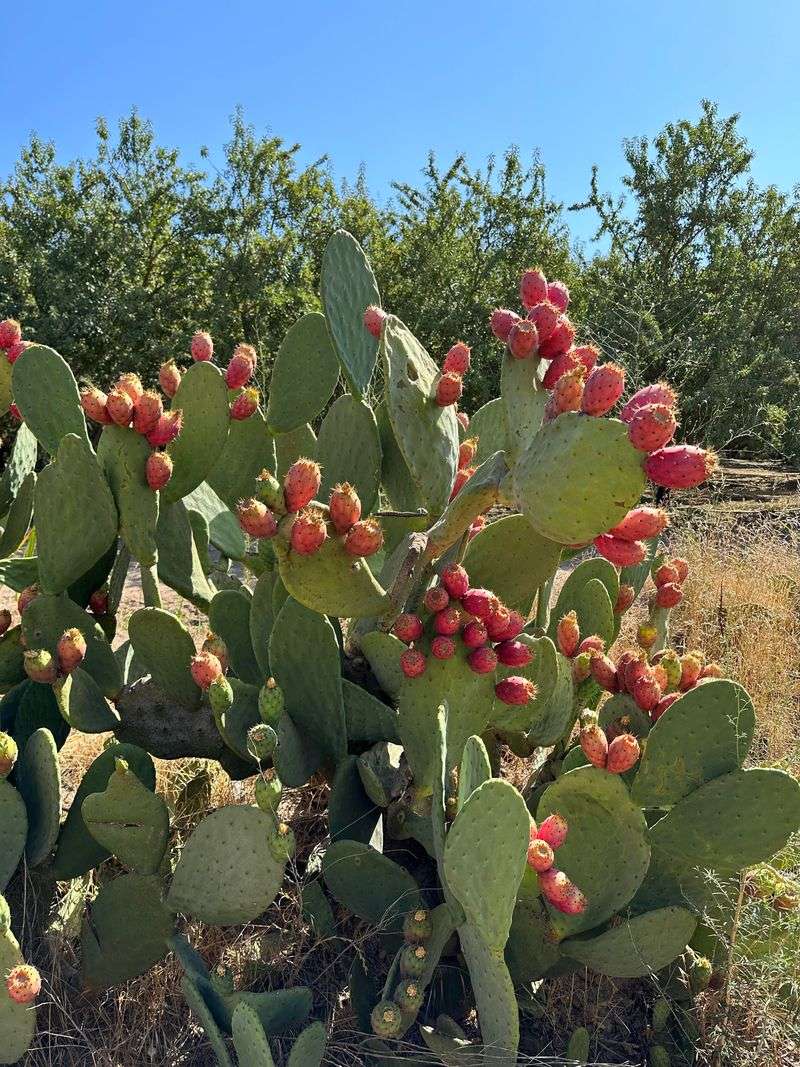
Prickly pear is a low-growing cactus, not a canopy tree. In a layered yard it sits down in the shrub or cactus layer, below the mesquite and citrus, and it cannot stand in for them.
What it offers is different. Extension information on prickly pear explains that Arizona species produce edible fruit, and the young pads can be eaten as nopales.
The fruit ripens in the warmest, driest months.
Not all prickly pears are alike. Species vary in size, flavor, and other traits, so the plant by your wall may taste and grow differently from one at a neighbor’s house.
Treat it as a food source in its own right and a way to fill space close to the ground, while the taller trees handle shade and canopy.
Plan complementary plantings around mature size
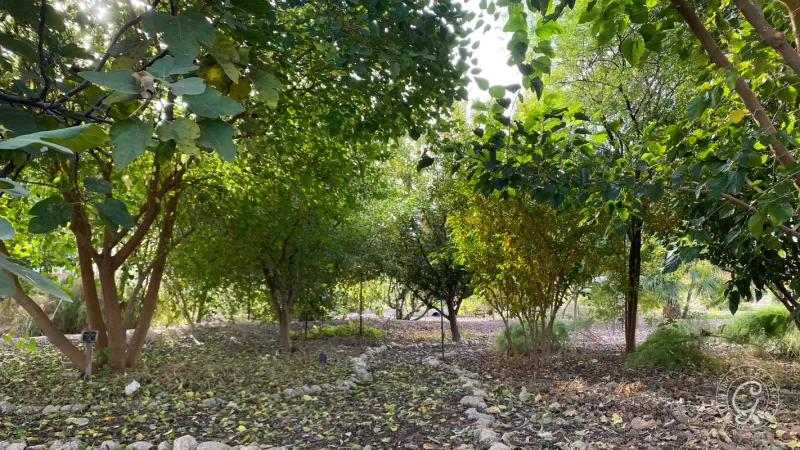
Layers come from variety. In the Southwestern food-forest survey, food forests were described as diverse, multilayered plantings, so adding different kinds of plants is what builds the structure beyond your starting trees.
Before you add anything, picture the mature size of what is already there. Canopy spreads wide, and roots usually reach even farther.
Crowding plants together now can mean fighting over light, space, and water later.
Planting citrus right under a mesquite is not a tested method. It is better to leave generous room for both canopies and both root zones, and to remember that citrus needs its own irrigation.
For new plants, planting guidelines for container trees and shrubs are a good place to start. A simple tape measure and a few stakes can show you where the open spots really are.
Water, drainage, and establishment shape what will thrive
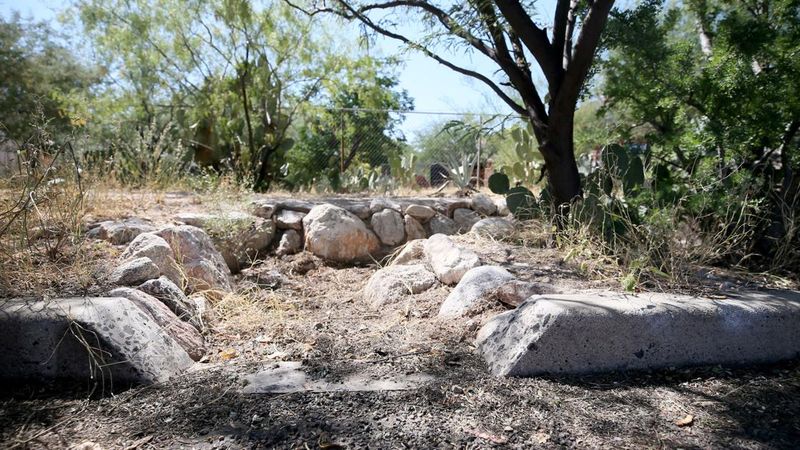
Rainwater harvesting can help supplement irrigation. Landscape guidance on passive rainwater harvesting also notes that urban trees in arid areas commonly need extra water to establish and stay healthy, even some native trees in hot, paved settings.
Check drainage before you plant. Caliche, the hard mineral layer in many desert soils, can limit roots and slow drainage, and
a caliche guide explains specific ways to deal with it rather than just adding amendments to every hole.For new trees and shrubs, container planting advice calls for a shallow hole, backfill with native soil, good drainage, and regular watering while the plant establishes.
Timing depends on where you live. The Pima County October guide suggests planting trees and shrubs early that month, but that advice is for Pima County, not the whole state.
Harvest mesquite and prickly pear with care
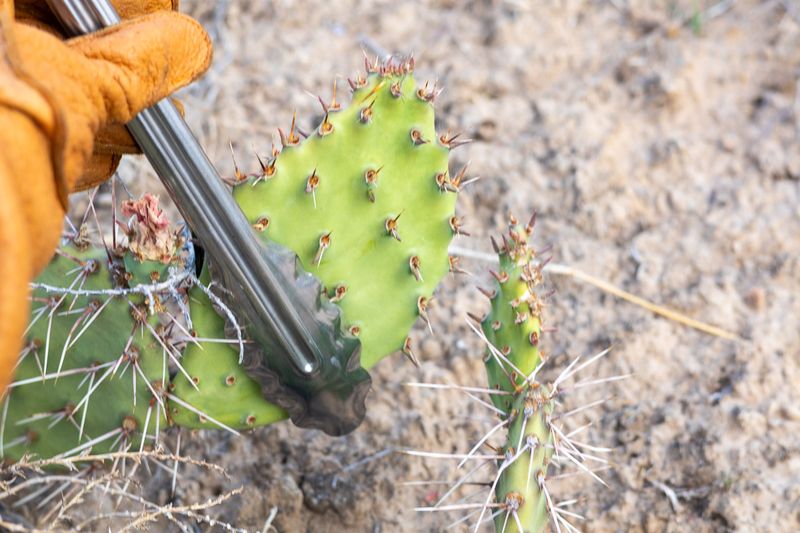
Prickly pear fruit and pads carry glochids, tiny bristles that can irritate skin. Extension prickly pear guidance recommends tongs and thick gloves, and warns that glochids can appear even on varieties called spineless.
Mesquite pods need their own care. Mesquite food safety guidance says to pick pods from the tree, not the ground, and to throw out any with holes or signs of fungal damage.
Fungal contamination can produce aflatoxin, so dry and store sound pods properly.
Timing varies. One garden-to-plate handout points to ripe pods in early summer before monsoon rains, so there is no single calendar date for every tree.
Let the condition of the pods guide you.
Start by mapping what your yard already supports
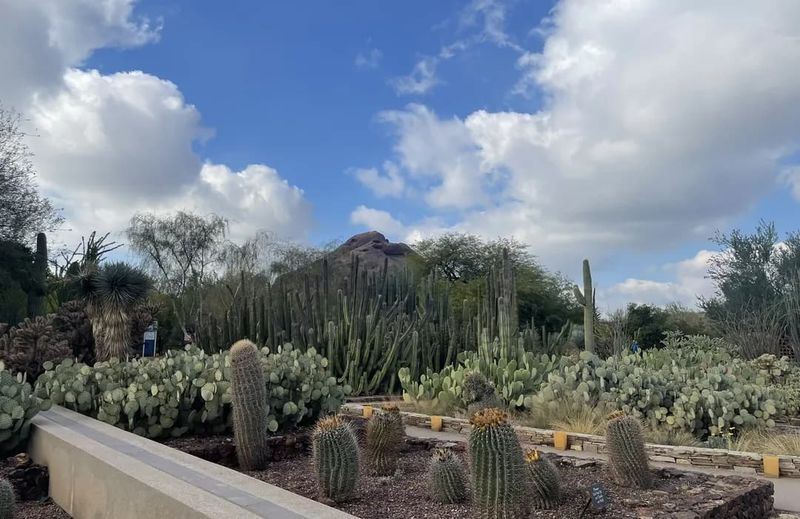
Grab a notebook and walk the yard. List each tree and cactus, note how much open space and shade you have, and mark where water already reaches.
Then look for the missing layer or need before buying anything. Southwestern food-forest research shows that water and soil shape what works, so your own yard’s conditions should pick the next step.
A good food forest starts with paying attention.