Pour This Simple Mixture Over A Suspicious Patch To See What Is Hiding In Your California Lawn
A brown, ragged patch in an otherwise healthy lawn tends to raise more questions than answers. The damage looks obvious, yet the cause often stays hidden right beneath the surface.
Dry soil, a misaligned sprinkler, a visiting dog, or something with an appetite can all leave nearly identical marks.
Some culprits do their work after dark, which makes them easy to miss entirely during a daytime inspection.
Guessing wrong can mean spending money on the wrong fix, and some products harm helpful insects, birds, and nearby waterways along the way.
A simple household mixture and a few minutes of patience can settle the question with real evidence.
The clues that surface often point straight toward the right next step.
Mix Dish Soap With Water In A Watering Can
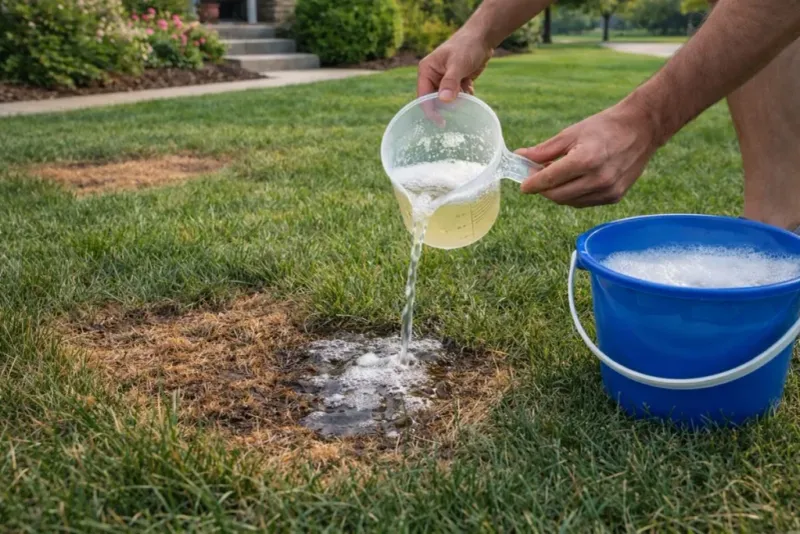
A watering can, a squirt of soap, and a mild afternoon cover nearly everything this lawn test requires. No special kit is needed, and most supplies already sit under the kitchen sink.
A watering can holding one to two gallons of water forms the base, with about one to two tablespoons of mild liquid dish soap stirred in per gallon, in line with university guidance. A gentle swirl spreads the soap without whipping up a bubble bath.
The soap irritates caterpillars hiding in the thatch, the spongy layer of stems and roots above the soil, so they crawl upward to escape.
Too little soap may fail to bother them, while too much can scorch grass blades. A light rinse of the test area with plain water afterward helps protect the grass.
Plain, mild products work best. Anything containing bleach, degreasers, antibacterial additives, or strong fragrances is best avoided, since those extras can harm grass without improving results.
Laundry detergent and dishwasher soap are also poor choices, since both run much harsher.
A fresh batch for each test works best, because soapy water left sitting for days loses strength and can turn slimy.
A clean watering can matters too, so a rinse to remove any leftover fertilizer or weed product keeps surprise ingredients out of the test. That clean start helps ensure whatever surfaces reflects the lawn’s actual residents rather than a chemical reaction.
Pour It Over A Square Yard Of Turf
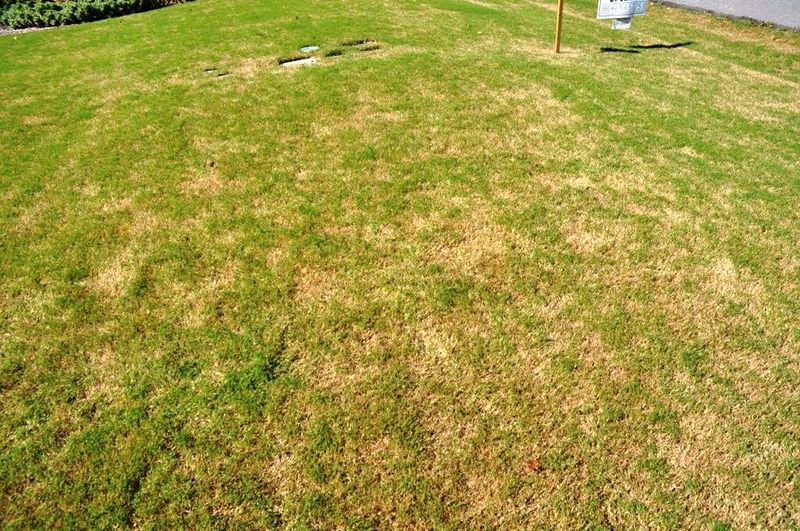
A few random splashes of soapy water reveal little. A careful pour over a measured spot produces numbers worth trusting, and an area about one square yard, roughly three feet by three feet, works well.
The best spot sits right at the edge of the brown patch, where yellowing grass meets green. Caterpillars usually move outward from damage toward fresh food, so the middle of a brown patch often stands empty.
Four sticks, garden stakes, or a few rocks can mark the square. Marking the spot also allows a repeat test later in the same place.
The full gallon or two goes on slowly and evenly, moving the can back and forth as if watering a flower bed rather than dumping a bucket. The goal is soapy water soaking into the thatch instead of running off.
Your California Garden Changes Every Week. Your Plan Should Too.
Gardening in California changes quickly throughout the season. Every Friday you’ll receive a simple weekly plan showing exactly what to plant, prune, fertilize, harvest, and protect so you never miss the right timing.
Short or very dense turf may need the full two gallons to soak in well. Thick thatch can act like a sponge, holding liquid near the top, so slow pouring helps it reach hiding spots.
Timing helps too. Late afternoon or early evening works well, since many lawn caterpillars grow more active as the day cools.
Testing right after mowing or fertilizing is best avoided. A freshly watered lawn works fine, while a soggy, flooded one can let the mixture run off before it does its job.
October offers a prime window, since armyworm activity often peaks in late summer and fall across much of California.
Wait Several Minutes And Watch The Surface
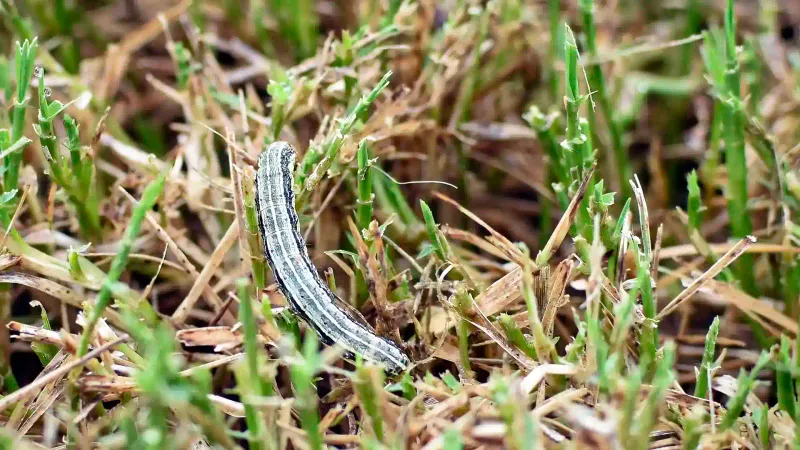
Patience pays off at this stage. Many people pour, glance down, see nothing, and walk away too soon, while caterpillars need a little time to feel the soap and climb up.
About five to ten minutes of watching gives them that chance. Kneeling or sitting on a small stool keeps eyes close to the grass, and a phone timer helps, since a few minutes can feel endless when staring at turf.
Small movements between the blades deserve attention. Curled shapes, wiggling bodies, or what looks like a bit of twig suddenly crawling all count.
Some caterpillars surface quickly while others take their time, so scanning the entire square, rather than one corner, pays off.
Other creatures may appear too. Earthworms often surface after a soap flush, a good sign of healthy soil, and beetles, spiders, and ants may scurry around.
Most of those visitors are harmless or even helpful, so each new bug deserves a calm look rather than alarm. Ground beetles and spiders, in particular, feed on caterpillars and deserve protection.
A flashlight helps near dusk, held low across the grass so shadows make insects easier to spot.
A small notebook or phone camera records what appears, and a quick photo can help identify a mystery critter later, with a local nursery offering a second opinion. Good detective work always includes collecting evidence, even when the suspects measure barely an inch long.
Caterpillars Wriggle Up From The Thatch
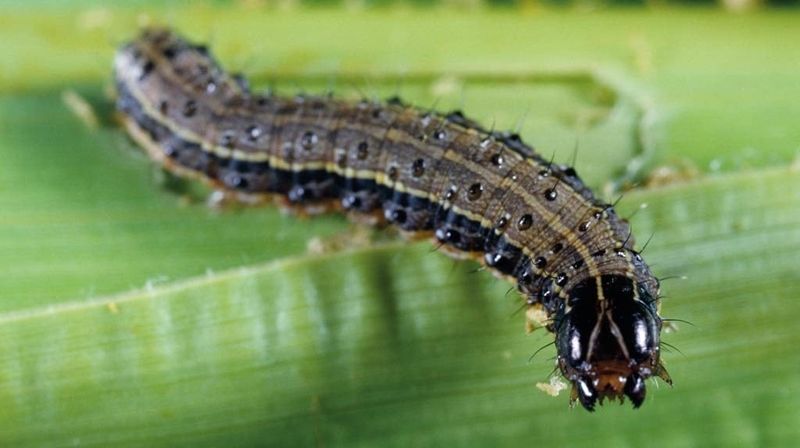
Suddenly the grass starts moving. One green-brown body, then another, crawls up and flops onto the blades, confirming company and raising the question of who showed up. Several species may turn up together.
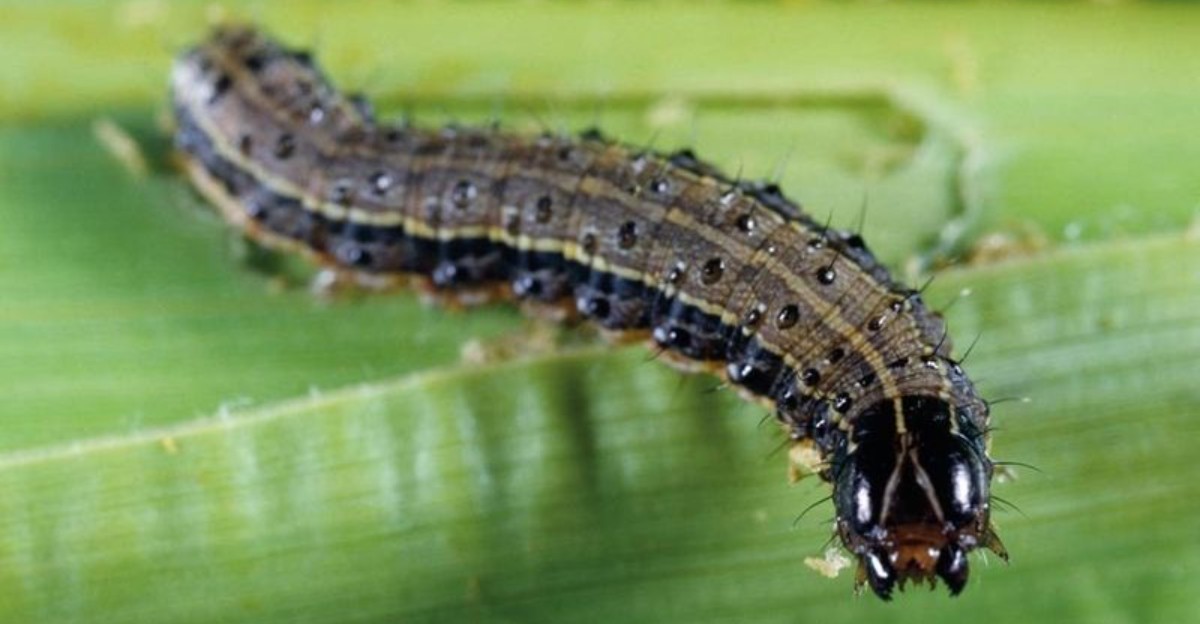
Armyworms are smooth caterpillars that can reach about an inch and a half long, often with pale stripes running along the sides and back. Their name comes from the way large groups march across lawns together, feeding as they go.
Cutworms look plump and greasy, in shades of gray, brown, or dull green, and they often curl into a tight C shape when disturbed. They chew blades near the soil line at night, leaving small sunken spots or bare circles.
Sod webworms are smaller and thinner, usually under an inch, often tan or grayish with dark spots along the body.
Silky tunnels or webbing in the thatch, along with clumps of tiny green droppings, point to webworms, and their adult moths fly in a zigzag pattern just above the lawn at dusk.
Size deserves careful attention. Caterpillars under about half an inch are young, while chunky ones are older and nearly finished feeding.
A ruler or coin in photos provides scale. That detail matters later when choosing a treatment, since young larvae respond far better to gentle controls than full-grown ones.
UC IPM’s online pest photo galleries make a helpful reference for confirming identification before taking action.
Count What Surfaces Before You Treat
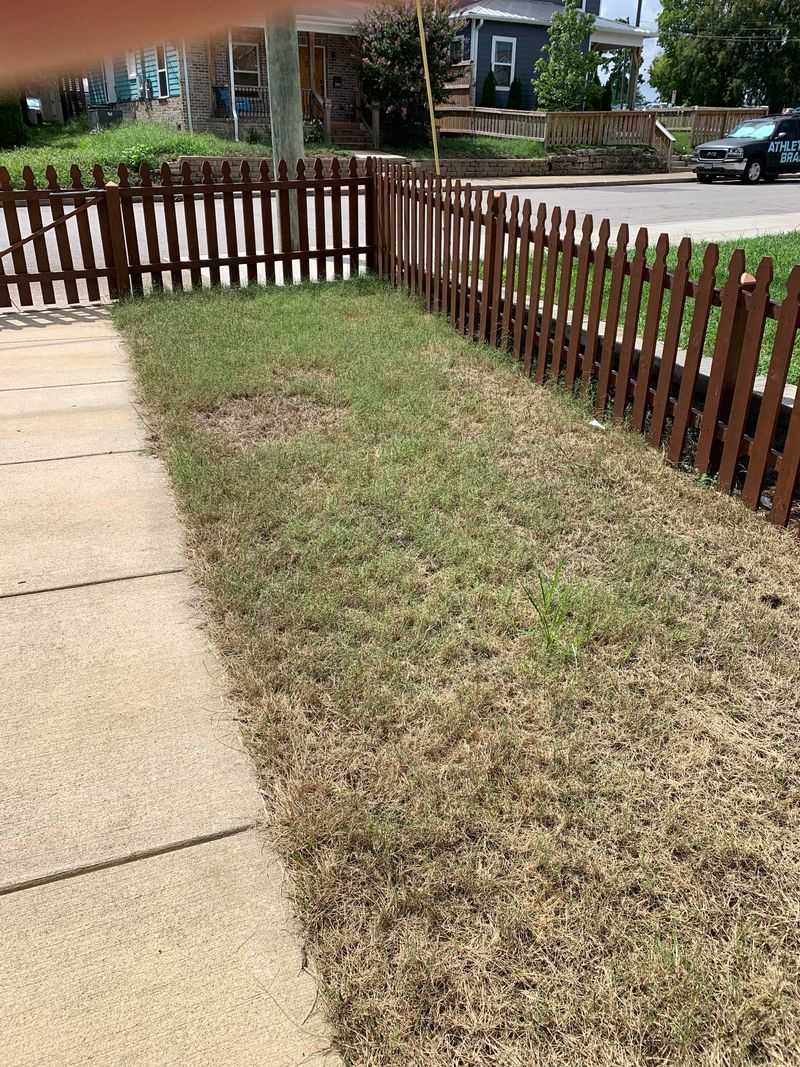
Two caterpillars hardly add up to an emergency. A healthy lawn can handle a few hungry guests without looking ragged, and counting turns an alarming moment into a calm decision.
Every caterpillar appearing in the square yard deserves a tally, along with notes on type and size when possible. Earthworms, beetles, and spiders stay out of the count.
UC IPM turfgrass guidelines offer a useful benchmark. Finding roughly 15 or more armyworm, cutworm, or sod webworm larvae per square yard suggests treatment may be worth considering.
UC IPM Pest Notes for lawns provide the current figures and more detail.
Below that level, lawns usually outgrow the damage. Good watering, proper mowing height, and light feeding help grass recover.
Birds, ground beetles, and tiny parasitic wasps often handle small caterpillar groups at no cost. Flocks of birds pecking at a lawn often signal caterpillars below, and they help reduce numbers.
Repeating the test in a few days makes sense when a patch keeps spreading. Populations can climb quickly in warm weather, especially from late summer into fall, and comparing counts over time shows whether the problem is growing or fading.
A notebook works like a scorecard here. The numbers, rather than nerves, deserve the final say on whether any treatment happens at all.
Warm-season lawns such as bermudagrass also slow their growth in cooler fall weather, so damage may take longer to fill in, a factor worth weighing alongside the count.
Test Both Edges Of The Damaged Patch
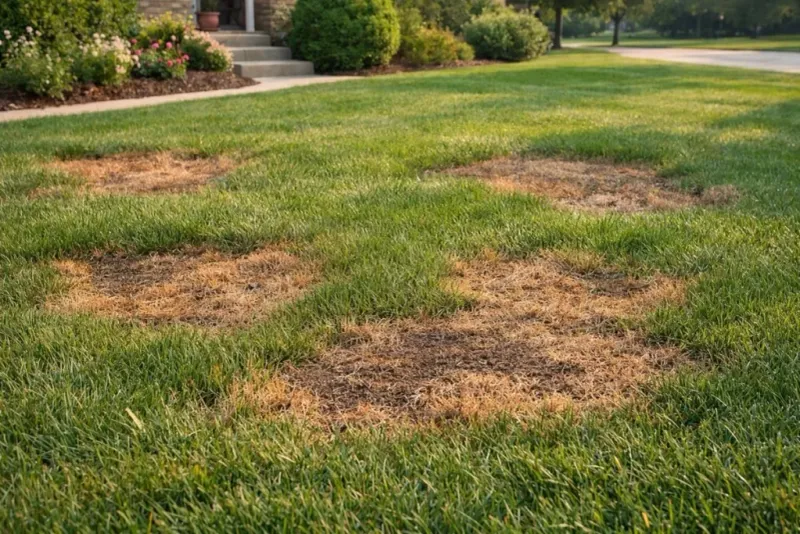
A single clean result can mislead. Caterpillars might be lurking just a few feet from the spot that got the soap, so testing two areas paints a far clearer picture.
The first square sits at the damaged edge, where brown grass fades into green. A second square goes on the healthy side, a few feet into the green zone, using the same amount of soapy water and the same waiting time.
Side-by-side results tell a story. Plenty of caterpillars at the edge with few on the healthy side means pests are feeding and spreading outward.
Caterpillars turning up in both squares suggest a wider problem that may cover more of the lawn than it appears.
An empty result at both spots offers useful information too. The brown patch may stem from something else entirely, since sprinkler gaps, compacted soil, heat stress, fungal disease, or pet urine can all create brown spots across California yards.
Sprinklers deserve a check when both tests come up empty. A clogged or tilted head can leave a dry patch that looks remarkably like insect damage.
A few empty tuna cans placed around the area during a watering cycle reveal whether water lands evenly, since uneven amounts point to coverage gaps.
Sometimes the real culprit is a thirsty corner rather than a hungry critter, and the fix involves a quick nozzle adjustment instead of any pest product.