12 Bulbs Michigan Gardeners Should Plant Before the Ground Freezes
The prettiest spring gardens in town get planted right now, in chilly October dirt, by people with muddy knees. I learned this the hard way one April and stared at bare soil with a jealous, grumpy frown.
Michigan winters look harsh, but many flowering treasures actually need that long, icy nap to bloom well. The cold works like an alarm clock for them, and it rings each spring with bright, cheerful color.
Personally, I think fall planting is the laziest way to look like a garden genius next year. You dig a small hole and drop in a papery package, then winter handles the hardest part for you.
Timing matters a lot here, and frozen Michigan ground turns a fun afternoon into a grumpy struggle with a shovel. My twelve favorite picks are below, and a few of them hide some truly surprising secrets.
1. Daffodils
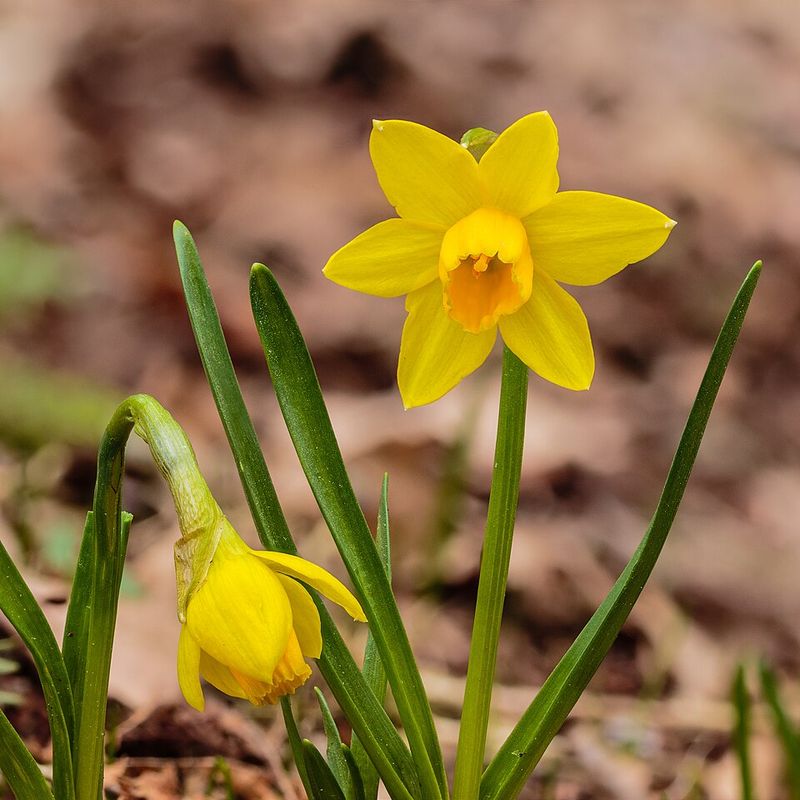
Hungry deer and nibbling rabbits mostly walk right past these sunny trumpets, and that alone earns them first place. Their bulbs contain a bitter compound called lycorine, which makes them taste awful to curious backyard critters.
I like how they return year after year with barely any fuss, often multiplying into bigger clumps over time. A single bag planted this October can turn into a golden drift within a few short seasons.
Plant each bulb about six inches deep, with the pointy tip facing up toward the sky. A handy rule from many extension experts says to plant bulbs roughly three times as deep as they are tall.
Early October is a sweet spot because the soil has cooled but still stays soft enough for easy digging. Roots need several weeks to settle in before the ground locks up tight for the long winter.
Pick a sunny spot with soil that drains well, since soggy ground can cause bulbs to rot over winter months. Raised beds and gentle slopes work nicely if your yard tends to hold puddles after rain.
After blooming, leave the leaves alone until they turn yellow, because they feed the bulb for next spring. Braiding or cutting them early might look tidy, but it often leads to fewer flowers the following year.
Try mixing early bloomers with late ones, and you can stretch the yellow show across many spring weeks. Tete-a-Tete stays small and sweet, while Carlton stands tall and proud with big buttery yellow blooms.
2. Tulips
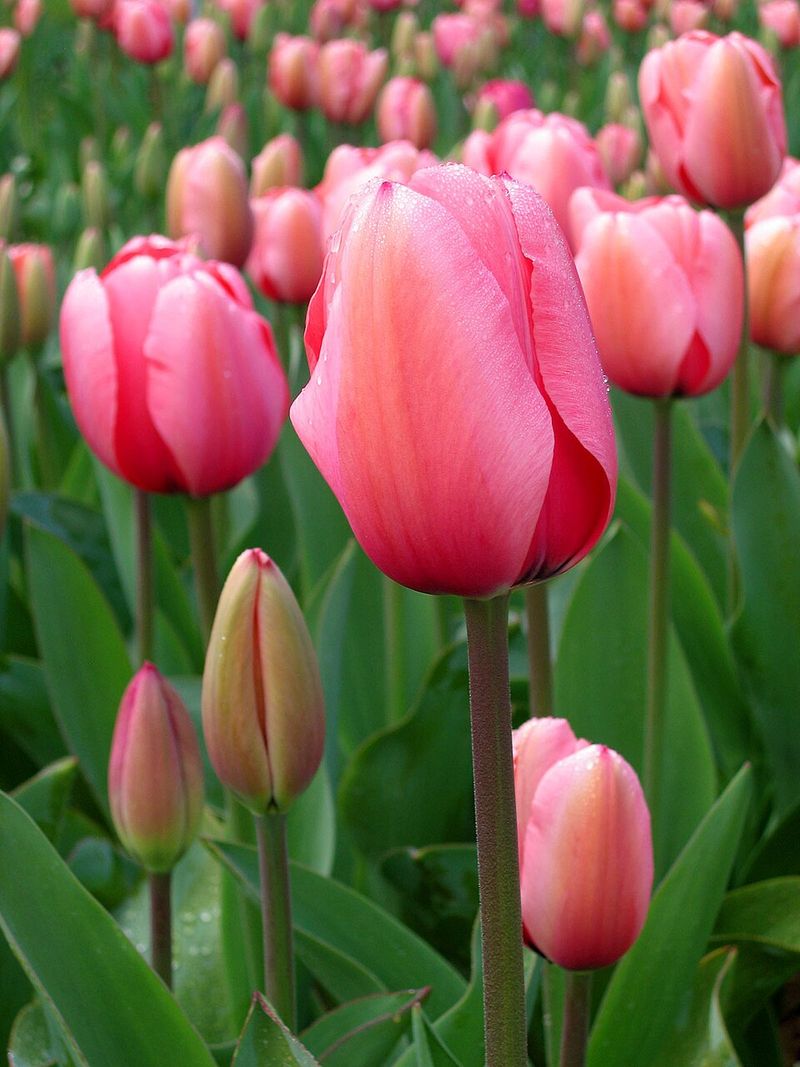
Deer treat tulips like a salad bar, so planting them feels a little like setting a fancy dinner table outdoors. I still plant dozens every fall, because nothing else delivers such bold, glossy color in mid spring.
These bulbs actually need a long cold spell, usually twelve to sixteen weeks, before they can bloom properly. Michigan winters handle that chilling job for free, while warmer places often fake it inside a fridge.
Wait until the soil cools below about sixty degrees, which usually happens in early to mid October. Dig holes six to eight inches deep, and set each bulb with its pointed nose facing upward.
Your Michigan Garden Changes Every Week. Your Plan Should Too.
Gardening in Michigan changes quickly throughout the season. Every Friday you’ll receive a simple weekly plan showing exactly what to plant, prune, fertilize, harvest, and protect so you never miss the right timing.
Squirrels love digging up freshly planted bulbs, so cover your bed with chicken wire or hardware cloth. Lay the wire flat under a thin layer of soil, and the leaves will poke right through in spring.
Many fancy hybrids bloom beautifully the first year and then slowly fade, producing smaller flowers each season after that. Species tulips and Darwin hybrids tend to return more reliably, so they are worth hunting for this fall.
Back in the 1600s, tulip bulbs in the Netherlands sometimes sold for more than a skilled worker earned in a year. Historians call that wild period tulip mania, and it still pops up in stories about strange money bubbles.
Plant them in groups of ten or more for the strongest look, since single rows can appear a bit lonely. A sunny spot with good drainage keeps them happy, and light mulch helps the soil temperature stay steady.
3. Crocuses
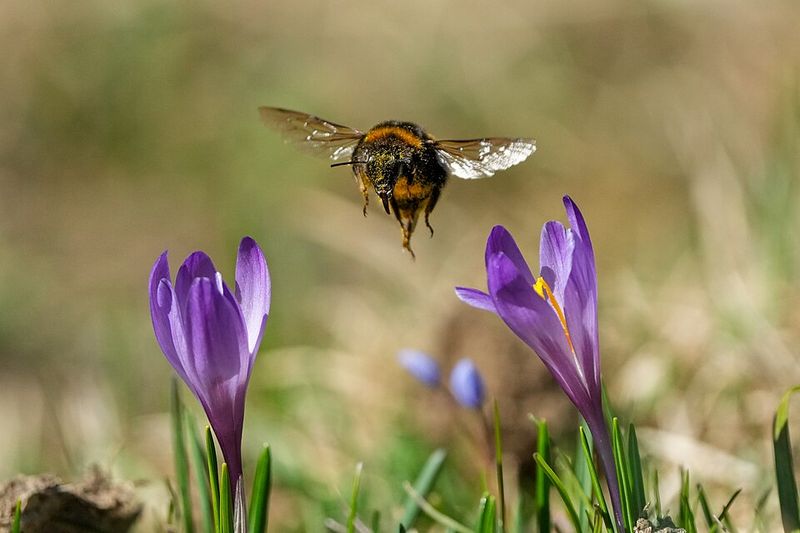
Hungry bees wake up on warm late winter days, and these tiny cups are often the first snack waiting for them. I love spotting a busy bumblebee tucked inside a purple bloom while patches of snow linger nearby.
The small bulbs are technically corms, which are solid underground stems rather than layered bulbs like onions. Plant them about three to four inches deep and a few inches apart, with the flat side facing down.
October planting works nicely, and these little guys settle in fast, so even a late weekend outside pays off. Tuck them under trees that drop leaves, since they bloom and finish before the branches fill with shade.
Some gardeners plant them right in the lawn for a sweet spring surprise scattered across the grass. You just need to hold off on mowing until the leaves turn yellow, usually around six weeks after flowering.
Squirrels and chipmunks find these corms tasty, so a little protection makes a big difference in many yards. Placing wire mesh over the planting area or mixing sharp gravel into each hole can help discourage digging.
One fun fact surprises a lot of people, because the pricey spice saffron comes from a fall blooming crocus. Those red threads are hand picked from each flower, which explains why the spice costs so much at stores.
Spring types come in purple, white, yellow, and striped patterns that look like tiny pieces of painted candy. Snow crocus and Tommasini crocus usually bloom earliest, while larger Dutch crocus follow a week or two later.
4. Hyacinths
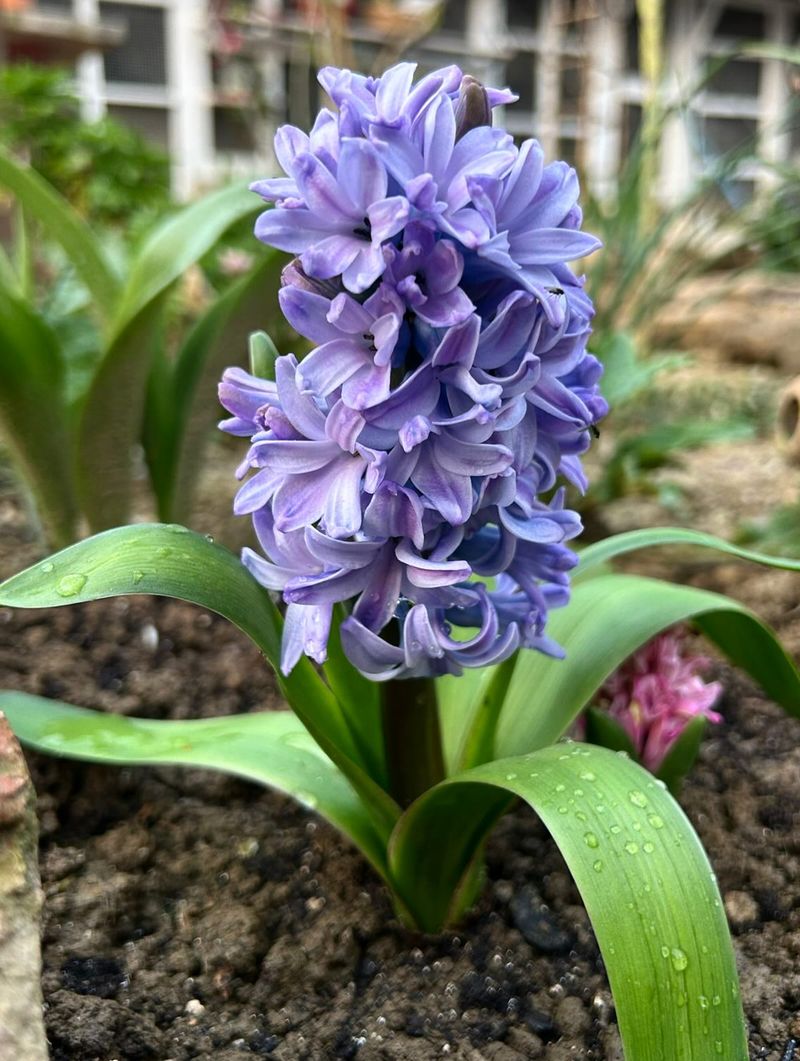
One whiff of these chunky spring spikes can stop you mid stride on a chilly April morning. The sweet perfume is so strong that a small cluster near the front door greets every single visitor.
Wear gloves when handling the bulbs, because their papery skin can make hands itch and turn red for some people. Tiny crystals called calcium oxalate cause that irritation, so washing your hands afterward is also a smart habit.
Set each bulb about six inches deep and roughly six inches apart in loose soil that drains well. They grow nicely in zones four through eight, which covers nearly every corner of the state with ease.
The first spring after planting usually brings fat, tightly packed flower heads that look almost too perfect. Later years often bring looser, more relaxed spikes, and personally I think those softer blooms carry extra old fashioned charm.
Deer and rabbits mostly leave them alone, which makes them a smart choice for gardens near wooded areas. Squirrels might still dig around now and then, so firm the soil well and water after planting to settle everything.
Colors range from deep purple and soft pink to creamy white and even a pale buttery yellow. Pairing them with early daffodils creates a cheerful combo that smells wonderful and brightens the yard for several weeks.
Plant them close to walkways or patio doors so you can enjoy the scent without trekking across a muddy yard. Mid October is a great window for planting, giving roots plenty of time to grow before hard frost arrives.
5. Grape Hyacinths
Leaves popping up in October might make you think something went wrong, but these little bulbs do that on purpose. Their grassy foliage often appears in fall and simply waits out the winter, ready for spring.
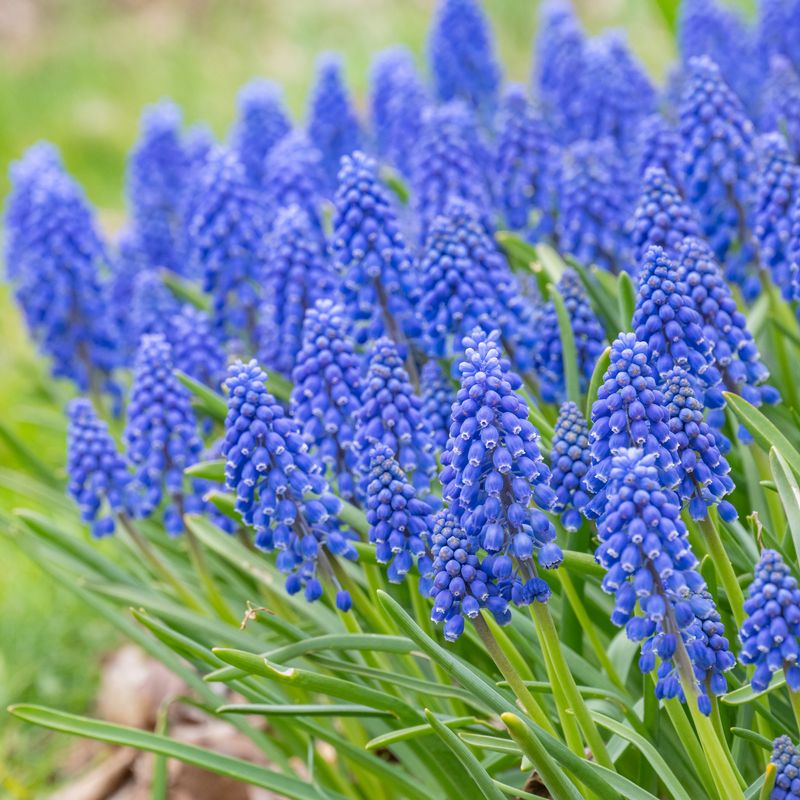
Each short stem holds a tight cluster of tiny blue bells that really do look like a bunch of grapes. Some types even carry a mild, sweet scent that reminds many people of grape candy or ripe fruit.
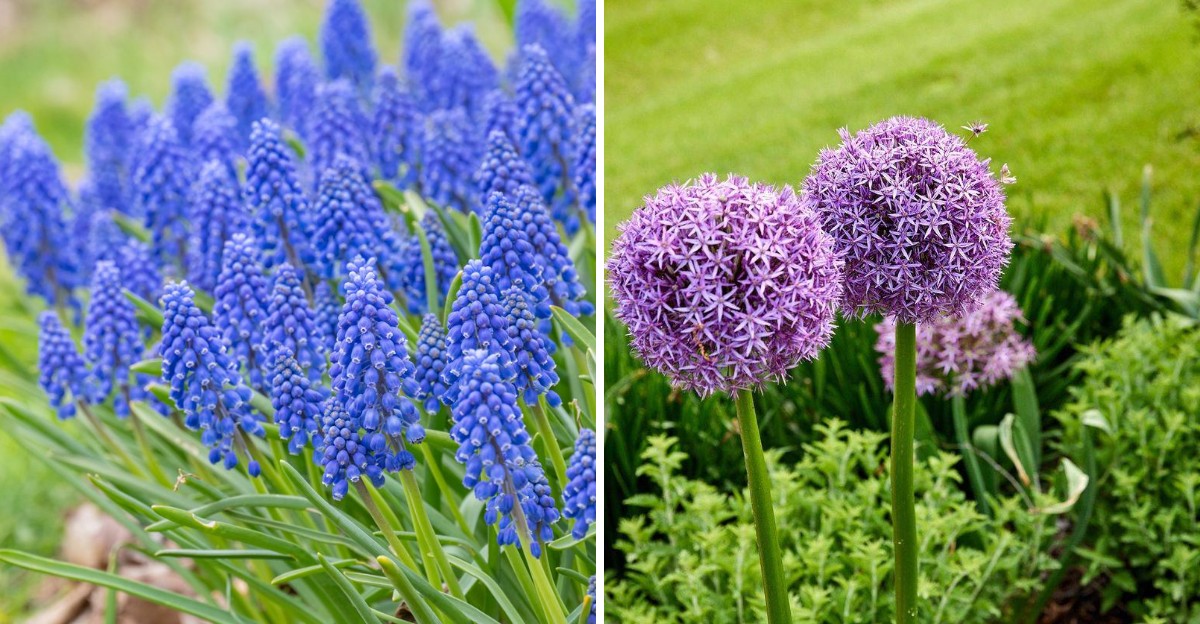
Plant the small bulbs about three inches deep and a few inches apart, in groups for the best color. They handle cold winters with ease and grow in zones three through nine, so northern gardens can enjoy them.
Because they stay low, they make a lovely blue edging along paths or a carpet under taller spring flowers. I like how they fill gaps between tulips, creating a rich blue base that makes brighter colors pop.
These bulbs multiply quickly by making new offsets and dropping seeds, so a small patch can grow wider each year. Trimming off the faded flower heads helps limit spreading if you prefer keeping them in a tidy space.
Deer and rodents rarely bother them, which is a nice relief for anyone who has watched tulips disappear overnight. Their sturdy nature also means they handle average soil and need very little care once they settle in.
Look for Valerie Finnis, a variety with soft powder blue flowers that seem to glow on gray spring days. Muscari armeniacum is the most common type, and it offers that classic deep blue color many gardeners adore.
6. Alliums
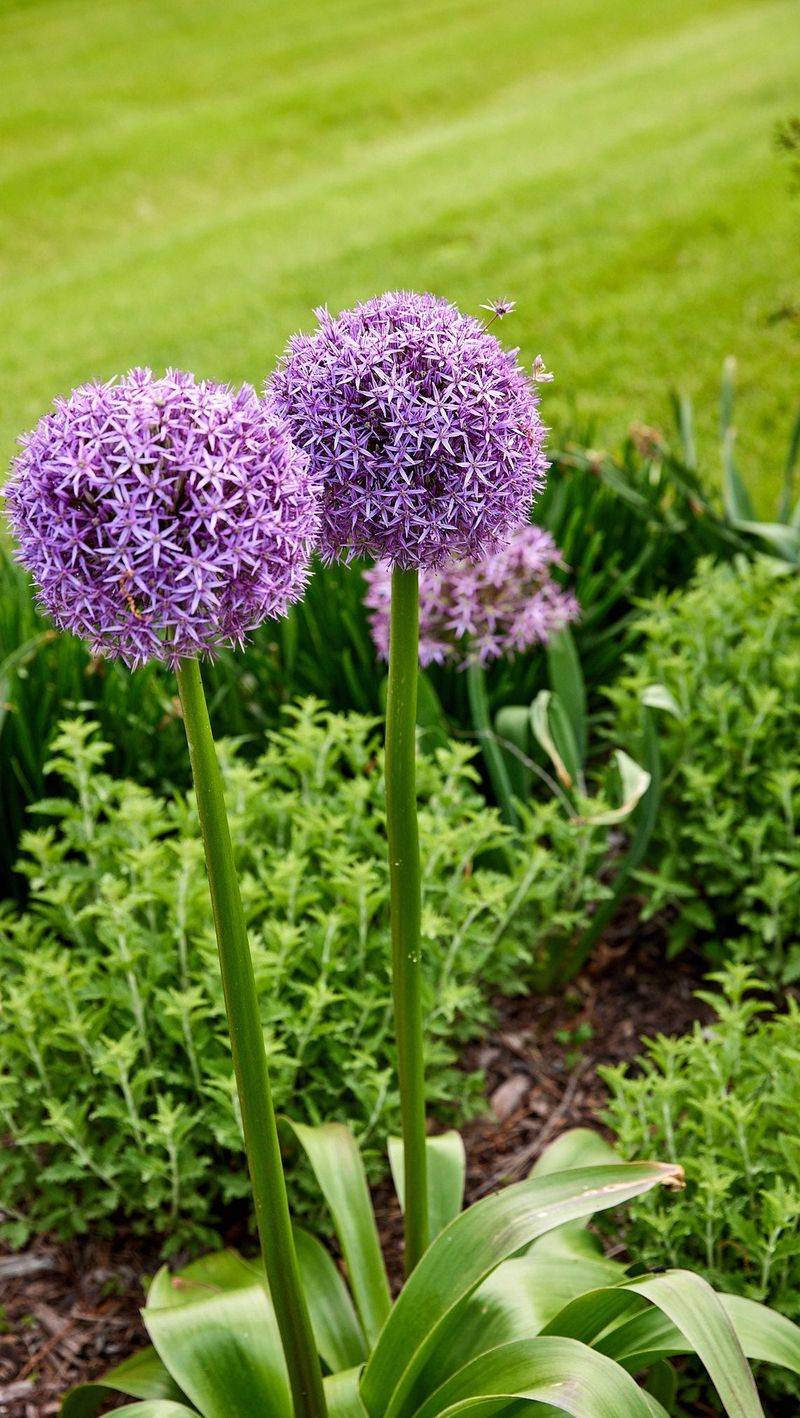
Giant purple balls floating on tall stems look like something from a cartoon, and kids usually point straight at them. These ornamental onions belong to the same family as the garlic and chives in your kitchen garden.
That onion connection gives them a scent that deer and rabbits mostly avoid when they wander through your yard. Gently crush a leaf, and you will notice a faint oniony smell that explains why hungry animals pass them by.
Plant the bulbs in October about three times as deep as they are tall, usually four to eight inches down. Big types like Globemaster need more room, so space them around eight to twelve inches apart in sun.
Bloom time arrives later than most spring bulbs, usually in late spring or early summer, which fills a common color gap. Bees and butterflies swarm the round flower heads, turning your garden into a busy and buzzing snack stop.
One quirky habit catches new growers off guard, because the leaves often turn yellow before the flowers even open. Plant them behind leafy perennials like hostas, and those tired leaves will hide nicely out of sight.
After blooming, the dried seed heads stay standing and look like tiny fireworks frozen in place for weeks. Many gardeners leave them up through fall, and some even spray paint them for fun holiday decorations later.
Smaller types like drumstick allium cost less and still bring lots of personality to tight garden spaces. Good drainage matters a lot, because these bulbs dislike sitting in wet soil during long and slushy winters.
7. Snowdrops
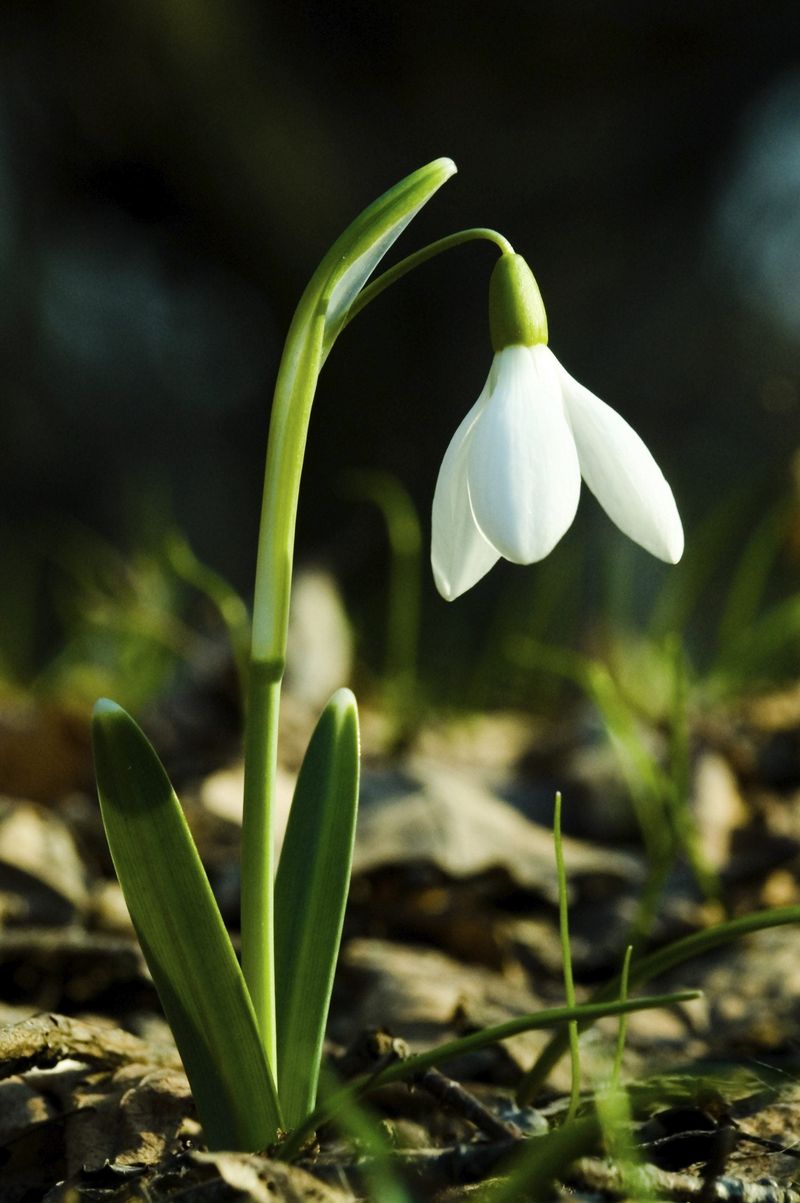
Tiny white bells sometimes push right through a crust of snow in late winter, looking brave and a little stubborn. I can’t imagine a better reward after months of gray skies than spotting that first nodding flower.
The bulbs are small and dry out quickly, so plant them soon after you bring them home from the store. Waiting too long in a warm garage can leave them shriveled and weak, which often leads to poor blooms.
Set them about three inches deep and a few inches apart in soil that stays slightly moist but still drains. Spots under deciduous trees work great, since the bulbs get spring sunshine before the branches fill with leaves.
The common snowdrop, Galanthus nivalis, handles cold winters well and grows in zones three through eight in many guides. That toughness makes it a lovely fit for colder northern gardens where winter hangs on for a long time.
Deer and rodents mostly ignore them, which helps the little clumps spread slowly into larger patches over many years. Some gardeners divide crowded clumps right after flowering, while leaves are still green, to help them spread faster.
In England, people get so excited about these flowers that serious fans have a special nickname, galanthophiles. Rare varieties have sold for surprisingly high prices there, with single bulbs sometimes fetching hundreds of pounds at auction.
Plant them near a window or along a path you use often, since the flowers stay short and easy to miss. A group of twenty or more bulbs together creates a sweet white patch you can actually see from inside.
8. Camassia
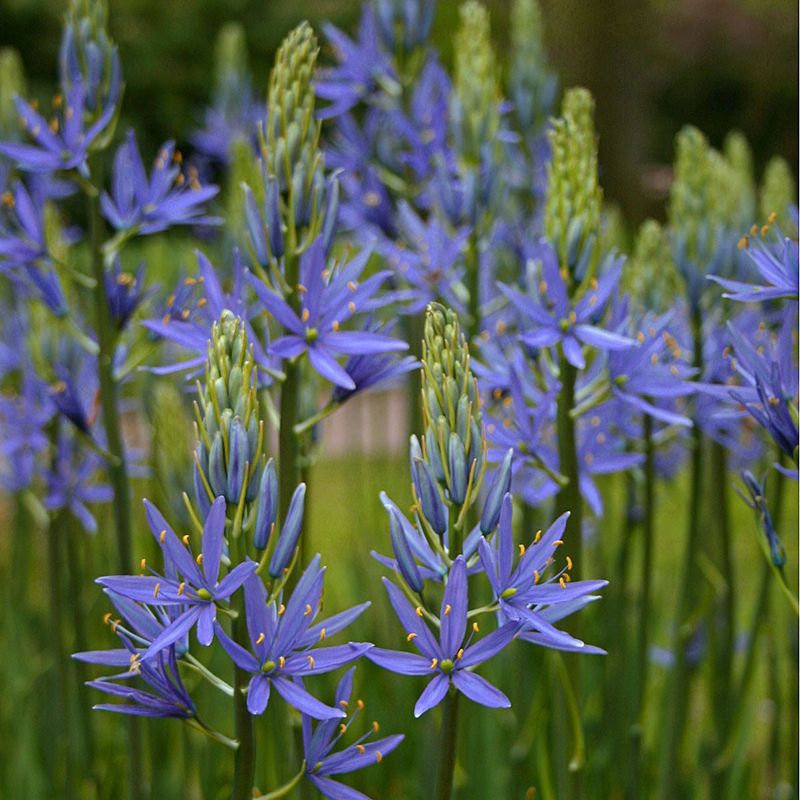
Indigenous peoples of the Pacific Northwest once cooked camas bulbs as an important food, long before gardeners grew them. Today these tall blue spikes bring a wildflower feel to backyards, and they handle soggy spots surprisingly well.
Most spring bulbs struggle in wet ground, but camassia often thrives in soil that stays damp during spring. That makes it a smart pick for low corners or rain gardens that other bulbs usually dislike.
Plant the bulbs about four to six inches deep and roughly six inches apart during early fall. Many popular types grow in zones four through eight, so they fit well across a wide range of cold climates.
Flower spikes rise two to three feet tall in late spring, covered in starry blooms of blue or creamy white. Bees love them, and the timing fills a nice gap after tulips finish but before summer perennials start.
Michigan even has its own native relative, wild hyacinth, known as Camassia scilloides, found in parts of the southern state. That native species is rare and protected here, so stick with nursery grown bulbs and leave wild plants alone.
Personally, I like planting camassia in loose drifts rather than neat rows, because it looks more natural that way. Mixing them with ferns or native grasses creates a meadow style scene that feels relaxed and easy to maintain.
Deer usually show less interest in them than in tulips, though hungry animals can still nibble now and then. Once established, the clumps slowly grow larger each year and need little attention beyond letting the leaves fade.
9. Striped Squill
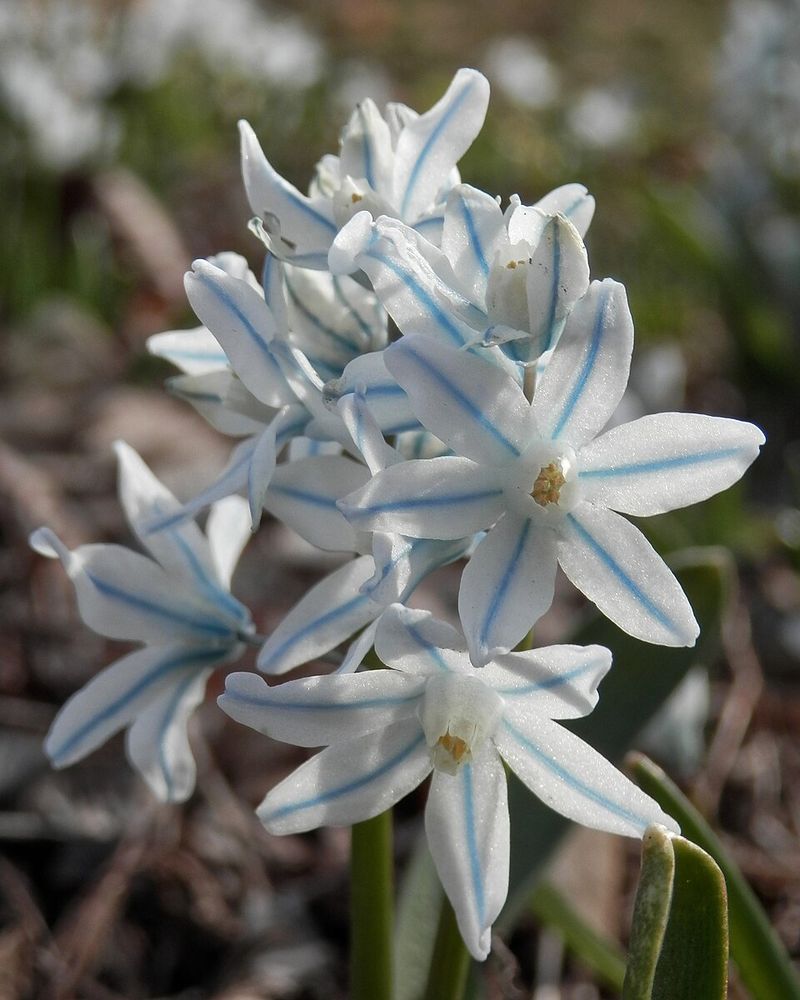
Look closely at these pale blue flowers and you will find a thin, darker blue stripe running down every petal. That delicate detail makes them look hand painted, like tiny pieces of fine china scattered across the ground.
The botanical name honors Count Apollos Mussin-Pushkin, a Russian scientist who collected plants in the Caucasus long ago. Despite that fancy title, the bulbs are humble and easy, asking for little more than sunshine and decent drainage.
Plant the small bulbs about three to four inches deep and a few inches apart this October. They grow in zones three through eight, so even chilly northern yards can enjoy their soft early spring color.
I believe this little bulb deserves more attention, since it offers early color with a calmer spreading habit. Some gardeners choose it over Siberian squill, which several Midwest groups now flag as an invasive concern in woodlands.
The flowers stand only four to six inches tall, so place them near the front of beds or along walkways. They also look lovely tucked into rock gardens, where the stones help show off their delicate icy color.
Bees appreciate the early pollen on cool spring days when few other flowers have opened yet. Deer and rodents rarely bother them much, which gives these little clumps a better chance to settle and grow.
Pair them with yellow daffodils or early tulips for a fresh spring color mix that looks bright and clean. Once the blooms fade, the leaves disappear quickly, leaving room for summer plants to take over without fuss.
10. Grecian Windflowers
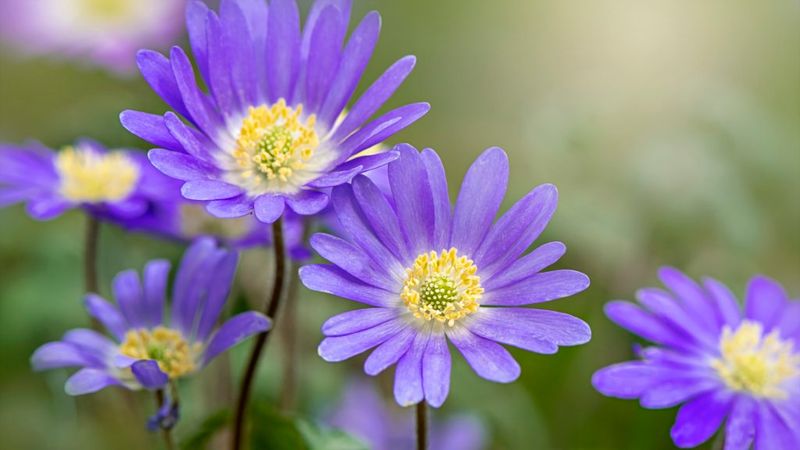
Daisy shaped flowers in blue or pink open on sunny days and often close again when clouds roll in. It feels like they have their own moods, and watching them react to the weather is a small daily joy.
Their tubers look like shriveled brown pebbles, and honestly they might be the strangest thing you plant this fall. Soaking them in water for a few hours before planting helps them plump up and sprout faster.
Telling the top from the bottom can be tricky, so many experts suggest planting them sideways to avoid worry. Set them about two to three inches deep and a few inches apart in loose soil with good drainage.
Most sources list them as hardy in zones four or five through eight, so colder northern spots need extra care. A thick layer of shredded leaves or straw after the ground cools can help protect them in chilly areas.
Plants stay low, around six inches tall, and their ferny leaves form a soft carpet under shrubs and trees. I like tucking them around taller tulips, since the lacy foliage hides bare soil and adds a frilly texture.
Deer and rabbits usually leave them alone, which makes life easier for gardeners living near woods or open fields. Over time, the small clumps can slowly widen and fill shady corners with cheerful early spring color.
Blue Shades is a popular variety with sky colored petals, while White Splendour offers crisp white flowers with yellow centers. Planting a mix can create a cheerful patchwork that looks like confetti tossed across the spring garden.
11. Fritillaria
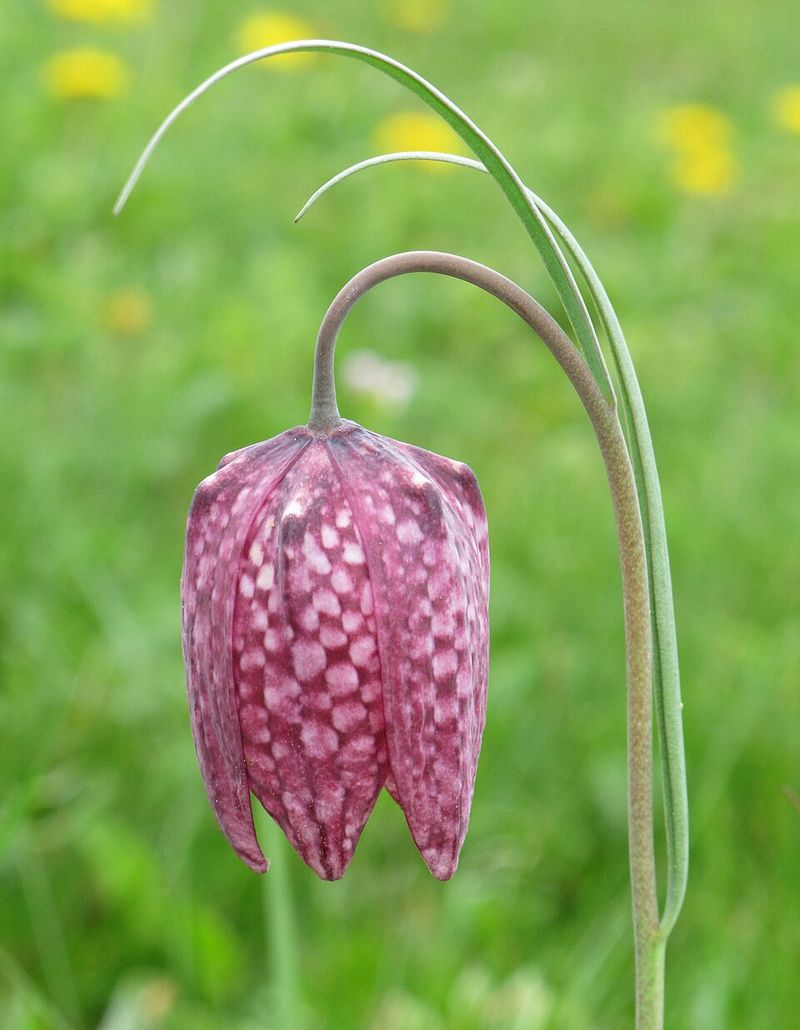
Checkered purple petals that resemble a tiny chessboard make snake’s head fritillary one of the strangest flowers you can grow. Visitors often bend down for a closer look, sure that someone must have painted the pattern by hand.
This species, Fritillaria meleagris, grows in zones three through eight and likes soil that stays a bit moist. It handles damp spots better than many bulbs, which makes it handy for low areas that drain slowly in spring.
Plant these small bulbs about four inches deep and a few inches apart as soon as you buy them. They have thin skins and can dry out quickly, so keep them cool and plant without long delays.
Its bigger cousin, the crown imperial, stands about three feet tall with a ring of orange or yellow bells. A tuft of green leaves sits on top like a pineapple, and that look surprises nearly everyone who sees it.
Crown imperial bulbs have a hollow center, so plant them on their sides to keep water from collecting and causing rot. They need deeper holes, about six to eight inches, and tend to do best in zone five and warmer areas.
Both types carry a musky scent that many gardeners believe helps keep rodents and deer away from their beds. You may notice the smell when handling the bulbs, so planting them quickly keeps your garage from smelling funky.
Bees visit the dangling bells, and the flowers usually show up in mid spring after the earliest bulbs fade. Grouping them in small clusters helps the unusual shapes stand out, especially beside plain green groundcovers nearby.
12. Asiatic Lilies
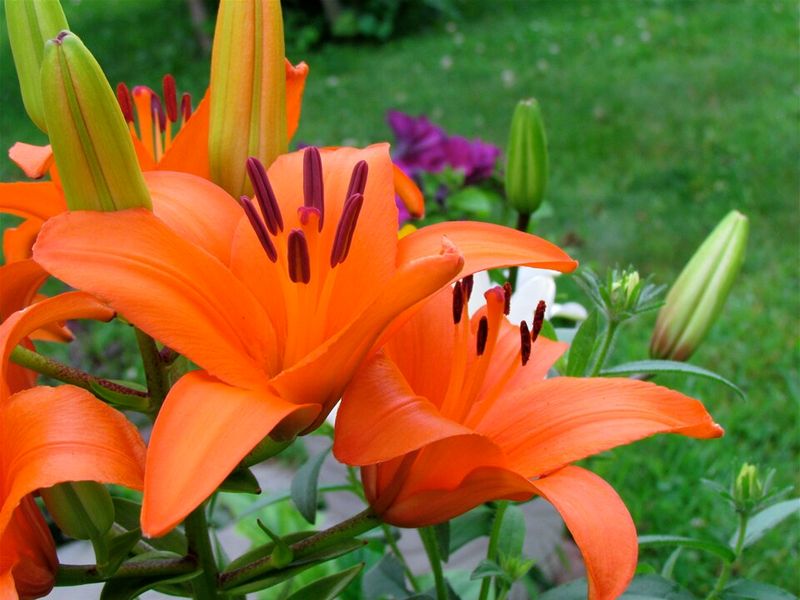
Most people buy lilies as potted plants in summer, yet fall planting often gives the bulbs a stronger start. The roots grow during cool autumn weeks, and that head start can mean sturdier stems and bigger blooms.
Lily bulbs look different from most others, with loose fleshy scales and no papery outer skin to protect them. That missing coat lets them dry out fast, so plant them soon after buying and keep them cool until then.
Dig holes about six to eight inches deep in a sunny spot with loose, well drained garden soil. Asiatic types handle cold winters well and grow in zones three through eight, covering even the far northern corners.
Bold flowers in orange, red, yellow, pink, or white open in early summer and carry little to no scent. That makes them a nice pick for people who find the heavy perfume of other lily types a bit too strong.
Watch for bright red lily leaf beetles in spring, since these hungry bugs can chew leaves down surprisingly quickly. Hand picking them into a cup of soapy water works well, and checking plants every few days keeps damage low.
Cat owners need to know something serious, because every part of a true lily can harm cats, including pollen. Even a small nibble can lead to kidney trouble, so plant them far away from curious pets or skip them altogether.
Lilies mix beautifully with spring bulbs, because they bloom just as the earlier flowers fade away for the year. I like planting them behind daffodils, so the tall stems rise up and fill space once daffodil foliage yellows.