Copperheads Are Heading Toward Rocky Hillside Dens Across Missouri As Nights Turn Cold
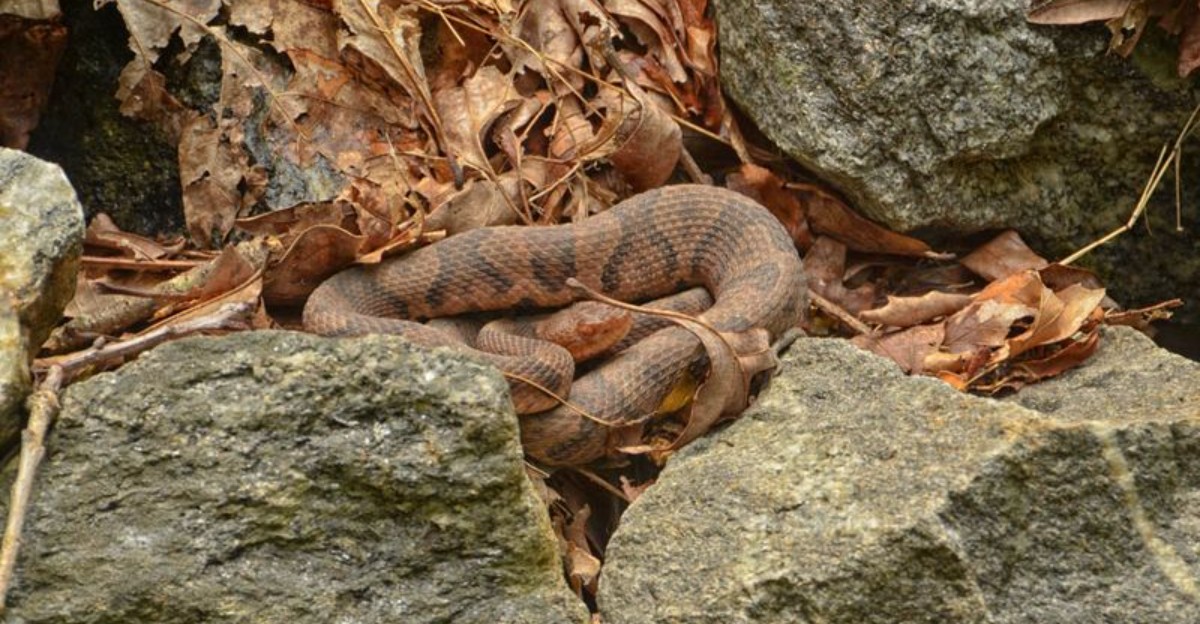
Copperheads in Missouri often spend winter packed into the same rocky crevice as black rat snakes and timber rattlesnakes. I find it amazing that animals rarely sharing space in summer will crowd together underground in fall.
Many of those dens sit on south-facing hillsides, where low autumn sun warms the rocks for a few extra hours. The Ozarks hold plenty of these ledges, so sightings often cluster in the southern half of the state.
Babies born in late summer are still out in October, and many still show a bright yellow tail tip. Young snakes wiggle that tip like a small worm to lure frogs and lizards close enough to catch.
You could spot one resting on a warm rock wall during an afternoon hike or while stacking firewood. Have you ever wondered where those quiet neighbors go once the first hard frost settles over your yard?
Cooler Nights Push Snakes Toward Shared Winter Shelters
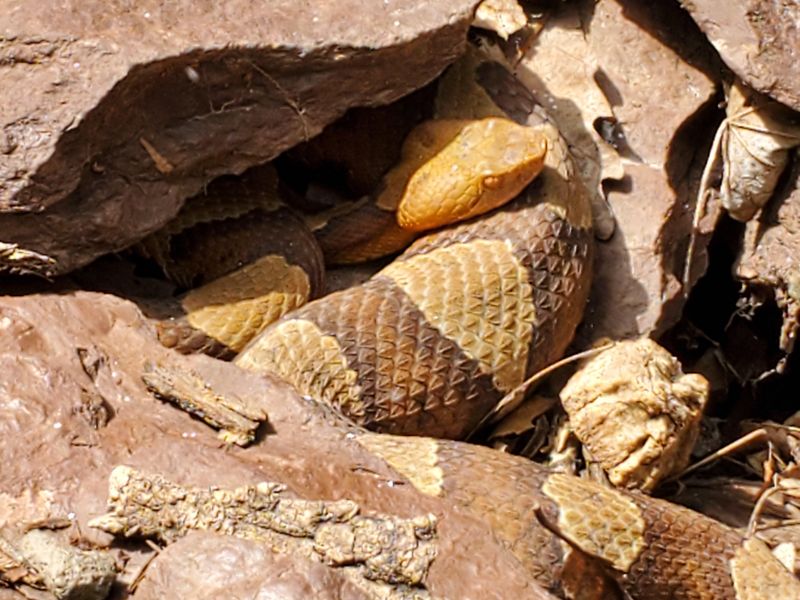
Each fall, many copperheads across Missouri begin a short trip from summer hunting grounds back to familiar rocky dens. The Missouri Department of Conservation reports that they usually stay in winter shelters from about October until April.
Snakes are cold-blooded, so their body temperature follows the air and ground around them each day. Once nights drop into the forties, digestion slows down and hunting stops being worth the effort for them.
Many copperheads return to the same den year after year, and researchers believe they follow scent trails to find it. Young snakes born in late summer may track the scent of adults to locate a safe winter spot.
Those dens are often shared with other species, including black rat snakes, timber rattlesnakes, and smaller snakes. Suitable crevices are limited, so several species often end up using the same deep cracks below the frost line.
Not every copperhead uses a group den, and scientists are still learning how common communal dens are in each region. Some individuals settle alone in rotting stumps, old foundations, or animal burrows that reach below frozen soil.
For homeowners, this movement means October can bring more daytime sightings, at least for a few weeks. Snakes cross lawns, trails, and driveways on warm afternoons, then slip out of sight once a cold front settles in.
I like to think of it as the last busy commute of the year for our local wildlife. By the time leaves finish falling, most copperheads are tucked away and quiet until spring sunshine returns.
South-Facing Rock Ledges Draw The Most Traffic
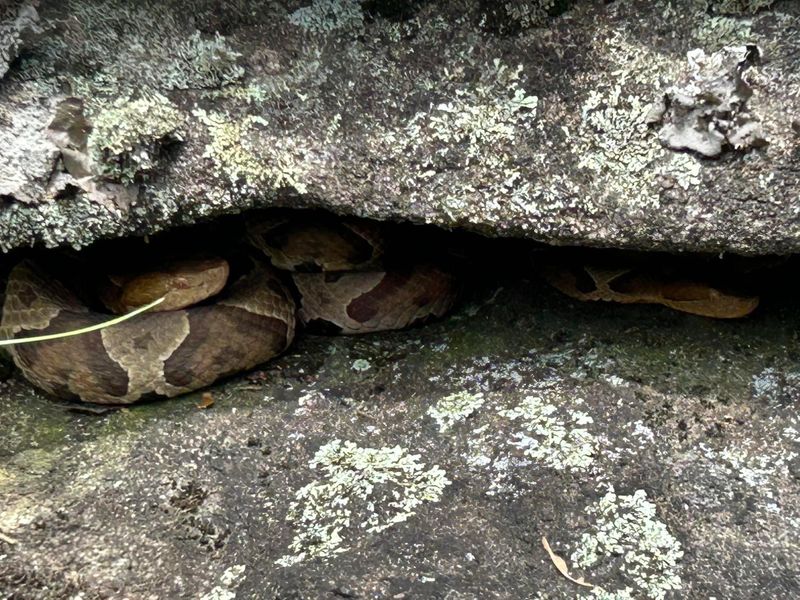
Sunlight is the secret ingredient, and south-facing slopes in Missouri catch far more of it than shady north slopes. On a clear October afternoon, exposed limestone or dolomite ledges can feel noticeably warmer than the nearby air.
Copperheads use that stored heat to warm up before slipping deeper into cracks where temperatures stay more stable. Biologists call these spots hibernacula, a fancy word for places where animals spend the cold months resting.
The Ozark region is full of these features, thanks to bluffs, glades, and broken rock along wooded ridges. Rocky glades, which are open patches of thin soil and bare stone, are especially popular with sun-loving reptiles.
Your Missouri Garden Changes Every Week. Your Plan Should Too.
Gardening in Missouri changes quickly throughout the season. Every Friday you’ll receive a simple weekly plan showing exactly what to plant, prune, fertilize, harvest, and protect so you never miss the right timing.
A good den usually has deep crevices that reach below the frost line, often several feet underground. Shallow cracks freeze too easily, so snakes rarely choose them for the long winter stay ahead of them.
In late fall, you may notice snakes basking near den openings for a few days before going underground. Spring brings the same pattern in reverse, with snakes lingering at the entrance before scattering to summer areas.
Hikers in places like Ha Ha Tonka or the Mark Twain National Forest should watch where they place hands. Stepping over logs or reaching onto ledges without looking first is how many surprise encounters happen each year.
I believe a little curiosity goes a long way, so pause and scan sunny rocks before you sit down. Leaving these hillside dens alone helps the snakes and keeps your own trip calm and safe.
Late Fall Sightings Near Woodpiles Or Rock Walls
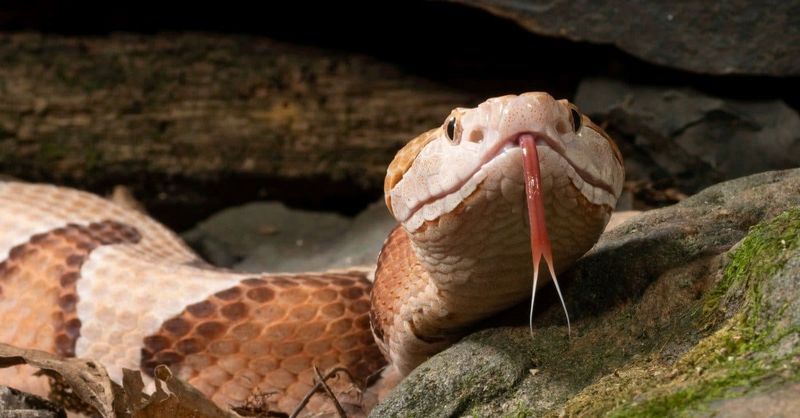
Stacking firewood in October feels like a cozy chore, but your woodpile can look like a hotel to a snake. Gaps between logs hold warmth, block wind, and attract mice, which are a favorite meal for copperheads.
Stone walls, landscape boulders, and old foundations work the same way, especially if they sit in full sun. Snakes heading toward winter dens may stop at these spots to rest, warm up, or grab a final meal.
Newborn copperheads add to the count, since Missouri litters usually arrive in August or September each year. A mother may have around three to ten babies, and each one is born ready to hunt alone.
Those little snakes are about eight inches long and carry the same venom as adults, just in smaller amounts. Because they are small and well hidden, they are easy to miss while raking leaves or moving logs.
You need to wear sturdy leather gloves and closed shoes whenever you handle firewood or shift garden stones this season. A long-handled tool, like a rake or grabber, lets you lift debris without putting fingers into dark gaps.
Most fall sightings happen on mild afternoons, when temperatures climb into the sixties or low seventies again. Cool mornings usually keep snakes tucked in place, so they may not move away quickly when disturbed.
If you spot one, step back slowly and give it time to leave on its own schedule. In most cases, the snake is simply passing through and will be gone once colder weather arrives.
Hourglass Bands That Set This Snake Apart
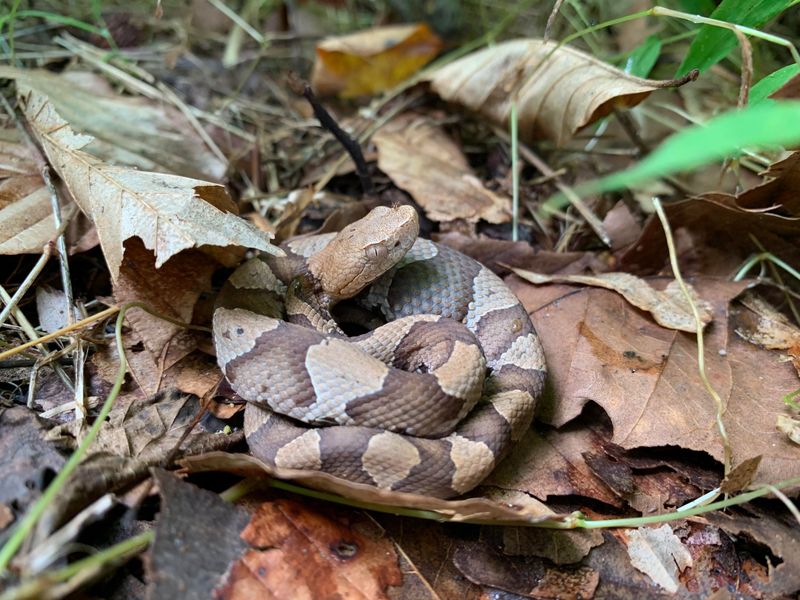
Did you know that copperheads wear a pattern many people compare to a stack of hourglasses or Hershey’s Kisses? Viewed from above, each dark band is wide along the sides and pinched narrow across the middle of the back.
The background color ranges from pale tan to pinkish brown, which blends neatly into fallen oak leaves. Its head is a coppery, unpatterned color, which explains the common name and makes adults fairly easy to recognize.
Adults in Missouri usually measure two to three feet long, with a thick body for their length. Copperheads are pit vipers, so they have a small heat-sensing pit between each eye and nostril.
Their pupils are vertical, like a cat’s eye, though you should not get close enough to check that. Babies look like small adults, except for that bright yellow or greenish tail tip used to lure prey.
Several harmless snakes get mistaken for copperheads, especially young black rat snakes and northern water snakes. Young rat snakes have blotches that stay wide across the back instead of narrowing into an hourglass shape.
Water snakes have bands that usually widen on the back, which is the opposite of the copperhead design. The Missouri Department of Conservation offers a free online field guide with clear photos of each species.
Learning these patterns at home makes it much easier to stay calm when you spot a snake outdoors. Snapping a quick photo from a safe distance also lets you check the identification later without getting close.
A Safe Distance Matters More Than Removal
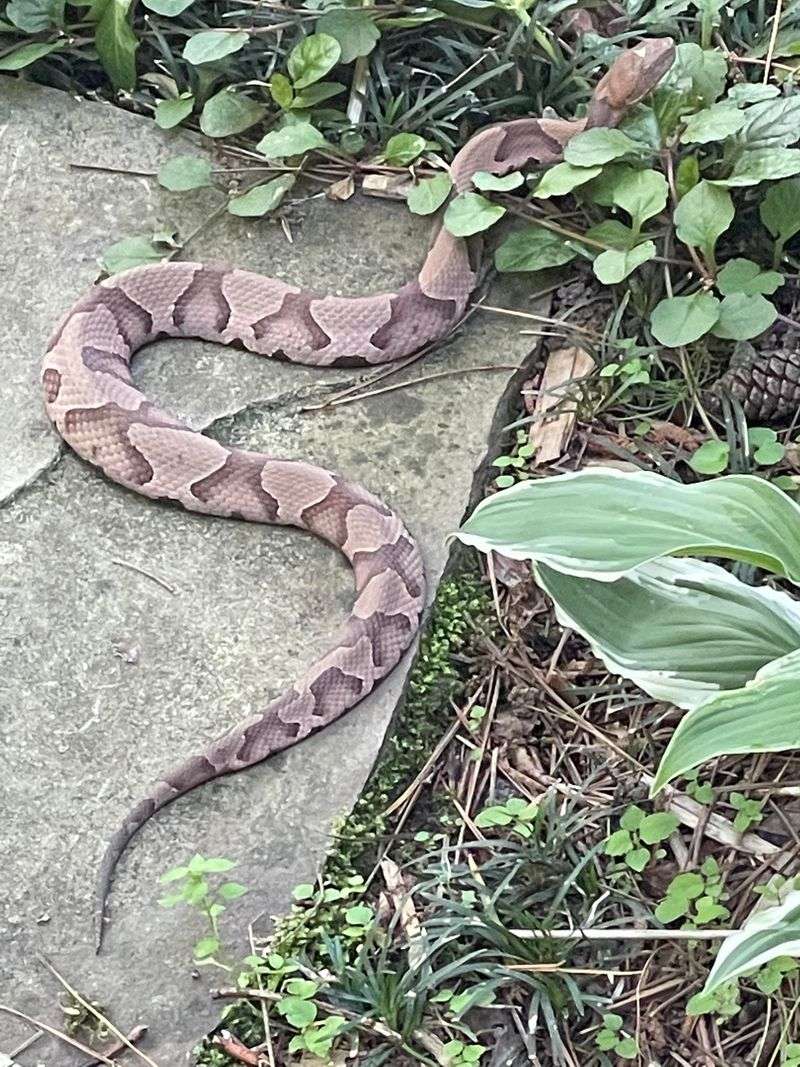
Missouri doctors treat copperhead bites every year, yet these bites are rarely life-threatening for healthy adults who get care. Their venom is milder than a rattlesnake’s, but a bite can still cause strong pain, swelling, and bruising.
Many bites happen when people try to catch, move, or harm a snake instead of leaving it alone. Copperheads often freeze in place when they feel threatened, trusting their camouflage to keep them hidden from view.
Experts often suggest staying at least six feet away, which is farther than most snakes can strike. Keep children and pets close, and calmly walk around the snake rather than trying to chase it off.
Missouri’s Wildlife Code treats native snakes as nongame, so harming them is technically unlawful, and leaving them alone is the safest choice. For a snake inside a garage or home, a licensed wildlife control operator can relocate it safely.
If a bite does happen, stay calm, remove rings or tight clothing, and keep the bitten limb still. Call 911 or head to an emergency room right away, since antivenom works best when given early.
Skip old remedies like ice, tourniquets, or cutting the wound, because they can make the injury much worse. The Missouri Poison Center can also give guidance by phone while you travel to get medical care.
Snakes also help us out, since copperheads eat plenty of mice, voles, and cicadas around homes and farms. Giving them space protects you and lets these quiet pest controllers keep doing their useful work.
Yard Habits That Leave Fewer Hiding Spots
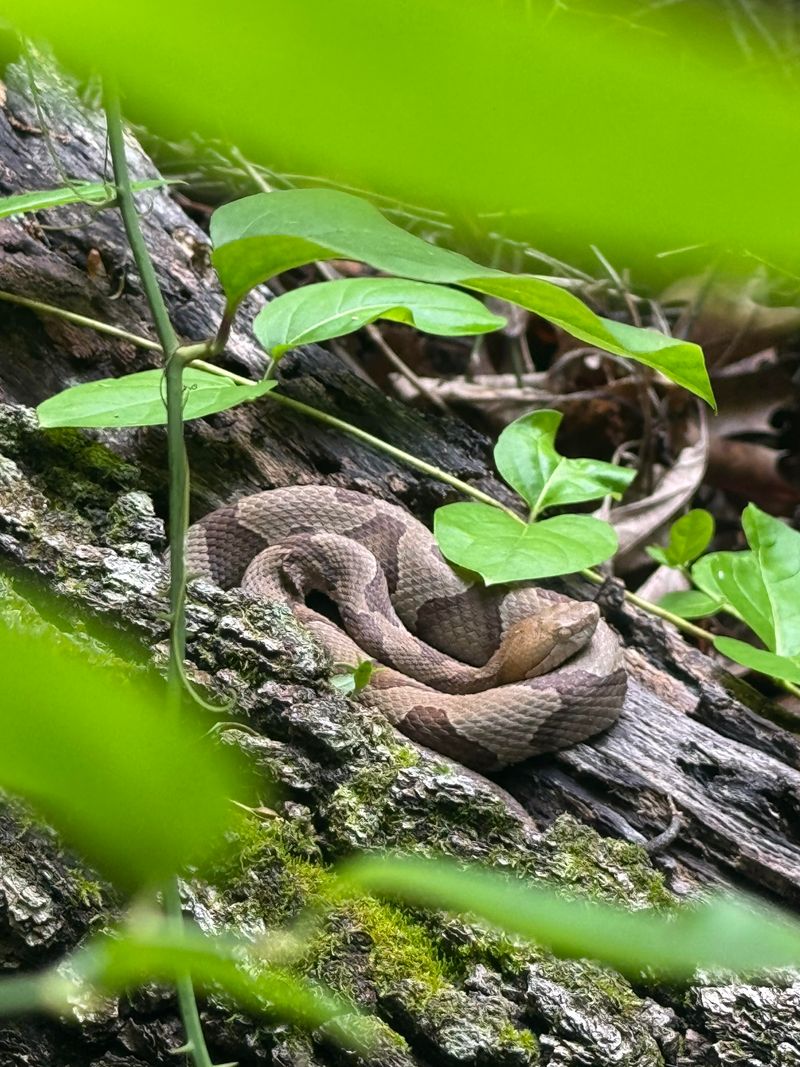
A tidy yard will not keep every snake away, but it can make your property far less inviting. University extension services suggest focusing on two things snakes want most, which are shelter and food.
Fall is a great time to start, since cooler weather makes yard work more comfortable for most people. Move firewood stacks at least twenty feet from the house, and raise them off the ground on a rack.
Clear brush piles, scrap lumber, and old tarps that create shady, protected spaces close to doors or patios. Keep grass mowed short near the house, since snakes usually avoid open ground where hawks can spot them.
Rodents draw copperheads in, so store birdseed, pet food, and grain in sealed metal or heavy plastic bins. Pick up spilled seed under feeders, because mice gather there at night and snakes follow the easy meals.
Seal gaps under doors, around foundation vents, and near pipes with caulk, weather stripping, or fine hardware cloth. Even small openings of a quarter inch can let young snakes slip into basements or crawl spaces.
Snake repellents sold in stores, including mothballs and sulfur products, have shown little proof of working well. Mothballs can also harm pets, kids, and soil, so extension experts recommend skipping them around the yard.
I like pairing these chores with leaf cleanup, since one Saturday in October can handle most of them. By spring, your yard will offer fewer hiding places when copperheads leave their hillside dens once more.