What Florida Palms Need In November Before Cooler Weather Sets In
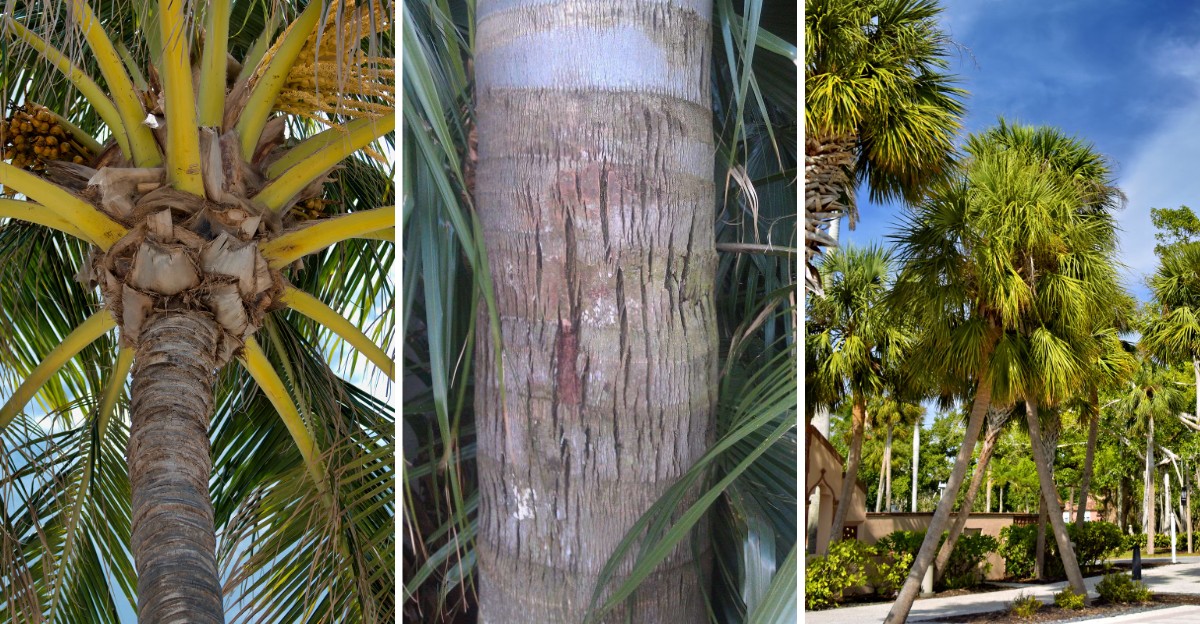
November is the quiet before the cold, and Florida palms feel it long before you do.
Fronds look as green as ever, which fools plenty of owners into coasting. Underneath that calm surface, the tree starts sorting out what to keep and what to let go.
Feed it wrong now and the damage hides until a cool snap exposes it. Skip a step and the crown pays for it in January.
Some palms shrug off a chilly night like it’s nothing. Others sulk for months after a single dip.
Which camp yours falls into depends on the species, and a few popular ones fool people badly.
A short list of chores covers the essentials, and several take less time than a coffee break.
Pull out your calendar this week and mark the date. Cool weather won’t ask permission.
1. November Is Feeding Time For Central And South Florida Palms
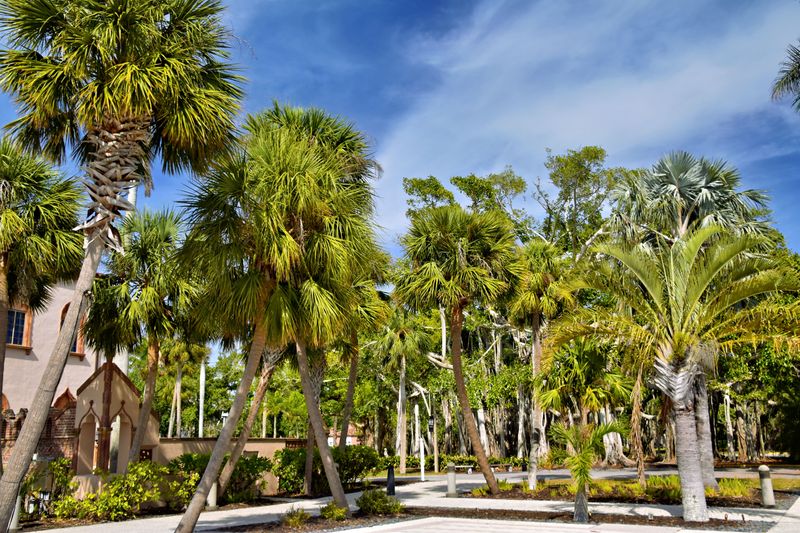
Think of November as the last snack before a long nap. In Central and South Florida, palms still grow a bit during the cooler months, so they need fuel.
Many palm experts suggest feeding four times a year. The usual schedule is February, May, August, and November, which keeps nutrients flowing all year long.
That steady supply matters most in sandy soil. Florida sand drains fast, and nutrients wash away with every heavy rain.
A late fall feeding helps refill the pantry before winter arrives.
Palms showing yellow or spotty leaves may benefit the most. Those colors often point to missing nutrients, and a November meal gives the tree a chance to catch up.
Southwest Florida growers often feed in October or November for this reason.
Not everyone agrees on the timing, though. Some gardeners wait until late February or March, worried that fall food could push tender new growth too early.
If you live near the colder edge of Central Florida, talk with your local extension office.
When you do feed, spread the granules evenly under the canopy. Keep them a foot or two away from the trunk so they do not pile up against it.
Water lightly afterward to help the fertilizer settle in. Then let your palm enjoy its fall feast while the weather stays mild.
2. Panhandle Palms Should Skip This Feeding
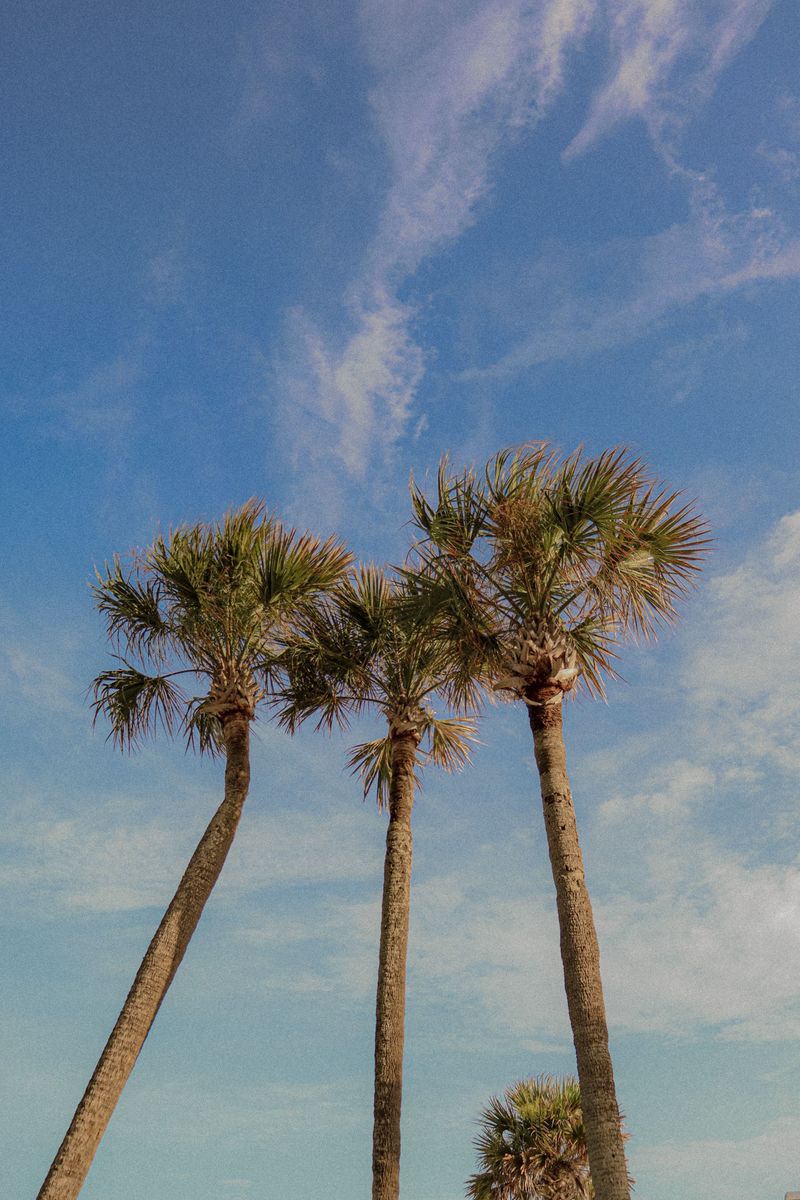
Up in Pensacola or Tallahassee, November can bring frosty mornings that feel nothing like Miami. That difference changes the plan for your palms.
Panhandle palms usually do better without a fall feeding. Fertilizer acts like a wake-up call, telling the tree to push out fresh leaves.
New growth is soft and tender, and a sudden cold snap can damage it fast.
Picture a kid running outside in shorts right before a cold front. That is basically what a fall-fed palm does in North Florida.
Instead, let your palm slow down naturally. It knows winter is coming, and it is ready to rest.
Holding off on food helps it toughen up instead of sprouting fragile leaves.
Your Florida Garden Changes Every Week. Your Plan Should Too.
Gardening in Florida changes quickly throughout the season. Every Friday you’ll receive a simple weekly plan showing exactly what to plant, prune, fertilize, harvest, and protect so you never miss the right timing.
The better time to feed is late winter or early spring. Once the frost risk passes, usually around March, your palm can use those nutrients to grow strong and healthy.
You can still do other helpful chores now. Pull weeds from around the base, add a thin layer of mulch, and check that the soil drains well.
Soggy roots in cold weather can lead to trouble.
Hardy types like sabal palms, needle palms, and windmill palms handle Panhandle winters well. Even these tough characters appreciate being left alone this month.
Sometimes the kindest care is simply patience.
3. Pick A Slow-Release Palm Blend For The November Feeding
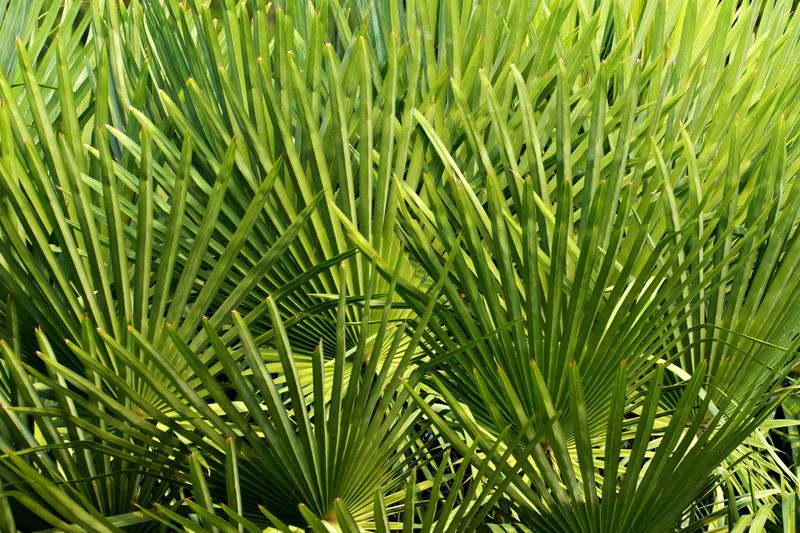
Those numbers on the bag might look like a secret code. Once you crack it, choosing palm food gets much easier.
The University of Florida recommends an 8-2-12-4Mg formula for landscape palms. Some versions are 8-0-12-4Mg, and both work well.
The first number stands for nitrogen, which helps leaves grow green.
The second number is phosphorus, and palms need very little of it. The third number, potassium, is the big star.
Florida palms often run low on potassium, which shows up as spotty or frizzled older leaves.
That final 4Mg means magnesium. Without enough of it, older fronds can turn yellow along the edges while the middle stays green.
A good palm blend also includes tiny helpers called micronutrients. Look for manganese, iron, boron, copper, and zinc on the label.
Manganese is especially important, since a shortage can cause curled, weak new leaves.
Slow-release granules make the best choice. They feed your palm a little at a time over several months, instead of dumping everything at once and washing away.
Skip regular lawn fertilizer near your palms. Lawn blends often pack too much nitrogen, which can actually make palm nutrient problems worse.
Reading the label for a minute can save you months of headaches later.
4. A Potassium-Rich Palm Heads Into Winter Better Protected
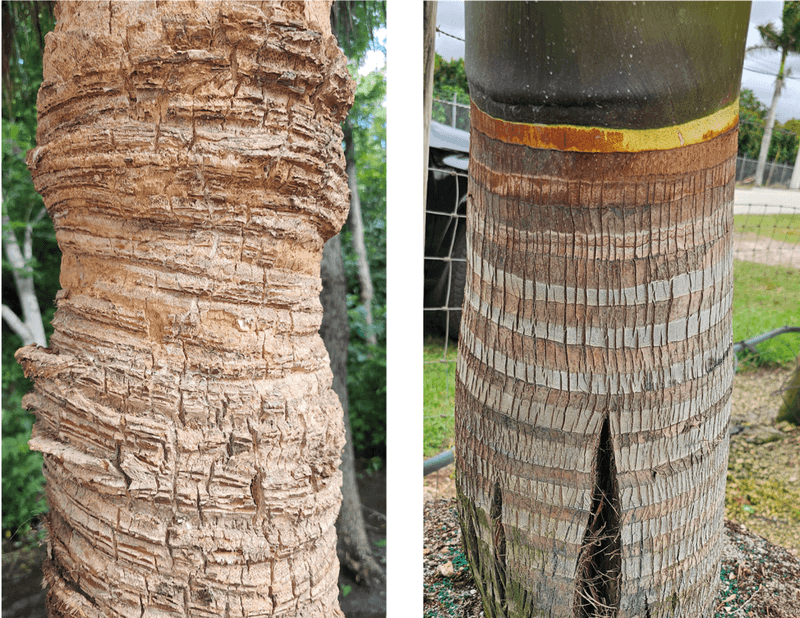
Here is a neat bit of science: well-fed palms tend to shrug off cold better than hungry ones. Researchers studying coconut palms found that fertilized trees showed much less leaf damage after a chilly spell.
Potassium deserves most of the credit. This nutrient helps keep cell walls flexible and full of water.
When cold air hits, those sturdy cells hold up better and are less likely to crack or bruise.
Think of it like wearing a good winter jacket. A palm with plenty of potassium is dressed for the weather, while a starving palm is out there in a thin T-shirt.
Steady feeding through the year builds this protection slowly. One emergency meal right before a freeze will not do much.
The real benefit comes from palms that have been eating well for months.
That is one more reason the November feeding matters in warmer parts of Florida. It tops off the potassium tank before the coolest weeks arrive.
Healthy roots help too. Keep mulch two to three inches deep, but pull it back from the trunk.
Water during dry spells, since thirsty palms handle cold poorly.
Of course, food cannot make a tropical palm frost-proof. Still, a well-nourished tree gives itself the best fighting chance when chilly nights roll in.
5. Save Big Pruning Jobs Until The Frost Risk Passes
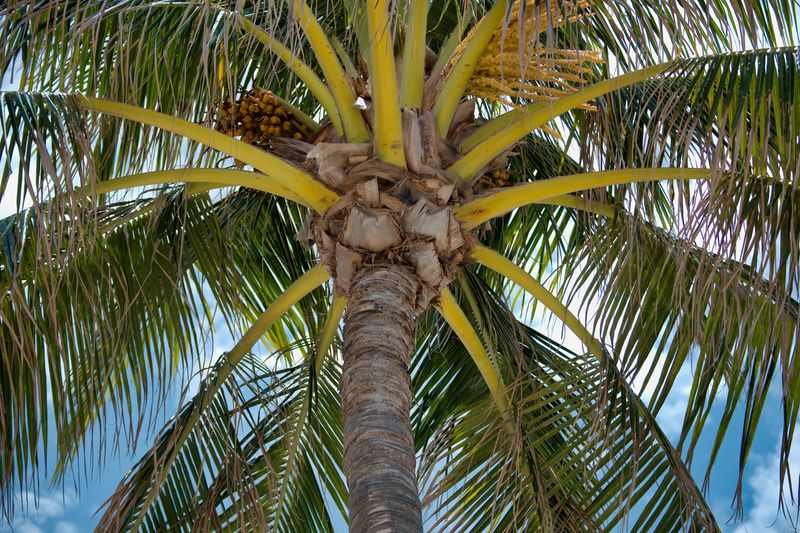
Put down the pruning saw, at least for now. Those droopy lower fronds may look scruffy, but they are doing important work.
Older fronds act like a pantry. They store nutrients that the palm can pull from during lean times.
When you cut them off too early, you take food away from the tree right before winter.
They also work as a cozy blanket. A full canopy helps shield the bud, which is the palm’s single growing point at the top.
If that bud gets badly hurt by cold, the whole tree can be in serious trouble.
Many homeowners love the neat, skinned look sometimes called a hurricane cut. Sadly, removing too many fronds leaves the palm weak and exposed.
Good pruning follows a simple rule: keep green fronds attached.
If something truly bugs you, only remove fronds that are fully brown and dry. Those have already given back their nutrients and offer little protection.
Wait until March or whenever warm weather settles in for good before doing bigger trimming jobs. By then, the frost risk has passed and your palm is ready to grow again.
A slightly shaggy palm in January is a happy palm in May. Your neighbors may stare, but your tree will thank you.
6. Some Tropical Palms Can Be Damaged Above Freezing
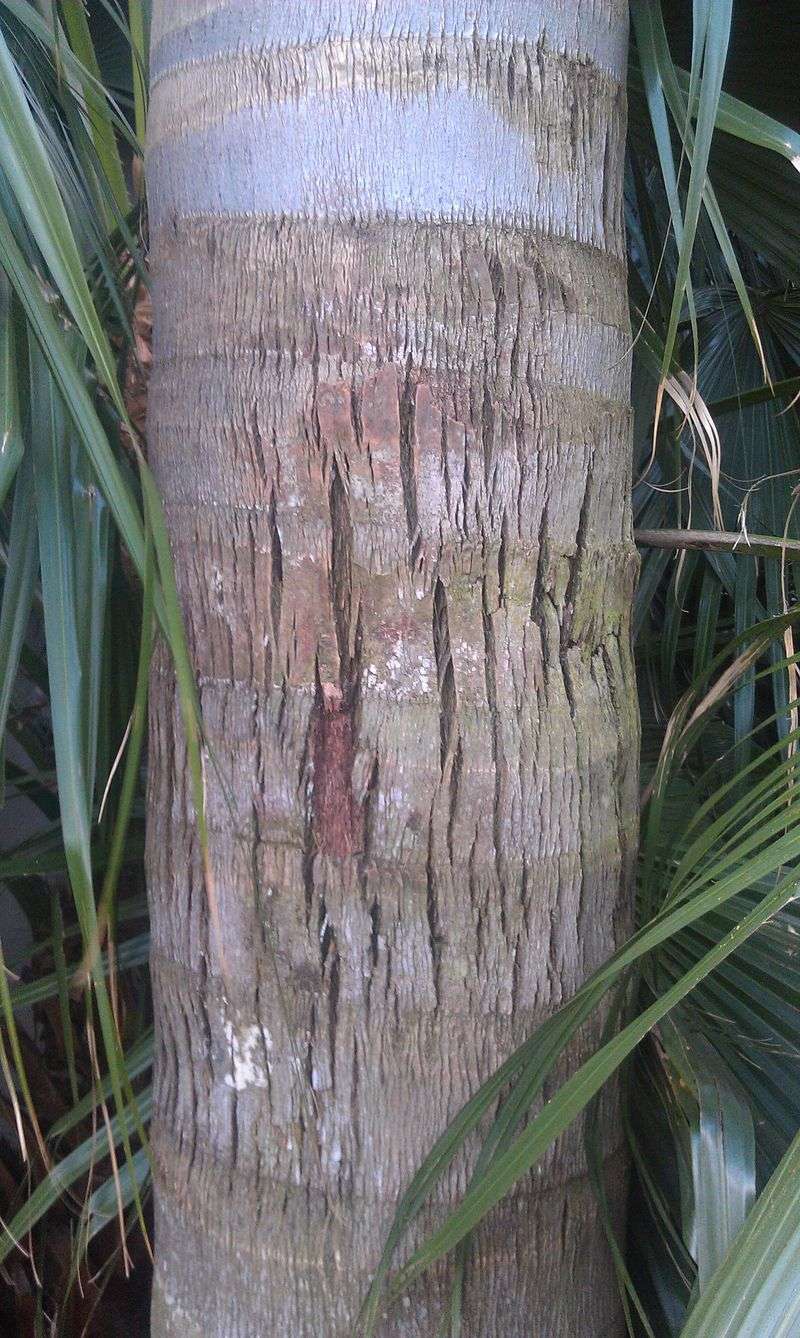
Surprise! A palm does not need ice on the windshield to get hurt.
Some tropical types can suffer chilling injury at temperatures around 50 degrees.
Speed plays a big role here. A quick drop from 80 degrees to 50 degrees can stress a palm more than a slow slide down to 40.
It is a bit like jumping into a cold pool instead of easing in step by step.
Certain palms are extra sensitive. Coconut palms, Bismarck palms, some date palms, and the popular adonidia, often called the Christmas palm, may show damage once nights dip into the 40s.
Signs usually include leaflets that turn pale, spotted, or brown. Sometimes the color change looks like a sunburn, even though cold caused it.
So what can you do? Keep an eye on the forecast during November and December.
When a sharp cold front is coming, give young or potted palms some extra shelter.
Move containers into a garage or close to the house. For in-ground palms, a frost cloth draped over the canopy can trap a little warmth from the soil.
Remove it once the sun comes out.
Watering the soil a day ahead also helps. Moist ground holds heat better than dry ground, giving roots a small but welcome boost.
7. Cold Damage May Not Show Up For Months
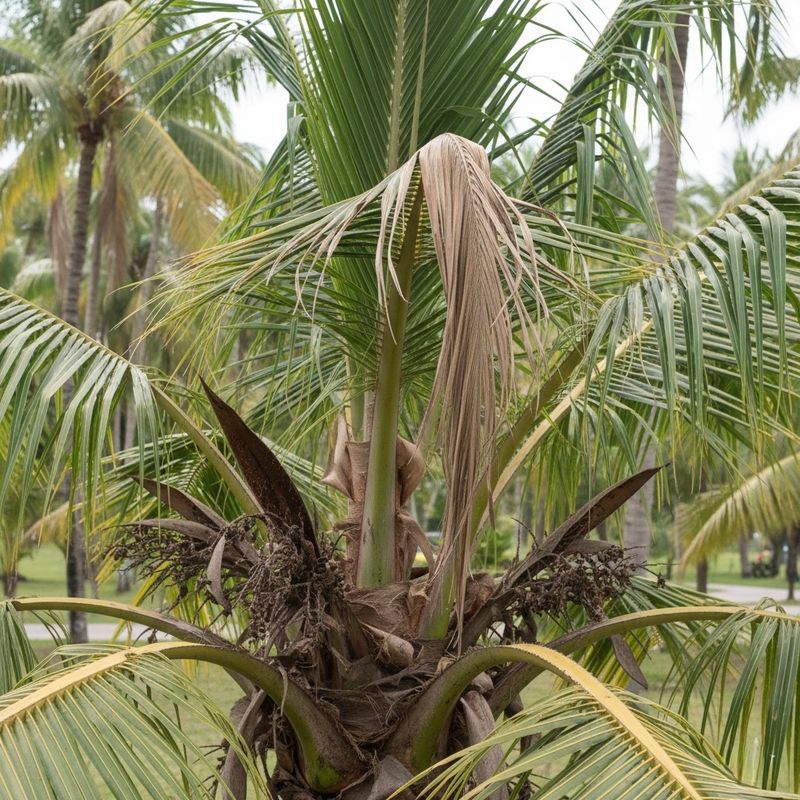
Palms are masters of hiding their feelings. After a cold night, a tree can look perfectly fine for weeks or even months.
Meanwhile, trouble may be brewing inside. Cold injury can harm the bud and young tissue deep within the trunk.
The outside just takes a while to tell the story.
So what should you watch for? Slow new growth is often the first clue.
New leaves may come out bent, twisted, or partly brown when they finally open.
Another warning sign is called spear pull. The spear is the newest leaf, still folded up in the center.
If it slides out with a gentle tug, rot has likely set in at its base.
Do not panic or reach for the chainsaw too soon. Many palms bounce back slowly, pushing out healthier leaves as the weather warms.
Patience is your best friend here.
Some growers spray a copper fungicide into the bud area after a cold event. That can help slow rot while the tree recovers.
Follow the label carefully if you try it.
Keep feeding and watering normally once spring arrives. Then wait and watch through summer.
A palm that keeps producing clean new fronds is telling you it made it through just fine.
8. Watch For Early Lethal Bronzing Signs
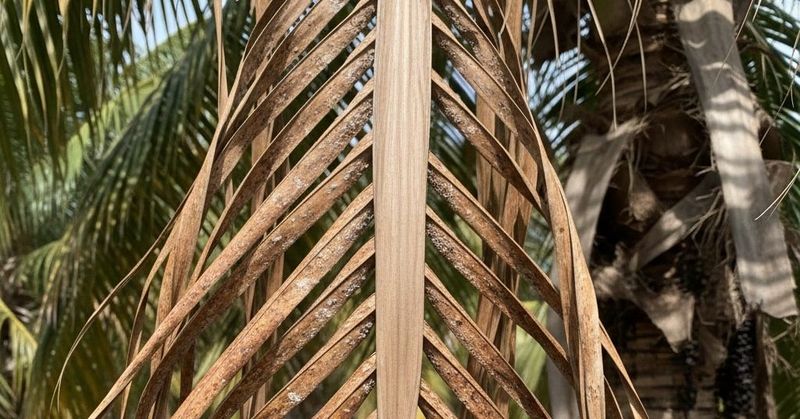
Few things worry Florida palm lovers more than lethal bronzing. This bacterial disease is spread by a tiny planthopper insect, and infected palms have no known way to recover.
Catching it early still matters. Quick action helps protect the other palms in your yard and your neighborhood.
Look at the fruit and flowers first. Early on, a sick palm may drop its fruit too soon, or its flower stalks may turn brown and wither before their time.
Next comes the color change. The oldest, lowest fronds start to look bronze, yellow, or reddish-brown.
Over time, that discoloration creeps upward through the canopy like a slow tide rising.
Finally, the spear leaf turns brown and droops. This means the palm’s growing point has failed, and the tree cannot make new leaves.
Here is the tricky part. Symptoms may take four to five months to appear after infection.
A palm can look healthy while the disease quietly spreads inside.
Sabal palms, queen palms, and Canary Island date palms are among the commonly affected types. If you spot these signs, contact a certified arborist or your county extension office.
Removing infected palms promptly cuts down on spread. Healthy nearby palms can sometimes receive preventive antibiotic injections from a professional.
9. Check Trunks For Ganoderma Conks
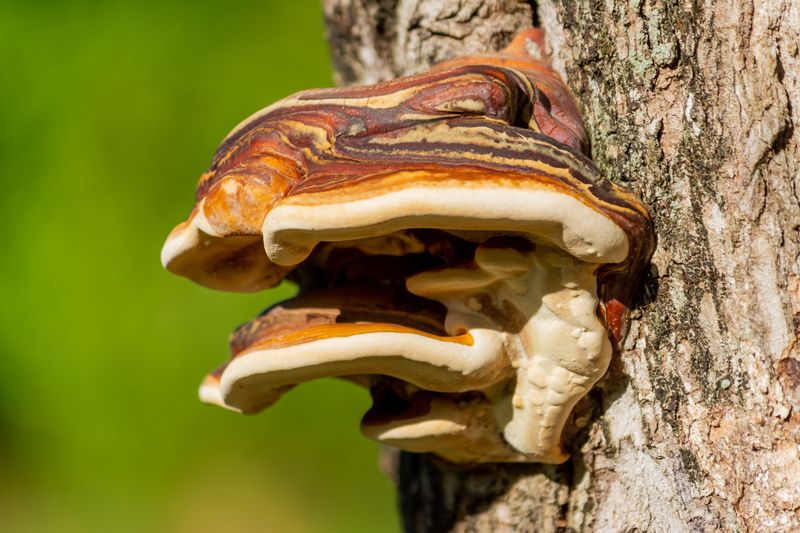
Take a slow walk around the base of each palm. You are looking for something that might seem harmless, maybe even pretty: a mushroom-like shelf growing on the trunk.
That shelf is called a conk, and it signals Ganoderma butt rot. This fungus slowly breaks down the wood inside the lower four to five feet of the trunk.
Young conks start as soft, white bumps about the size of a button. As they mature, they harden into half-moon brackets.
The tops look shiny and reddish-brown, while the undersides stay white.
Sadly, no treatment can cure an infected palm. Worse, the inside can be badly rotted before any conk appears.
By the time you notice one, the trunk may already be weak.
That weakness is a real safety concern. A rotted palm can snap or topple in a storm, putting people, cars, and roofs at risk.
Experts recommend removing a living palm with conks quickly. Taking it down limits the spread of spores to other palms nearby.
Be careful with yard tools, too. Avoid nicking trunks with mowers or string trimmers, since wounds can invite trouble.
Do not replant a new palm in the same spot. The fungus can linger in the soil, so choose a different tree there instead.