You Might See Huge Honeycomb Hanging From A Tree In Indiana These Days
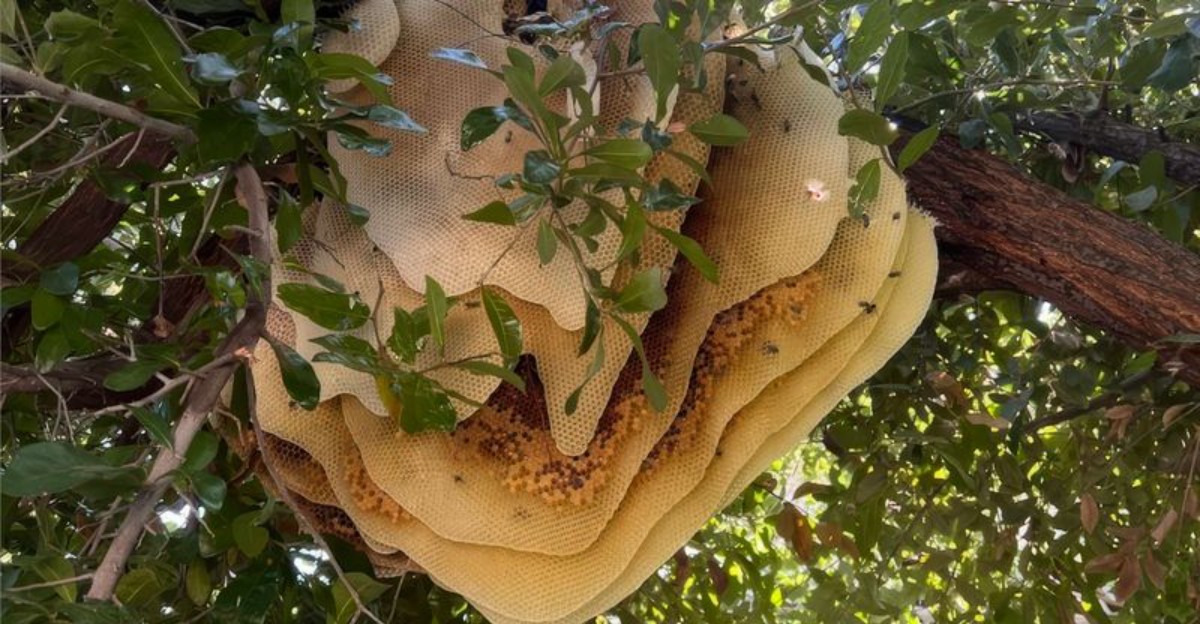
Sometimes an entire insect colony builds its wax comb right out in the open, dangling from a bare branch. I still remember spotting one in Indiana and thinking it looked like a pale, ribbed lantern hanging there.
Each pound of that wax costs the colony roughly six to eight pounds of honey, according to extension experts. That means every sheet you see on the tree represents weeks of hard work by thousands of tiny builders.
When cold weather arrives, the workers huddle into a tight ball and shiver their flight muscles to make heat. The center of that ball can stay far warmer than the outside air, even while the air drops near freezing.
You need patience to watch one up close, but the quiet hum on a chilly October afternoon feels unreal. How many neighbors in Indiana walk right past one of these hanging homes without ever glancing up?
A Swarm That Settled On A Branch Rather Than Inside A Hollow
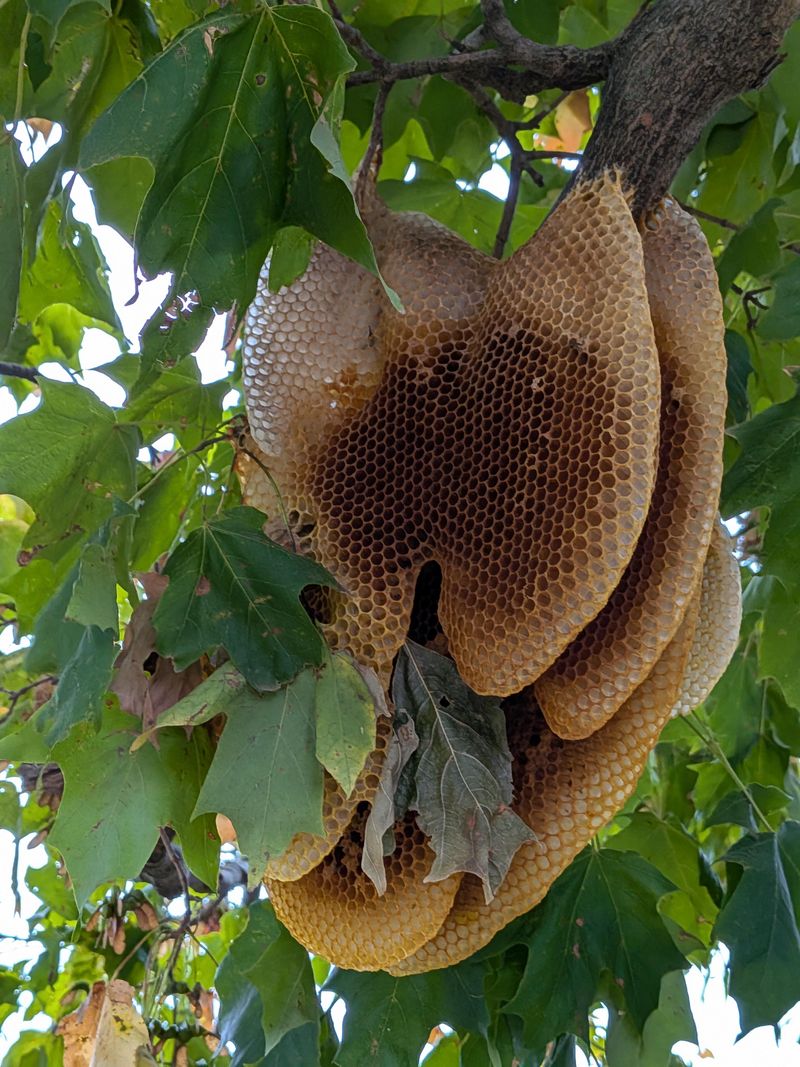
Most of the time, honeycomb hanging from an Indiana tree belongs to an open-air honeybee colony that moved there. The colony likely started as a swarm earlier in the year, then struggled to find a sheltered cavity.
Swarming is the natural way honeybee colonies reproduce, with the old queen leaving alongside thousands of worker bees. The group usually rests on a branch for a few hours or days while scouts search for a hollow.
Scout bees prefer tree cavities, wall voids, or old chimneys that offer about ten gallons of protected space. Once the scouts agree on a site, the whole swarm lifts off and flies there within minutes.
Sometimes the scouts cannot settle on any site, or bad weather keeps the swarm stuck on its branch. Rather than wait forever, the workers start building fresh wax comb right where they are hanging.
By October, that comb may hold honey, pollen, and developing young bees, all exposed to wind and rain. The layered sheets you see make up the colony’s whole home, since no walls surround them at all.
Many people spot these colonies only in fall because the leaves drop and suddenly reveal what was hidden. The comb may have been growing quietly above your yard since early summer without anyone noticing it.
Bee experts describe open-air nests as unusual, so your sighting is worth sharing with local beekeepers. They can often tell you how long the colony has been there just by looking at the comb.
Look For Clues That Separate Honeybees From Wasps Or Hornets
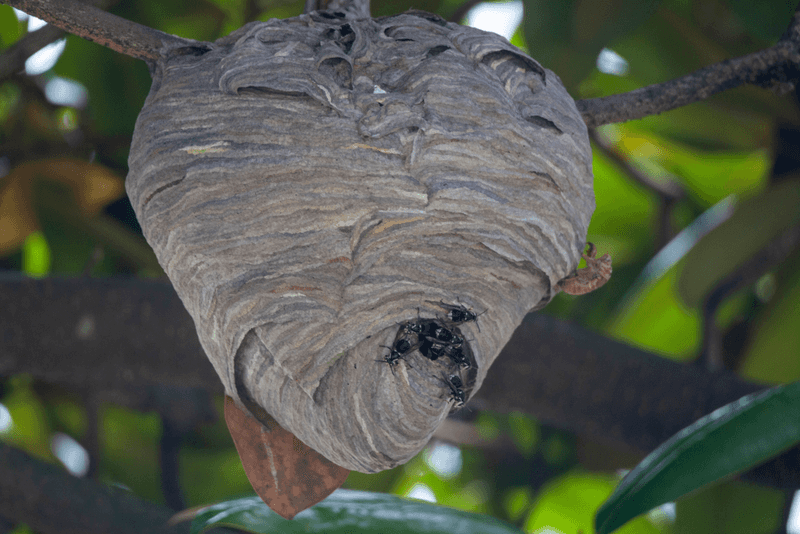
Before you panic about a nest in your tree, take a calm look at what the outside is made of. Honeybee comb is built from waxy sheets that look pale yellow, cream, or golden brown in sunlight.
Bald-faced hornets build gray, papery balls that hide their combs inside, often shaped like a big football. Those paper nests are made from chewed wood fibers mixed with saliva, not from wax made by the insects.
Paper wasps make small, open, umbrella-shaped combs that usually hang under eaves rather than high in trees. Their cells look gray and papery, and you rarely see more than a few dozen wasps around them.
Your Indiana Garden Changes Every Week. Your Plan Should Too.
Gardening in Indiana changes quickly throughout the season. Every Friday you’ll receive a simple weekly plan showing exactly what to plant, prune, fertilize, harvest, and protect so you never miss the right timing.
The insects themselves offer another clue, since honeybees look fuzzy and golden brown with soft striped bodies. Yellowjackets and hornets appear shiny and smooth, with bold yellow or white markings on black bodies.
Honeybees also stack several parallel sheets of comb side by side, like pages hanging from a book spine. Each sheet has six-sided cells on both faces, while wasp combs have cells on only one side.
Fall behavior differs too, because wasp and hornet colonies decline as frost arrives and only new queens overwinter. Honeybee colonies stay together as a large group and try to survive winter with their stored honey.
Use binoculars from at least twenty feet away so you can study the nest without bothering anyone inside. A quick photo also helps a beekeeper or extension office confirm exactly which insect built the nest.
Bees Clustering Over The Comb To Hold In Warmth
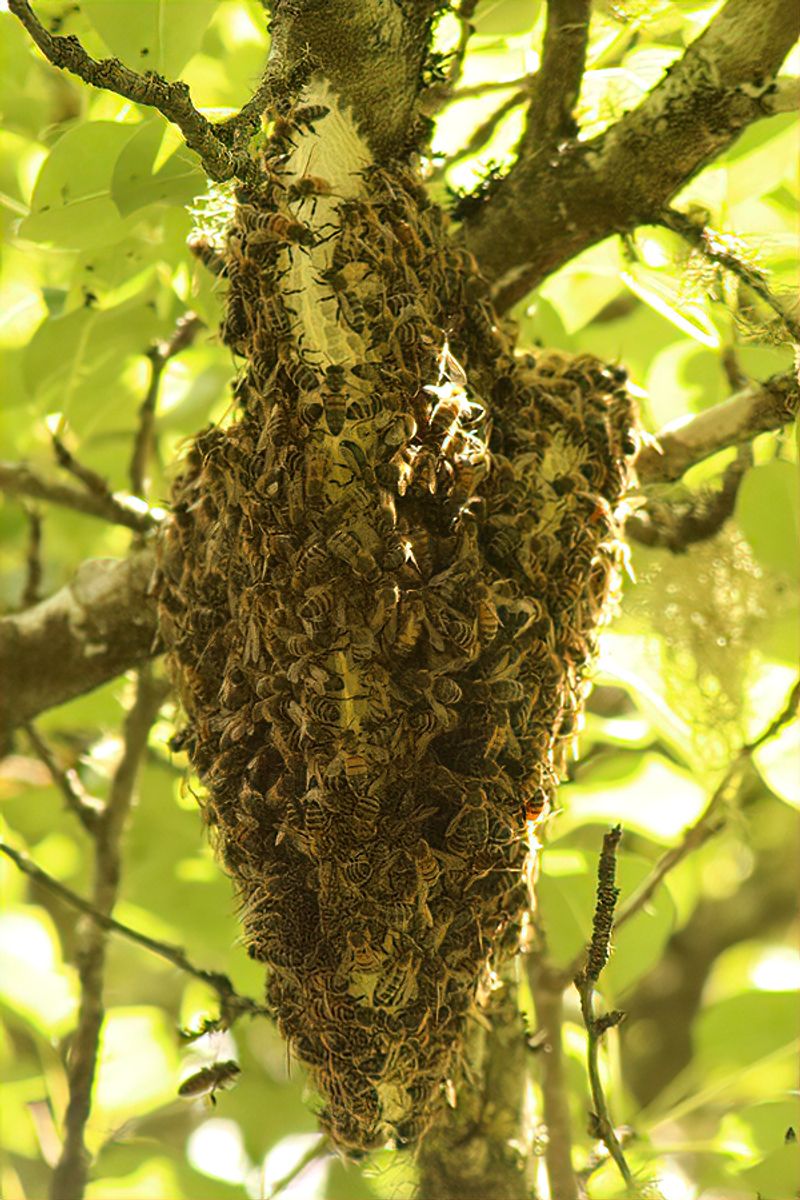
On a frosty October morning, the bees on an open comb may look frozen in place, but they are working. Once temperatures fall into the fifties, honeybees begin pulling together into a tight, living blanket over the comb.
Beekeepers call this formation a winter cluster, and it works a lot like a crowd sharing body heat. Bees in the middle shiver their flight muscles without moving their wings, which produces surprising amounts of warmth.
The outer layer of bees packs tightly together and acts like insulation, slowing heat loss from the center. Bees take turns moving between the chilly outside edge and the warmer core throughout long cold nights.
Inside a hollow tree, that system works well because thick wood walls block wind and hold steady temperatures. On a bare branch, the cluster faces every gust and rainstorm with nothing but its own bodies for shelter.
Shivering burns fuel, so the cluster slowly eats its way across the stored honey as winter goes on. An exposed colony uses more honey than a sheltered one because so much heat escapes into open air.
You may notice the cluster shrinking or shifting position on the comb as fall turns into early winter. That movement usually means the bees are following their food supply, not leaving the colony behind.
Give the cluster plenty of space, because disturbing it on a cold day forces bees to waste energy. Honestly, I find it amazing that such small insects can manage their own heating plan without any help.
You Are Looking At A Rare Sight In Midwestern Trees
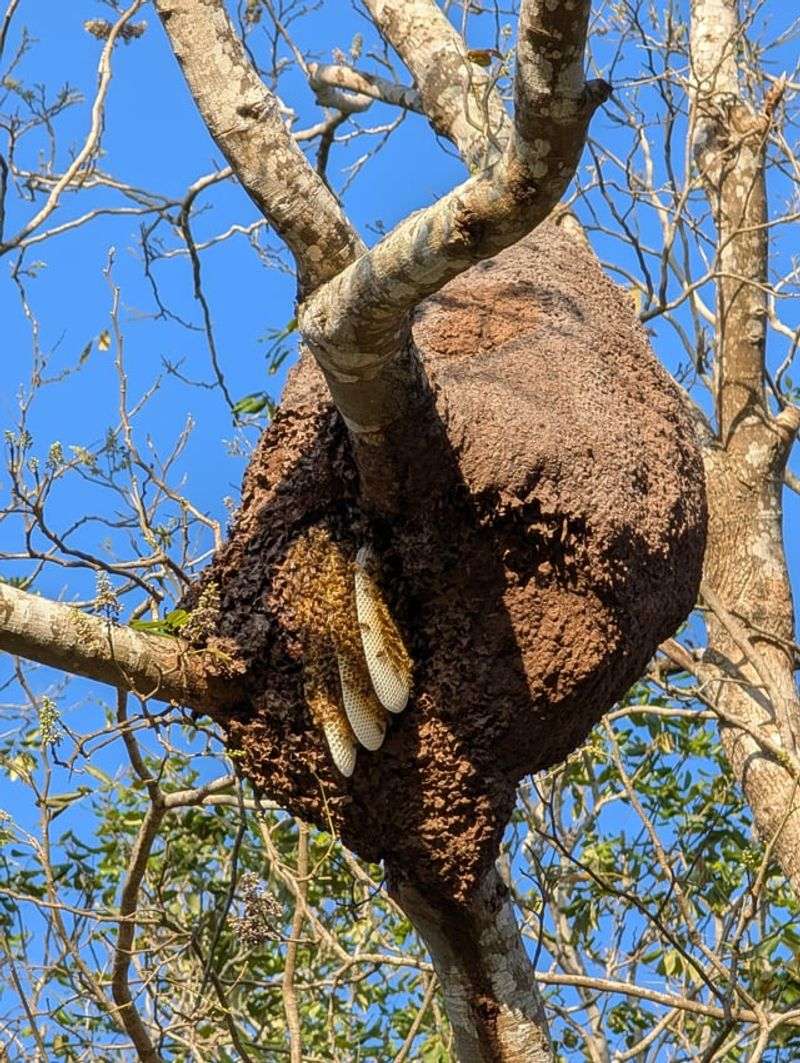
Did you know that some honeybee relatives in Asia build open combs on purpose, high on cliffs and branches? The European honeybees kept across Indiana behave differently, and they strongly prefer enclosed spaces for their nests.
Because of that preference, open-air colonies show up only now and then across the Midwest each year. Beekeepers often share photos of them online because many people go years without seeing a single one.
Researchers do not track an exact count of exposed colonies, so nobody can say precisely how rare they are. Still, extension specialists and bee clubs describe them as uncommon compared with colonies hidden in trees or buildings.
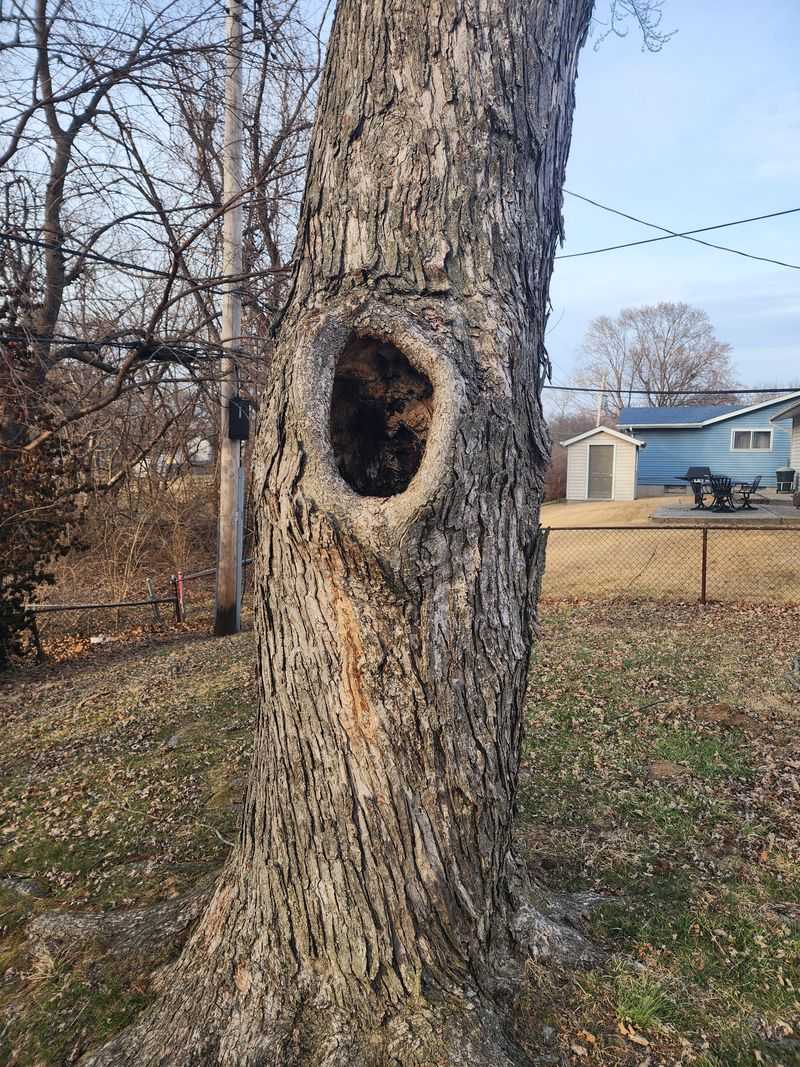
Far more wild colonies live inside hollow oaks, sycamores, and maples that you might pass daily. Those hidden nests rarely get noticed, because the only sign is a stream of bees near a knothole.
Open comb is easier to spot in October, when maples and oaks drop their leaves across much of Indiana. So a sudden fall sighting may reflect thinning leaves more than any increase in open-air colonies.
If you find one, jot down the date, tree type, and height so local beekeepers can learn from it. Some bee clubs keep informal records of swarms and unusual nests that help members understand local bee behavior.
Seeing one is uncommon enough that most people remember the moment for years. Enjoy the moment from a safe distance, and share a photo with friends who love nature as much as you.
Indiana Winters Leave Exposed Comb Without Protection
Beekeepers report that many open-air colonies in Indiana struggle to get through winter. January nights in the state can drop into the single digits during cold snaps, and wind chills push conditions even lower.
Snow, sleet, and freezing rain can coat the comb directly, chilling the bees that are trying to stay warm. Wet bees struggle to generate enough heat, which makes a bad situation even harder for the whole colony.
Wax also turns brittle in deep cold, and heavy gusts can snap pieces of comb loose from the branch. When a chunk falls, the honey and young bees stored in that section are lost to the ground below.
Hungry raccoons, opossums, and birds may also visit exposed comb once other food sources become scarce in late fall. A hollow tree keeps most of those visitors out, but a dangling comb offers an easy snack with no door.
A few open-air colonies in mild winters have reportedly lasted until spring, so survival is possible but uncommon. Experts cannot predict which colonies will pull through, since weather and honey stores vary so much each year.
If the colony does decline over winter, the leftover comb may draw wax moths, mice, or robbing insects next spring. That empty comb can also attract new swarms, since the smell of old wax signals a possible home.
For these reasons, many beekeepers try to rescue open-air colonies in fall before the harshest weather settles in. Moving the bees into a sturdy hive gives them walls, a roof, and a much better chance at spring.
Call A Local Beekeeper Instead Of A Can Of Spray
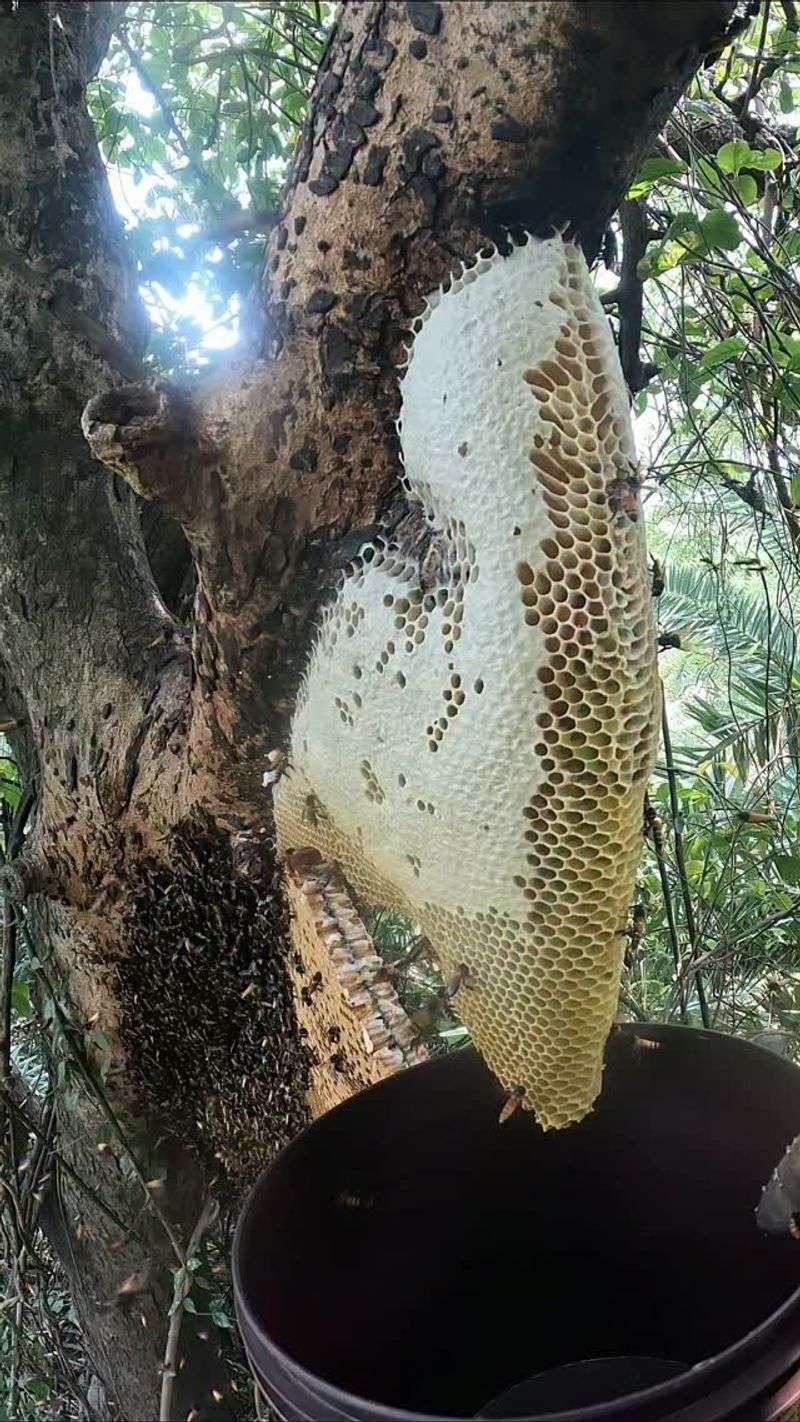
Grabbing a can of insect spray might feel like the fastest fix, but it creates bigger problems for everyone. Honeybees pollinate many Indiana crops and garden plants, so saving a colony supports pollination in nearby gardens.
Spraying a hanging comb can also leave pesticide-soaked honey that other bees, birds, or pets might eat later. Honeybees nearby could carry that tainted honey back to their own hives and spread the problem further.
A better first step is contacting a local beekeeping club, many of which keep swarm removal lists online. The Indiana State Beekeepers Association and Purdue Extension offices can also point you toward experienced beekeepers in your area.
Many beekeepers will remove an open-air colony for free or a small fee, because they gain new bees. Removal from a high branch may require ladders or a bucket truck, which can raise the cost a bit.
Until help arrives, keep kids and pets away from the tree, and avoid mowing or trimming directly underneath. Loud vibrations from engines can make guard bees defensive, so keep a respectful distance even if the colony looks calm.
Snap a clear photo and note the height of the comb before calling, since beekeepers often ask those questions. Mention the tree type and whether the branch hangs over a road, house, or busy sidewalk nearby.
I think a fall sighting like this deserves a happy ending, and a quick phone call can make that happen. With a little help, the colony can spend winter in a snug hive and buzz around your garden next spring.