Hidden Venomous Creatures Live Right Outside Your New Jersey Door
You share your property with creatures that spritz or sting. Beetles in New Jersey mix reactive compounds inside their bodies, then release a hot puff.
Stink bugs slip through your window frames and release a pungent cloud. Millipedes curled beneath your leaf piles ooze irritating fluid from tiny pores.
Wolf spiders patrol your garage corners at night, tracking motion with keen eyesight. Wheel bugs wear toothed crests and snatch caterpillars on your shrubs.
Centipedes hiding under your logs deliver potent bites using modified front legs. Yellowjackets build papery fortresses in your wall gaps and guard them closely.
Few of these residents want any contact with you. Understanding their habits lets you rake, plant, and stack firewood with sharper instincts.
Gardeners across New Jersey like you often brush past that whole lineup unaware. Picture a snake patterned exactly like your leaves.
1. Northern Copperheads Among The Leaf Litter
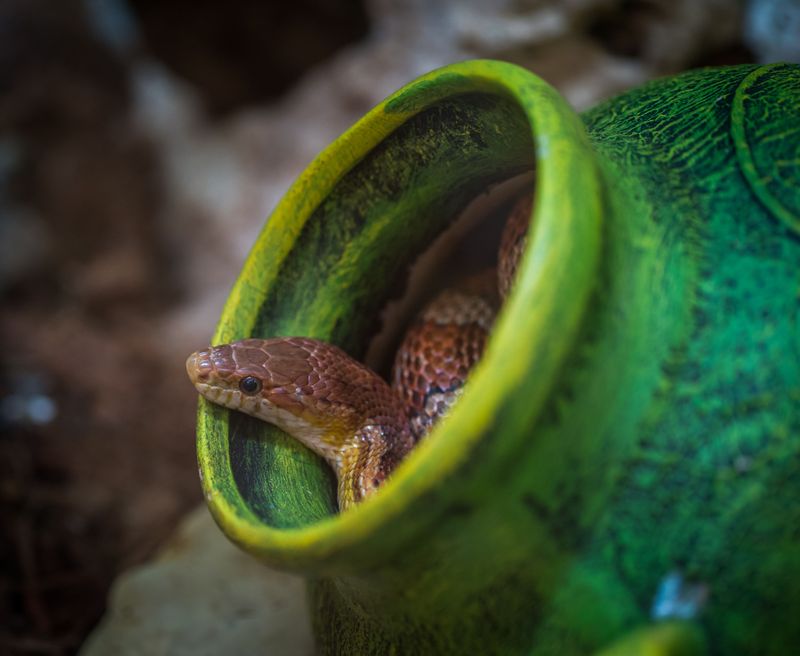
Nature gave the copperhead excellent fall camouflage. Its coppery bands blend into October leaves so well that you could step right beside one.
Copperheads are the most common venomous snake in New Jersey, especially in the northern hills. They also show up in wooded suburbs, reaching south to the Sourland Mountain area.
Look for a thick body with tan and copper hourglass shapes along its back. Young ones have a bright yellow tail tip they wiggle to lure frogs.
Their bite is painful and causes swelling, but it is seldom life-threatening for healthy adults. Still, any bite needs a trip to the emergency room right away.
Fall is a busy season because copperheads travel toward rocky dens to spend the winter. You might spot them crossing trails or warming up on sunny stone walls.
Wear sturdy boots and gloves when you move firewood, rake leaves, or clear brush. Use a flashlight on warm evenings since these snakes like to hunt after sunset.
Keep your yard tidy by trimming tall grass and moving woodpiles away from the house. Fewer hiding spots means fewer surprise meetings near your back steps.
If you see one, back away slowly and give it plenty of room. They would much rather hide under leaves than waste venom on a sneaker.
New Jersey law protects all snakes, and harming one is illegal, so calling a wildlife expert beats grabbing a shovel. The New Jersey Fish and Wildlife snake hotline can advise you if a snake wanders too close.
2. Timber Rattlesnakes Along Rocky Ridges
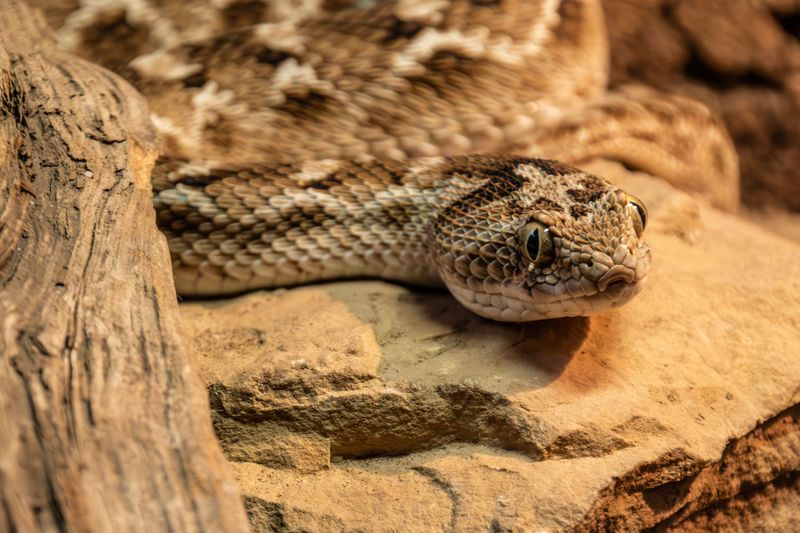
The dry buzz of a timber rattlesnake is an unmistakable warning. That rattle works like a polite but firm signal to keep your distance.
Timber rattlesnakes are endangered in New Jersey, which makes every sighting pretty special. They live mainly in the northern mountains and some quiet corners of the Pine Barrens.
Adults can stretch over four feet long with dark zigzag bands across yellow or black bodies. Their tails end in a solid black tip with a segmented rattle.
Each time a rattlesnake sheds its skin, it adds a new segment to that rattle. Counting segments does not reveal its age, despite what many folks believe.
Your New Jersey Garden Changes Every Week. Your Plan Should Too.
Gardening in New Jersey changes quickly throughout the season. Every Friday you’ll receive a simple weekly plan showing exactly what to plant, prune, fertilize, harvest, and protect so you never miss the right timing.
Their venom is stronger than a copperhead’s, so a bite is a true medical emergency. Call 911, stay calm, and keep the bitten limb still and at or slightly below heart level.
Do not cut the wound, suck out venom, or use ice on a snakebite. Those old movie tricks can make the injury much worse.
October is denning time, when rattlers gather near rocky slopes to wait out winter. Hikers on Kittatinny Ridge trails should watch where they put their hands and feet.
Stay on marked paths and step onto logs instead of over them. A walking stick helps you tap ahead in thick brush or leafy spots.
If you spot one, consider reporting it to the New Jersey Division of Fish and Wildlife. Your photo and location can help scientists protect this rare and remarkable snake.
3. Black Widows Inside Woodpiles
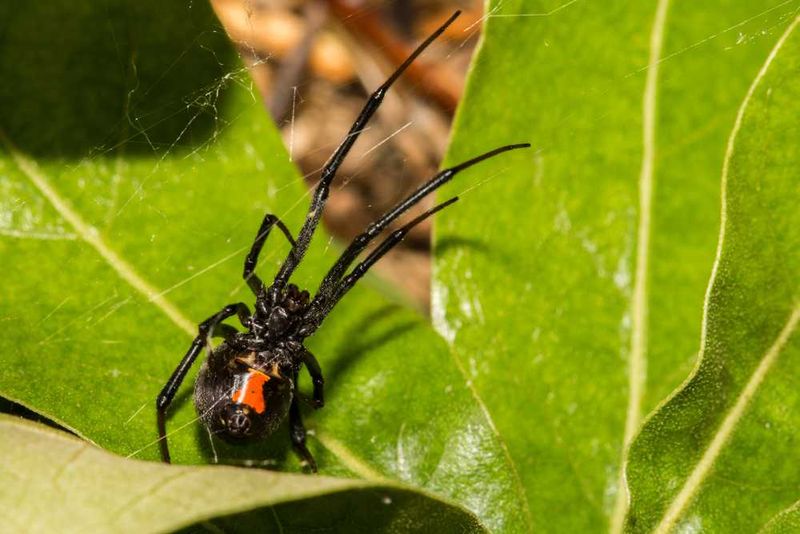
Halloween decorations are not the only spiders hanging around in October. The northern black widow lives in parts of New Jersey and loves dark, quiet, undisturbed corners near people.
Females are shiny black with a red hourglass or two red marks on the belly. Males are smaller, lighter in color, and pose almost no danger to people.
You will find their messy, tangled webs in woodpiles, sheds, garages, and under deck furniture. Old flower pots and stacked bricks also make perfect spider apartments.
Black widow venom affects the nerves and can cause muscle cramps, sweating, and stomach pain. Children and older adults should get medical care quickly after a bite.
The bite itself may feel like a tiny pinprick at first. Pain usually builds over the next hour, so watch carefully for spreading cramps or stiffness.
Gloves are your best friend when grabbing firewood or reaching into storage bins. Shake out boots, gardening gloves, and jackets that have been sitting in the garage.
Pack decorations in sealed bins and move hay bales away from your house after the holiday. Those cozy decorations can become surprise homes for real spiders by next year.
Female black widows sometimes eat their mates, which inspired the name. In truth, many males escape safely, so the story is partly a myth.
Clean clutter often and use a vacuum to remove webs and egg sacs. A tidy garage gives these spiders fewer places to settle down for winter.
4. Yellow Jackets Beneath Your Lawn
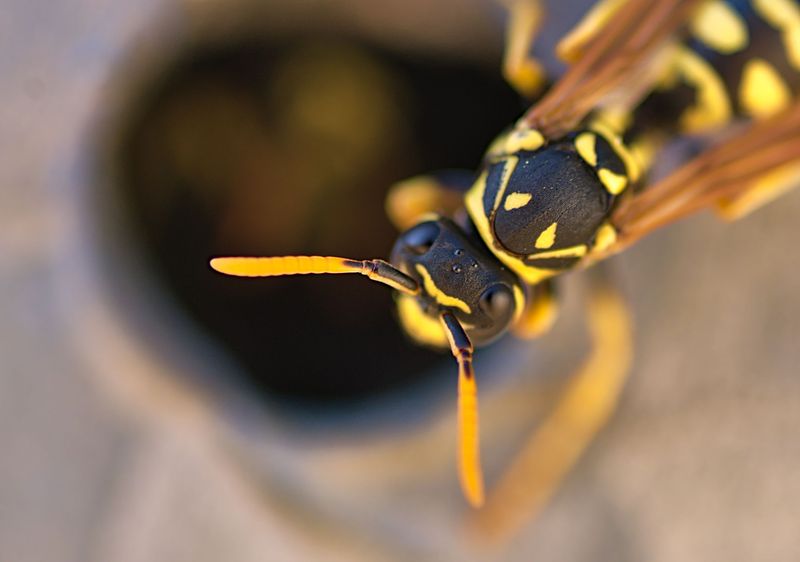
Ever had a soda can buzz back at you during a picnic? Yellow jackets are frequent visitors to New Jersey’s outdoor autumn meals.
These wasps are black and bright yellow, smaller than hornets, and defensive when disturbed. Unlike honeybees, they can sting again and again without losing their stinger.
Many yellow jackets build nests underground in old rodent holes or under lawn edges. Mowing over one can prompt a swarm response within seconds.
October is their most active month because colonies are huge and food is running low. Workers hunt for sugar, so open drinks and fallen apples attract them fast.
For most people, a sting causes sharp pain, redness, and swelling that fades within days. Wash the area with soap, then use a cold pack to ease the ache.
Some people have serious allergic reactions with face swelling or trouble breathing. Call 911 right away and use an epinephrine pen if one was prescribed.
Keep drinks covered outside and use clear cups so you can spot any visitors. Pick up fallen fruit and seal trash cans tightly with snug lids.
Watch for a steady stream of wasps flying in and out of a ground hole. Mark the spot with a flag and keep kids and pets well away.
Large or tricky nests are best handled by a licensed pest professional. The first hard frost of late fall usually ends the colony’s busy season anyway.
5. Bald-Faced Hornets Nesting Overhead
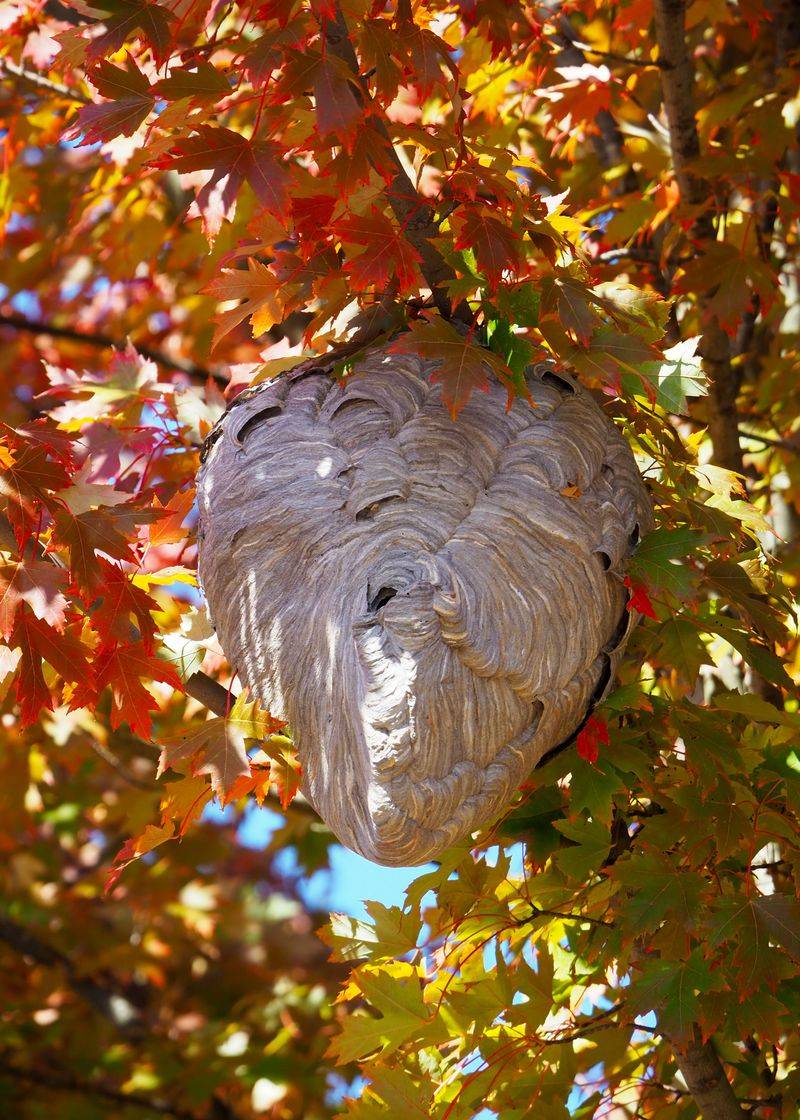
That giant gray paper ball dangling from your maple tree is not a forgotten Halloween prop. Bald-faced hornets build these stunning nests, and some grow bigger than a basketball.
Despite the name, bald-faced hornets are actually a type of yellow jacket. They wear black bodies with creamy white markings on their faces and tails.
Workers chew wood fibers and mix them with saliva to create a papery building material. The finished nest has many layers that keep the colony warm and dry.
These hornets defend their nests actively and can spray venom toward the eyes of threats. Their stings are painful and can come in quick groups.
Nests often hang in trees, shrubs, under eaves, or on the sides of sheds. Leaves can hide them until fall, when bare branches suddenly reveal the surprise.
Bald-faced hornets do have a helpful side, since they eat flies and garden pests. Keeping a safe distance lets them do pest control without bothering your family.
Avoid trimming hedges or using a leaf blower near any active nest. Vibration and loud noise can disturb the whole colony within seconds.
By late October, the colony begins to fade as cold weather settles in. Only new queens survive the winter, hiding under bark or inside rotting logs.
Empty nests are not reused, so you can safely remove them after several hard frosts. Some families even keep old nests as amazing science projects for school.
6. Short-Tailed Shrews Below Garden Beds
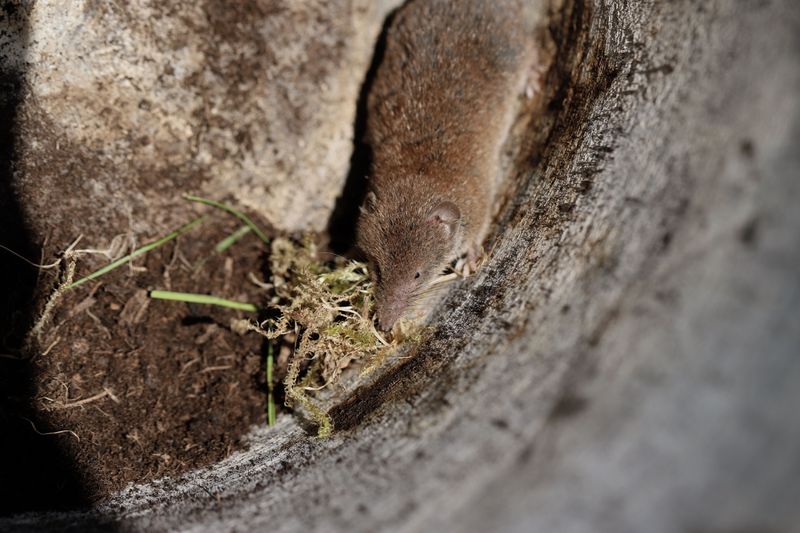
A lesser-known backyard fact is that New Jersey has a venomous mammal. The northern short-tailed shrew looks like a tiny mouse but packs a toxic bite.
This gray, velvety critter is about four inches long with a short tail and tiny eyes. Its eyesight is weak, so it relies on smell, touch, and soft clicking sounds.
Shrews produce venom in their saliva to stun worms, insects, snails, and even small mice. They store paralyzed prey in tunnels for later.
For people, a bite can cause burning pain and swelling that lasts a few days. Luckily, shrews mostly bite only when someone picks them up or corners them.
These little hunters must eat about their own body weight in food every single day. Their super-fast metabolism keeps them busy hunting both day and night.
Look for small tunnels and holes in garden beds, mulch, and under leaf piles. Cats sometimes bring shrews home as gifts but often refuse to eat them.
Shrews taste and smell bad to many predators, which helps protect them. Owls do not seem to mind, though, and readily eat them.
Gardeners can thank shrews for eating slugs, beetle grubs, and other plant-munching pests. Their hunger makes them free garden helpers with surprisingly sharp teeth.
Wear gloves if you need to move a trapped shrew from a garage or window well. Gently scoop it into a bucket and release it near some bushes.
7. Saddleback Caterpillars On Garden Shrubs
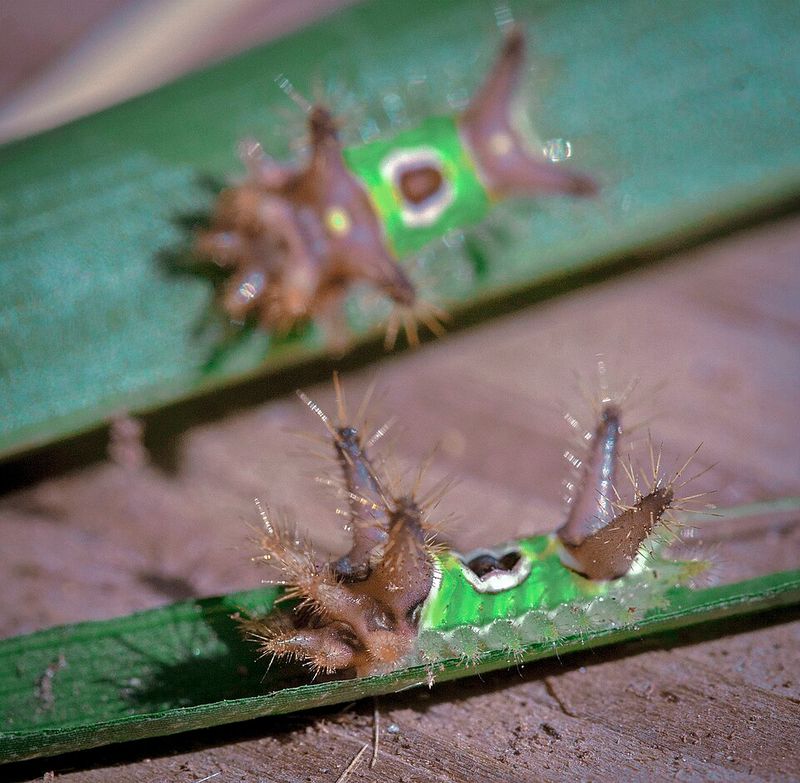
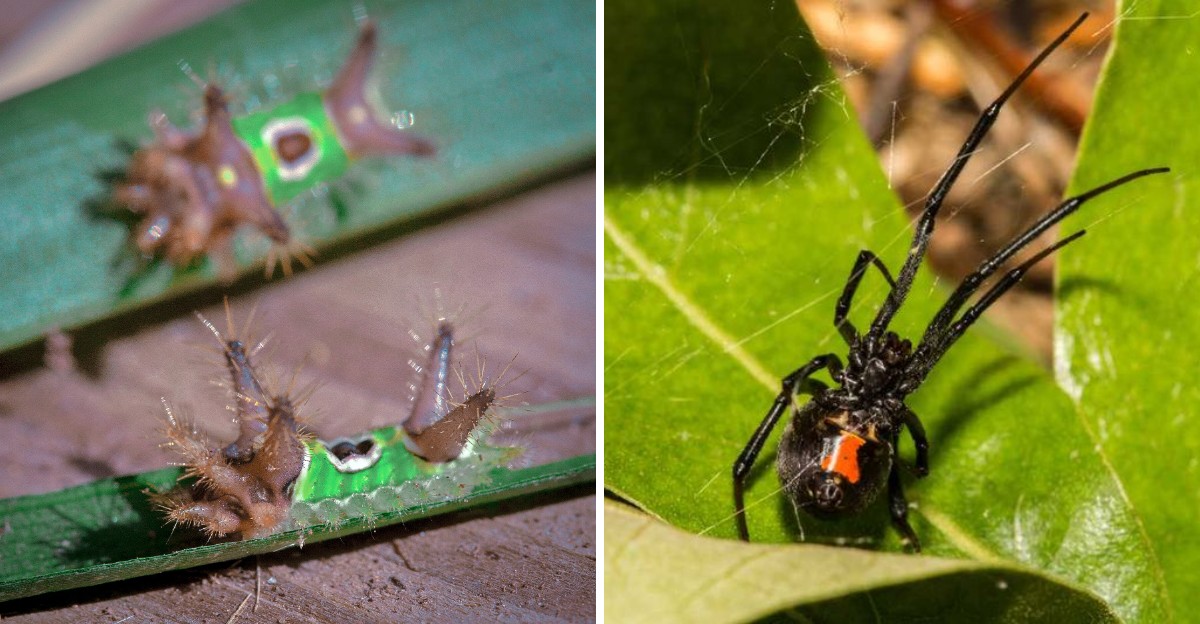
Colorful and covered in spines, the saddleback caterpillar has brown ends, a green midsection, and a brown oval spot like a saddle.
Saddlebacks have been reported in parts of New Jersey on oaks, maples, cherry trees, and garden plants. Late summer and early fall are peak times to find them on leaves.
Hollow spines along their bodies connect directly to tiny venom glands. Brushing against them feels like a bee sting and may leave a red, itchy rash.
Some people also feel nausea or swelling after touching one. Allergic folks should watch closely and call a doctor if redness or swelling spreads quickly.
If you get stung, press clear tape on the skin to lift out tiny broken spines. Then wash the spot with soap and water and apply a cold pack.
Kids love picking up caterpillars, so teach them to look before they touch. Fuzzy or spiky caterpillars should stay on the leaf where they belong.
Gloves help when pulling weeds, trimming bushes, or picking late tomatoes in October. Check the undersides of leaves, since saddlebacks like to hide in the shade.
Eventually, each caterpillar spins a cocoon and becomes a small brown moth. The adult moth is fuzzy, plain, and harmless, a surprising ending to a spiky story.
Leave them alone, and they will munch quietly without bothering anyone. Birds and wasps naturally help keep their numbers in check across New Jersey yards.
8. Velvet Ants Across Sandy Yards
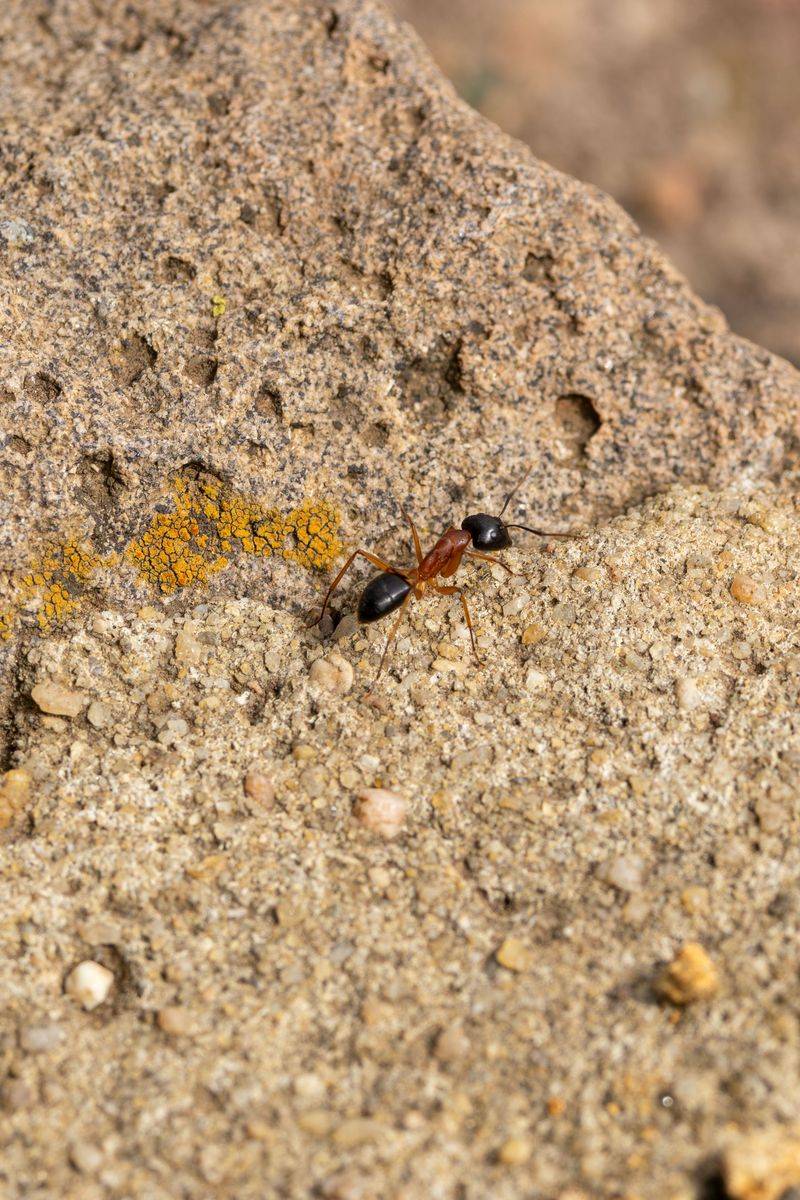
A fuzzy red bug racing across your sandy driveway might look like a cartoon character. Look closer at the eastern velvet ant, a wasp in disguise with a famously painful sting.
Velvet ants are not ants at all, but wingless female wasps. Their bright red and black fuzz warns predators to stay far away.
Scientists have ranked their sting among the most painful of any insect in North America. Some nicknames claim the sting can drop a cow, but that part is an exaggeration.
Males have wings and cannot sting, so they are harmless. Females do the hunting, searching for ground-nesting bee burrows to lay their eggs inside.
These insects love sandy soil, which makes South Jersey and the Pine Barrens a favorite home. You may spot them on warm afternoons through early October.
Their tough outer shell is so hard that some people struggle to crush one. When grabbed, they squeak loudly by rubbing body parts together like tiny violins.
Walking barefoot in sandy yards or beaches is a common way people get stung. Sandals or sneakers make a simple and effective shield for curious feet.
A sting brings sharp, burning pain that often fades within an hour or so. Clean the area, apply ice, and watch for any signs of an allergic reaction.
Velvet ants are solitary, so you will not find a big group stinging. Simply watch from a distance and let this fuzzy speedster go on its way.