Adjusting Arizona Citrus Watering in November
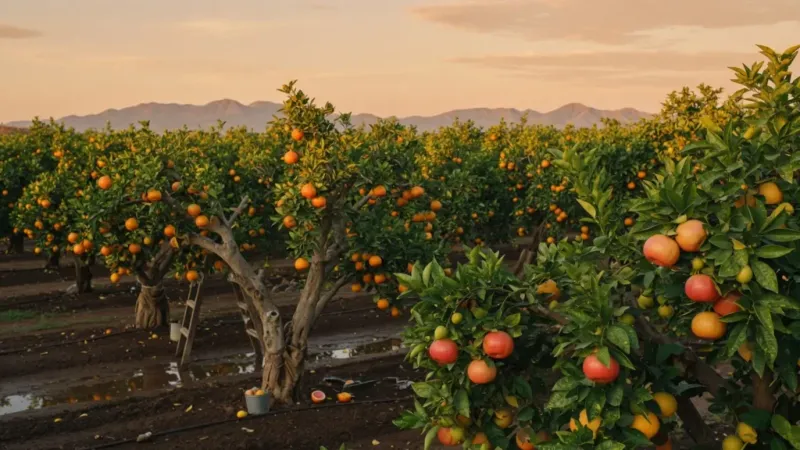
As Arizona days finally cool off, your citrus tree is not asking for the same amount of water it wanted in July. It also still needs a steady drink.
Getting the rhythm right in fall helps roots stay healthy going into winter. Here is how to adjust without guessing.
November means adjusting irrigation, not stopping it
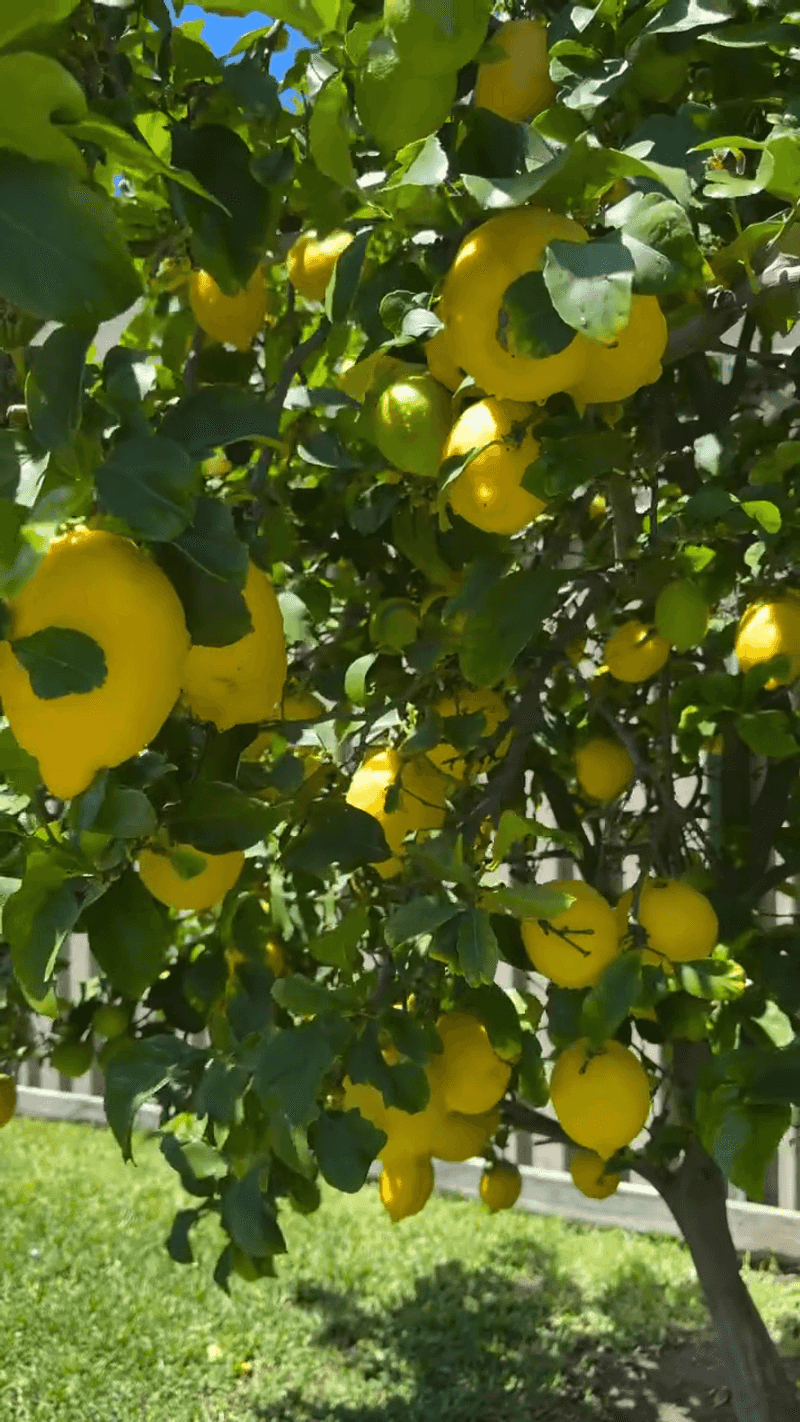
When the first cool mornings arrive in Phoenix, Mesa, or Tucson, it is tempting to put the hose away. Your in-ground citrus tree still needs water, though.
It just needs it on a different rhythm than the one that carried it through the hottest months.
For established trees, Arizona citrus irrigation guidance calls for longer gaps between waterings in October and November than in summer. That is a stretch of the interval, not a shutdown.
Think of the summer routine as a starting point you are now loosening. Cooler air means the tree loses less water through its leaves, and the soil stays moist longer.
The goal is to match what the tree and soil are actually doing.
This advice covers citrus planted in the ground. Potted citrus dries out differently and needs its own plan, so do not copy these timings to a container.
Use tree age to choose a starting interval
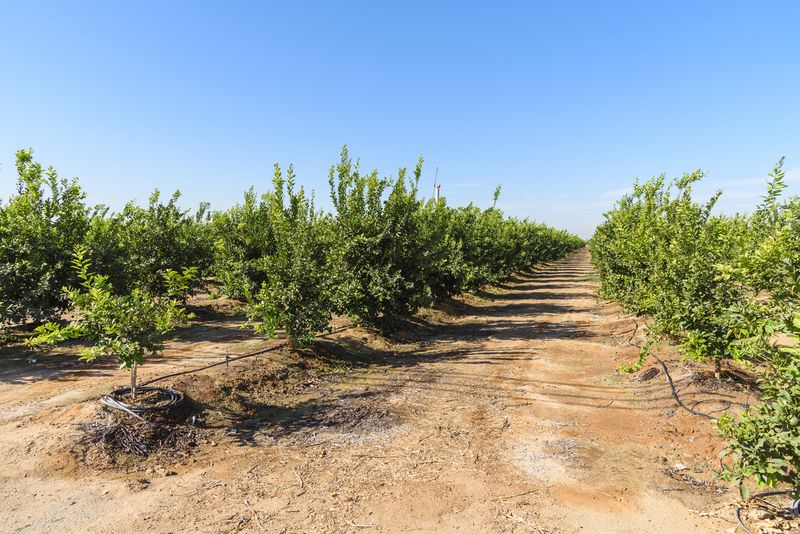
Age changes how often a tree needs water, because younger trees have smaller root systems. For October and November, the citrus irrigation table lists these starting intervals for in-ground trees.
Trees from 4 months to 1 year old: every 5 to 10 days. Trees 1 to 2 years old: every 10 to 14 days.
Trees 3 years or older: every 14 to 21 days.
A tree that was just planted is a separate case. Brand-new plantings have their own, more frequent guidance, so do not put them on a mature-tree schedule.
Treat every number here as a place to begin, not a timer to set and forget. Your soil, recent weather, and watering method can all shift the right answer for your yard, and the next sections show how.
Water deeply across the root zone
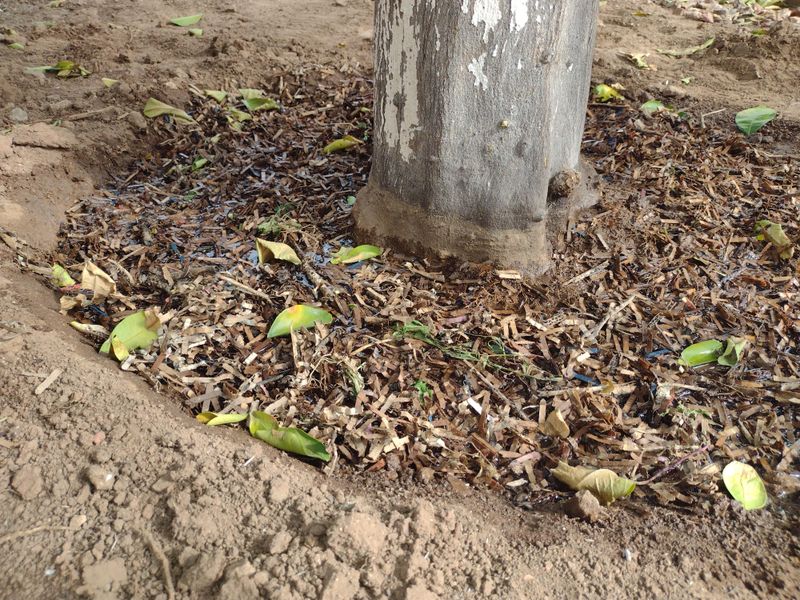
A deep soaking beats several quick sprinkles. Frequent, shallow watering leaves the lower roots without enough moisture and can let salts build up in the soil.
The aim is to wet the soil from near the trunk out to just past the drip line, the edge of the canopy, and down to at least two feet. Citrus irrigation guidance describes this as the target for wetting the root zone.
If you use a basin, building it about a foot wider than the canopy helps cover the roots that reach outward. Fill it slowly so the water soaks in rather than running off.
Not sure how far the water went? A soil probe, or even a long screwdriver, slides in easily through wet soil and stops where it turns dry.
Tree and shrub watering advice suggests using a probe to check depth.
Adjust for soil, weather, and irrigation method
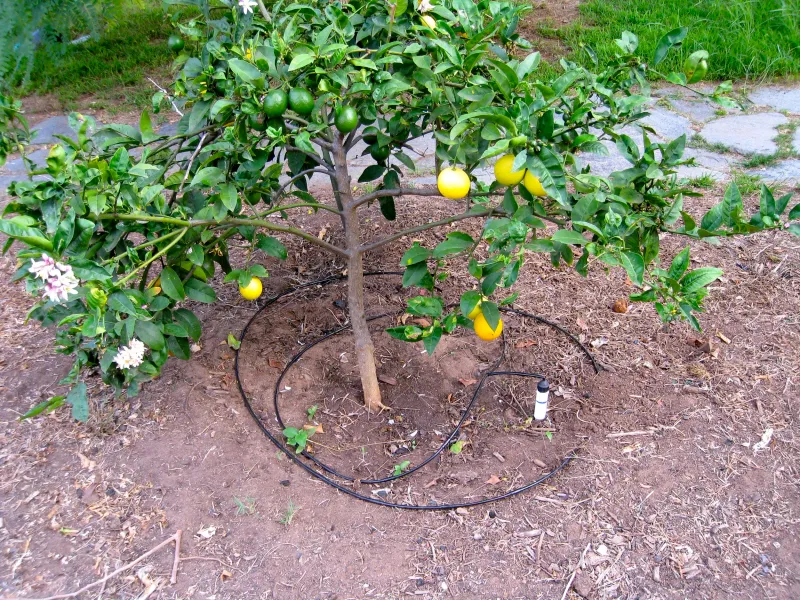
Two yards on the same street can need different schedules. Sandy or gravelly soils drain fast and generally need water more often than heavier soils that hold moisture longer.
Your Arizona Garden Changes Every Week. Your Plan Should Too.
Gardening in Arizona changes quickly throughout the season. Every Friday you’ll receive a simple weekly plan showing exactly what to plant, prune, fertilize, harvest, and protect so you never miss the right timing.
Weather matters too. A cool spell or a good rain means you can wait longer, and a warm, dry, windy stretch can pull you back toward the shorter end of the range.
Your delivery method is the third piece. The tables were built around basin or flood watering, and the citrus guide says to modify intervals for the system you use.
Drip and microsprinkler setups put out lower volumes, so they may need more frequent applications.
Do not copy a basin interval straight onto a drip line. Look at how much water your emitters deliver and where they sit.
Emitters close to the trunk may leave the outer root zone dry, so move or add them as the tree grows.
Check soil moisture before interpreting leaf symptoms
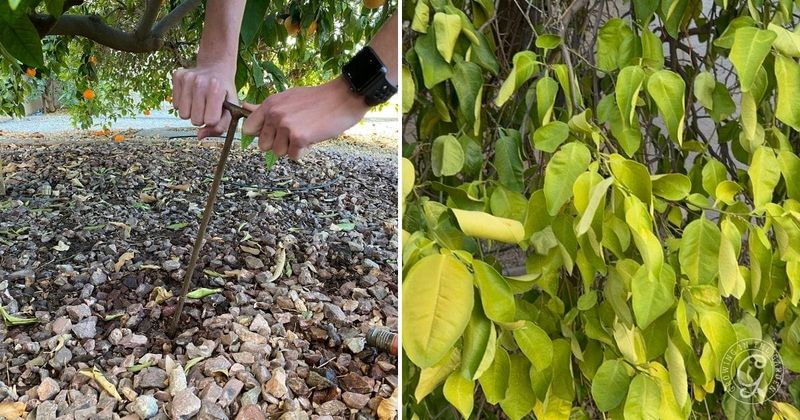
The most reliable check is in the ground, not on the calendar. The citrus guide suggests letting the soil dry to about six inches deep before you water again.
Push a probe or trowel in and see what you find.
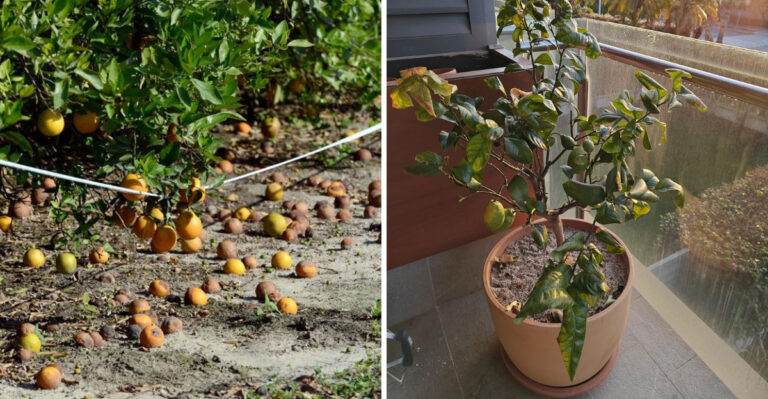
Leaves can offer clues, but they need context. Dull-green leaves that curl inward are a noticeable sign of water stress in citrus.
Pale or yellow leaves are trickier. It is easy to blame too much water, but citrus problem diagnosis guidance lists overwatering and nitrogen deficiency as possible causes of uniformly pale leaves, and other problems can look similar.
So check the soil first, then look at the whole picture: the weather, your watering history, and the pattern of the leaves.
Treat frost watering as a specific, limited measure
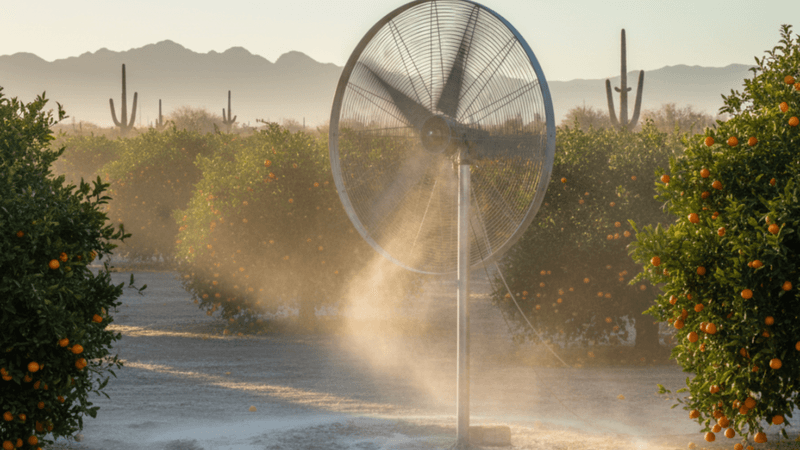
Frost talk can get confusing. A tree stressed by dry soil tends to handle a cold snap worse, so frost protection guidance favors careful, even moisture rather than skipping water altogether.
That is different from adding extra irrigation every time frost shows up in the forecast. Your normal, deep watering schedule stays the foundation.
The same guidance describes one specific tactic: trickling water onto the ground at the base of the tree late at night and into the early morning. It should be used for no more than three nights in a row.
Think of it as a narrow tool for a cold stretch, not a standing rule. If frost is not in the forecast, there is no need to use it.
Let conditions—not the calendar alone—set the rhythm
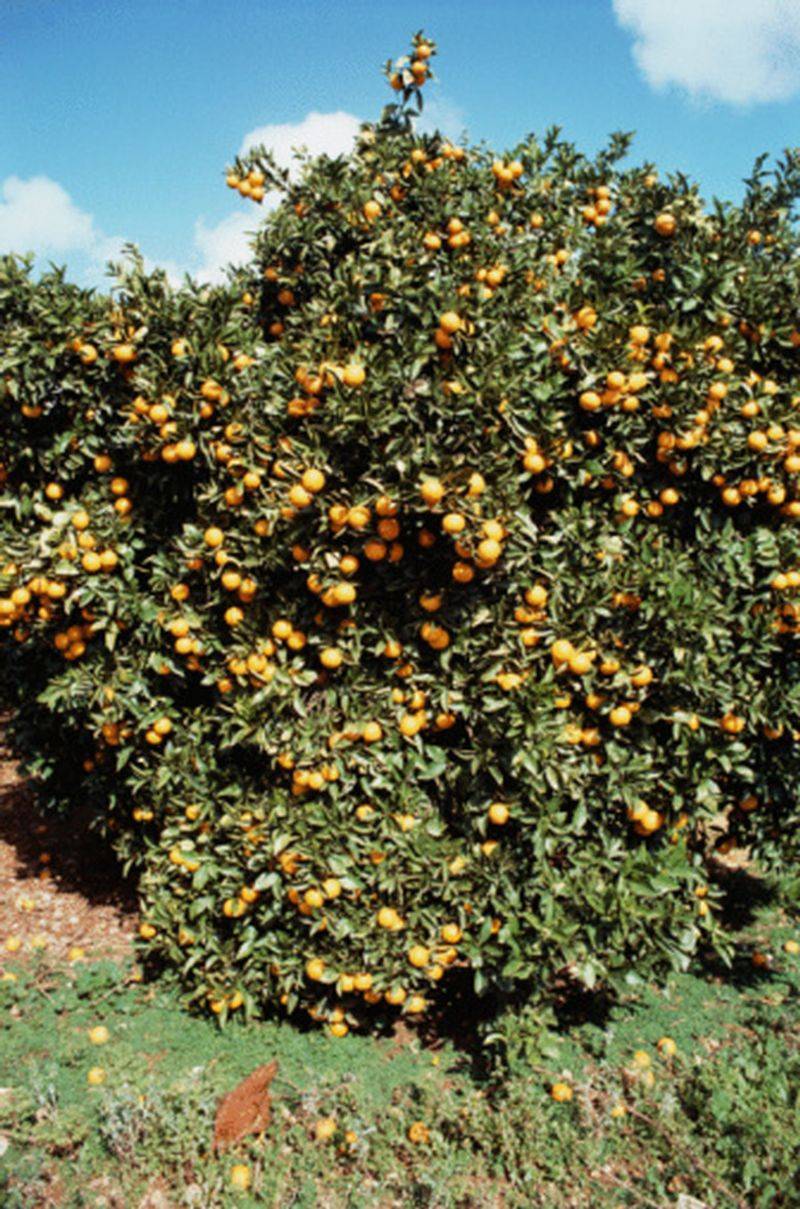
Skip the shutdown and skip the autopilot. Start with the interval that fits your tree’s age, soak the whole root zone, and let the citrus irrigation guide remind you to adjust for soil, recent weather, and your watering system.
A quick probe test before each watering will tell you more than any date on the wall. The tree will let you know when it is ready for its next drink.