Do Gray Mud-Like Patches On Maryland Trees Need Scraping Before Spring?
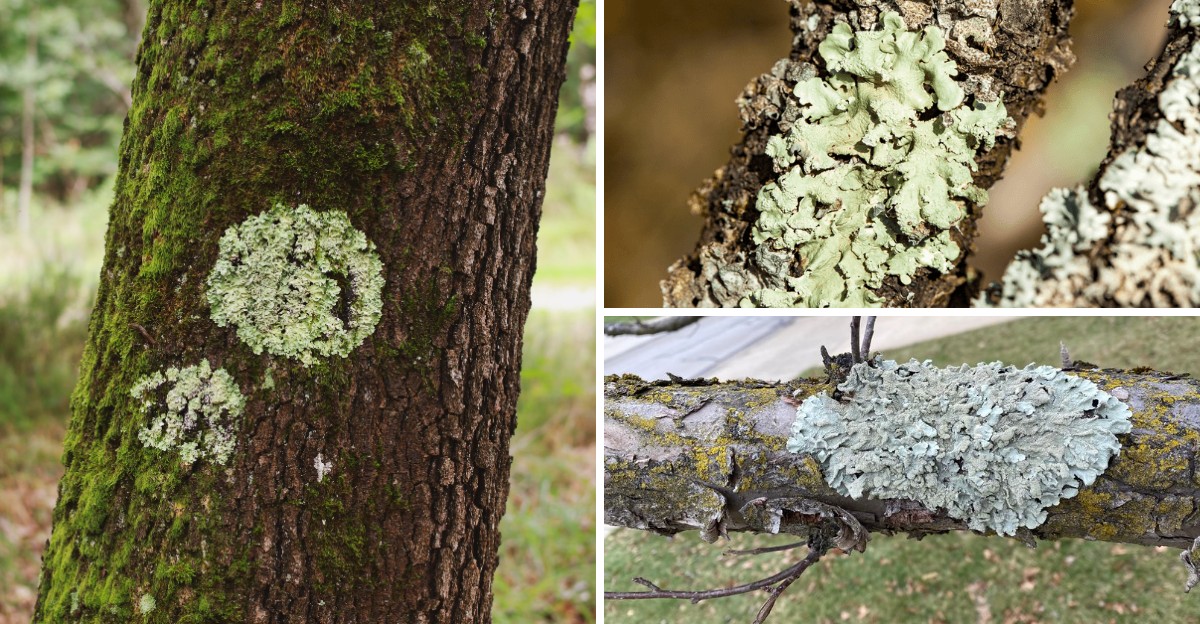
Some of the crusty gray smudges on your tree bark are two living things fused into one. Scientists have argued for over a century about how to even classify them.
I’ll be honest, the first time I spotted those flat, muddy-looking blotches on my old oak, I grabbed a wire brush. My knees still remember kneeling in cold February dirt, scrubbing away like a woman on a mission. The tree did not thank me.
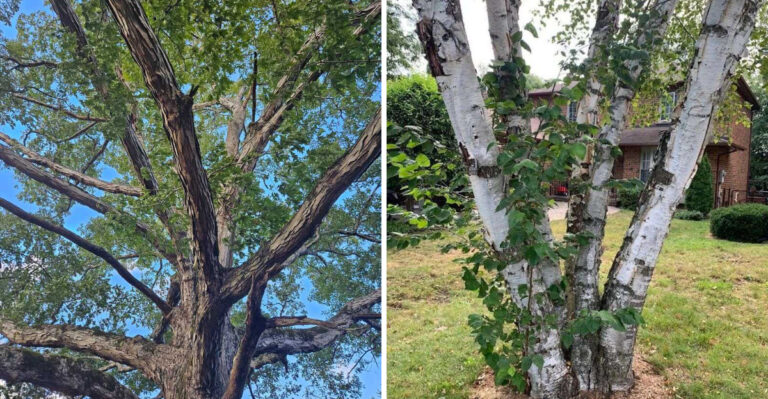
Across Maryland, late winter makes these patches pop because bare branches and gray skies leave nothing else to look at. You notice them on maples, dogwoods, cherries, and even your fence posts. Some look like dried mud, some like pale paint, and some like tiny curly lettuce leaves.
So should you scrape them off before the buds open? The answer surprised me more than I expected, and it might save your trees a little grief.
Those Crusty Gray Blotches On Tree Bark Are Very Much Alive
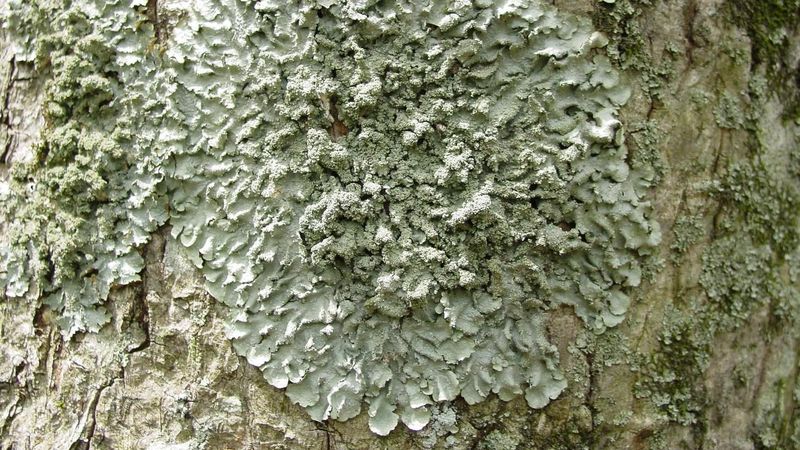
Funny thing about those mud-like smears is that they are not mud at all. In nearly every case, they are lichens, one of the strangest life forms in your yard.
A lichen is a partnership between a fungus and a tiny alga or cyanobacterium. The fungus builds the body and grabs water. The partner makes food from sunlight, and the two share the results like good roommates.
Lichens come in three main shapes you can spot on bark. Crustose types lie flat and look painted on or smeared like dried clay. Foliose types have small leafy lobes, and fruticose types look like tiny shrubs or dangling hairs.
Colors range from ash gray and pale green to bluish, yellow, and even orange. Wet weather turns many of them brighter green, which is why they seem to appear overnight after a rainy week.
Here is a fun detail to share with the kids. Scientists recently discovered that many lichens also contain a yeast, making them a three-way team instead of two. Nature still has surprises tucked into the bark of an ordinary backyard maple.
Once you know what you are looking at, those patches start to feel a lot less scary.
Put Down The Wire Brush Before You Scrape Your Tree Bark
Guilty as charged, I was once the person scrubbing bark with a stiff brush. University extension experts, including the University of Maryland Extension, advise against it, and they have good reasons.
Lichens do not feed on your tree. They take moisture and nutrients from rain, fog, dust, and air. The bark is just a place to sit, the same way a rock or a fence rail is.
Scraping, brushing, or power washing can tear the thin outer bark layer. Those little wounds open doors for decay fungi, cankers, and boring insects. On young trees and smooth-barked species like cherry or beech, the damage shows up fast.
Chemical sprays are another trap. Lichens are not a disease, so fungicide sprays are not needed for them. Copper or bleach mixtures can harm bark, nearby plants, and the soil life below.
So the honest answer is no. Lichen patches on Maryland trees do not need scraping before spring, or any other season.
Leave them be, step back, and save your elbow grease for jobs that truly help. Your tree will be happier without the rough treatment.
Lichens Won’t Smother Or Strangle Your Maple Trunk
A worry I hear a lot goes like this: the patches must be choking the bark. It sounds logical, but trees simply do not work that way.
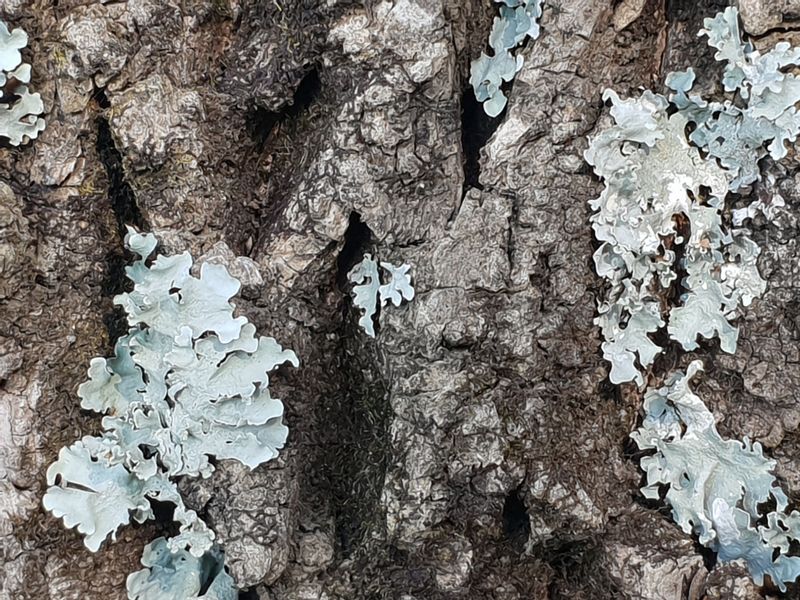
Lichens sit on the surface and anchor with tiny threads that hold on without pushing into living wood. They do not tap into the tree’s sap or water-carrying tissues. They are not parasites.
Bark also does not breathe like our skin or lungs. Tiny pores called lenticels do pass some air, but a thin layer of lichen does not block a tree’s ability to grow or leaf out.
Even a trunk covered top to bottom can be perfectly vigorous. Plenty of grand old oaks and tulip poplars across the state wear thick lichen coats and still push out big canopies every spring.
There is a bonus too. Many lichen species are sensitive to air pollution, especially sulfur dioxide. Seeing a lot of leafy and shrubby types on your trees often hints that your local air is fairly clean.
I like to think of it as a little air quality badge hanging right on the trunk. Not bad for something I once tried to scrub away.
Green Moss And Gray Lichen Often Share The Same Tree Trunk
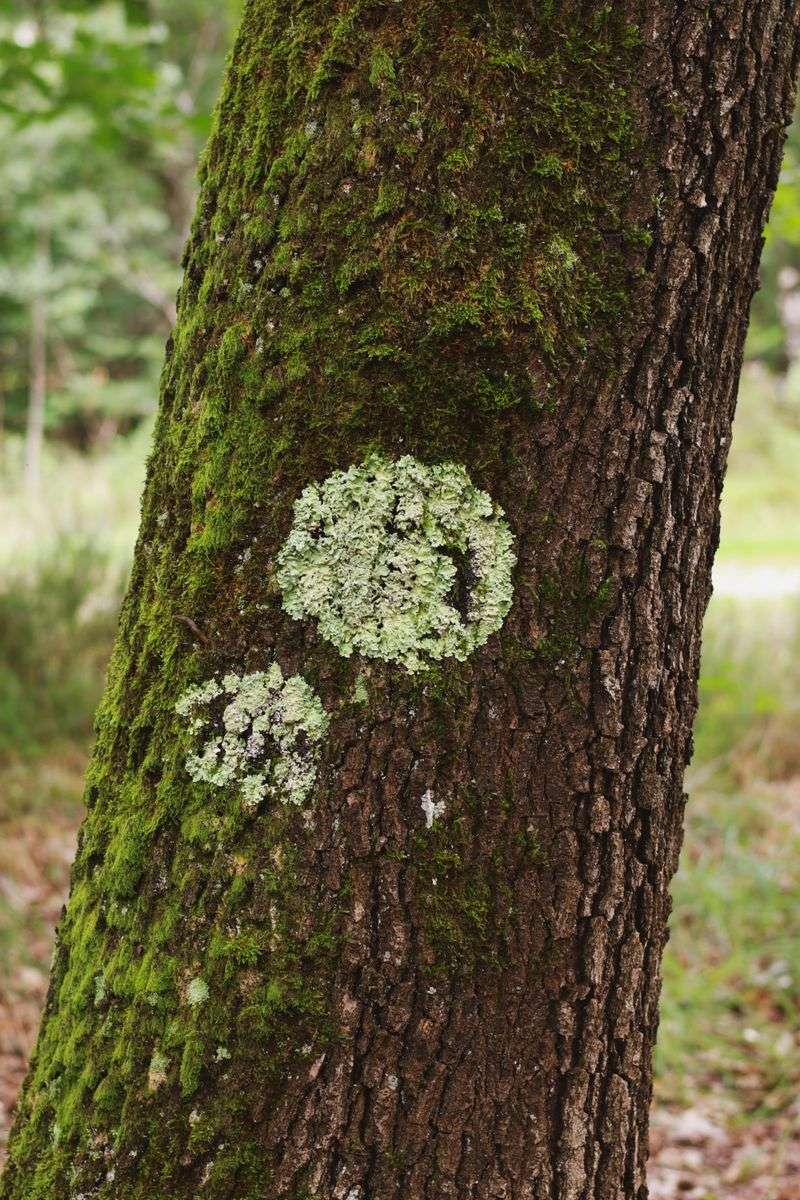
Moss and lichen get mixed up all the time, and they often grow side by side. Telling them apart takes about ten seconds once you know the trick.
Moss is a true plant. It feels soft and spongy, has tiny leaves on little stems, and stays mostly green. You will usually find it on the shady, damp side of a trunk, often near the base.
Lichen is not a plant. It feels crusty, papery, or leathery, and it is often gray, blue-green, or yellowish. It can grow on sunnier spots that moss would find too dry.
Neither one harms the tree. Both grab water and nutrients from the air and rain instead of from the wood underneath.
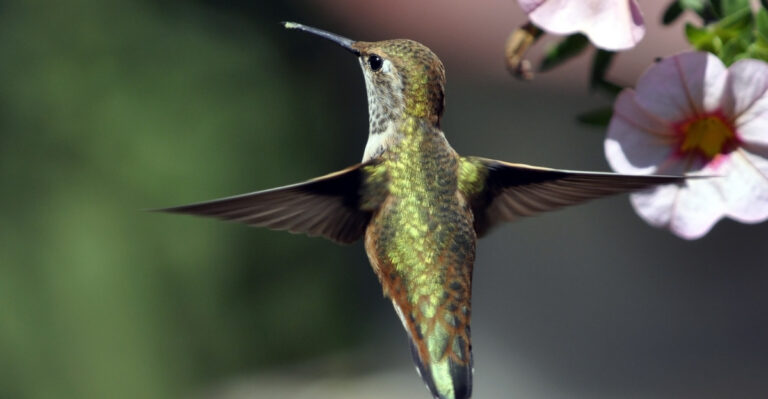
They also earn their keep. Birds like blue-gray gnatcatchers and ruby-throated hummingbirds weave lichen into their nests for camouflage. Tiny insects, spiders, and mites shelter in both moss and lichen, feeding birds through the cold months.
So if your trunk looks like a patchwork of fuzzy green and crusty gray, you are hosting a miniature wildlife habitat. That is a better use of bark than I ever gave it credit for.
Heavy Lichen On Thinning Branches Can Hint At A Stressed Tree
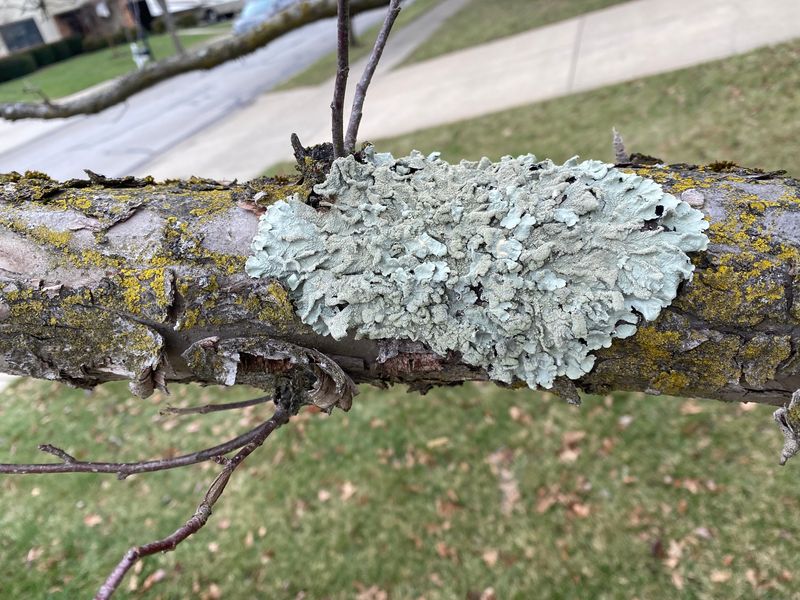
Lichens do not cause decline, but sometimes they point to it. That is the one time unusually heavy lichen growth deserves a closer look.
Lichens love light. When a tree loses leaves or branches, more sunlight reaches the bark, and lichens gradually build up. Slow-growing or older trees also give them more time to settle in.
So when you see branches thickly coated while the canopy looks thin, ask why the canopy is thin. Lichen is the messenger, not the culprit.
Common stressors in Maryland yards include compacted soil, poor drainage in heavy clay, mulch volcanoes piled against the trunk, root damage from construction, and drought stress from dry summers. Pests like emerald ash borer on ash trees also cause thinning crowns.
Check a few things this spring. Do buds swell and open on the lichen-covered branches? Do twigs bend, or do they snap brittle and brown inside? Are there cracks, oozing spots, or mushrooms at the base?
If several branches stay leafless by late spring, call an ISA certified arborist. A pro can sort out what is really going on and suggest a plan that addresses the root problem.
Some Gray Bumps On Bark Are Scale Insects Or Fungus Instead
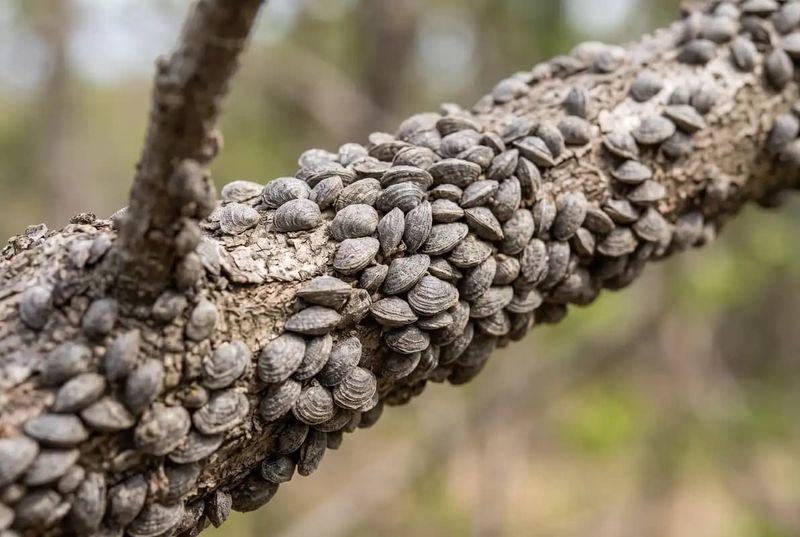
Trust me on this one, not every gray crust is a harmless lichen. A few look-alikes are worth ruling out before you relax completely.
Scale insects can look like small gray, brown, or white bumps stuck to twigs. Crape myrtle bark scale, now found in Maryland, shows up as white felty patches that ooze pink when crushed. Sticky honeydew and black sooty mold nearby are big clues.
Sooty mold itself looks like smeared soot or dark mud. It grows on the honeydew from insects like aphids, scale, and spotted lanternfly, which is common in parts of the state.
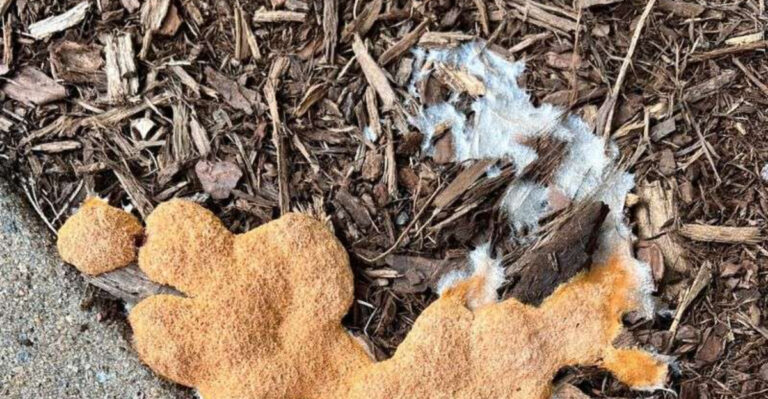
Spotted lanternfly egg masses deserve a mention too. They look like a smear of gray mud or putty, about an inch long, on trunks, stones, and outdoor gear from fall through spring.
Here is the twist. Those egg masses actually should be scraped off. Maryland officials ask residents to scrape them into a bag with rubbing alcohol or hand sanitizer and report sightings.
So if a mud-like smear feels waxy and cracks like old putty, look closer. That might be the one gray patch worth removing.
Late Winter Pruning Does Far More Good Than Scraping Bark
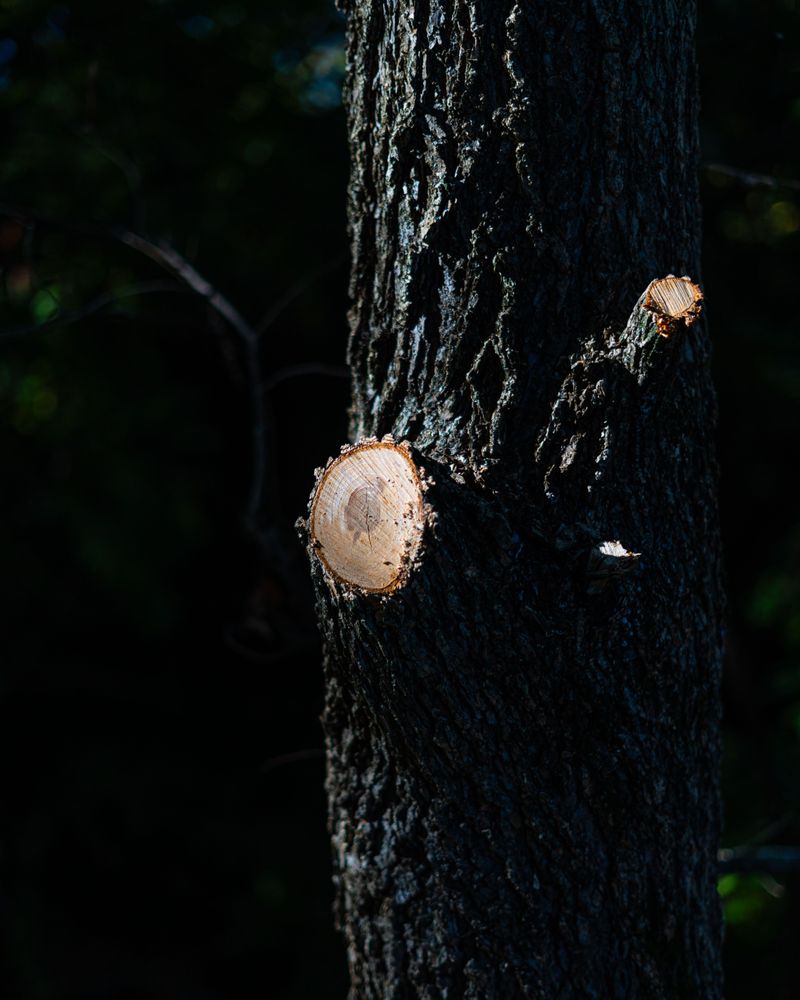
Now for the part I genuinely enjoy. Late winter, while trees are still dormant, is a great window for real care that helps them grow strong.
Pruning is the star job. With leaves gone, you can see the branch structure clearly. Remove broken, crossing, rubbing, or clearly declining limbs, and cut just outside the branch collar so the wound seals well.
Hold off on a few trees and shrubs. Spring bloomers like dogwood, redbud, and azaleas set their flower buds last year, so heavy pruning now cuts off this year’s show. Oaks, on the other hand, are best pruned now, in the dormant season, to avoid attracting beetles that spread oak wilt.
Fix mulch while you are at it. Pull any mulch away from the trunk and spread it two to three inches deep in a wide ring. Mulch piled against bark traps moisture and invites rot.
Water young trees during dry spells once the ground thaws. Watch for frost cracks on thin-barked trees after cold snaps.
For big limbs or anything near power lines, call a certified arborist. Ladders and chainsaws are not a weekend experiment I recommend.
Learn To Love The Lichen Art On Your Backyard Oaks
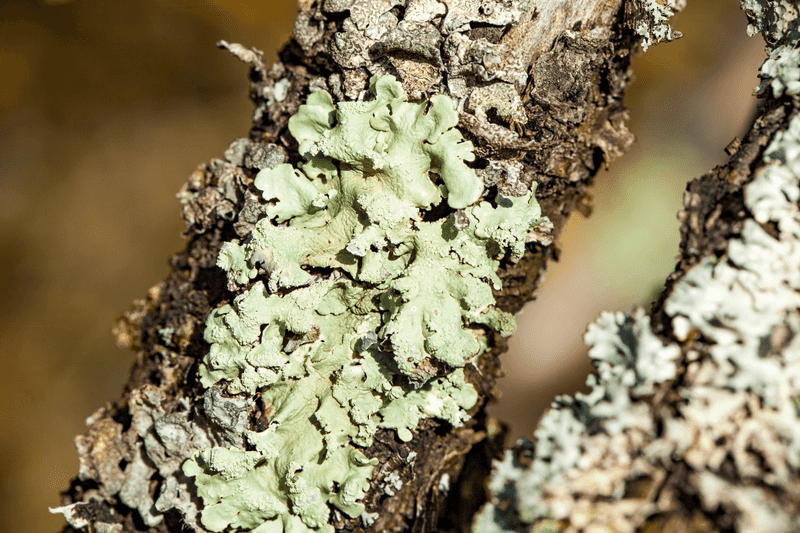
Don’t laugh, but I now go lichen hunting on purpose. A cheap hand lens turns a boring trunk into a tiny landscape of ruffles, cups, and frosty crusts.
There are hundreds of lichen species in the Mid-Atlantic. Common greenshield lichen forms mint-colored rosettes on many yard trees. Candleflame lichen adds bright yellow specks, and beard lichens hang in soft gray tufts.
Lichens grow slowly, sometimes only a fraction of an inch per year. That big patch on your old oak may be decades old, which makes scrubbing it off feel a little like erasing family history.
Want a fun project? Snap photos and upload them to iNaturalist. Your sightings help scientists track air quality and biodiversity, and the community often helps identify what you found.
The takeaway is simple. Leave healthy lichens alone, rule out look-alikes like lanternfly egg masses and scale, and focus your energy on pruning, mulching, and watering wisely.
Your trees will head into spring stronger, and you will have one less pointless chore on the list. That alone is worth celebrating with a cup of coffee on the porch.