Should New Yorkers Leave Old Pumpkins Out for Deer and Squirrels? Here’s What Wildlife Experts Say
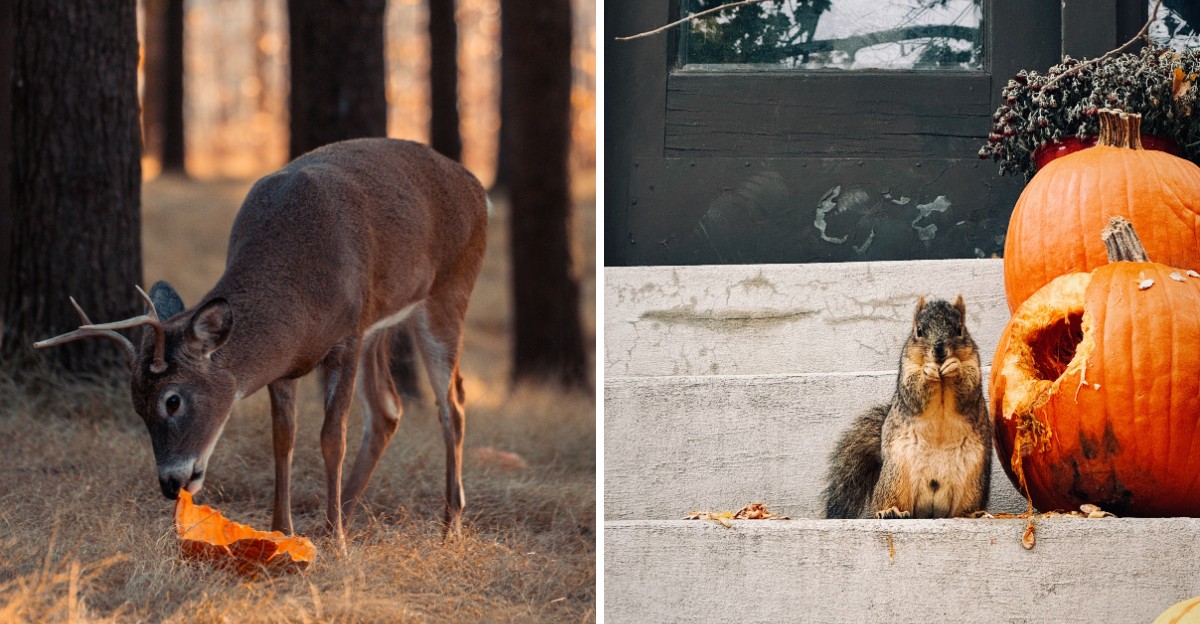
Leaving a soft, slumping jack-o’-lantern where deer can reach it can count as evidence that you meant to feed them. In New York, that matters, because feeding wild deer has been against state rules since 2002.
I’ll admit it. My first instinct every November is to roll my tired pumpkins to the edge of the yard and let nature handle the cleanup. It feels generous, thrifty, and a little bit magical.
Wildlife biologists see that same scene very differently. They picture crowds of animals sharing spit, germs, and bad habits around one sticky orange pile.
You’re in for a surprise if you think squirrels are the only ones who show up. Rats, raccoons, and even neighborhood skunks love a free buffet. So what should a kind-hearted gardener actually do with that grinning gourd once the candles go out?
That Porch Pumpkin Feels Like a Kind Gift for Deer
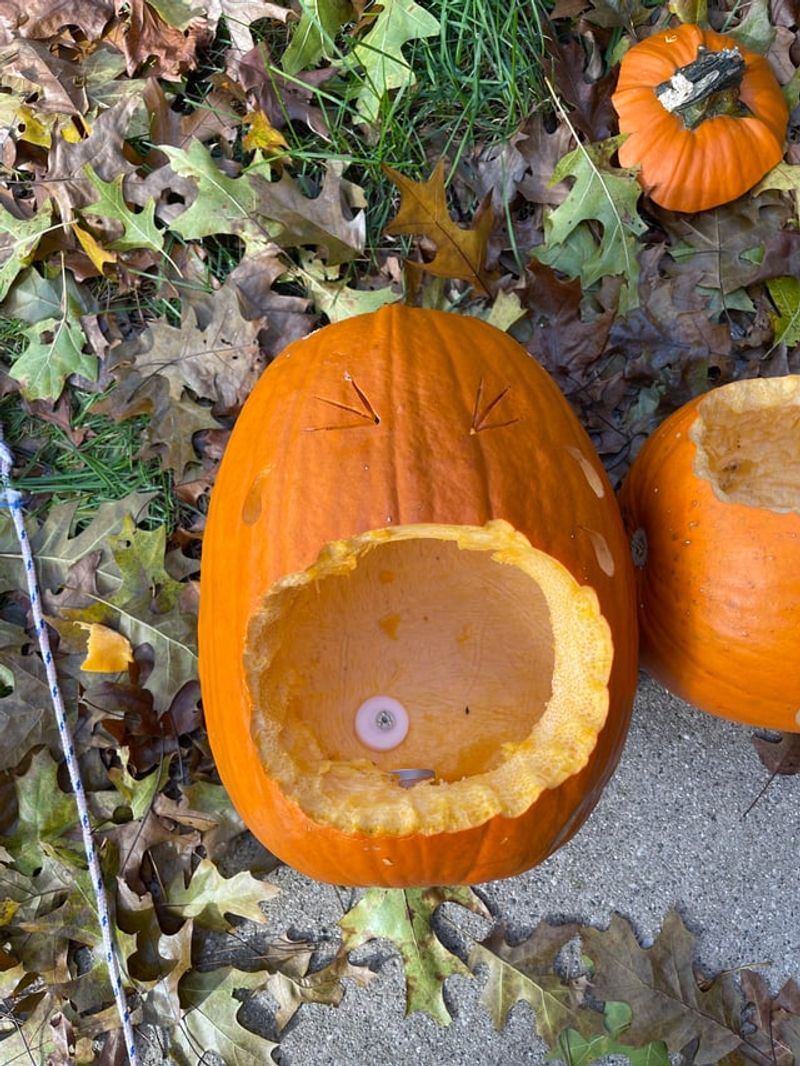
Every fall, my soft-hearted side argues with my gardener side. The pumpkin is past its prime, the deer look hungry, and tossing it out back seems like a win for everyone.
Wildlife experts at the New York State Department of Environmental Conservation, often called DEC, gently disagree. Their advice is simple.
Wild animals do best on the wild foods they already know how to find.
Deer, squirrels, and raccoons are clever foragers. By late fall, they are eating acorns, twigs, buds, dried leaves, and stored nuts.
Their bodies are tuned for that menu, especially as winter approaches.
A big pile of pumpkin changes the picture. It draws many animals into one small spot, often more than would gather naturally.
That crowding is where most of the trouble starts.
Animals bunched together share saliva and droppings. They also get bolder around homes, roads, and pets.
A one-time treat can turn into a regular stop on their nightly route.
I like thinking of it this way. A pumpkin feels like a gift to us, but to wildlife it is more like an unexpected party with uninvited guests and germs.
So the short answer is no. Experts recommend skipping the backyard pumpkin drop, and the next sections explain why the reasons go beyond simple caution.
Feeding Deer in New York Is Against State Rules
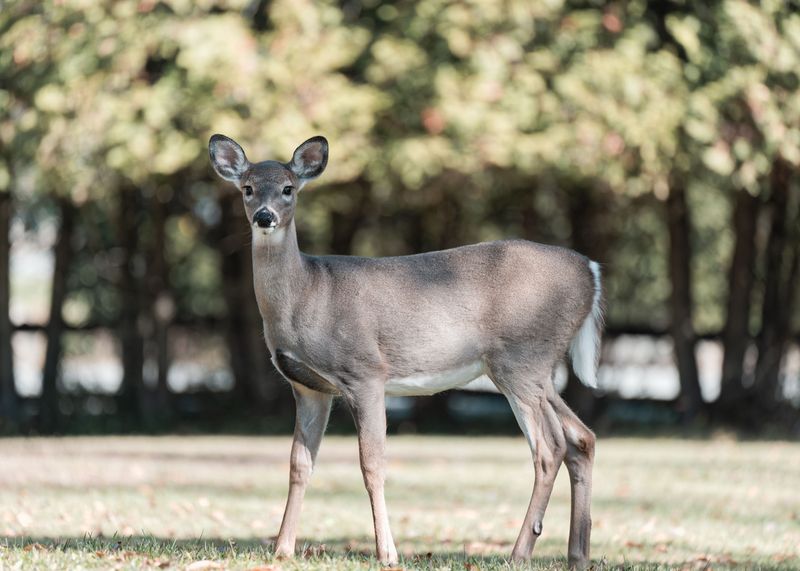
Plenty of folks are shocked to learn this one. Since 2002, New York has banned the intentional feeding of wild white-tailed deer and moose across the state.
The rule is enforced by the DEC. It was created to slow disease spread, reduce car crashes and backyard conflicts, and protect forests from heavy browsing near feeding spots.
Here is the part that catches gardeners off guard. Under the regulation, placing food where deer can easily reach it can be treated as presumptive evidence that you meant to feed them.
That means saying you were only composting may not help if a pile of pumpkins sits openly on your lawn. Intent is judged by what you did, not just what you hoped.
There are a few exceptions, such as normal farming and garden plants, plus certain permitted activities. A carved jack-o’-lantern tossed into the woods does not fall under those.
Rules for other animals vary. Small backyard creatures like squirrels are not covered by the deer ban, but local towns may have ordinances about attracting wildlife or rodents.
Personally, I find the law helpful. It takes the guesswork out of a decision that feels emotional, and it keeps neighbors on the same page.
If you have questions, your regional DEC office is happy to explain the details.
Crowded Deer Around Pumpkin Piles Can Spread Disease
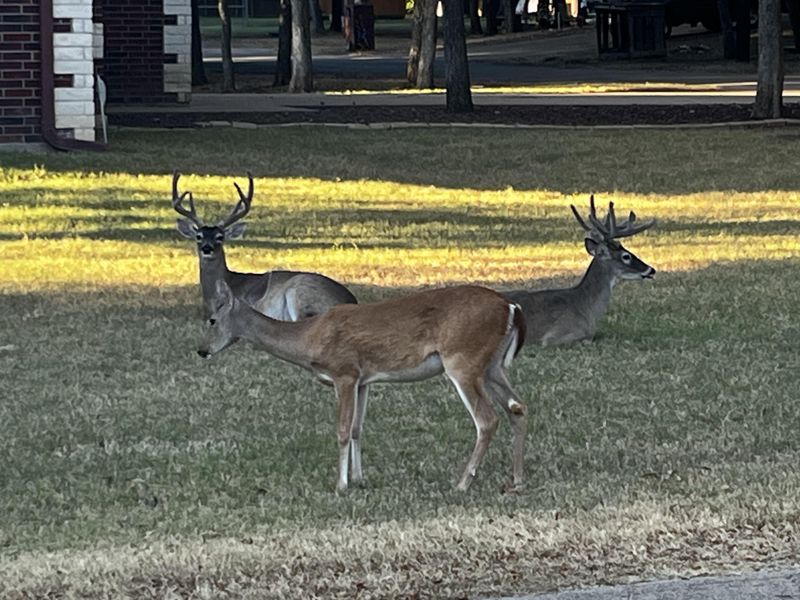
Chronic wasting disease is the big worry here. It is a contagious brain illness in deer, and New York works hard to keep it out after a 2005 case in Oneida County.
The state responded fast, and no new cases have been found since. Biologists want to keep it that way, and feeding sites make their job harder.
CWD spreads through saliva, urine, and droppings. Abnormal proteins called prions can linger in soil for years.
When deer crowd nose to nose over a pumpkin, they swap far more of those fluids than usual.
Other illnesses can travel the same way. Bovine tuberculosis is a concern in some states, and parasites pass easily where animals keep returning to one patch of ground.
Raccoons and foxes drawn to the same pile bring their own problems, including rabies and distemper. Your pumpkin ends up acting like a busy bus station for germs.
I can’t imagine wanting to be the yard where an outbreak starts. That is a heavy thought for one leftover gourd.
Spreading deer out across the landscape is one of the best natural defenses they have. Keeping food piles out of your yard helps them stay that way, healthy and a bit more wild.
Rich Pumpkin Snacks Can Upset a Deer’s Winter Belly
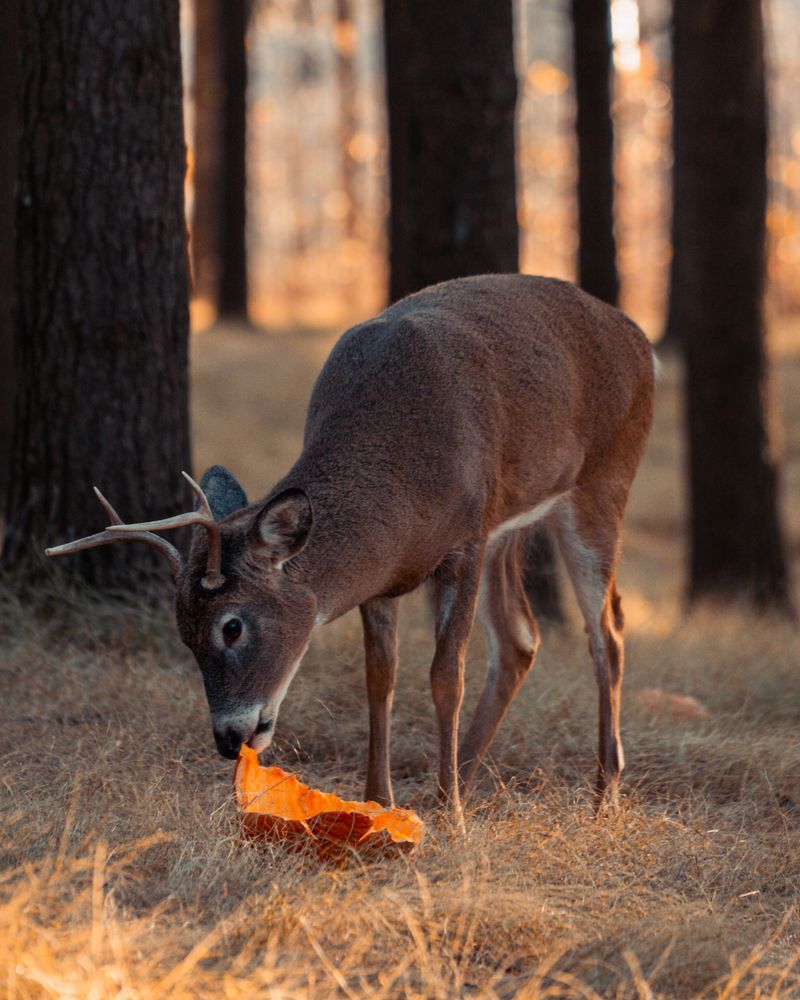
Deer stomachs are fascinating little factories. They have four chambers, and tiny microbes inside help them digest tough winter foods like twigs, buds, and bark.
As the seasons change, those microbes slowly shift to match the menu. That process takes weeks, not hours.
Drop a sudden load of sugary, watery pumpkin into that system, and the balance can tip. Experts warn that rich, unfamiliar foods may cause bloating, digestive upset, or a serious condition called acidosis.
Corn and bread cause similar issues, which is why biologists often discourage those too. Pumpkin is not poison, but large amounts at the wrong time can do real harm.
Nutrition matters too. Pumpkins are mostly water with modest protein, so they fill bellies without giving deer the balanced diet they need heading into cold months.
You need to remember that deer are already prepared for winter. They build fat in fall and slow their metabolism to stretch natural foods until spring.
A well-meant snack can interrupt that smart plan. I’d rather let them stick with the woody buffet they were built for.
If you enjoy watching deer, planting native shrubs well away from roads offers natural cover and food without the stomach troubles or legal headaches.
Squirrels and Raccoons Get Bolder Near Your Porch Steps
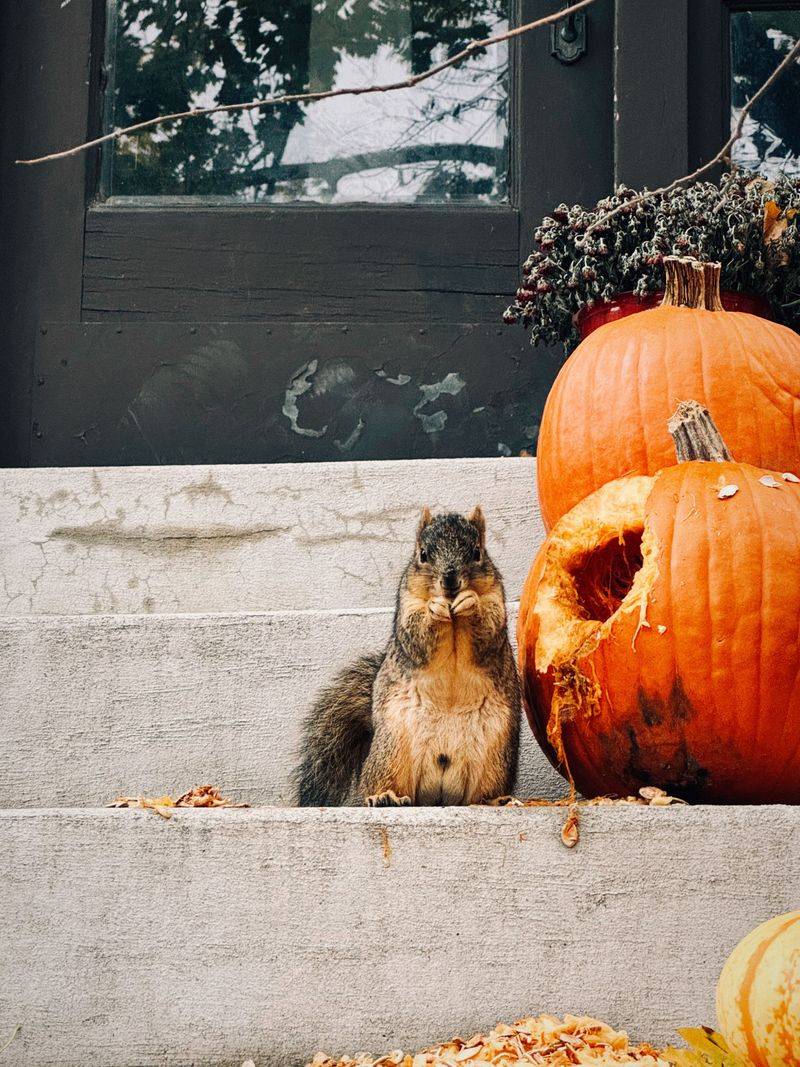
Anyone who has watched a gray squirrel hollow out a jack-o’-lantern knows the scene is hilarious. That fluffy tail sticking out of a carved grin is pure comedy.
Still, the laughs come with a catch. Regular pumpkin buffets teach squirrels and raccoons that porches mean food, and they start visiting more often and with less fear.
Bold raccoons may tip trash cans, explore garages, and meet your pets face to face. They can carry distemper, rabies, and roundworm, which are worth keeping far from the family dog.
Decorated pumpkins add another layer. Paint, glitter, glue, bleach sprays, and candle wax can be harmful if animals chew them, so painted gourds should go straight to the trash.
You may have heard squirrels get reckless near roads after eating too much pumpkin. That idea floats around online, but no solid research backs it, so I’d file it under fun rumor.
Squirrels are not part of the state deer feeding ban. Even so, a pile of food near your home invites far more than the cute visitors you had in mind.
If you love squirrel antics, enjoy them from the window as they bury acorns. They are excellent at feeding themselves.
Rotting Gourds in the Woods Attract Rats and Upset Soil
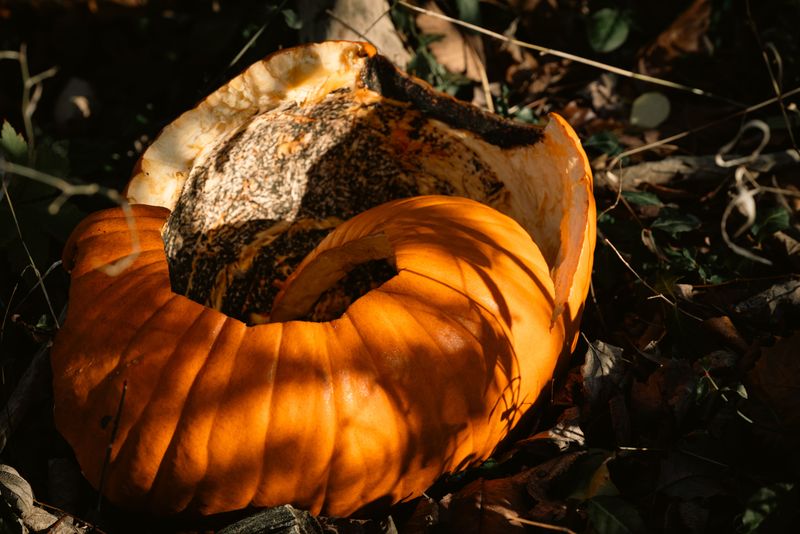
Out of sight should not mean out of mind. Many people toss pumpkins into a nearby park or wooded lot, thinking they will simply melt back into the earth.
They do break down eventually, but not neatly. A heap of mushy pumpkins becomes a magnet for rats, mice, and other critters that rarely gather there in such numbers.
In New York City and other dense areas, rats are already a tough challenge. Handing them a free orange feast on public land makes control even harder for parks crews.
Forest floors have their own slow rhythm. Leaves, fungi, insects, and native plants work together, and a sudden pile of rich food can upset that balance in one patch.
Seeds can sprout where they do not belong too. Pumpkin vines are not invasive, but dumping garden waste on public land is often against park rules anyway.
I believe most people do this out of kindness and a wish to avoid landfills. That instinct is great, it just needs a better target.
If your pumpkin will not go in the trash, the woods are not the backup plan. Thankfully, there are easy, earth-friendly options that keep both wildlife and parks happier.
Community Pumpkin Smash Events Are a Fun Send-Off
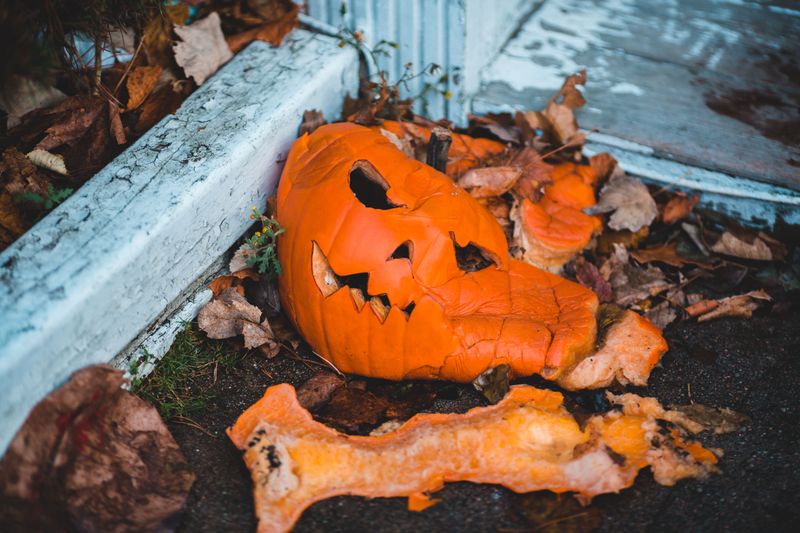
Smashing pumpkins on purpose is oddly satisfying. Kids love it, grown-ups secretly love it, and the gourds end up exactly where they belong.
Many New York towns and boroughs hold pumpkin smash or drop-off days in early November. New York City’s compost programs and groups on Long Island, like North Hempstead, have hosted these events in past years.
The idea is simple. You bring your pumpkins, remove decorations, and toss them into collection bins headed for composting sites instead of landfills.
Landfills are a poor home for food waste. Buried scraps break down without much oxygen and release methane, a powerful greenhouse gas.
Compost sites handle pumpkins the right way. With air and heat, they turn into dark, crumbly soil that may later feed parks, gardens, and street trees.
Check your town website, local library board, or sanitation department in late October. Dates and locations change from year to year, so a quick search saves a wasted trip.
Personally, I think it makes a perfect family tradition. You get a little fun, a little exercise, and a clear conscience.
Bring gloves, leave candles at home, and give that grin one final, happy whack.
Chopped Pumpkins Make Rich Compost for Spring Garden Beds
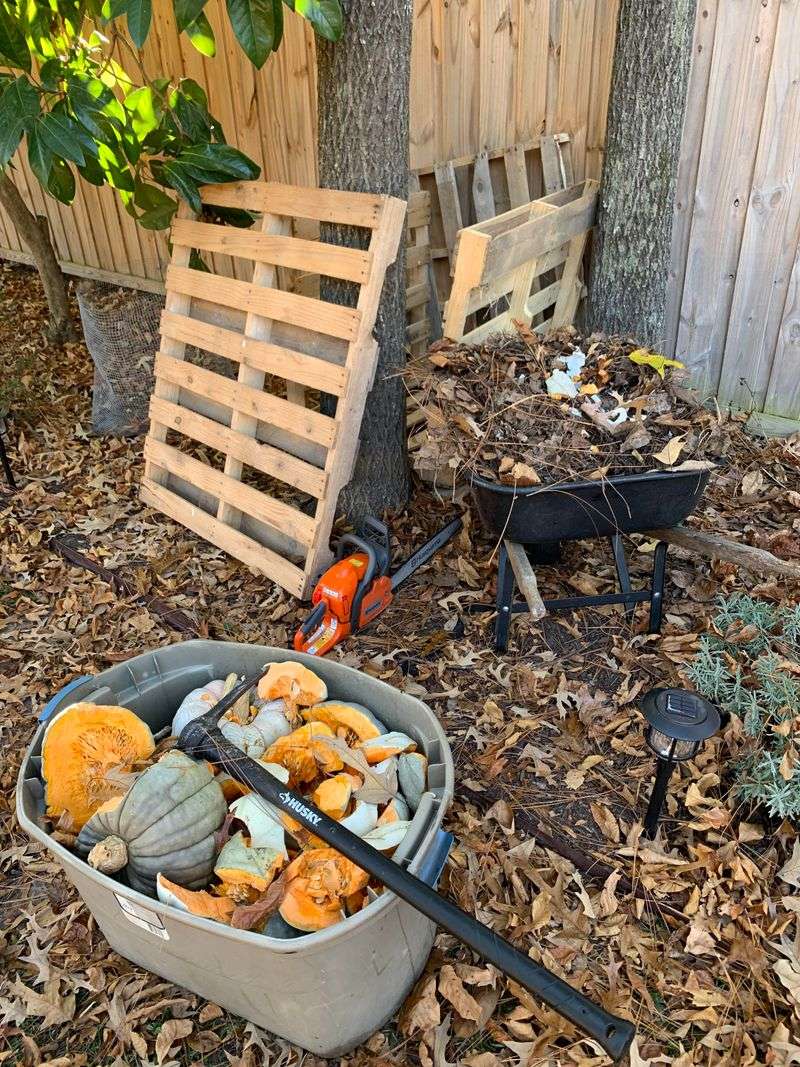
Home composting might be my favorite pumpkin ending of all. That cheerful porch decoration can feed next year’s tomatoes and zinnias.
Start by removing candles, wax, stickers, paint, and glitter. Painted or chemically treated pumpkins belong in the trash, not the compost pile.
Next, break the pumpkin into small chunks with a shovel or garden fork. Smaller pieces break down much faster and are less tempting as whole meals.
Mix the pieces with plenty of brown material, like shredded fall leaves, straw, or wood chips. Pumpkins add moisture and nitrogen, and the browns balance them out.
Bury the chunks in the center of the pile and cover them well. An enclosed bin works best, especially in areas with deer, raccoons, or rats.
Scoop out seeds first if you dislike surprise pumpkin vines. You can roast them for a snack or save dry ones for the birds in a feeder away from deer reach.
Across much of the state, piles slow down in cold weather, then wake up in spring. By late spring or summer, you should have dark, earthy compost.
Your takeaway is simple. Skip the wildlife buffet, compost responsibly, and let that jack-o’-lantern help your garden grow.