Why Your Florida Palm’s Newest Frond Won’t Open (And When to Worry)
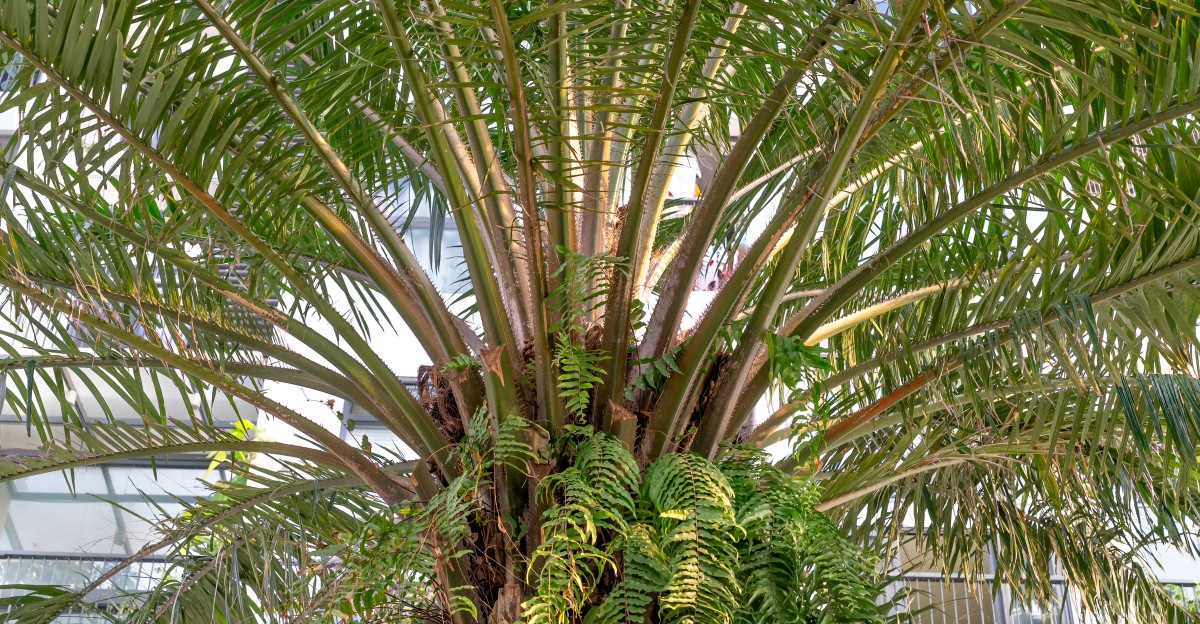
A healthy palm grows from one single bud, and it has no backup plan if that bud fails.
I find that fact a little nerve-racking every time I look up at the tall trunks in my Florida yard. That bud hides at the very top, wrapped in leaf bases, where you rarely get a good look at it.
The only clue you get is the tall, pointed leaf rising from the center. When it stays shut for weeks, the tree is telling you something about its food, its weather, or its health.
Personally, I panicked the first time I saw one stall. Most of the time the cause is fixable. So how do you tell a hungry tree from one in real trouble?
That Tightly Closed Palm Spear Leaf Has a Story to Tell
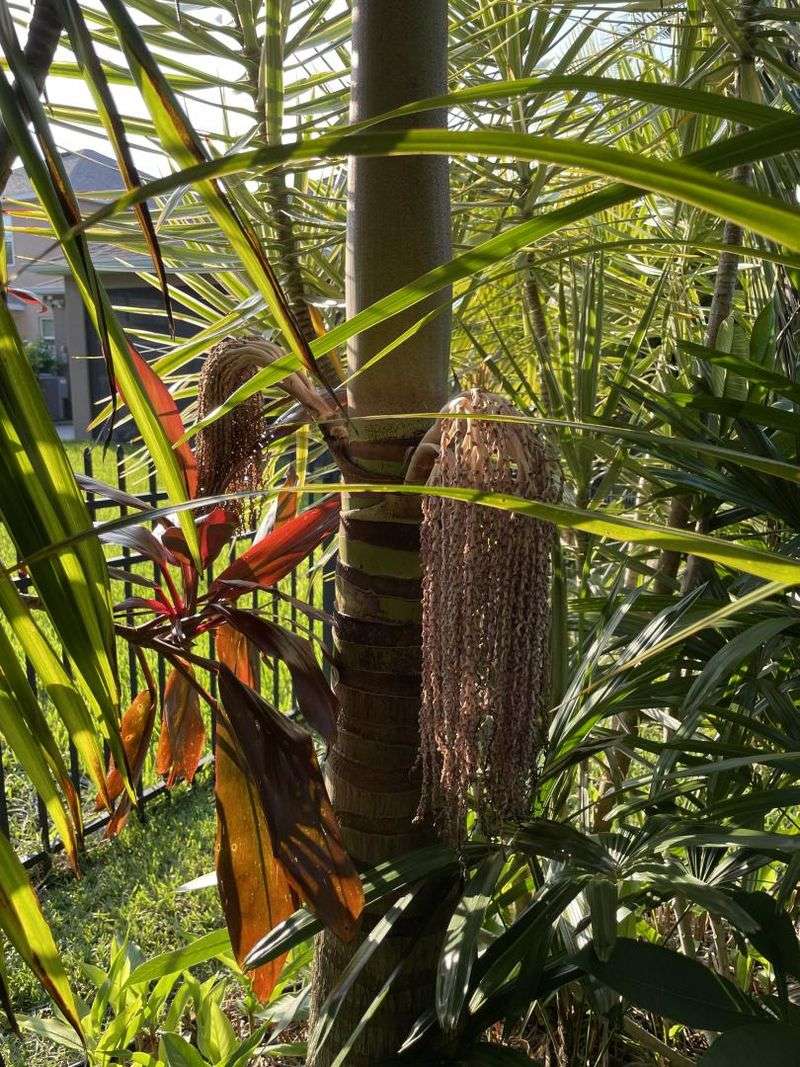
Every palm frond starts life as a spear, a stiff, folded leaf that pushes straight up from the bud. Normally it loosens and opens over a few weeks, depending on the species and the season.
A spear that stays closed longer than usual is a symptom, not a disease. The palm is struggling to build healthy new tissue, and the reason sits somewhere in its roots, its soil, or its bud.
University of Florida IFAS experts point to a short list of usual suspects. Missing nutrients, mainly manganese and boron, top that list in Florida landscapes.
Cold damage, waterlogged roots, bud rot, and bronzing disease follow behind.
I like to start with a quick check before worrying. Tug gently on the spear with a gloved hand.
If it holds firm, the bud is likely still alive and working.
Next, study the leaves around it. Are newer fronds small, crinkled, or yellow streaked?
Are the oldest fronds turning bronze or orange?
Also look at timing. A slow spear in January may just reflect cool weather, since palms grow slowly in winter.
A stuck spear in July, during peak growing season, deserves more attention.
Those simple clues will point you toward the right answer.
Frizzled New Palm Fronds Often Point to Missing Manganese
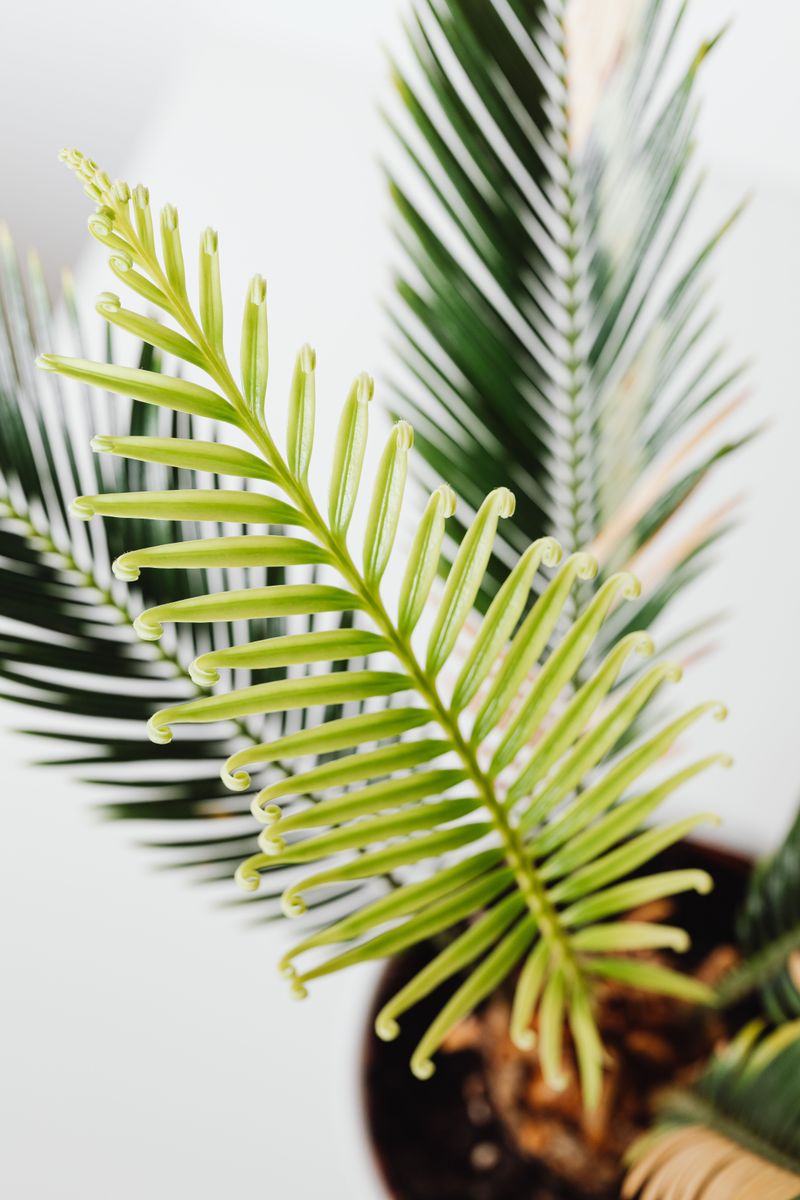
Gardeners nicknamed this one frizzle top, and the name fits perfectly. New fronds come out small, scorched looking, and curled, like they lost a fight with a hair dryer.
Manganese deficiency is a top reason palms here push out weak or unopened spears. The tree needs this micronutrient to build fresh leaf tissue.
Without it, each new frond gets smaller and more distorted than the last.
Queen palms, royal palms, and coconut palms show it often. Alkaline soil is a big trigger, because high pH locks manganese away from roots.
That makes coastal areas with shell or limestone fill common trouble spots.
Treatment is simple and affordable. UF/IFAS recommends manganese sulfate applied to the soil under the canopy.
Rates on the label vary by palm size, so follow them carefully.
Skip manganese oxide, since it barely dissolves and does little for the tree. Foliar sprays can help short term, but soil treatment does the lasting work.
You need patience here. Damaged fronds stay damaged, and the palm only shows recovery in brand new leaves.
Expect several months before you see clean, normal growth.
Left alone for too long, severe cases can stop the bud for good.
A Crumpled or Hooked Palm Spear May Mean Boron Is Low
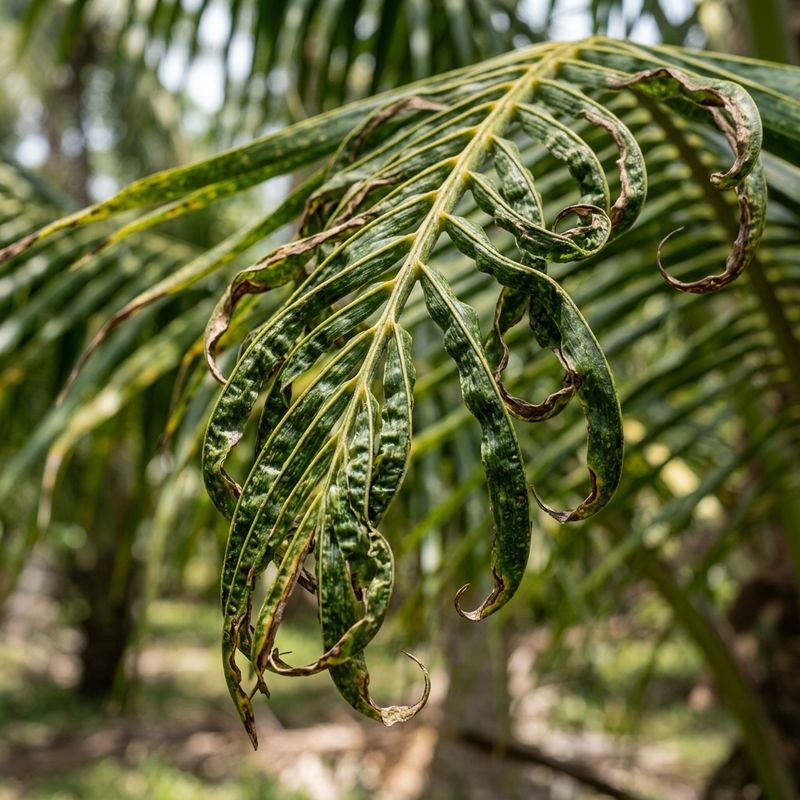
Boron problems look strange enough to stop you in your tracks. Leaflets may stay stuck together, wrinkle like accordion folds, or bend sharply at the tip, a symptom nicknamed hook leaf.
Palms need only a tiny amount of boron for healthy cell growth in new leaves. Florida sand lets it wash away fast, especially after heavy summer rain or frequent irrigation.
Dry spells can also block uptake, so symptoms sometimes appear in waves.
One tricky detail matters a lot. The gap between enough boron and too much is very small.
Overdoing it can burn leaves and harm the tree, so more is not better.
UF/IFAS suggests a light application of a boron product like borax or Solubor scattered evenly under the canopy. Use label rates, measure carefully, and never pile it near the trunk.
Honestly, my favorite fix is prevention. A quality palm fertilizer already includes a small, safe dose of boron, which usually covers the need.
Fun fact: a single boron shortage can leave a ring of odd, crimped fronds in the canopy. Months later, the normal leaves grow out above it, like a timeline you can read from the ground.
Spear Leaves That Pull Out Easily Are a Real Warning Sign
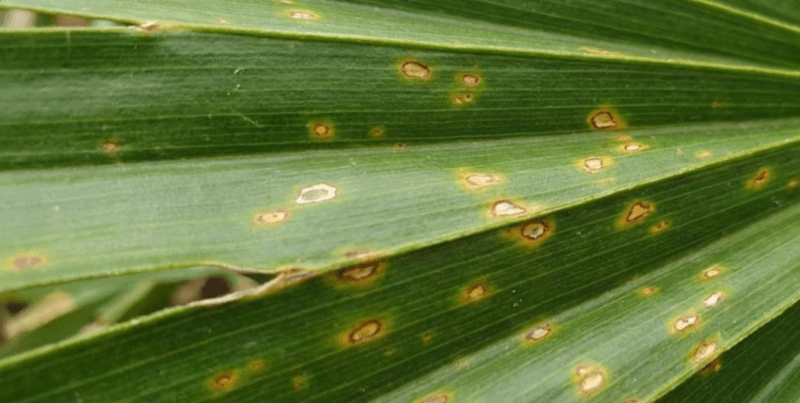
Here is the moment that should raise your eyebrows. You give the spear a gentle tug and it slides right out, often with a sour, rotten smell at the base.
That usually means bud rot. Fungi or bacteria have attacked the soft heart of the palm, where all new growth begins.
Phytophthora is one common cause, and UF/IFAS notes it often shows up after cold snaps, storm injury, or long wet spells.
Because a palm has only one growing point on most species, damage there is serious. Clumping palms like areca can survive because other stems keep going.
Single-trunk palms usually cannot replace a lost bud.
Early on, a mild case sometimes responds to a copper fungicide poured into the crown. Results are mixed, and a certified arborist can tell you if it is worth trying.
Avoid overhead sprinklers that soak the crown every day. Keep pruning tools clean, and never cut green fronds while the palm is stressed.
If the spear and next few fronds have collapsed, removal is often the safest choice. A weak crown can drop heavy material without notice, so plan ahead.
Bronzing Older Fronds Plus a Stuck Spear Means Call an Expert Fast
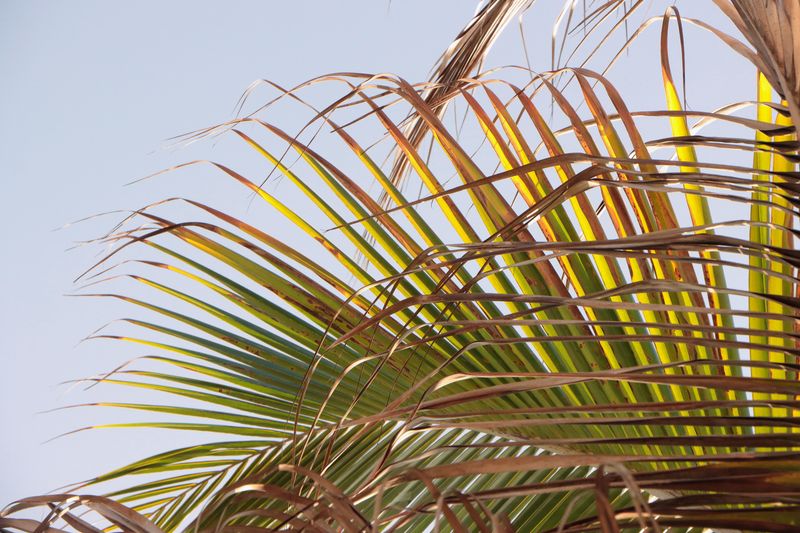
Bronzing is the one diagnosis Florida palm lovers truly dread. A tiny planthopper called Haplaxius crudus spreads it from tree to tree.
The disease affects sabal palms, our state tree, plus queen, Canary Island date, Christmas, and other species. Symptoms usually begin with fruit or flowers dropping early.
Next, older fronds turn a bronze or reddish brown from the bottom up.
Then the spear leaf browns and collapses. UF/IFAS describes that as the point where the growing bud has failed, and the palm will not recover.
So here is the key pattern to remember. A stuck spear with green, healthy fronds below often points to nutrients.
A browning spear with bronzing lower fronds points toward this disease.
No cure exists for infected trees. Trunk injections of oxytetracycline, given by licensed professionals, can help protect nearby healthy palms.
Prompt removal matters because sick trees can serve as a source for spread. Your county extension office can arrange lab testing, which confirms the problem before you make big decisions.
Please do not wait on this one. Early action protects every other palm on your street.
Cold Snaps Can Show Up on Palm Spears Weeks Later
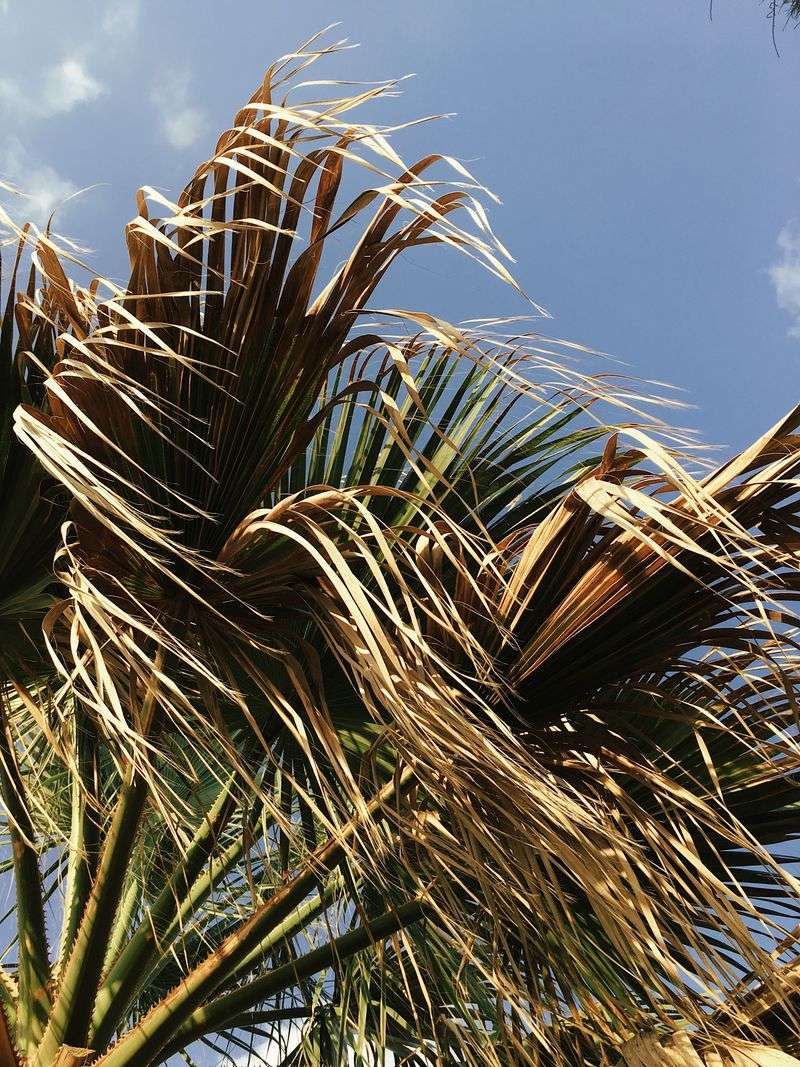
Palms keep secrets, especially after a frosty night. North and central Florida get freezes most winters, and even South Florida sees the occasional chilly blast.
Cold soil slows root activity, so a palm may stop absorbing manganese and boron for a while. New fronds then look deficient even when the soil holds plenty.
These symptoms often appear weeks or months after the cold event.
More severe cold can injure the bud directly. That damage invites rot, and the spear may later loosen or turn brown.
My best advice sounds boring, but it works. Wait before you cut anything.
UF/IFAS recommends leaving brown fronds in place until warm weather returns and new growth shows the full picture.
Many palms bounce back by late spring. Damaged fronds still give some protection to the bud and feed the tree stored nutrients.
Some gardeners apply a copper fungicide to the crown after a hard freeze to reduce rot risk. Check the label and use it only on affected trees.
Choosing cold-hardy palms like sabal or needle palm for northern parts of the state saves a lot of winter worry.
Soggy Soil Around the Palm Trunk Can Stall New Growth
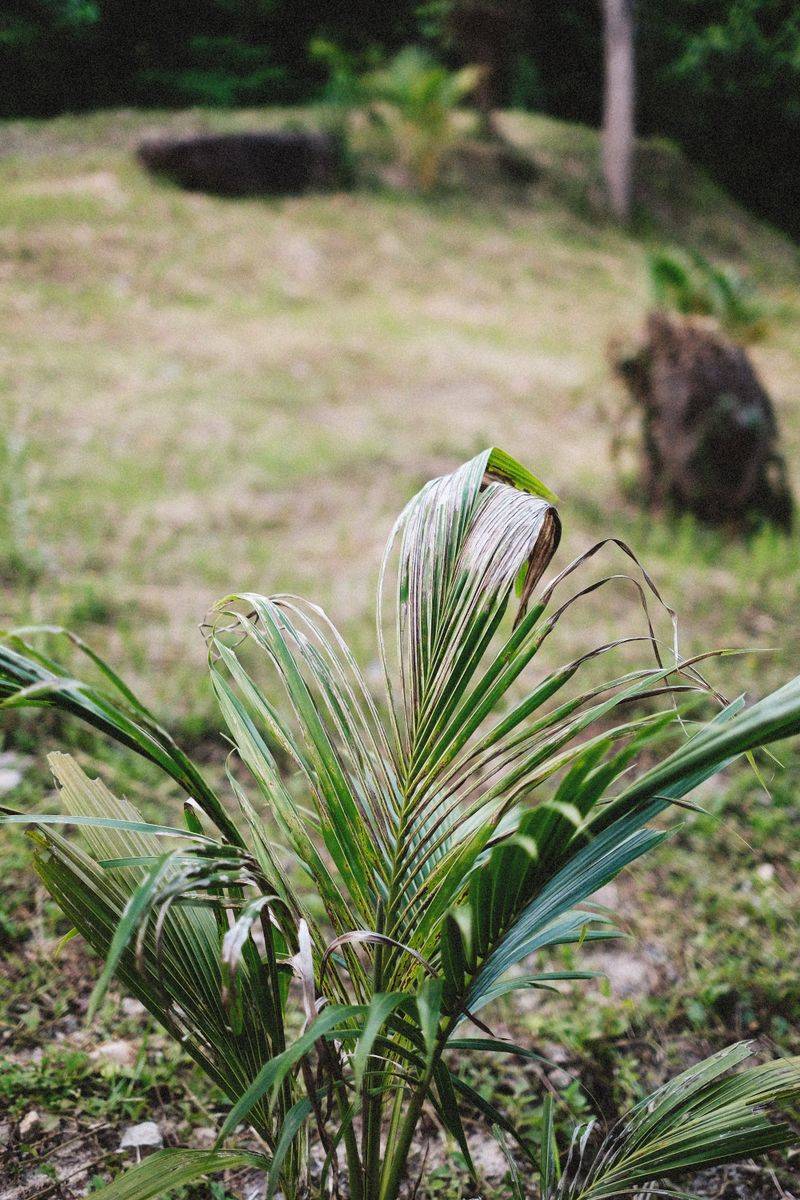
Surprise, tropical does not mean swampy. Most landscape palms want moist, well-drained soil, not roots sitting in a puddle.
When soil stays waterlogged, roots run short of oxygen. Weak roots absorb fewer nutrients, and the top of the tree feels it.
A slow or stuck spear can be one result.
Wet conditions also encourage root rot and crown problems. Combine that with a cool spell, and bud rot becomes much more likely.
Planting depth matters too. A palm buried deeper than it grew in the nursery pot often struggles for years.
Look for the root initiation zone at the trunk base, which should sit right at the soil line.
Try this simple test. Dig a small hole a few inches deep near the root zone a day after watering.
If it feels soggy or smells sour, cut back.
Established palms usually get by on rainfall during the wet season, roughly June through September. New plantings need regular watering for the first several months, then less over time.
Check sprinkler heads, too. Many I have seen spray straight into palm crowns every morning, which helps nobody.
A Steady Palm Fertilizer Routine Keeps New Fronds Opening
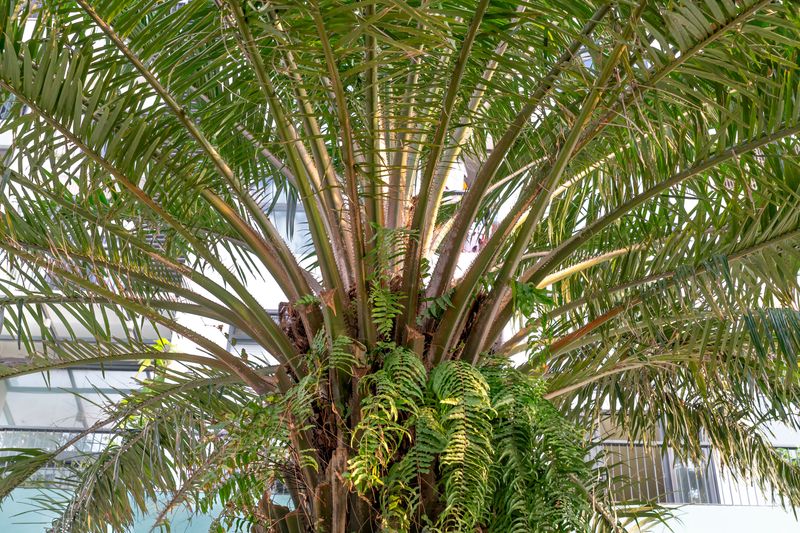
Prevention beats rescue every single time. Most Florida soils are sandy and low in nutrients, so palms rely on the food you give them.
UF/IFAS recommends a controlled-release palm fertilizer with an analysis like 8-2-12 plus 4 percent magnesium. A good blend also includes manganese, boron, and other micronutrients in slow-release form.
Spread it evenly under the canopy, not piled against the trunk. Many experts suggest feeding about three times a year during the growing season.
Always check local rules first, because many counties ban nitrogen and phosphorus applications during summer rainy months.
Watch out for lawn fertilizer near palms. High-nitrogen turf products can make palm deficiencies worse by throwing nutrients out of balance.
Pruning habits count as well. Palms pull potassium and other nutrients from older fronds, so cutting green or partly yellow fronds starves the tree.
Remove only fully brown fronds.
Finally, know when to call help. A loose spear, a browning spear with bronze lower fronds, or no improvement after months of proper feeding all deserve a certified arborist or extension visit.
Personally, I keep a little calendar note for feeding days. My palms have thanked me with clean, open spears ever since.