9 Collector Plants That Will Make Your Virginia Neighbors Ask “What Is That?”
One plant on my list smells like spoiled meat on purpose, and flies happily fall for the trick every spring. Another one traps insects inside slippery leaves that work like tiny water slides with no exit at the bottom.
I love how odd plants turn a quiet yard into a living conversation starter for the whole street. Walkers slow down, point at strange leaves, and finally knock on your door to ask questions.
Every pick on this list can handle Virginia winters with the right spot and a little thoughtful care. Personally, I think the best collector plants look rare but behave like easygoing neighbors once they settle in.
You might notice a few of them are native treasures hiding in plain sight across nearby woods and bogs. So which strange beauty will earn the very first curious stare from your neighbors this year?
1. Purple Pitcher Plant
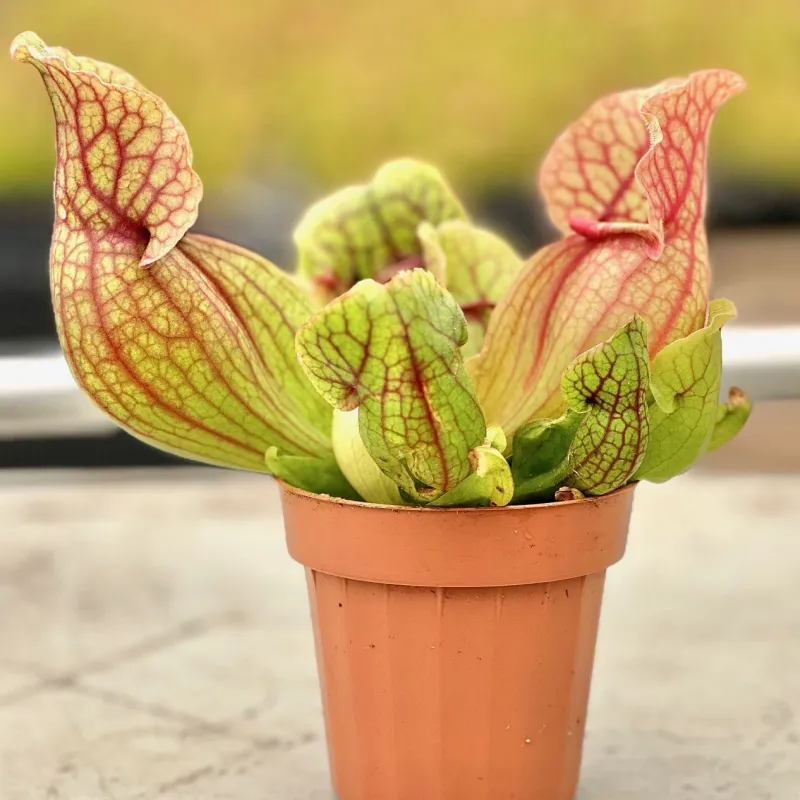
Bugs crawl toward the sweet nectar on the lip, then slip down into a pool of rainwater they cannot escape. I still grin every time a visitor peeks inside and spots the floating leftovers of last week’s flies.
Purple pitcher plant, or Sarracenia purpurea, grows wild in a handful of scattered Virginia bogs and wet seepage areas. Its chunky, red-veined pitchers sit low to the ground like a cluster of little open-mouthed vases.
Hardiness is not a worry here, since this carnivore handles USDA zones 3 through 9 with ease. Cold winters actually help, because the plant needs a real dormant rest before waking up each spring.
You need to skip regular garden soil and fertilizer, which both burn the delicate roots over time. A mix of peat moss and sand kept soggy in full sun copies its natural boggy home nicely.
Water matters more than most people expect, so collect rainwater or use distilled water whenever possible. Minerals in tap water slowly build up and can cause the plant to decline over a few seasons.
Many growers build a small bog by sinking a lined plastic tub into the ground and poking drainage holes high. That simple setup keeps roots wet while letting heavy summer storms drain away without flooding the crowns.
Please buy only nursery-propagated plants, since wild pitcher plants are rare and protected in many places. Strange maroon flowers that look like tiny upside-down umbrellas appear in spring and add another surprise.
2. Voodoo Lily
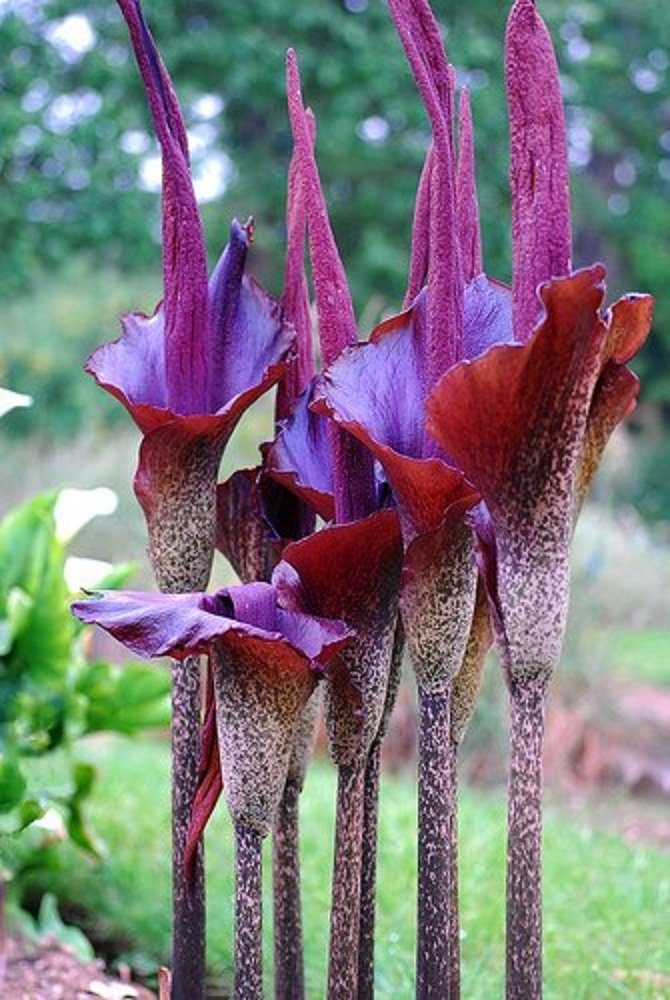
Neighbors usually notice the smell first, a rotten-meat aroma that drifts across the yard for a day or two. Then they spot a tall maroon spike rising from bare dirt, and the questions start pouring in fast.
Voodoo lily, known to botanists as Amorphophallus konjac, blooms in spring before any leaves show up above ground. That dark, ruffled flower can reach several feet tall, and its stink attracts flies as pollinators.
Once the bloom fades, a single umbrella-shaped leaf unfolds on a mottled stalk that looks like snakeskin. I have to admit the leaf thrills me even more than the flower, since it feels prehistoric.
Tubers survive outdoors in zones 6 through 10, which covers most of the region with decent mulch. Plant it about six inches deep in rich, well-drained soil where it gets bright light or partial shade.
Soggy winter soil is the main enemy, because the tuber can rot if it sits in cold water. A raised bed or sloped spot keeps it much happier than a low corner that collects rainwater.
Fun fact for food lovers: the same plant supplies konjac flour, used for jelly and low-calorie shirataki noodles. Raw tubers contain irritating crystals, though, so keep curious pets and kids from chewing on them.
Place it away from patios and windows, unless you enjoy explaining the odor to dinner guests. Mature tubers often make offsets over time, so one plant can slowly become a small spooky colony.
3. Harry Lauder’s Walking Stick
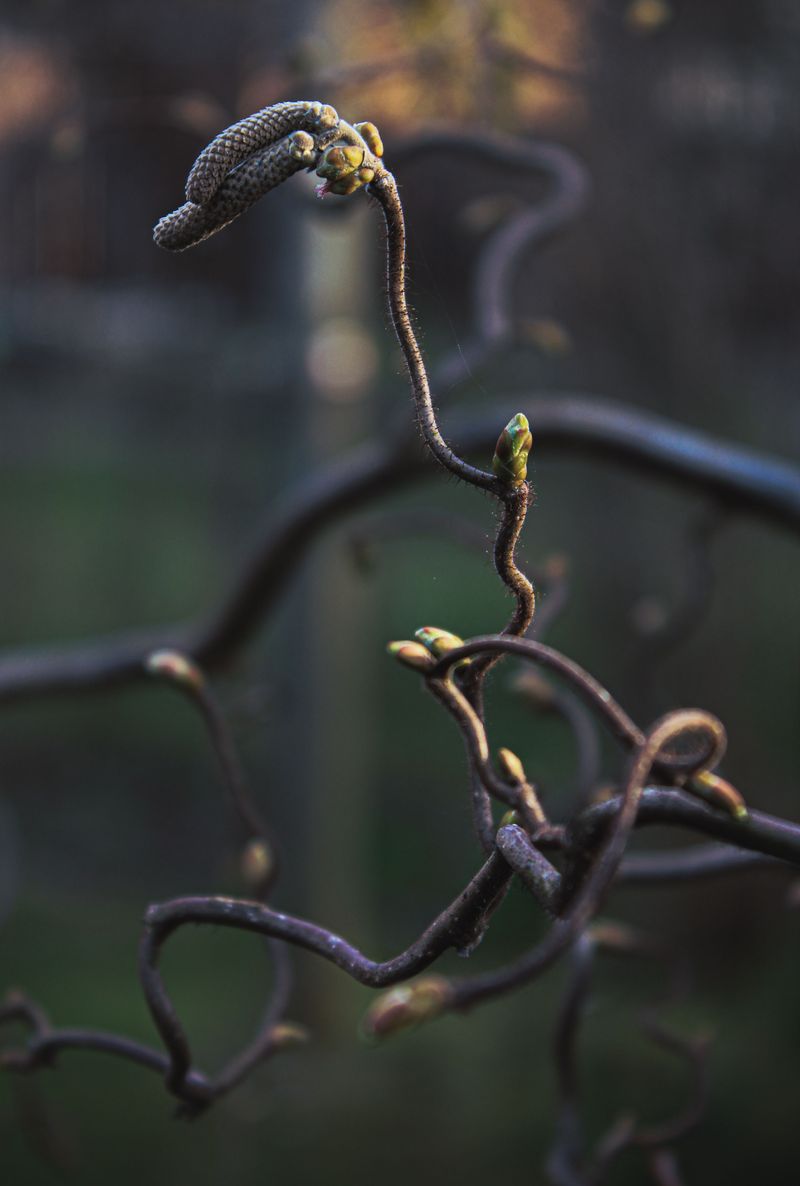
Branches twist and curl like corkscrews on this shrub, making it look as if it stepped out of a storybook. Winter shows it off best, when bare stems stand out against snow or a gray February sky.
Harry Lauder’s walking stick is a contorted form of European filbert, Corylus avellana ‘Contorta’, grown for its strange shape. The name honors a Scottish entertainer famous for carrying a crooked cane during his stage performances.
Late winter brings dangling yellow catkins that sway in the breeze and catch light like little tassels. Personally, I love cutting a few twisted branches for vases, because they last for weeks indoors.
Most plants are hardy in zones 4 through 8 and slowly reach around eight to ten feet tall. Give it full sun or light shade with well-drained soil, and water deeply during long dry spells.
Many nurseries graft the twisted top onto a straight rootstock, which can send up ordinary straight suckers. You need to snip those suckers at the base quickly, or they may eventually crowd out the curly growth.
Summer leaves look a bit crinkled and plain, so pair it with bright perennials to carry the season. Japanese beetles sometimes chew the foliage, but healthy shrubs bounce back without much fuss from you.
Nuts are rare on these shrubs, so think of it as living sculpture rather than a snack source. Plant it near a window or walkway where those wild branches can start conversations all winter long.
4. Paperbush
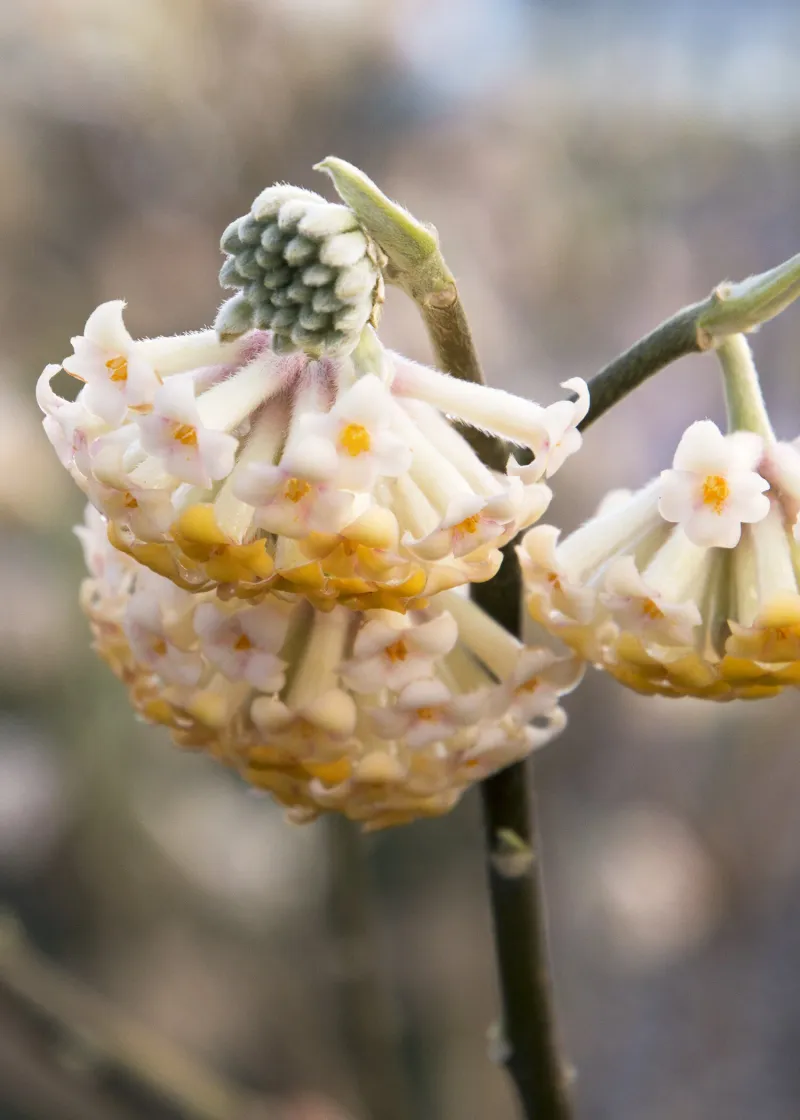
Fuzzy silver buds hang from bare branches all winter, looking like tiny clusters of upside-down pom-poms. By late winter they open into creamy yellow blossoms with a sweet scent that floats across the yard.
Paperbush, or Edgeworthia chrysantha, comes from China and earned its name because its bark was used to make fine paper. Mitsumata fiber from this plant has been used in Japanese banknotes, a fun detail to share with visitors.
Branches split into neat groups of three, a pattern that gives the shrub a tidy, architectural shape. Long tropical-looking leaves arrive after the flowers and stay handsome until they finally drop in autumn.
Hardiness runs from zone 7 through 9, so Tidewater and Piedmont gardens are the safest bets. Colder western valleys can still try it near a sheltered south or east wall with winter protection.
Partial shade suits it best, especially a spot with morning sun and relief from harsh afternoon heat. Rich, moist soil that drains well keeps the roots happy, while soggy clay leads to trouble.
I believe it belongs near a front door, where you can enjoy the fragrance on chilly mornings. Expect a rounded shrub around four to six feet tall and wide after several years of growth.
Pruning is rarely needed, since its natural form already looks polished without much help from you. Keep it watered during summer droughts, because the large leaves wilt quickly when the soil dries out.
5. Hardy Banana
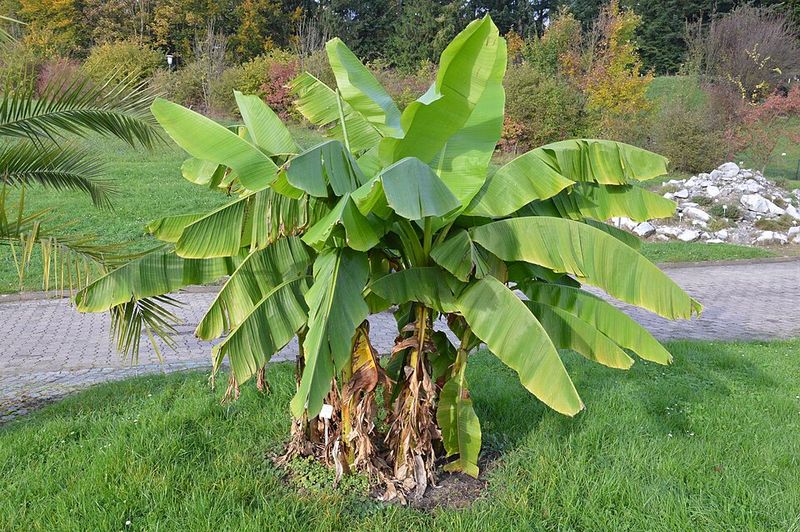
Nobody expects a banana plant in a backyard near the Blue Ridge, yet this one shrugs off winter underground. Its huge paddle leaves can stretch several feet long, giving any corner an instant tropical vacation feel.
Japanese fiber banana, Musa basjoo, has roots that survive down to zone 5 when protected by thick mulch. Frost turns the leaves brown each fall, but fresh stems shoot up again once spring warms the soil.
Growth is shockingly fast, and a healthy clump can reach ten feet or more in a single summer. You’re in for a big surprise if you measure it in June and again in late August.
Full sun and rich, moist soil fuel all that growth, so mix in compost before planting. Feed it regularly through summer and water deeply, since those giant leaves lose moisture very quickly.
Wind shreds the leaves into ribbons, so tuck the plant beside a fence or building for shelter. A little tattering is normal and even looks natural, much like bananas growing wild in warm climates.
After the first hard frost, cut stems back to a foot or two and pile on straw or leaves. Some gardeners wrap the trunks in burlap and insulation so the plant starts taller next season.
Small green fruits occasionally form, but they are seedy and not worth eating, so enjoy the foliage instead. Side pups pop up around the base, and you can dig and share them with jealous neighbors.
6. Toad Lily
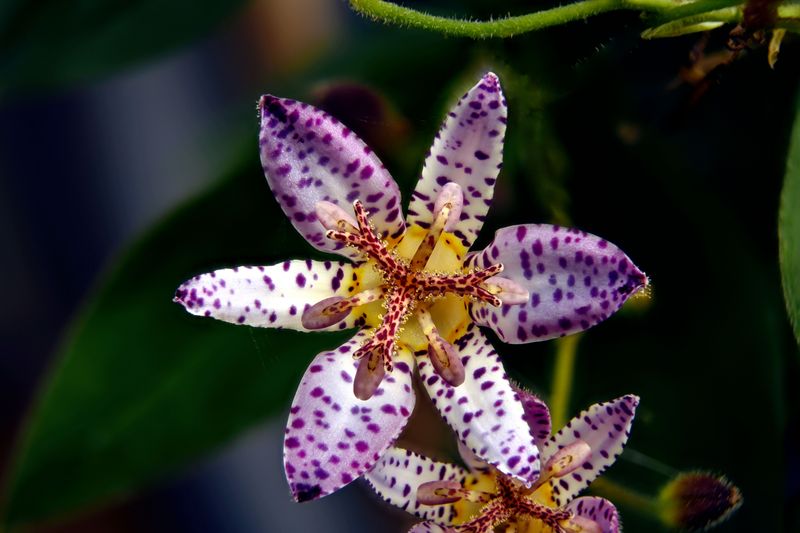
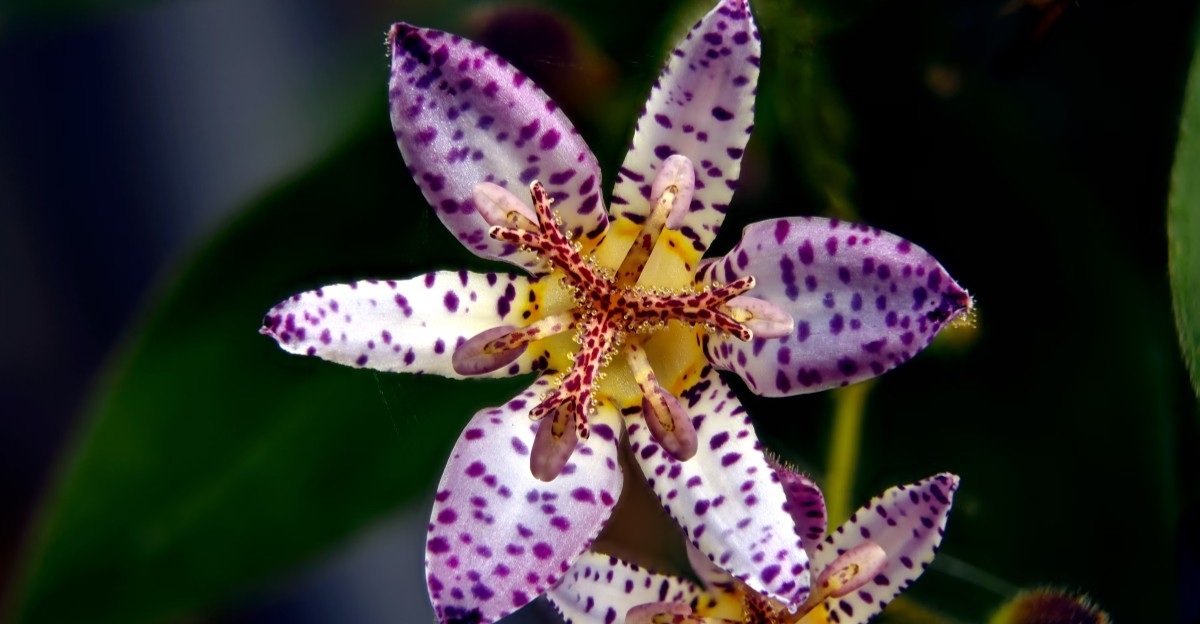
Speckled purple flowers that look like tiny orchids appear in fall, just when most shade gardens are winding down. Visitors bend close to study the spots, and many assume you grow something rare from a jungle.
Toad lily, or Tricyrtis hirta, is a tough perennial from Japan that thrives in zones 4 through 9. The odd common name may come from its spotted petals, which some people say resemble a toad’s skin.
Arching stems lined with fuzzy leaves reach two to three feet tall and carry flowers along their length. I like how each bloom looks hand-painted, with freckles of purple across a pale white background.
Shade is its happy place, especially under trees where it gets gentle morning light and cool roots. Rich, moist soil packed with leaf compost keeps it lush, while dry ground causes brown leaf edges.
Since the flowers are small, plant toad lilies along a path or beside a bench for close viewing. Raised beds and containers also work well, lifting those delicate blooms closer to eye level for admirers.
Slugs sometimes nibble the leaves in damp weather, so check under foliage during rainy stretches of summer. Clumps spread slowly over the years, and dividing them in spring gives you extras for friends.
Deer may browse the stems in some areas, so a light repellent spray can help protect the show. Late-season bumblebees occasionally visit too, giving the garden a final burst of activity before winter arrives.
7. Pawpaw
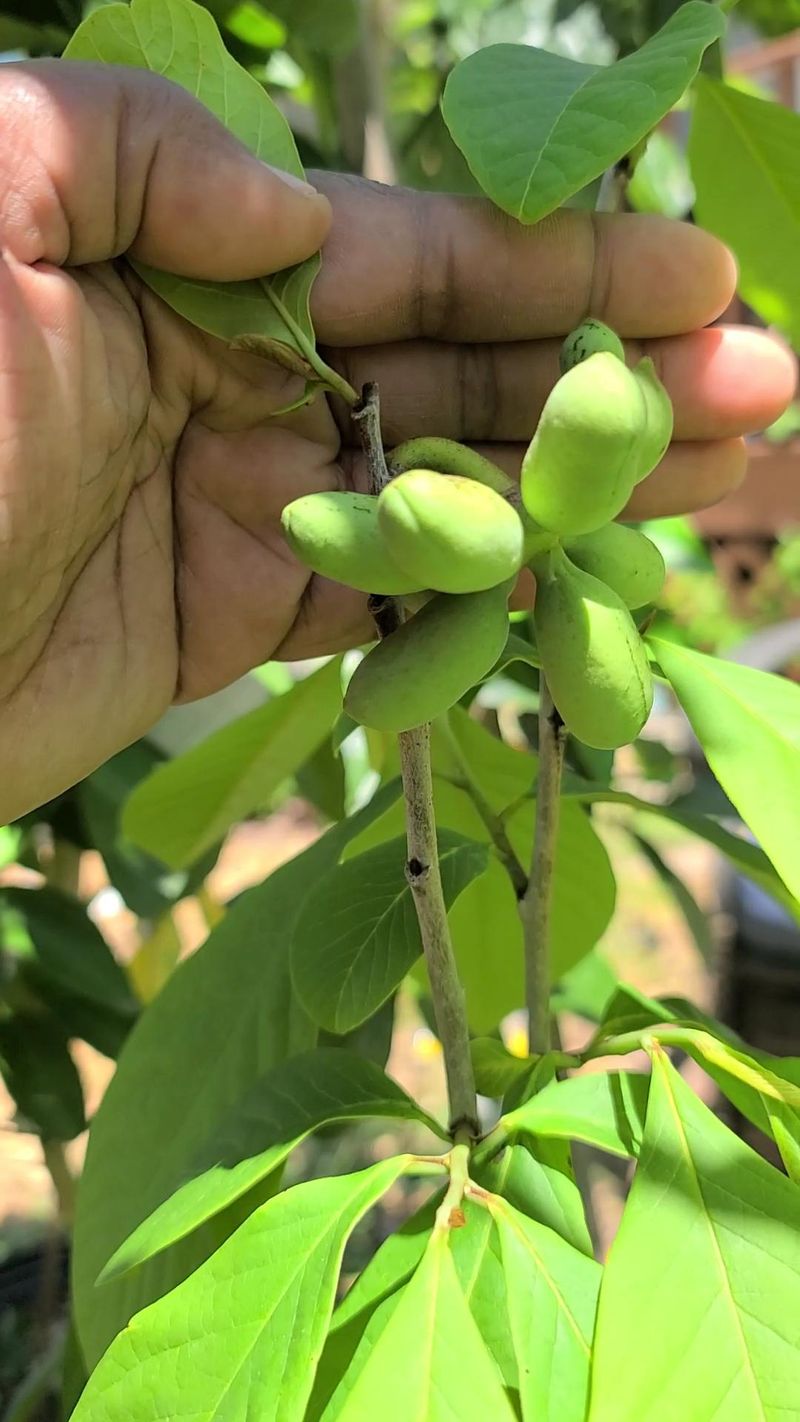
Few people realize North America’s largest native fruit grows wild along shady creeks across much of the state. Its custard-soft flesh tastes like a tropical mix of banana and mango, which shocks first-time tasters.
Pawpaw, Asimina triloba, is a small understory tree hardy in zones 5 through 8 throughout most of Virginia. Long drooping leaves give it a tropical look, even though it belongs right here in local forests.
Spring brings maroon, bell-shaped flowers that smell faintly yeasty and attract flies and beetles as pollinators. What surprises me most is how few neighbors notice those blooms until someone points them out up close.
You need two genetically different trees for good fruit set, since most pawpaws cannot pollinate themselves. Buying two named varieties or seedlings from different sources raises your chances of a heavy late-summer harvest.
Young trees prefer some shade for their first couple of years, then fruit best with more sunlight. Moist, rich, slightly acidic soil that drains well suits them, much like the creek bottoms they love.
Pawpaws grow a long taproot, so plant them small and avoid moving them once they settle in. Patience pays off, because seedlings may take five or more years before producing their first fruit.
Zebra swallowtail butterflies lay eggs only on pawpaw leaves, so your tree doubles as a nursery. Ripe fruit softens and spoils quickly, which is one reason you rarely find pawpaws at grocery stores.
8. Rattlesnake Master
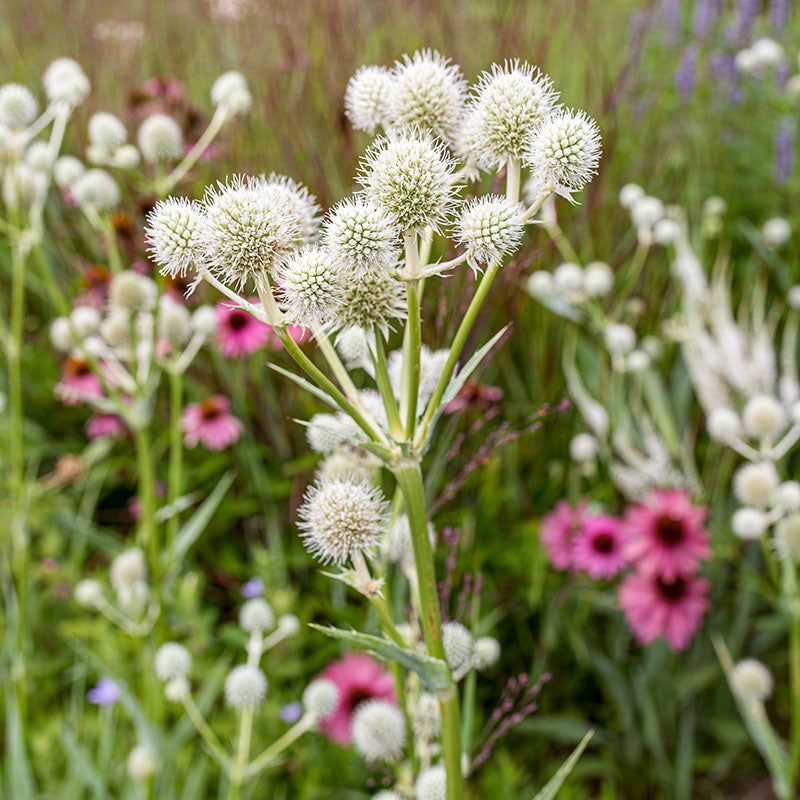
Spiky white balls perched on stiff stems make this native look like something from a science fiction movie. Pollinators adore it, and on a sunny afternoon the flower heads buzz with busy bees and small wasps.
Rattlesnake master, Eryngium yuccifolium, grows naturally in prairies and open woodlands across the eastern United States. Early settlers reportedly believed it treated snakebites, though there is no real proof it actually worked.
Sword-shaped, bluish leaves resemble a yucca, giving the plant a tough desert look even in a humid climate. Flower stems rise three to five feet in summer, topped with round heads that resemble prickly marbles.
Hardy in zones 3 through 8, it handles hot summers and cold winters with very little complaint. Full sun is a must, because shade causes floppy stems that lean over and lose their crisp form.
Lean, well-drained soil works better than rich garden beds, which often make the plant grow tall and flop. Once established, a long taproot helps it handle drought, so water mainly during the first summer.
I love leaving the seed heads standing through fall, since they turn bronze and look striking with frost. Cut stems also dry beautifully for arrangements, holding their shape and color for many long months indoors.
Pair it with coneflowers and native grasses to create a meadow look that feels wild yet tidy. Deer and rabbits usually leave the spiny foliage alone, which makes it a smart pick for rural yards.
9. Chinese Ground Orchid
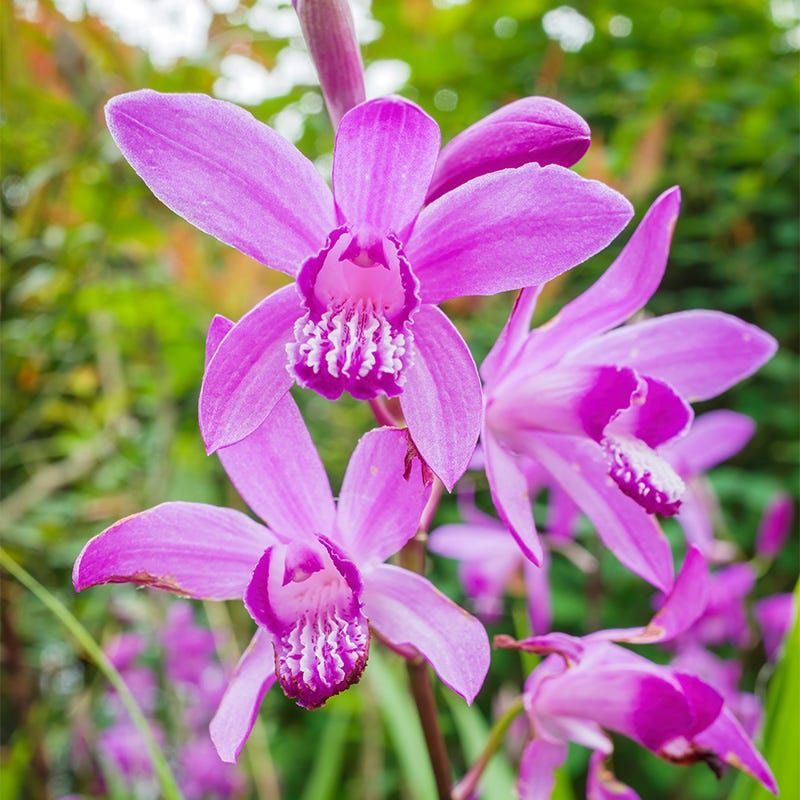
Real orchids blooming outdoors in a regular flower bed sound impossible, yet this one returns every spring like clockwork. Magenta-pink flowers dangle from slender stems, and people often assume you smuggled them home from a greenhouse.
Chinese ground orchid, Bletilla striata, is one of the easiest hardy orchids and grows in zones 5 through 9. Its pleated, sword-like leaves stay attractive through summer, long after the late spring blooms have faded away.
Partial shade with gentle morning sun suits it nicely, especially in warmer regions with hot afternoons. Moist soil that drains well is key, because the underground pseudobulbs can rot in soggy winter ground.
Plant the pseudobulbs a few inches deep in early spring, once the soil begins to warm up. A layer of shredded leaf mulch keeps roots cozy in winter and holds moisture during dry spells.
Early sprouts sometimes emerge during warm spells, so cover them with a sheet if late frost threatens. Personally, I keep an old bedsheet handy each spring just for these overly eager little orchids.
Clumps slowly expand over the years, and you can divide them after flowering to start new patches. White and striped-leaf forms also exist, which makes this orchid a fun plant to collect in multiples.
Containers work well too, letting you move the plant into a garage during harsh winters in colder valleys. Few plants deliver such exotic flair with so little effort, and that alone earns it a spot.