Arizona Trees With Roots Less Likely to Lift Pavers in Small Yards
A single mesquite root can travel more than 150 feet down while searching for water in the desert. That same thirsty habit can also creep sideways under a patio and quietly tilt your favorite pavers out of line.
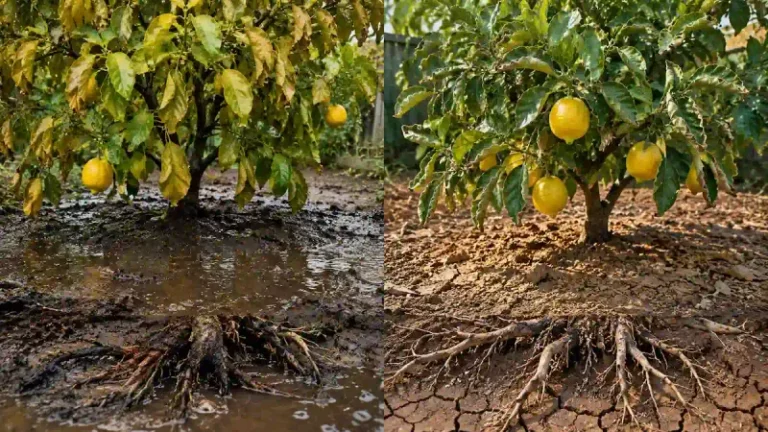
I have to admit that my first backyard tree taught me this lesson the bumpy way over three summers. Shallow sprinkler watering trained its roots to hug the surface, and my walkway slowly turned into a tiny mountain range.
What surprises me most is how many tough Arizona trees stay polite when you choose wisely and water deeply. Several of them also invite hummingbirds and lizards, plus native bees, which turn a small yard into busy living habitat.
October happens to be prime planting season across low desert Arizona, since warm soil helps new roots settle in fast. So which compact trees deserve a spot beside your patio, and which ones belong far out in open ground?
1. Desert Willow
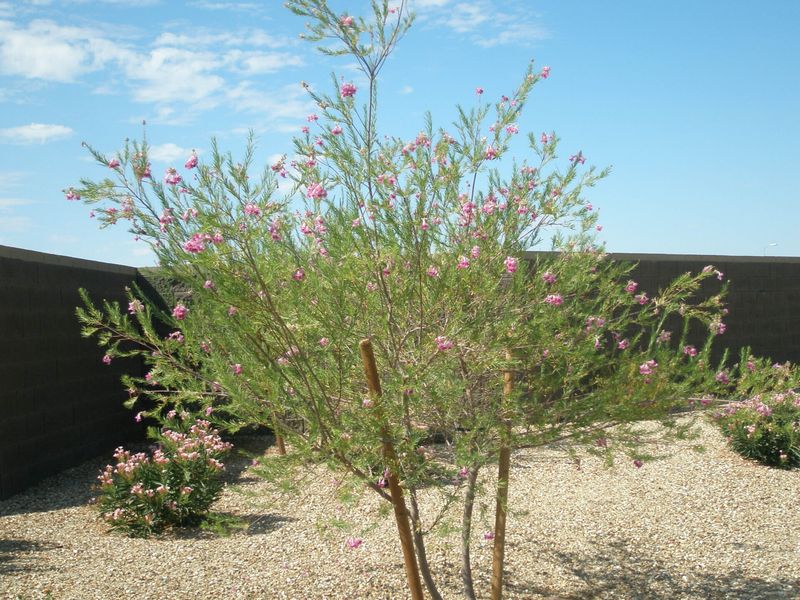
Hummingbirds seem to have a private map of every desert willow in town, and they visit mine before breakfast. Those orchid-like trumpet flowers bloom in pink or lavender from late spring well into early fall in many yards.
Despite the name, this native is not a true willow, and it handles heat far better than its namesake. Most trees reach roughly 15 to 25 feet, which keeps the airy canopy friendly for a modest backyard space.
Roots tend to run deep when you water slowly and thoroughly, which helps keep nearby pavers sitting flat. I like placing one about eight to ten feet from hardscape to give the trunk some breathing room.
October planting works beautifully here, since cooler nights reduce stress while the warm soil still encourages fresh root growth. Water deeply every week or so at first, then stretch the schedule as winter arrives and leaves drop.
Personally, I love the long seed pods that dangle through winter, though some gardeners prefer seedless selections like Bubba or Timeless Beauty. Either way, you get dappled shade and lively pollinators without a tangle of thirsty surface roots under your patio.
2. Desert Museum Palo Verde
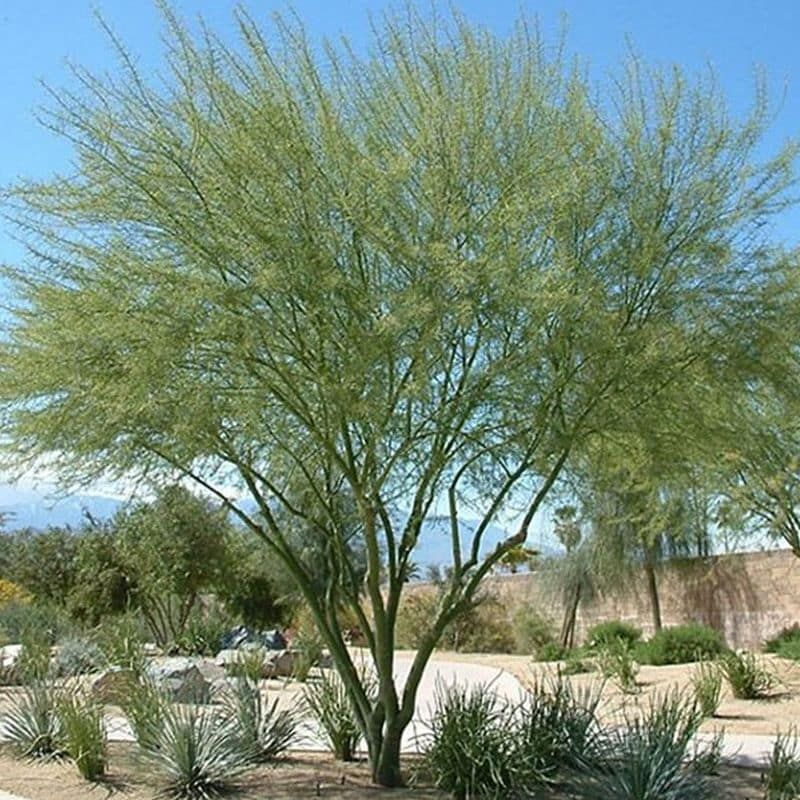
Green bark that actually photosynthesizes sounds like science fiction, yet this palo verde does exactly that every single day. Its smooth lime trunk keeps working even when the tiny leaflets drop during harsh drought or cold snaps.
Developed at the Arizona-Sonora Desert Museum, this hybrid blends several palo verde parents into one thornless and tidy tree. You can expect roughly 15 to 25 feet of height with a broad umbrella shape that shades a patio nicely.
Roots generally behave well when trained with deep, infrequent soaking rather than daily sprinkles from a nearby drip emitter. I suggest setting the trunk at least ten feet from pavers so the mature canopy has room to spread.
Spring brings a wild burst of yellow flowers that native bees adore, and the petals make a cheerful golden carpet below. Fall is ideal for planting one, so you can enjoy that first bloom show after a mild winter of settling in.
You might notice faster growth than many desert natives, which means lighter pruning each late spring keeps branches strong. Avoid overwatering, since soggy soil can create weak wood and a lopsided crown that struggles during monsoon winds.
3. Texas Mountain Laurel
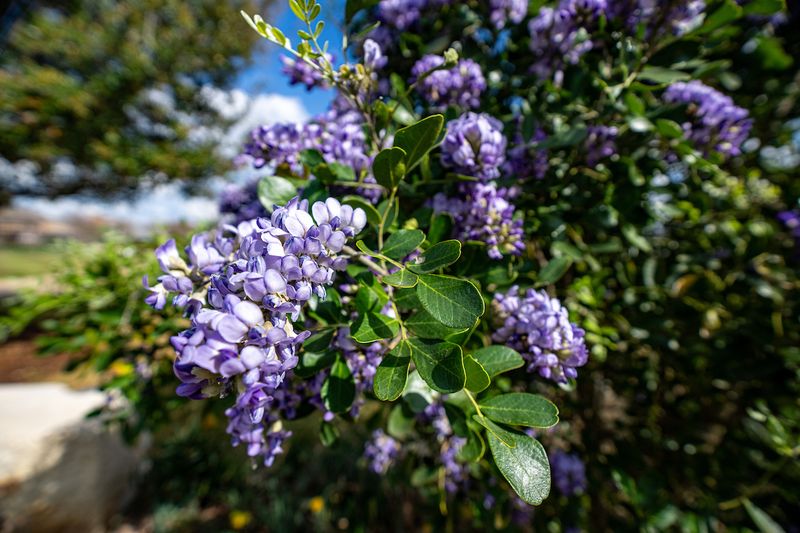
Few blooms smell quite like grape bubble gum, and this evergreen pulls off that trick every late winter without fail. Clusters of violet flowers hang like little bunches of grapes, and neighbors often stop walking just to sniff.
Growth is famously slow, which I actually see as a gift when space beside the patio feels tight. Most specimens settle around 10 to 15 feet tall, with dense glossy leaves that stay green through the hottest months.
Roots tend to grow down rather than wandering sideways, making this shrub-tree a safer pick near walkways and low walls. Excellent drainage matters more than rich soil, so skip heavy clay pockets where water lingers after irrigation runs.
One caution deserves attention, since the bright red seeds are toxic if chewed by curious kids or pets. Many gardeners simply clip the fuzzy seed pods in summer, which keeps the yard safer and the branches looking tidy.
Planting in October gives this slow starter extra months to build roots before blooming season arrives in late winter. Full sun or light afternoon shade both work well, and established plants need only occasional deep drinks through summer.
4. Arizona Rosewood
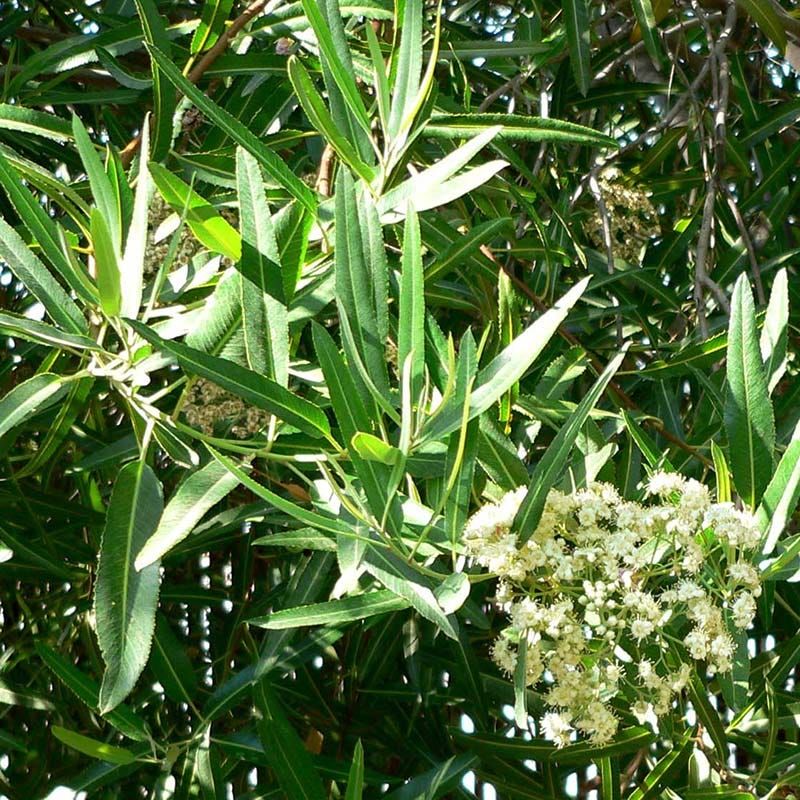
Quail love ducking under this native evergreen, and I often hear their soft chatter before spotting the plump little birds. Dense leathery leaves create a safe hideout for small songbirds, especially during hot afternoons and chilly winter mornings.
Most plants grow into a large shrub around 10 to 15 feet tall, which suits narrow side yards wonderfully. You can lift the lower branches over time and shape it into a charming multi-trunk patio tree.
Its modest size and slow pace mean roots rarely muscle into nearby hardscape when watering stays deep and occasional. I find it handy as a living privacy screen along block walls, where taller shade trees would feel crowded.
Flat clusters of tiny white flowers appear in late spring, followed by rusty seed heads that add winter texture. Leave those seed heads for a while, since finches and other small birds pick through them for a snack.
Fall planting helps this desert native establish quickly before summer heat returns next year with its intense afternoon sun. Give it well-drained soil and full sun, then water every couple of weeks during the first summer season.
5. Desert Ironwood
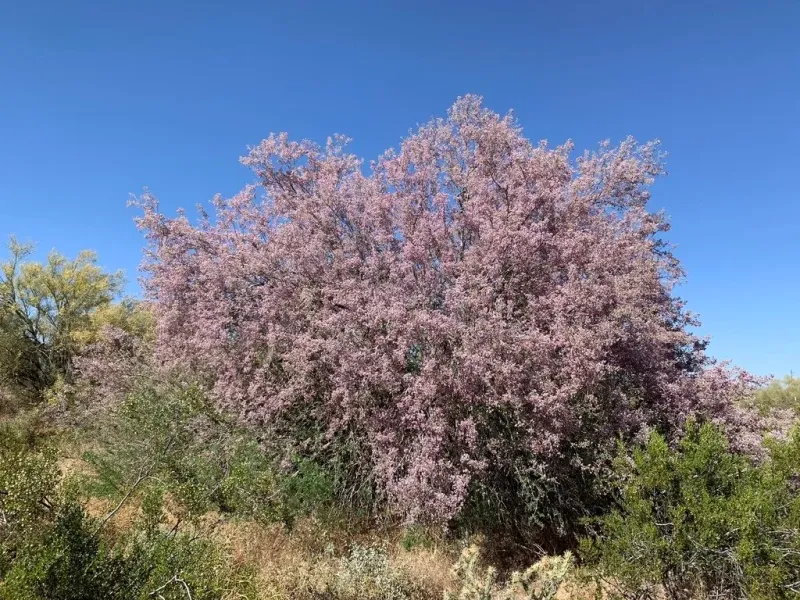
Ironwood wood is so dense that it sinks in water, which explains the tough name this Sonoran native carries. Scientists also call it a nurse tree, since young saguaros and many critters shelter beneath its sprawling canopy.
Roots reach deep for moisture, and that downward habit makes it a fair option near pavers with proper spacing. Still, mature trees can reach 15 to 25 feet wide, so give this one the largest corner you have.
Late spring brings lavender flowers resembling tiny sweet peas, and native bees buzz around them for several busy weeks. Roadrunners and lizards often patrol the leaf litter below, hunting insects and even the occasional scorpion near the trunk.
State law protects wild ironwood trees, so buy nursery-grown plants rather than digging anything from the desert yourself. Licensed nurseries offer healthy container trees that adjust quickly when planted during mild October weather in the low desert.
Growth stays slow, so patience pays off with a sturdy shade tree that asks for very little water later. I believe it rewards gardeners who plan ahead, especially anyone hoping to welcome more native wildlife into their yard.
6. Cascalote
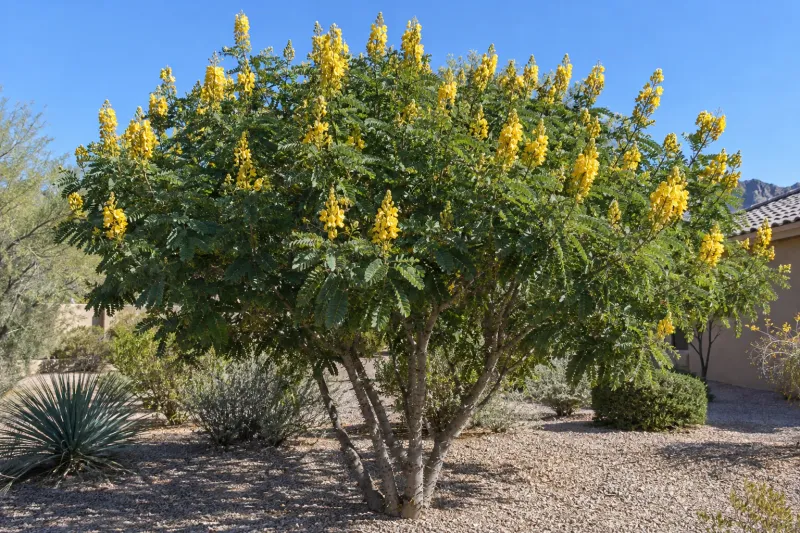
Winter blooms feel like a sneaky bonus, and cascalote fills the cool months with tall spikes of golden flowers. Hummingbirds treat those blossoms like a seasonal buffet, often zipping past my kitchen window in December and January.
Native to Mexico, this small tree usually reaches about 15 to 20 feet in favorable low desert gardens. Its manageable root system and compact frame make it a solid choice for front yards with tight paver borders.
Thorny branches deserve some thought, so keep the trunk several feet back from walkways where people brush past daily. Thornless selections like Smoothie exist at some nurseries, and I find them friendlier near pools or play areas.
Frost can nip young growth when temperatures fall into the mid twenties, so pick a warm sunny spot. Planting in October gives roots time to settle before winter, though a frost cloth helps during unusually cold nights.
Water deeply every couple of weeks once established, letting the soil dry between soakings to encourage downward roots. You might notice the dark bronze seed pods hanging after bloom, adding interesting texture once the flower spikes fade.
7. Texas Ebony
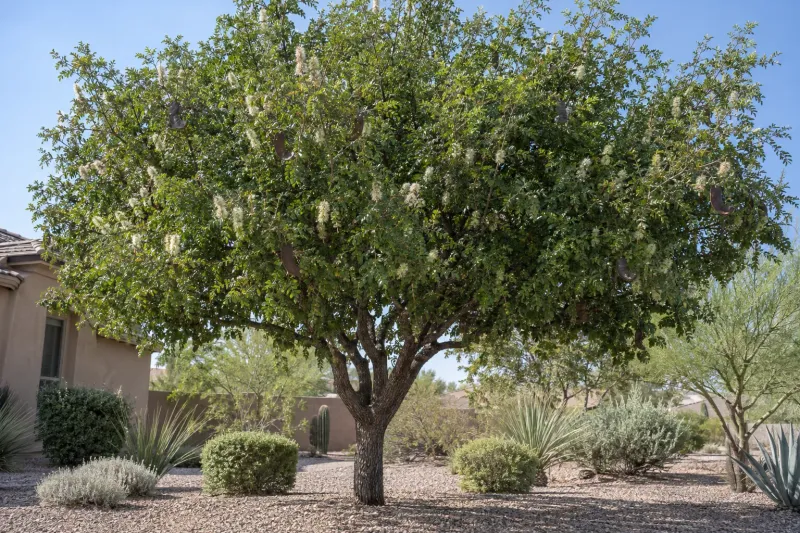
Dark glossy leaves on this evergreen look almost tropical, which surprises visitors who expect only gray desert foliage. I love how the deep green color makes a backyard feel cooler, even when afternoon thermometers creep upward.
Growth is slow and steady, which helps the roots develop gradually without heaving nearby pavers in a hurry. Mature trees often reach 15 to 25 feet, so plant with future width in mind beside patios.
Creamy flower spikes appear in late spring or summer, drawing native bees that hum quietly through the dense canopy. Thick woody seed pods follow and hang on for months, giving the tree a bold sculptural winter look.
Sharp paired thorns line the branches, so I suggest placing it as a screen along walls rather than doorways. That same prickly cover offers shelter for songbirds, which often nest safely inside the thick twiggy interior.
October planting gives this hardy tree a head start, since mild weather reduces transplant stress for container plants. Water deeply during the first two summers, then reduce irrigation gradually as the roots reach cooler soil below.
8. Anacacho Orchid Tree
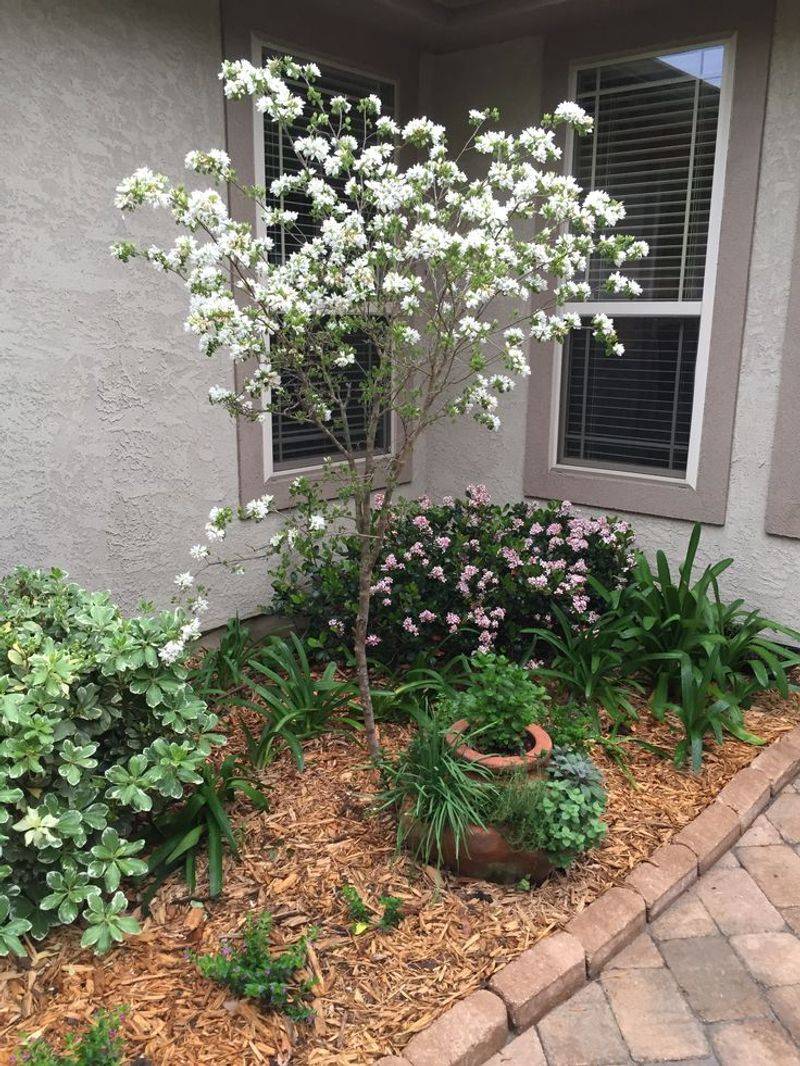
Butterfly-shaped leaves give this little tree a whimsical look, with each leaf split into two rounded lobes. Spring flowers resemble tiny white or pale pink orchids, and they cover the branches like fresh confetti.
Height usually tops out around 8 to 12 feet, making it one of the smallest trees on this list. That petite frame suits courtyards and entry gardens, where larger roots and canopies would quickly overwhelm the space.
Native to a small region of Texas and northern Mexico, it handles alkaline soil and desert heat fairly well. Light afternoon shade can help in the hottest low desert spots, especially near reflective walls or west-facing patios.
Butterflies and bees visit the blossoms through spring, and the open branching invites small birds to perch nearby. Personally, I enjoy using one near a seating area, since the flowers look best when admired up close.
Fall is a lovely time to plant, giving roots several cool months to settle before flowering season begins. Water about once a week during establishment, then shift to deeper soakings every couple of weeks in summer.
9. Foothill Palo Verde
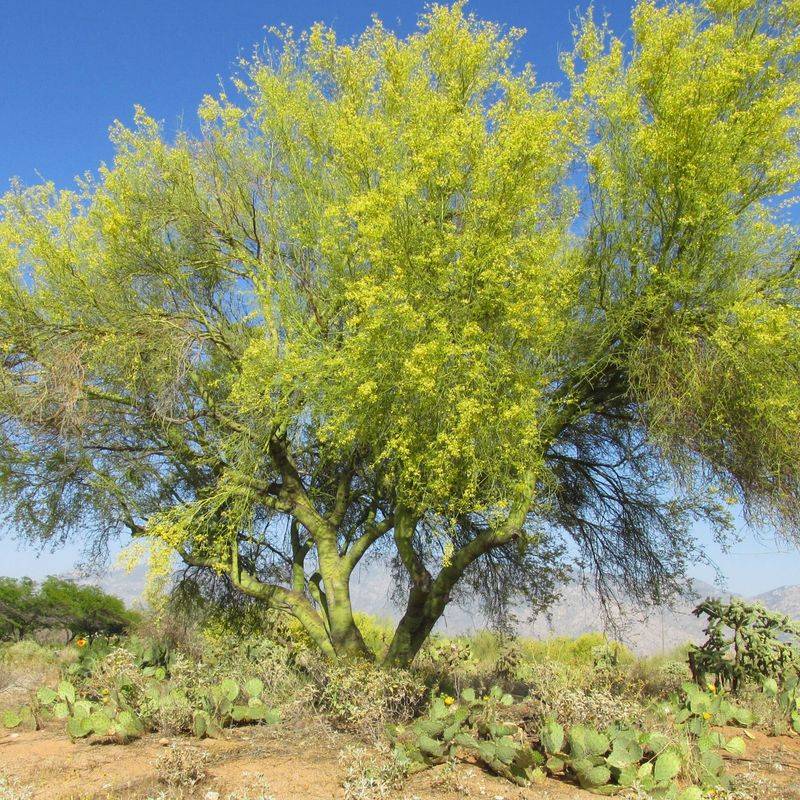
Some foothill palo verdes in the wild may live for centuries, growing so slowly that patience becomes part of gardening. That unhurried pace makes this native a tidy choice for small yards where restraint matters more than speed.
Most trees reach about 10 to 20 feet, with a spiky yellow-green crown and branches that end in thorny tips. Roots spread modestly in garden settings, especially when you water deeply instead of running frequent shallow cycles.
Pale yellow and cream flowers cover the branches in spring, attracting native bees that help pollinate nearby desert plants. Doves and quail often forage for fallen seeds afterward, which brings plenty of quiet activity to the yard.
Thorny twig tips mean careful placement, so keep it a few steps away from pool decks and busy pathways. I like it as a sculptural accent among boulders and cacti, where its twisting trunk can really shine.
Established trees thrive on rainfall plus occasional summer soaking, making them some of the most water-thrifty options around. Plant in October, water regularly through the first year, then gradually back off as the tree adapts.
10. Sweet Acacia
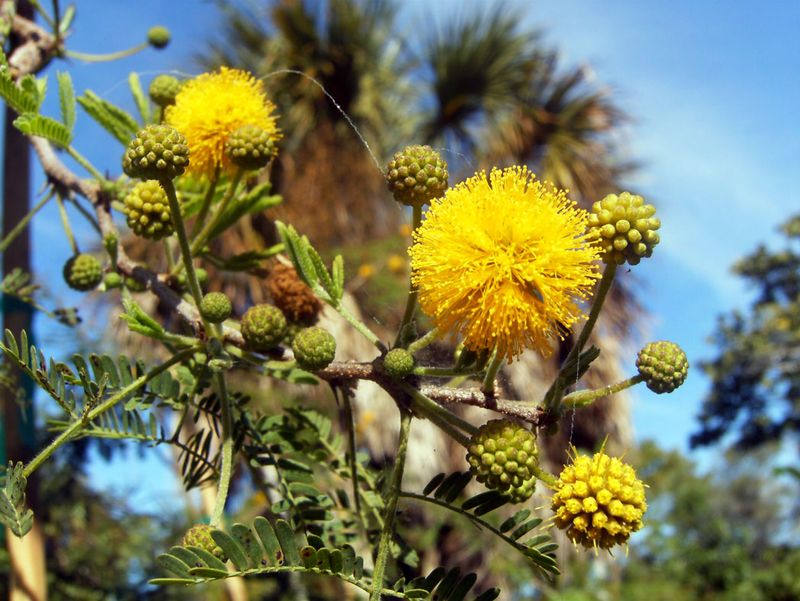
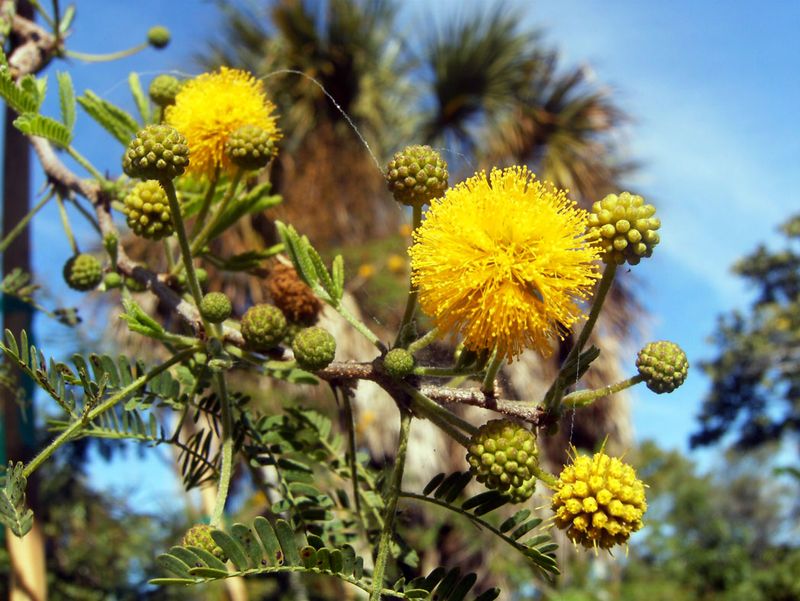
Fuzzy yellow puffballs cover this tree in late winter, and their sweet scent drifts across the yard on warm afternoons. Perfume makers in Europe once grew this species for its fragrant blossoms, which surprises many desert gardeners.
Native to parts of southern Arizona, it typically reaches about 15 to 25 feet with a rounded, multi-trunk shape. Roots stay manageable when you water deeply, so pavers placed several feet away usually remain level for years.
Early bees and other pollinators flock to the fragrant blooms, giving them an important food source before spring arrives. Small birds also tuck into the twiggy canopy, finding shelter from hawks and the sharp afternoon heat.
Paired white thorns line the stems, so plan placement where kids and pets will not brush past it often. Seed pods drop in summer, and I usually rake them from the patio once or twice each season.
October planting lets roots establish during the mild season, setting the stage for that fragrant bloom several months later. You need only modest water once mature, which makes it a happy fit for thrifty small yards.