How Arizona Citrus Can Provide Food for Roof Rats and Ways to Reduce Access
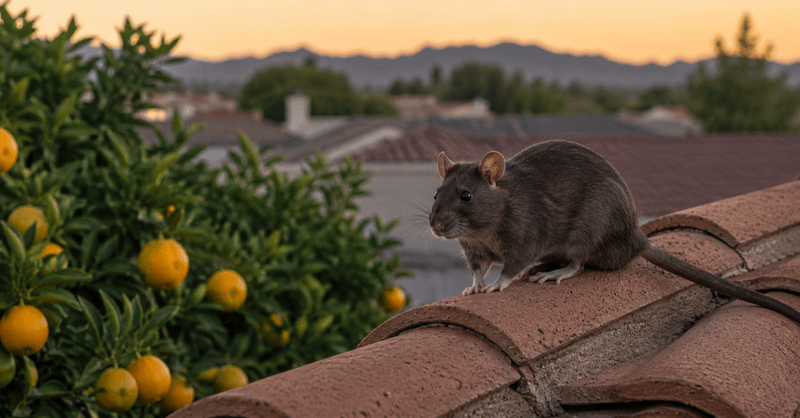
A single orange can end up with a neat round hole and an empty inside, like a tiny hollow lantern. Plenty of Arizona yard owners find one and wonder who did it.
Citrus can feed a hungry rodent, but the full story is more careful than blaming the tree. Here is what experts say about fruit, rats, and practical ways to protect your home.
How Citrus Can Provide Food Without Causing Rat Populations
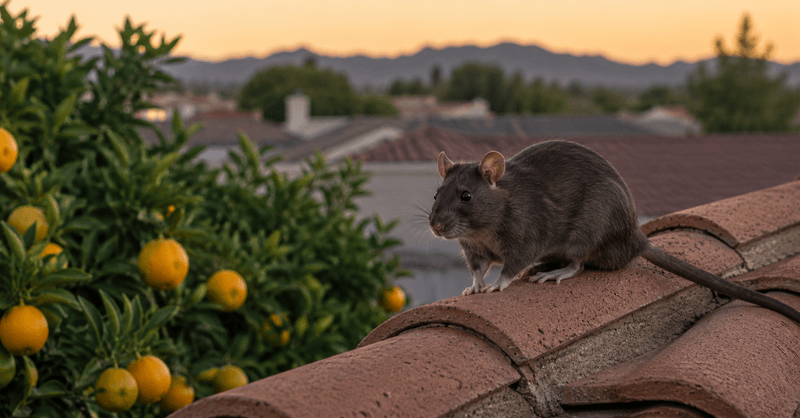
A ripe orange on a backyard branch is a snack, and roof rats know it. They climb well, search for food above the ground, and sometimes hollow out fruit while it still hangs on the tree.
So a citrus tree can offer a meal and a handy route through your yard.
Still, a tree that feeds a rat is not the same as a tree that causes a rat problem. University of Arizona Extension says roof-rat population levels are not related to how many food plants are around.
It also says removing trees will not stop rats from arriving. Roof rats are established in some Arizona neighborhoods, but not every yard has them.
That changes the goal. You are not trying to win a war against your lemon tree.
You are trying to make the yard less handy for feeding and to keep rats out of your buildings, while keeping the shade and the fruit you love.
Hollowed Fruit Does Not Identify the Rodent
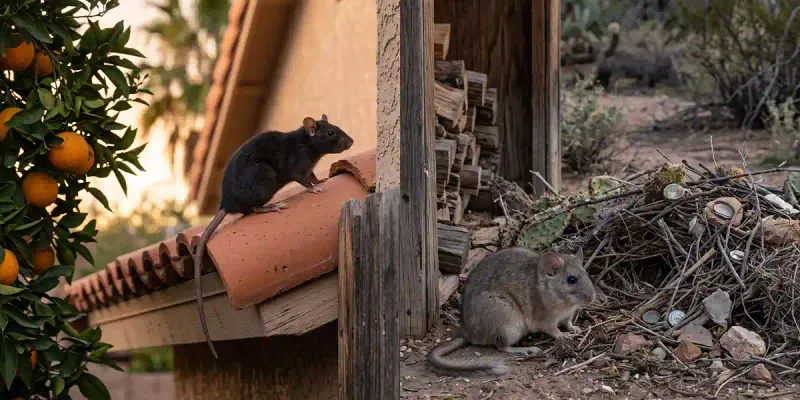
Finding a hollowed grapefruit feels like solving a mystery, but the fruit alone does not name the culprit. Arizona Extension lists hollowed citrus as a recognized sign of roof-rat feeding.
A recognized sign is a clue, though, not proof.
Look for more evidence around the property. Droppings, gnaw marks, greasy rub marks along walls, and nighttime noises overhead all help build the picture.
Other animals can also leave damaged fruit behind.
Species matter because the wrong guess can lead to the wrong action. Maricopa County identification guidance separates roof rats from pack rats, cotton rats, and Norway rats.
UC IPM also warns that some native rats resemble pest species, and some of those animals are protected. Confirm what you have before choosing any control method, and ask a local Extension office or pest professional if you are unsure.
Harvest Ripe Citrus and Remove Fallen Fruit
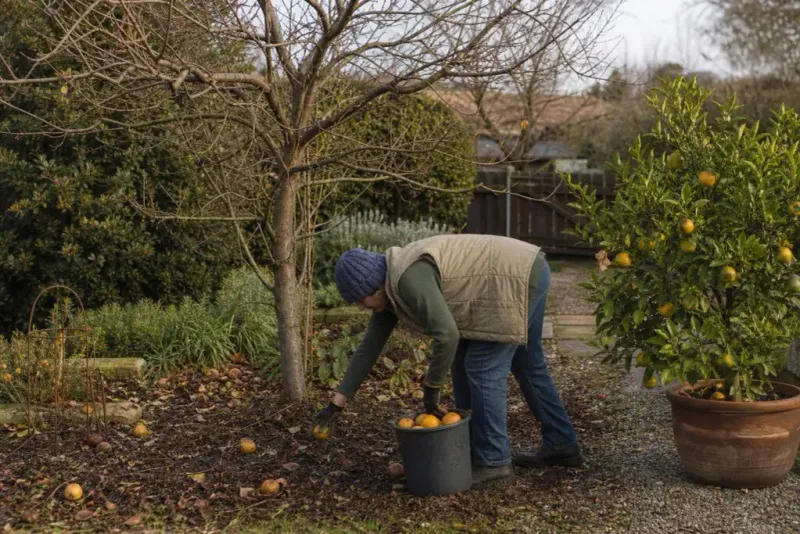
Ripe fruit left hanging is an open invitation to anything that likes sweet snacks. Picking it promptly is one of the easiest steps you can take.
Extension guidance says harvesting ripe fruit and clearing fallen fruit can make a yard less attractive for foraging.
Walk the ground under each tree every few days and gather anything that has dropped. Share extra fruit with neighbors, a food bank, or a compost method that is sealed and rodent resistant.
Pet food, bird seed, and trash cans left open also count as accessible food, so tidy those up too.
Think of this as taking a few items off the menu. It may reduce feeding at your tree, but it does not guarantee that rats will leave or stay away.
The upside is that you keep your tree and enjoy more of your own harvest.
Prune Citrus Selectively, Not as Rat Control

It is tempting to grab loppers and cut a tree way back, hoping rats will lose interest. That plan is not backed up as a way to control roof-rat populations.
Citrus also tends to suffer from heavy cutting.
Arizona Extension says citrus usually needs only selective pruning, and it does not generally need routine skirting. For desert-grown citrus, routine pruning is best done February through April.
Pruning from May through mid-October can expose wood to sun damage.
Since it is October, this is a good time to plan rather than cut. Mark any dead twigs or crossing branches now and wait for late winter.
If a branch touches your roof, a careful trim of that one limb is a different job from stripping the whole tree.
Reduce Shelter and Routes Into the Home
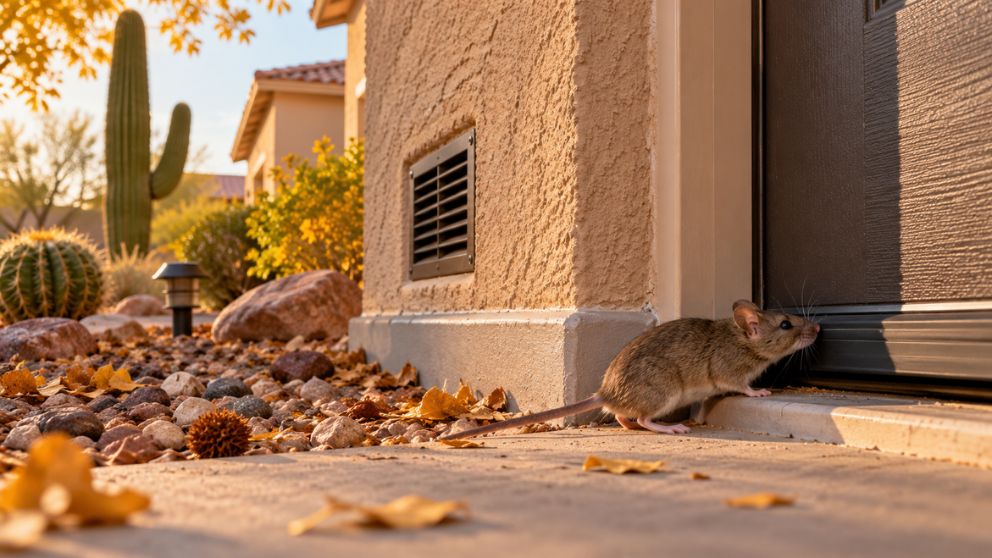
Roof rats are acrobats. They can travel along tree limbs, utility lines, and rooflines, then slip into a building through very small gaps.
That makes access a bigger concern than any single piece of fruit.
UC IPM guidance suggests keeping branches from touching walls or rooflines. It also recommends removing debris and woodpiles and storing materials off the ground.
These steps take away hiding places and shortcuts.
Next, walk around the outside of your house with a flashlight. Check vents, pipe openings, gaps near the roof, and door sweeps, and seal what you find with durable materials.
Extension advice stresses inspection and pest-proofing for this reason. None of this guarantees that rats stay out, but it makes entry harder.
Use Traps and Bait With a Safety Plan
Before setting anything out, confirm which animal you have. Then think about the children, pets, and wildlife that share your yard.
A product that suits one situation can be risky in another.
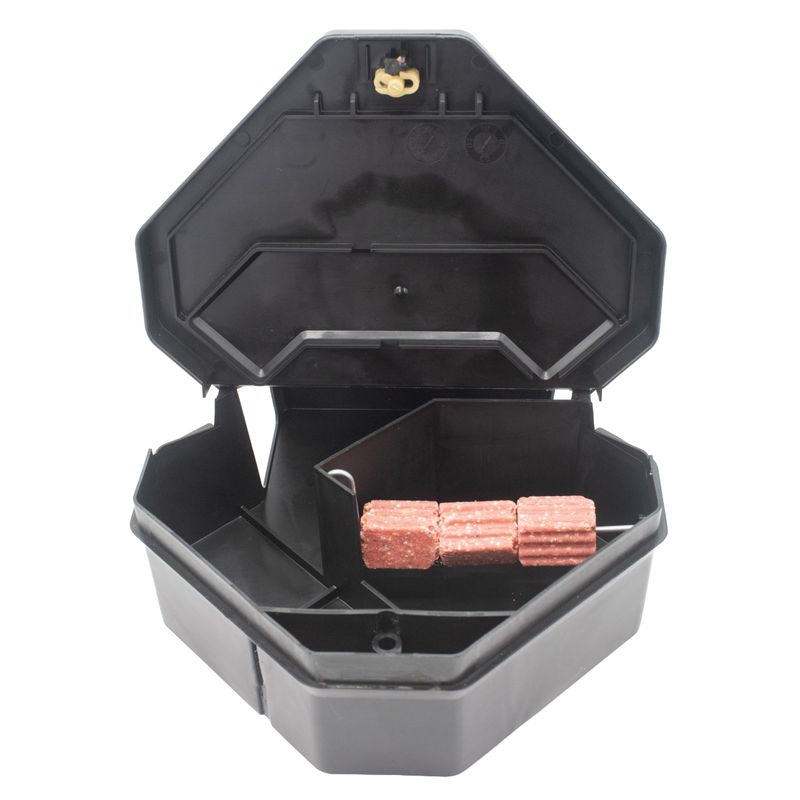
Poison is not a simple backyard fix. EPA guidance says to keep traps and bait out of reach of children and pets.
Poison baits belong in tamper-resistant bait stations, and you should follow the label exactly, including any outdoor-use limits.
Some products require certified applicators or supervision, so a licensed pest professional may be the safest route. UC IPM also warns against outdoor glue boards, because they can trap birds and lizards.
When in doubt, ask for help instead of guessing.
Clean Indoor Rodent Signs Without Raising Dust
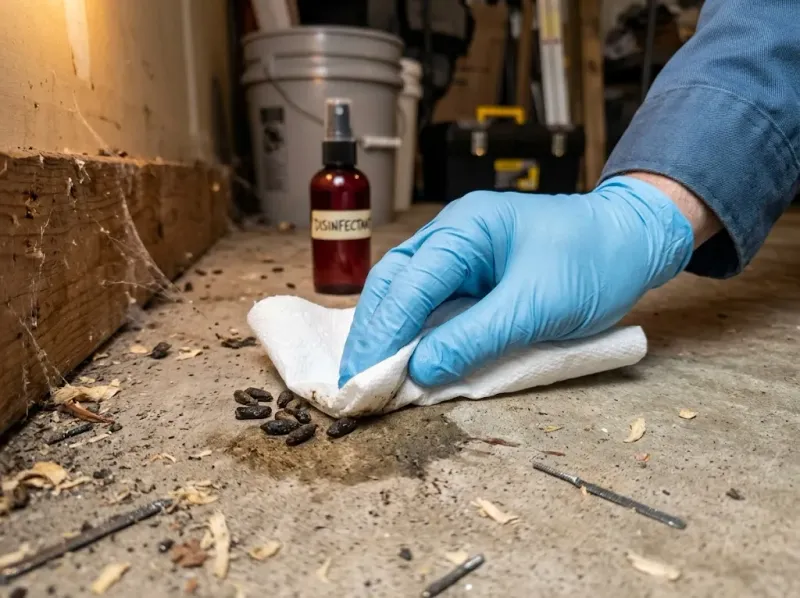
Droppings or nesting material inside your home call for a careful cleanup. Dry sweeping can send particles into the air.
CDC guidance lays out a safer way.
Put on gloves first. Wet the droppings or nesting material with disinfectant and let it soak as the product directions say.
Then wipe it up with paper towels and dispose of them properly.
Do not sweep or vacuum contamination before it has been disinfected. Finish by wiping the surface again and washing your hands well.
Keep this job separate from yard work so you stay focused on safe handling.
One Yard’s Cleanup May Not End Neighborhood Activity

Rats do not read property maps. University of Arizona’s roof-rat fact sheet notes that urban home ranges can be smaller than rural ones.
Even so, roof rats may travel to find food and shelter, including across property lines.
Your plan is still worth following. Reduce fruit and shelter, manage building access, confirm the animal, and call for suitable help when needed.
As Extension guidance reminds us, trees are not the root cause of the population.
A tidy yard can be less inviting, but it cannot promise a rat-free block. Talking with neighbors can help.
Your tree can stay, and so can your good habits.