Putting Frost Cloth on Your North Carolina Plants? The Timing Matters More Than You Think
Frost can coat your lettuce leaves while the thermometer on your porch still reads 35 degrees. That sounds backward, but it happens on clear, still nights more often than most of us realize.
The reason is simple physics. Cold air settles low, and plants lose heat straight up into an open sky, so leaves near the ground can chill well below the official reading taken several feet higher.
I know how frustrating it can be to tuck plants in carefully and still find limp, darkened leaves at sunrise. Here in North Carolina, a mild week in March can be followed by a sharp cold night, and the garden pays the price.
The surprising part is that a thin, lightweight cover can make a real difference. Whether it helps or hurts often comes down to the hour you put it on and the hour you pull it off.
1. That Thermometer Reading Above 32 Doesn’t Mean Your Tomato Leaves Are Safe

Frost and freezing are not the same thing, and that difference trips up plenty of gardeners. A frost can form when the air temperature sits around 33 to 36 degrees, especially on clear, calm nights.
Official readings are taken roughly five or six feet above the ground. Down at plant level, heat escapes quickly into an open sky, so leaf surfaces can drop below freezing even when the forecast looks fine.
That is why the National Weather Service issues frost advisories for lows in the mid-30s. A true freeze happens when the air itself reaches 32 degrees or lower.
Ice can form inside plant tissue during a freeze, which ruptures cells and leaves foliage limp, dark, and mushy by afternoon.
Wind also plays a quiet role. A breezy night mixes warmer air down toward the ground, so calm nights are often the riskier ones.
Clouds act like a lid that holds warmth in, while a starry sky lets it slip away. So when you see a clear, still evening with a low near 36, treat it as a cold night for tender plants. Your tomatoes will thank you for thinking a few degrees ahead.
2. Drape the Frost Cloth in Late Afternoon While the Garden Soil Still Holds Warmth
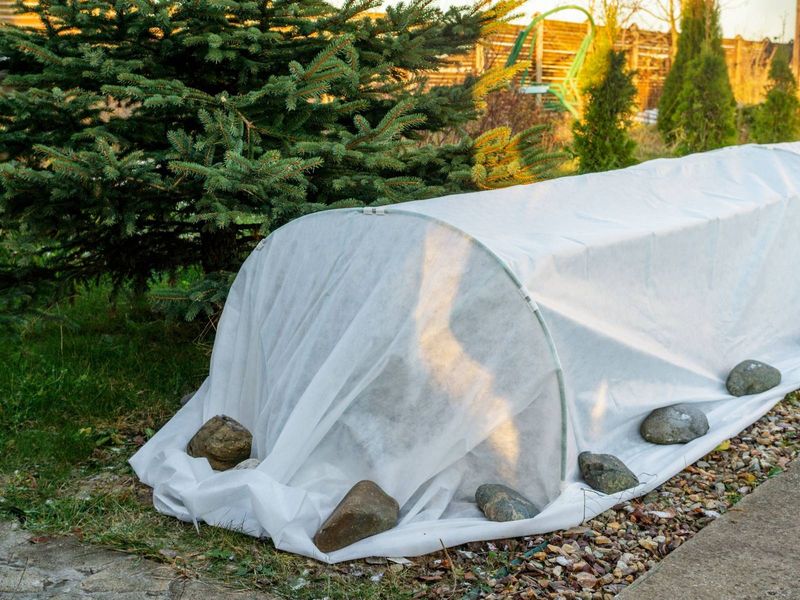
Late afternoon is the sweet spot for covering plants. The soil has spent all day soaking up sunshine, and that stored heat is what your frost cloth is meant to hold onto.
Waiting until bedtime, or rushing outside at dawn, misses the point. By then much of that warmth has already drifted into the night sky, and the cover has less to trap. I aim to have everything tucked in before the sun dips behind the trees.
Frost cloth does not make heat on its own. It works more like a jacket, slowing the loss of warmth rising from the ground and the plants themselves.
Check the evening forecast a day or two ahead so you are not scrambling. A simple rule of thumb many gardeners use is to cover tender plants when lows near 36 degrees are expected.
Morning matters too, and we will get to that. For now, remember that the cloth works best when it goes on early enough to capture the day’s stored warmth. Think of it as closing the oven door before the heat escapes, not after the kitchen has already cooled off.
3. Mountains, Piedmont, and Coast Each Get Frost on Their Own Schedule
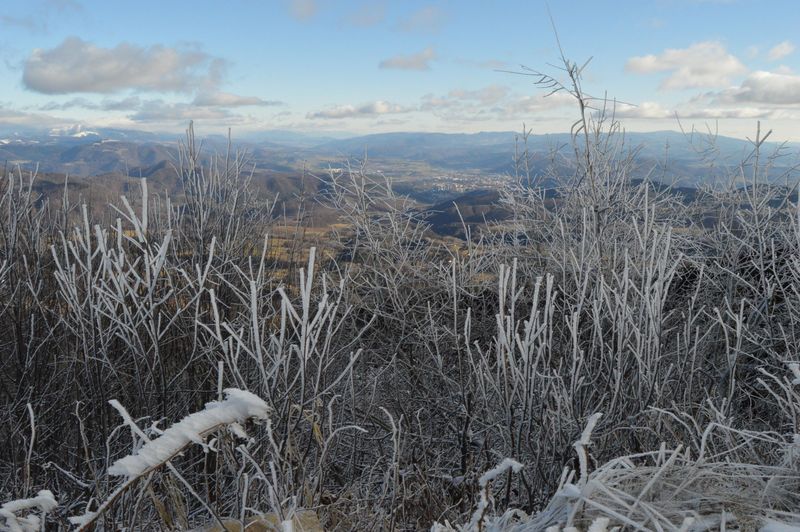
A gardener in Boone and a gardener in Wilmington can live in the same state and still face very different calendars. Elevation and distance from the ocean change everything.
The mountain region usually sees its first fall frost in early to mid-October, and spring frosts can linger into May at higher elevations.
The Piedmont, around cities like Raleigh, Greensboro, and Charlotte, typically gets first frost in late October or early November. Along the coast, the first frost often waits until mid to late November.
Spring works in reverse. Coastal areas may be safe by late March, while the Piedmont often waits until mid-April and the mountains later still.
NC State Extension offers frost date information by county, and it is worth a look before you plan. Keep in mind that average dates are just averages, and a frost can arrive a couple of weeks earlier or later in any given year.
Your own yard has quirks too. Low spots collect cold air, while beds near a brick wall or the south side of the house stay a bit warmer. Watching where frost appears first in your yard is free, useful information.
4. Let Morning Sun Warm Things Up Before You Pull Back the Cover
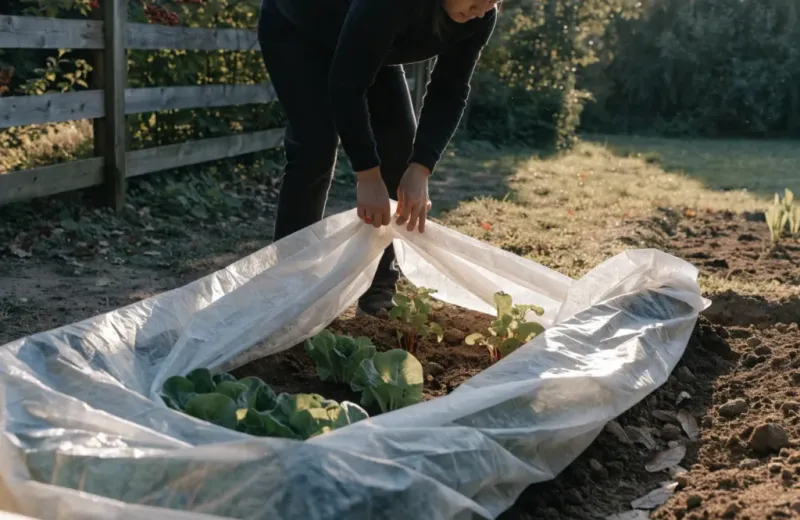
Uncovering plants deserves as much thought as covering them. Whip the cloth off at sunrise and your plants meet the coldest part of the day bare.
The lowest temperatures usually arrive right around dawn. A better plan is to wait until the air climbs safely above freezing and the sun has started warming the bed, often by mid-morning.
Leaving covers on all day has its own problems. On a bright afternoon, even breathable fabric can trap extra heat and humidity, and plants may get stressed or develop fungal trouble from damp, stuffy conditions.
Thin, lightweight frost cloth lets some light through, so it can stay on for a short stretch during a long cold spell. Heavier covers and sheets block more light and should come off once the danger passes.
When another cold night follows, fold the cloth loosely beside the bed so it is ready for the evening.
That habit saves time and makes it far more likely you will actually cover again. A quick glance at the forecast each morning helps you decide whether to stash the cloth away or keep it close by.
5. Hoops and Ground Anchors Keep Row Covers Doing Their Job
A frost cloth flapping across the yard at midnight protects exactly nothing. How you place it matters just as much as when.
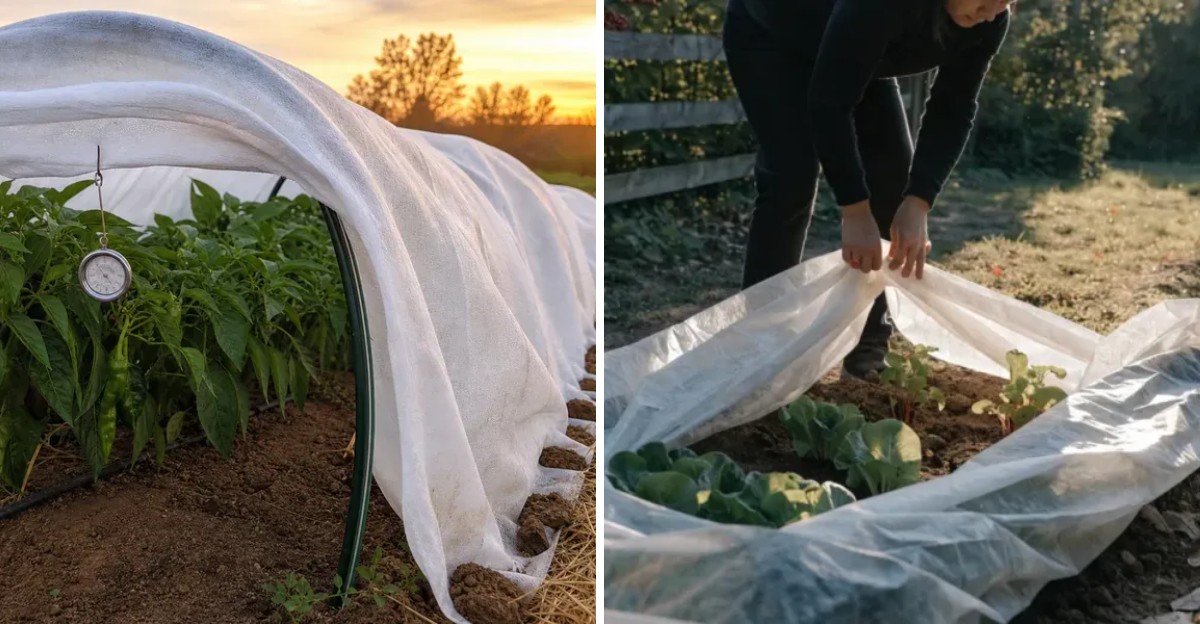
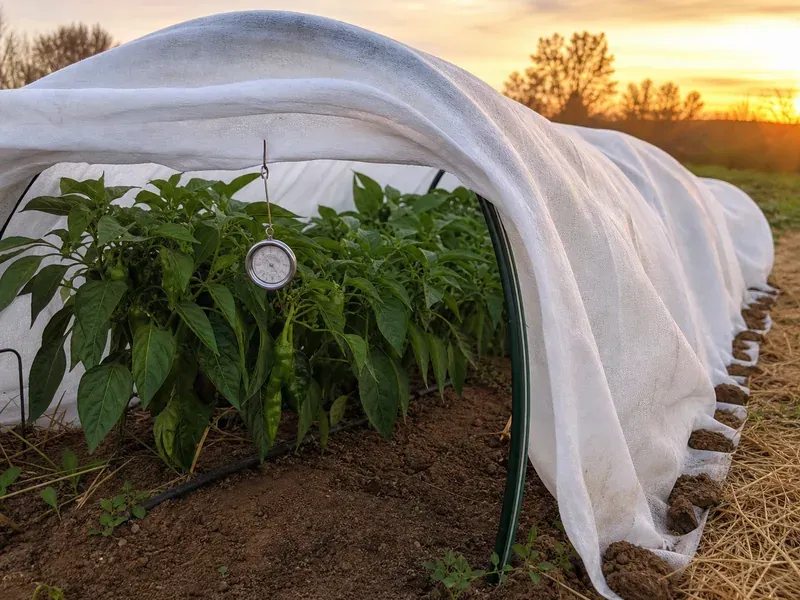
Run the fabric all the way to the ground on every side. That creates a pocket where warmth rising from the soil collects around your plants instead of slipping out the edges.
Secure the edges with bricks, rocks, sandbags, or landscape staples. Wind is sneaky, and one strong gust can lift a loose corner and let cold air rush right in.
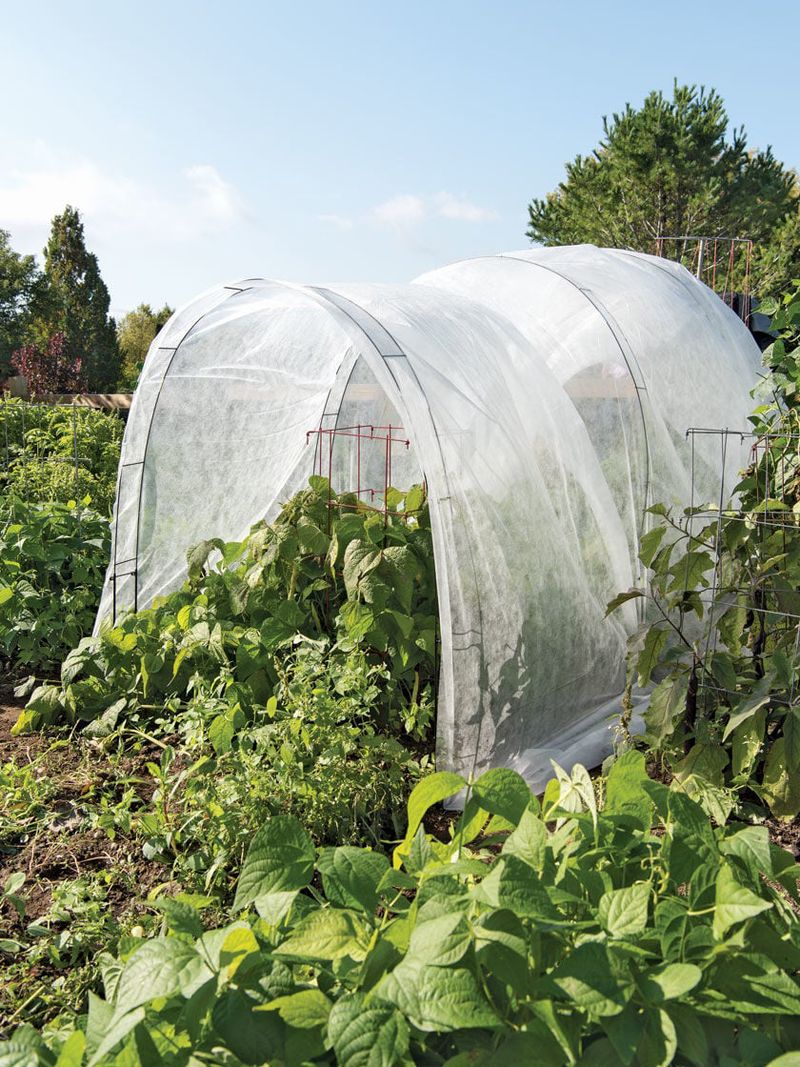
Wire or PVC hoops are a smart upgrade for vegetable beds. They hold the fabric above the leaves, and that small air gap adds extra insulation while keeping heavy, frosty cloth from pressing on tender growth.
For shrubs, a few stakes around the plant work in a similar way. Clothespins or spring clamps help hold overlapping pieces together.
Thicker cloth gives more cold protection, and many products list how many degrees they help. Lighter weights let in more light for longer use. Picking the right weight for your crops, then anchoring it well, turns a flimsy sheet into a reliable shield.
6. Plastic Sheeting Touching Leaves Can Make Cold Damage Worse
Grabbing a plastic tarp feels like a quick fix. Sadly, plastic resting directly on leaves often does more harm than good.
Plastic is a poor insulator. Where it touches foliage, cold passes straight through, and the leaves under those contact spots frequently show damage the next day. Moisture trapped underneath can also freeze against the plant.
Plastic also heats up fast in morning sun. Forget to remove it, and you may swap cold injury for scorched leaves by lunchtime.
If plastic is your only option, build a frame first so it never rests on the plants. Placing an old sheet or frost cloth underneath gives an extra buffer.
Old bedsheets, light blankets, and cardboard boxes can work in a pinch overnight. Just remember that heavy fabric can crush delicate stems, especially once it gets damp.
Purpose-made frost cloth, often sold as row cover, is built from spunbonded fabric that lets air and water pass through. It is light, reusable for several seasons with care, and far kinder to your plants.
A roll tucked in the garage is one of the most useful investments a gardener can make.
7. A Deep Watering Earlier in the Day Helps Garden Beds Hold Heat
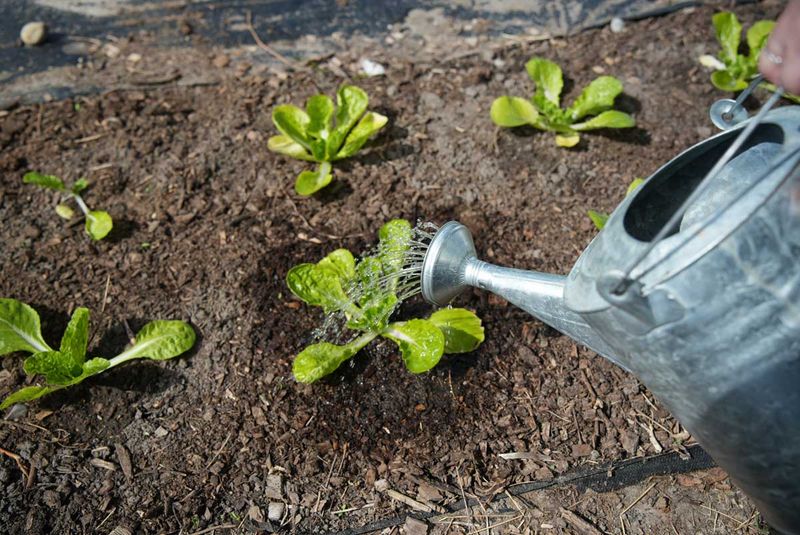
A simple garden hose might be your best partner before a cold night. Moist soil stores and releases heat better than dry soil, and that matters under a cover.
Water in the morning or midday, well before temperatures drop. That gives the soil time to absorb sunshine and lets leaves dry off before evening.
Wet foliage heading into a frosty night is not ideal. The goal is damp ground, not soggy plants.
Dry spells in fall and late winter are fairly common in many parts of the state. Plants that go into a cold night thirsty also tend to handle the stress worse, so checking the soil a day ahead is a smart habit.
Push a finger a couple of inches into the bed. If it feels dry, give it a slow, deep soak instead of a quick sprinkle. Skip this step for soil that is already waterlogged from recent rain, since soggy roots bring their own problems.
Combine moist soil with a well-anchored frost cloth, and you stack two small advantages together. On borderline nights, those few degrees can decide whether your greens look perky or sad at sunrise.
8. Peppers and Basil Need Covers Sooner Than Kale and Collards

Not every plant in your garden panics at the same temperature. Knowing who is tough and who is fragile saves you from covering everything every time.
Warm-season crops are the most sensitive. Tomatoes, peppers, basil, cucumbers, squash, and beans can be damaged by even a light frost, so cover them whenever lows near the mid-30s are forecast.
Basil often shows dark leaf damage even before frost appears. Many leafy greens sit in the middle. Lettuce and spinach usually handle light frosts but appreciate protection when lows fall into the upper 20s.
Then come the hardy champs. Kale, collards, cabbage, and broccoli can often handle temperatures in the mid-20s, and frost can even make collards and kale taste sweeter, which Southern cooks have known for generations.
Even tough plants have limits. A hard freeze in the teens, especially after a warm spell, can damage young transplants that have not hardened off. Newly planted flowers and spring blossoms on fruit trees are especially vulnerable too.
Peach and blueberry flowers are prized in North Carolina, and covering small bushes when buds open can help protect your summer harvest. A quick sort of your plants by toughness makes every cold night easier to manage.