The Rain Barrel Trend Sweeping Drought-Weary Virginia Yards
Last summer, one thunderstorm poured enough water off my roof to fill a bathtub several times over. I watched every drop race down the driveway and into the street. Meanwhile, my tomatoes sulked in the heat.
Gardeners across Virginia have quietly started catching that runoff instead of losing it. Recent dry summers brought drought watches, crunchy lawns, and pricey water bills to plenty of neighborhoods.
I laughed at the idea at first. A plastic drum by the gutter seemed like a craft project, not a real garden tool. Then I saw how soft, chlorine-free water perked up my thirsty beds.
Between you and me, the setup is easier than assembling a bookshelf. Your roof is already doing half the work. So why let all that free water slip away down the storm drain every time clouds roll in?
That Gutter Downspout Is Hiding A Surprising Amount Of Water
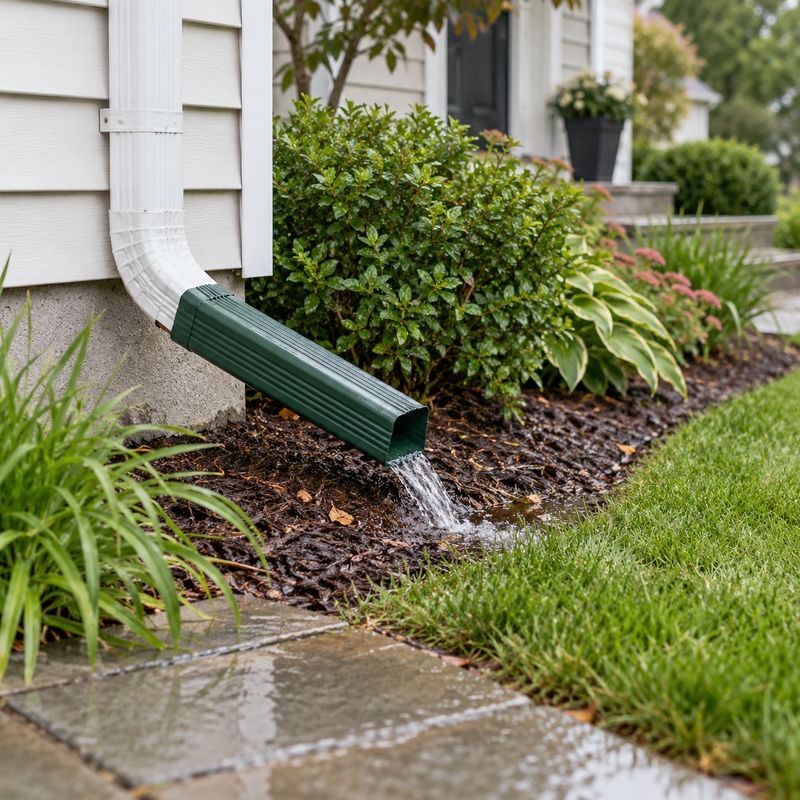
One inch of rain on a 1,000-square-foot roof produces roughly 620 gallons of runoff. That figure comes from a simple formula extension agents use, and it surprised me the first time I ran it for my own house.
Most of that water rushes through gutters and out the downspout in minutes. On hard surfaces, it picks up fertilizer, pet waste, and grime before reaching storm drains.
In much of the state, those drains feed creeks that flow toward the Chesapeake Bay.
Meanwhile, summers can swing from soggy to bone-dry in a few weeks. Virginia gets a respectable 40 to 45 inches of rain in an average year, but it rarely arrives on a gardener’s schedule.
Long, hot stretches without a good soaking have triggered drought watches and warnings across many counties in recent years.
That mismatch is the real story behind the trend. People are not inventing new water.
They are simply saving spring and early summer storms for the dry weeks of July and August.
Try this quick math for your own home. Multiply the square footage of roof feeding one downspout by 0.62 to see how many gallons a single inch of rain delivers.
Even a small porch roof can fill a 55-gallon barrel during one decent shower.
A Simple Rain Barrel Under The Downspout Changes Everything
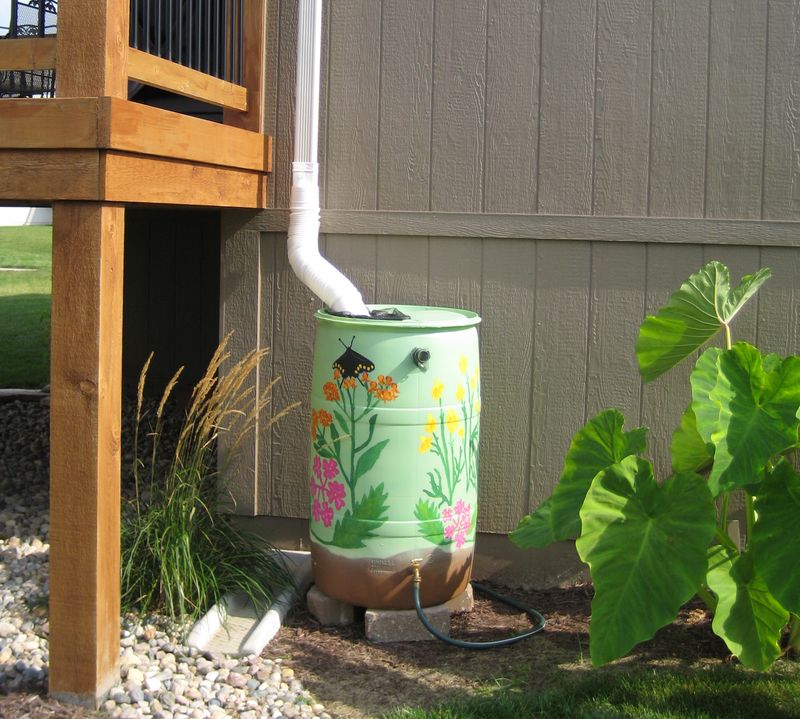
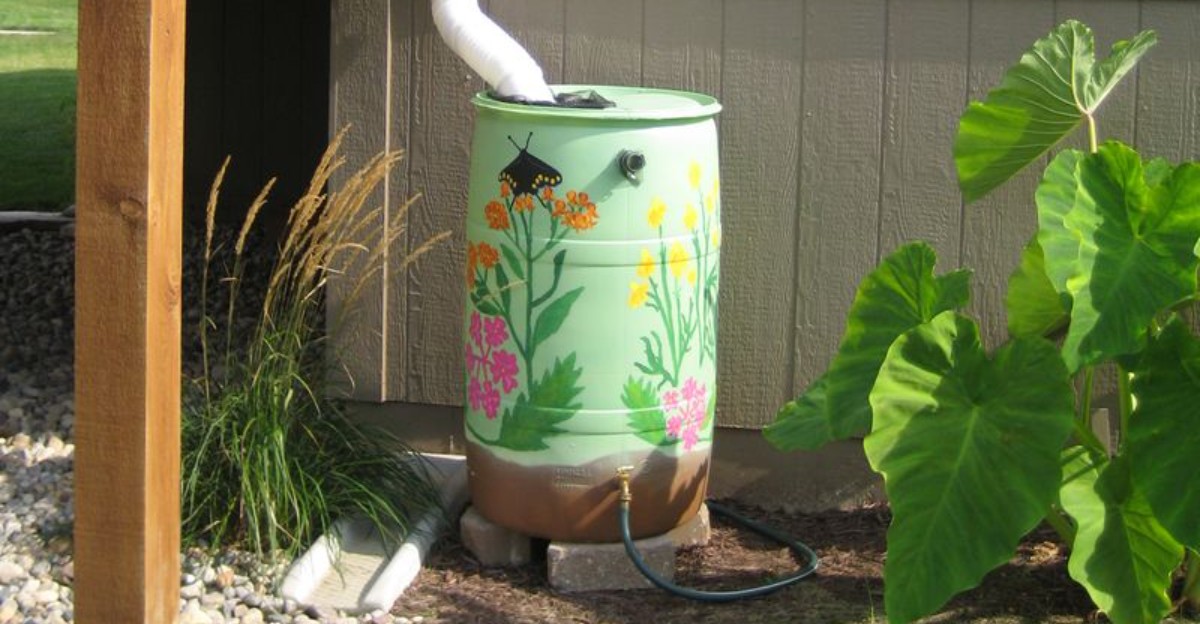
Mine cost less than a nice pair of pruners, and it paid off by mid-June. A rain barrel is basically a covered container, usually 50 to 60 gallons, that sits under a downspout and catches roof runoff.
A spigot near the bottom lets you fill a watering can or attach a soaker hose.
Plants seem to love it. Rainwater is naturally soft and free of the chlorine that municipal systems add for safe drinking.
Container plants, ferns, and seedlings often look perkier after a drink from the barrel.
Your wallet notices, too. Every can you fill from the barrel is water you don’t pay for at the meter, which adds up during weeks of hand watering.
The savings for one barrel are modest, but several barrels linked together can cover a good chunk of a small garden’s summer needs.
There’s a community perk as well. Stormwater programs across the state promote barrels because capturing runoff slows the surge that erodes stream banks.
One barrel feels small, yet thousands of them across a watershed make a measurable dent.
Start with one barrel at the downspout closest to your thirstiest bed. You’ll quickly learn how fast it fills, and whether you want a second one by fall.
State Law Gives Your Backyard Rain Barrel A Green Light
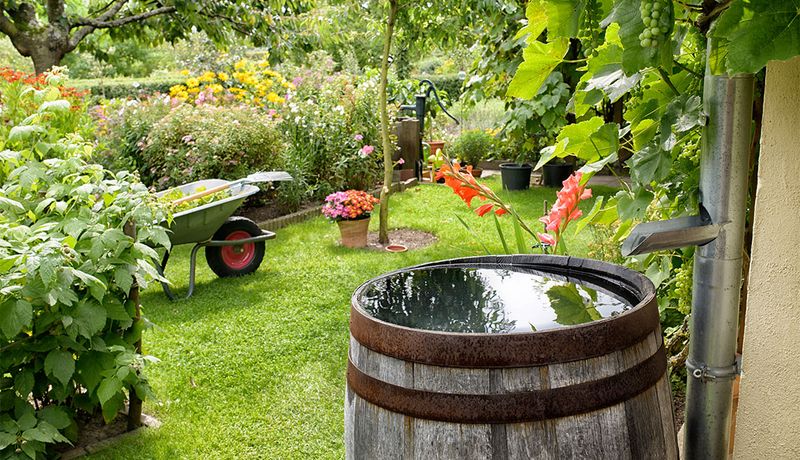
Some folks still whisper about rain barrels as if they’re breaking a rule. That myth likely drifted east from a handful of western states, where old water rights laws once limited collection.
Virginia takes a friendlier view.
The Virginia Department of Health oversees rainwater harvesting and encourages using rain to ease demand on drinking water supplies. According to the department, its rainwater harvesting regulations, effective in late 2024, exclude rain barrels holding 100 gallons or less.
That means a typical 55-gallon barrel needs no permit, even if you set up several.
Bigger systems are a different story. Large cisterns used for irrigation or flushing toilets may need to be registered with the health department, so check its website before investing in a big tank.
Rules can also shift, so a quick look at current guidance is smart.
Your homeowners association might have its own opinions. Some HOAs ask for screened, earth-toned barrels or placement out of street view.
A short email to the board can save an awkward letter later.
One firm line deserves mention. Barrel water is not treated, so keep it for plants, washing tools, and cleaning patio furniture, not for drinking or cooking.
Raise That Barrel On Cinder Blocks Before The First Storm
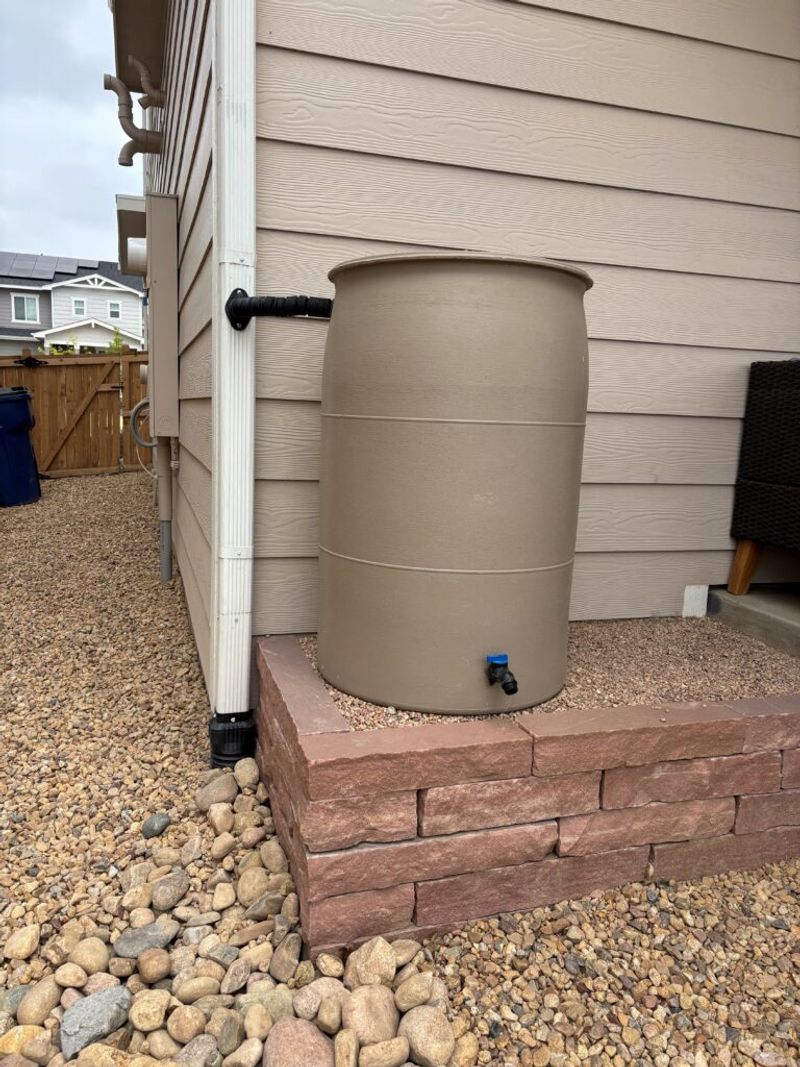
Take it from someone who learned the hard way, a barrel sitting flat on the ground is a frustrating barrel. Water pressure depends on height, so a spigot at grass level barely trickles into a watering can.
Raising it on two or three courses of cinder blocks, or a sturdy pressure-treated platform, gives gravity something to work with. Each foot of height adds a little push for a hose.
Just make sure the base is level and firm, because a full 55-gallon barrel weighs about 460 pounds.
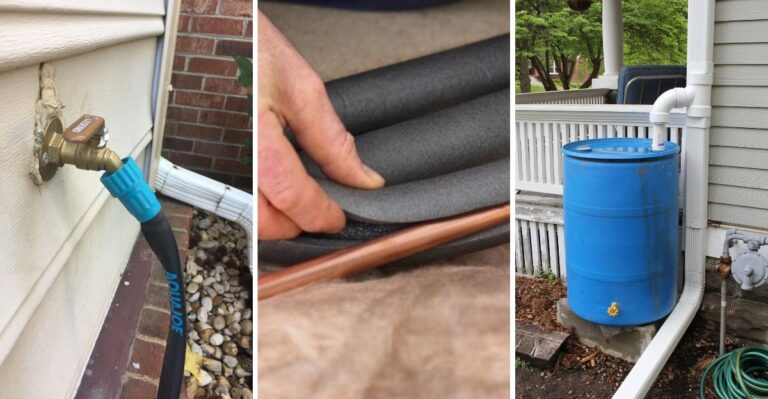
Next comes the downspout. Most kits include a diverter that sits in the downspout and sends water into the barrel, then routes overflow back down the pipe once the barrel is full.
Others require cutting the downspout and adding a flexible elbow that drops into the barrel’s screened top.
Plan for overflow before the first big storm arrives. An overflow hose near the top should carry extra water at least several feet from your foundation and away from your neighbor’s yard.
Pointing it toward a rain garden or mulched bed turns extra water into a bonus.
Spring is a great time to install, since storms are frequent and the barrel can fill well before summer heat. Rinse a used food-grade drum thoroughly before using it.
Mosquitoes Love Open Barrels, So Screen Every Gap
Asian tiger mosquitoes, those striped daytime biters, breed happily in small pools of standing water. Mid-Atlantic yards are full of them from late spring into fall.
An uncovered barrel can turn into a nursery within a week.
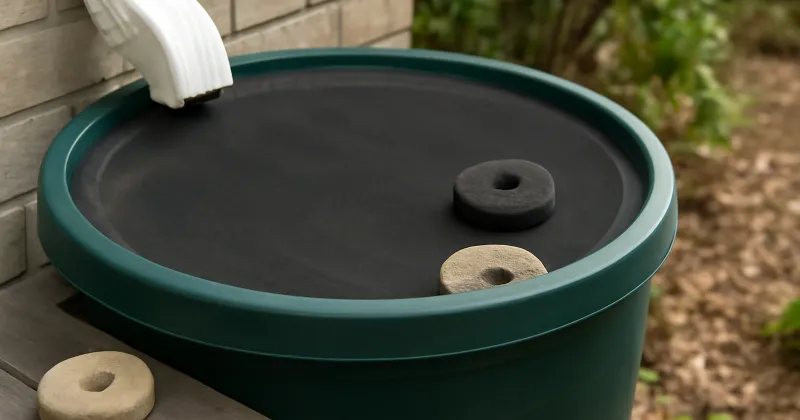
The fix is simple. Cover every opening with fine mesh screen, including the inlet and the overflow port.
Check that the lid seals snugly, since even a small gap can let a female slip inside to lay eggs.
Wigglers, the tiny larvae that jerk around near the surface, are your warning sign. If you spot them, drop in a mosquito dunk containing Bti, a natural bacterium that targets mosquito larvae.
Extension specialists consider it safe for pets, birds, and plants, and one dunk usually lasts about 30 days.
Using the water regularly helps too. Mosquitoes take roughly a week to develop from egg to adult in warm weather, so draining the barrel often interrupts the cycle.
Gutters also deserve attention, because clogged gutters hold puddles and dump debris into the barrel.
Fall brings one more chore. Before hard freezes, drain the barrel, open the spigot, and disconnect it from the downspout.
Ice can crack plastic and split fittings, especially in the colder mountain counties.
Thirsty Flower Beds And Shrubs Get The Most From Stored Rain
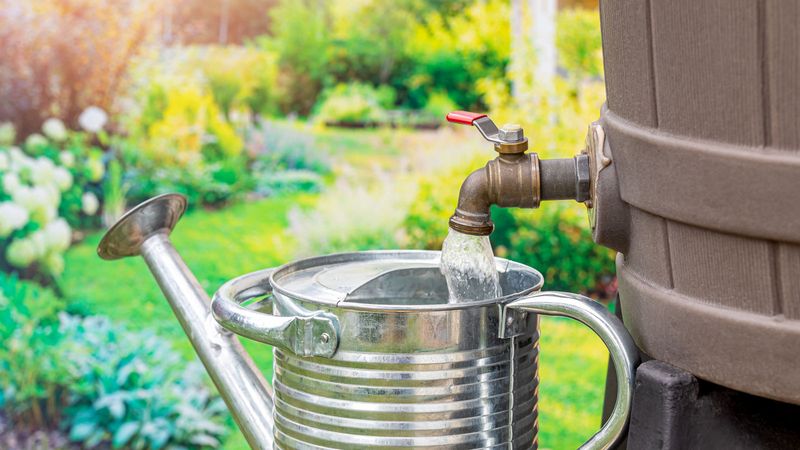
Let’s just say a barrel empties faster than you expect. Fifty-five gallons sounds like a lot, but a vegetable bed in July can drink that in a few days.
Smart gardeners give stored rain to the plants that benefit most.
Newly planted shrubs, perennials, and young trees top the list. Their roots haven’t spread yet, so they lean on steady moisture for their first one or two seasons.
Container plants and hanging baskets come next, since pots dry quickly on hot afternoons.
Watering style matters as much as the source. Deep, occasional soaks encourage deeper roots, while frequent sprinkles keep roots near the surface.
Most garden plants do well with about one inch of water per week, counting rainfall.
A soaker hose attached to the spigot works nicely for raised beds, though barrel pressure is low. Keep runs short, roughly 25 to 50 feet, for decent flow.
Watering cans offer more control and let you target the base of each plant, keeping leaves dry and reducing disease.
Mulch stretches every gallon. Two to three inches of shredded bark or leaves slows evaporation and keeps soil cooler.
Pair mulch with native, drought-tolerant plants like coneflower, black-eyed Susan, and little bluestem, and your barrel will go much further.
Tomato Plants And Veggie Beds Need A Quick Roof Check First
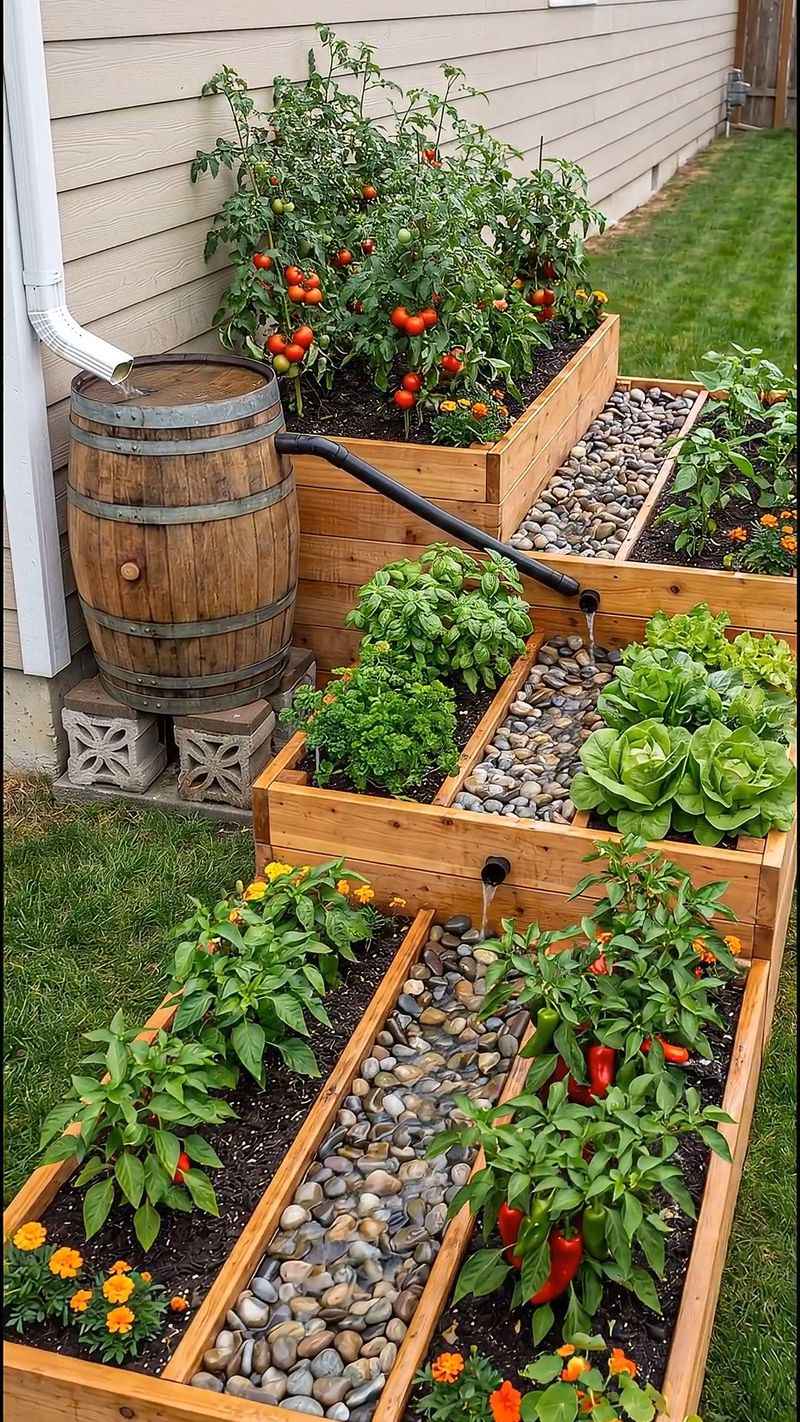
Tomato growers ask this more than anything else. Can barrel water go on the vegetable patch?
Most extension specialists say yes, with a few sensible precautions.
Roof material is the first thing to check. Asphalt shingles and metal roofs are common sources for garden use, though shingles can shed small amounts of grit and residue.
Older roofs treated with moss control products, or roofs with copper flashing, can add metals you don’t want near food.
Bird droppings and leaf debris on the roof can carry bacteria into the barrel. That risk is the main reason for careful habits.
Pour water at the soil line instead of over leaves, especially on lettuce, herbs, and other crops you eat raw.
Timing adds another layer of protection. Many experts suggest avoiding overhead watering of edible leaves close to harvest.
Wash all produce well before eating, which is wise even with tap water.
A first-flush diverter can help, too. It discards the first few gallons of runoff, which carry most of the dust and droppings, before sending cleaner water into the barrel.
For worried gardeners, a simple compromise works well. Use barrel water on flowers and shrubs, and save the hose for salad greens.
Rain Barrel Workshops And Local Rebates Can Shrink Your Costs
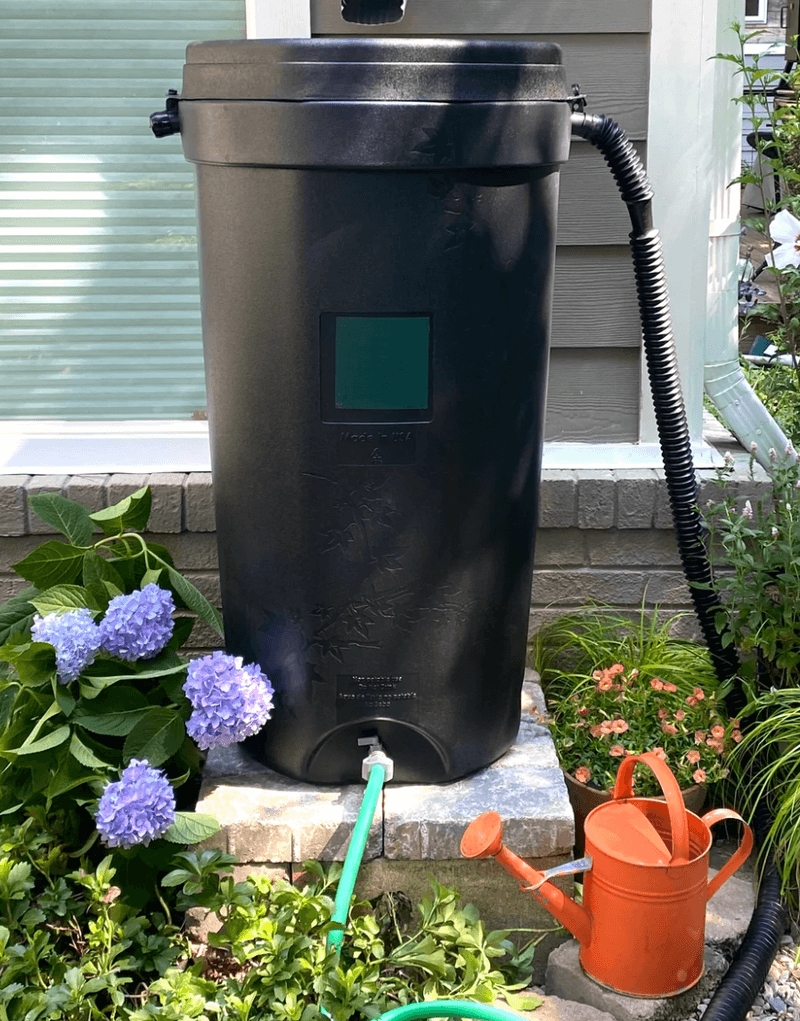
For what it’s worth, my favorite barrel came from a Saturday workshop, not a store. Many local soil and water conservation districts hold build-your-own sessions where you leave with a finished barrel and know-how.
Fairfax County’s district, for example, has offered these classes for years.
Money help exists in some places, too. The Virginia Conservation Assistance Program, run through local conservation districts, offers cost-share and technical help for practices that manage stormwater, including rain barrels in some districts.
Funding and eligibility vary, so call your district before buying.
Some cities and counties sweeten things further. Certain localities have offered rebates for barrel purchases or credits on stormwater utility fees.
In Hampton Roads, the askHRgreen.org program shares tips and local resources for barrels and rain gardens.
Building your own is another budget path. A food-grade drum, spigot, screen, and fittings often cost less than $100 total.
Check online marketplaces for used drums, but skip any that held chemicals.
Once one barrel is working, the next steps come naturally. Link a second barrel, add a rain garden for overflow, or swap some lawn for native plants.
Small moves like these keep your yard greener through dry spells and send cleaner water to local streams.