9 Native Florida Shrubs That Attract Butterflies All Year
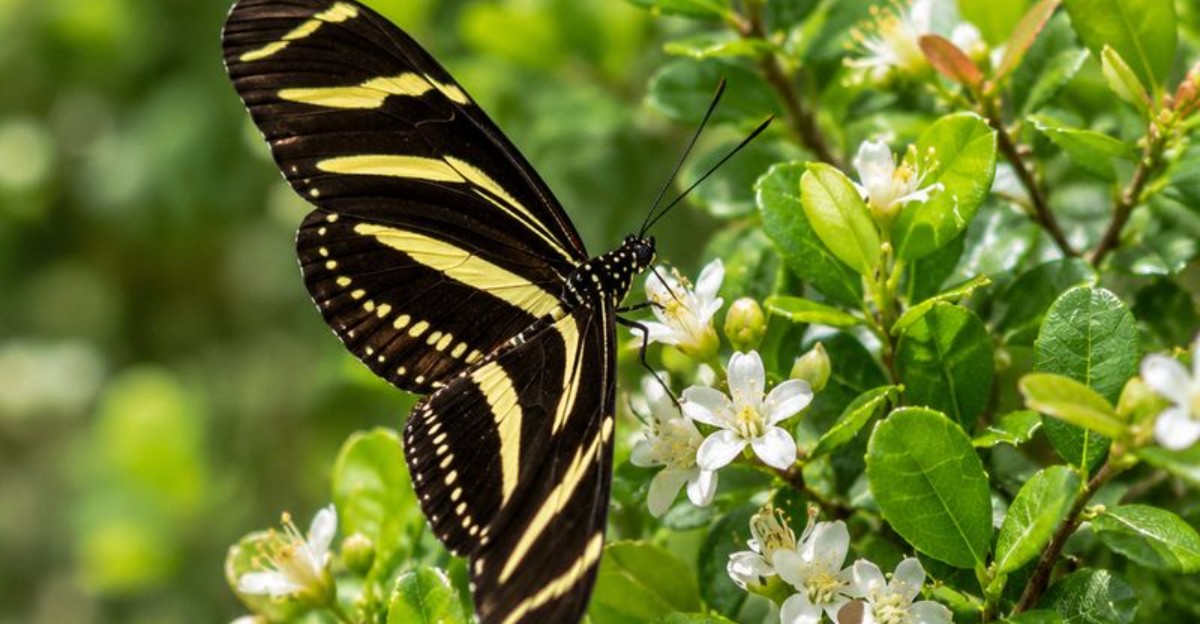
Zebra longwing butterflies sleep in tight groups at night, often returning to the very same branch each evening. They are the official state butterfly of Florida, and they fly in every month across the southern half.
That steady flight schedule means hungry wings need food in January as much as they do in July. Caterpillars also need specific leaves, and many butterflies will lay eggs only on one kind of plant.
I love how a single well-chosen shrub can turn a quiet corner into a busy little airport. You might notice sulphurs and skippers arriving within days, especially when the plants are true locals that evolved right here.
Native shrubs handle Florida heat and sandy soil far better than most fussy nursery imports could manage. A few standouts keep the nectar flowing and the caterpillars munching, no matter what month the calendar shows.
1. Firebush
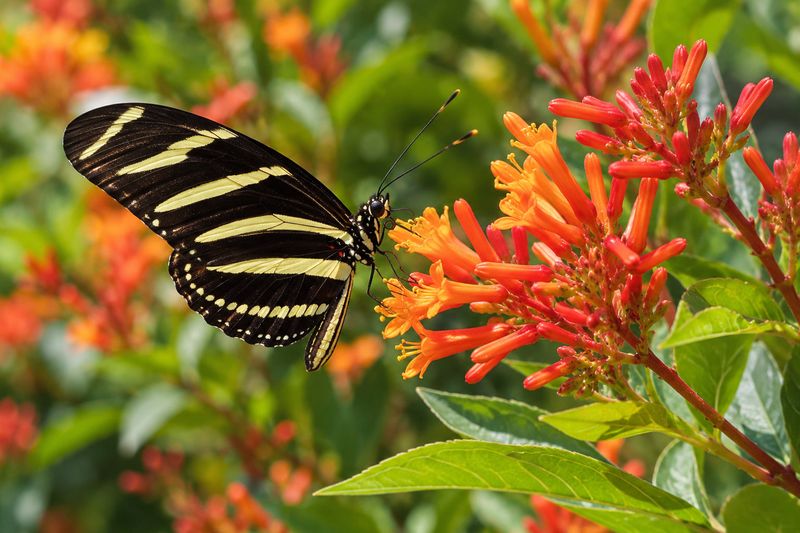
Hummingbirds and zebra longwings will practically argue over firebush, and I find their little turf wars hilarious to watch. The tubular orange-red flowers glow like tiny lanterns from late spring until cold weather finally arrives.
In frost-free coastal spots, blooms can keep going nearly all year without much of a break at all. Farther north, a hard freeze knocks the shrub back to the ground, but it usually resprouts in spring.
You need to grab the native Hamelia patens var. patens, since a compact non-native type gets sold under similar names. Look for the botanical name on the tag, or buy from a nursery that specializes in natives.
Full sun brings the heaviest flowering, though plants still bloom decently in partial shade under tall pines. Well-drained soil suits it best, and established shrubs handle dry spells with very little extra watering.
Expect a mature size around eight to fifteen feet tall when you leave it alone and let it stretch. Personally, I prune mine in late winter to keep it bushy and closer to six feet tall.
Small berries ripen from red to glossy black, and mockingbirds plus catbirds gobble them up surprisingly fast. Leaves often blush red in cooler months, which adds a warm color touch when flowers slow down.
Give it room near a window so you can watch the nectar traffic from your kitchen each morning. I can’t imagine a butterfly garden in the southern half of the state without at least one.
2. Buttonsage
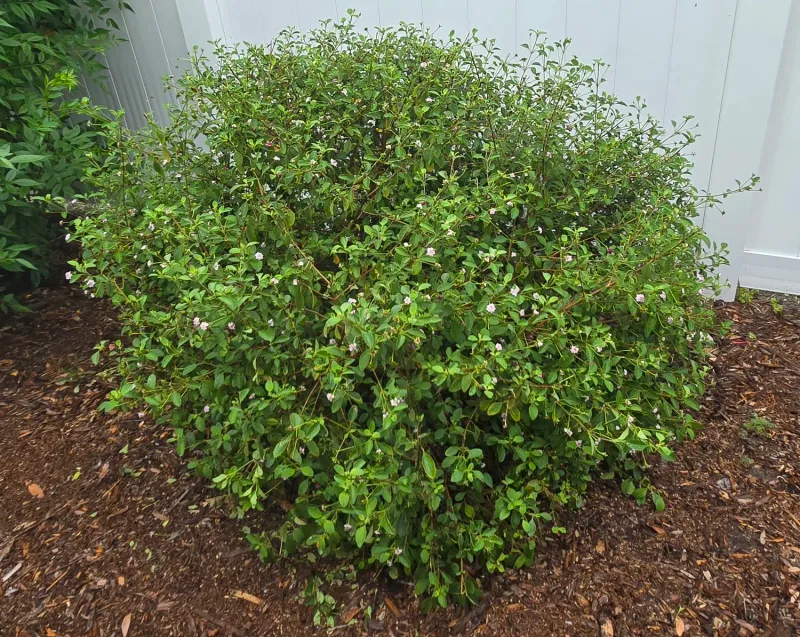
Crush a buttonsage leaf between your fingers and you’ll get a sharp, sage-like scent that clings to your skin. Tiny white flowers with yellow eyes form neat little buttons that skippers and hairstreaks visit eagerly.
Lantana involucrata is the true native lantana, found naturally in coastal hammocks and pine rocklands of the southern peninsula. Its flowers sometimes fade toward soft lavender, so a single cluster can show two gentle colors.
In warm areas, blooming happens on and off all year, giving butterflies a dependable snack bar between busier seasons. Small purple fruits follow, and songbirds pick them off quickly once they ripen and soften.
You need to avoid the common ornamental Lantana camara, which is invasive here and hybridizes with native lantana species. Choosing buttonsage gives you a similar look without harming wild plants growing in nearby natural areas.
Plant it in full sun with sandy or limestone-based soil that drains quickly after heavy summer storms. Once roots settle in, it shrugs off drought and salt spray better than most shrubs I have grown.
Most plants reach about three to six feet tall with a rounded, slightly loose shape that looks natural. A light trim after a big flush of flowers encourages fresh growth and another round of blooms.
I like tucking it along a sunny walkway where brushing past releases that herbal fragrance on hot afternoons. Butterflies seem to enjoy that spot too, and you get an up-close show every time you stroll.
3. Bahama Senna
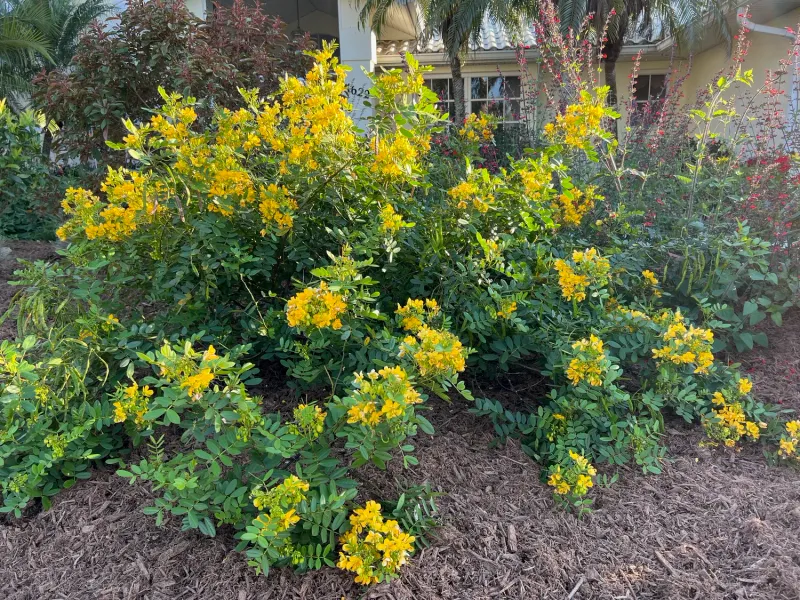
Spot a lime-green caterpillar munching your senna leaves, and you should celebrate instead of reaching for spray. That hungry youngster will likely become a cloudless sulphur, one of the brightest yellow butterflies around.
Bahama senna, Senna mexicana var. chapmanii, is a state-listed threatened native found naturally in South Florida pine rocklands. Nurseries grow it from seed, so buying a potted plant does not harm wild populations.
Cloudless sulphur and sleepy orange caterpillars both feed on its leaves, often chewing them down to bare stems. Stay calm, because the shrub bounces back quickly with fresh growth within a few weeks.
Bright yellow flowers appear mostly from fall into winter, right when many other blooms in the garden slow down. Adult butterflies sip the nectar, so the plant feeds two generations at the same time.
Expect a rounded shrub about three to five feet tall and similar in width under good conditions. Full sun and well-drained sandy soil suit it best, and it handles drought nicely once established.
Plants tend to be short-lived, often lasting just a few years, but they reseed modestly around the garden. I let a few seedlings grow each spring so I have replacements ready when older shrubs decline.
Personally, I plant it near a bench so I can watch tiny caterpillars and fluttering adults on one shrub. You might be surprised how quickly sulphurs find it, sometimes within the very first week.
4. Blue Porterweed
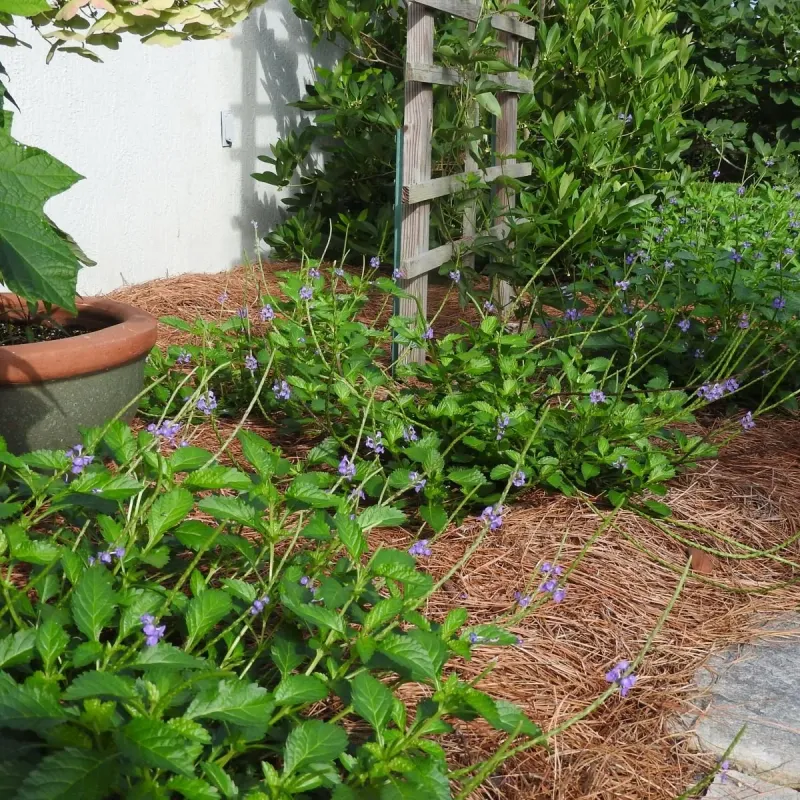
Each blue porterweed flower lasts only a day, yet butterflies line up for those tiny blooms every single morning. The flowers open in rings along a long green spike, so a fresh band appears daily.
Stachytarpheta jamaicensis is the native species, a low and spreading plant usually staying around one to three feet tall. Some call it a groundcover, but older plants turn woody and act like a short shrub.
You need to check labels carefully, since a taller non-native porterweed and a hybrid are sold widely. Those types can escape into natural areas, while the native stays low with grayish green leaves.
Tropical buckeye caterpillars use it as a host plant, which adds even more value to a sunny bed. Skippers and swallowtails love sipping from the violet blue flowers during the warmest parts of the day.
Blooming can carry on through most of the year in frost-free coastal areas near the southern tip. A freeze will brown the stems, but plants often regrow from the base once warm weather returns.
Full sun works best, and sandy or limestone soils suit it well as long as water drains away. It tolerates salt spray, which makes it a handy option for gardens close to the beach.
I love how it fills gaps in front of taller shrubs and softens the edge of a path. Plant several together for a bigger blue patch that butterflies can spot from across the yard.
5. Wild Lime
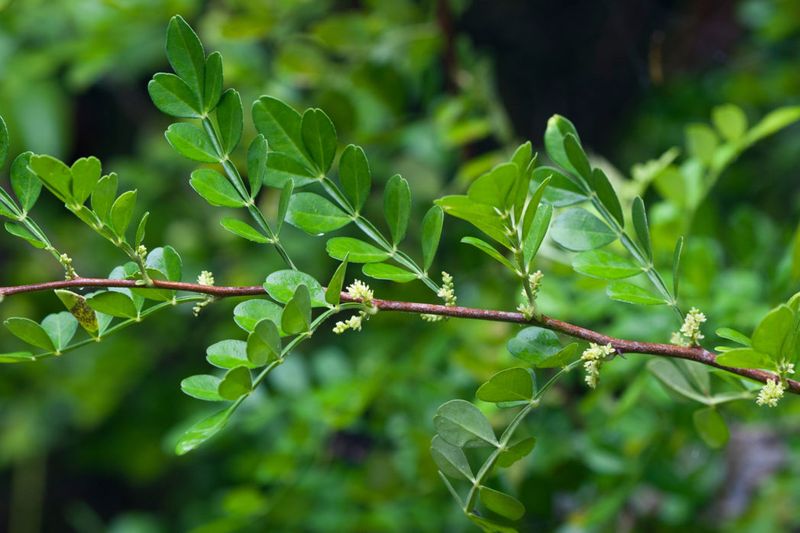
Giant swallowtail caterpillars look exactly like bird droppings, and that clever disguise fooled me the first time I found one. Wild lime is a favorite host for these huge butterflies, so expect visitors on its small leaves.
Zanthoxylum fagara belongs to the citrus family, which explains why swallowtails recognize its scented foliage so easily. Crush a leaflet and you’ll catch a light citrus smell, though it produces no edible limes.
Its range covers central and southern parts of the peninsula, mostly in coastal hammocks and shell mounds. It also hosts the endangered Schaus’ swallowtail, which survives mainly in the Upper Florida Keys area.
Watch out for the hooked spines along the stems, since they grab sleeves and skin with surprising strength. I plant it away from walkways, often as part of a wildlife hedge along the property line.
Expect a large shrub or small tree around ten to twenty feet tall when left unpruned. It grows well in full sun or partial shade and handles alkaline soils better than many landscape plants.
Tiny greenish yellow flowers appear mostly in spring, and small insects visit them more often than showy butterflies. The real value lies in the leaves, which feed caterpillars that later become stunning adults in your yard.
Birds appreciate the thorny branches too, because the spiny cover helps protect nests from hungry predators. You’re in for a big surprise when a giant swallowtail drifts past, since its wings can stretch over five inches.
6. Wild Coffee
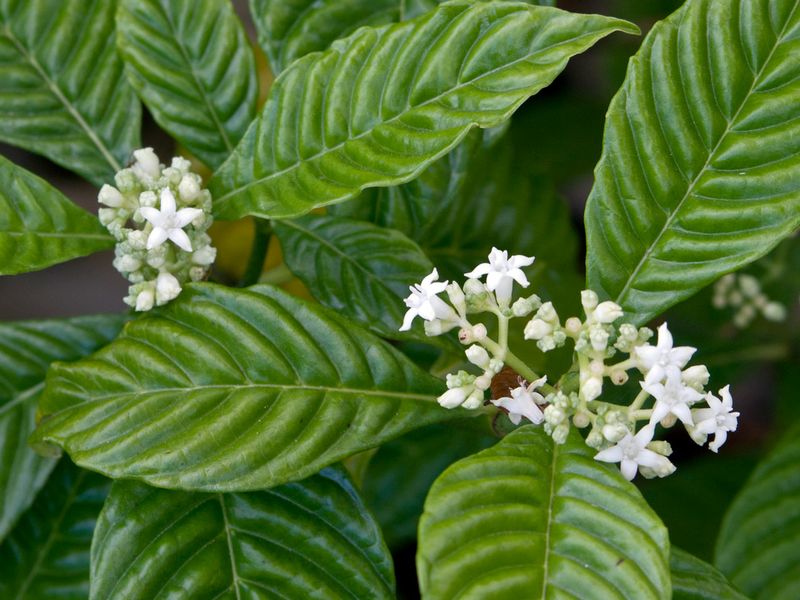
Shady yards get overlooked in butterfly talk, but wild coffee proves that a little dappled light still draws wings. Small white flowers cluster above glossy, deeply veined leaves that look polished even on cloudy days.
Psychotria nervosa grows naturally in hammocks across central and southern parts of the peninsula, often beneath oaks and palms. It belongs to the same family as true coffee, but its bright red berries make no decent brew.
Flowers mostly appear in spring and summer, attracting small butterflies along with plenty of busy native bees. I enjoy watching them hop between flower clusters while I relax under the trees on warm mornings.
Red berries ripen in fall and early winter, and cardinals plus mockingbirds pluck them off with obvious delight. That timing keeps birds busy after flowers finish, so the shrub stays useful nearly all year.
Most plants reach four to eight feet tall and spread about as wide when given a little room. Partial to full shade keeps leaves dark green, while harsh afternoon sun tends to turn them yellowish.
Rich, moist soil with plenty of leaf litter suits it best, especially during the first summer after planting. Cold snaps can damage tender growth in northern areas, but plants commonly sprout again from lower stems.
Personally, I think it makes a lovely informal hedge under a big oak where grass rarely grows well. Pair it with firebush along the sunny edge, and you can cover both nectar and berries nicely.
7. Buttonbush
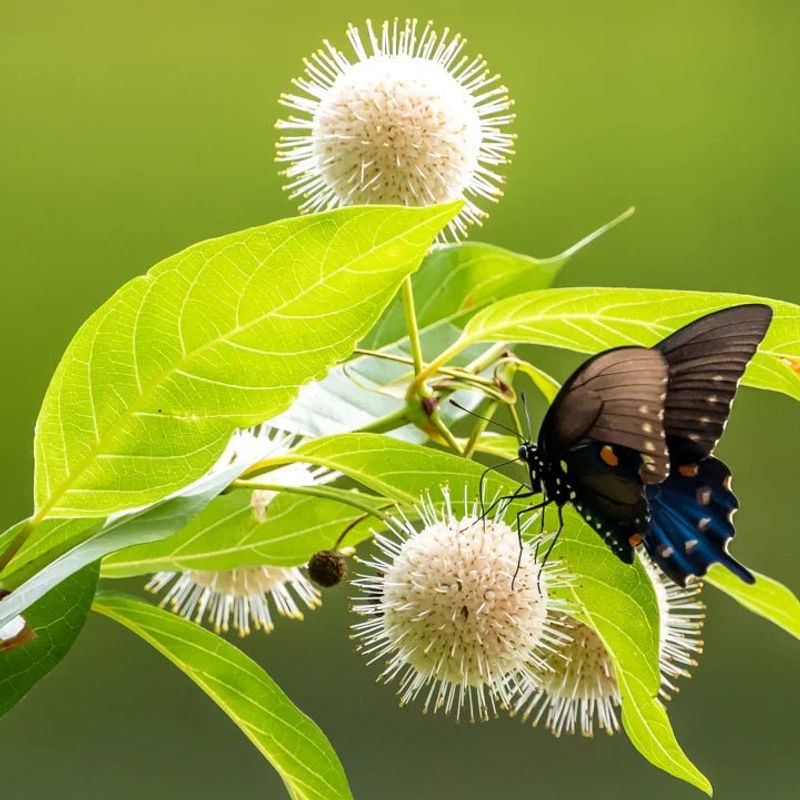
Buttonbush flowers look like tiny white pincushions, or maybe little satellites floating above dark green leaves. Each round head holds many slender tubes, and swallowtails sip them with long, curling tongues.
Cephalanthus occidentalis grows naturally along swamps, ponds and ditches throughout the state, from the Panhandle to the Keys. It loves wet feet, so it solves the problem of that soggy corner where other shrubs rot.
Blooming usually runs from spring through summer, with scattered flowers sometimes appearing later in warmer southern areas. Bees join the butterflies, and the whole shrub hums gently on still June afternoons in the sun.
Ducks and other waterbirds eat the round seed balls that form after flowering ends in late summer. The dense branches also give small birds safe cover, which makes it a busy spot well beyond bloom season.
Expect a size of about six to twelve feet tall, sometimes taller in rich, wet soil with full sun. It tolerates partial shade, though flowering is heavier when plants soak up plenty of direct light.
You need to know the leaves and seeds are toxic if eaten, so keep curious pets and livestock away. Planting it near a pond edge rather than a play area keeps everyone safe and happy.
I love how it handles flooding during rainy summers and then tolerates short dry spells in spring. A rain garden or retention pond edge gives it the moisture it craves without extra watering from you.
8. Yellow Necklacepod
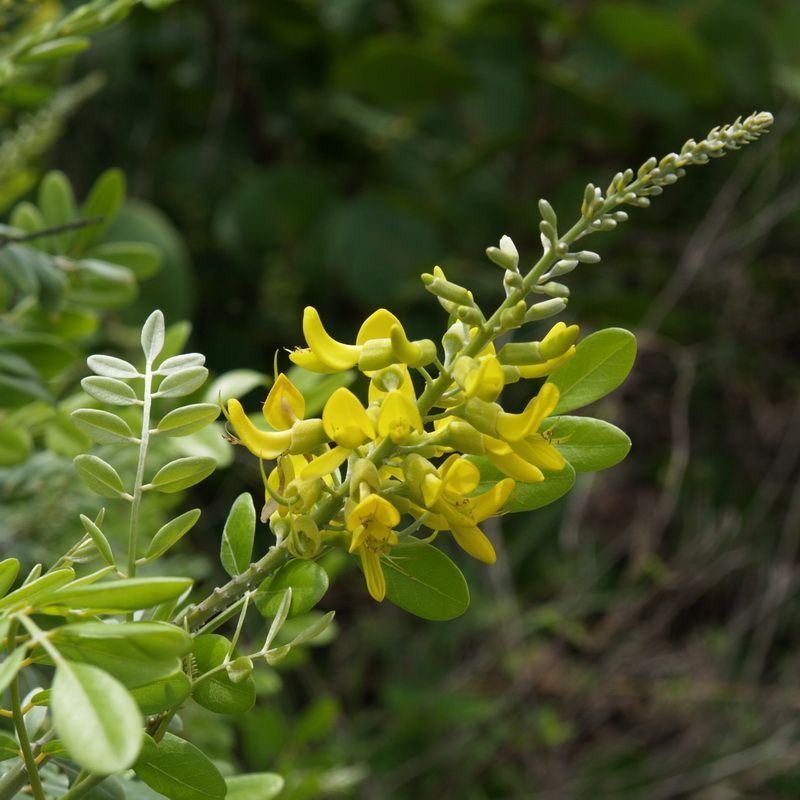
Seed pods on this shrub pinch between each seed, so they dangle like strings of beads after flowering. Bright yellow flower spikes come first, and sulphur butterflies and hummingbirds both stop by for nectar.
Yellow necklacepod, Sophora tomentosa var. truncata, grows naturally on coastal dunes and hammocks along the southern peninsula. Avoid the silvery variety from overseas, since the native type has greener leaves and fits local habitats.
Blooming happens on and off through the year in warm coastal areas, with heavier flushes during spring and summer. That steady schedule makes it a handy nectar stop when other shrubs take a seasonal break.
Salt spray barely bothers it, which makes it a favorite for beachfront yards where tender plants usually struggle. Sandy, well-drained soil and full sun keep it compact and flowering heavily through the warm months.
Expect a height around six to ten feet, with a loose, rounded form that spreads about as wide. I prune lightly after a big bloom flush to encourage new branches and keep the center full.
Seeds are considered poisonous, so pick off pods if small children often play near your garden beds. Wearing gloves while collecting them is wise too, and you can share extras with fellow native gardeners.
What surprises me most is how silvery the young leaves look when sunlight catches their fuzzy undersides. Pair it with blue porterweed nearby, and the yellow and blue combination looks amazing on summer afternoons.
9. Simpson’s Stopper
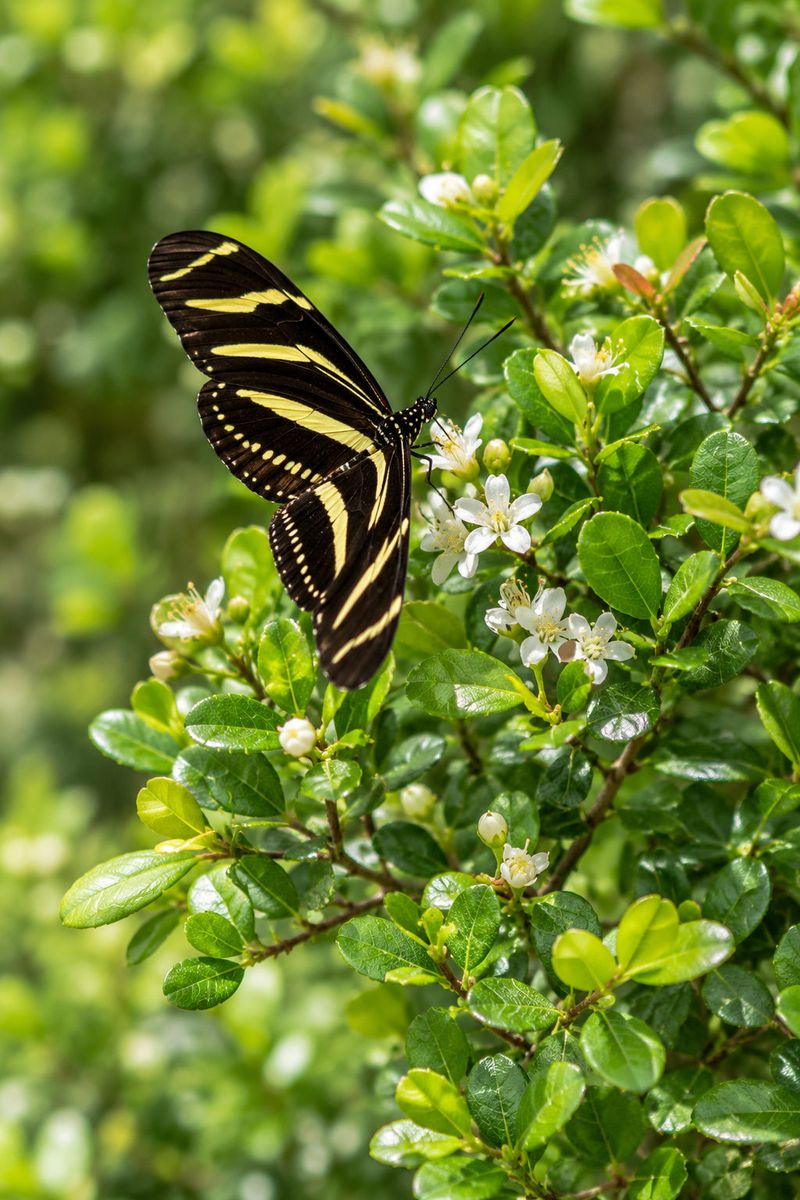
Brush past a Simpson’s stopper on a humid evening and a spicy, citrus-like scent drifts up from the leaves. Masses of fluffy white flowers follow in spring and summer, each one packed with tiny stamens.
Myrcianthes fragrans is native to central and southern parts of the state and belongs to the myrtle family. Its name comes from an old folk use for stomach trouble, though I would stick to admiring it.
Small butterflies and bees visit the fragrant blooms, especially during warm, still mornings after a gentle rain. The flowers are not as flashy as firebush, yet they add welcome nectar between the bigger shows.
Orange-red berries ripen later, and mockingbirds and catbirds snap them up within just a few days. The peeling, cinnamon-colored bark adds winter interest, especially on older plants trained into small multi-trunk trees.
Plan for about ten to twenty feet tall if unpruned, though it takes trimming well as a dense hedge. Full sun to partial shade works, and sandy soils suit it once roots are well established.
Salt tolerance is moderate to high, so coastal homeowners can use it as a windbreak behind dune plants. Hard freezes may damage it in northern areas, so gardeners there should plant it in sheltered spots.
I believe it ties a butterfly garden together by offering evergreen structure behind the flowering stars. You get privacy and bird food from one tidy shrub that rarely asks for much extra care.