How Road Salt Ruins Ohio Lawns and How to Protect Yours
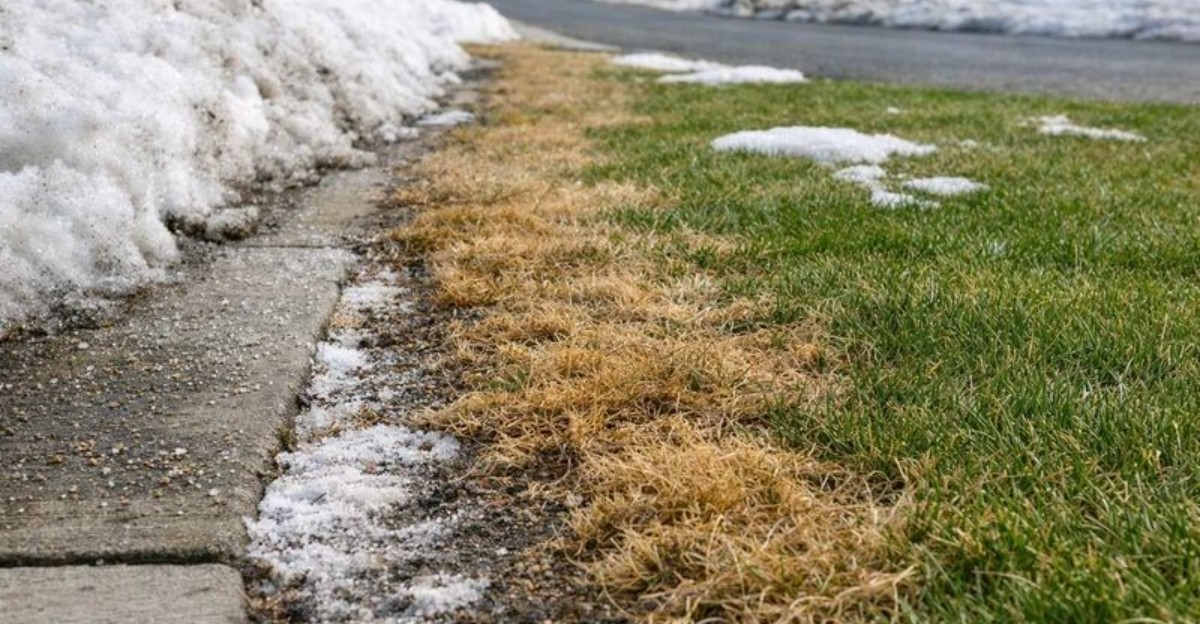
Grass growing beside a salted driveway can suffer drought while sitting in soggy soil. That sounds backward, but it is real plant science, and it plays out every spring along curbs and sidewalks.
Here in Ohio, a single snowy season can mean many rounds of spreading on roads and walks. All that melted slush has to go somewhere.
Much of it splashes, drains, or gets plowed straight onto the nearest strip of green.
I used to blame those crispy brown edges on dog visits or a bad mower blade. Then I noticed the damage followed the pavement like a painted stripe.
You probably have the same tan border along your own driveway right now.
The frustrating part is how quietly the trouble builds all winter long. The hopeful part is how much of it you can prevent with a few cheap, simple habits.
Hear me out, because that salty runoff does its sneakiest work underground, long before any brown edge shows up.
Those Brown Strips Along Your Driveway Tell a Salty Story
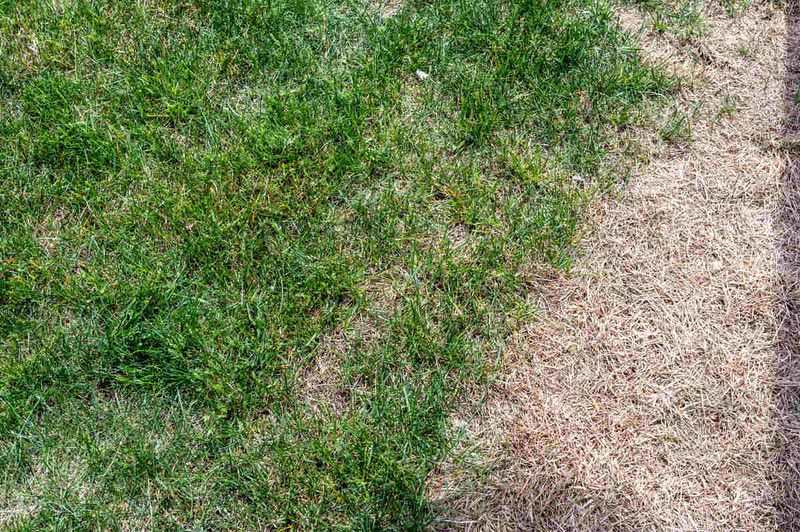
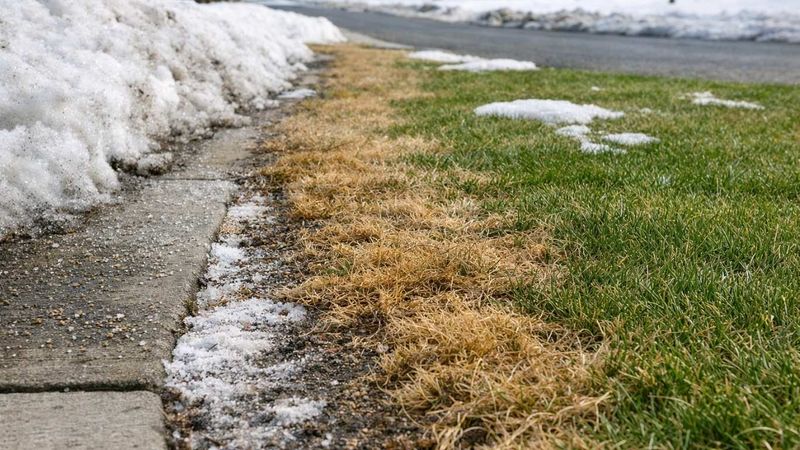
Spring cleanup taught me to read my lawn like a map. The worst browning hugged the driveway, the sidewalk, and the curb, then faded a few feet back where the grass looked fine.
That pattern is the classic calling card of de-icing salt. Most products used on Ohio roads and driveways are rock salt, which is sodium chloride.
When snow melts or plows push slush aside, the salty water soaks into the soil right beside the pavement.
Look for a few clues together. Grass may be tan or yellow in a band, slow to green up, or thin and patchy.
Sometimes a white crust forms on bare soil after a dry spell.
Other problems can look similar, so check before you blame salt alone. Dog urine usually makes round spots with green rings.
Snow mold leaves matted, gray or pink circles that show up after the snow pack melts.
Plow scraping can also tear up turf along the edge. If the damage follows every salted surface in a steady line, though, salt is the most likely suspect.
Knowing the real cause matters, because the fix for salt is different from the fix for mold or a mower mishap.
Salt Pulls Water Away From Grass Roots Even in Wet Soil
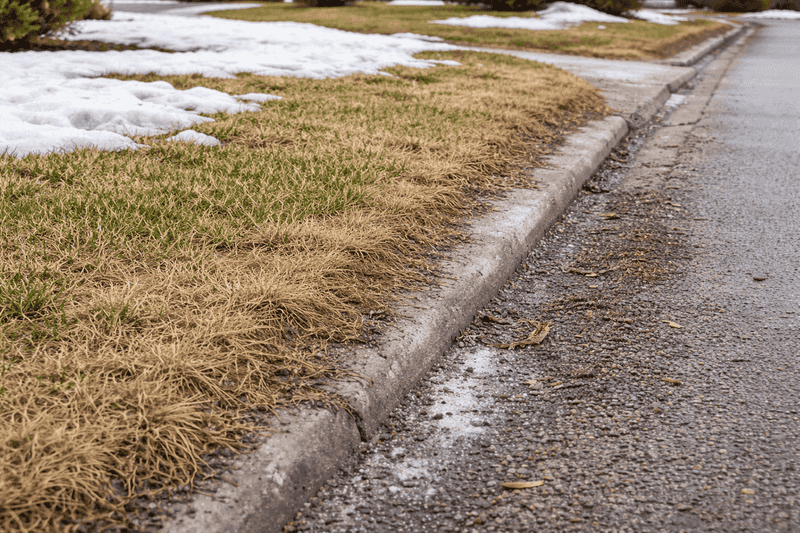
Here is the strangest part of salt injury. Your grass can be thirsty while standing in wet ground.
Roots take in water because the inside of the root is a bit saltier than the soil around it. Water naturally moves toward the saltier side.
When road salt floods the soil, that balance flips, and the soil becomes the saltier side. Roots then struggle to pull water in, and some moisture can even move back out.
Turf experts call this osmotic stress, and it acts like a drought. The blades turn dull, then tan, even after a rainy March.
Sodium causes a second problem. It crowds out calcium, potassium, and magnesium on soil particles, so grass has a harder time getting the nutrients it needs.
Chloride can also build up in leaf tips and scorch them.
Over time, sodium breaks apart soil crumbs, especially in clay. The ground packs down, drains poorly, and holds less air for roots.
Much of central and northern Ohio sits on heavy, clay-rich soil. That makes this soil damage a real concern there, because salt lingers longer when water drains slowly.
A Deep Spring Soaking Can Flush Salt Below the Grass
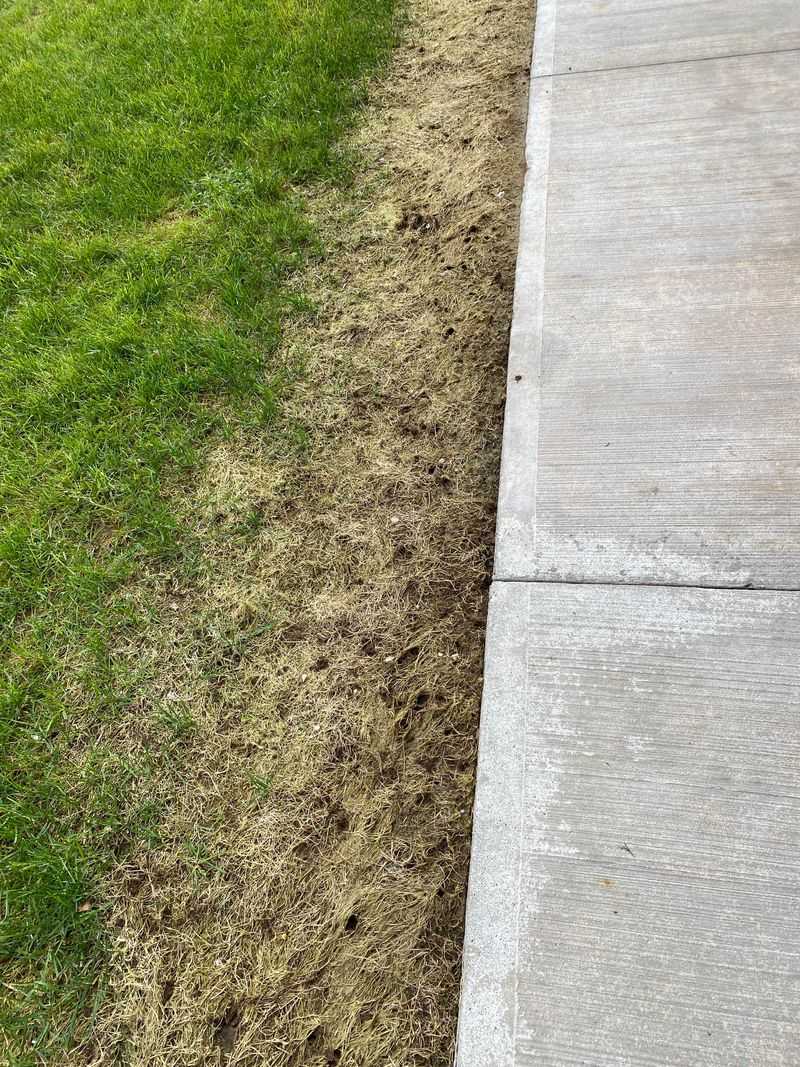
Water is the cheapest repair tool in your garage. Salt dissolves easily, so a good soaking can carry much of it down past the root zone.
Wait until the ground thaws and stops freezing at night. Then give the damaged strip a slow, deep watering.
Ohio State University Extension and other turf experts suggest soaking salt-hit areas with a generous amount of water, often around an inch or two, spread over several sessions.
Go slowly. A soaker hose or a gentle sprinkler works better than a blast from the nozzle, because runoff just moves salt across the surface instead of down.
Repeat the soaking a few times over the next couple of weeks. Spring rain helps too, and Ohio usually gets plenty of it in March and April.
Watch for puddles that sit for hours. That tells you the soil is compacted or heavy with clay, and water is not moving through well.
Core aeration can open the soil so the flushing works better.
Patience matters here. Grass that still has living crowns often greens up within a few weeks once the salt level drops.
Gypsum Might Help Your Clay Soil, but Only in the Right Situation
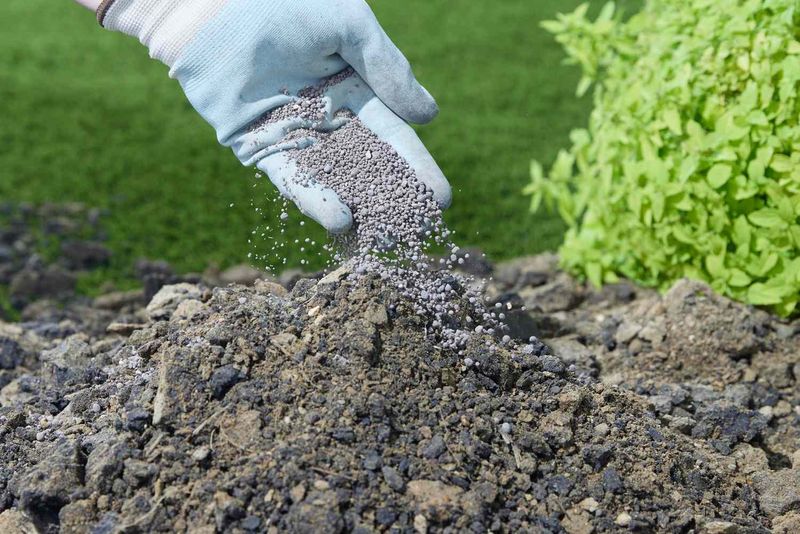
Gypsum gets talked about like a miracle cure. It can be useful, but it works best on one specific problem.
Gypsum is calcium sulfate. Its calcium can swap places with sodium stuck to soil particles.
Once sodium is loose, water can wash it away, and clay soil may hold its structure better.
That swap matters most in heavy clay that has taken years of salt splash. In sandy or loamy soil, simple watering often does the job without it.
Gypsum also has limits. It does not neutralize chloride, the part of salt that burns grass blades and roots.
You still need water to flush everything down.
If you want to try it, use pelletized gypsum for easy spreading. Follow the label rate, usually given per thousand square feet, and water it in well.
A soil test from a lab can tell you whether sodium levels are high enough to justify the effort.
Skip gypsum as a fix for acidic soil, since it does not raise pH the way lime does. Treat it as a helper for salty clay, not a replacement for good drainage and steady watering.
Burlap Screens and Snow Fencing Can Block Salty Spray
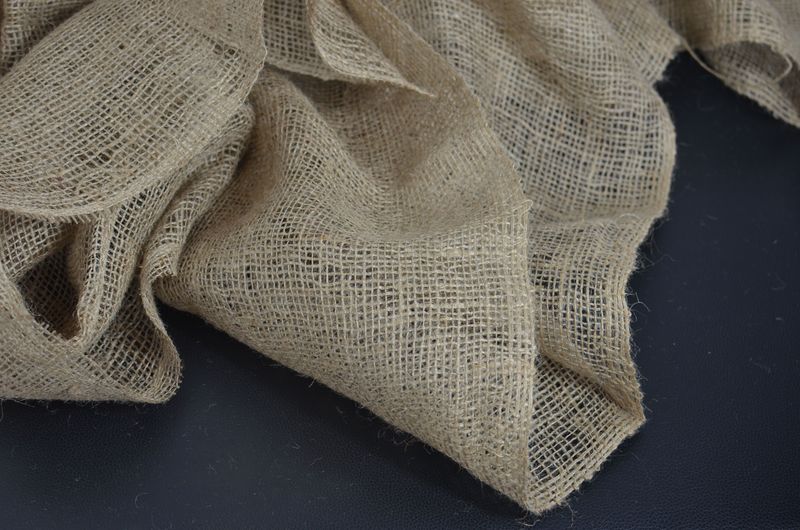
My favorite fix happens before the first flake falls. A simple barrier can catch a surprising amount of salty slush.
Plows and passing cars spray brine several feet onto lawns near busy streets. Burlap stapled to wooden stakes, or a short run of snow fencing lined with burlap, stops much of that spray from reaching the grass and nearby shrubs.
Set the barrier a little back from the curb, often a foot or two, so plows do not flatten it. Make it about as tall as the snowbanks you usually see.
Timing matters in Ohio. Late October or November works well, before the ground freezes and pounding stakes becomes a chore.
Barriers will not stop salty meltwater from flowing into the soil, so they work best paired with good grading and careful salt use. They shine along roads where you cannot control what the city spreads.
Take them down in early spring after the last plow run. Then rinse the strip behind them, since some salt will still sneak through.
I like that a few dollars of burlap can save hours of reseeding later.
Gentler De-Icers and Sand Give Your Grass a Break
Not all ice melters hit grass the same way. Switching products on your own walks is one of the easiest changes you can make.
Rock salt is cheap and works well, but it is the hardest on soil because of its sodium. Calcium chloride and magnesium chloride melt ice at colder temperatures, so you often need less.
They still add salt to soil, so use them lightly.
Calcium magnesium acetate, often sold as CMA, is generally considered gentler on plants and soil. It costs more and works more slowly, but many gardeners save it for paths beside beds and lawns.
Sand adds grip without adding salt. It does not melt anything, though, and it can wash into storm drains, so sweep it up in spring.
Watch the label claims. Words like pet safe or plant friendly are not regulated in a strict way, so read the ingredient list instead.
Skip fertilizer as a de-icer. Products with nitrogen can run off into streams and Lake Erie, where extra nutrients feed algae blooms.
A shovel, some traction grit, and a gentler melter make a smart winter toolkit.
Shovel First and Scatter Salt Lightly on Your Sidewalk
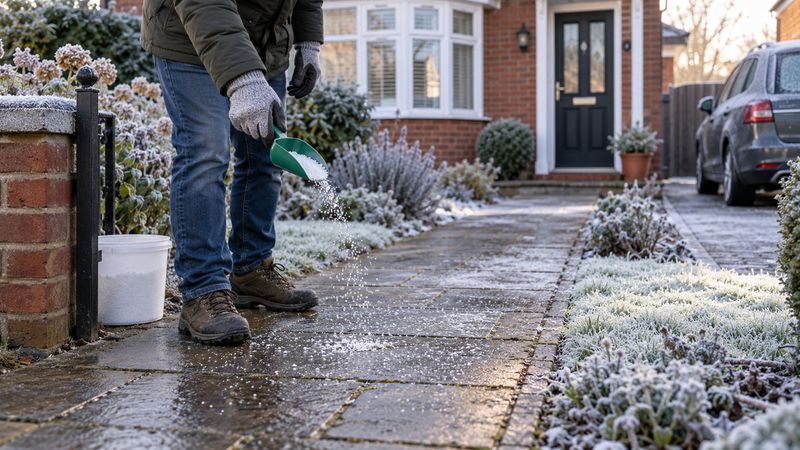
More salt does not mean less ice. Past a certain point, extra granules just sit there, waiting to wash into your yard.
Start with the shovel. Clearing snow early, before feet and tires pack it into ice, cuts down how much melter you need.
A thin layer of fresh snow comes up easily, while packed ice takes a heavy hand.
When you do spread, aim for scattered granules with small gaps between them. Many guides compare the right amount to roughly a coffee mug for a typical car-length stretch of driveway.
A handheld spreader helps keep it even.
Pay attention to temperature, too. Plain rock salt slows down a lot once pavement gets well below about 15 degrees, so piling on more rarely helps on frigid mornings.
Pile snow from salted areas where it can drain onto pavement or gravel, not into flower beds or your best turf.
After the ice is gone, sweep up leftover granules and save them for the next storm. You save money, protect your grass, and keep salt out of local streams.
It feels good when one small habit pays off three ways.
Tougher Grass Seed Can Fill Bare Spots Near the Curb
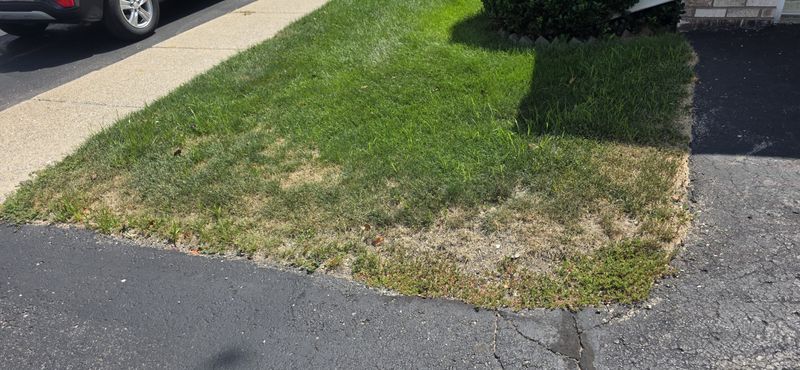
Some strips just will not bounce back, no matter how much you water. That is your cue to reseed with grass that handles salt better.
Tall fescue and perennial ryegrass hold up better to salt than Kentucky bluegrass, which is common in Ohio lawns but more sensitive. Some fine fescues also cope fairly well.
For harsh curbside strips, some turf researchers point to specialty salt-tolerant grasses, such as certain alkaligrass varieties.
First, flush the soil with water so new seedlings are not sprouting into a salty bed. Rake out the brown thatch and loosen the top inch of soil.
Spread seed at the rate on the bag, press it into the soil, and keep it moist. A thin layer of straw or compost helps hold moisture.
Timing makes a big difference. Late summer to early fall is the best seeding window for cool-season grasses across Ohio.
Spring seeding works too, but young grass faces summer heat and weeds sooner.
Each fall, check your barriers, stock gentler melters, and plan your snow piles. A little prep now gives you a greener edge next April.