The Shrub Still Green In Indiana Woods After Most Other Leaves Have Fallen Is An Invader
Walk through a gray November woods and one shrub keeps waving bright green leaves at you. Most of the plants around it stand bare, brown, and ready for winter.
I used to admire that stubborn green. I figured it was a tough little native showing off. Truth is, I had it backward, and plenty of Indiana gardeners do too.
That late color is a clue, not a compliment. The plant leafs out early in spring and hangs on late into fall, so it grabs sunlight while our native shrubs and wildflowers sit out the season.
Birds love its shiny berries and scatter the seeds far and wide. Ecologists now rank it among the most troublesome plants in Midwest forests.
One gardener with loppers can’t clear a whole woodlot, but every plant you remove is one less shrub shading out the spring wildflowers.
That Last Green Shrub In The Bare Fall Woods Has A Sneaky Advantage
Every fall, I take the same walk through a patch of woods near my house. By mid-November, most of the oaks and maples have dropped their leaves, yet the understory still glows green like it missed the memo.
That green layer is no accident. Researchers call it an extended leaf season, and it gives the plant a real head start. The shrub opens leaves a couple of weeks before most native woody plants in spring and keeps them weeks longer in fall.
Why does that matter so much? Sunlight on a forest floor is precious. In early spring, native wildflowers rush to grow before the tree canopy closes overhead. A shrub that leafs out first shades them right when they need light the most.
Then in autumn, those extra weeks of green let the shrub keep making food after its neighbors have shut down. Studies in Ohio and Indiana woods have linked this timing to strong growth and fast spread.
So that cheerful splash of color is really a plant working overtime. Once you know the trick, a green understory in late fall starts to look less like a pretty surprise and more like a warning sign worth checking out.
Meet The Culprit Hiding Behind Those Red Honeysuckle Berries
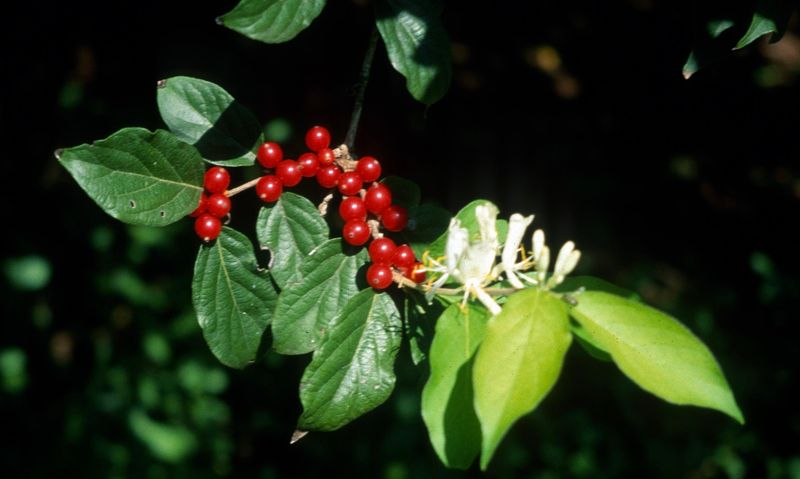
Bright red berries in pairs, clustered along a twiggy branch in October, are usually the giveaway. The shrub hogging all that late-season green is Asian bush honeysuckle.
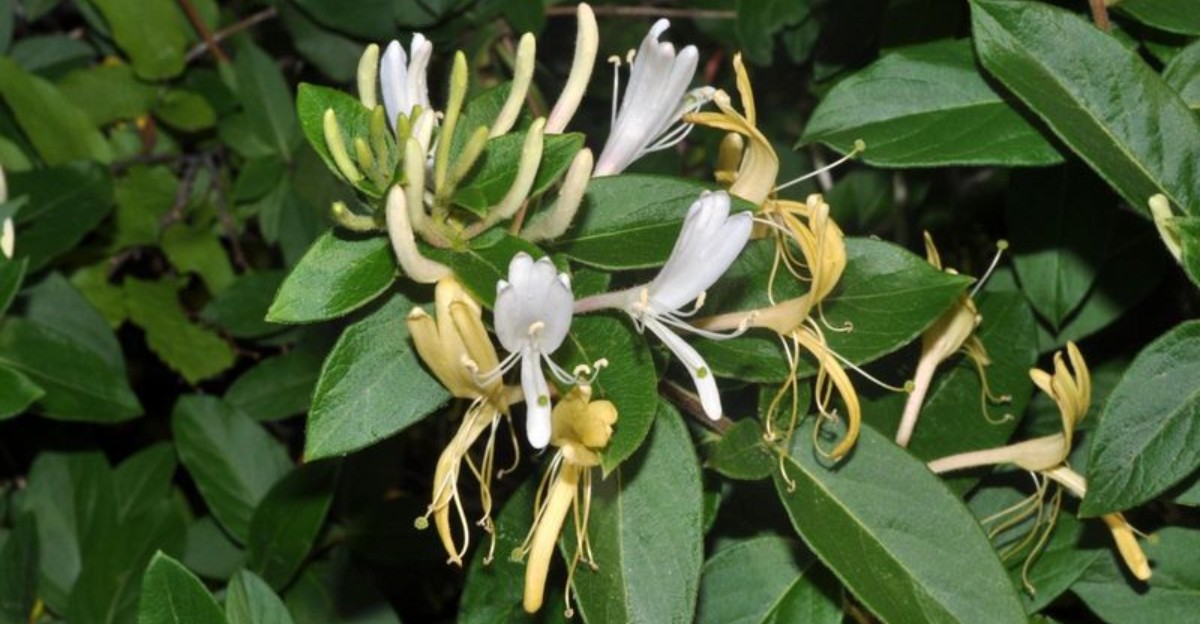
In Indiana, the biggest offender is Amur honeysuckle, known to scientists as Lonicera maackii. Its cousins, Tartarian honeysuckle and Morrow’s honeysuckle, cause similar trouble, along with a few hybrids that blend their traits.
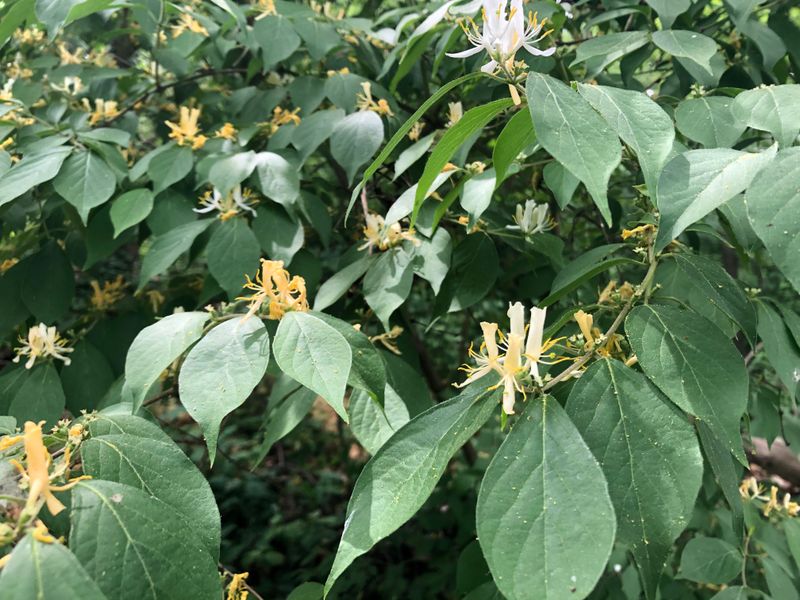
Amur honeysuckle grows as a large, upright shrub, often 6 to 15 feet tall, with arching branches that spread wide. In late spring it covers itself in white flowers that fade to yellow and smell sweet. By fall, those flowers have turned into shiny red or orange berries.
Fun fact for your next hike. The berries tend to hang on into winter, which keeps them visible long after other fruit is gone.
One thing to remember is that not every honeysuckle is a problem. Our native vine called trumpet honeysuckle, Lonicera sempervirens, is a hummingbird favorite and behaves nicely. The trouble comes from the bushy Asian types that march through woodlots, fencerows, and the edges of suburban yards.
Learning that name gives you a head start on everything else in this article.
Snap A Bush Honeysuckle Stem And Look For The Hollow Center
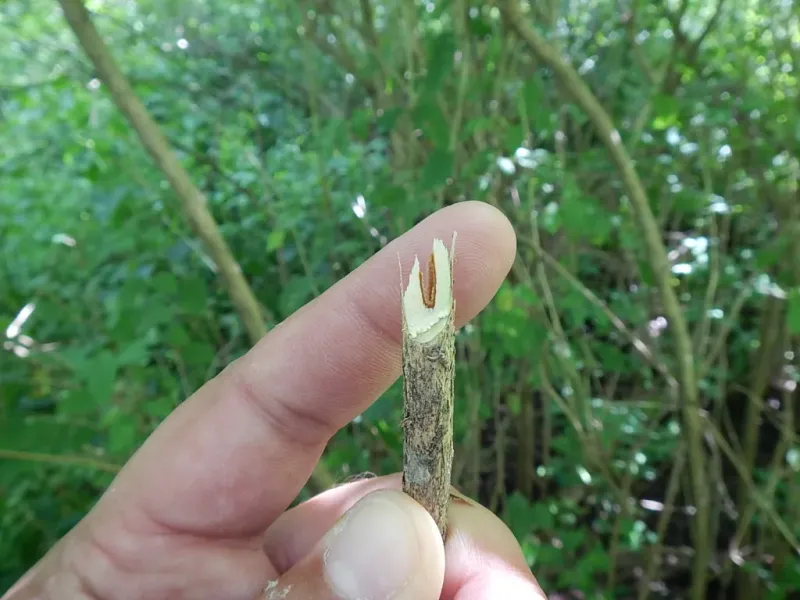
Grab a pair of pruners, because this test is oddly satisfying. Clip a small older branch from the suspect shrub and look at the cut end.
A hollow center, often brown inside, points strongly to Asian bush honeysuckle. Many native look-alikes have a solid white pith instead. That one simple check has saved me from cutting the wrong plant more than once.
A few more clues help seal the deal. The leaves grow in opposite pairs, directly across from each other on the stem. They are oval with a pointed tip, and the edges are smooth rather than toothed.
Older trunks have light tan or grayish bark that looks shaggy and peels in strips. The shrub often has several stems coming up from one base, giving it a vase shape.
Careful observers should watch out for native shrubs that also have opposite leaves, such as dogwoods, viburnums, and coralberry. Dogwood leaves show curved veins that follow the leaf edge, and many viburnums have toothed leaves.
If you still feel unsure, snap a clear photo and contact your county Purdue Extension office. They help folks sort out plant puzzles like this one all the time.
Thick Honeysuckle Thickets Leave Woodland Wildflowers In The Shade
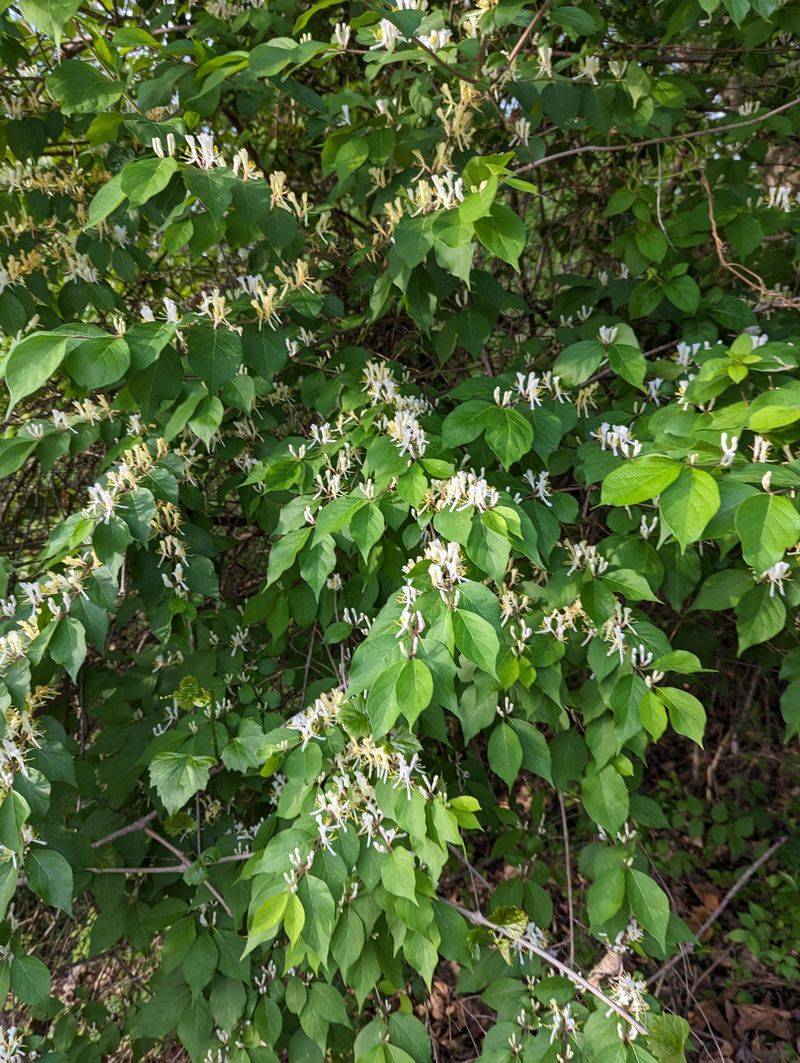
Stand inside a mature honeysuckle patch and the first thing you notice is the gloom. The branches weave together so tightly that very little sunlight reaches the ground.
That shade hits spring wildflowers hard. Trillium, bloodroot, Virginia bluebells, and spring beauty all depend on a short window of light. Under a honeysuckle canopy, many of them shrink back or fail to return.
Young trees struggle too. Oak and hickory seedlings need sun to grow into the next forest, and studies show far fewer tree seedlings under heavy honeysuckle cover. Over time, that can change what the woods look like decades from now.
Some research also suggests Amur honeysuckle releases chemicals from its leaves and roots that may slow the growth of nearby plants. Scientists are still studying how strong that effect is in real forests, so treat it as one possible factor.
Wildlife feels the change as well. Fewer native plants mean fewer insects, and fewer insects mean less food for baby birds.
Researchers in Illinois found that robins nesting in honeysuckle faced higher nest predation, likely because the low, sturdy branches made the nests easier for predators to reach. Thicker is not always safer.
Birds Scatter Honeysuckle Seeds Farther Than You Would Guess
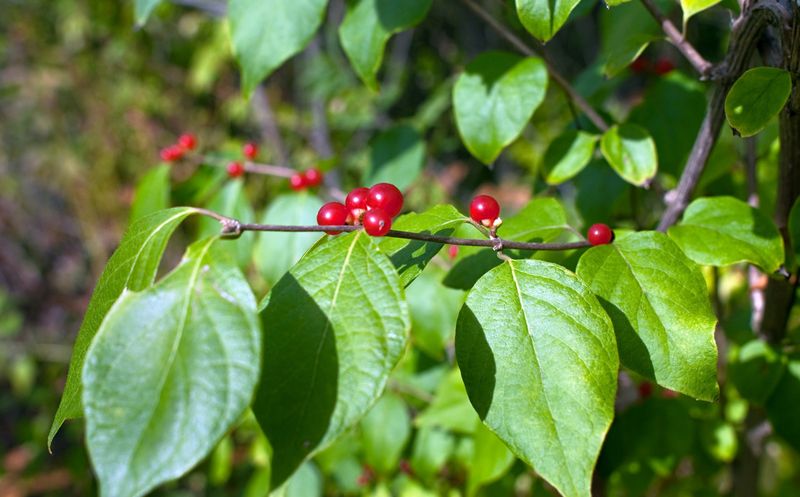
Ever wonder how a shrub shows up in the middle of a woods with no gardener around? Thank the birds.
Robins, starlings, cedar waxwings, and other fruit eaters gobble up honeysuckle berries in fall and winter. The seeds pass through their bodies and land wherever the birds perch next, often under a fence or tree.
Not going to lie, I find this a little frustrating. The birds are doing nothing wrong. They are hungry, and those berries are easy to find.
The catch is nutrition. Research suggests honeysuckle fruit is high in sugar but lower in the fat that migrating birds need for long flights. Native berries like spicebush and dogwood often pack more of that fuel.
How did the shrub get here in the first place? Amur honeysuckle came from eastern Asia, including China, Korea, and Japan. It arrived in the United States in the late 1800s as an ornamental.
Later, agencies even promoted it for wildlife cover and erosion control. People meant well. Nobody expected it to spread so quickly once birds got involved. Today it is common across much of Indiana, along roads, old fields, and woodland edges.
Late Fall Is Prime Time To Pull And Cut Bush Honeysuckle
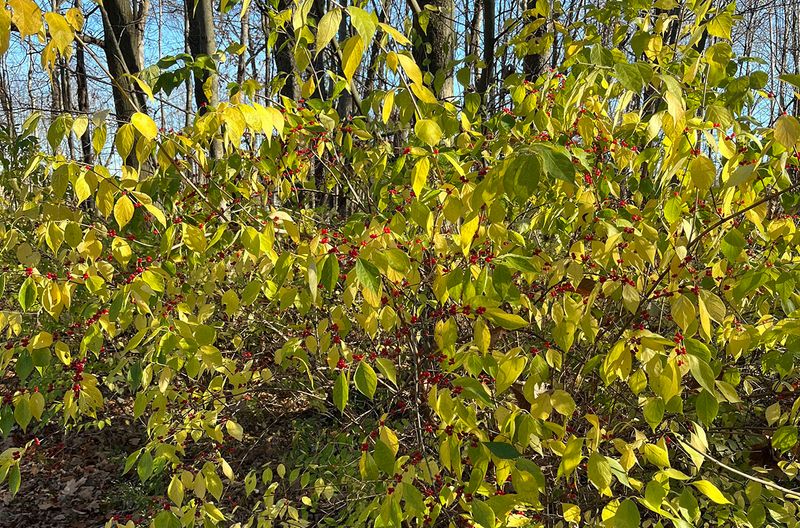
Here comes the satisfying part. That same green that gave the shrub away also makes this season perfect for removal.
In late fall, most native plants have gone dormant. The honeysuckle stands out like a highlighter, so you can find every plant without guessing. Many land managers in Indiana and nearby states focus their honeysuckle work from October through early winter for that reason.
Start small. Seedlings and young shrubs pull up fairly easily when the soil is moist after a rain. Grip low on the stem and rock it gently to bring up as much root as possible.
For bigger plants, a weed wrench or similar pulling tool gives you extra leverage. Shake off loose soil and leave the plants to dry out, or pile them where they will not reroot.
Shrubs too large to pull need cutting. Use loppers for thinner stems and a pruning saw or chainsaw for thick trunks, cutting close to the ground.
A word of warning from experience. Cutting alone often leads to a bushy cluster of new sprouts next spring. The next section covers how folks handle that problem, so the stump does not simply grow back.
Treating Honeysuckle Stumps Stops The Comeback Sprouts
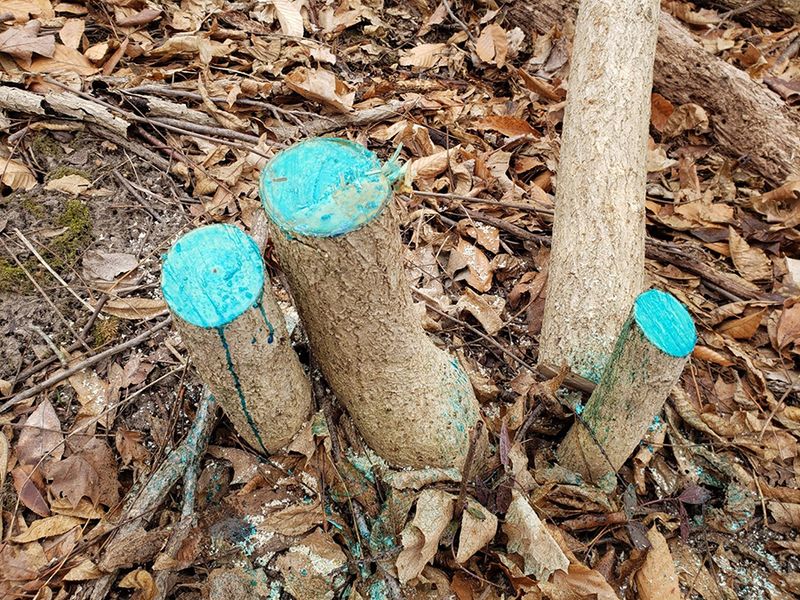
Cut stumps of bush honeysuckle are stubborn. Left alone, many send up a ring of new shoots within weeks of warm weather.
Purdue Extension and Indiana DNR guidance points to the cut-stump method for larger shrubs. You cut the stem near the ground, then right away apply herbicide to the fresh cut surface, usually within a few minutes.
Products containing glyphosate or triclopyr are commonly listed for this job. Read the label closely, since it is the law and tells you the right concentration, safety gear, and conditions.
A small hand sprayer or paintbrush keeps the herbicide on the stump and off nearby plants. Many people add a marker dye so they can see which stumps they already treated.
Late fall and winter work well because native plants are dormant, which lowers the chance of harming them. Avoid treating stumps when the ground is frozen solid or during heavy rain.
If you would rather skip chemicals, there are options. Repeated cutting of resprouts over a few seasons can slowly wear a shrub down. Covering a stump with a heavy black bag tied tightly also helps some gardeners, though it takes patience and follow-up visits.
Fill The Gap With Native Shrubs Like Winterberry And Arrowwood
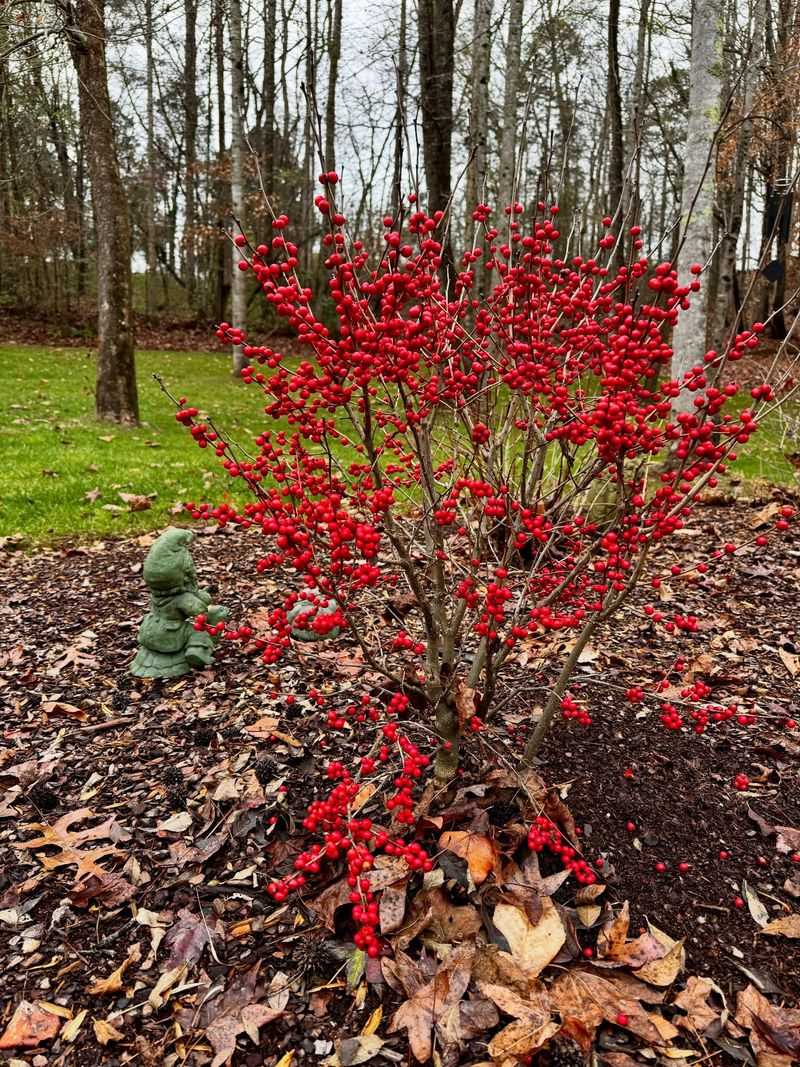
Clearing out honeysuckle feels great, but bare ground rarely stays bare for long. Plant something good there before more invaders move in.
Native shrubs give birds and insects the food they evolved with. Winterberry holly offers bright red berries in winter. Arrowwood viburnum feeds birds in fall and supports dozens of caterpillar species that songbirds feed to their young.
Gray dogwood and silky dogwood handle tough spots and produce fatty fruit that migrating birds love. Spicebush thrives in shady woods and turns a buttery yellow in autumn. Black chokeberry and American hazelnut are other easy picks.
Fall and early spring are solid planting windows across Indiana. Water new shrubs during dry spells for the first year while roots settle in.
Keep an eye on the cleared area for a few seasons. Honeysuckle seeds in the soil will sprout, and pulling seedlings while they are tiny takes seconds.
Also good to know, Indiana’s Terrestrial Plant Rule bans selling, gifting, or planting Amur, Morrow’s, and Tartarian honeysuckle. So if a friend offers you one, politely say no.
Every fall, when you spot that suspicious green, you will know exactly what it means and how to answer it.