8 Signs A Tree In Your New York Yard Could Come Down In The First Winter Storm
In October 2006, a surprise lake-effect storm buried Buffalo under nearly two feet of heavy wet snow. Maples still wore their green leaves, so the snow piled on like wet cement and snapped limbs everywhere.
Ice can be even sneakier, since a half inch coating can add hundreds of pounds to one branch. Arborists across New York see the same pattern each year, with hidden weak spots failing first under load.
I skipped a careful walk around my own yard one autumn and paid for it in January. A cracked limb I had shrugged off landed on the fence after a single night of freezing rain.
You might notice warning signs right now if you know where to look before the snow flies. So which of your New York trees would still be standing tall when the first real storm rolls in?
1. Deep Cracks Running Down The Tree Trunk
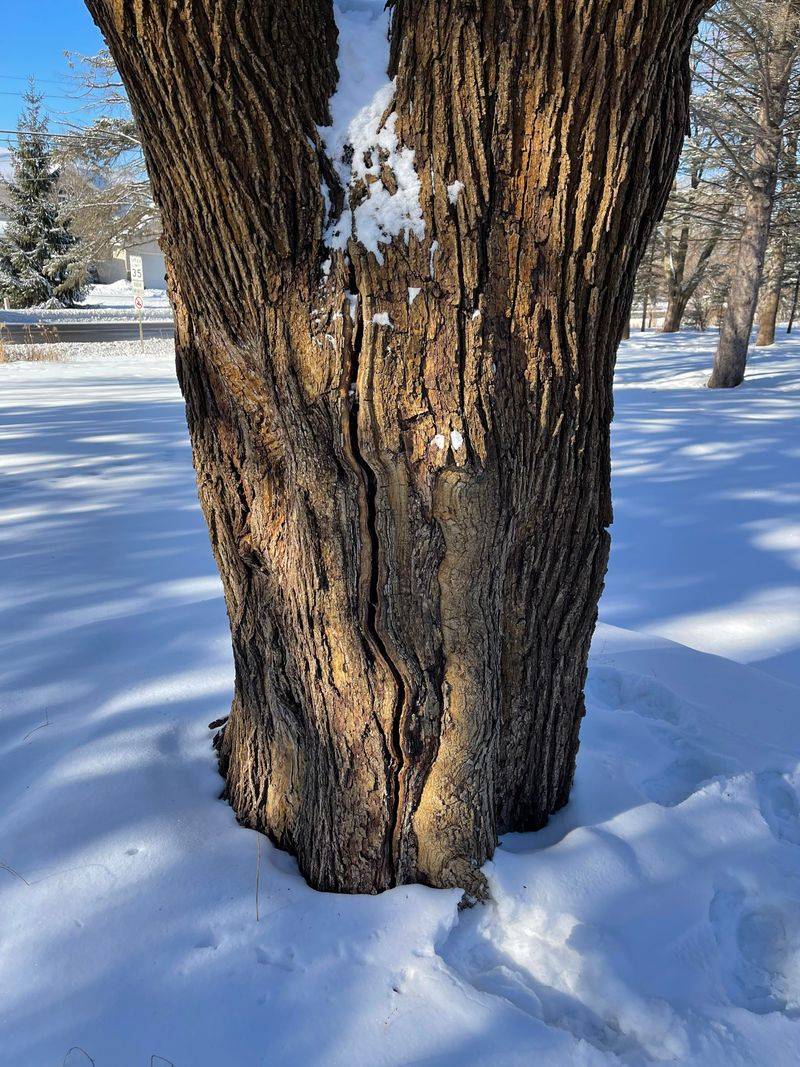
A crack in a trunk is basically the tree telling you its wood fibers have already pulled apart. I once ran my fingers along one and felt cold air seeping out from somewhere deep inside.
Vertical cracks on the main trunk deserve the closest look, especially when they run longer than your arm. Cracks that reach through the bark into the wood below mean the damage goes beyond the surface.
Frost cracks are common here, because sunny winter days warm the bark before cold nights shrink it fast. Such splits can reopen for years, and they often show a raised ridge of callus wood along the edges.
Pay special attention where two big stems meet in a tight V shape near the top. Bark often gets pinched inside that joint, which keeps the wood from knitting together into a strong union.
Snow and ice push those stems apart like a wedge, and a crack below the joint gets worse. I would treat any crack at a stem union as an urgent problem rather than a cosmetic one.
Skip the urge to fill or seal the crack yourself, since that can trap moisture and hide decay. A certified arborist can measure how deep it goes and judge whether cabling or bracing makes sense.
Sometimes removal is the safer choice, especially when the crack faces your house or the driveway. Booking that visit in autumn beats calling for emergency help during a storm, when crews stay swamped.
2. A Tree That Suddenly Leans Toward The House

Plenty of old trees across New York lean gracefully for decades, and that slow, steady tilt usually comes with sturdy roots. A brand-new lean is a different story, and it makes my stomach drop every time I spot one.
Trees that lean naturally often curve back upward at the top, as they reach toward the light. A trunk that tilts in one straight line from base to crown suggests the roots have shifted instead.
Check the ground on the side opposite the lean for mounded soil or roots poking up through the grass. That lifted area means the root plate is starting to pry loose, a bit like a lid on a jar.
Soggy fall soil makes things worse, because waterlogged ground loses much of its grip on the roots. Add the weight of wet snow on one side of the crown, which is common in a New York winter, and the leverage builds quickly.
I like a simple trick here, which is to compare old family photos against how the tree looks today. Snapping a picture from the same spot each season also gives you an easy record for later.
Direction matters too, since a tree tipping toward your roof or a power line carries much higher stakes. Lines near trees belong to the utility company, so call them instead of trimming anything near the wires.
Resist pulling a large tree upright with ropes or cables, because that can tear the remaining anchor roots. A certified arborist in New York can tell you whether the lean is stable or whether removal before winter is the wiser move.
3. Broken And Leafless Branches Hanging In The Canopy
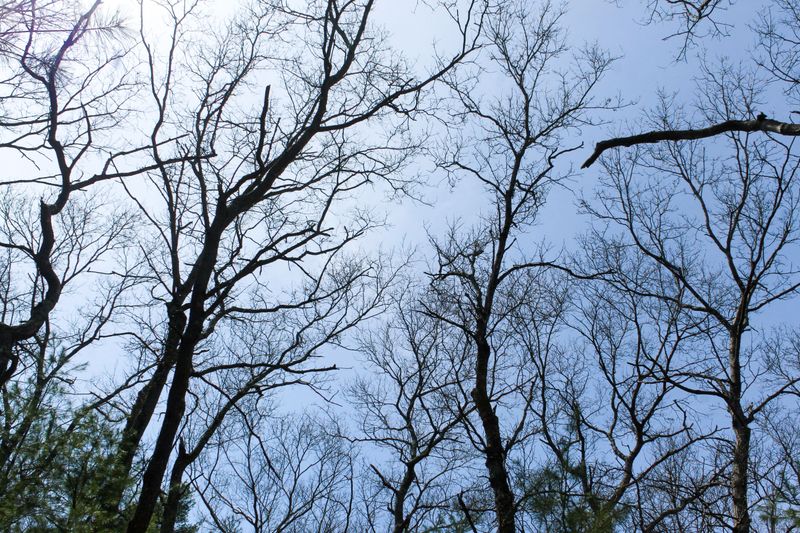
Arborists have a grim nickname for broken limbs dangling in the canopy, and the name is widowmakers. Honestly, the first time I heard it, I went straight outside and started squinting up at my oaks.
Leafless branches are easiest to spot in late summer, when they stand out against the green crown. Once leaves drop, look instead for limbs with flaking bark and no plump buds at the twig tips.
Lifeless wood turns brittle over time, so it snaps instead of bending when snow piles on top. Healthy limbs flex under a load, which is one reason they often survive storms that break weaker neighbors.
Hangers are the broken pieces already caught in the branches, just waiting for a gust to finish the job. Ice and wind can shake them loose without warning, so keep kids and pets away from those spots.
Early storms are the tricky ones, because many trees still carry leaves that catch heavy wet snow. That extra load lands hardest on weak limbs, and a falling branch can tear healthy bark on its way down.
Small twigs you can reach from the ground are fair game for clean pruning cuts just outside the branch collar. Anything heavy or high overhead belongs to a trained climber with ropes and proper safety gear.
Fall and early winter are good times for this work, since bare canopies make problem limbs easier to see. I schedule my own check every October, and I sleep much better when the forecast turns icy.
4. Mushrooms And Shelf Fungi Growing At The Tree Base
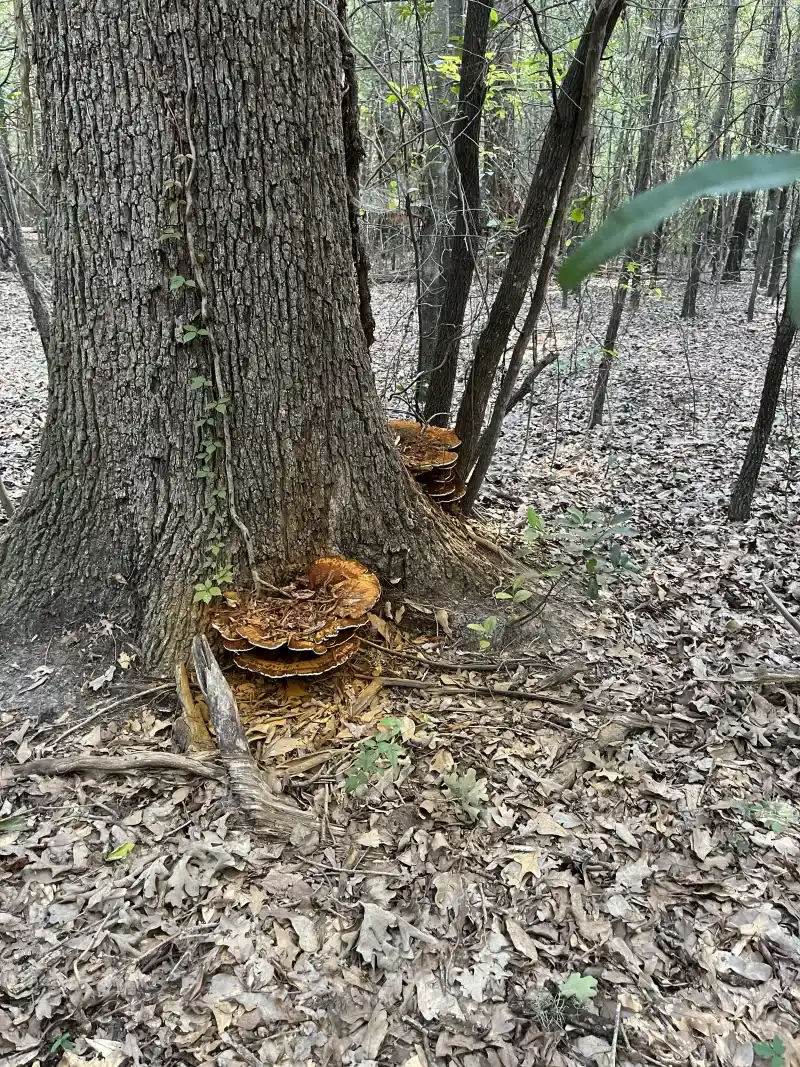
Those cute mushrooms popping up beside your maple might be the most honest messengers in the whole yard. They are only the fruiting bodies of a fungus that may be feeding on wood hidden inside the tree.
Shelf-shaped conks on the trunk or root flare deserve the most concern, especially hard woody ones that return yearly. Ganoderma species, often called artist’s conk or reishi relatives, are linked with serious decay in roots and lower trunks.
Not every mushroom spells trouble, because many feed on buried wood chips or old roots from a stump. Location tells the story, so note whether they grow from the lawn or right against the bark.
Honey mushrooms, the golden clusters that show up in autumn, can signal Armillaria root rot at the base. Peeling back loose bark sometimes reveals white fan-shaped fungal mats, which is another strong clue for an arborist.
Root decay is especially sneaky, since the crown can look leafy and fine while the anchor quietly weakens. Add saturated soil and a heavy snow load, and that hidden weakness can suddenly matter a great deal.
Knocking the mushrooms off feels satisfying, but I learned it does nothing about the fungus growing inside. Snap a photo before removing anything, because the shape and color help an expert identify the species.
Arborists can use sounding mallets or resistance drills to estimate how much sound wood remains below. That answer helps decide whether the tree can safely stay or should come down before heavy snow arrives.
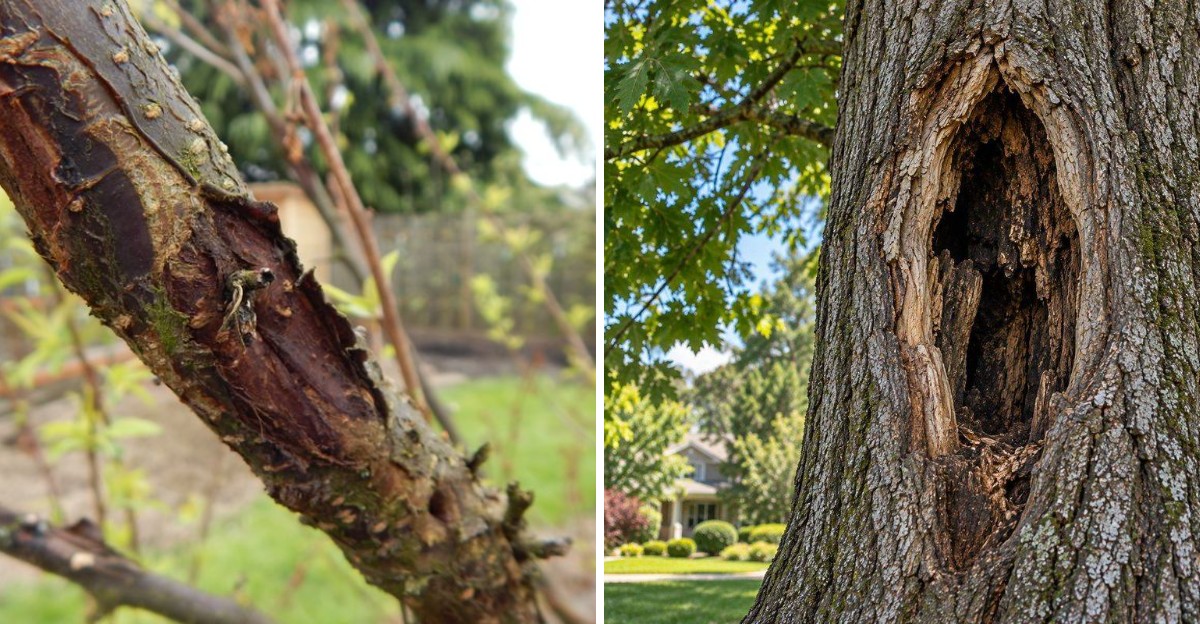
5. Hollow Trunks And Open Cavities In Old Trees
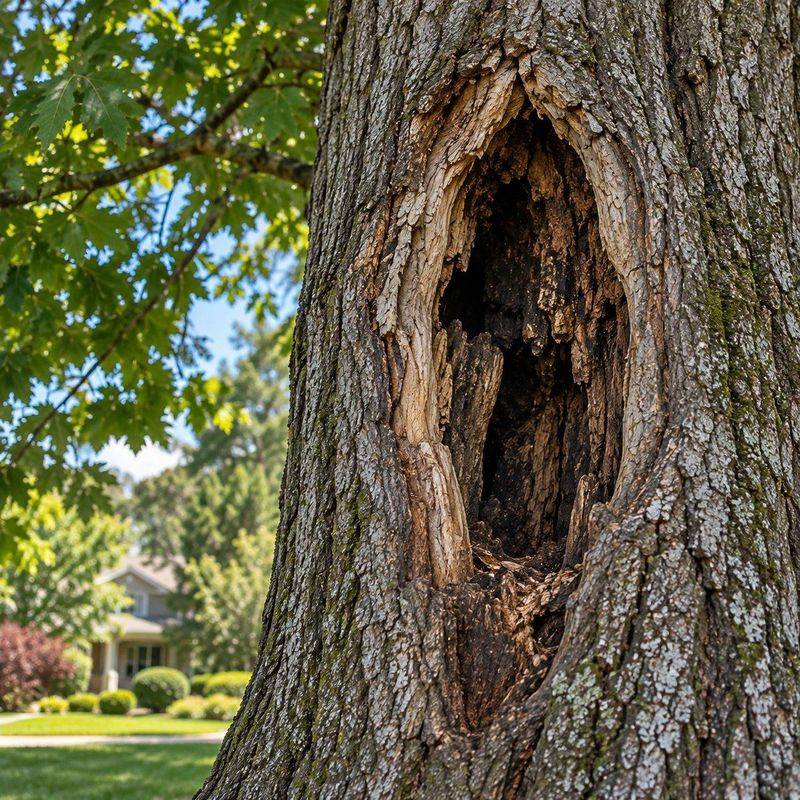
Knock on a sound trunk and you get a dull, solid thump, a lot like tapping a thick tabletop. A hollow trunk answers back with a drum-like echo, and I find that sound oddly chilling.
Cavities often start at old pruning wounds or broken limbs, where decay fungi slip in over the years. Woodpeckers and squirrels love these openings, so frequent visitors can hint at soft wood behind the bark.
Trees are surprisingly good at walling off decay inside their wood, a process scientists call compartmentalization. Plenty of hollow trees stand for decades, as long as a thick shell of healthy wood surrounds the hole.
Trouble begins when that shell gets thin, because the trunk then behaves more like a flimsy pipe. Many arborists grow concerned when sound wood makes up less than roughly a third of the trunk radius.
Winter storms test that shell hard, since wind and ice twist the crown back and forth for hours. Large cavities facing the prevailing wind or sitting low on the trunk tend to raise the most concern.
Please skip the old trick of stuffing cavities with concrete, which experts no longer recommend for home trees. Filling the hole can trap moisture and hide the decay, while adding little real strength to the trunk.
Poking around with a screwdriver can also break through the protective barrier the tree has built inside. Leave the measuring to a pro with proper tools, and let the results guide your next step.
6. Heaving Soil And Exposed Roots Around The Trunk
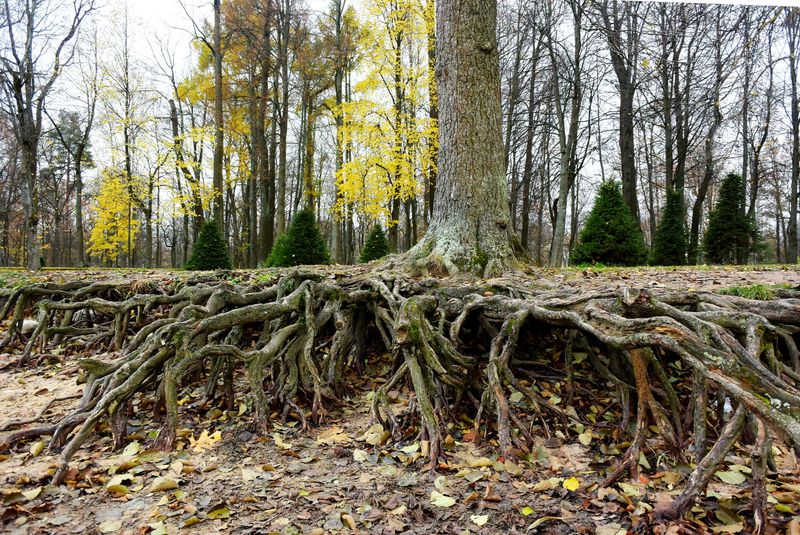
Roots do the quiet work underground, and most of them live in the top foot or two of soil. I find that fact humbling every time I look up at a towering oak held by such shallow anchors.
Cracked or mounded soil near the base can mean the root plate is shifting when the wind blows. On a breezy day, watch the ground closely, since lifting turf beside the trunk is a serious red flag.
Construction is a common culprit, because trenching for pipes or new driveways can sever major roots. Trouble from that damage may take several years to show, which makes old projects worth remembering.
Compacted soil from parked cars or heavy equipment also starves roots of oxygen and slows their growth. Weak roots mean weaker anchorage, and that shows up most during long soaking rains or heavy snowmelt.
Girdling roots are another hidden problem, wrapping around the trunk base and squeezing it as both grow. A trunk that looks flat on one side where it meets the ground often hides one below.
Pile mulch two to three inches deep in a wide ring, but keep it a few inches off the bark. Volcano mulch against the trunk invites rot and rodents, so I rake it back whenever I spot it.
Avoid adding fill soil over existing roots or cutting big roots to fix a lifted sidewalk on your own. A tree that rocks at the base deserves a quick call, and the area beneath it should stay clear.
7. Peeling Bark And Sunken Cankers On The Trunk
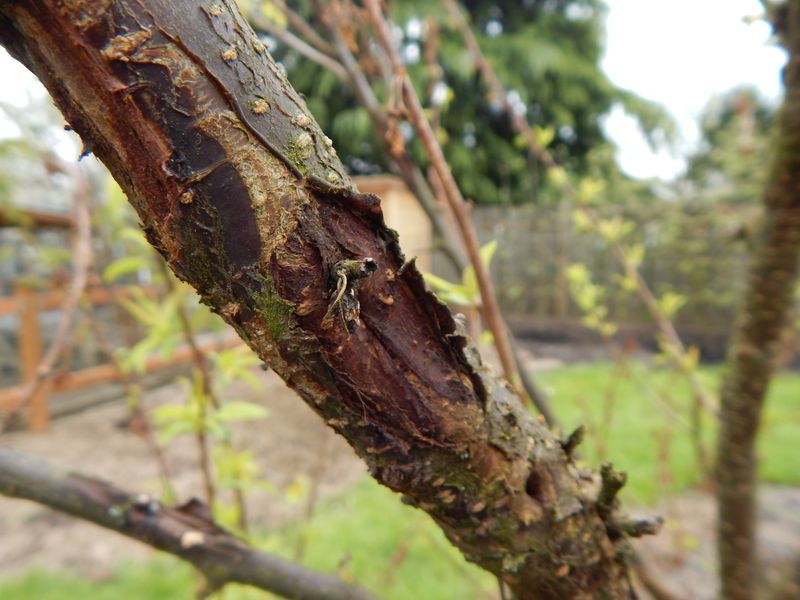
Bark works like a tree’s raincoat and plumbing cover rolled into one, so missing patches get my attention fast. Just beneath it sits the thin living layer that carries sugars down the trunk, while water travels upward through the wood just inside it.
Cankers are sunken or cracked areas where disease has damaged that layer, often with raised edges around them. Wood behind a large canker tends to be weaker, and trunks frequently snap right at that spot.
Hypoxylon canker is a classic opportunist, mostly infecting oaks and other hardwoods already stressed by drought or injury. As it advances, bark sloughs off to reveal crusty fungal mats that start tan and later darken.
Beech bark disease is another one to know, especially in older forests and wooded yards across the state. Scale insects open tiny wounds, fungi follow, and weakened trunks may snap in strong winds years later.
Some peeling is perfectly normal, since birches and shagbark hickories shed outer bark as part of growing. Worry more when bark falls away in large chunks and leaves bare wood or dark fungal growth behind.
Start your inspection low, where mower bumps and string trimmer nicks create wounds that diseases love to enter. A wide mulch ring keeps equipment back, and I consider it the cheapest tree insurance around.
When damage wraps around most of the trunk, everything above it often declines because water and sugars stop flowing. Ask an arborist to judge how much healthy bark remains before ice storms start testing that weakened section.
8. Thin Sparse Leaves And Bare Tips Across The Tree Crown
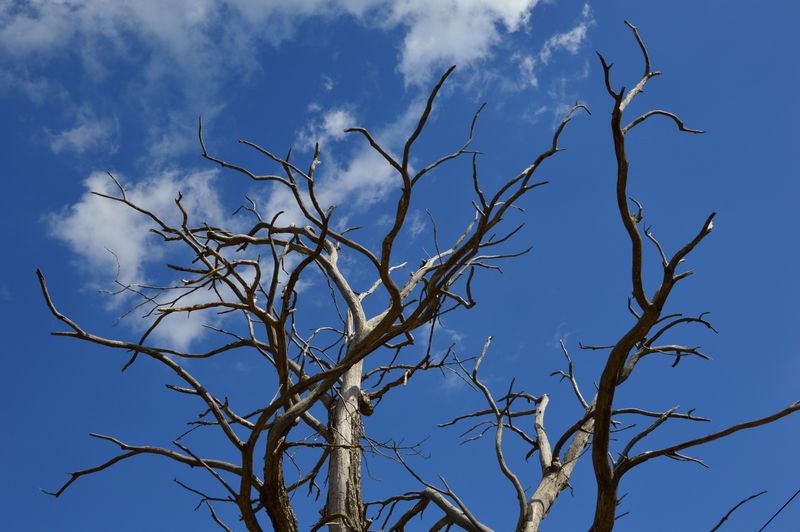
Sometimes the whole tree whispers a warning instead of shouting, and the crown is where you hear it first. A thin, see-through canopy or tiny leaves often point to stress in the roots or trunk.
Branch tips with no leaves, called dieback, usually show a tree struggling to supply its outer limbs. Early fall color on just one side or a single limb can also hint at trouble below.
Ash trees deserve a hard look, since emerald ash borer has spread widely across New York. Infested ash often turns brittle quickly, and arborists warn that it can become risky to climb or cut.
Look for small D-shaped exit holes and patches where woodpeckers have flaked away the outer bark. Hemlocks need checking too, because hemlock woolly adelgid leaves white cottony tufts on the undersides of twigs.
A quick scratch test helps when you are unsure, using a thumbnail on a thin twig. Green tissue under the bark means it is alive, while brown and dry tissue means that twig has quit.
One lifeless twig rarely matters much, but widespread decline signals a tree with fewer reserves for winter. Brittle tips snap easily under ice, and a weakened crown can drop larger limbs than you expect.
Watering deeply during dry autumn spells before the ground freezes gives stressed trees a real boost. For anything beyond a few bare twigs, I would bring in a certified arborist this fall and sleep much easier.