The Bare Scraped Patches Under Indiana Trees Mean A Buck Has Claimed Your Yard
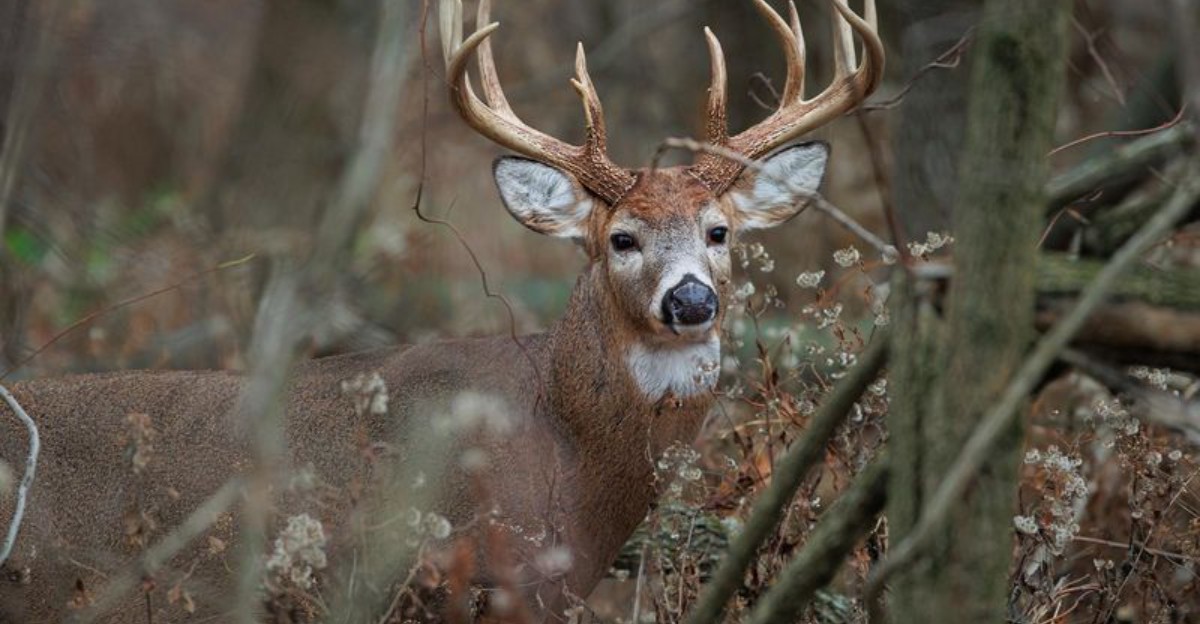
A buck can leave scent from glands on his hind legs and between his hooves on a single patch of dirt in your yard. Other deer read that bare spot like a note on the fridge.
I didn’t expect my backyard maple to become a message board. One fall morning I found pawed-up ground under a low branch and shredded bark on a skinny trunk nearby. My first guess was a dog or a raccoon, but I was wrong.
These marks show up across Indiana every autumn, often in quiet suburban yards near woods and creeks. They are signs, not random mischief. Each one tells you who visited, roughly when, and what that visitor plans to do next.
The part I can’t shake is how much planning goes into a spot most of us would rake over. Just what is that deer telling the neighborhood, and should your young trees be worried?
That Pawed Dirt Patch Under A Low Branch Is A Deer Message Board
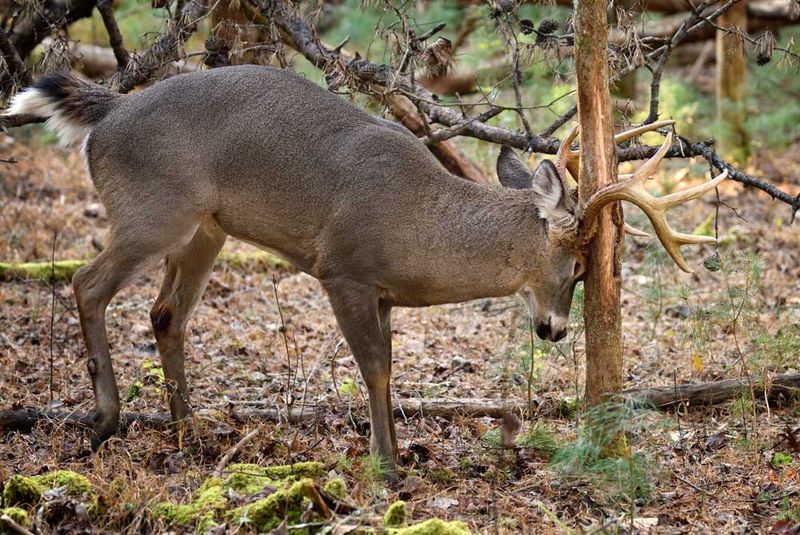
Funny thing is, most people blame a dog for that bare oval of dirt. The real artist is usually a white-tailed buck, and wildlife biologists call the spot a scrape.
A scrape often measures one to three feet across. You will usually find it right under a low branch hanging about four to six feet off the ground. That branch matters as much as the dirt below it.
The buck paws away leaves and grass with his front hooves. Then he often urinates over glands on his hind legs, letting scent drip into the soil. He also chews, licks, and rubs his face on the overhanging branch.
Biologists call that branch the licking branch. Glands near the eyes and forehead leave scent there that other deer can read later. Bucks and does both visit these spots, so a scrape works a bit like a community bulletin board.
Look for snapped twigs on the branch above and clear hoof marks in the soil. A fresh scrape smells musky and looks dark and damp. Old scrapes get covered in leaves quickly.
If you see one, you are not imagining things. A deer has been working your yard with real purpose, and he will likely be back.
Shredded Bark On Skinny Trunks Points Straight To A Buck Rub
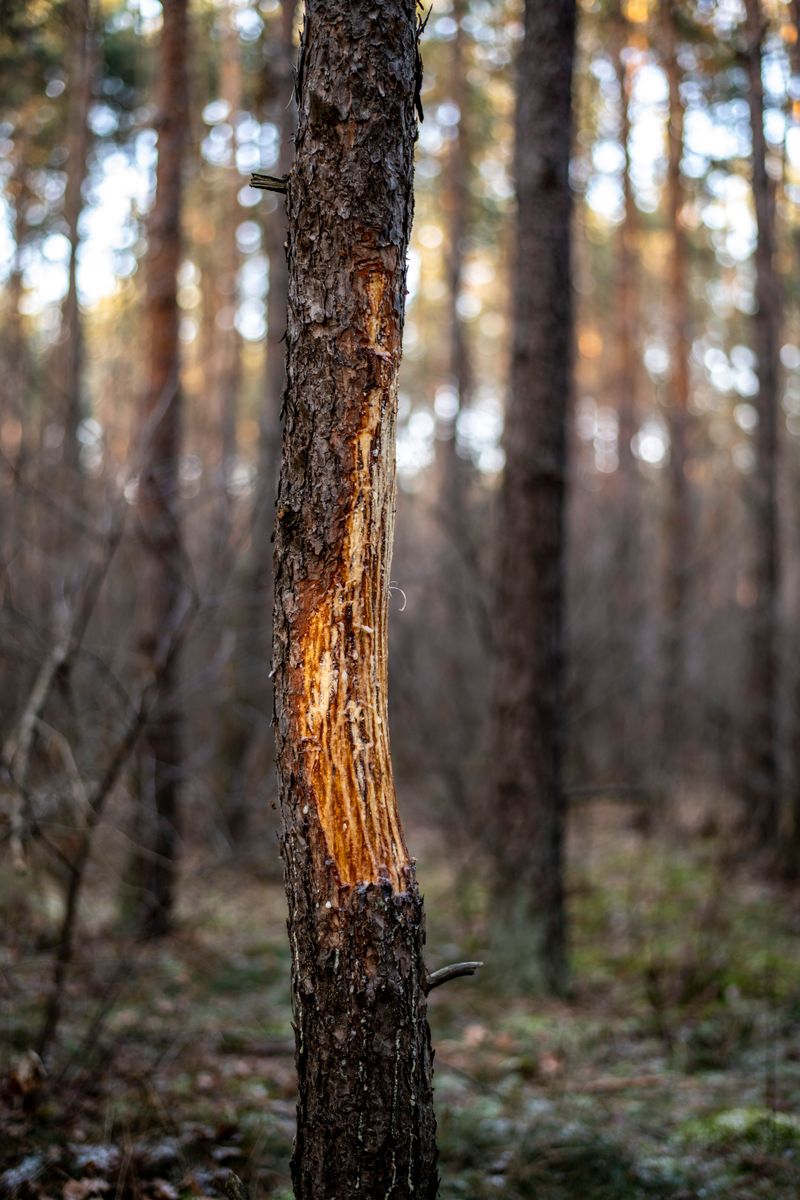
Scrapes have a close cousin, and this one hurts more. A buck rub shows up as a strip of bare, pale wood on a young tree trunk, often with curls of bark hanging off the edges.
Bucks make rubs with their antlers and foreheads. Early in fall, they rub to strip off dried velvet, the fuzzy skin that fed their growing antlers. Penn State Extension and other sources note this velvet shedding often happens in late August or September.
As fall moves along, rubbing turns into communication. Forehead glands leave scent on the wood, and the bright scar is easy for other deer to spot. Rubbing also builds neck muscles for sparring later in the season.
Most rubs sit between one and four feet above the ground. You will often see a few rubs lined up along a deer trail, almost like signposts.
Here is a quick way to tell rubs from other damage. Rabbits chew low and leave neat tooth marks near the ground. Voles gnaw at the base, often under snow. Deer rubs look rough and torn, with no clear tooth marks at all.
Once you know the pattern, these marks become easy to read.
November Is Peak Season For Scrapes And Rubs Around Indiana
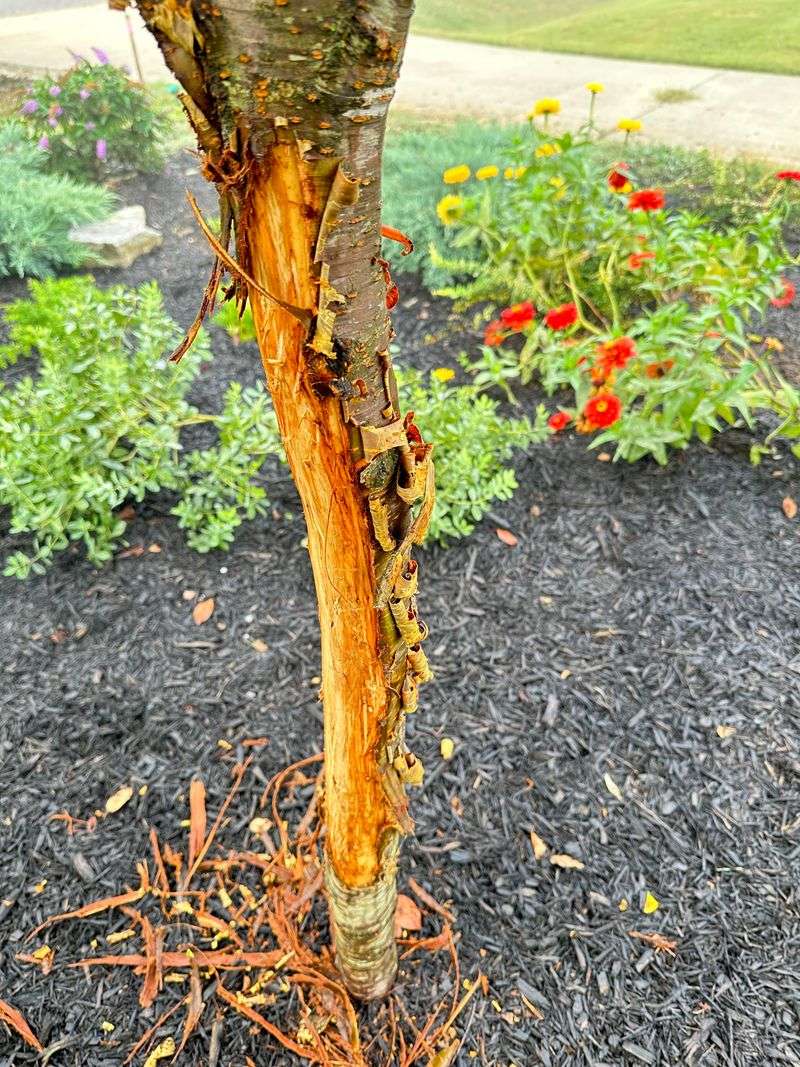
Timing tells you a lot. If these marks pop up between October and early December, you are watching the deer breeding season, called the rut, play out in real time.
Rubbing starts as velvet comes off in late summer. Scraping picks up through October, during the stretch hunters call the pre-rut. Bucks are busy marking travel routes and sizing up rivals.
In Indiana, peak breeding usually lands in early to mid November. That pattern is steady from year to year because day length, not weather, mostly controls it. Shorter days raise testosterone and push bucks into action.
During this window, bucks travel more and pay less attention to roads and houses. That is why the Indiana Department of Natural Resources and insurance groups warn drivers about higher deer crash numbers in fall. Dawn and dusk are the riskiest hours.
Once breeding winds down, scraping slows sharply. Some does that did not breed earlier come into heat again about a month later, so you may notice a small second wave in December.
Fresh marks in your yard right now are normal for the season. They do not mean an unusual deer problem, just a regular autumn on schedule.
Young Maples, Dogwoods, And Fragrant Cedars Top A Buck’s Rubbing List
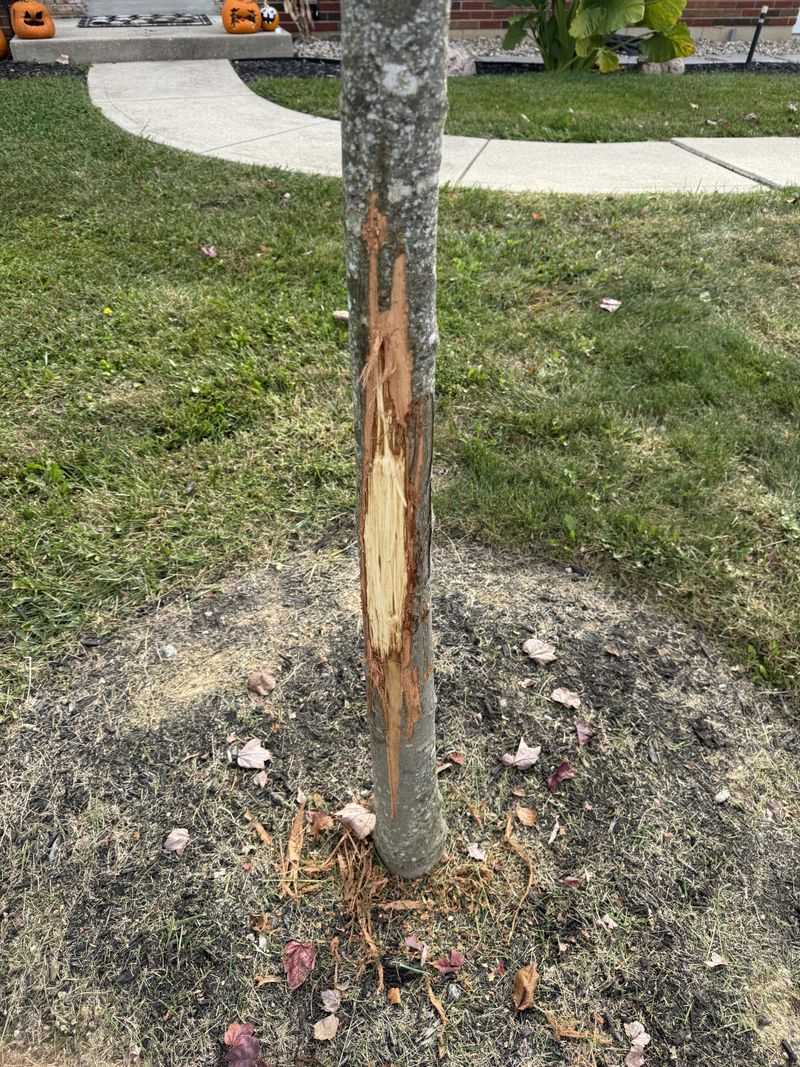
I learned the hard way that a buck does not pick trees at random. My sturdy old oak went untouched while a two-year-old maple took a beating.
Bucks usually choose trunks about one to four inches across. Young trees are flexible enough to push against and small enough to grip with antlers. Smooth, thin bark also shreds easily, leaving a bright, eye-catching mark.
Extension sources often list maples, dogwoods, lindens, birches, cherries, and magnolias among frequent targets. Fragrant species get extra attention too. Eastern red cedar, pines, and sassafras show up on many rub lists, maybe because their scent carries well.
Location matters as much as species. Trees near wooded edges, fence lines, and creek corridors see more rubbing because deer already travel there. A lonely sapling at the back of the lot is a classic target.
Freshly planted landscape trees are especially at risk. They often stand alone, have tender bark, and sit right where deer walk at dusk.
Take a walk around your yard and note every young tree under four inches thick. Those are the ones to watch first this fall, and they are the ones worth protecting before the next rub appears.
A Rub That Circles The Whole Trunk Can Girdle Your Tree
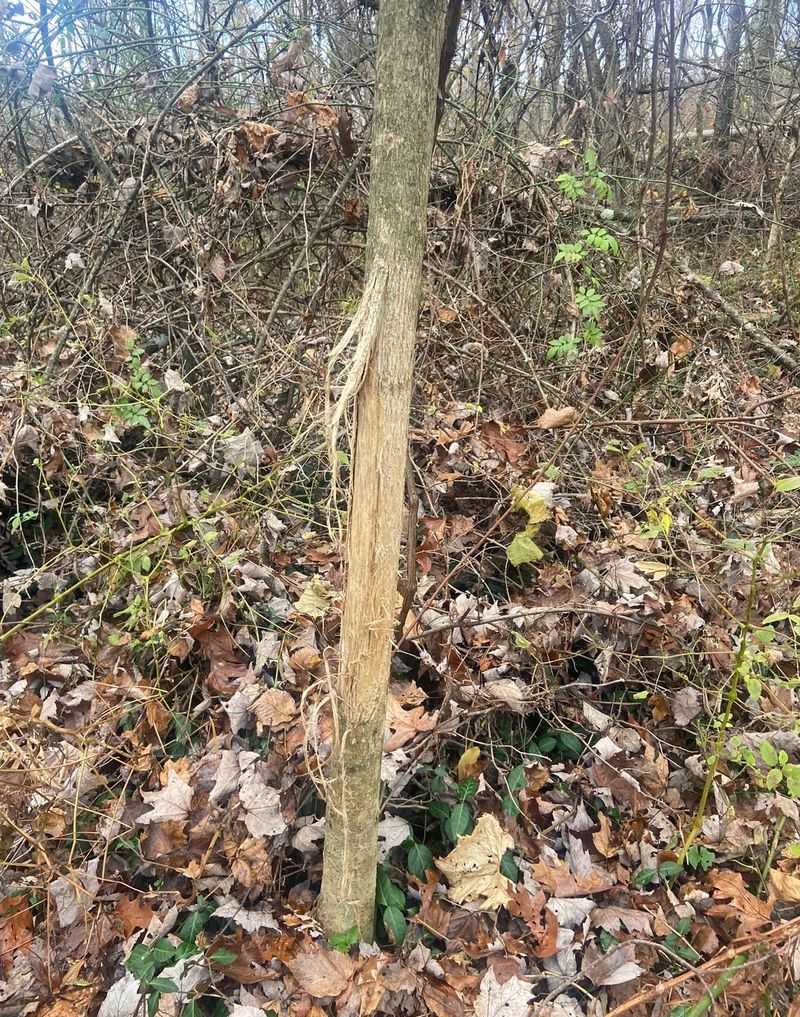
Not going to lie, this is the part that stings. A rub is more than a cosmetic scratch when it digs through the bark into the thin living layer underneath.
That layer is called the cambium, and next to it sits the phloem. Together they help move sugars and build new wood each year. Antlers can scrape all of it away in a few minutes.
If the damage wraps all the way around the trunk, the tree is girdled. Purdue Extension explains that girdling cuts off the flow of food to the roots. The top may leaf out next spring, then decline as the roots run low on energy.
Partial rubs are less severe. A tree can often seal a wound covering less than a quarter to a third of the trunk. Still, open wounds give insects and decay fungi an easy entry point.
Repeated rubs year after year add up. A young tree may end up crooked, scarred, or stunted even if it survives.
Check the damage closely with your fingers. If you find green, moist tissue still connecting the upper and lower bark, your tree has a better shot at recovery.
Wire Cages And Trunk Guards Give Trees The Best Protection From Antlers
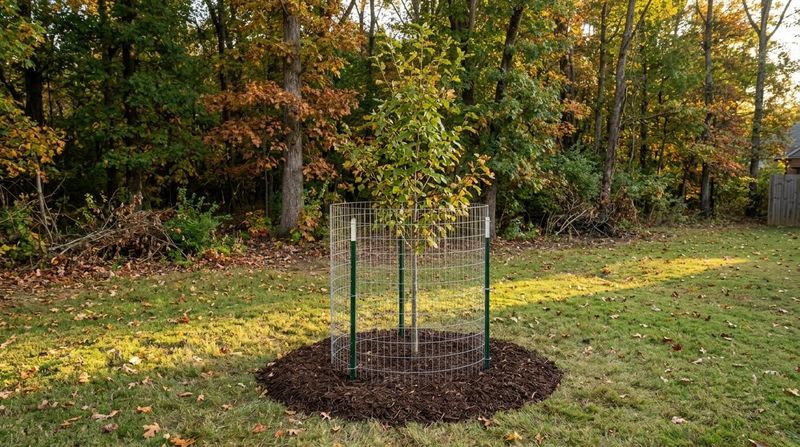
Trust me on this one: physical barriers beat clever tricks. A buck that wants to rub cannot hurt bark he cannot reach.
Wire cages are the most reliable choice for single trees. Use welded wire or sturdy fencing and form a circle that stands a foot or more away from the trunk. Make it about four to five feet tall and secure it with two or three stakes.
The gap is the key detail. If the cage touches the trunk, a determined buck can still push it into the bark.
Plastic spiral wraps and tree tubes help too, especially on small saplings. Many gardeners also split black corrugated drain pipe lengthwise and slip it around the trunk. Remove these wraps in spring so they do not trap moisture or rub the bark themselves.
For a yard with many young trees, a tall fence may make sense. Deer can clear fences under eight feet, so shorter designs often need double rows or angled layouts.
Put protection up by late August, before velvet comes off. Leave it on through winter. Once a trunk grows thicker than about five inches, bucks usually lose interest, and you can retire the cage.
Deer Repellent Sprays Rarely Stop A Determined Buck During The Rut
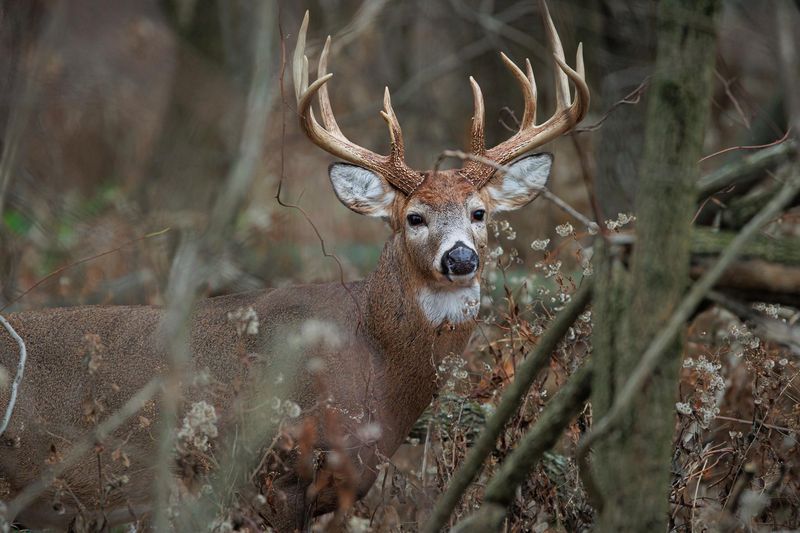
I used to think a bottle of spray would solve everything, but rubbing taught me otherwise. Repellents work mostly on hungry deer, not on bucks with breeding on their minds.
Most repellents rely on bad taste or strong smells like rotten egg, garlic, or hot pepper. They can lower browsing on buds and leaves. University extension trials often show mixed results, and success drops when deer numbers are high.
Rubbing is about signaling, not eating. A buck focused on marking territory may ignore an odd smell entirely. That is why fencing and cages earn more trust for trunk protection.
Repellents still have a place. Use them on shrubs, hostas, and evergreens that deer chew in winter. Reapply after heavy rain and switch products now and then so deer do not grow used to one scent.
Motion-activated sprinklers can startle deer in small areas, though they are less practical once freezing weather arrives. Dogs in fenced yards also discourage visits.
Skip homemade tricks like hanging soap bars as your only defense. They may help a little, but a strong buck in November is a different animal. Pair any spray with a real barrier for trees you care about.
Rubbed Trees Can Bounce Back With Some Smart Follow-Up Care
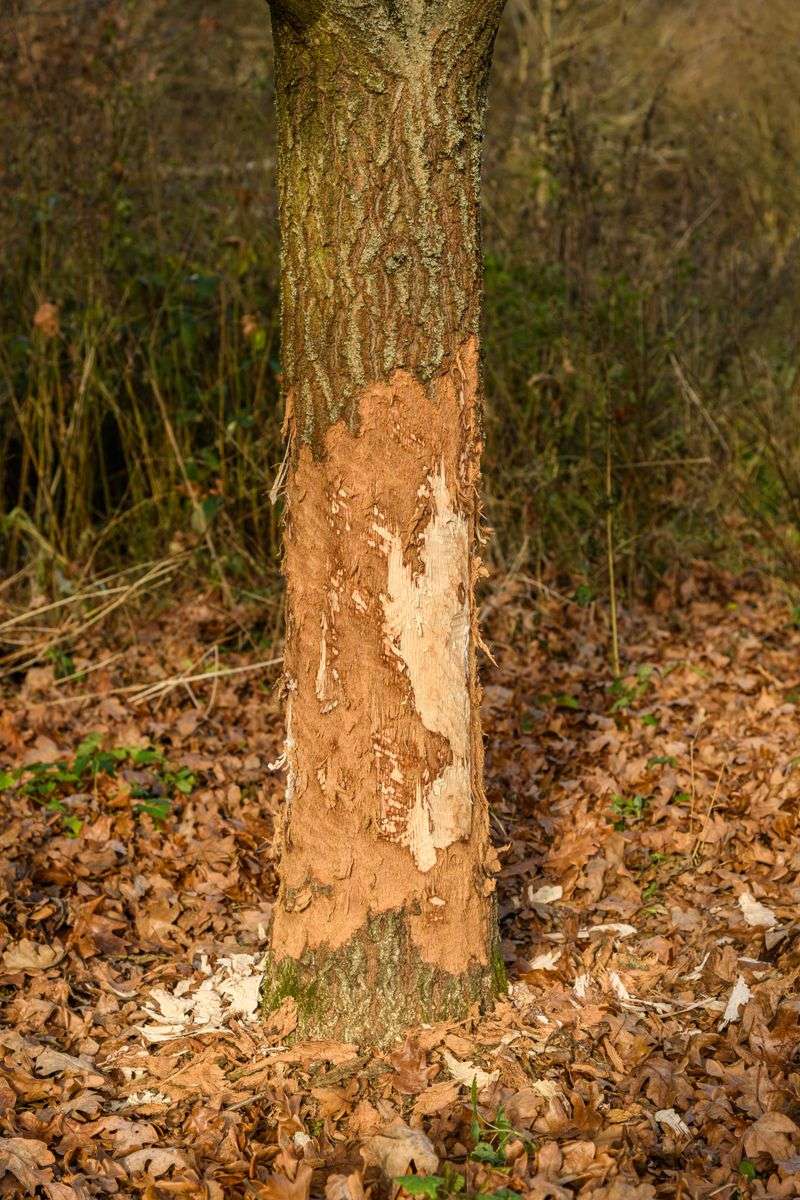
Guilty as charged, my first instinct was to slather the wound in tar. Skip that step, because research shows wound dressings do not help trees heal and may hold in moisture.
Instead, trim away loose, ragged bark with a clean, sharp knife. Cut only the dangling pieces so the edges sit smooth and firm. Leave healthy bark alone.
Water the tree during dry spells and spread two to three inches of mulch over the root zone. Keep mulch a few inches away from the trunk. A healthy tree has more energy to grow callus tissue around the injury.
Hold off on fertilizer in fall. Pushing new growth late in the season does little for the wound.
If the rub circles the trunk or covers most of it, contact a certified arborist or your local Purdue Extension office. On some small trees, a strong new sprout from below the wound can be trained into a new leader.
Then look ahead. Protect that tree before next August, because bucks often reuse the same routes year after year. A yard with deer will see deer again, and a little planning keeps the marks on the dirt, not your trees.