7 New York Native Shrubs That Feed Birds All Winter
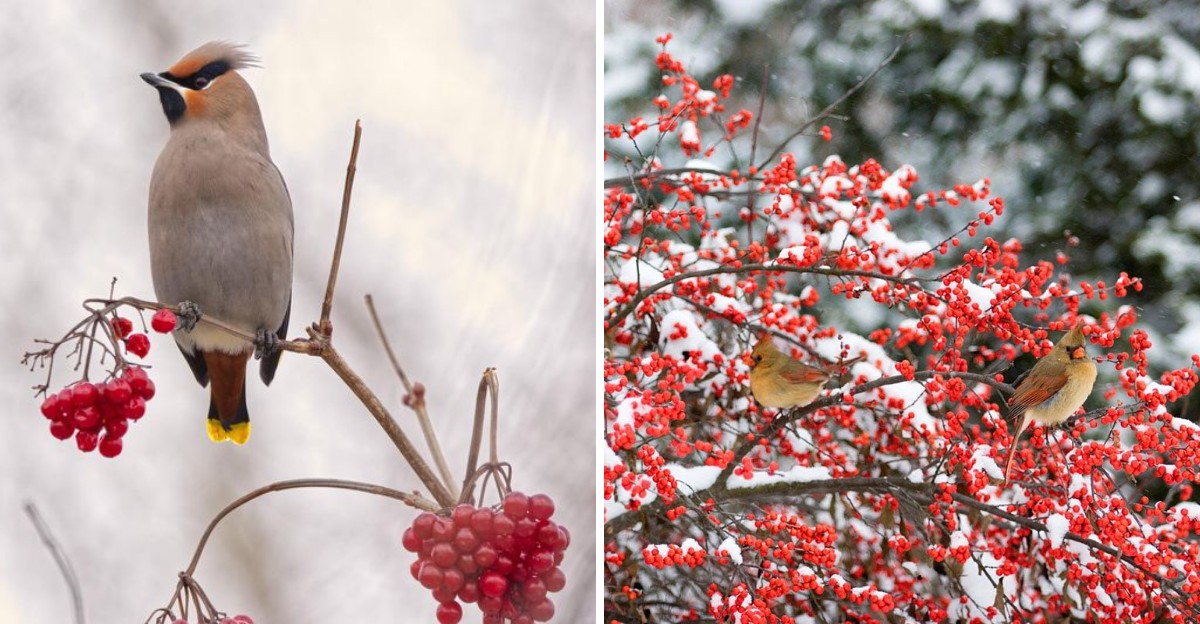
Yellow-rumped warblers can digest the waxy coating on certain winter berries, a trick most other songbirds can’t manage. That special skill lets some of them stay much farther north in winter than their warbler cousins ever dare.
It’s fascinating that a few humble shrubs hold their fruit for months, long after the leaves drop. Some of those berries even become more appealing to birds once repeated freezing and thawing softens them in late winter.
Here in New York, winters stretch long, and food gets scarce for the robins and bluebirds that stick around. A few smart plant choices tucked along a fence line or foundation can make a real difference.
Best of all, native New York shrubs need very little fuss once their roots settle in. Which ones deserve a spot in your yard before the next snowstorm rolls through?
1. Winterberry Holly
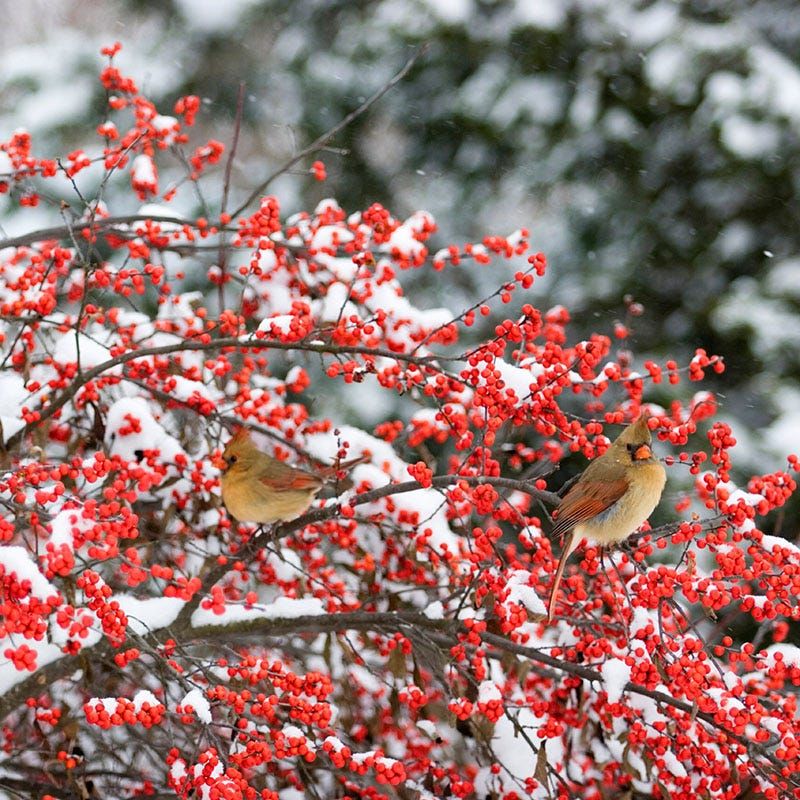
Few sights beat a winterberry shrub glowing scarlet against fresh snow, with every bare twig packed tight with fruit. Robins and bluebirds often show up in small groups, stripping branches clean in a single busy afternoon.
Botanists know this deciduous holly as Ilex verticillata, and it grows wild in swamps across much of New York. Most plants reach six to ten feet tall, though compact cultivars stay closer to three or four feet.
One quirk catches plenty of new gardeners off guard, because only female plants produce those famous red berries. You need at least one male nearby, usually one male for every five to ten females, for good pollination.
Matching bloom times matters too, so pair a cultivar like Red Sprite with a male such as Jim Dandy. Garden centers often label these partners clearly on the tag, which saves you from guessing at the register.
Moist, acidic soil keeps winterberry happiest, and it handles soggy spots where many shrubs would sulk and struggle. Give it full sun or light shade, since more sunlight usually means a heavier crop of berries.
I love how the fruit often lingers into late winter, waiting for birds when other food runs short. Cedar waxwings and mockingbirds join the robins, so keep a window seat ready for some lively entertainment.
Plant container shrubs in spring or early fall, then water deeply during dry spells for the first year. After that, winterberry mostly takes care of itself with only light pruning in late winter or early spring.
2. Northern Bayberry
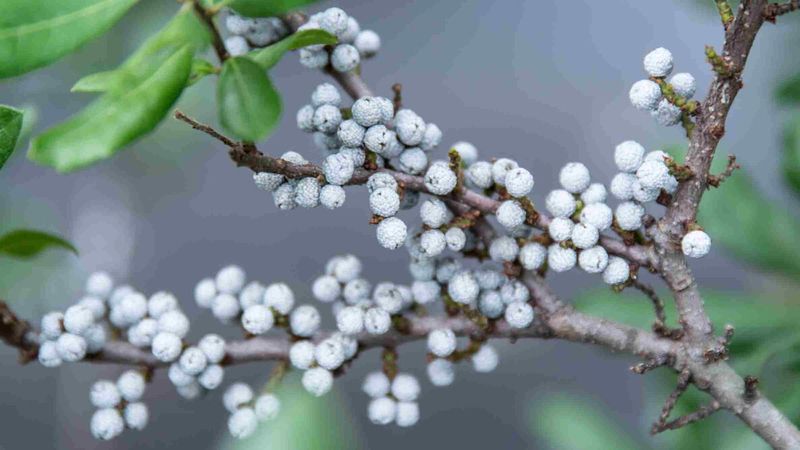
Crush a bayberry leaf between your fingers and you will catch a spicy, clean scent that lingers for minutes. Colonial families once boiled the waxy gray berries to make fragrant candles for the holiday season.
Known to botanists as Morella pensylvanica, northern bayberry grows naturally along the Long Island coast and beyond. Plants usually reach five to ten feet tall and slowly spread into handsome, dense thickets over time.
Those waxy berries are the secret menu item for yellow-rumped warblers, which can digest the coating efficiently. Tree swallows also eat them during cold snaps, which helps explain how some linger along the coast.
What I find impressive is how well this shrub handles tough sites like sandy soil and roadside salt spray. Its roots partner with bacteria that fix nitrogen, so it rarely needs any fertilizer from you.
Like winterberry, bayberry separates male and female plants, and only the females carry those gray clusters of fruit. Buy a few plants together, ideally from a nursery that sells them by sex or in small groups.
Full sun suits it best, although it puts up with partial shade without too much complaint. In milder parts of the state, the leaves may hang on well into winter before finally falling.
Prune lightly in early spring if you want a tidier shape, or let it sprawl for better bird cover. Either way, the berries often hang on for months, ready whenever hungry visitors need a quick snack.
3. Black Chokeberry
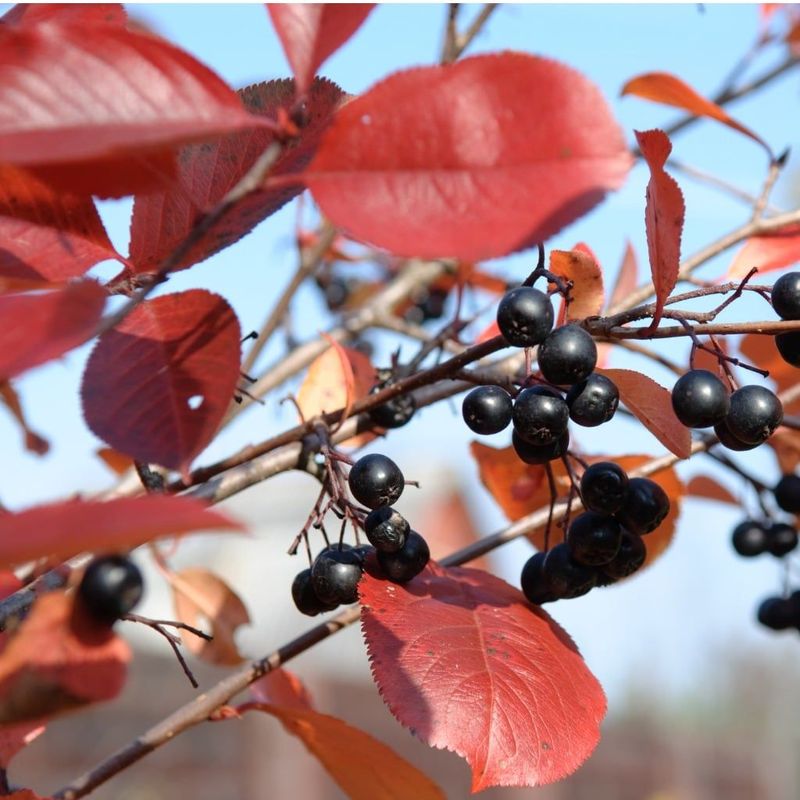
Pop a raw chokeberry in your mouth and your cheeks will pucker instantly from the dry, tart bite. Birds seem to agree at first, mostly leaving the dark fruit alone until late winter makes them less picky.
That delayed appetite turns out to be a blessing, since the berries stay available when food grows scarce. Robins and cedar waxwings often clean up the remaining clusters as snow begins to melt in March.
The scientific name is Aronia melanocarpa, and this tidy shrub typically grows three to six feet tall. It spreads slowly by suckers, so give it some elbow room or pull the extras each spring.
Spring brings clusters of small white flowers that buzz with native bees on warm sunny days. Autumn follows with leaves turning glowing shades of red and purple before they finally drop for the season.
Chokeberry adapts easily to wet clay or ordinary garden soil, which makes it handy for rain gardens. Full sun brings the heaviest fruit and brightest fall color, though partial shade works reasonably well too.
Don’t confuse this shrub with chokecherry, a native tree in the Prunus genus with a similar name. Mixing them up at the nursery could leave you with something much taller than you planned.
Pests rarely cause serious trouble here, and many gardeners report only light deer browsing on established plants. Plant several in a loose group, and you will create both shelter and a handy late-winter pantry for birds.
4. Staghorn Sumac
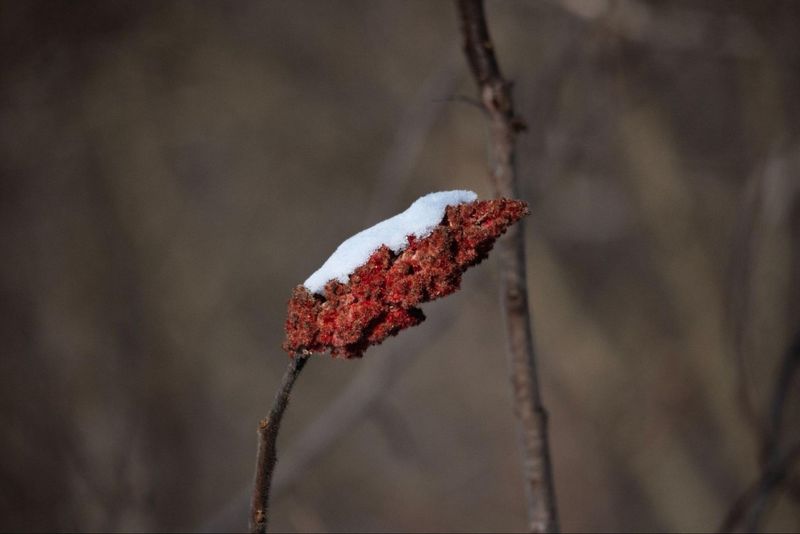
Run your hand along a young staghorn sumac branch and it feels just like fuzzy velvet on deer antlers. That soft coating gives the plant its name, and the red fruit clusters look like little upright torches.
Its scientific name is Rhus typhina, and it grows wild along roadsides and old fields throughout New York. Many plants reach fifteen feet or more, forming spreading colonies that turn fiery orange in autumn.
I wouldn’t call sumac a gourmet meal, because the fruit is fairly low in fat compared to other berries. Instead, it works as a reliable backup food that birds turn to in late winter when better options vanish.
Bluebirds and robins returning early in spring often depend on those lingering clusters to bridge a hungry gap. Woodpeckers and wild turkeys also nibble at the fuzzy fruit when snow buries other food sources.
Only female plants produce fruit clusters, so pick a colony or nursery stock that includes them. Some golden-leaved cultivars like Tiger Eyes rarely set much fruit, so check before you bring one home.
Sumac loves full sun and handles dry, rocky soil where fussier shrubs would struggle to survive. You don’t have to worry about poison sumac here, since that relative has white berries and grows in swamps.
Suckers pop up freely, so plant it where spreading is welcome, like a slope or wild back corner. Mowing around the edge each summer keeps the colony in bounds without much effort from you.
5. American Highbush Cranberry
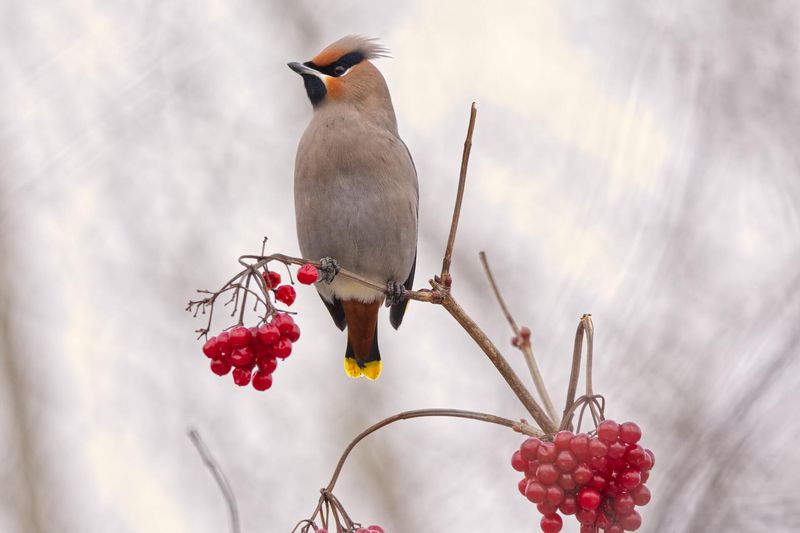
Despite the name, American highbush cranberry is not a true cranberry at all but a native viburnum. Its glossy scarlet fruit hangs in drooping clusters that glow like stained glass on cloudy gray winter days.
Botanists list it as Viburnum trilobum, sometimes called Viburnum opulus var. americanum, and it grows wild in New York wetlands. Mature shrubs usually reach eight to twelve feet tall with a rounded, gently arching shape over time.
You might be surprised that birds often ignore the fruit for months after it ripens in early fall. Repeated freezing and thawing seems to make the berries more appealing, so they become a late-winter feast.
Cedar waxwings and ruffed grouse are among the visitors that eventually work through the hanging clusters. Some years, the fruit lingers until spring and feeds early migrants arriving before anything else is ripe.
Buying the right plant matters, because the European cranberrybush looks nearly identical and spreads aggressively in some areas. Ask for the native American type, and check the tag for the trilobum name before you pay.
Moist, well-drained soil and full sun to partial shade keep this shrub growing strong and fruiting heavily. Planting two or more different plants nearby improves cross-pollination and leads to bigger, fuller fruit clusters.
Viburnum leaf beetles can chew the leaves badly, so check twig tips for egg sites during winter. Pruning off those small infested twigs before spring helps reduce damage and keeps your shrub looking healthy.
6. Inkberry Holly
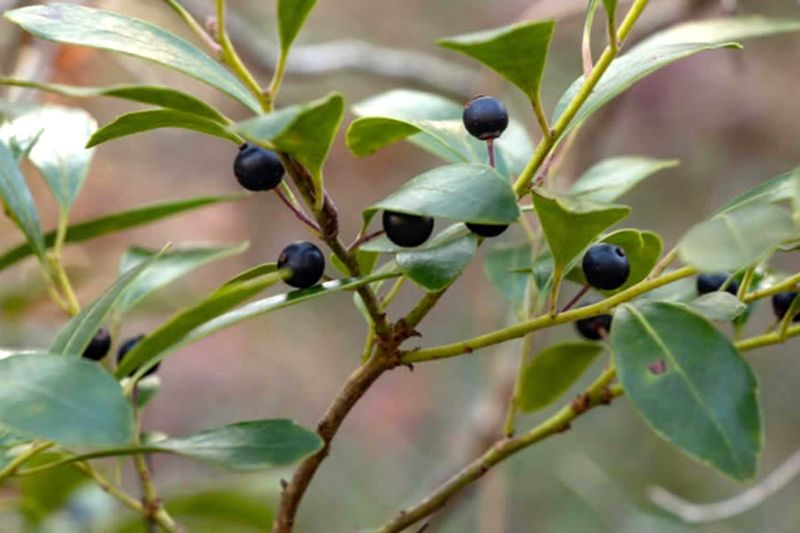
Most hollies flaunt red fruit, but inkberry keeps things classy with small black berries tucked among evergreen leaves. That year-round greenery also gives chickadees and sparrows a sheltered spot to hide from icy wind.
Its scientific name is Ilex glabra, and wild populations grow mainly on Long Island and nearby coastal areas. Plants typically reach five to eight feet tall, although compact selections like Shamrock stay much shorter.
I can see why landscapers love inkberry as a native swap for boxwood in foundation plantings and hedges. The glossy leaves stay green through winter, which keeps your yard from looking bare until spring returns.
Birds usually save these berries for later in the season, which means they often persist into late winter. Mockingbirds and hermit thrushes are among the visitors that eventually pick through the dark, shiny fruit.
Male and female flowers grow on separate plants, so include a male nearby for good berry production. Many compact cultivars are female, which makes asking the nursery staff a smart move before buying.
Acidic, moist soil suits inkberry best, and it tolerates wet ground better than most evergreen shrubs. Upstate gardeners should choose a sheltered spot, since harsh winter wind can brown the leaves in colder zones.
Older plants sometimes get leggy at the base, but cutting a few stems low in spring encourages fresh growth. Its tiny flowers also attract bees in early summer, and inkberry honey has a fine reputation along the coast.
7. Common Juniper
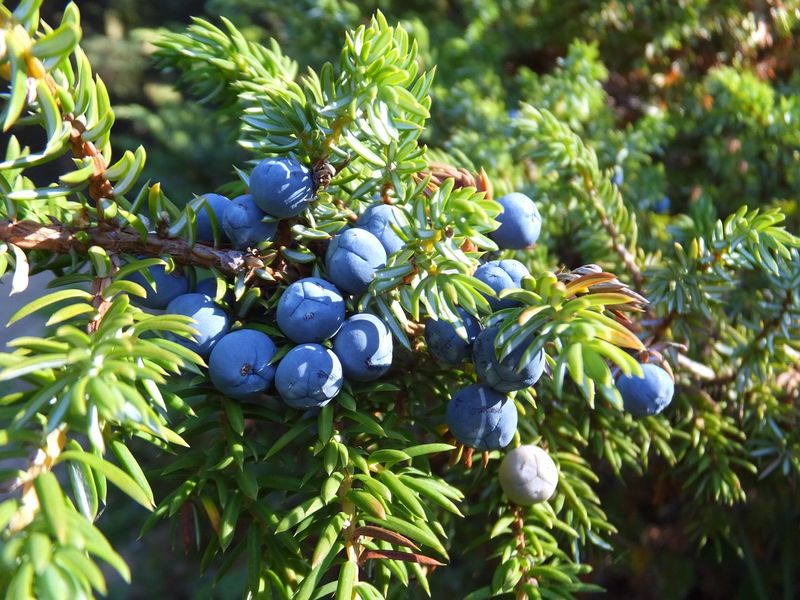
Those dusty blue berries on common juniper are actually tiny cones with fleshy scales fused together. They can take two or even three years to ripen, so different ages often hang on one branch.
Botanists call it Juniperus communis, and it grows as a low, spreading shrub in rocky New York pastures. Most plants stay under four feet tall while stretching several feet wide across dry, open, sunny ground.
What caught my attention is how widespread this shrub is, growing wild across much of the Northern Hemisphere. That toughness shows in a garden too, where it shrugs off bitter cold and thin, rocky soil.
Bluebirds and cedar waxwings eat the cones in winter, while sparrows often shelter beneath the prickly branches. The dense evergreen needles break the wind nicely, giving small birds a cozy hideout during storms.
Female plants carry the berry-like cones, so look for nursery plants labeled as female when possible. A male growing somewhere in the neighborhood usually supplies enough pollen, since juniper pollen travels on the wind.
Full sun and sharp drainage are the keys here, because soggy soil leads to root problems fairly quickly. Skip fertilizer and rich compost, since this shrub prefers lean conditions similar to its wild hillside homes.
Common juniper can be tricky to find at big box stores, so check native plant sales instead. Plant it on a sunny slope or rock garden, and it will feed birds for many winters ahead.