8 Boxwood Alternatives Virginia Homeowners Can Turn To After Blight
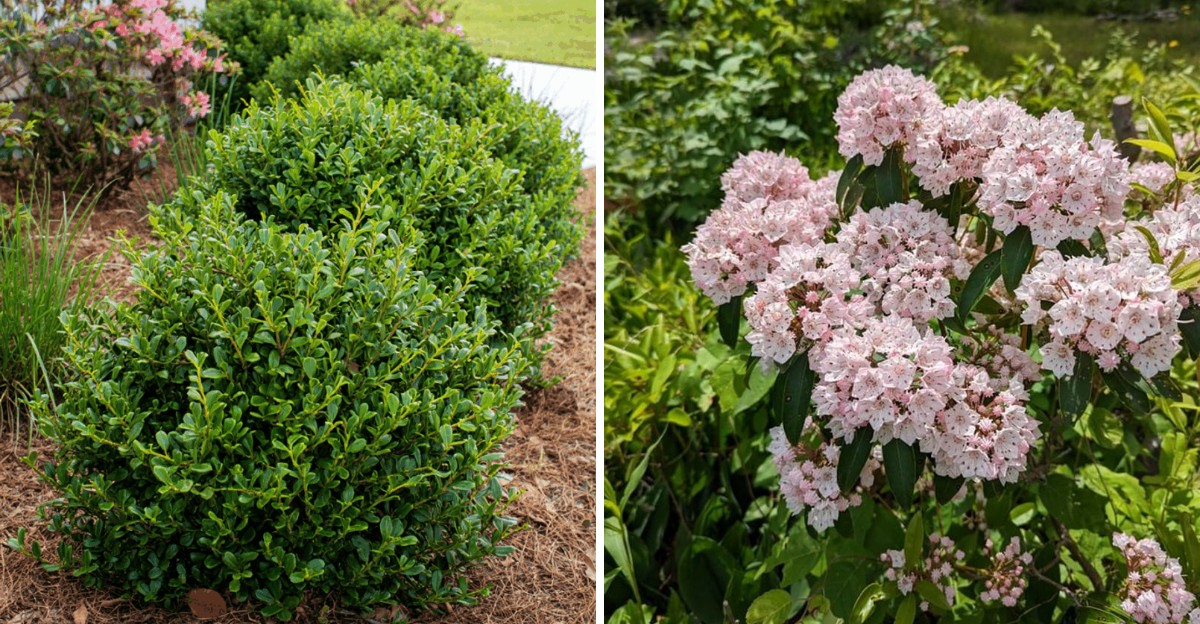
A brown boxwood hedge can turn a proud garden into a frustrating mess overnight. Boxwood blight spreads fast, causing leaves to drop and stems to develop dark streaks.
Warm, humid, wet conditions can help boxwood blight develop and spread. Once a shrub is infected, there’s no treatment that eradicates the disease.
Fungicide programs take time, effort, and money. So instead of fighting a losing battle, many gardeners are choosing a different path: replacing boxwoods with tougher shrubs.
The right replacement can offer glossy foliage, flowers, berries, and fall color. Some shrubs even have the neat, tidy look of boxwood.
Others bring benefits boxwoods cannot. Their blooms attract bees, while their berries provide food for wildlife. So grab your gloves and rethink that planting bed.
1. Inkberry Brings Evergreen Structure Without Boxwood
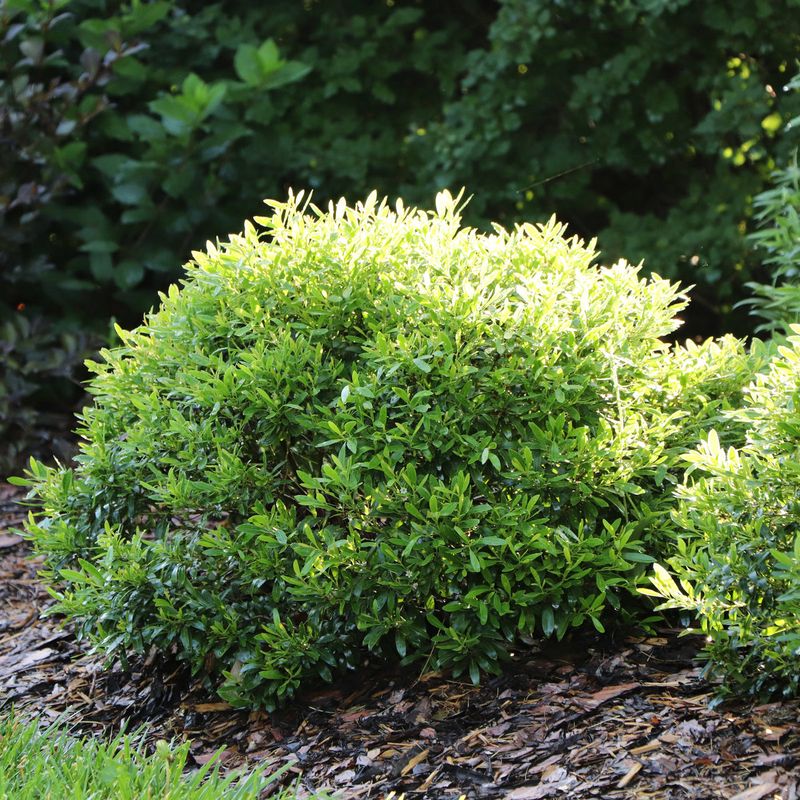
Imagine a shrub that looks tidy like boxwood but simply ignores the fungus that ruined your hedge. Inkberry holly, or Ilex glabra, fits that description beautifully.
Native to eastern North America, it grows wild in coastal Virginia bogs and sandy woods. Its small, glossy, spineless leaves give the same fine texture people love in boxwood.
Deer tend to pass it by, which is a big relief in many suburbs. The shrub also handles wet, soggy spots where plenty of other evergreens sulk.
For foundation beds, look for compact cultivars like ‘Gem Box’ and ‘Strongbox.’ Both stay around 2 to 3 feet tall and keep leaves full down to the ground.
Some inkberry cultivars hold their lower foliage better than others. Check plant tags for compact selections that resist legginess.
Plant inkberry in acidic soil with full sun to part shade for the densest growth. A 2 to 3 inch layer of mulch helps hold moisture during hot July stretches.
Pruning is easy, too. Trim lightly in late winter or early spring, and the plant rewards you with fresh, shiny growth.
Here is a fun bonus for nature lovers. Female plants produce small black berries that feed birds, and bees visit the tiny spring flowers.
Fun fact: the name inkberry comes from those glossy fruits, which look like drops of ink. Kids often get a kick out of that little detail.
Space plants about 3 feet apart for a low hedge that knits together within a few seasons. Patience pays off, and the finished row looks polished all year.
2. Dwarf Yaupon Holly Makes A Compact Evergreen Substitute
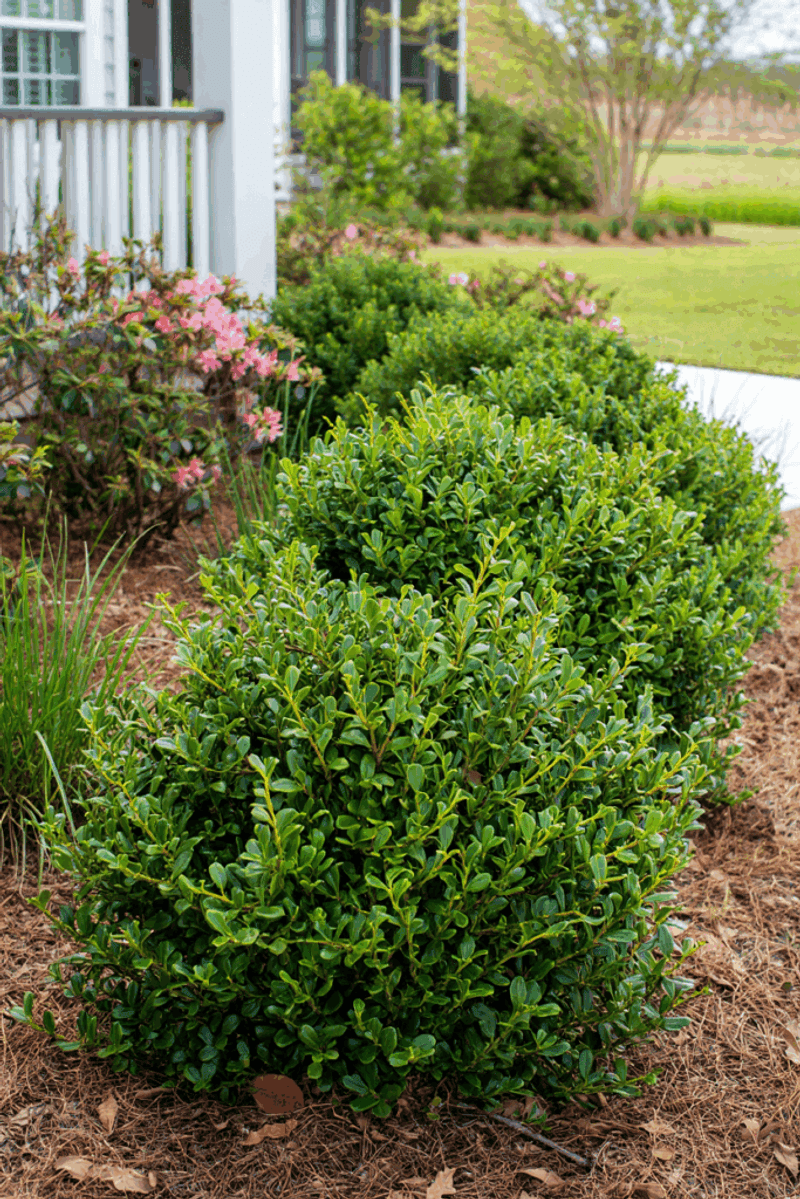
Some shrubs are divas, but dwarf yaupon holly is the easygoing friend who shows up ready to work. Its botanical name, Ilex vomitoria ‘Nana,’ sounds alarming, yet the plant itself is charming.
Chalk it up to an old myth. Early European writers linked the leaves to ritual purging, though the leaves actually contain caffeine.
Native to the Southeast, including southeastern Virginia, this holly forms a dense, rounded mound. Its small, dark green leaves give it a look close to classic boxwood.
Expect plants to reach about 3 to 5 feet tall and 3 to 6 feet wide. Growth is fairly quick, so an empty bed fills in faster than you might guess.
Your Virginia Garden Changes Every Week. Your Plan Should Too.
Gardening in Virginia changes quickly throughout the season. Every Friday you’ll receive a simple weekly plan showing exactly what to plant, prune, fertilize, harvest, and protect so you never miss the right timing.
Got a hedge trimmer and big ideas? Dwarf yaupon handles heavy shearing, so it works for crisp formal edges, balls, and even simple topiary.
Tough conditions rarely faze it. Yaupon tolerates dry or wet soils and salt spray, which makes it useful near roads and coastal sites.
Give it average to moist, well-drained, acidic soil in full sun to part shade. Soggy clay that stays wet for days is one of the few things it dislikes.
One quick heads-up for berry fans. The ‘Nana’ form seldom sets berries, so enjoy it for foliage rather than winter color.
Water new plants deeply once or twice a week through their first summer. After that, they usually coast along on normal rainfall with little fuss.
For Tidewater homeowners especially, dwarf yaupon may be the closest match to a lost boxwood border. Pair it with bright annuals, and the whole bed pops.
3. Japanese Holly Can Fill Formal Foundation Spaces
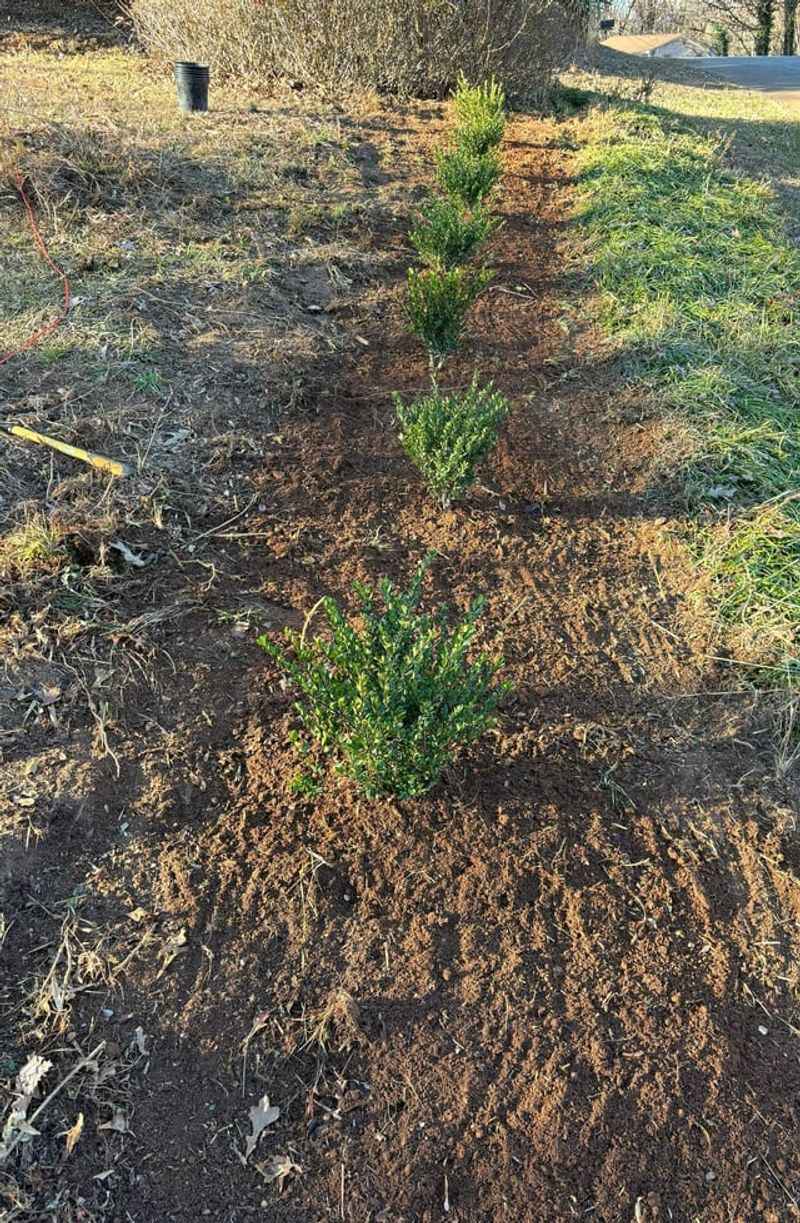
Walk past older homes in Richmond or Alexandria, and you will likely spot Japanese holly hugging the foundation. Many people mistake it for boxwood at first glance.
Known to botanists as Ilex crenata, it carries tiny, rounded, glossy leaves packed tightly on each stem. The effect is neat, formal, and wonderfully familiar.
Size matters here, so read labels carefully. The species can reach about 10 feet, while cultivars range from compact forms around 3 feet to much larger shrubs.
Picking the right shape solves many design puzzles. ‘Convexa’ forms a dense, rounded bush that shears into hedges or globes with ease.
Tight corners call for ‘Sky Pencil,’ a slim column that rises straight up like an exclamation point. Tuck one beside a front door or between windows for vertical drama.
Moist, acidic, well-drained soil keeps Japanese holly happiest. Full sun to part shade works, and deer usually leave it alone.
Drainage deserves extra attention, though. Roots can rot in heavy clay, so mix in compost or plant slightly high on a gentle mound.
Watch for spider mites during hot, dry spells in late summer. A strong spray of water from the hose knocks them back without harsh chemicals.
Gardeners in sandy coastal soils should know about nematodes, tiny worms that attack roots. In those spots, inkberry or yaupon may be the smarter choice.
Shearing works best in late spring after the first flush of growth. A second light trim in summer keeps lines sharp through the holidays.
Want the most boxwood-like look for the least money? Japanese holly is widely stocked at garden centers and tends to be budget friendly.
4. Mountain Laurel Adds Evergreen Foliage And Flowers
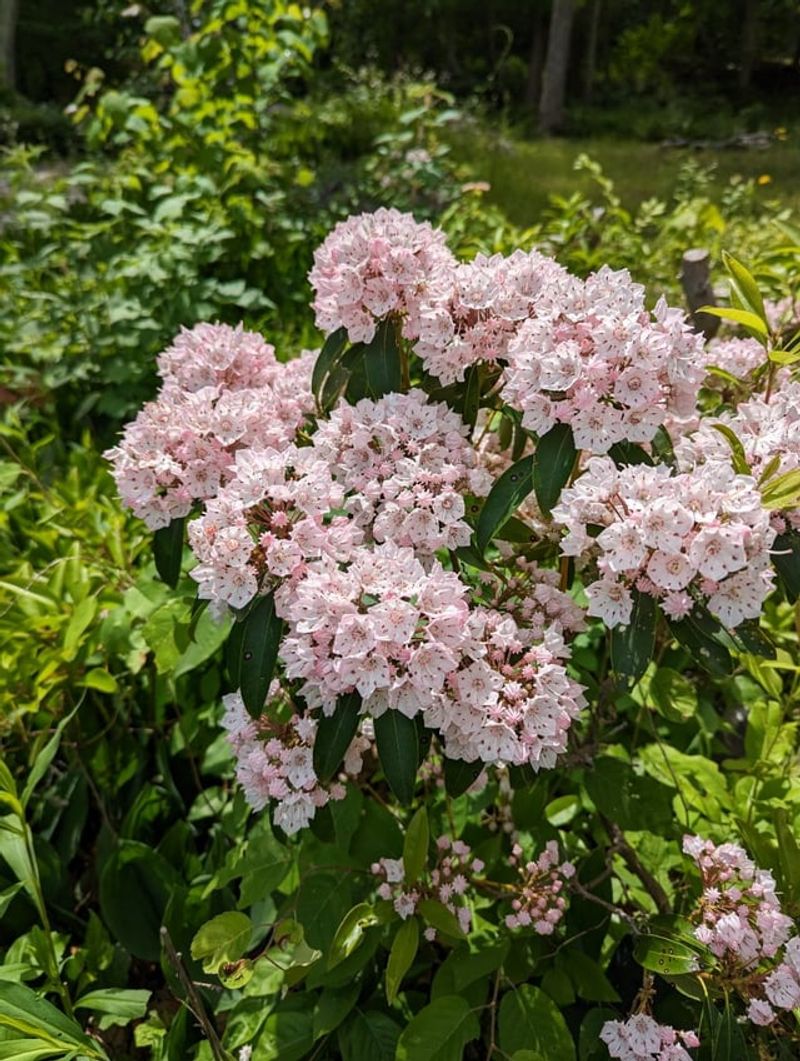
Hike a Blue Ridge trail in late May, and you may wander through clouds of pink and white. Those blossoms belong to mountain laurel, one of Virginia’s loveliest native shrubs.
Kalmia latifolia keeps its leathery, glossy, dark green leaves all winter. Its dense, rounded habit gives beds the steady backbone boxwood once provided.
Look closely at a single flower, and you will see something clever. Each cup holds tiny bent stamens that spring up and dust visiting bees with pollen.
Mountain laurel feels most at home in moist, acidic, well-drained soil. Bright shade or morning sun with afternoon relief suits it far better than baking heat.
Heavy clay is its biggest enemy. Plant it slightly high, mix in pine bark fines, and skip the rich fertilizer.
Growth ranges from 3 to 15 feet tall, depending on the cultivar and site. Compact picks like ‘Minuet’ or ‘Tinkerbell’ stay small enough for front beds.
Pinch or prune right after blooms fade to keep plants tidy. Cutting later in the year removes next spring’s flower buds.
Safety matters with this beauty. All parts of mountain laurel are toxic if eaten, so site it away from curious pets and toddlers.
Deer can browse mountain laurel, so protect young plants where deer pressure is high. Wildlife browsing can still vary by site, so watch young plants for damage.
Mulch with shredded leaves or pine needles to copy its forest floor home. Given a shady spot and patience, it rewards you for decades.
Fun history bit: early colonists sometimes called it spoonwood because Native people carved spoons from its hard wood. Talk about a shrub with stories.
5. Wax Myrtle Works Well For Larger Informal Screens
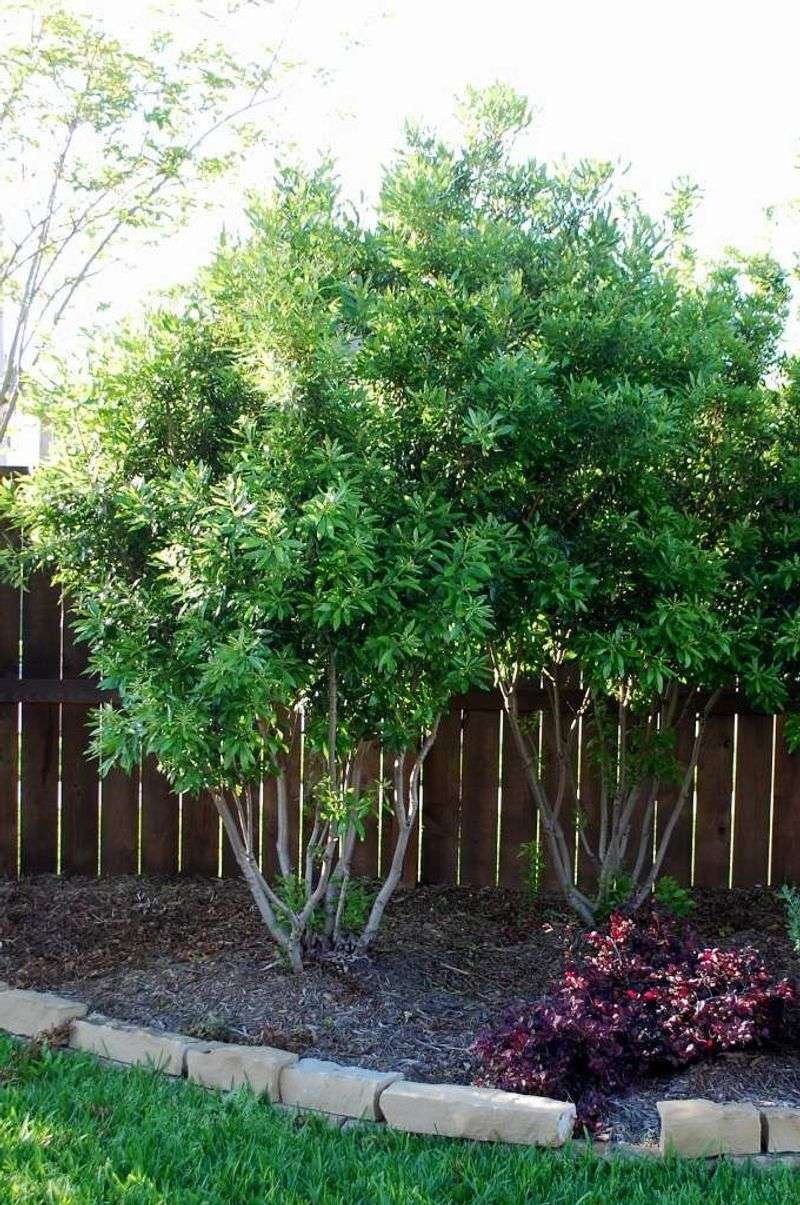
Need a green wall fast? Wax myrtle grows like it has somewhere to be, often adding several feet a year.
Known today as Morella cerifera, it was once filed under Myrica cerifera. It grows wild along the coastal Southeast, including the Virginia Beach and Eastern Shore areas.
Mature plants can reach 10 to 20 feet tall and 10 to 15 feet wide. Save it for property lines, big corners, or spots where you want serious privacy.
Brush the olive-green leaves, and a spicy, clean scent fills the air. Many people say it reminds them of bayberry candles, and there is good reason.
Colonists boiled the waxy blue-gray berries to make fragrant candle wax. Only female plants produce berries, so plant a male nearby if you want fruit.
Birds adore those berries all winter. Your screen doubles as a bird feeder that refills itself each year.
Rough sites rarely slow it down. Wax myrtle tolerates a wide range of soils and handles salt spray, making it a useful choice for many coastal sites.
Bright sun brings the thickest growth, although partial shade is tolerated. Its roots also fix nitrogen, which helps it thrive where other shrubs go hungry.
A word of caution for western parts of the state. Hard freezes in the mountains can damage it, so it shines brightest east of the Blue Ridge.
Pruning keeps it in bounds, but go gently. Remove a few of the oldest stems each spring to keep the base leafy and full.
Heavy snow can split limbs on older plants, which is worth watching. Shake off wet snow with a broom after big storms to prevent breakage.
6. Virginia Sweetspire Brings Flowers And Fall Color
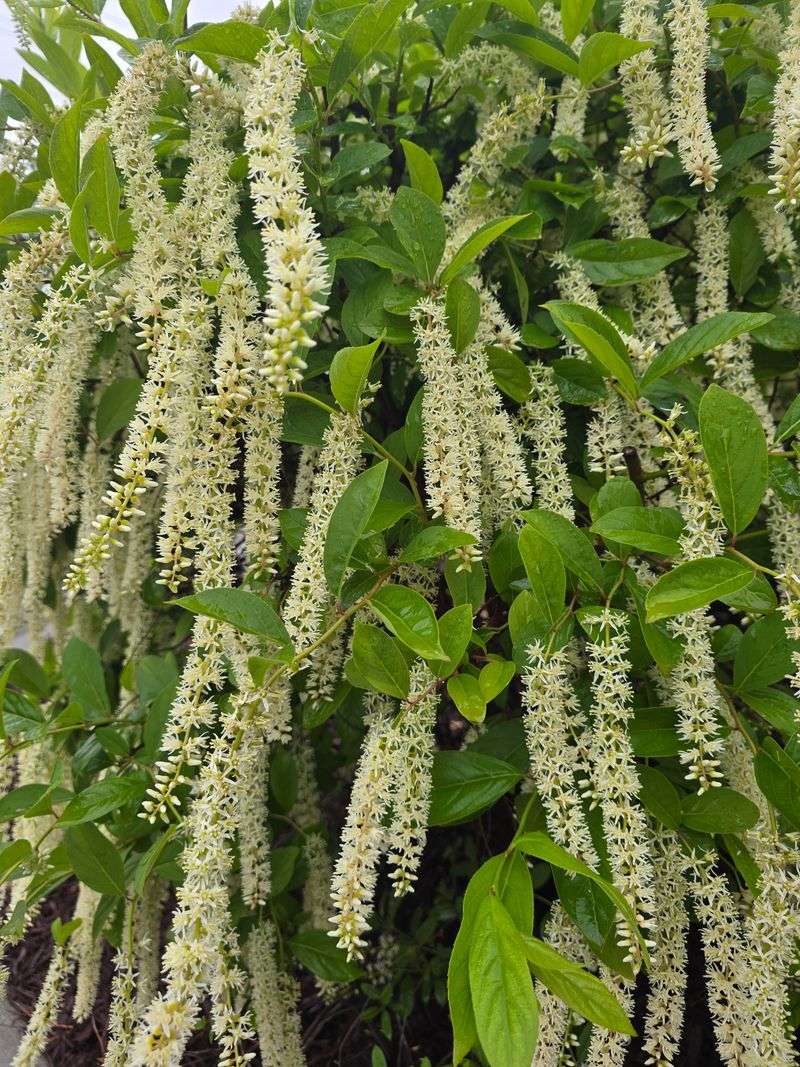
What if your hedge replacement smelled like honey in June and blazed like a campfire in November? Virginia sweetspire does both, and it asks for very little in return.
Itea virginica is native across the eastern United States, including swampy corners of our state. Unlike boxwood, it drops its leaves in winter, so think of it as a seasonal star.
Late spring brings arching branches loaded with fragrant white flower spikes. Picture little bottlebrushes swaying in the breeze while bees and butterflies crowd around.
Autumn is when this shrub really shows off. Leaves shift to red, purple, orange, and gold, and the color often hangs on into winter.
Sweetspire prefers moist, acidic soil and tolerates wet conditions, but it performs poorly in alkaline soil.
Sunshine brings out the richest fall color, while shade still gives flowers with softer autumn tones. Low, damp spots near downspouts can become showpieces instead of problem areas.
For smaller yards, ‘Little Henry’ stays around 2 to 3 feet tall and wide. ‘Henry’s Garnet’ grows larger, reaching 3 to 4 feet with deep burgundy fall leaves.
Give it room to roam, though. Sweetspire spreads slowly by underground runners, which makes it great for holding soil on gentle slopes.
Design tip: pair it with evergreen inkberry so winter beds still have a green frame. The mix gives you structure, flowers, and fireworks all in one planting.
Prune right after flowering by cutting a few old stems to the ground. Fresh shoots will sprout quickly and carry next year’s blooms.
7. Fothergilla Adds Fall Color And Spring Blooms
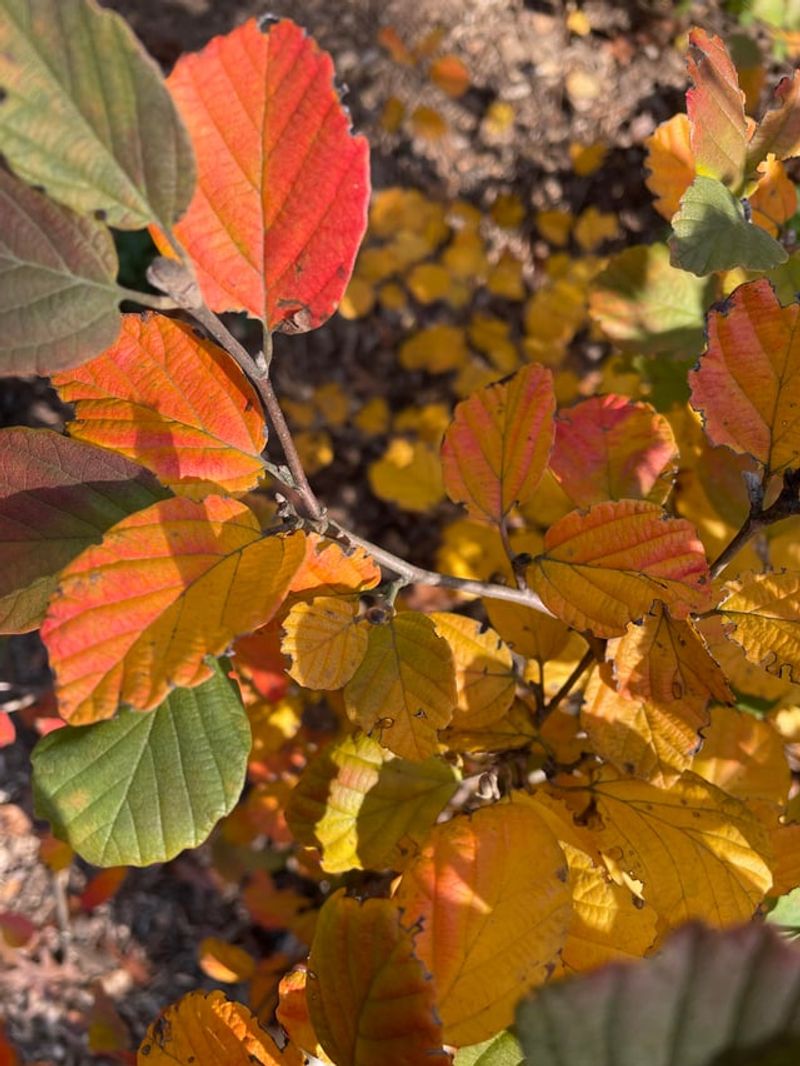
Fothergilla has a name that sounds like a cartoon monster, but its personality is pure sunshine. Fothergilla can deliver impressive spring flowers and fall color when it gets the conditions it prefers.
Credit an English doctor for the funny label. Physician John Fothergill collected American plants in the 1700s, and botanists honored him with this genus.
A southeastern native, it opens honey-scented white flowers shaped like little paintbrushes in early spring. Blooms arrive before the leaves, so each fuzzy spike stands out on bare stems.
Early pollinators hungry after winter find them quickly, especially on warm April afternoons. Watching the first bees arrive feels like a small celebration.
Fall is the real encore. Leaves glow orange, red, crimson, and yellow, often all on one branch.
Its red, purple, orange, and gold foliage can persist well into fall, depending on location and weather. Neighbors may start asking what that glowing shrub by your steps is called.
Two main types show up at nurseries. Dwarf fothergilla stays smaller, while Fothergilla major grows into a larger shrub.
Popular picks like ‘Mount Airy’ offer extra-reliable fall color and a tidy habit. For low beds under windows, the dwarf form is usually the easier fit.
Deer tend to skip it, and it grows well in full sun or part shade. More sun means more flowers and brighter autumn leaves.
Moist, acidic, well-drained soil suits it best, similar to what azaleas enjoy. Alkaline soil near concrete foundations can yellow the leaves, so test first.
Pruning is rarely needed because its natural shape stays neat and rounded. If you must trim, do it right after spring blooms fade.
8. Buttonbush Fits Moist Sites Where Boxwood Struggles
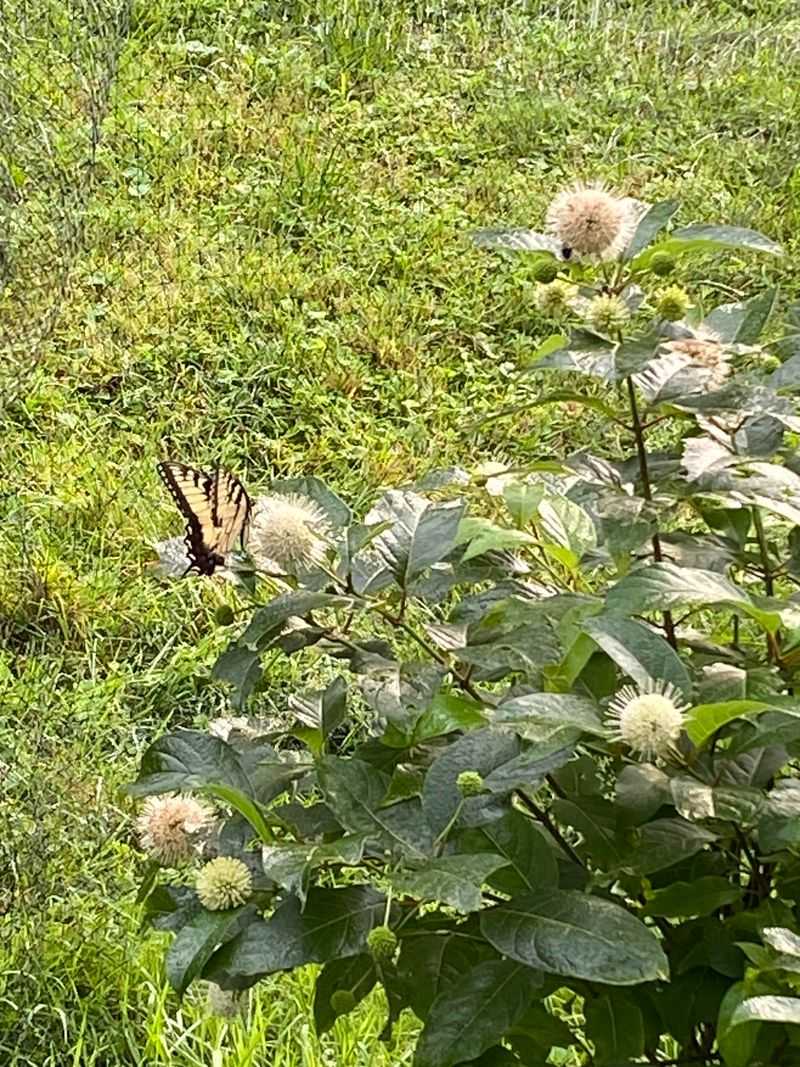
Many yards have a soggy spot where boxwood struggles with overly wet soil. Buttonbush looks at that puddle and practically cheers.
Cephalanthus occidentalis is a deciduous shrub native to Virginia swamps, pond edges, and stream banks. Wet soil suits buttonbush, making it a natural choice for rain gardens, pond edges, and other damp spots.
From June through August, it produces round, fragrant white flower heads that look like tiny pincushions. Some folks say they resemble little space satellites.
Pollinators go wild for those blooms. Bees, butterflies, and even hummingbirds visit, and ducks later snack on the seeds.
Size is the main thing to plan around. Buttonbush can reach 6 to 12 feet tall and 8 to 15 feet wide.
Instead of tucking it by the front steps, place it in a rain garden or low swale. It can soak up runoff from roofs and driveways while looking lovely.
Sunny spots produce the heaviest flowering, though part shade is fine. Plants in deep shade grow lanky and bloom sparsely.
Buttonbush leafs out late in spring, so do not panic if it looks bare in April. Those glossy green leaves finally unfold once the weather warms up.
If it gets too big, cut the whole shrub back hard in late winter. It bounces back quickly and blooms on the new growth that same summer.
Pet owners should know the leaves can be toxic if eaten. Most animals ignore them, but watch curious pups.
Losing boxwood hurts, yet it opens the door to plants that fit the state’s climate and wildlife better. Mix a few of these picks, and your yard may look better than ever.