Desert Chia: The Arizona Native That Can Fill Your Yard With Volunteer Seedlings
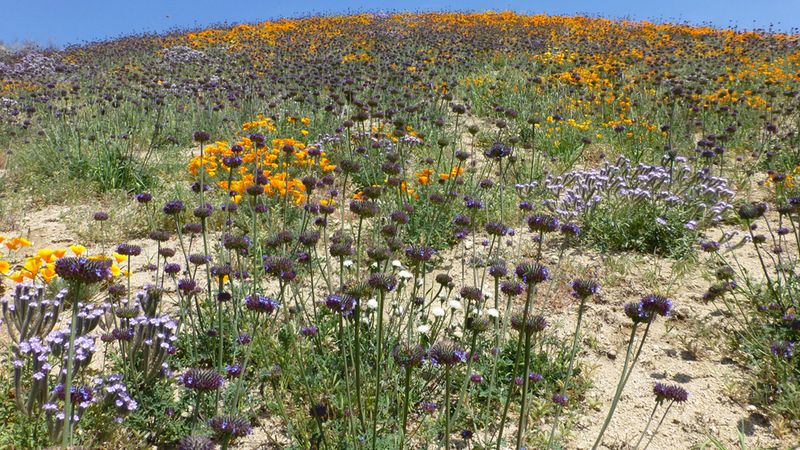
A small purple-flowered plant called desert chia has been quietly winning over Arizona gardeners who give it a single fall sowing and then watch it reappear season after season. Unlike the woody shrubs most people picture when they hear “desert sage,” this low-growing annual can drop seeds that sprout again when cool-season moisture arrives.
For Phoenix and Tucson homeowners who want pollinators without a big water bill, that is a genuinely useful trait. The catch is that results vary, and a few details make the difference between a thriving patch and a bare patch of gravel.
The reseeding plant is desert chia, not necessarily desert sage
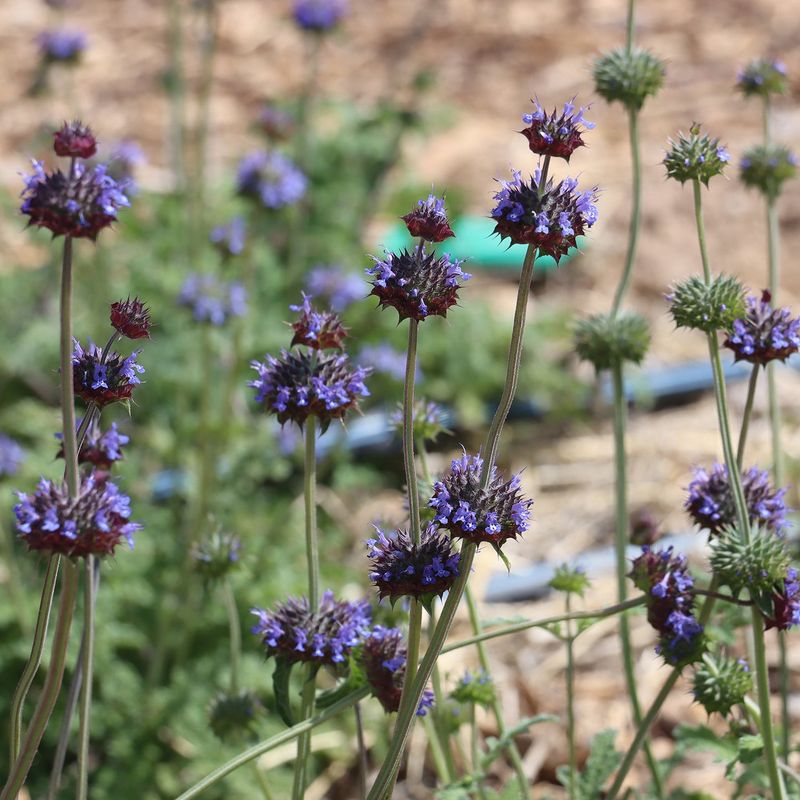
Two plants share the nickname “desert sage” in Arizona, and mixing them up leads to real frustration. The one that matches the reseeding story is Salvia columbariae, commonly called desert chia or chia sage.
It is a low-growing annual native to Arizona and the broader Southwest, reaching roughly 4 to 8 inches tall with flower stems that can stretch to about 24 inches. Its foliage is basal and lobed, and the blooms are tight purple-blue clusters that appear along upright stems in late winter through spring.
The Arizona Native Plant Society lists desert chia as attractive to bees and butterflies, suitable for full sun, and capable of reliably reseeding when moisture is available. Those traits are what give it the reputation for returning year after year without replanting.
The other plant, Salvia dorrii, is also called desert sage and is also native to parts of Arizona, but it is a woody perennial shrub that generally grows in higher, cooler desert and pinyon-juniper habitats. Its growth habit does not match the documented reseeding behavior as closely as desert chia does.
Throughout this article, “desert chia” and
Salvia columbariae refer specifically to the annual, reseeding plant. The two should not be treated as interchangeable.Favorable conditions can turn one sowing into volunteer seedlings
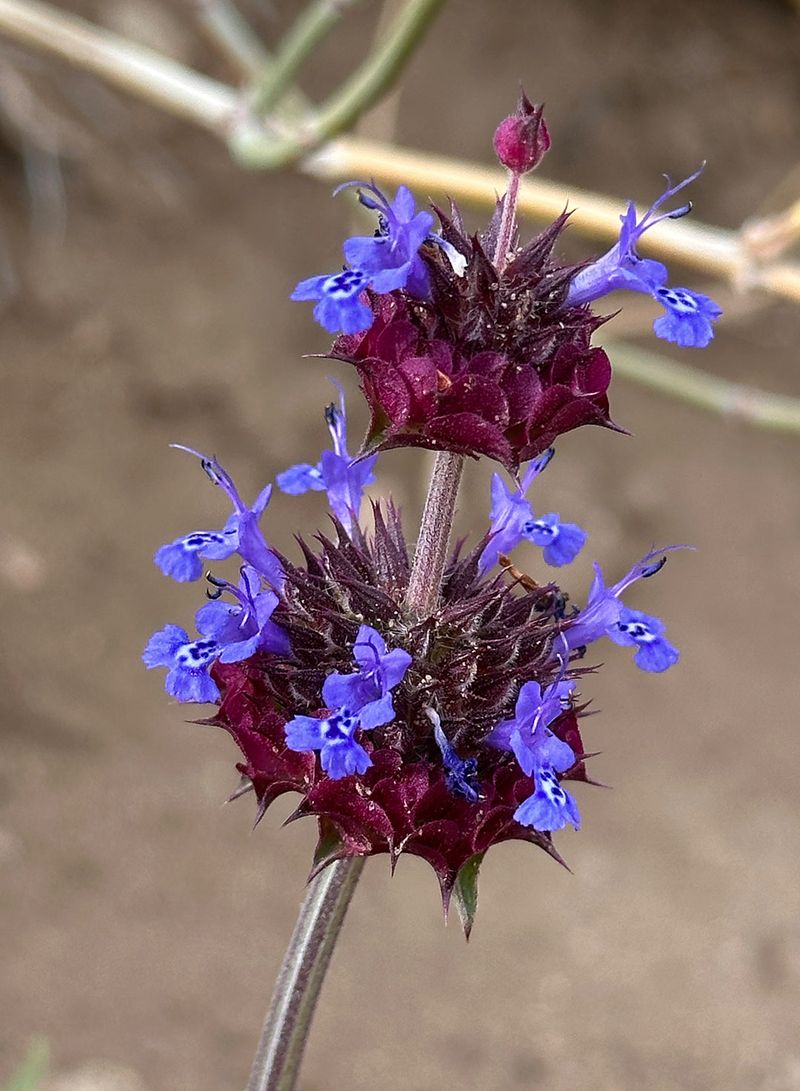
Planting desert chia once does not guarantee a permanent, ever-expanding carpet. What it can do is give you a starting population of plants that drop seed, and if conditions cooperate the following cool season, new seedlings appear without any additional sowing on your part.
The USDA plant guide for Salvia columbariae notes that it can self-sow freely, but qualifies that birds, mice, and ants may consume many of the seeds before they ever reach the soil surface.
Three conditions work together to give volunteer seedlings their best shot: exposed soil with minimal competing plants or thick mulch, shallow seed placement so seeds are not buried too deep, and consistent cool-season moisture during germination. Dense ground cover, heavy gravel, and dry stretches can all cut returns significantly.
Because desert chia is an annual, the parent plants die back during the hot season. What looks like a plant “coming back” is actually a new generation sprouting from seed left behind.
That distinction matters for managing expectations. A yard with good sun exposure, open sandy or gravelly soil, and reliable cool-season watering is likely to see volunteers.
Your Arizona Garden Changes Every Week. Your Plan Should Too.
Gardening in Arizona changes quickly throughout the season. Every Friday you’ll receive a simple weekly plan showing exactly what to plant, prune, fertilize, harvest, and protect so you never miss the right timing.
A yard with heavy clay, deep gravel, or irregular moisture may see far fewer, or none at all. Results genuinely vary from garden to garden.
Its seasonal flowers support bees and butterflies
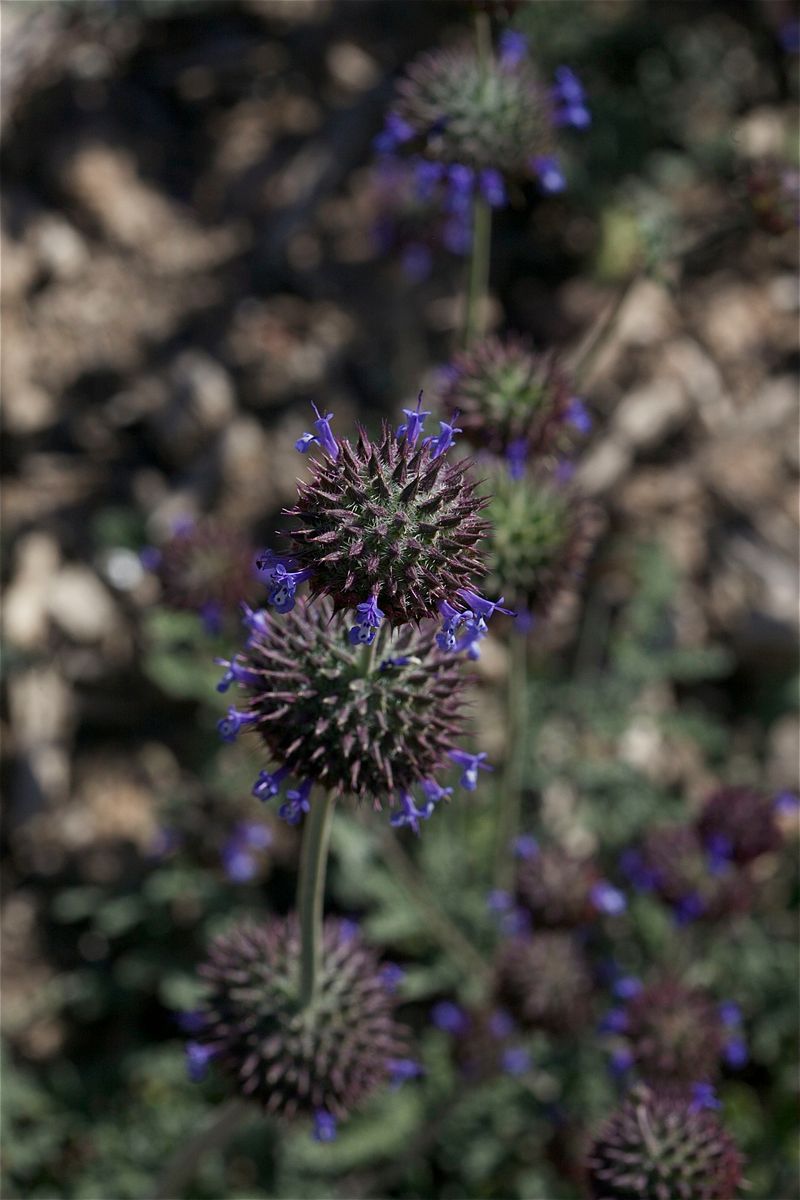
Desert chia earns its place in a pollinator garden through a compact bloom period that lands right when many low-desert gardens are waking up. Flowering generally runs from March through May in Phoenix and Tucson conditions, though weather, elevation, and soil moisture can push that window earlier or later.
The purple-blue flower clusters sit in tight whorls along slender stems, making the plant visually striking for something so small.
Bees and butterflies are the documented visitors. The Arizona Native Plant Society specifically identifies both groups as pollinators for this species, and the flowers are well-suited to smaller native bees that do much of the early-season work in low-desert gardens.
What desert chia does not do is cover the full calendar. One annual with a two-to-three-month bloom window cannot support pollinators through summer, fall, and winter on its own.
For a yard that genuinely functions as pollinator habitat, pairing desert chia with other Arizona natives that flower at different times makes a meaningful difference. University of Arizona guidance on low-desert pollinator gardens emphasizes planting several species that provide flowers across different months, so insects have resources from late winter through fall.
Desert chia fills the late-winter-to-spring slot well. Combine it with something that blooms in summer and something that carries into fall, and the garden starts doing real work for local bee and butterfly populations.
Sow desert chia during the low desert’s cool season
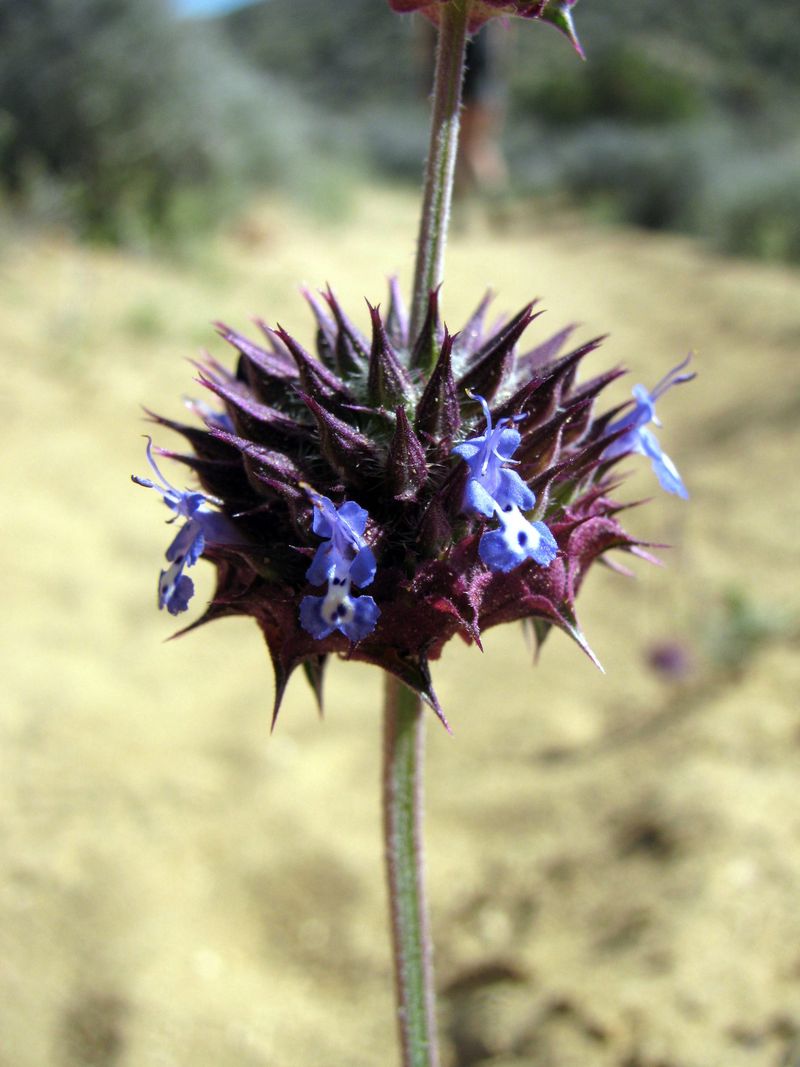
Fall is the right time to sow desert chia in Phoenix and Tucson, not spring. Low-desert winters are mild enough for germination, and the cool months give seedlings time to establish before summer heat arrives.
Native Seeds/SEARCH recommends sowing from fall through very early spring for low-desert conditions, with fall as the primary window. A University of Arizona fall gardening publication also lists chia among wildflowers to sow in autumn, reinforcing that timing for this region.
Preparation is straightforward. Choose a sunny, open patch and rake the surface lightly to break up any crust.
Scatter the seed evenly, then cover it with a thin layer of soil, no more than a light dusting. Burying seed too deeply is one of the most common reasons desert chia fails to germinate, so resist the urge to rake it in heavily.
After sowing, water the area and keep the ground consistently moist for about a week, then continue light, regular watering until seedlings are a few inches tall.
Temporary irrigation during this phase is not a contradiction of the plant’s drought-tolerant reputation. Seeds and young seedlings need moisture to get started, even in a species that will eventually need very little water.
Once plants are established, scale back irrigation and let the plant grow on its minimal water needs. Trying to rush germination with a single heavy watering and then walking away is a common mistake that leaves gardeners wondering why nothing sprouted.
Match the plant to a sunny, reasonably draining site
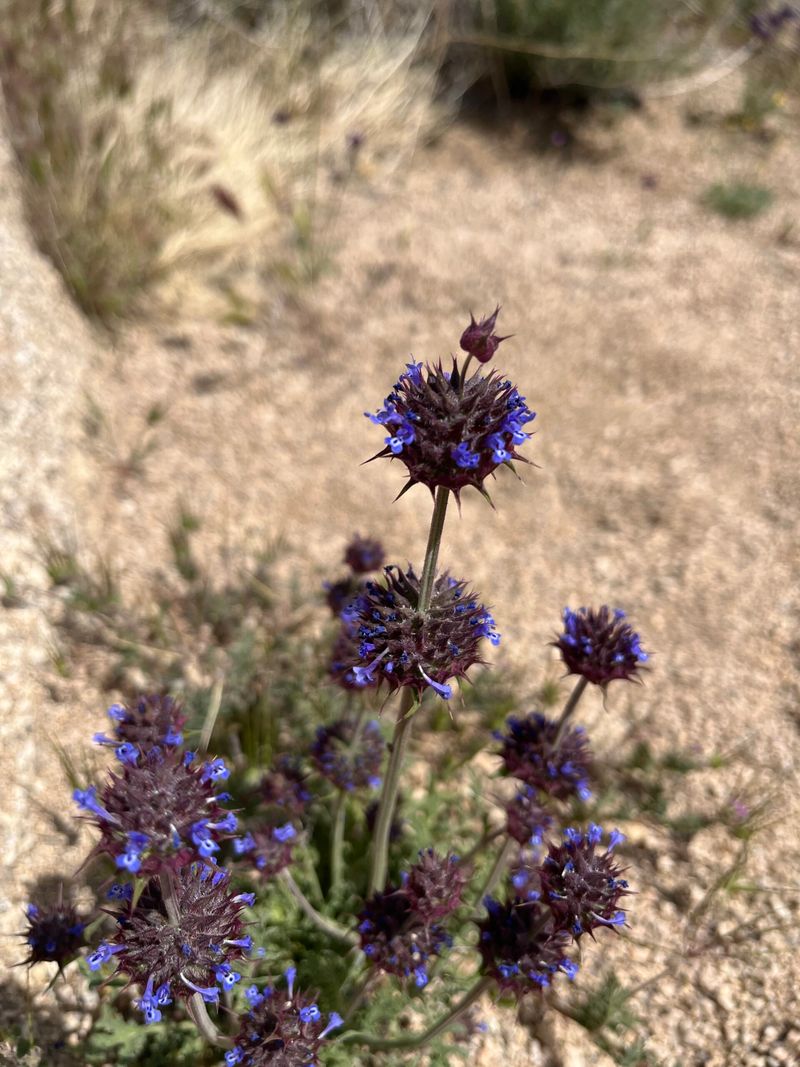
Full sun is non-negotiable for desert chia. In its natural habitat, the plant grows in open, exposed conditions, often in sandy washes, gravelly slopes, or occasionally clay-heavy soils.
The Arizona Native Plant Society and University of Arizona extension records both describe it as a full-sun species associated with open, unshaded ground. Planting it under a tree canopy or along a shaded wall will reduce flowering and may prevent germination entirely.
Soil type matters more than many homeowners expect. Desert chia can handle sandy, gravelly, and even some clay soils, but it does not perform equally in every Arizona yard.
Caliche, the hard calcium carbonate layer common in low-desert soils, can block root penetration and trap water above it, creating drainage problems even in spots that look dry on the surface. Before assuming the plant will not grow in your yard, check whether caliche or compaction is the actual obstacle.
A simple drainage test, pouring water into a hole and timing how long it takes to drain, reveals a lot about whether a site will work.
Once established, desert chia is drought tolerant and should not receive frequent irrigation. The USDA cautions against regular watering for mature plants, which can stress them or encourage weak growth.
The practical split is this: water consistently during germination and the first few weeks of growth, then step back. Urban sites with reflected heat from walls or pavement may need slightly more attention during establishment than a more open suburban yard, but the end goal is the same, a plant that runs mostly on seasonal rainfall once it is rooted.
Keep useful volunteers and remove crowded seedlings
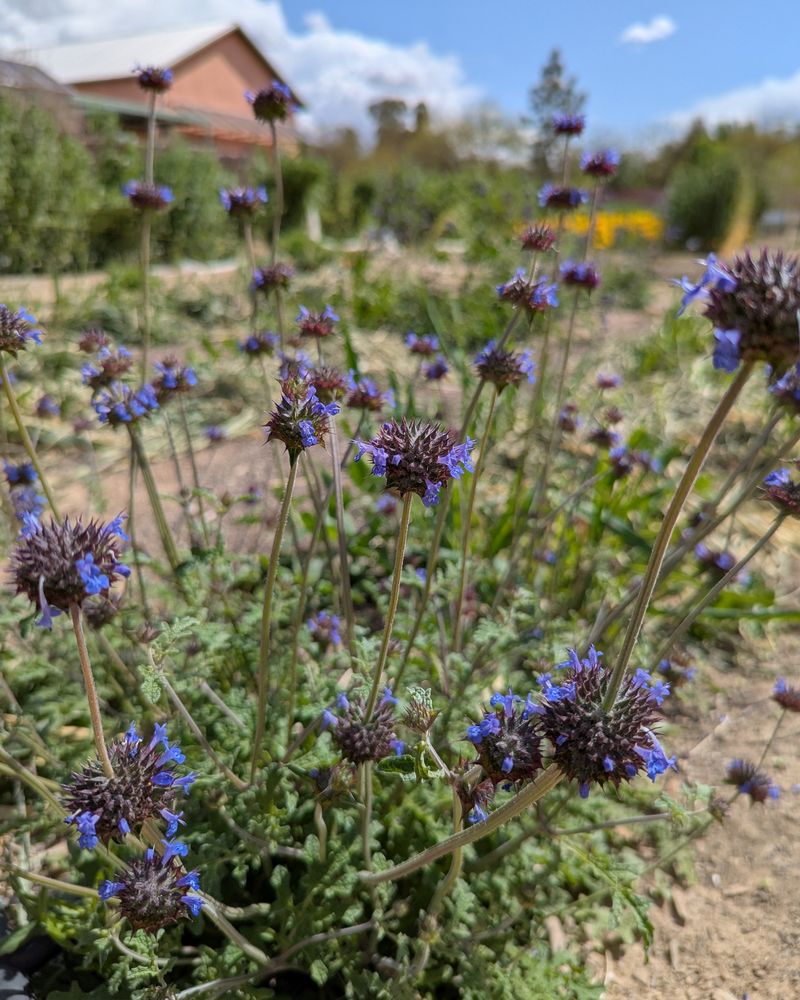
When desert chia reseeds successfully, the seedlings do not always appear in convenient locations. Some will sprout in open gravel where they are welcome.
Others will push up through a crowded perennial bed, lean against a cactus, or cluster so densely that none of them get adequate sun or air circulation. A simple management habit solves most of this: pull or thin the volunteers that are in the wrong place, and leave the ones that have room to grow.
Thinning is practical, not complicated. If a cluster of seedlings appears in a single spot, remove all but one or two of the strongest plants.
Crowded seedlings compete for the same moisture and light, and the result is usually several weak plants rather than one healthy one. Keeping a reasonable spacing, roughly 6 to 12 inches between plants, gives each seedling a fair chance and makes the bed look intentional rather than weedy.
A few additional points worth keeping in mind: broadcasting large quantities of seed into unmanaged areas is not the same as allowing natural reseeding in a garden bed, and the first approach can create dense single-species patches that crowd out other plants. Desert chia’s ability to reseed also does not make it a pest-control plant.
No current evidence supports claims that it repels scorpions, mosquitoes, or ticks. And despite its relationship to the edible chia sold in grocery stores, seed harvested from ornamental or unknown landscape sources should not be treated as food without separate safety guidance.
Expect a favorable repeat, not an inevitable takeover
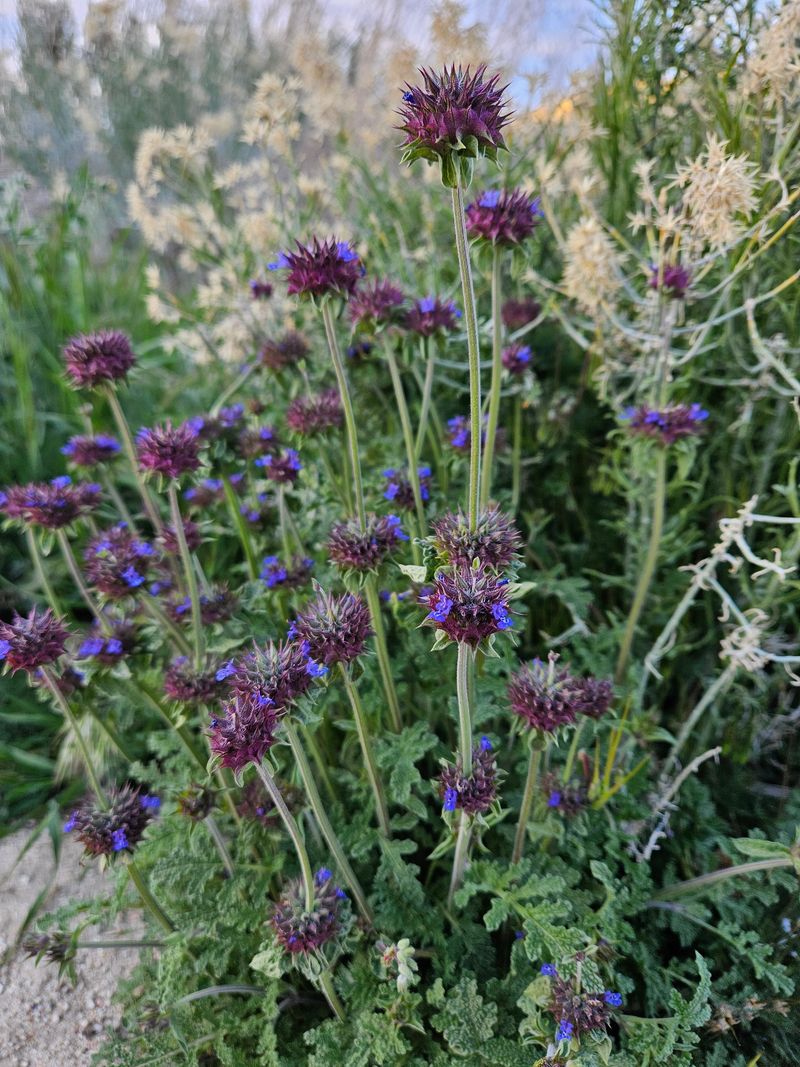
Desert chia can return year after year through reseeding, but only when conditions line up: a sunny, open site with reasonable drainage, cool-season moisture during germination, and enough seeds surviving birds, ants, and mice to produce a new generation. Some years deliver all of that.
Others do not, and the bed stays quiet until the next fall sowing.
The plant will disappear during the hot season regardless of how well it performed in spring. That is normal for an annual, not a sign that something went wrong.
Sow in fall, provide early moisture, and keep the volunteers that fit the bed. The practical payoff is modest water needs once established and a reliable flush of purple flowers for bees and butterflies each cool season.
That is a genuinely useful trade for a low-desert yard, even if it is not the effortless takeover the original premise suggested.