Florida Gardeners Can Replace Fussy Hydrangeas With These 7 Native Flowers
Almost every Florida gardener has a hydrangea story.
You planted it with good intentions, watered it carefully, maybe even talked to it a little. And still, it sulked through summer, browned at the edges, and made you feel like the problem.
Here is the truth nobody puts on the plant tag: hydrangeas and Florida summers are fundamentally incompatible in most yards, and no amount of extra care fully closes that gap.
The good news is that Florida has its own lineup of flowering plants that do everything a hydrangea promises and actually delivers it. Bold color. Long bloom seasons. Wildlife traffic that makes the yard feel genuinely alive.
Some of them reseed themselves every year without being asked. Some of them perform best in the exact sandy, dry conditions that send hydrangeas into a spiral.
Six native flowers are ready to take that spot in your garden and make you forget the hydrangea ever existed. Which one belongs in your yard?
1. Firebush Brings Red Summer Color
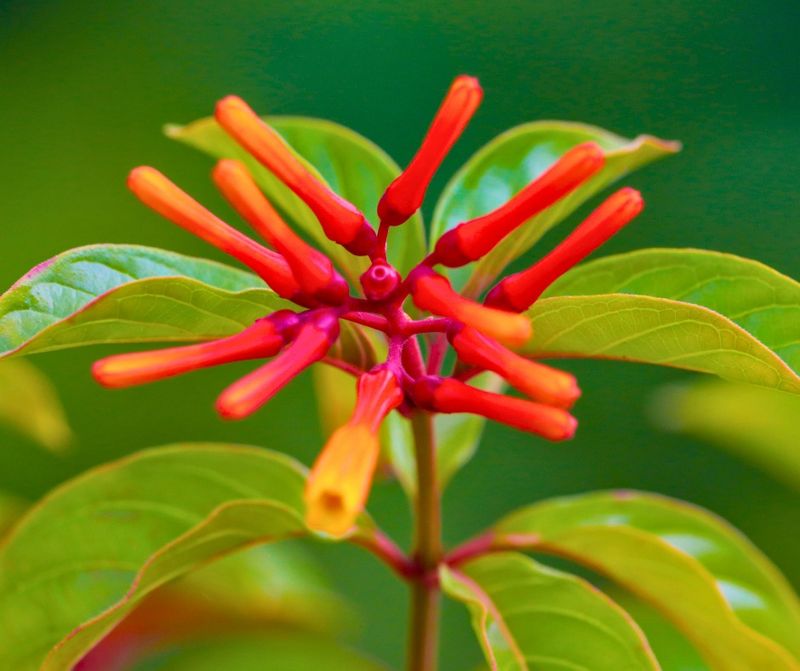
Most plants slow down when Florida summer hits its peak. Firebush reads that as a personal challenge.
Hamelia patens covers itself in bright red-orange flower clusters during the hottest weeks of the year, producing blooms from late spring straight through fall without any particular encouragement from the gardener.
Hummingbirds find firebush almost impossible to resist. The ruby-throated hummingbird treats it like a favorite stop on a regular route, and butterflies are never far behind.
Plant one near a window or porch and the wildlife activity alone justifies the space it occupies. That kind of daily entertainment is something a hydrangea never offered.
Firebush handles full sun and partial shade with equal confidence. It adapts to a wide range of soil types, including the sandy, fast-draining conditions that frustrate so many Florida gardeners.
Established plants manage dry spells without missing a bloom cycle, which puts them in a category most flowering shrubs cannot claim during an August dry stretch.
Growth is fast and substantial. In warmer regions of Florida, firebush reaches six to ten feet, so give it genuine room to develop.
In Central and North Florida, it tends to behave more like a perennial, stepping back in cooler months and returning fresh each spring.
Regular pruning keeps the shape tidy and actually encourages more flower production rather than less.
For summer color that attracts wildlife and tolerates heat without complaint, firebush is genuinely difficult to replace with anything else in the Florida native plant world.
The hummingbirds figured that out long before the gardeners did.
2. Tropical Sage Keeps Blooming In Heat
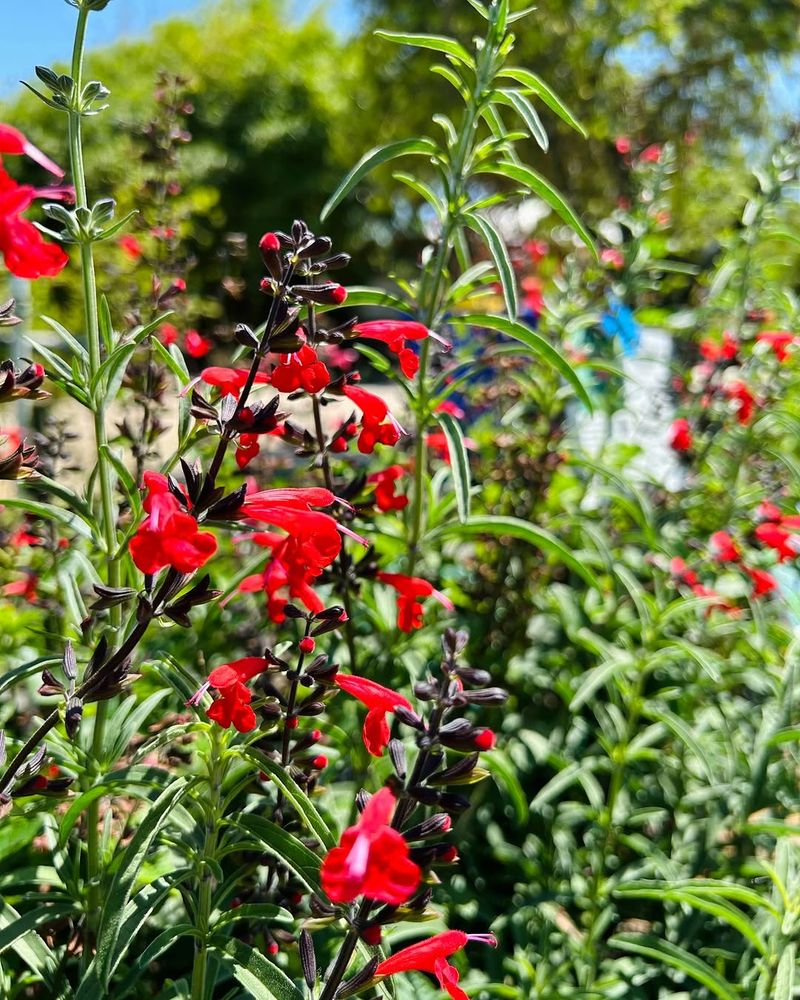
Most flowering plants have the decency to slow down when summer gets serious. Tropical sage does not get the memo, or more accurately, it ignores it completely.
Salvia coccinea sends up vivid red flower spikes even when temperatures push past ninety degrees, performing consistently through the stretch of the season when most garden plants are just trying to hold on.
The reseeding behavior is one of tropical sage’s most practical qualities. Once established, it drops seeds freely and fills bare patches on its own without any prompting.
Your Florida Garden Changes Every Week. Your Plan Should Too.
Gardening in Florida changes quickly throughout the season. Every Friday you’ll receive a simple weekly plan showing exactly what to plant, prune, fertilize, harvest, and protect so you never miss the right timing.
Over time, a single plant becomes a generous colony of color that manages its own expansion. That self-sufficiency is something hydrangeas simply cannot offer in most Florida conditions, where they often need coaxing just to stay upright through August.
Pollinators respond to tropical sage with real enthusiasm. Butterflies, bees, and hummingbirds visit the tall flower spikes repeatedly throughout the day.
The blooms rise above the foliage in a way that adds vertical interest to flat garden beds, and the slender flower form has an elegance that works well behind lower-growing natives for a layered, natural composition.
Full sun suits it best, though it manages light shade reasonably well. Sandy and loamy soils both work fine.
Varieties come in red, pink, white, and salmon, but the classic red form has the strongest pull for pollinators by a notable margin.
For a plant that handles Florida summer, feeds the local wildlife, and expands its own footprint over time, tropical sage earns its place in the garden without asking for much recognition in return.
Low maintenance and high performance rarely come in the same package. Tropical sage somehow manages both.
3. Coreopsis Adds Native Sunshine
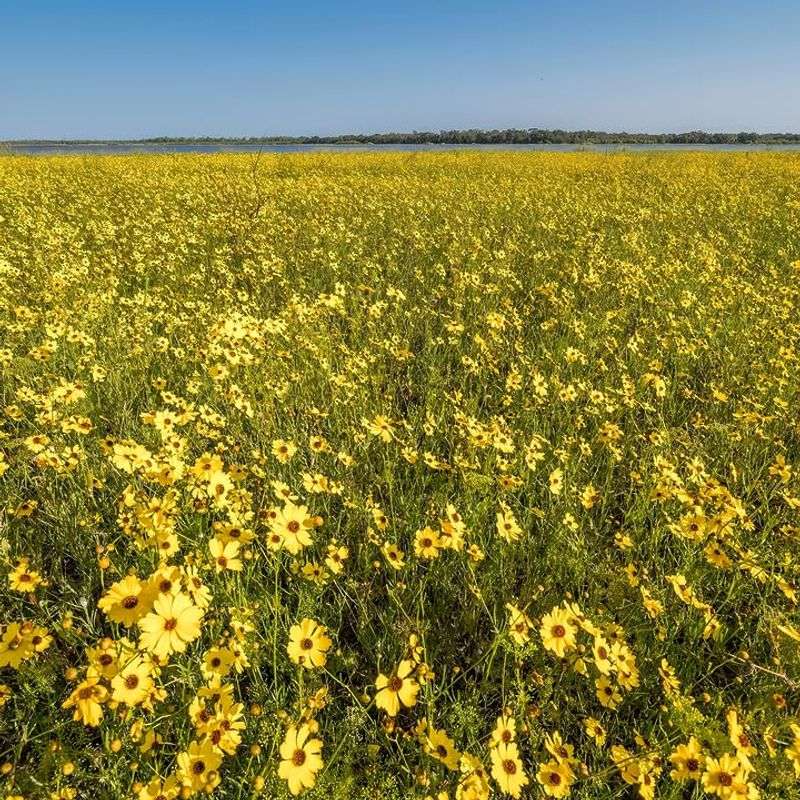
Florida made it official. Coreopsis is the state wildflower, and that designation is not ceremonial.
These golden, daisy-like blooms appear across fields, roadsides, and naturalized gardens throughout the state with a cheerfulness that feels almost deliberate.
Bringing that same energy into a cultivated yard takes almost no effort at all.
Several species grow natively in Florida, with Coreopsis lanceolata and Coreopsis floridana being among the most widely available at native plant nurseries.
Both produce flowers on slender stems that move gently in the breeze. The effect is light and airy, which feels completely different from the heavy, dense look of hydrangeas but earns just as much visual attention in a sunny border.
Sunny beds are where coreopsis performs at its highest level. Full sun and well-drained soil are the two requirements, making it a natural fit for the open, sandy areas that challenge most other flowering plants.
Established plants need minimal supplemental watering and essentially no fertilizer input. That low-maintenance profile is one of the reasons Florida-Friendly Landscaping principles consistently recommend it.
Butterflies and native bees visit coreopsis flowers reliably, adding pollinator activity to an already visually appealing plant.
The primary bloom period runs through spring and early summer, with some rebloom possible in fall depending on conditions.
Removing spent flowers encourages continued production and keeps the planting looking intentional rather than finished.
Allowing some flowers to set seed at the end of the season rewards the gardener with additional plants the following year at no cost whatsoever. Coreopsis essentially pays its own rent, which is more than most plants can honestly claim.
4. Blanket Flower Handles Sandy Soil
Sandy soil has ended more Florida gardening ambitions than any pest or disease.
Most flowering plants demand amendments, consistent moisture, or both before they agree to perform in the lean, fast-draining conditions that cover much of the state.
Blanket flower, Gaillardia pulchella, approaches sandy soil from a completely different angle. It was designed for exactly these conditions and genuinely thrives in spots where other plants refuse to cooperate.
The blooms are striking in a way that commands attention.
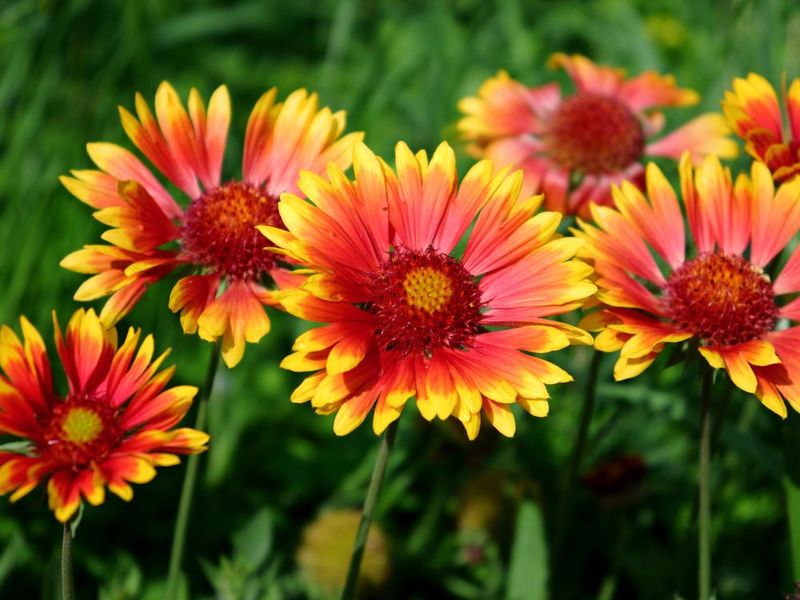
Each flower features red-tipped yellow petals surrounding a deep reddish-purple center, creating a warm sunset combination that stands out against green foliage from a significant distance.
Dense plantings cover the ground in a way that earns the common name, and that massed color effect works particularly well along garden edges, driveways, and sunny slopes where consistent coverage is the goal.
Gaillardia pulchella is a Florida native annual that reseeds prolifically, returning on its own year after year without any intervention from the gardener.
That self-renewing quality makes it one of the most practical color plants available for Florida landscapes from a cost perspective. One planting investment pays dividends across multiple seasons.
Full sun is essential. Give blanket flower a bright, open location and it blooms from spring through fall with minimal care requirements.
Native bees and butterflies visit the flowers consistently, and birds appreciate the seeds as individual flowers fade. The salt tolerance makes it particularly valuable for coastal properties where plant options narrow considerably.
For gardeners exhausted by babying plants through sandy soil, blanket flower is the uncomplicated, reliably bright solution that the garden has been waiting for. Sandy soil is its happy place, which automatically makes it a happy plant.
5. Blue Porterweed Draws Pollinators
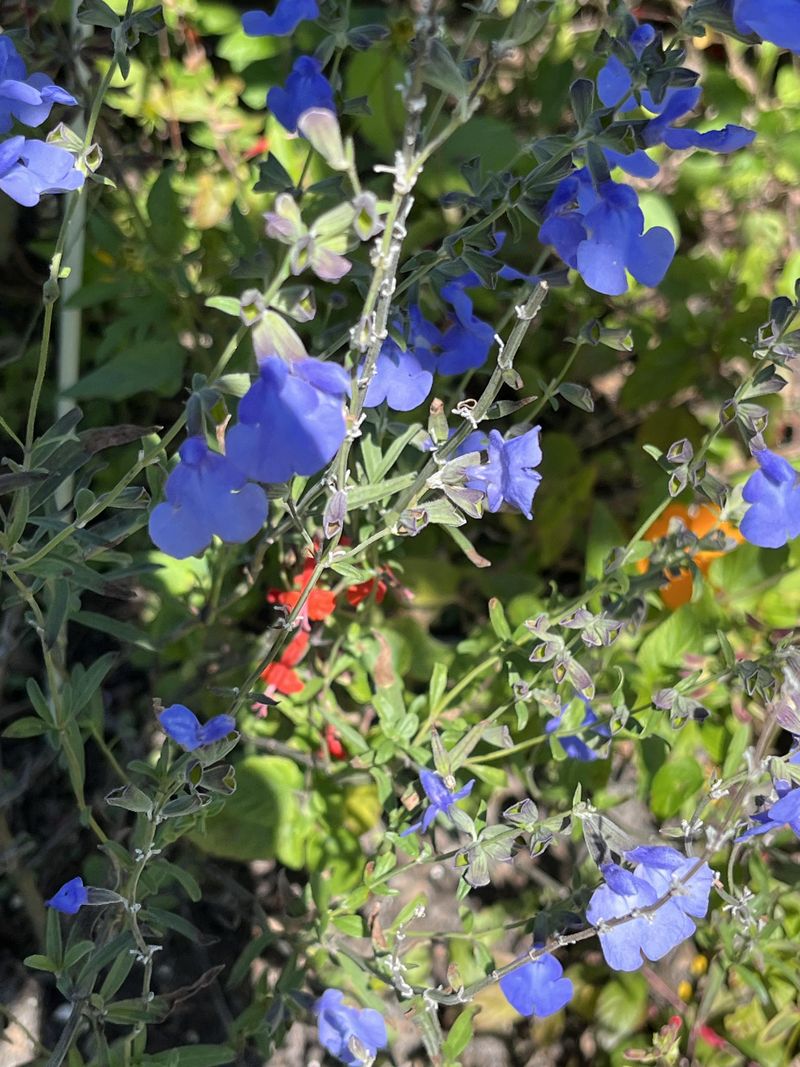
Blue is genuinely rare in the Florida native plant world, which makes blue porterweed worth paying attention to.
Stachytarpheta jamaicensis produces slender spikes of violet-blue flowers that look delicate but belong to a plant that handles Florida heat, humidity, and drought.
Butterflies find blue porterweed particularly compelling.
The long-tailed skipper and gulf fritillary are among the most frequent visitors, arriving consistently throughout the warm months and staying longer than they do at most other plants.
Each flower spike opens progressively from bottom to top, which means fresh blooms are always available for visiting pollinators rather than all opening and fading at once.
That continuous nectar supply makes it one of the most genuinely butterfly-friendly plants in the Florida native lineup.
Full sun to light shade suits it well. Blue porterweed reaches about two to three feet tall and spreads into a low, sprawling mound that functions effectively as a ground-level accent or border plant.
Sandy and loamy soils both work, and established plants handle dry periods without visible stress. The compact form makes it versatile in beds where space is more limited.
Reseeding happens readily, so new plants typically appear nearby each season without any deliberate effort from the gardener.
For anyone looking to create a living butterfly corridor in a Florida yard, blue porterweed provides the anchor color and the sustained nectar supply that makes that kind of planting work in practice.
The butterflies will find it faster than the gardener expected, and they will bring their friends. Blue porterweed is essentially a butterfly social network in plant form.
6. Beach Sunflower Covers Hot Edges
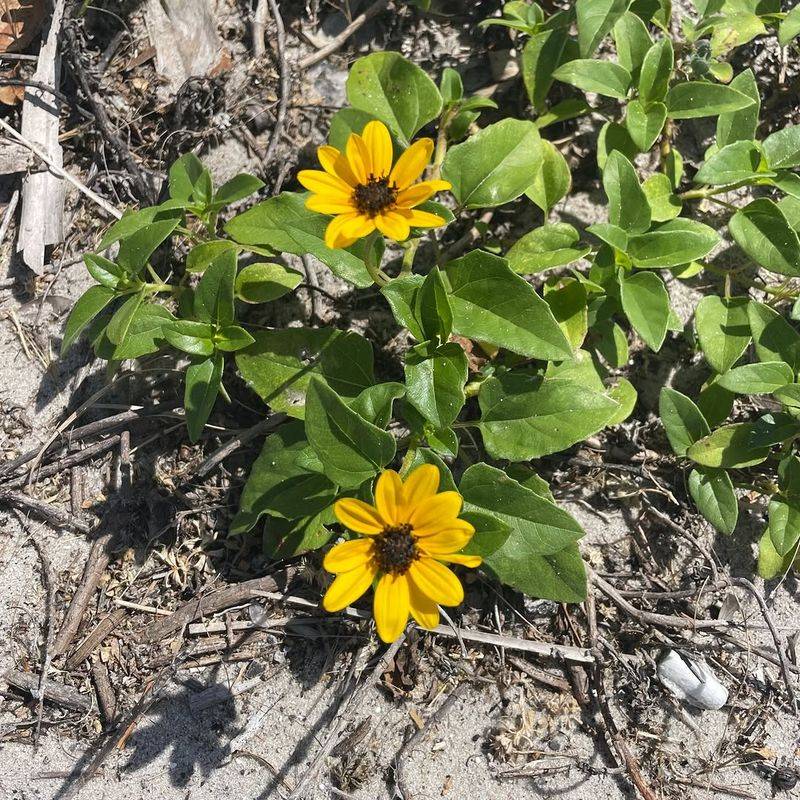
Not every garden challenge calls for a tall, upright solution.
Sometimes a hot, sun-blasted edge needs something low, spreading, and genuinely unbothered by difficult conditions.
Beach sunflower, Helianthus debilis, fills that role with a cheerful confidence that earns real appreciation from anyone who has tried to keep other plants alive in the same spots.
This native sunflower spreads outward in a groundcover mat, covering bare soil and garden edges with bright yellow flowers that bloom nearly year-round in South Florida.
The flowers are classic sunflower form, golden yellow petals surrounding a dark center, but smaller and more abundant than the tall garden varieties most people associate with the name.
That constant production of smaller blooms creates a carpet of color effect that persists long after most other plants have finished for the season.
The conditions that challenge most plants are exactly where beach sunflower thrives. Salt spray, sandy soil, and scorching afternoon sun register as ideal growing conditions rather than stressors.
Coastal properties, driveways, sidewalk edges, and any area with poor, dry soil all become legitimate planting opportunities rather than problem spots.
Native bees and butterflies visit the flowers consistently throughout the bloom season. Birds appreciate the seeds as flowers fade, giving beach sunflower three separate points of wildlife value from a single plant.
Growth is fast, spreading is readily managed with occasional trimming, and water requirements drop significantly once the plant establishes its root system.
For a hot, difficult edge that has resisted every previous planting attempt, beach sunflower does not just survive the conditions.
It performs better because of them, and that particular quality is genuinely rare enough to deserve a permanent spot in any Florida yard that has one of those problem edges that nothing else seems willing to cover.
7. Spiderwort Blooms Early When Almost Nothing Else Does
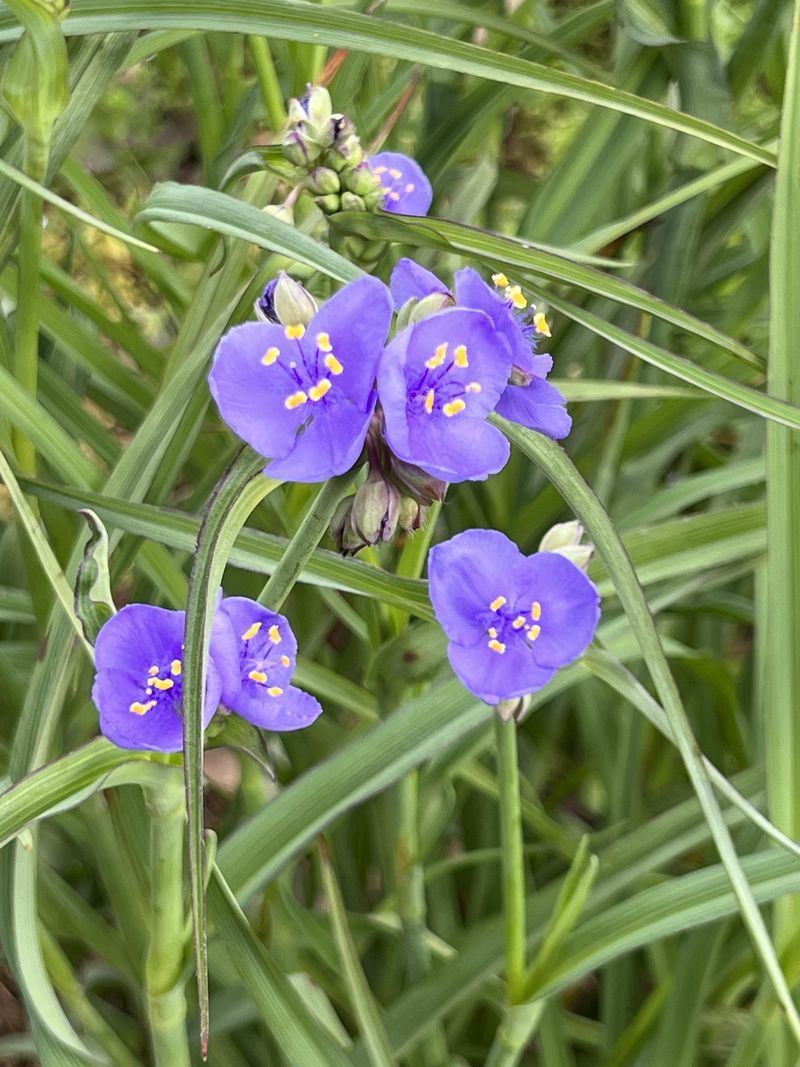
Most Florida native flowers hit their stride in summer.
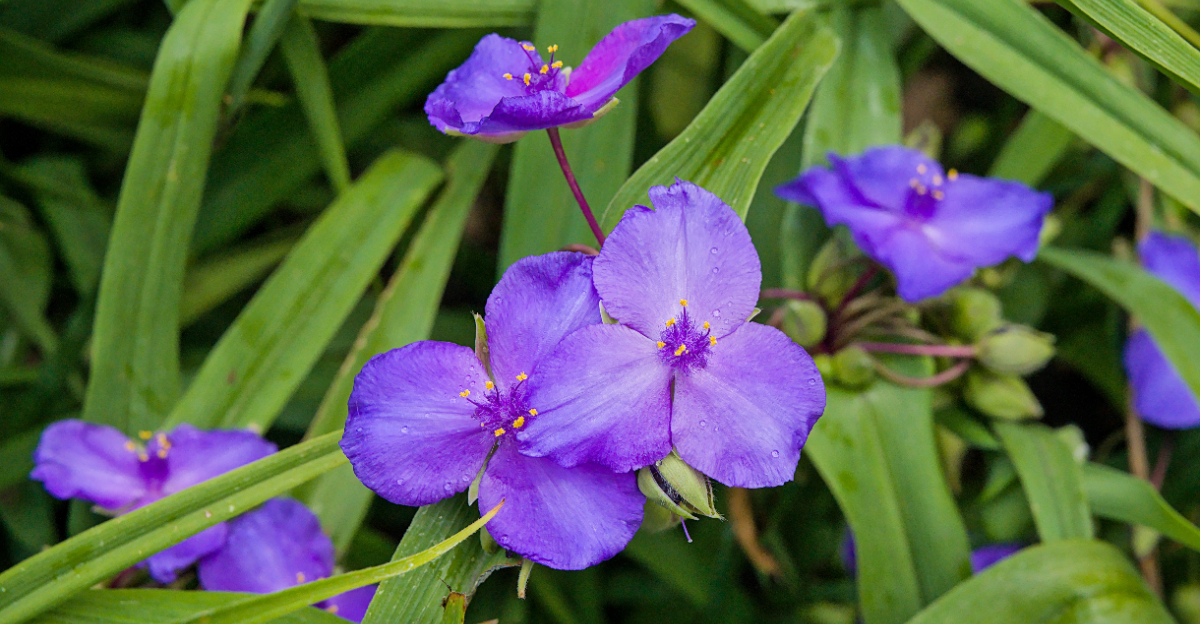
Spiderwort, Tradescantia ohiensis, operates on a completely different schedule and fills a gap in the garden calendar that almost nothing else addresses.
It blooms heavily in late winter and spring, delivering rich purple-blue color at exactly the time of year when the rest of the garden is still warming up and deciding what to do with itself.
The flowers are distinctive and genuinely lovely.
Three rounded petals in a deep violet-blue open each morning and close by afternoon, with new blooms appearing daily across multiple stems throughout the season.
That daily renewal keeps the plant looking fresh rather than tired, and the color intensity is striking against the bright green strap-like foliage below it.
Spiderwort handles a wide range of Florida conditions with flexibility that most flowering plants do not offer.
Full sun to partial shade, sandy soil to moist conditions, coastal regions to north Florida. It adapts across all of those variables and still performs reliably.
Established plants spread gradually into clumps that fill space naturally without becoming aggressive or difficult to manage.
Pollinators respond enthusiastically to spiderwort flowers.
Native bees are particularly active visitors during the morning hours when the blooms are fully open, making it a valuable early-season food source when other nectar plants have not yet started their cycle.
After the main bloom period, spiderwort can be cut back to encourage fresh foliage and sometimes a second round of flowering in fall.
The clumps divide easily and can be shared with other gardeners, which means one original plant has the potential to spread through an entire neighborhood. That might be the most Florida thing about it.