Ghostly Webs Are Covering Virginia Lawns On Foggy Mornings. Here’s Who Made Them
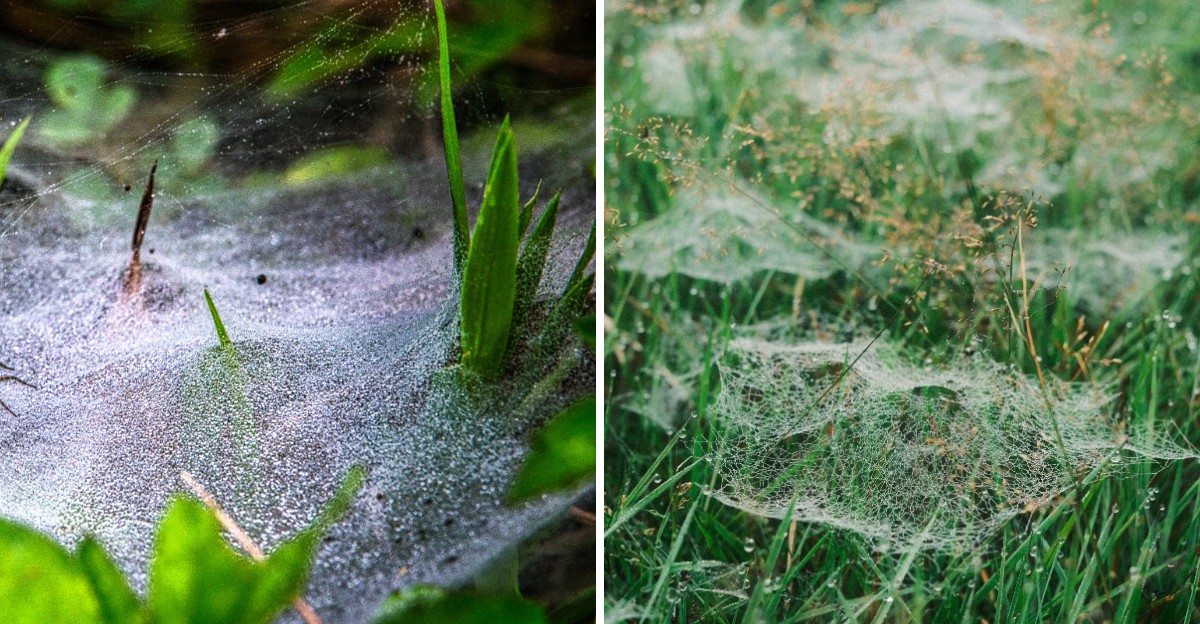
Thousands of silk hammocks can sit hidden in a single Virginia lawn, and you walk past them every day. You only notice them when fog rolls in.
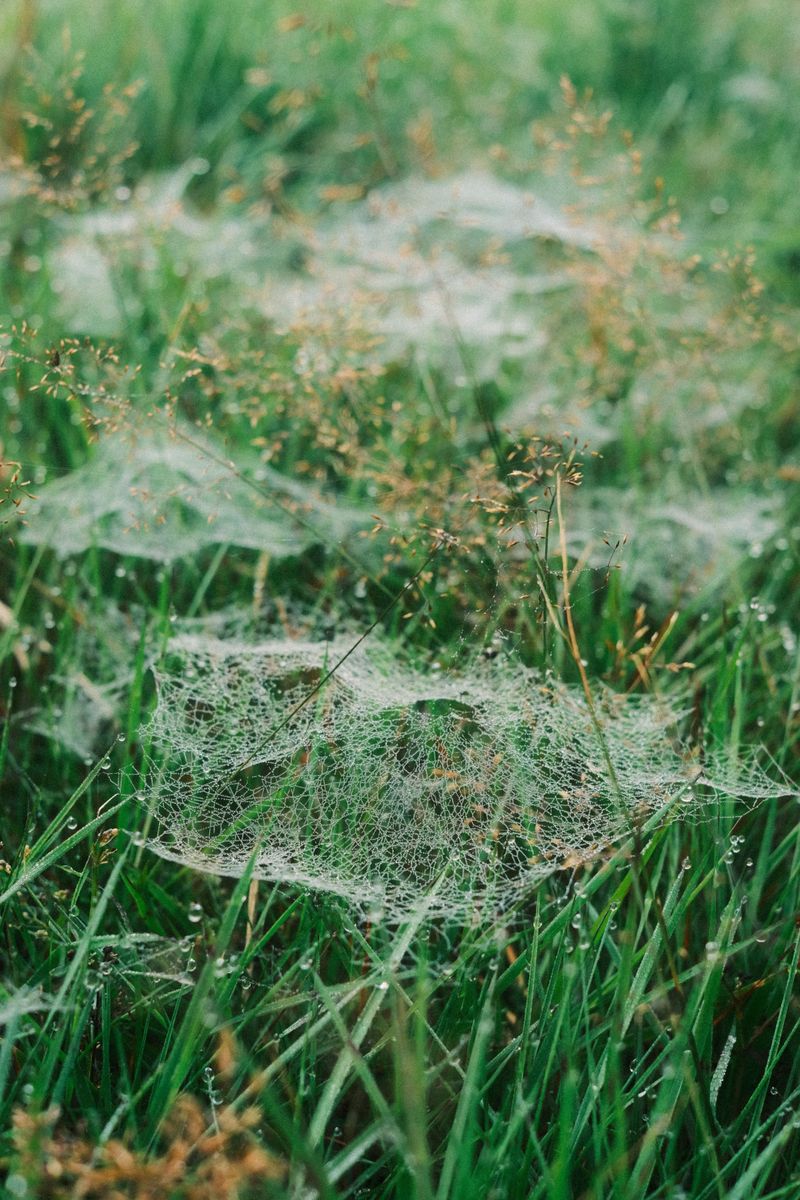
Then the grass looks like someone spread tissue paper across every blade. Each little sheet sparkles with dew, and many have a dark tunnel tucked at one corner. I stood in my yard last fall with cold coffee and counted forty before I gave up.
The builders are not new arrivals. They have been out there all summer, quietly growing bigger and working the night shift. Personally, I think they are some of the hardest workers in the whole garden.
So who spins all that lace, and should you worry? You’re in for a surprise, because the answer is probably sitting inside one of those tunnels right now, eight eyes fixed on your shoes.
That Little Tunnel In Each Dewy Lawn Web Hides Someone
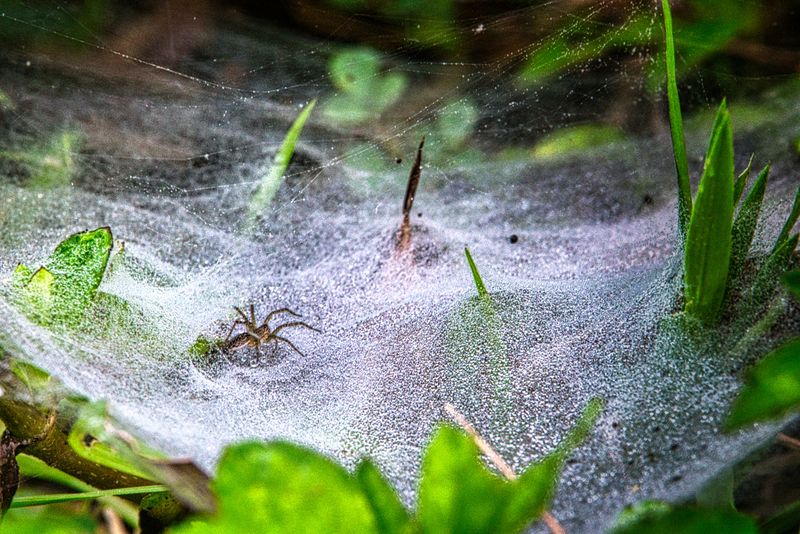
Bend down close to one of those silvery patches and look at the edges. Nearly every one narrows into a small, dark tube that drops into the thatch or slips under a leaf.
That tube is not decoration. It works like a front porch and a hiding spot rolled into one, and the web’s owner usually waits inside it with its front legs resting near the opening.
I like to think of the whole setup as a trampoline with a doorway. The flat sheet catches anything that hops, crawls, or tumbles onto it, while the tunnel gives the builder a safe place to watch.
Scientists call this shape a funnel web, and it is one of the easiest web styles to recognize in a yard. Once you know what to look for, you will start seeing funnels tucked into ivy, along sidewalk cracks, beside fence posts, and around shrubs near your foundation.
Try this on the next foggy morning. Gently touch the outer edge of a sheet with a grass blade and wait a few seconds without moving.
If someone is home, you might catch a quick flash of legs at the funnel’s mouth before it ducks back out of sight. It is a fun trick for kids, and it settles the mystery faster than any guidebook ever could.
Grass Spiders Are The Speedy Weavers Behind Those Sheets
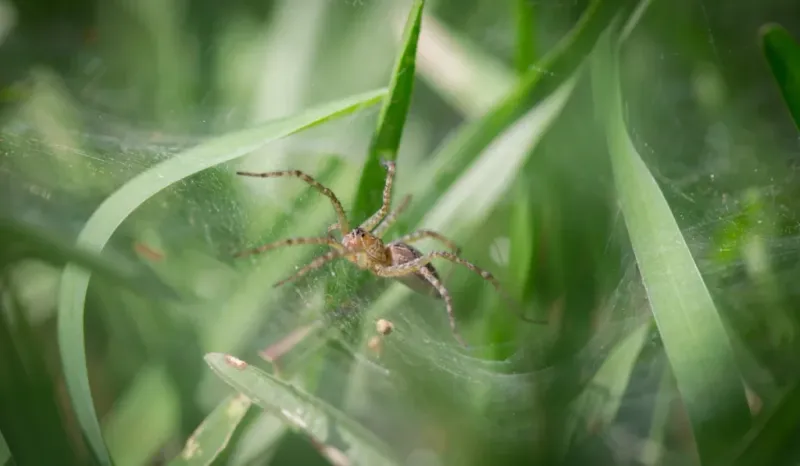
Meet the culprit with the racing stripes. The most common builder of those lawn sheets is the grass spider, a funnel weaver in the genus Agelenopsis, found across much of the eastern United States.
Grass spiders are usually tan to brown, with two dark stripes running down the front body section. Adults often measure around half an inch to three quarters of an inch long, not counting their legs.
Look closely at the rear end, and you may spot two little finger-like spinnerets poking out the back. That feature helps separate them from wolf spiders, which look similar at a glance but do not build sheet webs.
Their webs are not sticky like the classic wheel-shaped orb web. Instead, the dense silk mat works as a tripwire, sending tiny vibrations to the spider whenever an insect lands.
Your Virginia Garden Changes Every Week. Your Plan Should Too.
Gardening in Virginia changes quickly throughout the season. Every Friday you’ll receive a simple weekly plan showing exactly what to plant, prune, fertilize, harvest, and protect so you never miss the right timing.
Then things happen fast. A grass spider can sprint out, grab its meal, and drag it back into the funnel in about the time it takes you to blink twice.
Honestly, that speed is what makes them so tough to photograph. If you want a good look, use your phone’s zoom and stay still, because they spook easily from footsteps and shadows passing overhead.
Foggy Mornings Turn Invisible Spider Silk Into Sparkling Lace
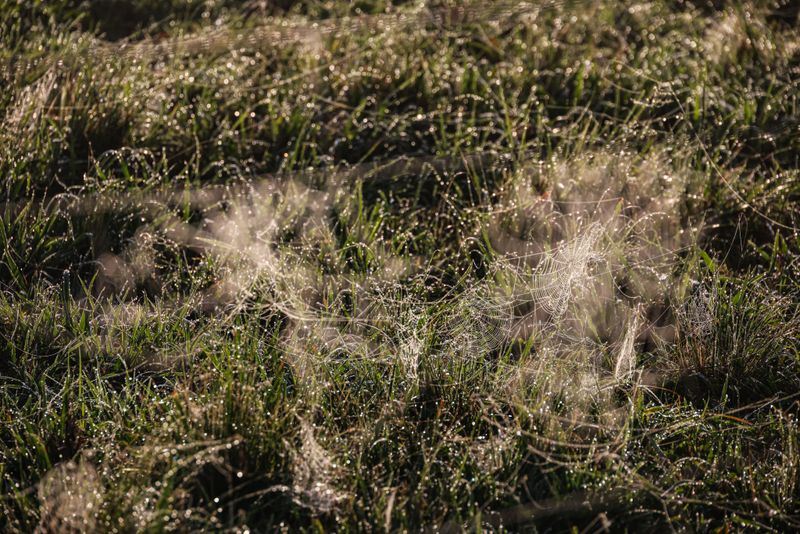
Funny thing about those webs. They did not appear overnight, even though it sure feels that way when you open the back door.
Most of them have been in your grass for weeks. On a dry, sunny afternoon, the silk is so fine that your eyes slide right past it.
Fog and heavy dew change everything. Tiny water droplets settle along every strand, and the silk suddenly looks white and thick, almost like spilled cotton candy across the yard.
Fall gives us lots of those mornings in Virginia. Nights turn cool while the ground still holds summer warmth, so moisture condenses on grass blades and on anything else sitting close to the soil.
That is why one morning can look like a haunted house set and the next looks normal. The spiders did not pack up and leave; the lighting and moisture just stopped showing off their work.
For a fun weekend project, grab a spray bottle on a dry day and mist a small patch of lawn. You may be amazed by how many hidden sheets pop into view.
Photographers love this effect too. Shoot with the sun low behind the webs, and every droplet glows like a string of tiny lights.
Late Summer And Fall Bring The Biggest Grass Spider Webs
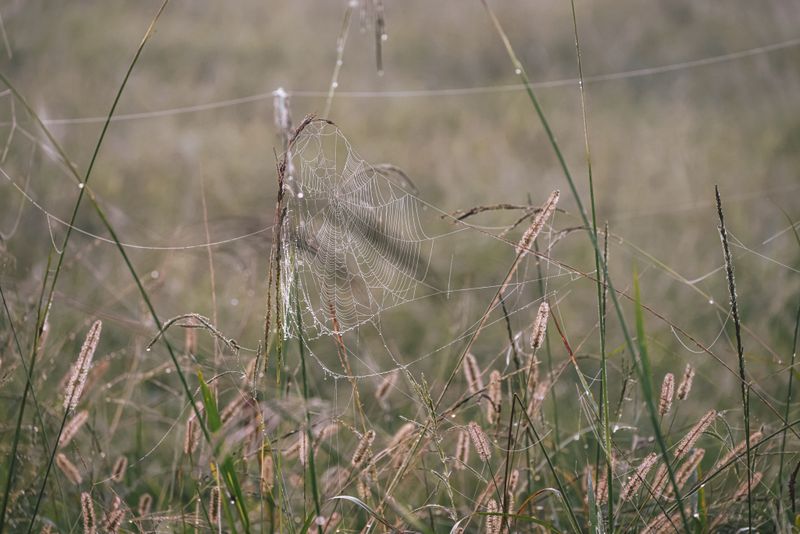
Timing explains a lot here. Grass spiders hatch in spring, spend the summer growing, and reach full adult size by late summer and early fall.
Bigger spiders build bigger webs. A sheet that was the size of a coin in June can stretch wider than a dinner plate by September, especially in thick grass or ground cover.
Fall is also mating season. Males leave their own webs and wander in search of females, which is why you might spot more of them scooting across patios, garages, and basement floors this time of year.
After mating, females lay egg sacs tucked in sheltered spots like bark, leaf litter, or crevices around your house. Most adults do not survive a hard winter, but those egg sacs carry the next generation into spring.
So the show peaks in a fairly predictable window. In much of the state, September through October tends to be prime viewing, though warm spells can stretch it into November in coastal and southern areas.
Mountain regions in the western part of the state usually see frost earlier, so the season can wind down sooner there. Wherever you live, those foggy fall mornings are your best chance to catch the full display.
A Grass Spider Bite Is Rare And Usually Mild
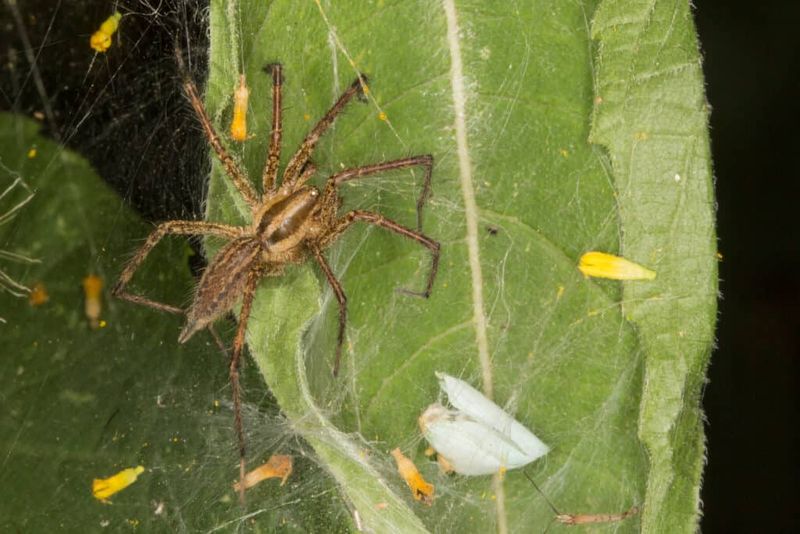
Plenty of folks feel their skin crawl when they see a lawn full of webs. Relax a little, because grass spiders are shy animals that would much rather run than bother you.
Like nearly all spiders, they do have venom for subduing insects. Bites on people are uncommon, though, and usually happen only when a spider gets pressed against skin, such as inside a glove or a shoe left outside.
When a bite does occur, most reports describe mild redness, swelling, or itching, similar to a bee sting or mosquito bite. Washing the area with soap and water and using a cool compress usually helps.
As with any bite, watch for unusual reactions. Spreading redness, signs of infection, or trouble breathing are reasons to call a doctor right away.
Pets are generally fine too. Dogs and cats may sniff around the funnels, but grass spiders tend to vanish down their tunnels long before a curious nose arrives.
A few simple habits go a long way. Shake out gardening gloves and boots before slipping them on, and wear gloves when you reach into thick ground cover or leaf piles.
Personally, I would rather share my yard with these quick little hunters than with the mosquitoes they catch.
Bowl And Doily Spiders Add Their Own Lacy Domes
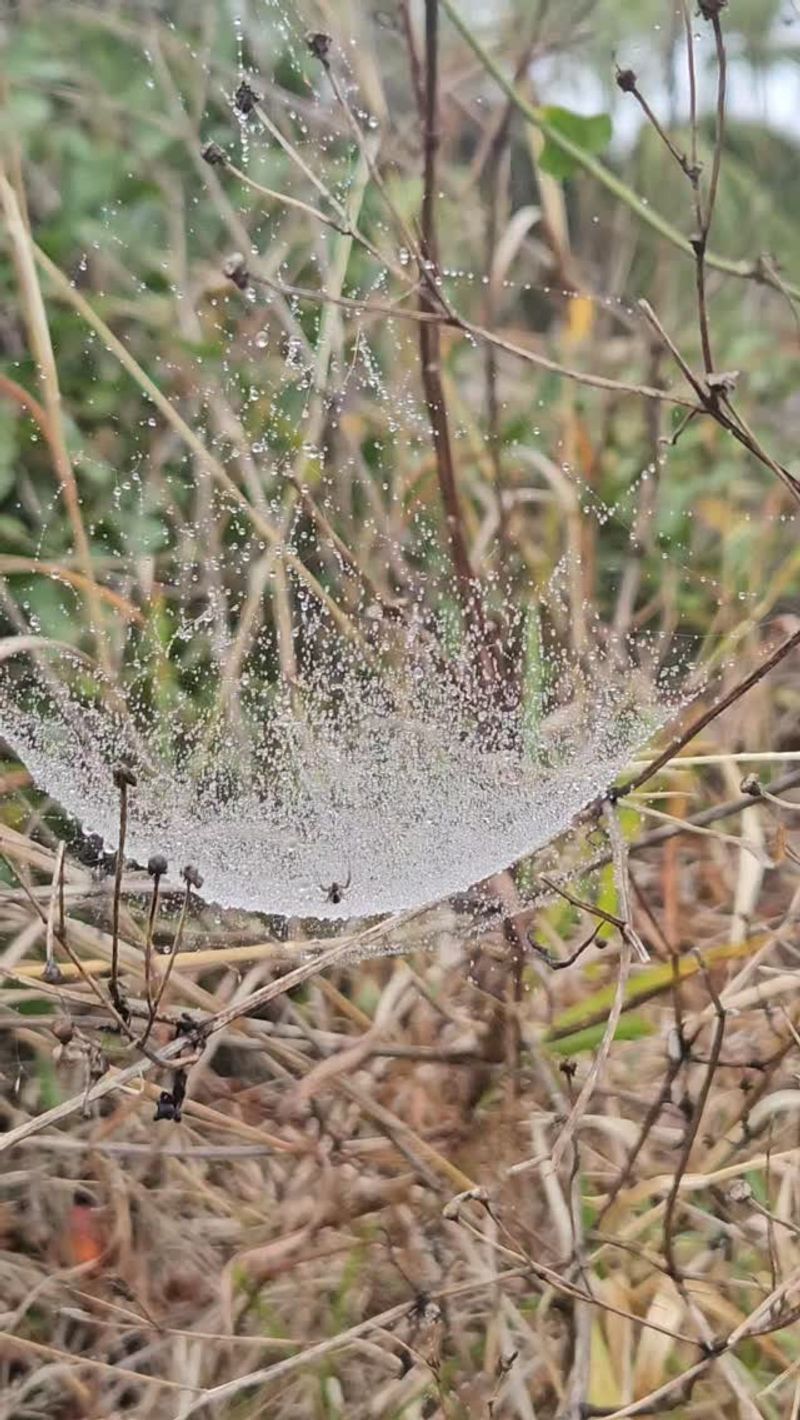
Not every ghostly web in your yard belongs to a grass spider. Look up a few inches into shrubs, tall weeds, or ornamental grasses, and you may find a strange little structure shaped like a teacup sitting over a saucer.
That belongs to the bowl and doily spider, a tiny sheet weaver common across the eastern United States. The spider hangs upside down beneath the bowl, waiting for flying insects that bump into the tangle of threads above it.
Its cousin, the filmy dome spider, builds a delicate dome instead of a bowl. Both belong to a huge family called sheet weavers, or Linyphiidae, which includes hundreds of North American species.
Here is a fun detail. Many sheet weavers are smaller than a grain of rice, yet their webs can look surprisingly large once dew settles on them.
Unlike grass spiders, these little weavers do not build funnels. That makes them easy to tell apart on a foggy morning walk.
Try a quick game with your family. Count funnels in the grass, then count bowls and domes in the shrubs, and see which group wins.
You will likely discover that your yard supports a much bigger spider community than you ever guessed.
Drifting Gossamer From Ballooning Spiders Can Blanket Grass Too
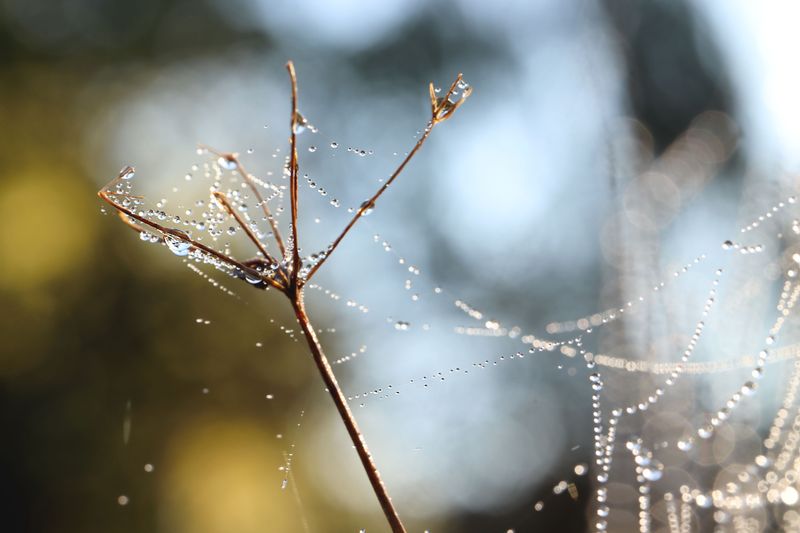
Ever seen grass that looks wrapped in a fine, glistening veil with no funnels at all? You may be looking at gossamer, silk left behind by spiders that travel through the air.
The trick is called ballooning. Small spiders, often young spiderlings or tiny sheet weavers, climb to the top of a grass blade, lift their abdomen, and let out silk threads until breezes and even electric fields in the air carry them away.
Some ballooning spiders travel only a few feet. Others have been found far out over the ocean and high in the sky, which still amazes me every time I read about it.
When lots of spiders try this at once, their threads can settle across a whole field or lawn. Early fall, with calm air and cool mornings, is a common time for it in the Mid-Atlantic.
Gossamer looks different from grass spider sheets. It is thinner, more stringy, and drapes over grass tips rather than forming tidy mats with tunnels.
So if your lawn looks like it got wrapped by a very patient ghost, think airborne spiders. The silk usually breaks apart within a day or two, especially after wind, rain, or mowing.
Leave Those Lawn Webs Alone And Let The Spiders Catch Your Bugs
My best advice is simple. Enjoy the show, snap a few photos, and let those webs be.
Grass spiders and sheet weavers eat a steady diet of flies, mosquitoes, leafhoppers, small caterpillars, and other insects that bother people and plants. A yard full of webs is often a sign of a lively, balanced ecosystem.
Spraying insecticides on a lawn just to remove webs usually backfires. Those chemicals can harm bees, fireflies, and other helpful insects, while spiders tend to move right back in.
If certain spots bug you, there are gentle options. Regular mowing at a healthy height, raking up heavy leaf piles near the house, and trimming ground cover away from doorways will reduce funnel sites where you walk most.
Indoors, sealing gaps around windows and doors helps keep wandering males outside during fall. A broom or vacuum handles any that sneak in, and a cup with a piece of paper works for relocating them.
Across Virginia, the webs fade as frost settles in, and the yard looks ordinary again until next autumn. Until then, step outside on the next foggy morning.
You will be looking at thousands of tiny hunters guarding your grass, and I think that is worth a second cup of coffee.