How to Make a Holiday Wreath From California Native Greens and Berries
Hollywood may owe its name to a scrappy shrub with red berries. Early Los Angeles settlers reportedly mistook it for holly, and the hills were covered with it every winter.
I find it fascinating that this same plant still glows red across California hillsides each December. Robins, cedar waxwings, and mockingbirds know exactly where to find it.
You might find it hard to believe, but its leaves stay leathery and green for weeks after cutting.
Here’s what caught my attention. The best holiday greenery might already be growing near your fence, smelling like bay leaves and pine.
No plastic, no shipping, and no imported fir branches shedding needles on your rug.
The way I see it, a door decoration should tell a story about where you live. So what would yours say if it came straight from your own backyard?
1. That Red-Berried Toyon Shrub Is Your Wreath’s Star
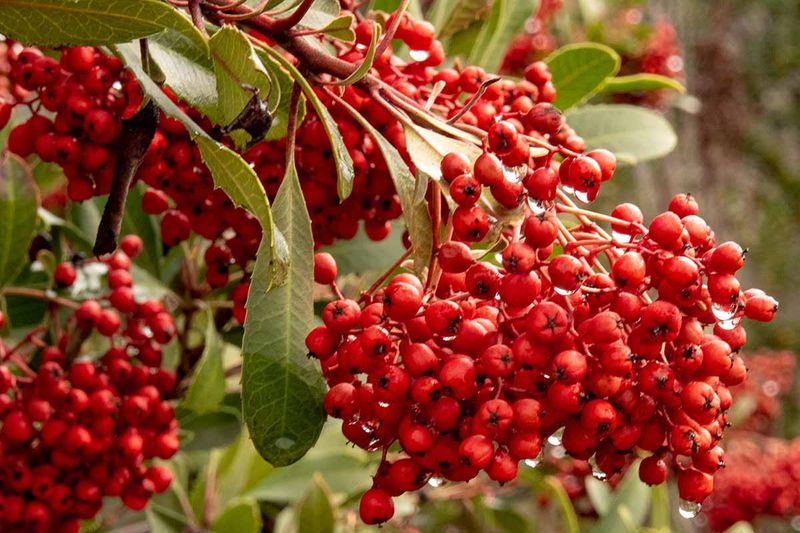
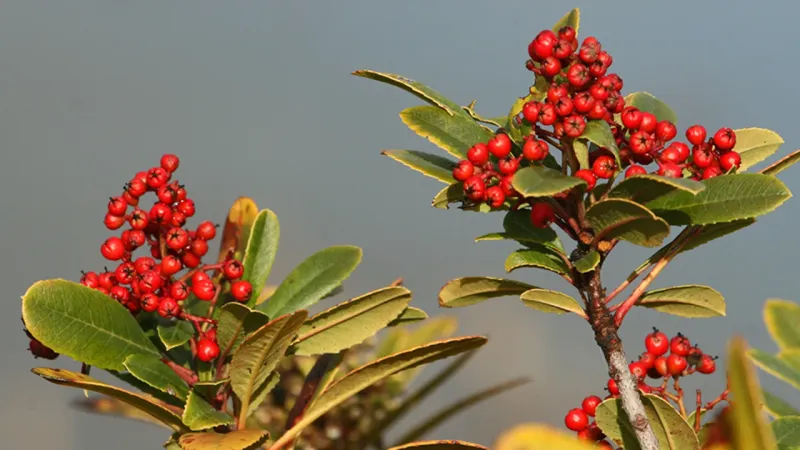
Toyon is the plant behind the old Hollywood story, and it earns every bit of its fame. Known as Christmas berry or California holly, Heteromeles arbutifolia grows wild from the coast ranges to the Sierra foothills.
Its bright red fruits usually ripen in late fall and color up nicely by December. The leaves are leathery, dark green, and toothed along the edges.
That combination gives you both greenery and color from a single shrub, which makes building a wreath a lot easier.
Toyon is a hardy native that handles drought once established. Many gardeners grow it as a hedge or screen, and it responds well to light winter trimming.
Cutting a few berry-laden stems for your door can actually help shape the plant.
Look for branches where the berry clusters sit near the tips. Short pieces about 6 to 10 inches long tuck neatly into a frame.
Longer stems can be trimmed down later, so cut a little extra.
One small heads-up matters here. Toyon seeds and unripe fruit contain compounds that can release cyanide, according to UC sources, so keep curious pets and toddlers from nibbling.
Birds handle the ripe berries just fine.
Toyon pairs beautifully with nearly every other native green. Make it your focal point, and let the other plants play supporting roles around it.
2. Fragrant California Bay Laurel Makes a Sturdy Green Base
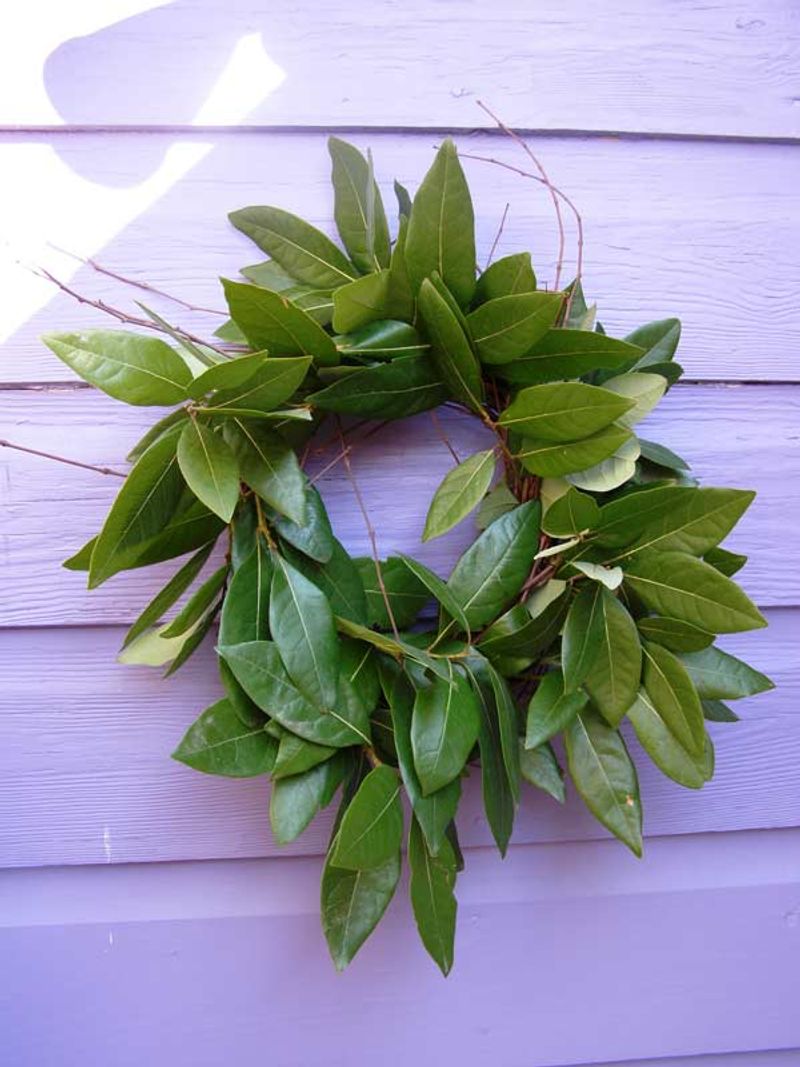
Crush one leaf of California bay laurel, and your kitchen suddenly smells like a forest after rain. Umbellularia californica has a scent much stronger than the Mediterranean bay in your spice jar.
That bold aroma makes it a favorite wreath base. The narrow, glossy leaves hold their shape as they dry, and they keep a soft olive-green color for weeks.
You get a wreath that looks good and smells even better.
Bay trees grow in canyons, oak woodlands, and coastal forests across much of the state. Many homeowners also have them in yards, where they can grow quite large.
Pruning a few lower branches in winter is usually easy on the tree.
Cut flexible stems with plenty of leaves along their length. Bundle three or four together with floral wire before attaching them to your frame.
Overlapping each bundle by about half its length hides the wire and creates a full look.
Go easy on the sniffing, though. Some people get headaches from the strong oils in the leaves, so hang a bay wreath outdoors or in a well-ventilated spot.
Wearing gloves while cutting helps if your skin feels sensitive.
Bay laurel also serves as a host for the sudden oak death pathogen in parts of coastal California. Avoid moving cuttings out of infested counties, and check UC guidance for your area.
3. Building Your Wreath Bundle by Bundle on a Wire Frame
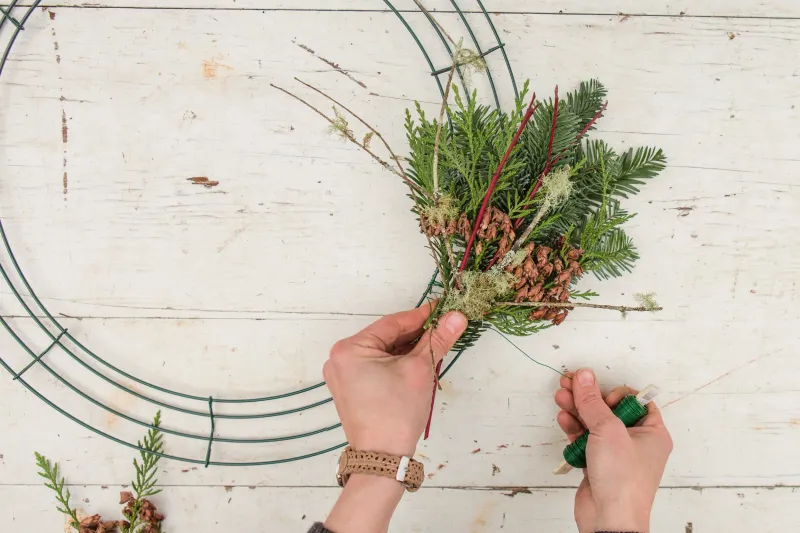
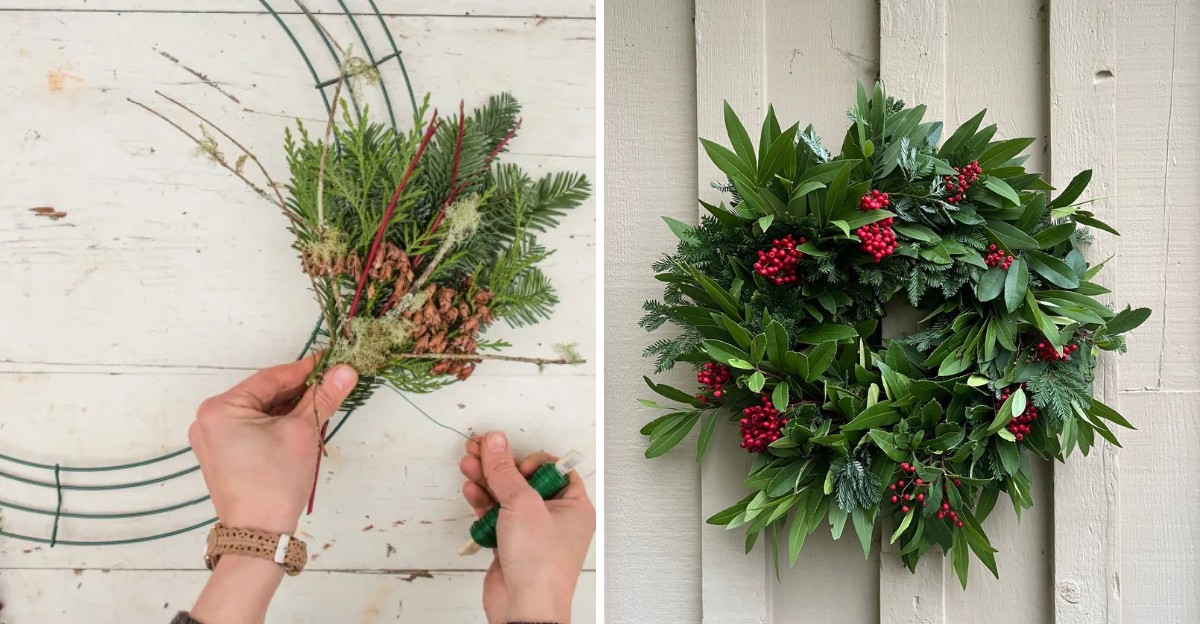
A plain metal ring and a spool of green paddle wire are honestly all the hardware you need. Craft stores sell both cheaply, and a 12 to 14 inch frame suits most front doors.
Start by making small bundles. Gather three to five stems of mixed greens, about 6 to 8 inches long, and wrap the base with wire.
Prepare a big pile before you begin, since a full wreath may use 25 or more bundles.
Tie the wire to the frame and lay your first bundle on top. Wrap the wire tightly around the stems and frame two or three times.
Lay the next bundle so its leaves cover the stems of the last one, and keep going in one direction.
Work around the circle without cutting the wire. When you reach the start, gently lift the first bundle and tuck the final stems underneath.
Tie off the wire on the back and twist it into a hanging loop.
Add your toyon berry clusters last. Poke their stems into the greenery and secure them with short pieces of floral wire.
Grouping berries in clusters of three looks more natural than spacing them evenly.
Step back and look from across the room. Fill thin spots with small sprigs, and trim any stems sticking out awkwardly.
4. Coast Redwood Sprigs and Native Conifers Add Soft Texture
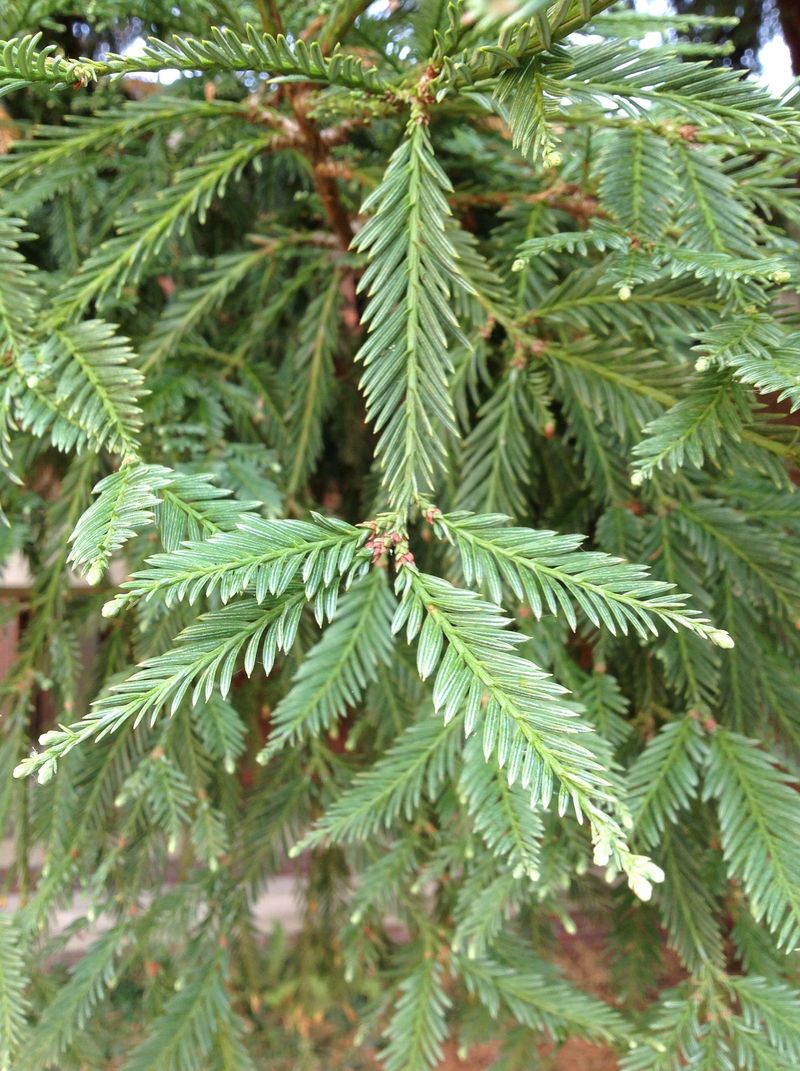
Few things feel more Californian than a wreath trimmed with coast redwood. The flat, feathery sprays bring a soft texture that contrasts nicely with toyon’s stiff leaves.
Redwood foliage does tend to brown faster than bay or toyon. Expect it to look fresh for about a week or two outdoors in cool weather.
Misting it regularly can stretch that time a bit.
Incense cedar is another lovely option. Its flat, fan-like sprays hold up well and carry a clean, woodsy scent.
Many California yards and parks feature this tree, so fallen branches after a storm are worth checking.
Native pines like Monterey pine and gray pine supply cones in all sizes. Small cones look great wired into clusters near your berries.
Larger cones can anchor the bottom of the wreath where you might add a bow.
To attach a cone, wrap floral wire around the lower scales and twist the ends into a tail. Push that tail through the wreath and twist it around the frame.
A dab of hot glue adds extra security on windy porches.
Mix conifers sparingly so the toyon still pops. A ratio of about one part needle foliage to two parts broadleaf greens keeps the look balanced.
You can play with proportions until it feels right to you.
5. Gather Native Greens Without Breaking the Rules
Foraging feels wonderfully old-fashioned, but California has real rules about it. Taking plants from state parks and national parks is generally prohibited, and national forests often require a permit.
Private land requires the owner’s permission. California law also makes it illegal to cut or remove toyon from public highways or land you don’t own without written permission.
That rule dates back to the 1920s, when people stripped hillsides bare for holiday sales.
Your own garden is the easiest and friendliest source. Friends and neighbors with native shrubs often welcome a light trim.
Local native plant society sales and nurseries sometimes have pruned cuttings available too.
Wildlife counts on these plants in winter. Toyon berries feed robins, waxwings, bluebirds, and other birds during lean months.
Take no more than about a third of the berries from any one shrub, and leave plenty behind.
Clean cuts matter for plant health. Use sharp, sanitized pruners and cut just above a leaf or side branch.
Ragged tears can invite disease and slow regrowth.
Watch out for poison oak while you’re gathering. It often grows tangled with toyon and bay in the wild, and its bare winter stems still carry irritating oils.
Gloves and long sleeves are smart choices whenever you cut near brushy areas.
6. Manzanita Branches and Seed Pods Bring a Sculptural Twist
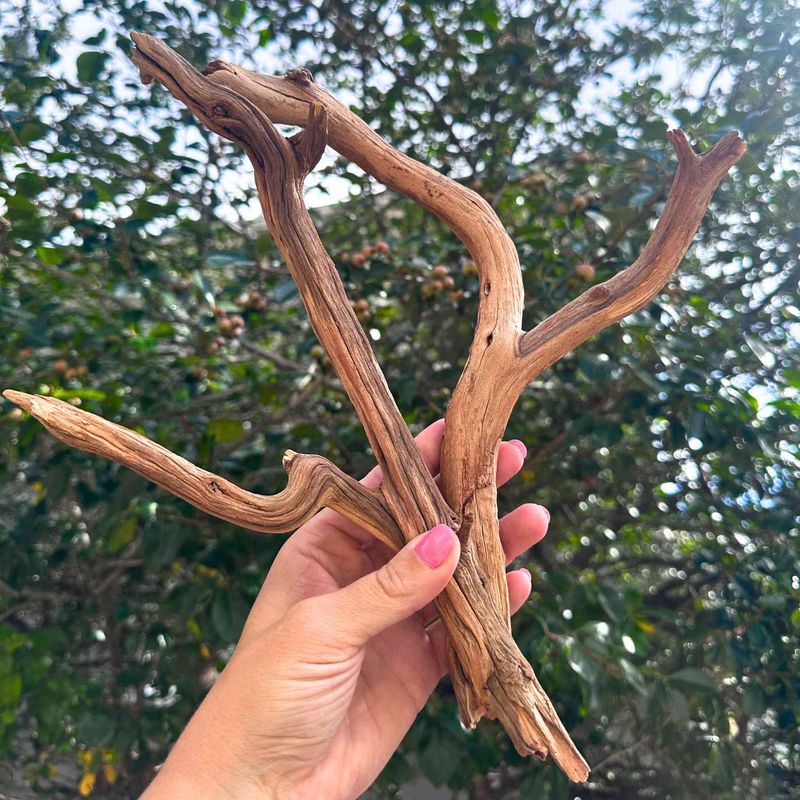
Manzanita bark looks like polished cinnamon, and it feels almost like satin. A few twisting pieces give your wreath a sculptural edge that store-bought versions rarely match.
Small fallen twigs work best. Manzanita wood is hard and dense, so thick branches are tough to bend.
Wire short, curvy pieces near the top or sides where they can break up the round shape.
Many California native plants offer interesting dried bits. California buckeye produces big, glossy brown seeds in fall.
Blue oak and coast live oak acorns add warmth, and you can wire them in by drilling a tiny hole or using hot glue.
Native grasses like deer grass have tan seed heads that add a light, airy feel. Tuck a few stems at angles for movement.
They look especially nice next to deep green bay leaves.
Keep California buckeye seeds away from pets and kids, since they are toxic if eaten. Acorns are safer but still not a snack straight from the wreath.
Hang your creation high enough to stay out of reach.
Dried orange slices and cinnamon sticks aren’t native, but they blend in nicely with these earthy tones. I like them for a cozy kitchen wreath.
Use whatever makes the design feel like home to you.
7. Keep Those Toyon Berries Bright Through New Year’s
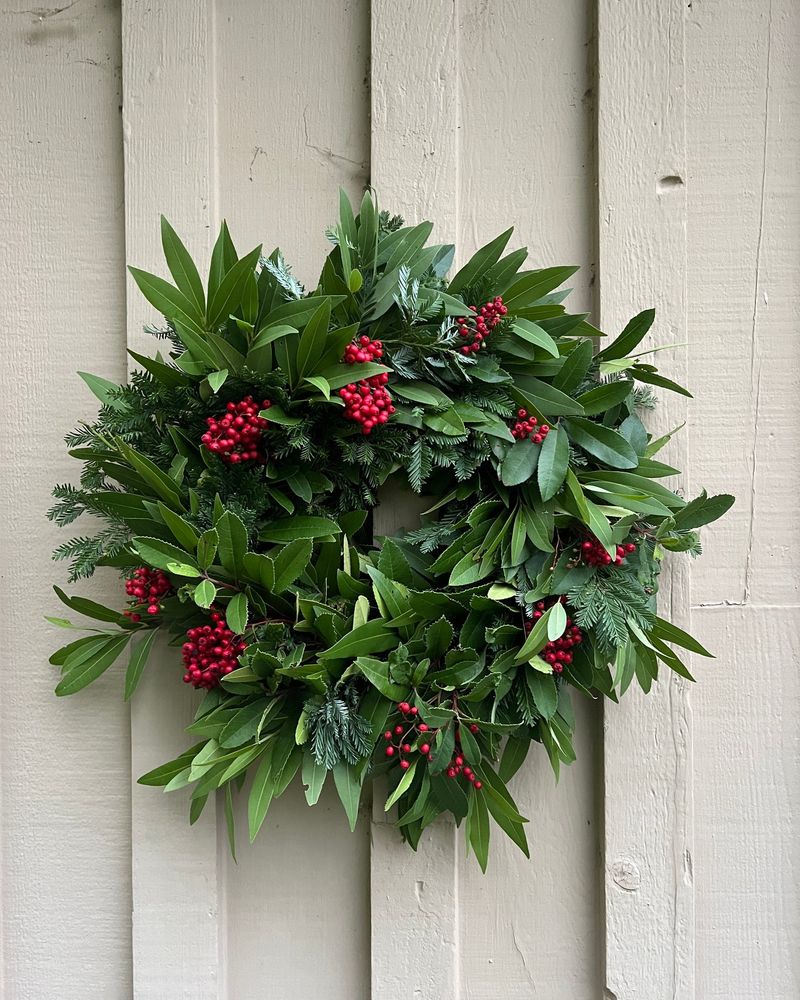
Nothing stings like a crispy wreath two weeks before the holidays. California’s dry winds and warm afternoons can shrivel fresh greens fast, especially in Southern California.
Start by conditioning your cuttings. Recut the stem ends at an angle, then soak the branches in a bucket of cool water overnight.
Fully hydrated greens last noticeably longer once wired onto the frame.
Placement makes a big difference. A shaded, north-facing door or covered porch keeps your wreath fresh much longer than a sunny wall.
Hanging it indoors near a heater will dry it out quickly.
Mist the wreath every few days with plain water. Some crafters lay the whole wreath face-down in a shallow tub of water for a few hours each week.
Just let it drip well before rehanging.
Toyon berries usually hold on well, though they may darken over time. Birds might also stop by for a snack if your wreath hangs outside.
Personally, I count that as a bonus rather than a problem.
Wind can loosen things over time. Check the wires every week and tighten anything that wiggles.
A quick touch-up with a few fresh sprigs from the garden can make the wreath look brand new again for the holidays.
8. Plant a Toyon Now for Years of Homegrown Wreath Supplies
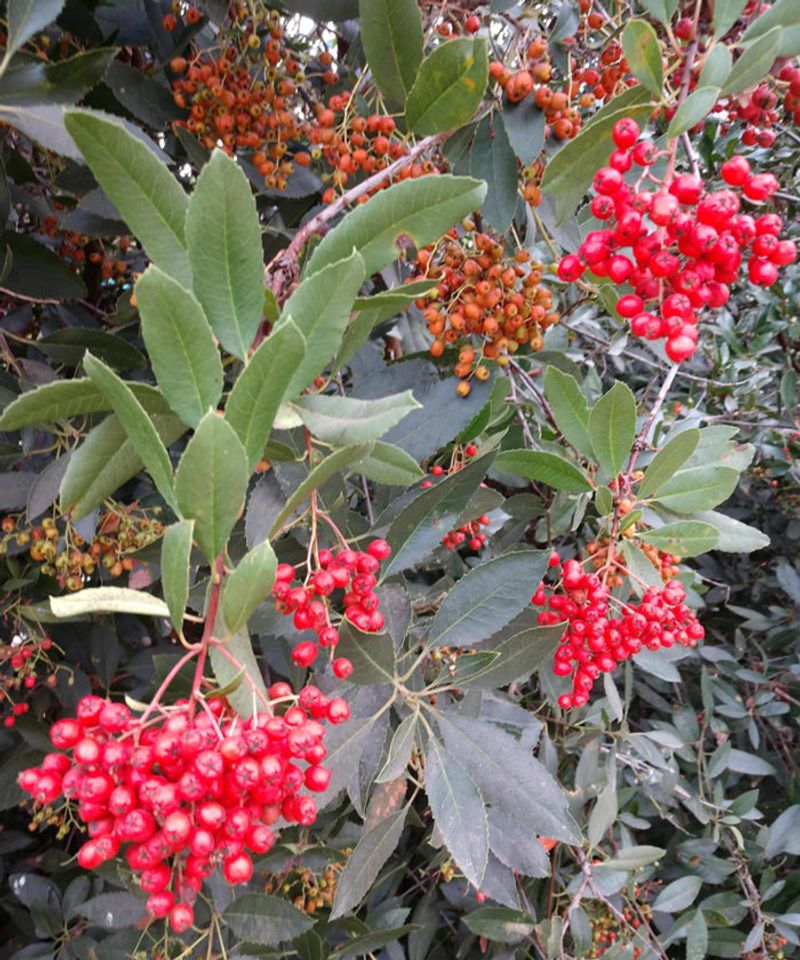
Winter happens to be the best planting season for most California natives. Cool temperatures and seasonal rain help young roots settle in before summer heat arrives.
Toyon is a smart first choice. It grows in sun or part shade, tolerates many soil types, and needs little summer water once established.
Most plants reach 6 to 15 feet tall, so give them room.
Pick up plants from a native nursery or a California Native Plant Society sale. One-gallon pots establish quickly and cost less than large containers.
Water deeply every week or two through the first dry season.
Add a California bay or coffeeberry nearby for more variety. Coffeeberry offers glossy leaves and berries that turn from red to dark purple.
Together, these plants create a living wreath pantry.
Your garden gains more than decorations. These shrubs feed birds in winter, support pollinators in spring, and provide shelter all year.
UC Cooperative Extension often points out how natives help local wildlife.
After the holidays, don’t toss your wreath in the trash. Strip off any wire and add the greens to your compost or green waste bin.
Next December, you can head out the back door with pruners and start the tradition all over again.