How To Prune Storm-Damaged Trees In Florida Without Making The Damage Worse
A tree can wall off its own wounds from the inside, building chemical barriers around injured wood like tiny bulkheads. Scientists have a name for this clever defense, and one sloppy saw cut can break right through it.
I learned the hard way that my cleanup urge after a big blow was not always helping. Years ago, I trimmed a broken oak limb flush against the trunk, proud of how neat it looked. Two years later, a soft, punky patch of rot showed me exactly what I had done.
Truth is, most storm-battered trees in Florida are tougher than they look. Many of them can bounce back if we give them smart cuts, a little patience, and plenty of leaves to work with.
That neat-looking cut taught me a lesson, and my oak charged full price for it.
That Neat Flush Cut On Your Oak Trunk Is Hiding A Problem
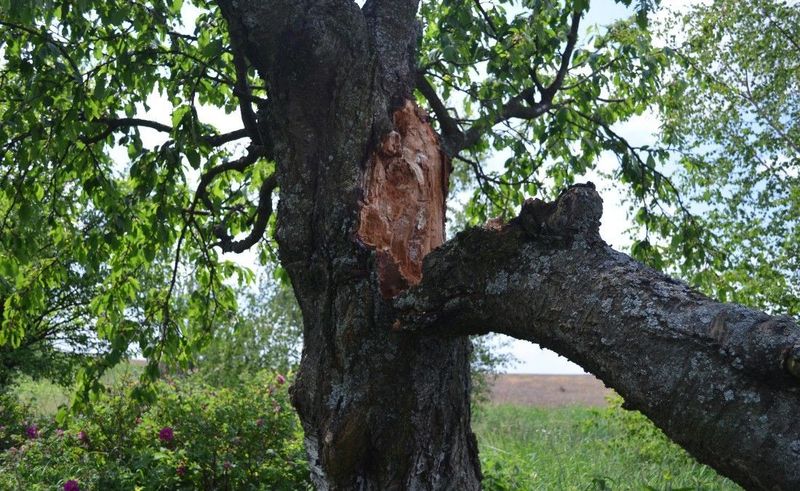
Trees do not heal the way our skin does. Instead of repairing hurt wood, they seal it off and grow new tissue over the top, a process University of Florida researchers describe as compartmentalization.
The key player is the branch collar. That slightly swollen ring where a limb meets the trunk holds special cells that build the seal. Cut into it, and you open the trunk to decay that can spread for years.
I used to think a cut tight against the trunk looked tidy and professional. Now I see it as an open door for fungi and wood-boring insects. A flush cut leaves a bigger wound and removes the very tissue that would close it.
Look for the bark ridge and the collar before you cut. Make your final cut just outside them, angled slightly away from the trunk. Leave the branch collar itself untouched so the tree can seal the wound.
Skip the wound paint, too. UF/IFAS and most arborists agree that sealers and tar rarely help and can trap moisture against the wood.
Within a season or two, you should see a donut-shaped ring of new wood rolling inward. That ring is your proof the tree accepted the cut and got to work.
Three Cuts Keep A Heavy Broken Limb From Tearing The Bark
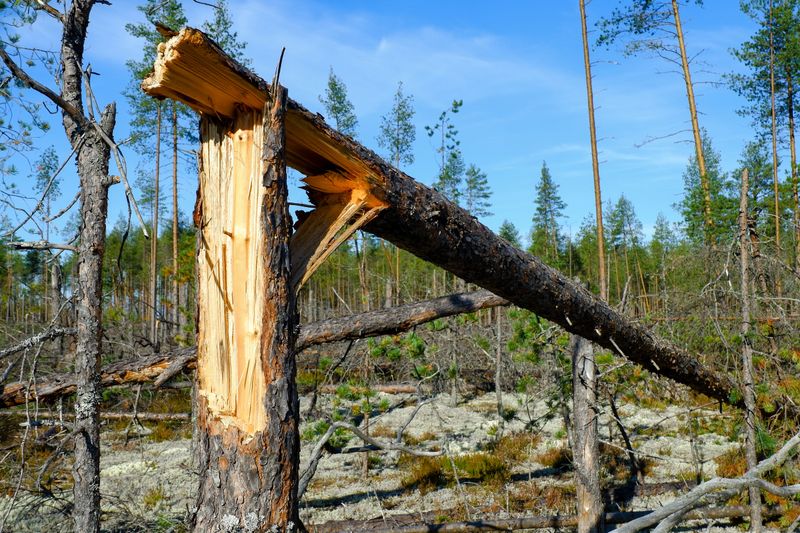
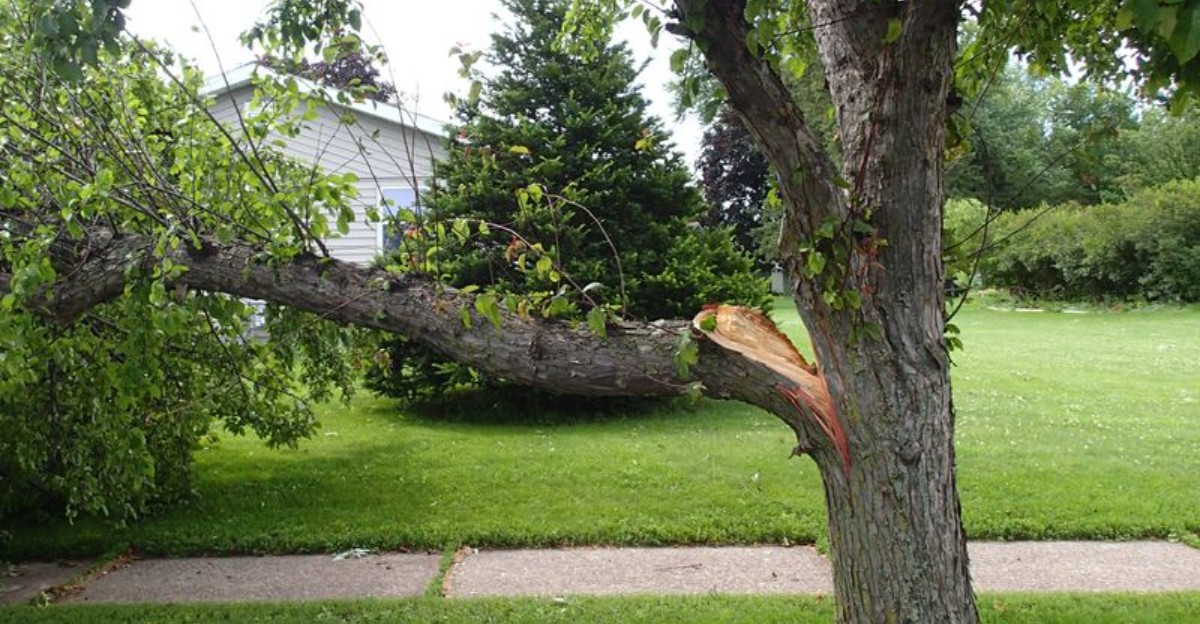
Gravity is sneaky. A large broken branch that you cut from the top will often sag, crack, and peel a long strip of bark down the trunk before your saw finishes the job.
The fix is a simple three-cut method that arborists teach everywhere. First, cut about a third of the way up from the underside, roughly a foot or two out from the trunk. That undercut helps keep the bark from tearing down the trunk.
Second, move a few inches farther out and cut from the top until the limb drops. Now the heavy weight is gone, and you are left with a short, light stub.
Third, remove that stub just outside the branch collar with a clean, careful cut. No ripping, no splinters, and a wound the tree can close.
Fair warning about size. UF/IFAS guidance suggests homeowners handle only small branches they can reach safely from the ground and leave larger ones to professionals. Anything larger, higher, or tangled with other limbs carries stored tension that can snap back hard.
Keep your tools sharp and clean. A dull saw crushes bark and leaves ragged edges, while a crisp blade gives the tree a smooth surface to seal.
Topped Trees Grow Back Weaker And Snap Sooner
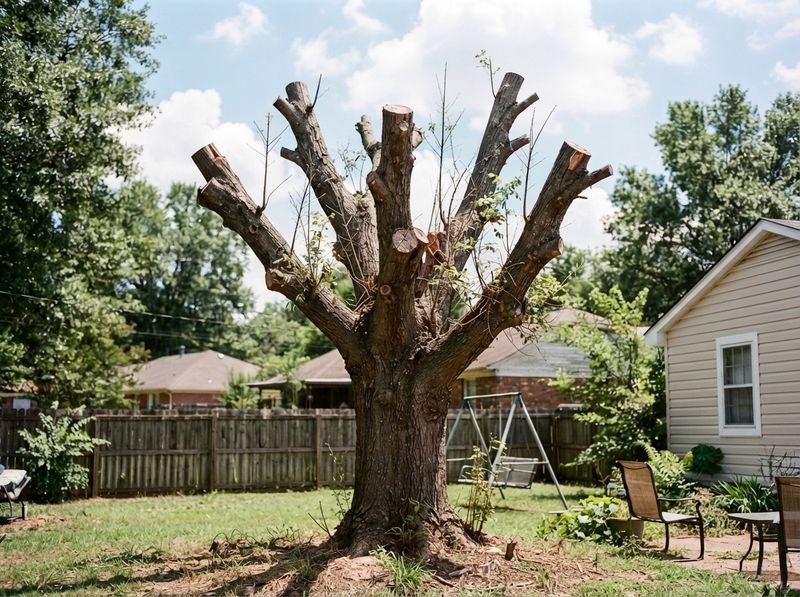
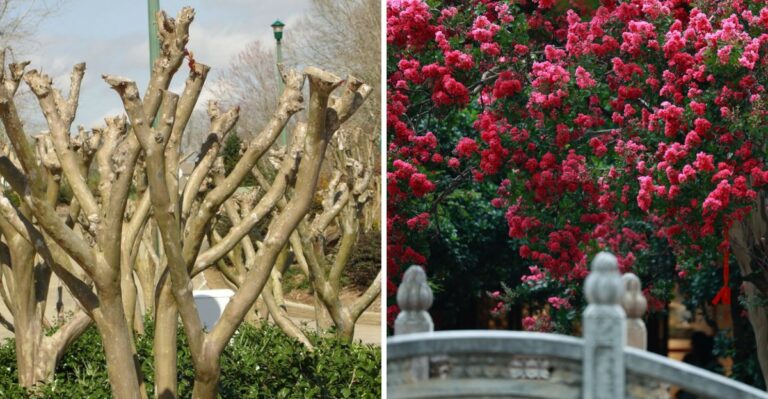
Drive around after any hurricane and you will spot them. Trees with every big branch chopped back to blunt stubs, looking like coat racks with a bad haircut.
Topping, sometimes called hatracking, removes a huge share of the leaves a tree needs to make food. It also leaves large wounds that decay often moves into quickly.
Here is what gets me. The thick bunches of new shoots that sprout from those stubs grow fast but attach weakly near the surface of the wood. UF/IFAS studies after Florida hurricanes found that trees with poor structure, including topped ones, tended to fail more often in later storms.
So the chop that seemed safe creates a more breakable tree a few years down the road. You end up paying for more pruning, more cleanup, and possibly a replacement.
Trees also lose shade on their own bark when the canopy vanishes. Intense sun can scald thin-barked species that were never meant to face that heat bare.
If a tree truly needs to be smaller, ask for reduction cuts back to healthy side branches. Those keep the natural shape and spread the work over time.
Reduction Cuts Clean Up Jagged Branch Tips The Smart Way
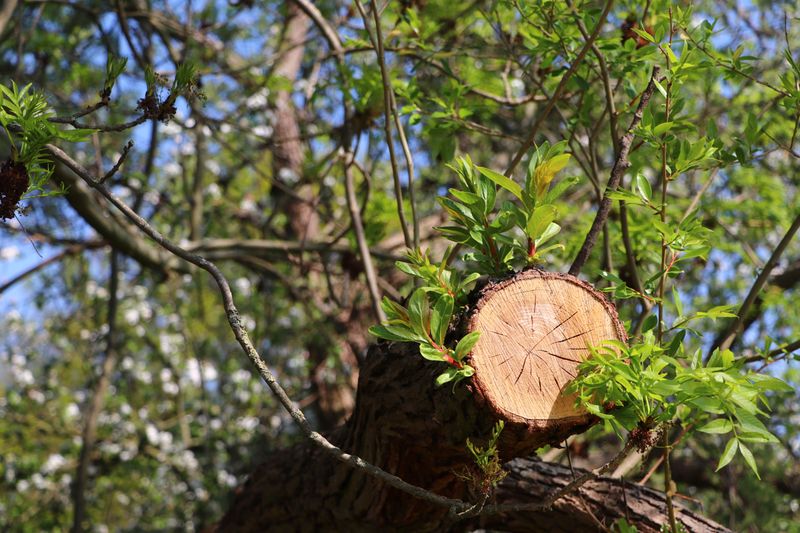
Splintered branch ends look awful, and I get the urge to trim them right away. Those torn tips are worth fixing, but where you cut makes all the difference.
A reduction cut shortens a branch back to a healthy side branch growing in a good direction. Arborists generally recommend choosing a lateral at least one-third the diameter of the piece you remove. That smaller branch takes over as the new leader and keeps feeding the wood below.
Simply snipping a broken tip back to nothing leaves a stub with no leaves to support it. Stubs like that often decline, rot, and sprout messy shoots.
For a branch that is ripped, twisted, or cracked, make a clean cut just below the damage. Ragged bark edges can be trimmed smooth with a sharp knife so water does not sit in the torn spots.
Thinning cuts are the other useful tool. Those remove an entire branch back to its origin at the trunk or a larger limb, outside the collar.
Step back often and look at the whole crown. Small, thoughtful cuts done in stages beat one marathon session that leaves the tree lopsided.
Those Palm Fronds Above Nine And Three O’Clock Should Stay Put
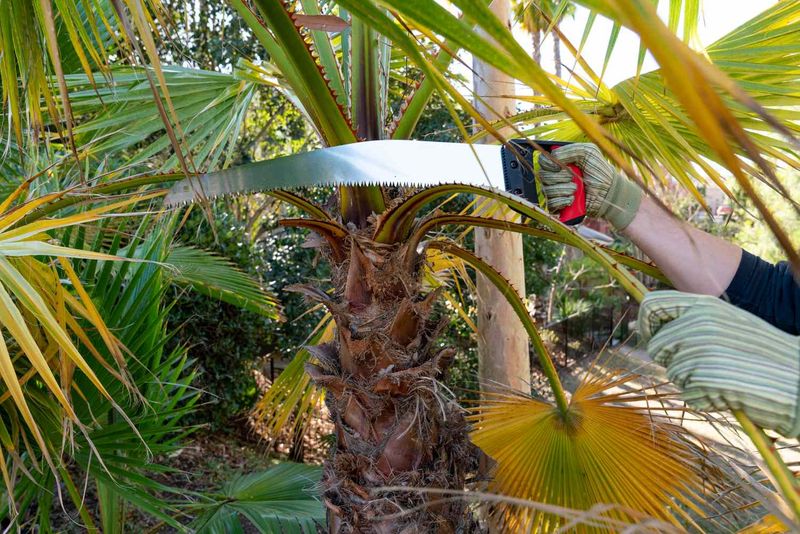
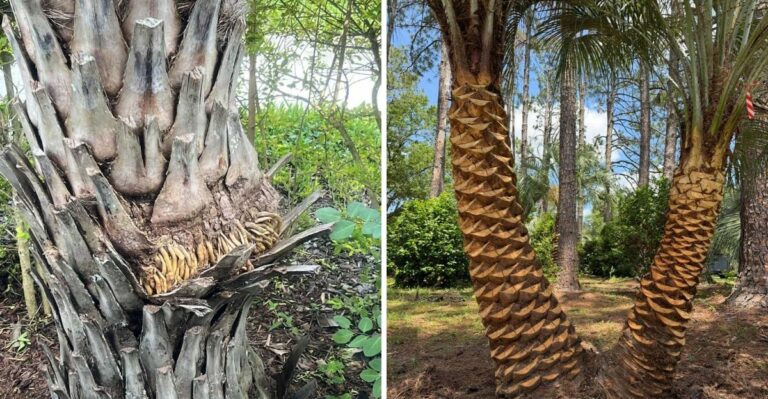
Palms play by their own rules. Unlike oaks or maples, a palm has a single growing point called the bud, and it cannot sprout new branches if that bud is harmed.
That is why the so-called hurricane cut makes UF/IFAS palm experts cringe. Stripping a crown down to a few upright fronds removes stored nutrients and food-making leaves, and it can leave the palm weaker and more vulnerable, not safer.
A simple guideline helps. Picture a clock face on the crown and leave every green frond above the 9 and 3 o’clock line. Remove only fronds that are fully brown or hanging and broken.
Yellowing lower fronds are often a sign of potassium deficiency, common in sandy Florida soils. The palm pulls nutrients from those old fronds, so cutting them early can make the shortage worse.
Check the bud area after a storm. If the newest spear leaf pulls out easily or smells foul a few weeks later, bud rot may be setting in, and a palm specialist should take a look.
Not going to lie, a full shaggy crown looks less tidy. Your palm will thank you anyway.
Walk Around The Whole Tree And Check The Canopy First
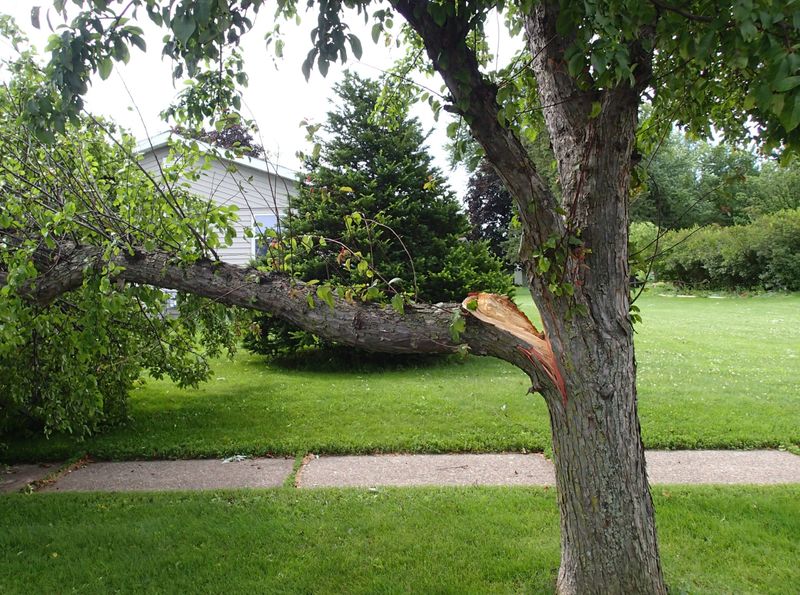
Before any saw comes out, grab a cup of coffee and slowly circle the tree. Ten quiet minutes of looking can save you a costly mistake.
Start with the big picture. Extension specialists often suggest a tree with at least half of its crown still intact has a reasonable shot at recovery, especially if it was healthy before the storm.
Next, check the trunk and main limbs for long cracks, splits where two trunks join, or hollow areas. Those structural problems are much harder to fix than broken branch tips.
Then look down. Lifted soil, exposed roots, or a fresh lean all suggest the root system has been damaged. A tree that tipped noticeably during the storm may not hold firm in the next one.
Species matter in Florida, too. UF/IFAS hurricane surveys found live oak, sabal palm, and southern magnolia among the more wind-resistant trees, while laurel oak, water oak, and sand pine tended to struggle more.
Jot down what you see or snap a few photos. Those notes help you decide what you can trim yourself and what needs a professional eye.
Leaning Trees Near Power Lines Belong To A Certified Arborist
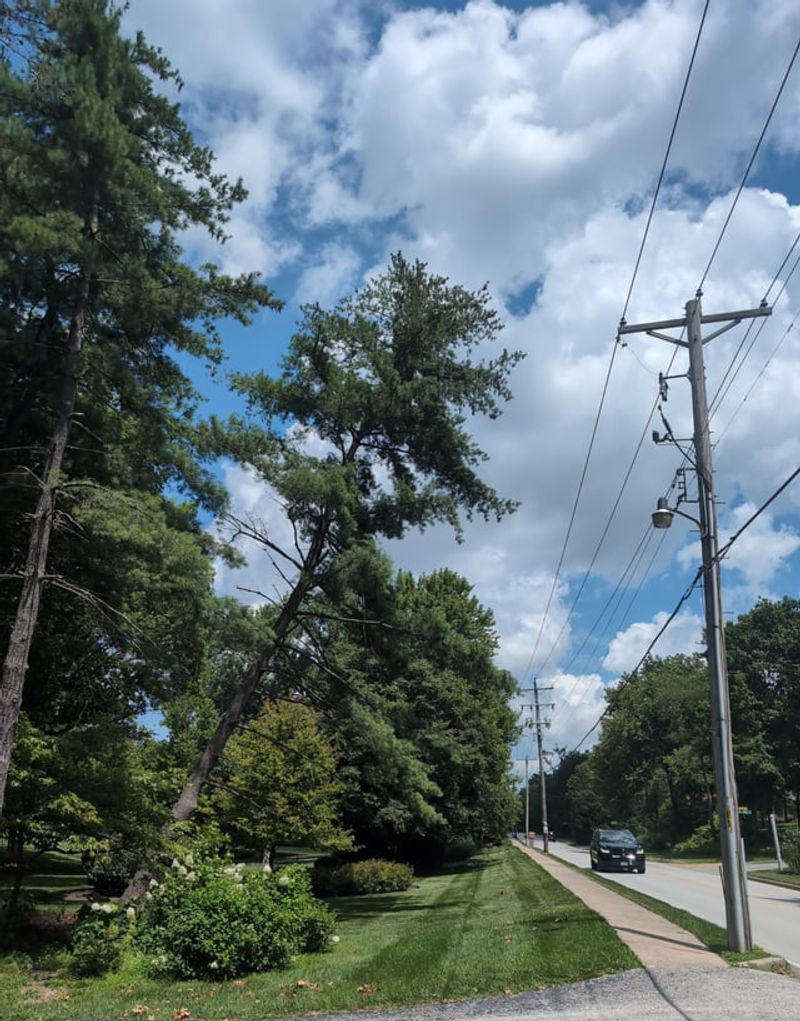
Trust me on this one. Some jobs are not worth the risk, no matter how handy you are with a chainsaw.
Any tree touching or leaning toward power lines calls for your utility company first. Lines can still carry current even when they look harmless on the ground, so keep well back and let trained crews handle it.
Large hanging limbs, split trunks, and trees pressing on a roof often hold twisted, loaded wood. One wrong cut can make a branch swing or jump in ways nobody expects.
That is where an ISA Certified Arborist earns their fee. Look up credentials on the International Society of Arboriculture website, ask for proof of insurance, and be cautious with door-knockers who show up right after a storm offering cheap topping.
Arborists can also judge whether a small leaning tree can be pulled upright and braced. UF/IFAS notes that young trees often recover from this, while large uprooted trees rarely stabilize well.
Check your city or county rules before removing bigger trees. Many Florida communities require permits, though state law allows removal of hazardous residential trees when documented by an arborist.
New Sprouts On A Battered Trunk Are Part Of The Comeback
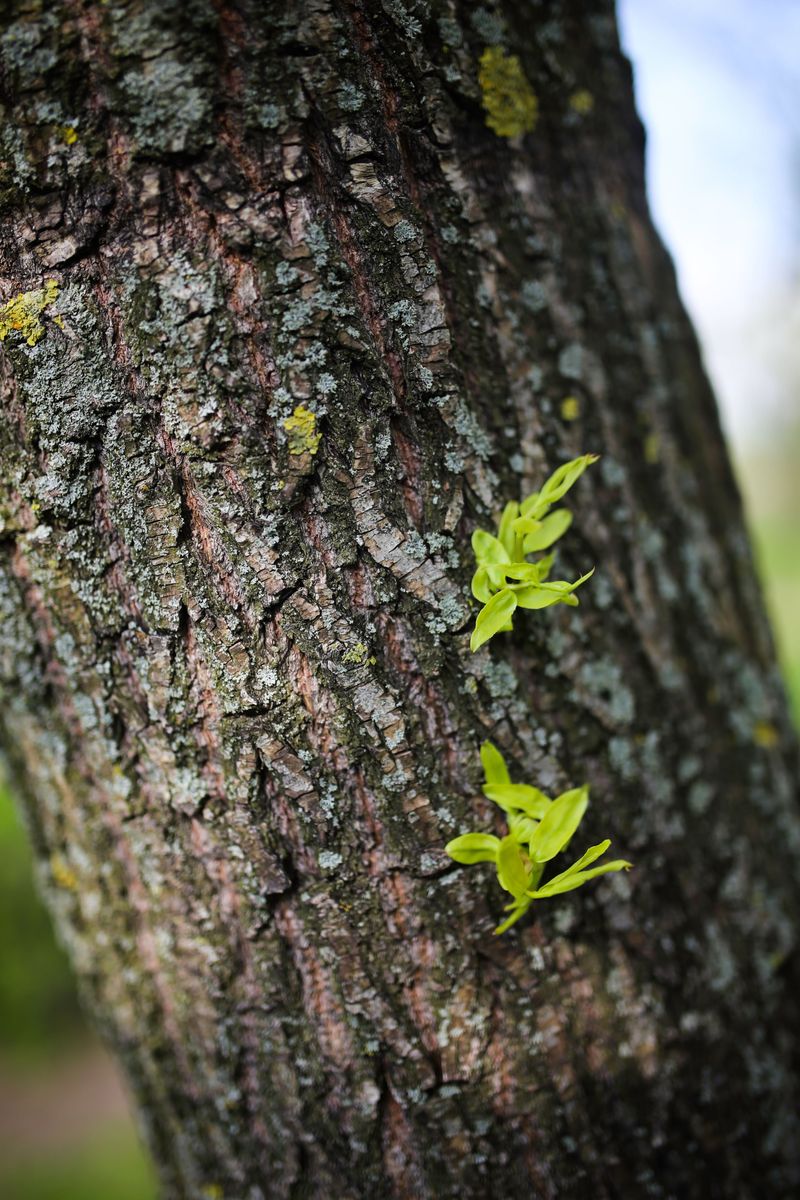
A few months after a big storm, many damaged trees suddenly fuzz up with clusters of small green shoots along the trunk and limbs. I didn’t expect it the first time, and I almost cut every one.
Those epicormic sprouts are the tree rebuilding its energy supply. UF/IFAS restoration guidance suggests leaving most of them for now, because each leaf helps restock the food reserves the storm drained away.
Over the next few years, an arborist or a careful homeowner can thin the sprouts in stages. The goal is to keep a few well-spaced, strong ones that can grow into sturdy new branches.
Restoration takes patience. Plan on a restoration pruning program lasting two to five years, with longer timelines for big or badly damaged trees.
Water matters during that recovery. Trees that were reset after leaning behave a lot like new transplants, so give them regular deep watering through dry spells, especially during the spring dry season.
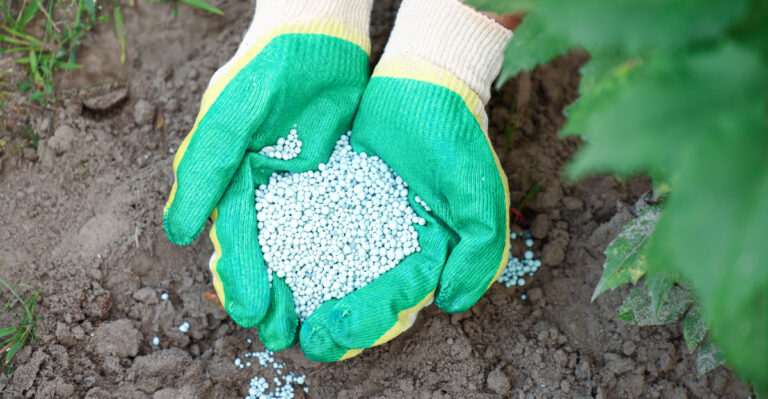
Skip heavy fertilizer right away and spread a few inches of mulch, kept away from the trunk. With smart cuts and steady care, your storm-weary tree has a real chance at a strong second act.