How To Scrape Spotted Lanternfly Egg Masses Off Ohio Trees This Fall
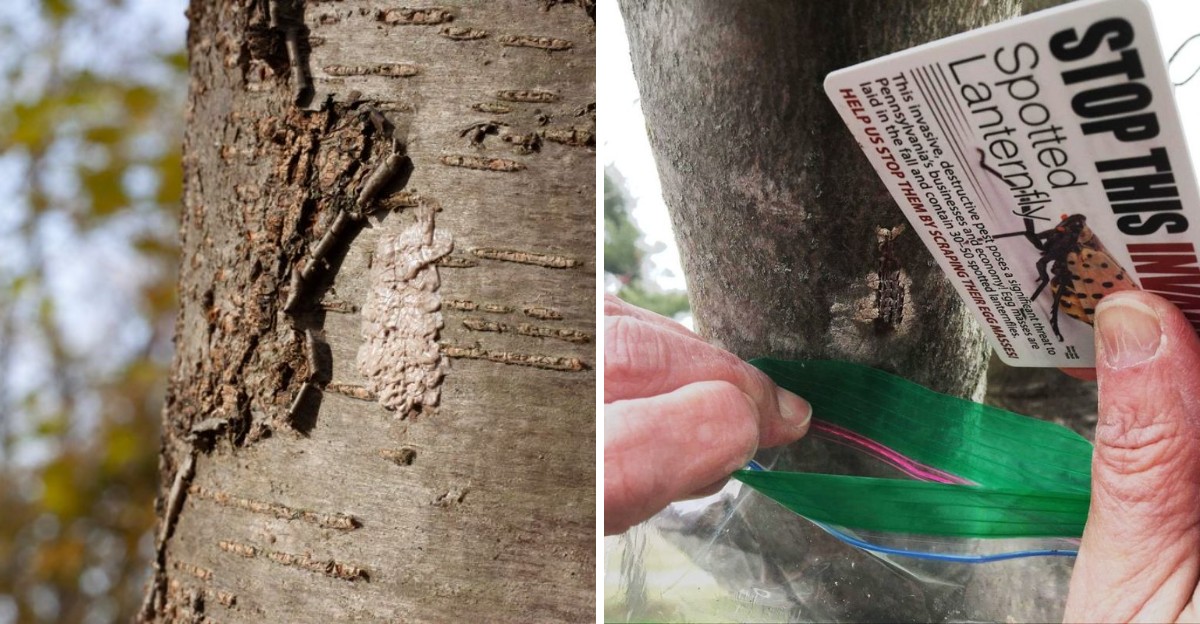
That gray, putty-like smear on your tree bark isn’t tree damage. It’s next spring’s infestation waiting to hatch.
Spotted lanternfly egg masses blend in almost perfectly with bark, moss, or even rust stains, which is exactly why so many Ohio homeowners walk right past them without a second glance.
Each one you miss this fall turns into dozens of new insects come spring, and by then scraping won’t be an option anymore.
Getting rid of them isn’t as simple as brushing them off either. A specific method keeps every egg inside from surviving the process, while doing it wrong just relocates the problem a few feet away.
Grab a scraper and start checking your trees this week. What you find, or don’t find, could decide how bad next year’s lanternfly season gets on your property.
1. Find Spotted Lanternfly Egg Masses Before Winter
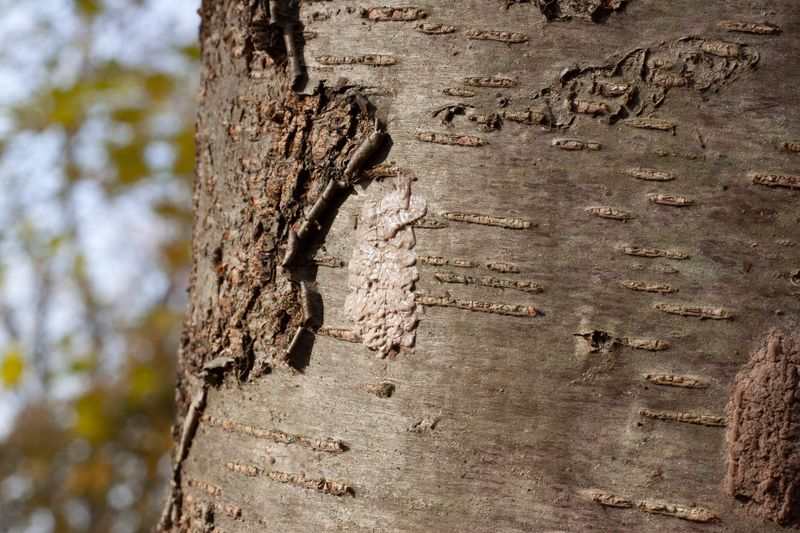
Picture a gray smudge on a maple trunk that looks like someone flicked mud at it. That little smear might hold dozens of future pests waiting for spring.
Spotted lanternflies lay eggs from late summer into early winter. October is usually the busiest month, so fall is prime time to start hunting.
Egg masses sit quietly through the cold months in sheltered spots. Most of them hatch into tiny nymphs in April or May.
The good news is that you have a long window to work with. You can search for and remove egg masses from September all the way through May.
Starting early gives you a real advantage, though. Leaves drop in fall, bark is easier to see, and you are not yet fighting snow or icy fingers.
Try a weekend walk around your yard with a warm drink in hand. Look low and high on trunks, and take your time near trees that had adult lanternflies this summer.
Adults tend to leave clues before they lay eggs. Sticky honeydew, black sooty mold, and swarms on tree-of-heaven or grapevines point to hot spots worth checking first.
Think of it as a scavenger hunt with a purpose. Each mass you find now is one less crowd of hungry nymphs next spring.
2. Scrape Egg Masses From Tree Trunks And Hard Surfaces
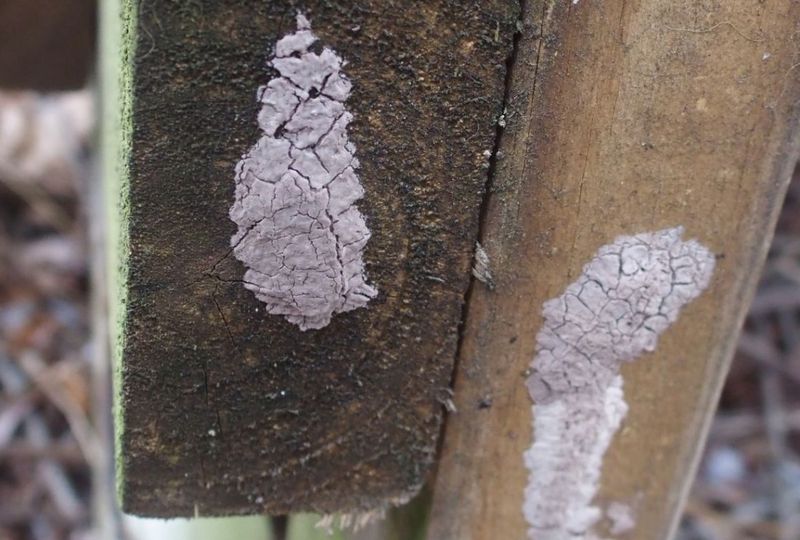
Here is a surprise for many homeowners: these bugs are not picky about where they lay eggs. Tree trunks and branches are common, but so are plenty of things with no leaves at all.
Egg masses turn up on firewood, rocks, brick walls, fences, decks, and sheds. Lawn mowers, trailers, patio furniture, and even cars can host them too.
Hard surfaces make scraping simple because the mass pops off with steady pressure. Work from top to bottom so pieces fall toward your collection bag instead of your shoes.
On tree trunks, go slowly and keep your tool flat. You want to lift the eggs, not gouge the bark, since healthy bark protects the tree from disease.
Hold a zip-top bag or small container right under the mass as you scrape. That way, every bit lands where it belongs instead of in the grass.
Your Ohio Garden Changes Every Week. Your Plan Should Too.
Gardening in Ohio changes quickly throughout the season. Every Friday you’ll receive a simple weekly plan showing exactly what to plant, prune, fertilize, harvest, and protect so you never miss the right timing.
Stacked firewood deserves a careful look before you move it anywhere. Hauling infested wood to a cabin or campsite is one of the easiest ways these pests spread.
A quick scrape of each log takes only a few minutes. Your future self, and your neighbors, will thank you for it.
Keep a small scraping kit by the back door during fall. When you spot a mass, you can handle it right on the spot.
3. Use A Stiff Plastic Card For Careful Removal
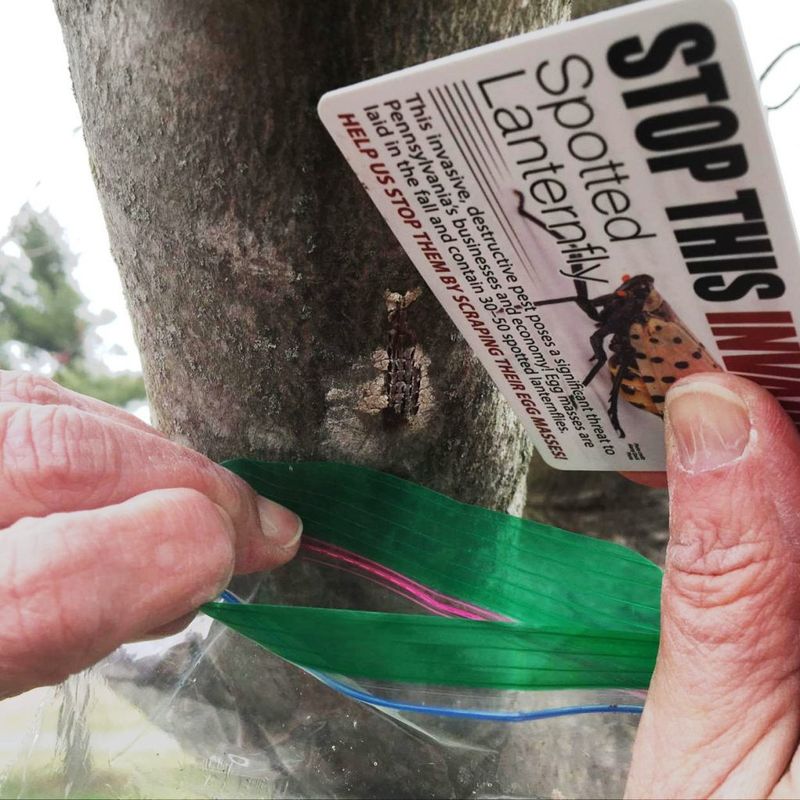
That expired gift card in your junk drawer is about to become a hero. A stiff plastic card is one of the best tools for removing lanternfly eggs.
Old credit cards, hotel key cards, and loyalty cards all work well. A putty knife is another solid choice, especially for thick or crusty masses.
Hold the card at a low angle, almost flat against the surface. Push firmly in one smooth stroke, like spreading cold butter on toast.
The goal is to remove the entire mass, not just the top layer. Leftover eggs tucked in cracks can still hatch, so check your work after each swipe.
Cards have a nice advantage on trees because the edge is firm but not sharp. You can clear eggs without slicing into living bark the way a metal blade might.
Some egg masses sit too high or deep in crevices to reach safely. For those spots, certain horticultural oils can be applied in winter or early spring, following label directions.
Wear gloves if you like, since the waxy coating can feel gummy. Rinse your card afterward so it is ready for the next round.
Fun fact: many Ohio extension offices have handed out free scraper cards at events. If you see one, grab it and stash it in your car for surprise finds.
4. Drop Scraped Egg Masses Into Soapy Water
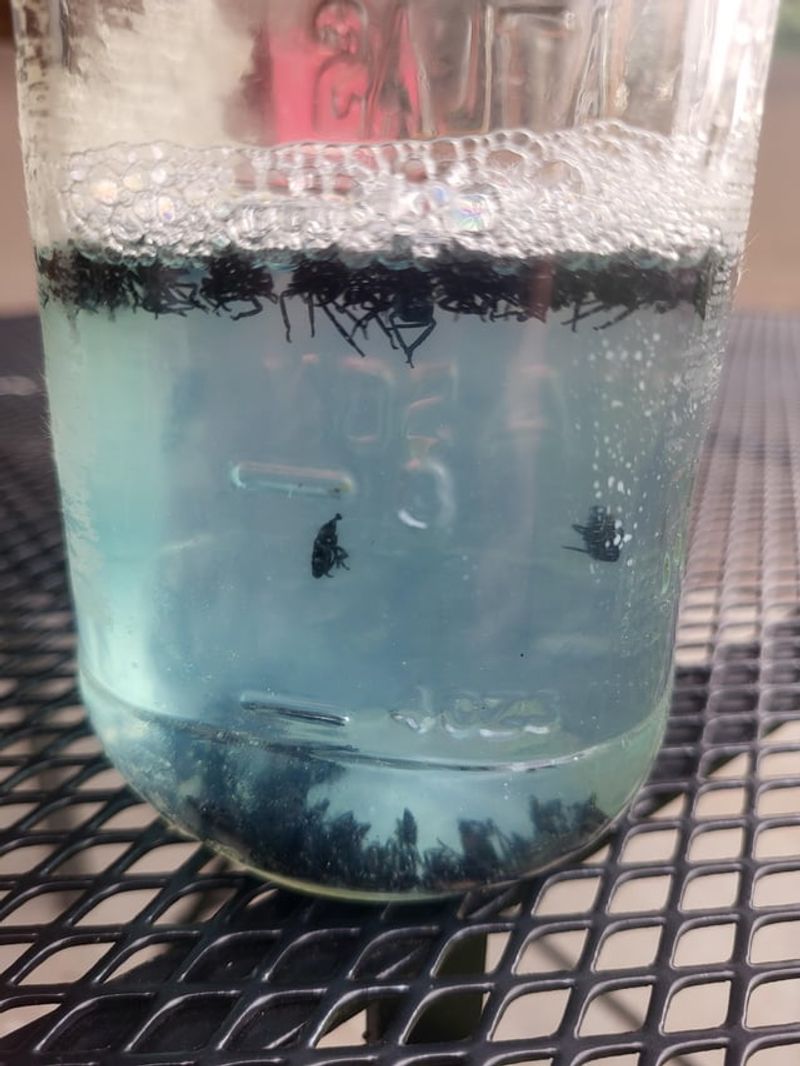
Scraping is only half the job, and skipping the second half is a common mistake. Egg masses knocked onto the ground can still hatch come spring.
That means you need a plan for every mass you remove. The easiest one uses supplies already sitting in your kitchen or bathroom.
Fill a jar or zip-top bag with warm water and a good squirt of dish soap. Drop the scraped eggs in and make sure they stay fully under the liquid.
Rubbing alcohol and hand sanitizer also work well. Pick whichever is handy, and keep the eggs submerged so nothing survives.
Seal the bag or screw the lid on tight once you are done. After the eggs have soaked, you can toss the sealed container in the trash.
Kids can help with this step, and they usually love it. Give them the job of holding the jar and counting how many masses you collect.
Label a jar with the date and location if you want to track your progress. Seeing the number grow each weekend is weirdly satisfying.
Skip stomping on eggs as your main method, since some can escape damage. A soapy bath is simple, cheap, and much more reliable.
Keep the jar in a cool spot away from pets while it sits. A bright sticky note that says do not open helps too.
5. Search Beneath Branches And Along Rough Bark
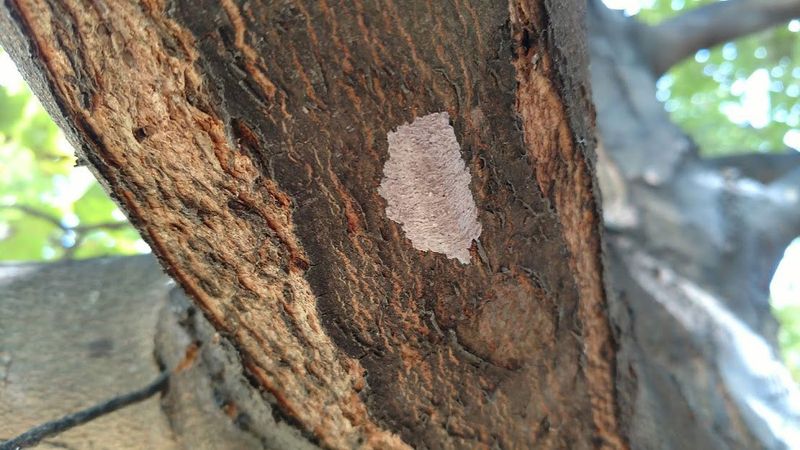
Would you recognize a lanternfly egg mass if you saw one? Many people walk right past them, thinking they are splashes of mud or dried cement.
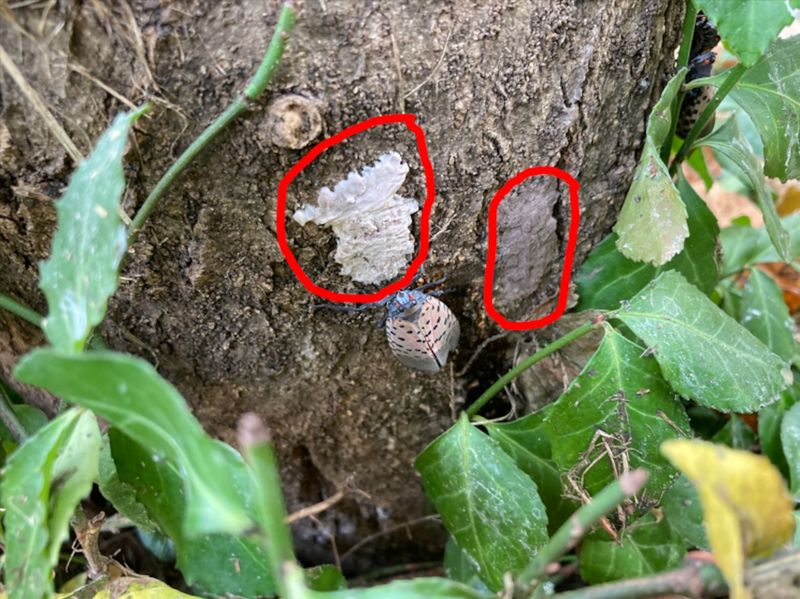
Each mass is about 1.5 inches long, roughly the length of your thumb tip to knuckle. They are usually brown or gray and lie flat against the surface.
Fresh masses look different at first. They wear a white, glossy, waxy coat that slowly dries to a darker grayish brown.
Older masses often look dry and cracked, a bit like old putty. If you see rows of small oval holes, the nymphs have already left, so there is no need to scrape those.
Now for the hiding spots. Lanternflies like the undersides of branches and the deep grooves of rough bark, where eggs stay tucked away from wind and weather.
Crouch down and look up at the bottom of limbs. A small flashlight helps on cloudy days, making the waxy coating easier to catch.
Trees with shaggy or furrowed bark, like black walnut, oak, and maple, deserve extra time. Run your eyes slowly along each crack instead of scanning quickly.
A pair of cheap binoculars can reveal masses higher up. Once you train your eye, spotting them starts to feel like a game you keep winning.
6. Expand The Inspection Beyond A Single Tree
Imagine cleaning one window in a dusty house and calling it spotless. Checking just one tree works about the same way.
Spotted lanternflies spread their eggs across many surfaces around a property. If adults visited your yard, there is a good chance eggs landed in more than one place.
Walk your whole lot in a loop. Start at the house, then move to the garage, shed, fence line, and back corner where tools and junk tend to pile up.
Flip over flower pots and peek behind stacked pavers or landscape stones. Check bird feeders, swing sets, grills, and the underside of your deck railing.
Vehicles and trailers deserve a look, especially near wheel wells and bumpers. Cars that sit outside for weeks can carry eggs to new towns without anyone noticing.
Grab a notebook or use your phone to make a simple map. Mark each spot where you find a mass so you know where to focus next time.
Teaming up with neighbors can make a big difference. Lanternflies ignore property lines, so a whole street working together gets better results than one busy yard.
Consider hosting a friendly block hunt on a crisp October afternoon. Hot cider, a few scraper cards, and some soapy jars can turn chores into a fun get-together.
7. Give Special Attention To Smooth Outdoor Surfaces
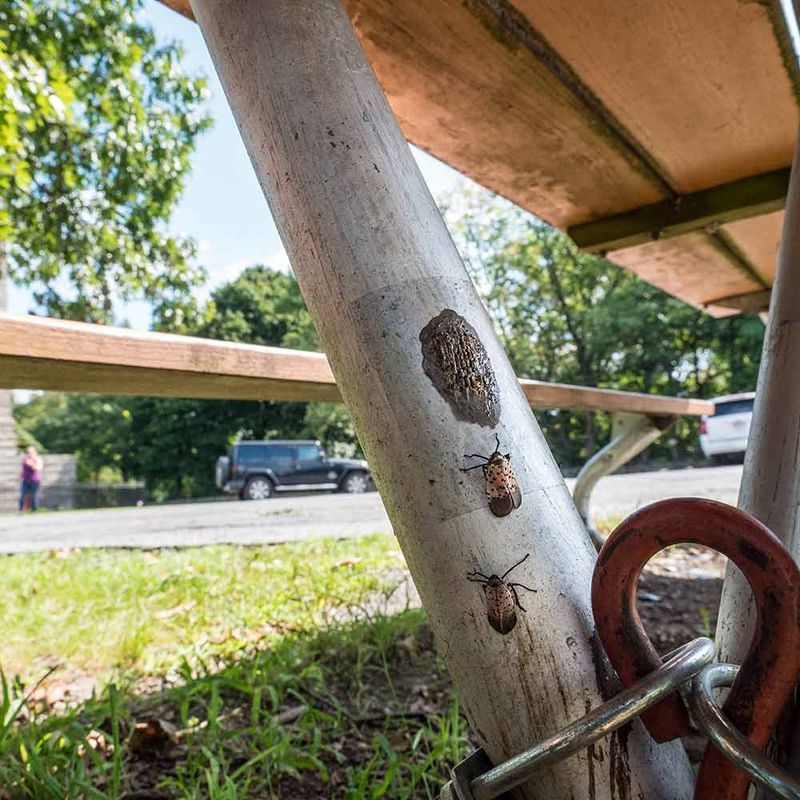
Picnic tables have a secret life in the fall. Along with holding burgers and lemonade, they sometimes hold a neat row of lanternfly eggs.
Rough bark gets most of the attention, but smooth outdoor surfaces are fair game too. Patio chairs, plastic storage bins, trailers, and car bodies can all host egg masses.
Lanternflies seem to favor horizontal or angled spots. The underside of a table, the slanted edge of a playset, or the top of a grill cover are worth a close look.
Smooth surfaces make eggs easier to spot in some ways. The gray patch stands out against white plastic or shiny paint more than it does on brown bark.
Scraping here needs a lighter touch, though. Press gently with your plastic card so you do not scratch paint, vinyl, or finished wood.
A little warm soapy water on a rag can help loosen stubborn bits. Wipe the spot clean afterward so you can tell if new eggs show up later.
Before storing patio furniture for winter, give every piece a once-over. Pulling it into a garage with eggs attached could mean a surprise hatch next spring.
The same goes for boats, campers, and yard equipment. A quick check before moving anything protects other parts of Ohio from new outbreaks.
8. Revisit The Yard Before Spring Hatch Begins
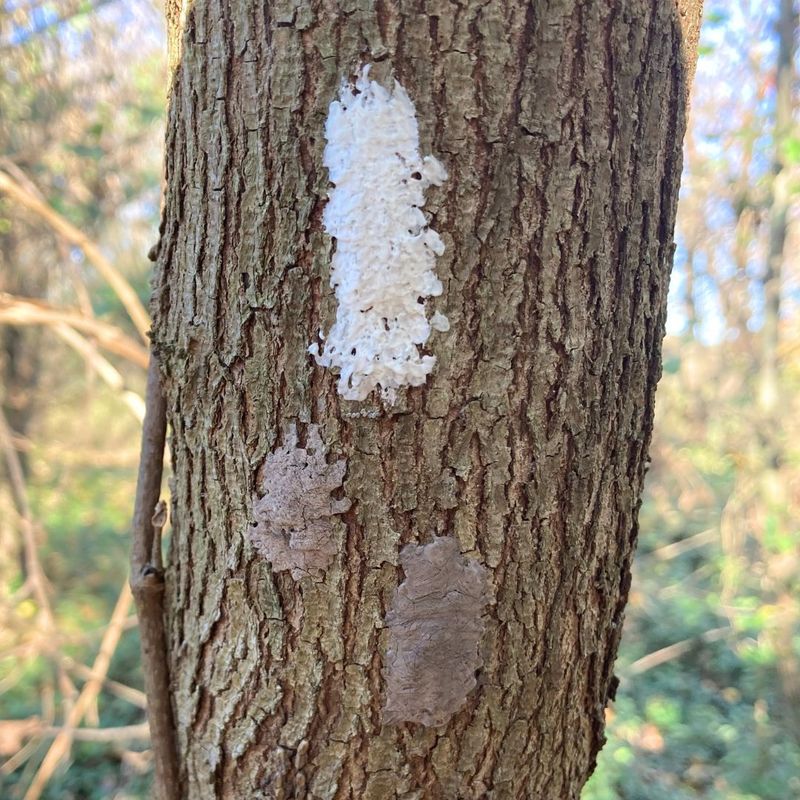
Winter has a way of hiding things we missed. Come March, that tree you checked in October might reveal a mass you overlooked under a flap of bark.
Lanternfly eggs sit through the cold and usually hatch in April or May. That leaves a handy window in late winter and early spring for a second sweep.
Every mass holds roughly 30 to 50 eggs. Missing just five masses could mean up to 250 nymphs crawling up your trees by summer.
Pick a mild, sunny day in late February or March for your return trip. Bare branches still give you a clear view before new leaves fill everything in.
Pull out the map or notes from your fall search. Start with the busiest spots, then widen your circle to places you skipped the first time.
Look for fresh masses that may have been laid in late fall after your first sweep. Also watch for masses with oval holes, which show eggs have already hatched.
If you find masses that are still sealed, scrape and soak them just like before. Each one removed now keeps a small army from hatching weeks later.
Set a phone reminder in the fall so this step does not slip your mind. A little effort in March can mean a calmer, less sticky summer on the porch.
9. Report Spotted Lanternfly Where Ohio Requests It
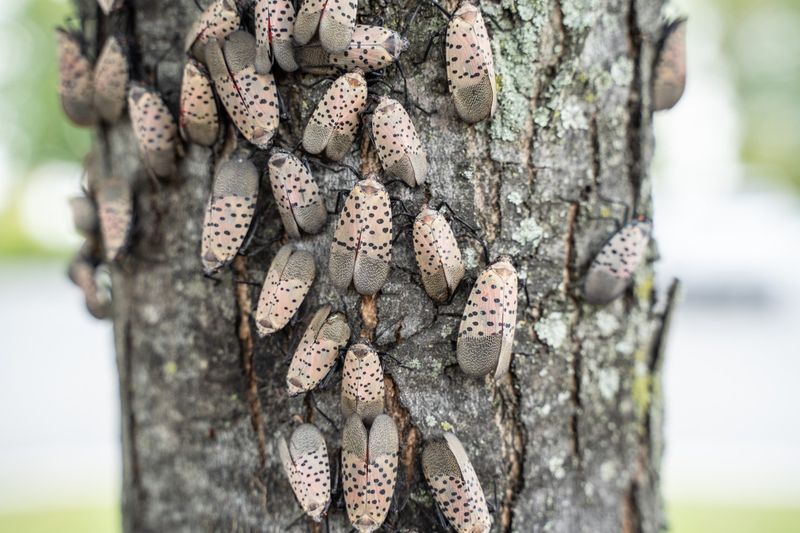
Reporting rules have changed, and it helps to know the latest. In February 2026, the Ohio Department of Agriculture placed the whole state under a spotted lanternfly quarantine.
Since the insect is now considered established across the state, the department is no longer asking residents to report every sighting. Homeowners are encouraged to identify the pest and manage it on their own property.
That shift puts more power in your hands. Your scraping, soaking, and yard checks are now the front line of defense.
Earlier, Ohioans were asked to snap a photo and send it to the Ohio Plant Pest Reporter. That tool helped track the spread when lanternflies were still limited to certain areas.
A quarantine also means rules for moving certain items. Businesses shipping goods like nursery stock or outdoor materials may need inspection steps, so check ODA guidance if that applies to you.
For homeowners, the key step is inspecting anything you move. Firewood, patio furniture, and vehicles leaving your yard should be free of eggs.
Local resources are still easy to find. Ohio State University Extension and county offices share guides, photos, and seasonal tips.
Staying informed matters because guidance can change. Check the ODA website each fall so your efforts match what the state needs right now.