How To Tell Chinch Bug Damage From Heat Stress In Your Texas Lawn
Texas lawns love making summer damage look like a mystery.
One week, the grass looks thick and green. Then July turns up the heat, the driveway starts radiating like a griddle, and brown patches creep across the yard with suspicious confidence.
That is when the guessing begins.
Maybe the lawn needs water. Maybe a tiny pest is feeding near the soil where you cannot see it. Maybe both problems are teaming up like the worst neighborhood committee ever formed.
The right answer matters.
Watering harder will not fix insect damage, and spraying a dry lawn wastes money, time, and chemicals.
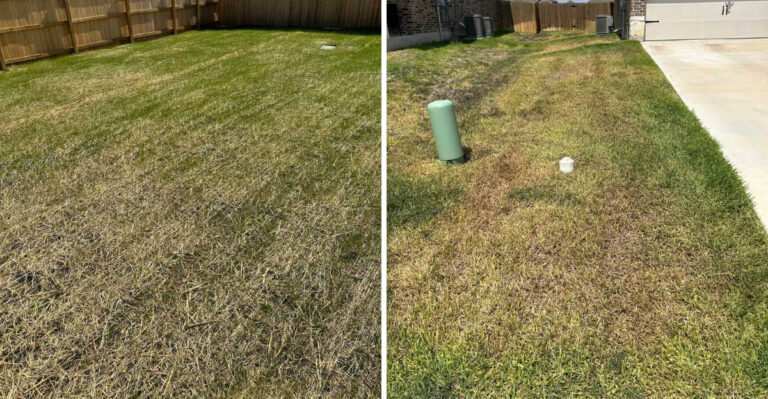
Brown grass near hot concrete, patches that spread outward, turf that refuses to green after a good soak, and movement in the thatch all tell different parts of the story.
So how can Texas homeowners tell heat stress from real pest damage before the lawn gets worse?
Start by reading the pattern, checking the edges, and confirming the culprit before taking action. Guessing is expensive. Diagnosis is lawn sanity.
1. Start With St. Augustinegrass
The first clue is the grass itself.
St. Augustinegrass is one of the most common lawn grasses in Texas, especially in warm, humid parts of the state.
It grows by thick above-ground runners called stolons, forms a dense carpet, and fills yards with the lush look many homeowners want.
That same density can become trouble.
Southern chinch bugs strongly favor St. Augustinegrass, so a brown patch in this lawn type deserves closer inspection during hot months.
Bermuda, zoysia, and other grasses can have their own summer problems, but St. Augustine sits high on the chinch bug menu.
Thatch makes the situation more inviting.
Thatch is the layer of living and decaying material between the green blades and the soil surface. A little thatch is normal. Too much creates a warm, protected zone where chinch bugs can feed, hide, and multiply without much disturbance.
Pull the grass apart and look near the base.
A lawn with thick thatch, poor airflow, and hot sunny exposure gives pests a very comfortable setup. That does not prove chinch bugs are present, but it moves them up the suspect list.
Knowing the grass type saves time.
A stressed St. Augustine lawn in July is not just asking for water by default. It may be asking for a closer look near the runners, leaf bases, and thatch layer.
That is where the tiny troublemakers like to hold their meetings.
2. Check Sunny Hot Edges
Texas lawn mysteries often start at the edge.
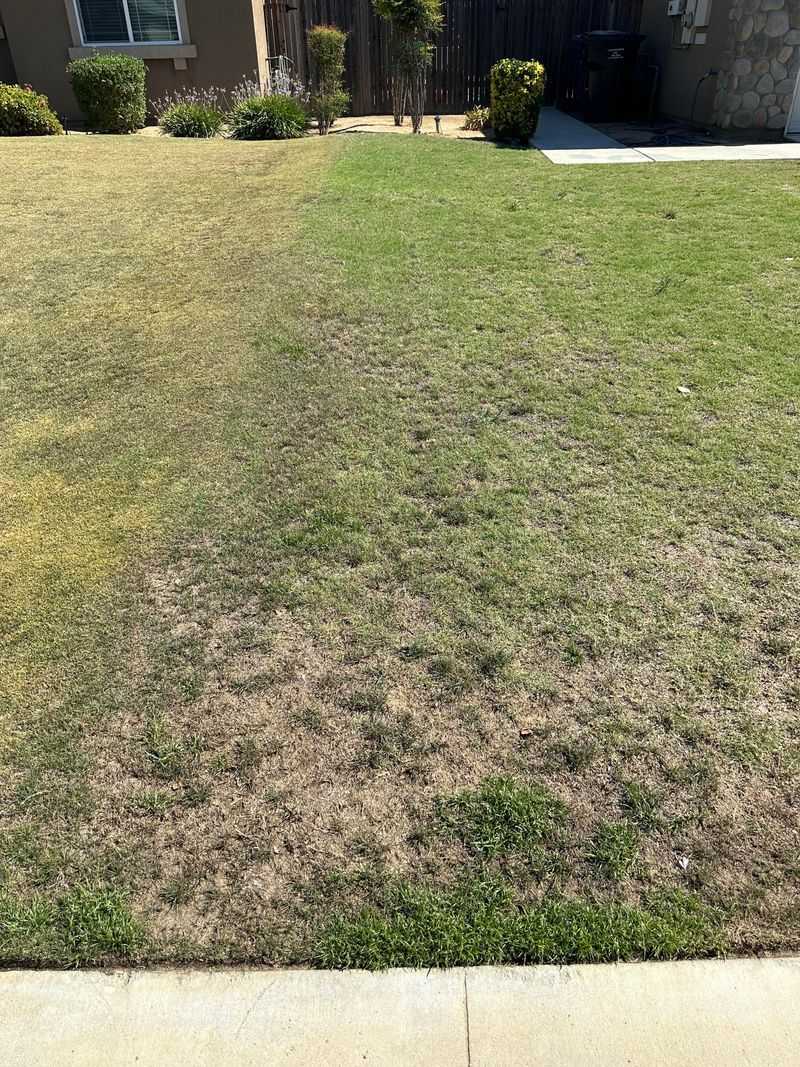
Chinch bugs love hot, sunny, dry zones, which makes the grass beside driveways, sidewalks, curbs, patios, and south-facing borders a prime place to inspect first.
Those areas get extra heat from concrete and pavement, and the grass there often struggles before the rest of the lawn.
That edge pattern is important.
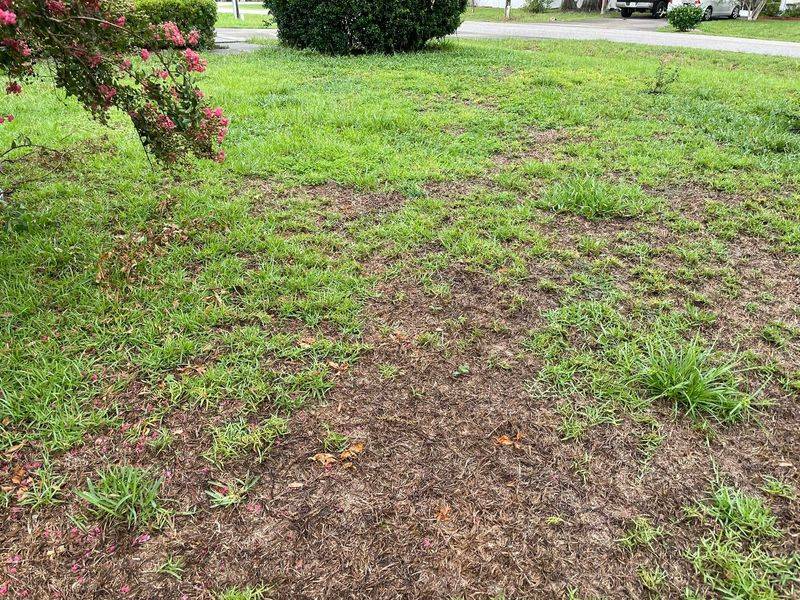
Heat stress can affect broad areas, especially where irrigation coverage is weak. Chinch bug damage often begins in a hot border strip and creeps inward.
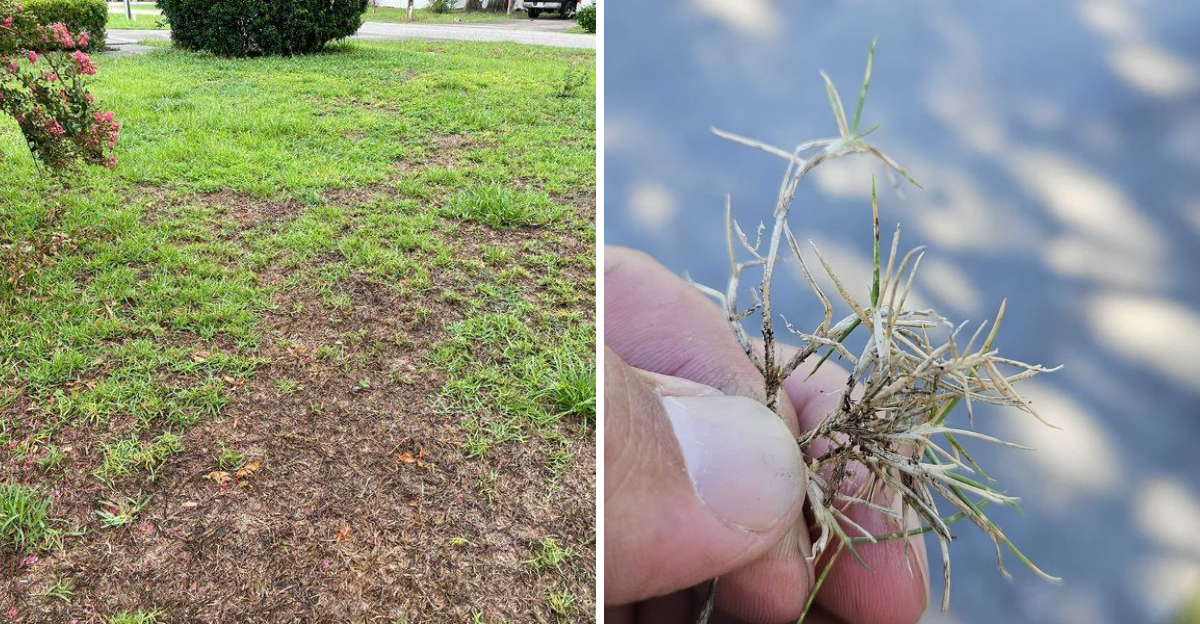
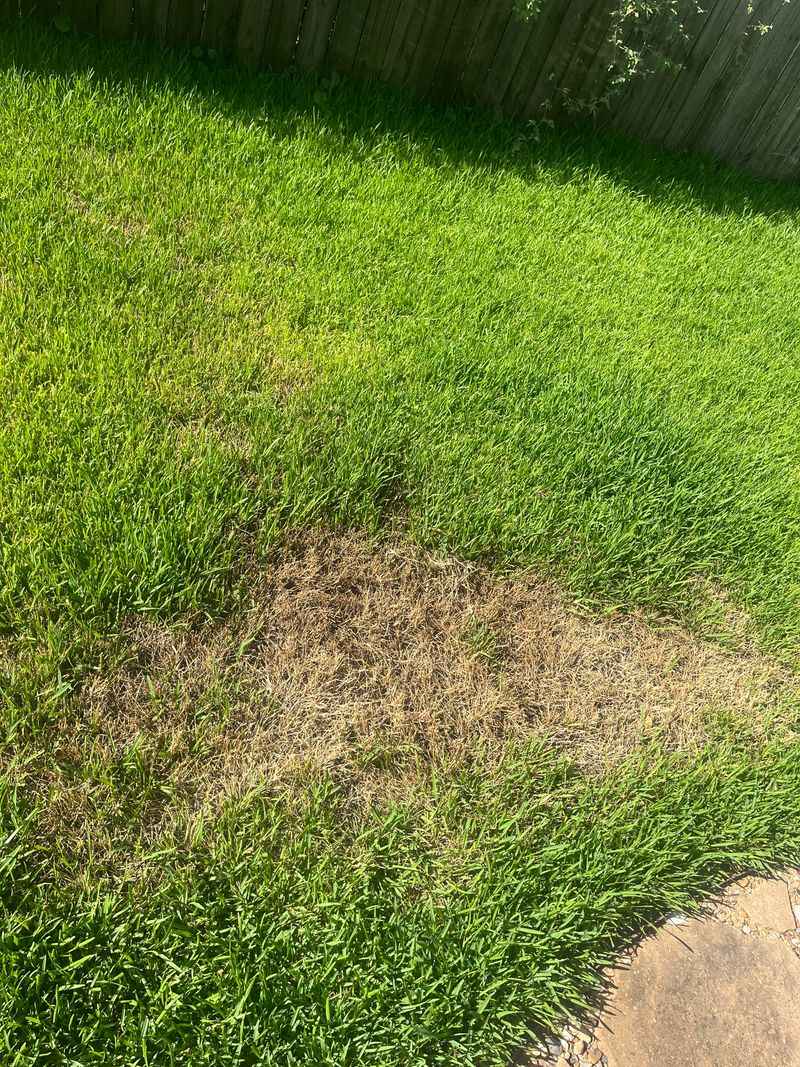
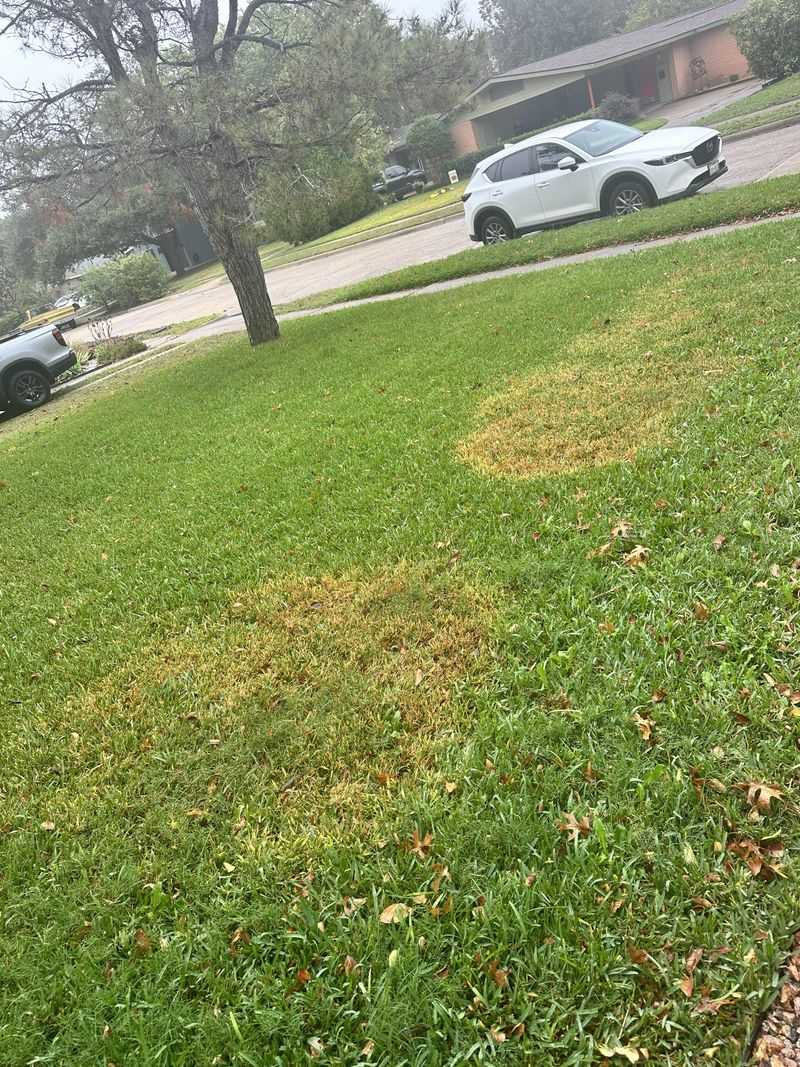
The brown patch may look scorched, crispy, and irregular, with a yellowish edge where the insects are still actively feeding.
Your Texas Garden Changes Every Week. Your Plan Should Too.
Gardening in Texas changes quickly throughout the season. Every Friday you’ll receive a simple weekly plan showing exactly what to plant, prune, fertilize, harvest, and protect so you never miss the right timing.
Concrete makes the whole scene rougher.
Driveways and sidewalks absorb heat all day, then radiate it back into the surrounding soil and grass. Roots near those surfaces face a double hit: hot air above and heated ground beside them.
Chinch bugs take advantage of weakened turf.
They feed near the base of the grass, drawing sap and damaging the plant’s ability to move water properly. That is why the affected area can look dry even when moisture is available.
Walk the lawn perimeter slowly.
Look for brown or straw-colored patches hugging hardscape, then spreading toward greener grass. Mark the edge of the patch with a small flag or photo so you can compare it a few days later.
3. Look For Expanding Patches
Brown grass tells one story.
Moving brown grass tells a better one.
Heat stress and chinch bug damage can look similar from the porch, but they spread differently. Drought stress usually shows up across broader areas that share the same watering problem.
Chinch bug damage often behaves like a slow-moving fire, starting in one hot spot and crawling outward as the insects move into fresh turf.
Track the patch for a week.
Take a photo from the same angle every few days. The camera remembers details better than a stressed homeowner staring at the lawn in ninety-eight-degree heat.
Chinch bug patches often have uneven edges.
The center may look brown and crispy, while the outer ring looks yellow, orange, or weak. That transition zone matters because active feeding often happens along the edge where damaged grass meets still-green turf.
Heat stress has a softer pattern.
Large sections may turn gray-blue, dull, or wilted without one patch marching steadily across the yard. The lawn may look tired all over, especially where sprinklers miss or soil dries fast.
A patch that doubles in size despite decent watering deserves suspicion.
That does not mean grabbing a pesticide immediately. It means the lawn needs an insect check before more water gets poured into a problem water cannot fix.
Watch the border, not just the brown center.
The edge of the patch is where the plot is still happening.
That is where the lawn whispers, “Look closer.”
4. Do The Can Test
A metal can can turn you into a lawn detective fast.
The float test is simple, cheap, and surprisingly satisfying. It helps reveal chinch bugs hiding in the thatch and soil surface, especially along the edge of a damaged patch.
Use a large metal can with both ends removed.
Press it two or three inches into the turf where brown grass meets green grass. That border zone is the sweet spot because pests are most likely feeding there right now. Fill the can with water and keep the water level steady for several minutes.
Then watch the surface.
Chinch bugs float up when they are present. Adults are small, dark insects with pale wing markings. Younger nymphs can look red, orange, or darker as they mature. They are tiny, so lean in and let your eyes adjust before declaring the test clear.
Repeat the test in more than one place.
One clean sample does not always mean the whole lawn is free of them. Test along different edges of the patch, especially near hot pavement or the most active-looking yellow transition area.
A few bugs may not explain a whole damaged lawn.
Larger numbers in multiple spots make the case much stronger. The goal is confirmation, not guesswork.
The can test is not glamorous, but it works.
It is basically a tiny swimming pool for suspects, and the guilty ones usually float to the top.
5. Watch How Water Responds
Water response can separate drought stress from insect damage quickly.
A heat-stressed lawn should improve when moisture returns to the root zone. The grass may shift from dull gray-blue toward green, blades may stand taller, and footprints may stop lingering after a few days of steady, deep watering.
Chinch bug damage refuses to play along.
The insects damage the grass as they feed, so affected patches may stay brown or continue spreading even after irrigation improves. That non-response is one of the clearest signs that water is not the main answer.
Start by checking irrigation coverage.
Make sure sprinklers are actually hitting the damaged area and not just wetting the sidewalk with impressive enthusiasm. Place small cups or tuna cans around the lawn during a watering cycle to see where water lands.
Then check the soil.
Moist soil under a brown patch changes the diagnosis. Dry soil under a brown patch still leaves drought stress on the table. The lawn surface can fool you, so use a screwdriver, soil probe, or your fingers to test below the thatch.
Give drought-stressed grass a fair chance to recover.
A few deep waterings over several days should bring improvement in living turf. No change, steady spread, and hot-edge damage all point back toward chinch bugs.
The lawn’s response is the receipt.
Water helps thirsty grass. It does not evict sap-sucking pests.
That difference saves a lot of wasted gallons.
6. Inspect Leaf Sheaths Closely
The most important evidence sits low.
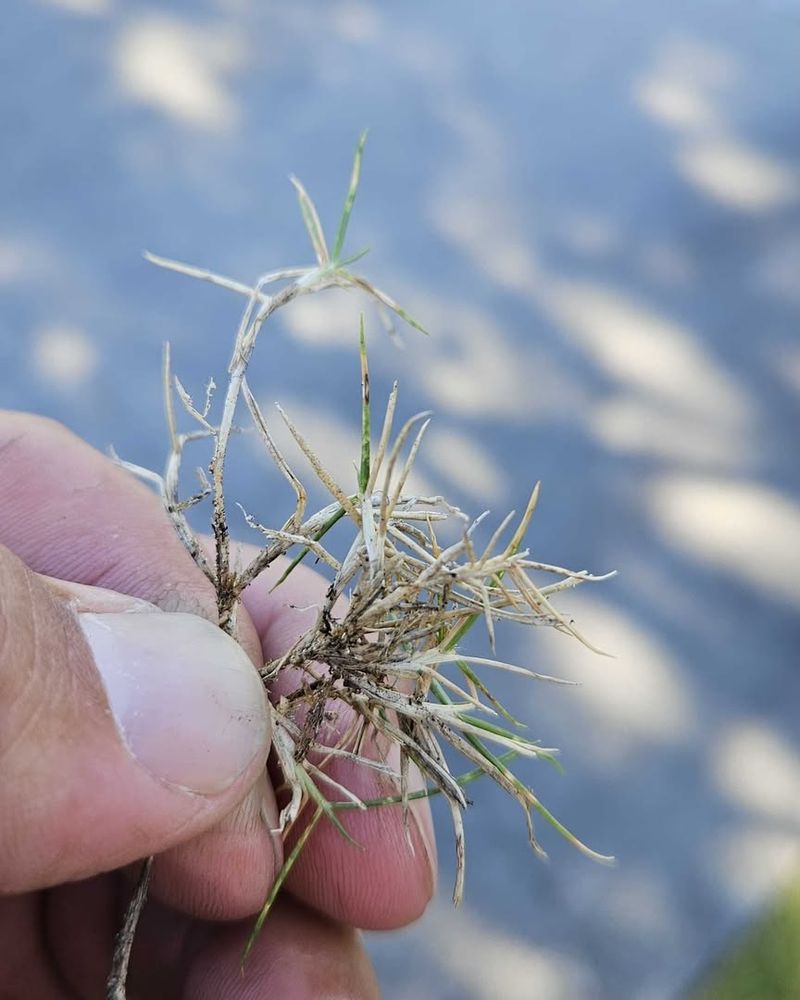
Chinch bugs spend much of their time near the base of grass plants, tucked into leaf sheaths and thatch where casual glances never reach. From standing height, the lawn only looks brown. Down close, the real story may start moving.
Part the grass firmly with your fingers.
Focus on the edge of the damaged patch, not the fully brown center. Active insects usually gather where the grass is still partly alive and easier to feed on. Bright sunlight helps, but a magnifying glass makes the job much easier.
Look for tiny movement.
Adults are small and dark with pale wing patches. Nymphs can appear red-orange, orange, or darker depending on age. They may scatter quickly when exposed, so look carefully right after parting the blades.
Check the thatch layer too.
That springy layer between leaves and soil can hide insects from view. Pulling it apart gently may reveal movement that was invisible from above.
Notice the grass bases.
Feeding injury may show as yellowing, browning, or a water-soaked look near the leaf sheath before the upper blade turns fully brown. That kind of low damage paired with visible insects builds a strong case.
Do not rely on one glance.
Inspect several spots around the patch. Texas lawns enjoy making homeowners work for answers.
The good news is that pests cannot argue with evidence. Once you see them at the base, the mystery gets a lot less mysterious.
7. Compare Gray Blue Drought
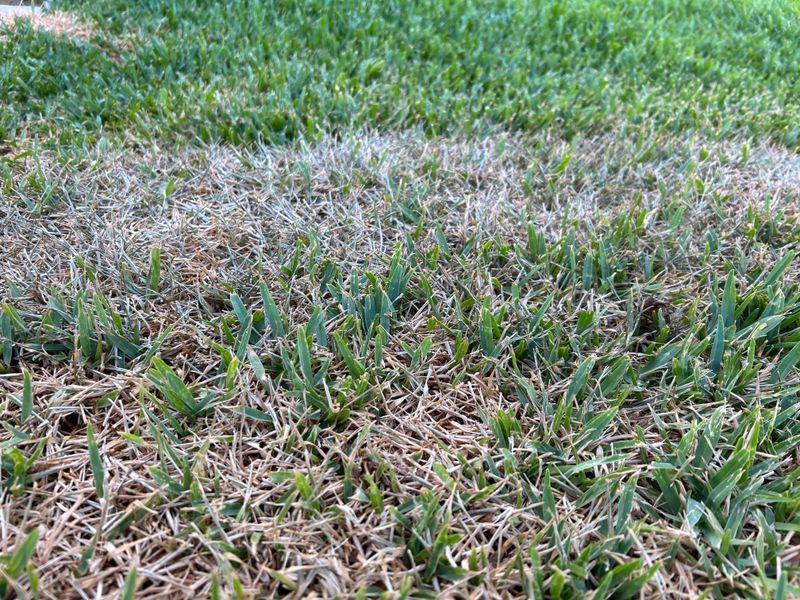
Drought stress has its own look before brown arrives.
St. Augustinegrass short on moisture often turns dull gray-blue or steel-blue first. The lawn loses its fresh green color and starts looking tired across a wider area. That early color shift is a warning, not the final chapter.
The footprint test helps.
Walk across the stressed area and look back. Drought-stressed grass may hold footprints because blades lack enough moisture pressure to spring back quickly. Healthy grass usually bounces upright faster.
Leaf blades may also fold or curl.
That is the grass trying to reduce moisture loss during intense heat. It is a survival move, not proof of insect feeding.
Pattern matters again.
Drought stress usually appears where irrigation is weak, soil is shallow, or sun exposure is intense across a section.
The damage may look more uniform than chinch bug patches. It does not usually start as one hot-edge spot and keep marching inward with a ragged border.
Recovery matters too.
After deep watering, drought-stressed turf should show improvement. The change may not be instant, but some bounce-back should appear within days when roots are healthy and moisture reaches them.
Chinch bug damage can mimic dryness, which is exactly why this gets confusing.
The difference is movement, response, and evidence. Gray-blue color, lingering footprints, folded blades, dry soil, and broad patterns lean toward heat stress.
Tiny insects, edge spread, moist soil, and no recovery lean toward chinch bugs.
Your lawn is not being vague. It is using clues instead of words.
8. Treat Only After Confirmation
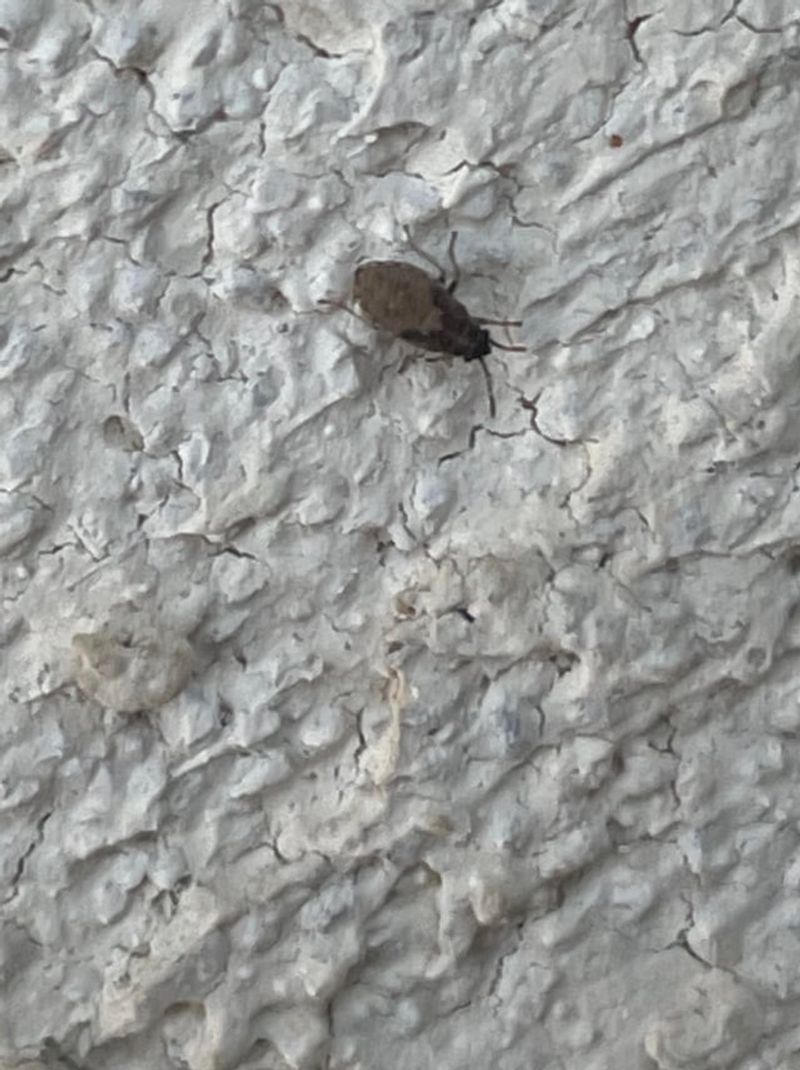
The most expensive lawn treatment is the one aimed at the wrong problem.
Spraying insecticide on drought stress does not help the grass, and it can harm beneficial insects that naturally feed on pests.
Watering a chinch bug problem every day does not solve the feeding damage, and it can waste a shocking amount of water during a Texas summer.
Confirm first.
Use the can test. Inspect the leaf sheaths. Check the patch pattern. Test the soil moisture. Watch how the lawn responds to proper watering. Each clue helps point toward drought stress or chinch bugs before any product enters the plan.
Beneficial insects matter.
Big-eyed bugs, earwigs, spiders, and other predators can help keep pest populations lower. Broad, unnecessary insecticide use can knock those helpers back and leave the lawn more vulnerable later.
When chinch bugs are confirmed, treat the active zones.
Spot treatment around the damaged area and its border is often more sensible than blanketing the whole yard. Always follow the product label exactly, including rates, timing, safety precautions, and watering instructions.
When drought stress is confirmed, skip the pesticide.
Water deeply, improve irrigation coverage, mow at the proper height, reduce traffic on stressed areas, and avoid fertilizing during peak heat stress. The lawn needs recovery, not a chemical pep talk.
Diagnosis is the grown-up move.
Texas summer already makes lawn care hard enough. Do not let guessing turn one brown patch into three separate mistakes.
Find the real culprit first, then act like you caught it.