How To Tell If Luna Moths Are Using Your Ohio Yard As A Breeding Site
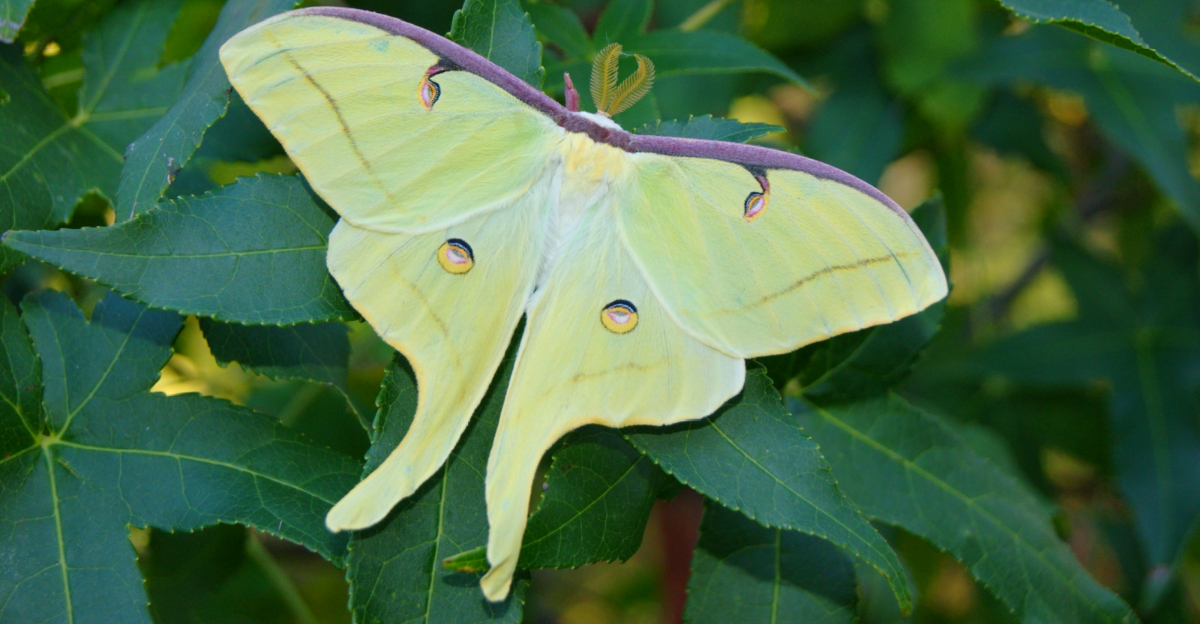
Seeing a luna moth drift across your Ohio backyard on a warm summer night is one of those moments that genuinely stops you mid-sentence.
Those wide, pale green wings and elegant trailing tails look almost too beautiful to be real, like something that belongs in an animated film rather than your actual yard.
And yet here it is, just hanging out near your porch light like it owns the place. Exciting stuff.
But one adult luna moth flying through on a June evening doesn’t necessarily mean your yard is a breeding site. The real signs go a lot deeper than a single sighting.
Eggs tucked onto host tree leaves, plump green caterpillars working through the foliage, papery cocoons tucked into fallen leaves: those are the clues that luna moths might actually be completing their life cycle right outside your back door.
1. Host Trees Make Breeding More Likely
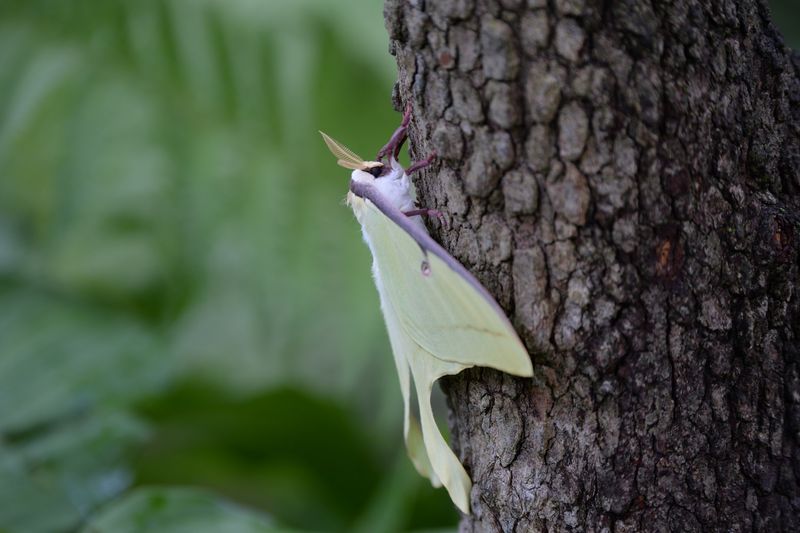
Tall native trees growing along the edge of an Ohio yard may be doing more than providing shade. Luna moths rely on specific host trees to lay their eggs, and without those trees nearby, breeding simply cannot happen in your yard.
Knowing which trees qualify as host plants is one of the most practical first steps any Ohio homeowner can take.
Luna moth caterpillars feed on the leaves of hickory, walnut, sweetgum, persimmon, birch, beech, red maple, white oak, wild cherry, willow, and sumac.
Many of these species grow naturally throughout Ohio, especially along wooded lot edges, shaded side yards, and residential landscapes near creek corridors.
If your property has even one or two of these trees, the habitat already has some appeal for a female looking to lay eggs.
Younger trees can matter too, not just large mature specimens. A small wild cherry sapling growing along a fence line or a young birch planted near a garden border could attract a luna moth female during the right season.
The more native host trees a yard contains, the more likely luna moths may consider it a suitable place to breed.
2. Adult Sightings Alone Do Not Prove Breeding
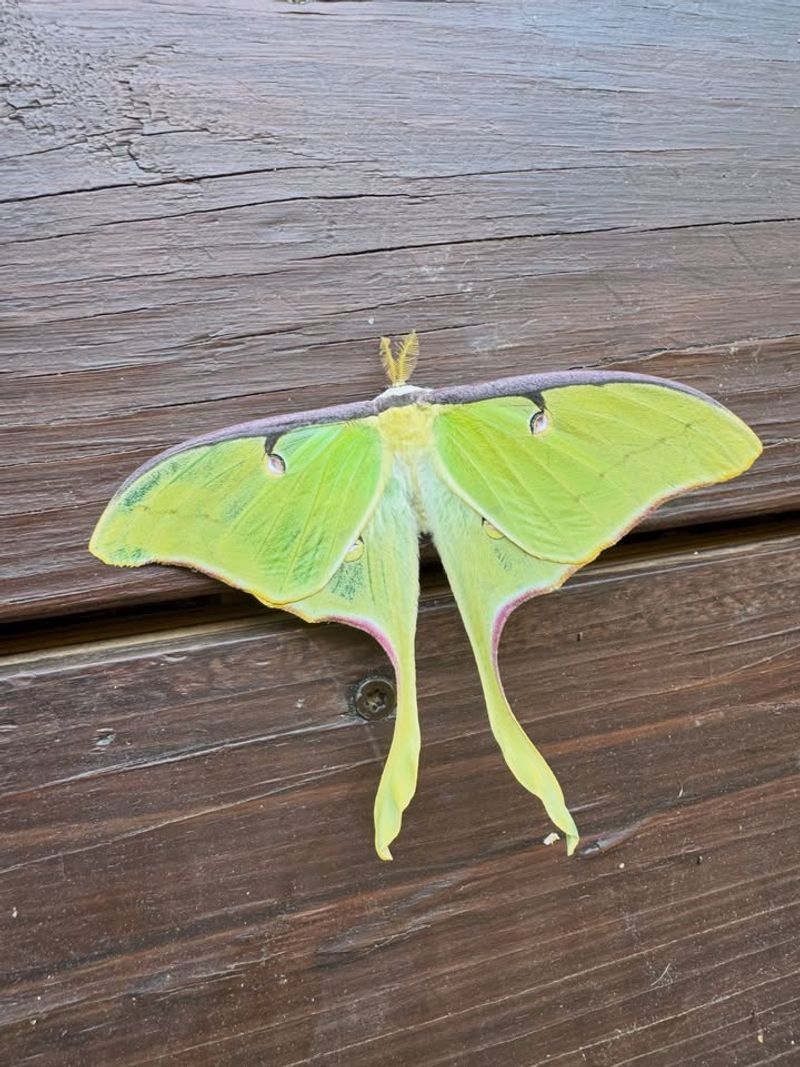
Porch lights across Ohio pull in all kinds of night-flying insects, and luna moths are no exception.
Seeing a stunning adult luna moth clinging to your siding or screen door is genuinely exciting, but it does not confirm that your yard is being used as a breeding site.
Adult luna moths can travel considerable distances in a single night, drawn toward light sources well beyond the area where they emerged.
Adult luna moths do not feed at all. They have no functioning mouthparts and survive entirely on energy stored during the caterpillar stage.
Because they are not visiting flowers or seeking food, their presence near a light tells you very little about where they came from or where they plan to lay eggs.
A female luna moth found near your porch may have emerged from a neighbor’s yard, a nearby woodlot, or even a park several blocks away. The real question is whether she will find a suitable host tree on your property and choose to stay long enough to lay eggs.
Your Ohio Garden Changes Every Week. Your Plan Should Too.
Gardening in Ohio changes quickly throughout the season. Every Friday you’ll receive a simple weekly plan showing exactly what to plant, prune, fertilize, harvest, and protect so you never miss the right timing.
Watching for additional clues beyond the adult sighting is the only reliable way to know whether breeding is actually taking place in your Ohio yard.
3. Eggs May Appear On Host Leaves
Quiet mornings spent looking closely at your host trees could turn up one of the most exciting finds an Ohio nature enthusiast can make.
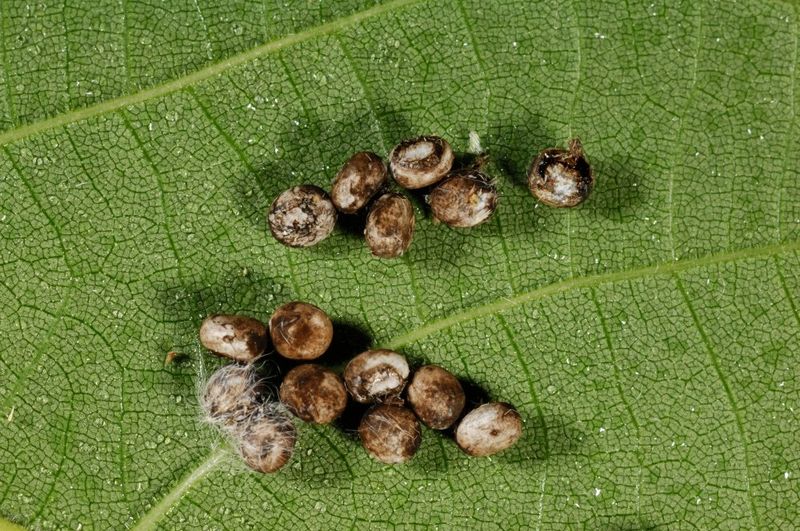
Luna moth eggs are small, flattened, and pale in color, often laid in loose clusters or small rows on the upper or lower surface of host tree leaves.
A female may deposit anywhere from a few eggs to well over one hundred during her short adult life.
Finding eggs requires patience and a good eye. The eggs are roughly the size of a sesame seed and blend in surprisingly well against leaf surfaces.
Checking hickory, walnut, and wild cherry leaves in late spring through midsummer gives you the best window for spotting them in Ohio, since luna moths typically produce one or two generations per year in this region.
Gently turning over leaves on lower branches without damaging them is a reasonable way to search. Avoid breaking branches or handling leaves roughly, since disturbing the eggs could reduce their chances of hatching successfully.
If you do find small pale eggs arranged in a pattern on a host tree leaf, photograph them and leave them exactly where they are. That small cluster may be the clearest sign yet that luna moths are genuinely breeding in your Ohio yard.
4. Green Caterpillars Feed On Tree Foliage
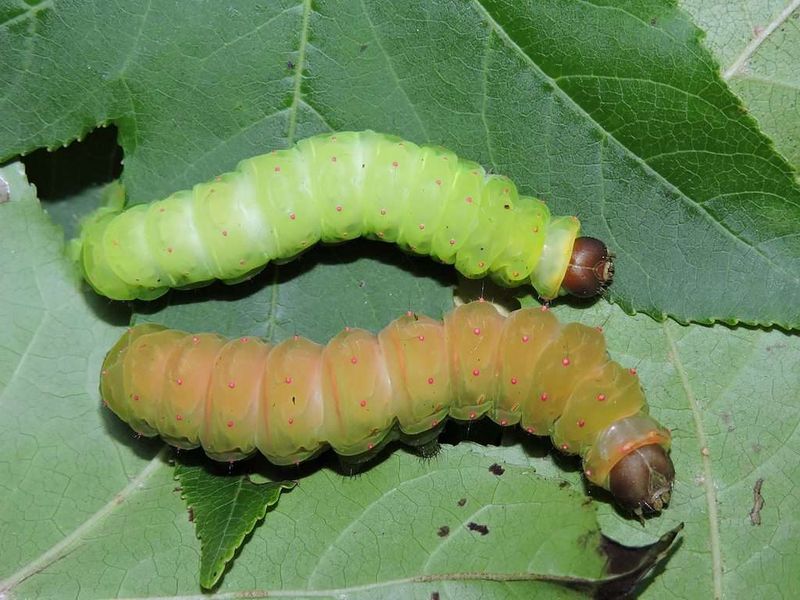
Stumbling across a plump, vivid green caterpillar on a walnut or hickory branch is one of those backyard moments that stops you in your tracks.
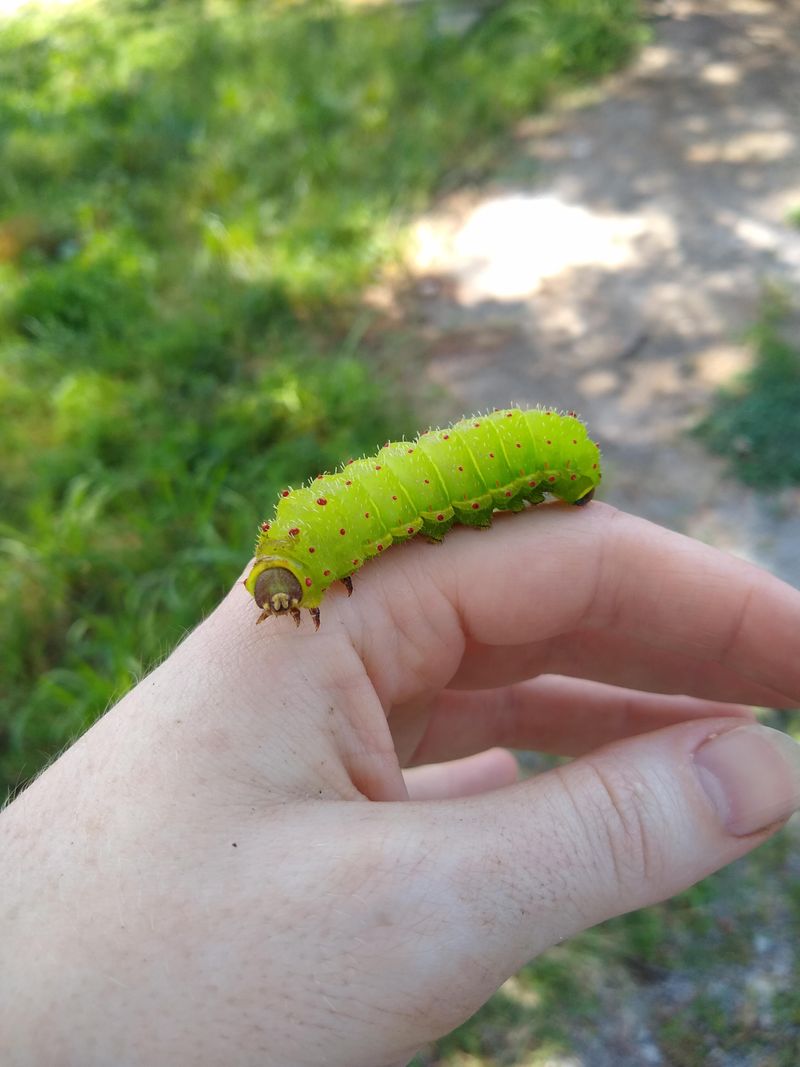
Luna moth caterpillars are large, smooth, and a rich lime green, often with faint yellow or white stripes running along their sides.
They can reach nearly three inches in length before they are ready to form a cocoon, making them easier to spot than the tiny eggs.
Caterpillars spend most of their time eating, moving steadily along branches and consuming leaf after leaf. In an Ohio yard, they are most active from late spring through late summer, depending on which generation you are observing.
Because they blend in so well with green foliage, slow and careful searching along branches of host trees gives the best results.
Look for frass, which are small dark droppings left on leaves and branches below where a caterpillar has been feeding.
Finding frass beneath a hickory or wild cherry in your yard is a useful hint that a caterpillar may be working its way through the canopy above.
Spotting an actual caterpillar confirms that luna moths have moved beyond the egg stage and are actively developing on your property, which is strong evidence of on-site breeding.
5. Leaf Damage Is Usually Light
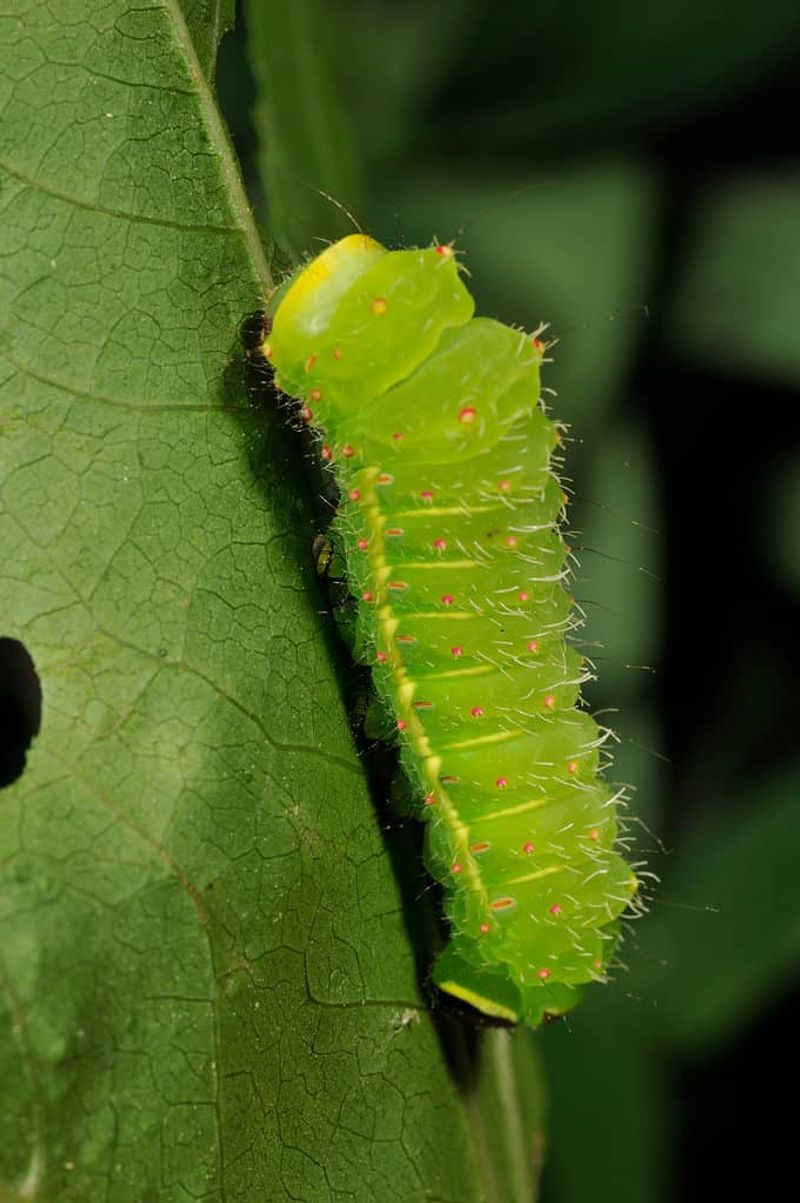
One thing that surprises many Ohio homeowners is how little damage luna moth caterpillars tend to leave behind, even when a small group is feeding in the same tree.
Unlike some caterpillar species that can strip a tree’s foliage quickly, luna moth caterpillars feed at a relatively moderate pace and rarely cause serious harm to a healthy, established tree.
The damage is often subtle enough that many people never notice it at all.
Chewed leaf edges, missing leaf sections, and small irregular holes in the foliage of hickory, walnut, or wild cherry are the most common signs to look for.
The feeding tends to be scattered rather than concentrated in one spot, which makes it blend into the natural wear and tear that summer foliage often shows anyway.
A tree showing this kind of mild, scattered leaf damage alongside a few caterpillar sightings is worth watching closely.
Healthy Ohio trees can handle the light feeding pressure luna moth caterpillars create without any lasting harm. Treating trees with pesticides specifically to stop this kind of mild damage would likely do more harm than good for the luna moth population.
Recognizing that minor leaf loss is part of a healthy backyard ecosystem helps Ohio homeowners appreciate the caterpillars rather than worry about them.
6. Cocoons May Rest In Fallen Leaves
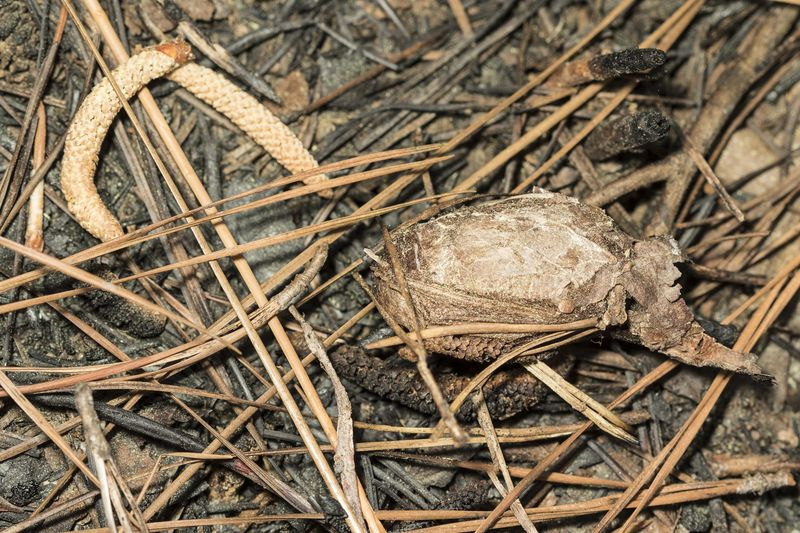
Fallen leaves piled along a fence line or tucked beneath a host tree are more valuable than most Ohio homeowners realize.
Luna moth caterpillars spin papery cocoons and wrap them inside dried leaves before dropping to the ground, where they spend the pupal stage hidden among the leaf litter.
This habit makes them nearly invisible to casual observers and extremely vulnerable to leaf removal and yard cleanup.
A luna moth cocoon looks like a small, firm, papery bundle wrapped loosely in a brown leaf. The cocoon itself is tan or light brown and has a slightly crinkly texture.
If you pick up a leaf from beneath a host tree in late summer or fall and feel something solid and papery inside, you may have found a cocoon without realizing it.
Leaving leaf litter undisturbed beneath host trees through the winter months gives overwintering cocoons the best chance of surviving to produce adult moths the following spring.
Raking away every fallen leaf removes the natural insulation and hiding spots these cocoons depend on.
If luna moths have been breeding in your Ohio yard, the leaf litter beneath your hickory, walnut, or wild cherry trees could be sheltering the next generation right now, quietly waiting for warmer days to arrive.
7. Yard Lights Can Confuse The Clues
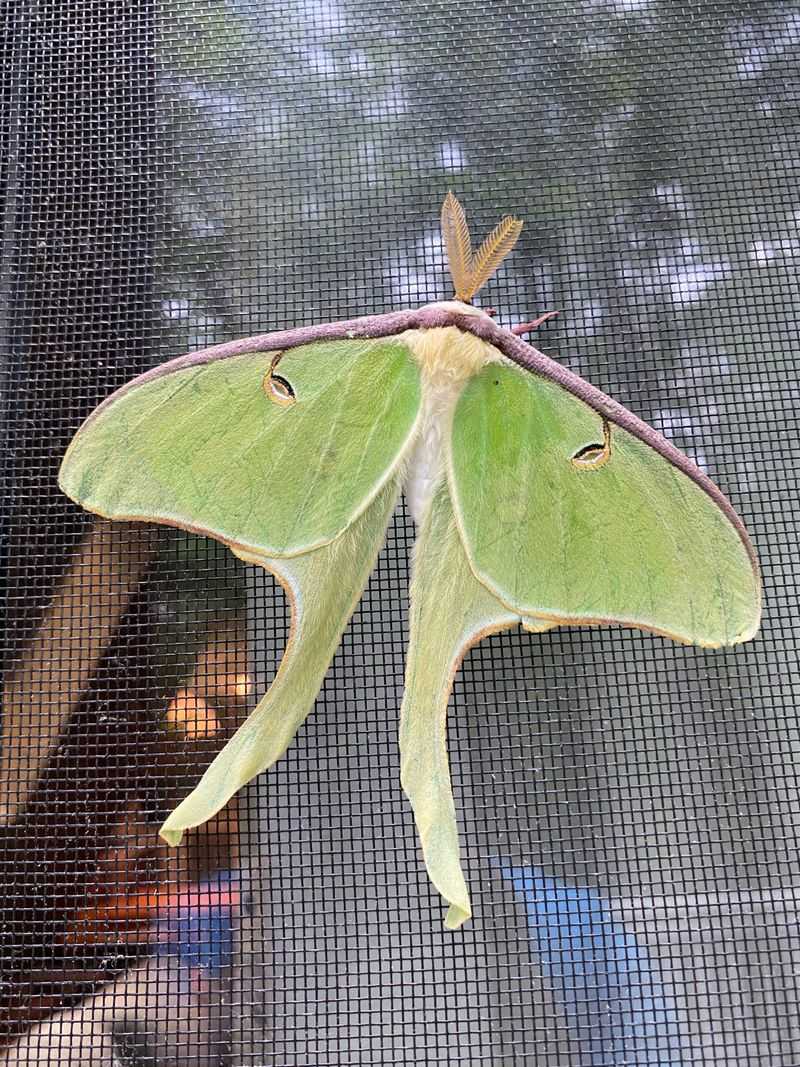
Bright outdoor lighting is one of the most common reasons Ohio homeowners spot luna moths near their homes, but it can also make it harder to figure out whether breeding is actually happening on the property.
Luna moths, like many large silk moths, are strongly attracted to artificial light at night.
A single bright porch light or floodlight can draw adults from a surprisingly wide area, pulling in moths that emerged and developed far from your yard.
When a luna moth shows up near a light, it does not mean the moth was born on your property or that it intends to lay eggs there. The light simply interrupted its natural nighttime activity.
Males in particular may travel long distances following light sources and pheromone trails, which makes their presence near a yard light especially unreliable as a breeding indicator.
Switching to warm-toned or amber LED bulbs for outdoor lighting can reduce how strongly your yard attracts moths from surrounding areas, which actually makes it easier to interpret the sightings you do have.
If luna moths continue appearing even with reduced lighting, and you also notice eggs, caterpillars, or cocoons on nearby host trees, the combination of clues becomes much more meaningful.
Lighting alone should never be the only reason you conclude that luna moths are breeding in your Ohio yard.
8. Pesticide Use Can Reduce Caterpillar Survival
Broad-spectrum pesticides applied to yard trees and garden areas can seriously reduce the chances of luna moth caterpillars surviving long enough to form cocoons.
Many common insecticides used in Ohio residential landscapes affect caterpillars without any distinction between pest species and native silk moths.
Even products applied to nearby garden plants can drift onto host tree foliage and affect caterpillars feeding there.
Bacillus thuringiensis, commonly called Bt, is a naturally occurring soil bacterium used in many organic and conventional caterpillar control products. While it is often considered a low-impact option, it can affect luna moth caterpillars just as it affects pest species.
Spraying Bt on host trees during the period when luna moth caterpillars may be actively feeding could reduce or eliminate a local population before they ever reach the cocoon stage.
Ohio homeowners who want to encourage luna moth breeding should consider reducing or eliminating pesticide applications on and around host trees during the spring and summer months.
Spot-treating specific pest problems away from host trees, using targeted methods, and avoiding broad sprays during warm months gives caterpillars a much better chance of completing their development.
A yard that stays relatively pesticide-light near its native host trees is a far more welcoming breeding environment for luna moths than one with routine chemical applications.
9. Repeated Seasonal Sightings Matter More
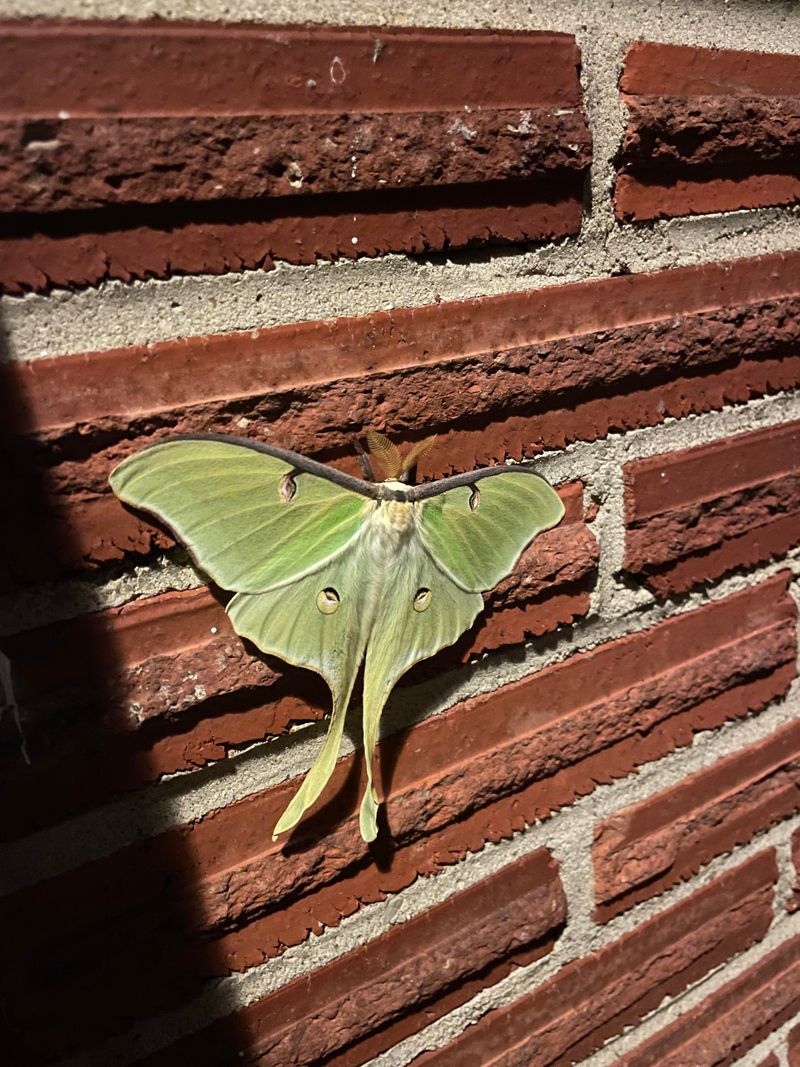
Keeping a simple nature journal or even just a few phone photos with dates can turn casual luna moth sightings into genuinely useful data over time.
A single adult seen in June is interesting, but adult sightings in May and July across multiple years, combined with caterpillar or cocoon finds, paint a much clearer picture of whether your yard is functioning as an actual breeding site.
Patterns matter far more than individual moments.
Ohio luna moths may produce one or two generations per year depending on conditions, with adults typically appearing from late spring through midsummer.
If you are seeing adults during both of these windows across multiple seasons, and your host trees show signs of caterpillar feeding, the likelihood of on-site breeding increases significantly.
One sighting per season for several years in a row is a stronger signal than three sightings in a single week.
Sharing your observations with local naturalist groups, Ohio native plant societies, or community science platforms can also help you connect with others tracking luna moths in your region.
Your repeated seasonal records contribute to a broader understanding of where luna moths are successfully breeding across Ohio.
A yard with the right trees, low disturbance, and consistent seasonal sightings over several years is very likely serving as genuine luna moth habitat worth protecting.