How To Turn A Jade Plant Into A Stunning Indoor Tree In California
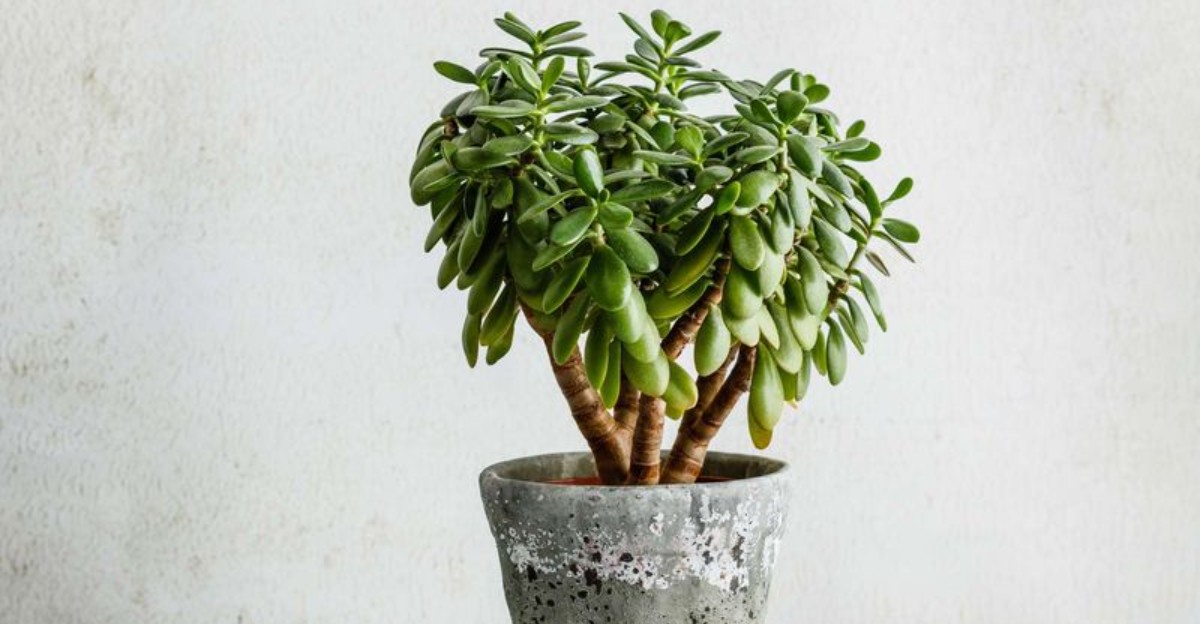
A houseplant sitting on your windowsill can live for decades and grow a trunk as thick as your wrist. Some families pass the same one down through three generations. I find that wonderful.
In its native South Africa, this plump-leaved succulent can reach six to eight feet tall outdoors. Indoors, it often stays a lumpy little shrub that leans toward the glass. Why do so few people ever see its tree-like side?
Personally, I believe most of us simply love it too gently. We water too often, we leave it in dim corners, and we feel nervous about grabbing the pruners. You need a bit of boldness and a lot of patience.
California gives you a real head start with its bright, sunny days. With a few smart moves, that chubby desk plant could become the miniature tree everyone asks about. Are you ready to see what yours is hiding?
That Chunky Jade Trunk Starts With One Brave Decision
Every jade tree you admire began as a soft green stem that someone decided to shape. The plant will not pick a trunk on its own. It mostly grows outward in every direction, like a toddler who just discovered running.
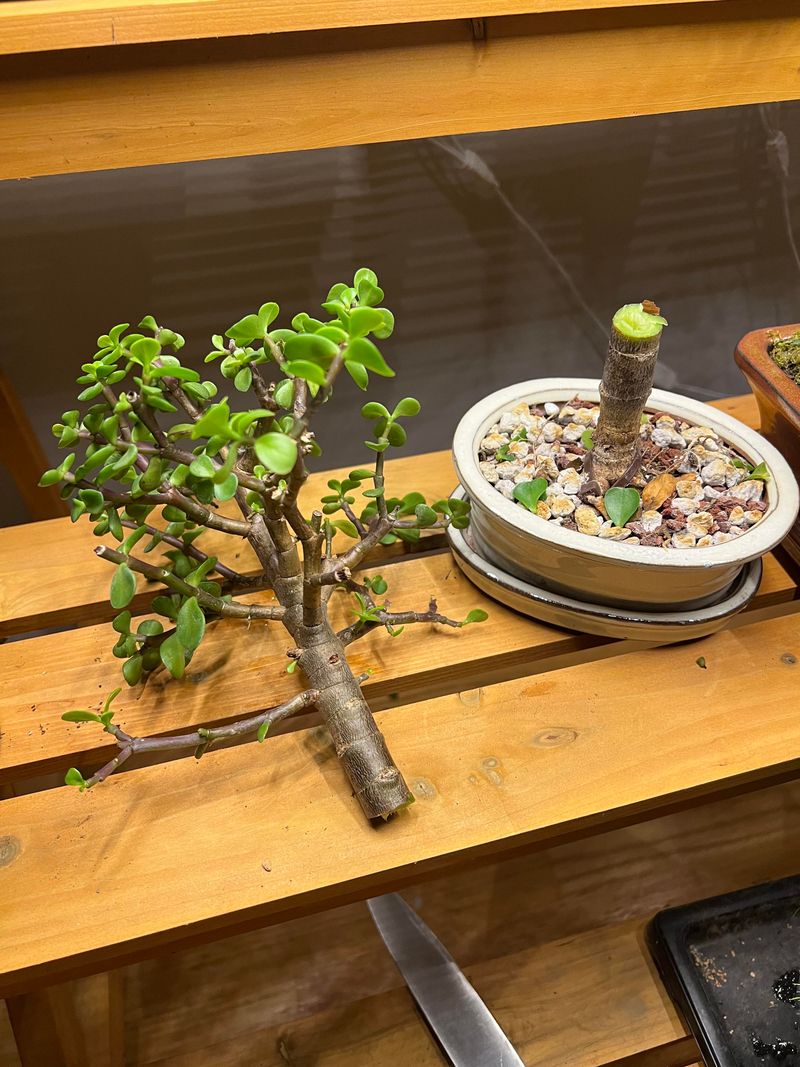
Your first job is choosing a leader. Look for the thickest, straightest stem near the center and treat it as the future trunk. Side shoots crowding the lower part of that stem can come off so the plant pours its energy into one main column.
I like to think of this step as clearing a hallway. Once the lower trunk is bare, you instantly see the outline of a tiny tree, even on a young plant. That small preview keeps you motivated for the years ahead.
Thickness takes time, so set honest expectations. A jade stem may gain only a little girth each growing season. Plenty of sun, careful watering, and regular pruning up top help the trunk thicken faster than any shortcut.
Fun fact for your next dinner party. Jade plants, known botanically as Crassula ovata, are often called money trees or friendship trees. Many folks believe a healthy one brings good fortune, and a sturdy trunk certainly brings plenty of compliments.
Snip Above The Leaf Nodes To Build A Bushy Jade Canopy
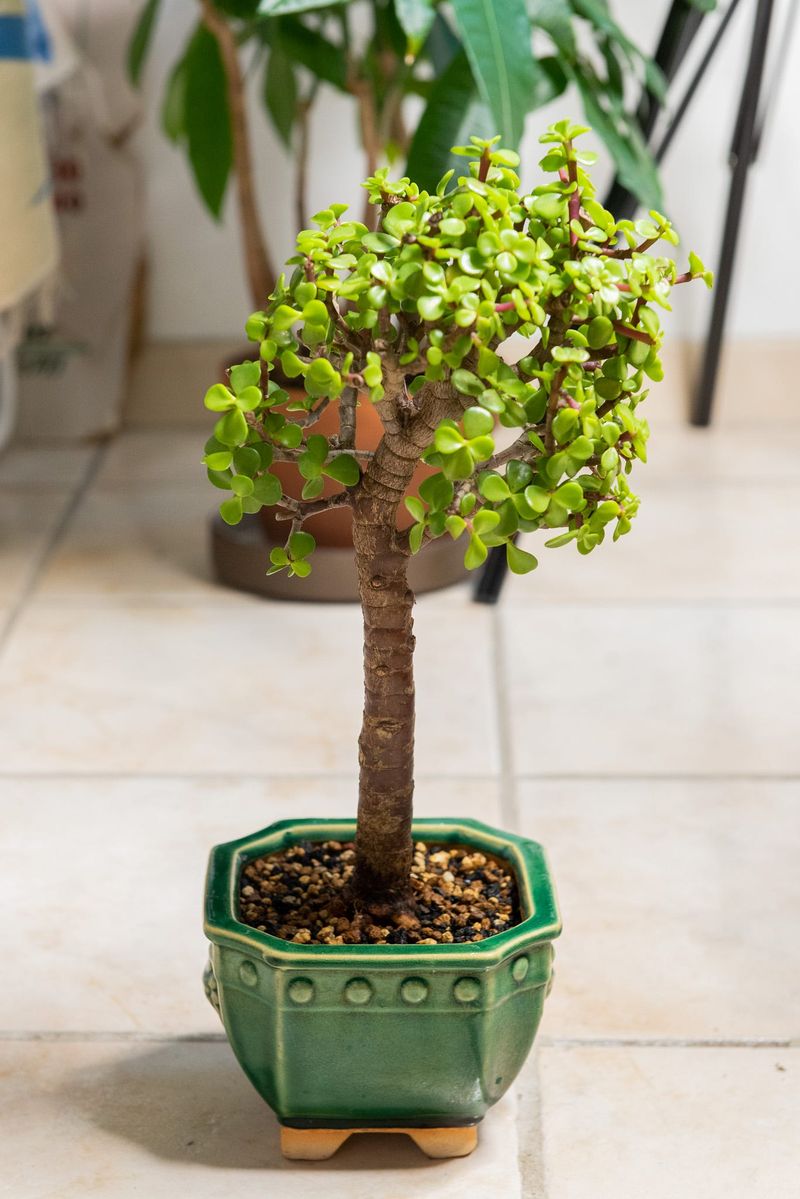
Pruning is the moment your jade stops being a shrub and starts acting like a tree. The secret lives in those little rings along each stem, called leaf nodes. Cut just above one, and the plant usually pushes out two fresh branches from that spot.
Spring through early summer is the best window for shaping. Growth is active then, so cuts heal quickly and new shoots appear within weeks. Grab clean, sharp shears and wipe the blades with a household disinfectant before you begin.
Start at the bottom and work your way up. Remove weak, droopy, or crossing branches first. Then trim the tips of the upper branches so the canopy grows dense and rounded instead of tall and floppy.
You can safely remove up to about one third of the plant in a season. Leave at least a pair of leaves on each branch you shorten, since those leaves fuel regrowth.
Here is my favorite bonus. Those trimmed pieces root easily in dry succulent mix after the cut ends callus for a few days. One pruning session can turn into a whole windowsill of baby jades for friends.
A Bright Window Makes Jade Leaves Blush With Red Edges
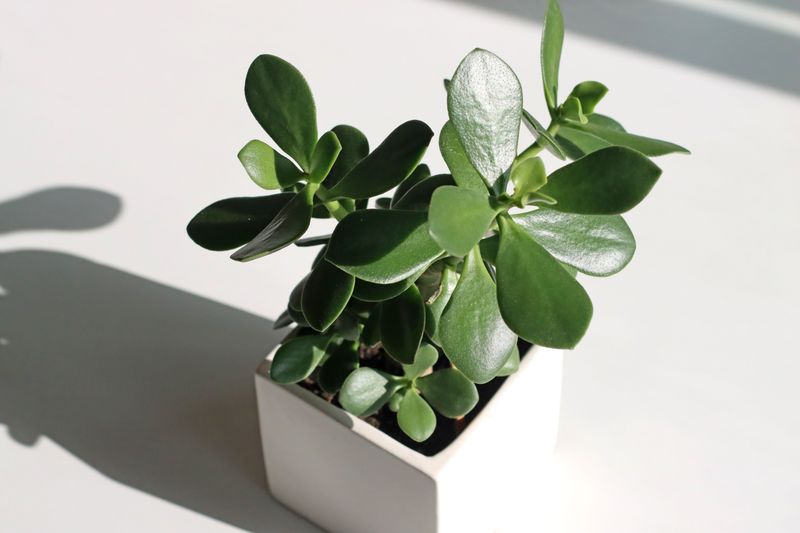
Light is the fuel behind every compact, tree-like jade. Without enough of it, stems stretch out, leaves spread apart, and the whole plant starts leaning like it wants to escape. Nobody wants a slouching tree.
Aim for at least four to six hours of bright light each day. A south-facing or west-facing window works beautifully in most homes. In California, coastal homes with marine layer mornings may need the sunniest spot available, while inland homes in places like Sacramento or Riverside can get intense afternoon heat through the glass.
Watch for a rosy or bronze blush along the leaf edges. That color is a natural stress response to strong light, and it usually means your jade is soaking up plenty of sunshine. Scorched brown patches, on the other hand, suggest the sun is too harsh.
Rotate the pot a quarter turn every week or two. This simple habit keeps the trunk growing straight instead of bending toward the window.
Short on natural light? A full-spectrum LED grow light running about 10 to 12 hours a day can fill the gap. Keep it a foot or so above the canopy for steady, even growth.
Let The Succulent Soil Go Bone Dry Before Watering Again
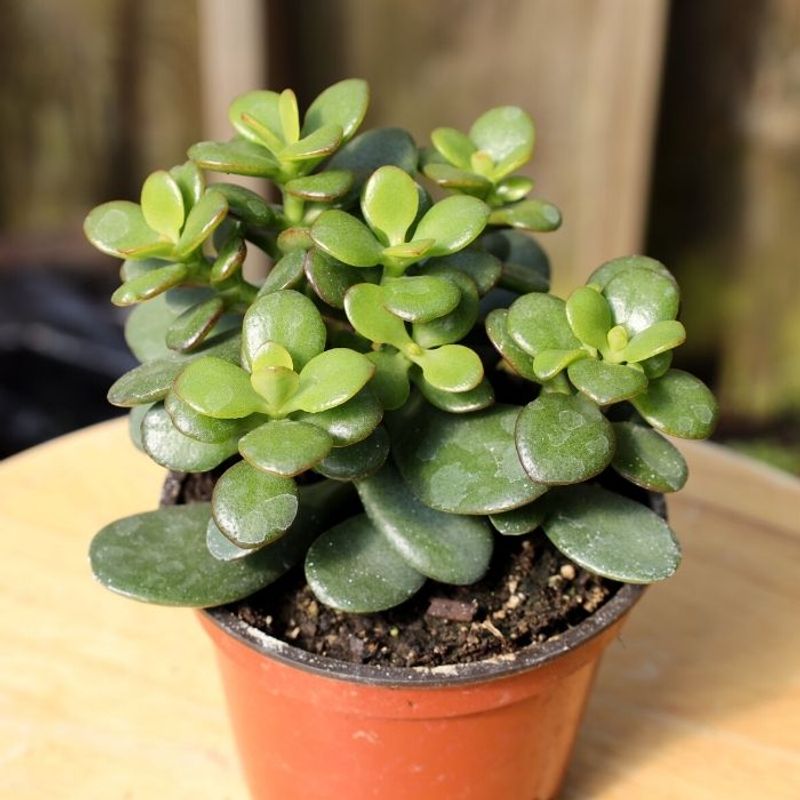
Overwatering sends more jade plants to the compost pile than any pest ever could. Those plump leaves store water like tiny canteens. Your plant is built to handle dry spells far better than soggy feet.
Try the finger test before reaching for the watering can. Push a finger an inch or two into the soil. If you feel any moisture, wait a few more days and check again.
When the soil is truly dry, water deeply until it drains out the bottom holes. Then empty the saucer within a few minutes. Standing water around the roots invites rot, and rot moves quickly.
Timing shifts with the seasons. During spring and summer growth, many indoor jades need water every two to three weeks. In fall and winter, that can stretch to once a month or even longer.
Leaves give helpful clues, too. Wrinkled or slightly deflated leaves usually mean the plant is thirsty. Soft, yellow, or mushy leaves point to too much water. I keep a little note on my calendar so I resist the urge to fuss. Honestly, a forgetful gardener often grows a happier jade than an eager one.
Heavy Terracotta Pots Keep A Top-Heavy Jade Tree Upright
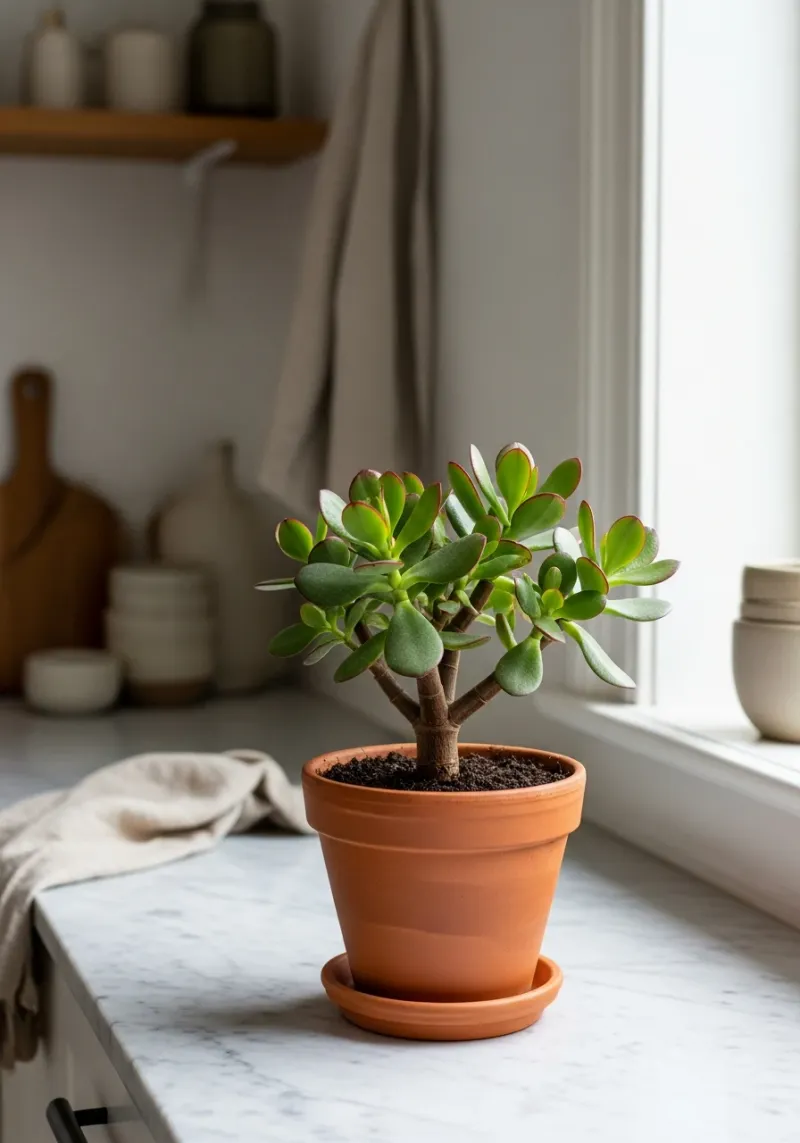
A jade tree gets surprisingly heavy as its branches fill with water-packed leaves. A lightweight plastic pot can tip over with one bump of the cat. Terracotta solves two problems at once.
Clay adds weight at the base, which keeps your tree steady. It also breathes, letting extra moisture escape through its walls. That porous quality helps protect roots between waterings.
Pair the pot with fast-draining soil. A bagged cactus and succulent mix works well. Many gardeners blend regular potting soil with perlite and coarse sand in roughly equal parts for even better drainage.
Jades enjoy being a bit snug in their containers. Repot every two to three years in spring, moving up only one or two inches in diameter. A pot that is too big holds extra soil that stays wet for days.
After repotting, hold off on watering for about a week. That pause lets any broken roots seal over before moisture arrives.
Want a bonsai-style look? Choose a wide, shallow container. It shows off the trunk and roots beautifully and makes even a modest jade feel like an ancient tree from a storybook garden.
A Light Fertilizer Snack Helps Jade Branches Grow Strong
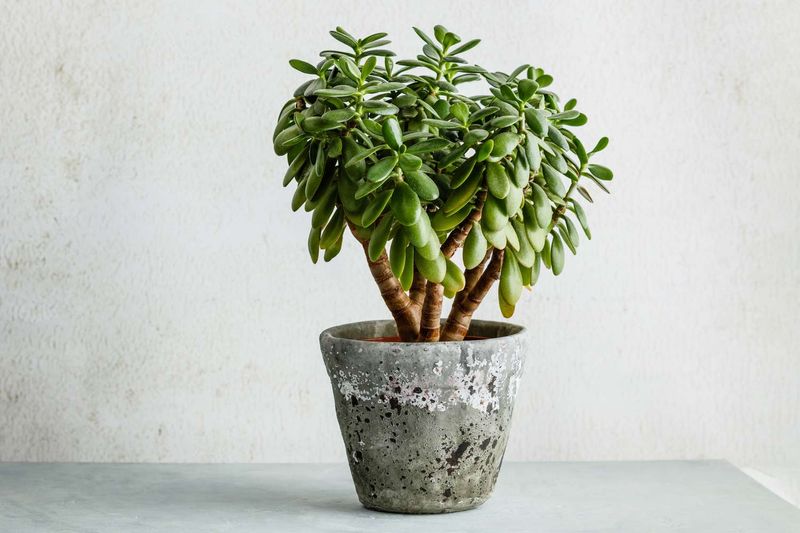
Jade plants are light eaters, a bit like a cat that nibbles rather than gobbles. Too much food pushes soft, stretchy growth that weakens your tree shape. A modest diet keeps stems firm and leaves compact.
Feed only during active growth, mostly spring and summer. A balanced liquid houseplant fertilizer or one made for succulents works nicely. Dilute it to half strength and apply about once a month.
Look for a formula that is not too heavy on nitrogen. Nitrogen fuels leafy growth, but succulents prefer steady, sturdy development. Many cactus fertilizers are designed with that balance in mind.
Skip feeding in fall and winter. Growth slows in shorter days, so the plant cannot use the extra nutrients, and salts may build up in the soil.
Speaking of salts, flush the pot now and then. Every few months during the growing season, water slowly and heavily so excess minerals wash out the drainage holes. This matters in many parts of California, where tap water can be fairly hard. If you spot white crust on the soil or pot rim, mineral buildup is likely, and a good flush usually helps.
Watch For Mealybugs Hiding In Jade Leaf Joints
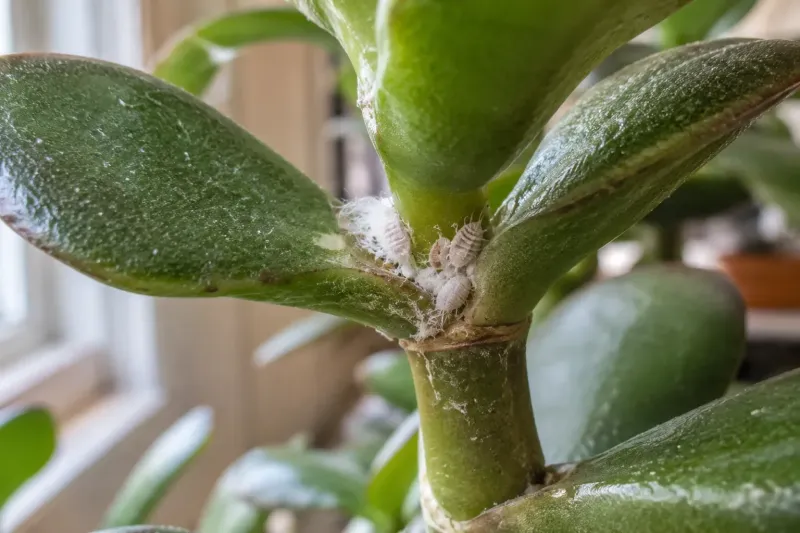
Those tiny white cotton tufts tucked where leaves meet stems are not lint. Mealybugs are the most common pest on indoor jade plants. They suck sap and leave sticky residue behind.
Catching them early makes control simple. Dab each bug with a cotton swab dipped in insecticidal soap. Check again every few days, since eggs hide in hard-to-see crevices.
Be careful with sprays. Jade leaves can be sensitive to some oils and soaps, so test any product on a small area first and wait a couple of days. Spot treatment with a swab is often the gentlest route.
Spider mites sometimes appear too, especially in dry, warm rooms. Look for fine webbing and speckled leaves. Wiping leaves with a damp cloth and improving airflow helps manage them.
Other warning signs deserve attention. Leaves dropping suddenly may mean a big temperature swing or a watering problem. Long gaps between leaves signal low light. Black, soft stems near the soil line often mean rot.
In that case, take healthy cuttings and start fresh. A quick weekly glance while you rotate the pot is the easiest way to spot trouble before it spreads.