Hummingbirds Are Heading Into Arizona Yards For Winter, And Here’s What They Want To Find
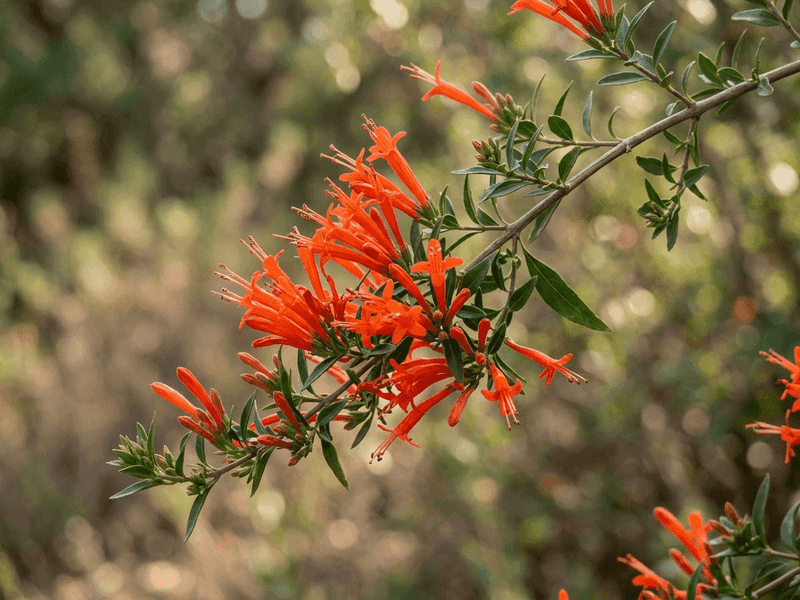
When the desert finally cools off, a tiny flash of green and pink starts showing up at Arizona patios. Anna’s Hummingbirds stay in Phoenix and Tucson all winter, and Costa’s Hummingbirds drift in by late winter, all looking for food, water, and a safe place to rest.
A yard with the right native plants can become their favorite stop, and it barely costs you any extra water. Here are ten things these little birds hope to find when they zip over your fence.
1. Chuparosa
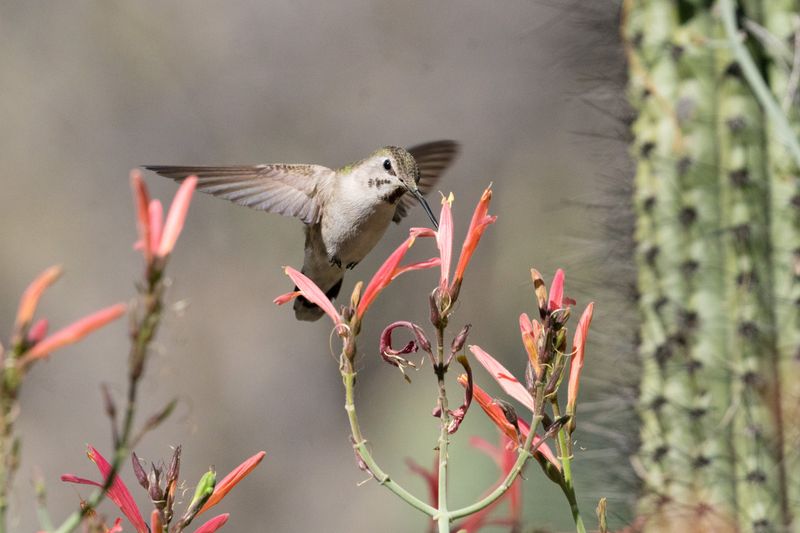
Picture a gray January morning in Tucson, and right outside the window is a shrub covered in red tubes with a hummingbird hovering at every branch. Chuparosa makes that scene happen.
Its name even comes from a Spanish word linked to hummingbirds, which tells you how long the two have been partners.
Native to the Sonoran Desert, chuparosa tends to bloom heavily from late fall through spring, right when Anna’s and Costa’s Hummingbirds need steady nectar. The narrow, curved flowers fit a hummingbird bill almost perfectly.
Bees and other pollinators may visit too, giving your yard more life overall.
Growing it is refreshingly simple. Plant in October or November in full sun, and give it a spot with good drainage, since soggy caliche is about the only thing that troubles it.
Once established, a deep soak every week or two in summer is usually plenty.
The shrub grows about three to four feet tall and wide, with soft green stems that look nice even when blooms slow down. Skip heavy shearing, because that removes flower buds.
A light trim after spring bloom keeps it tidy and ready for next winter’s crowd of tiny visitors.
2. Winter-Blooming Aloe
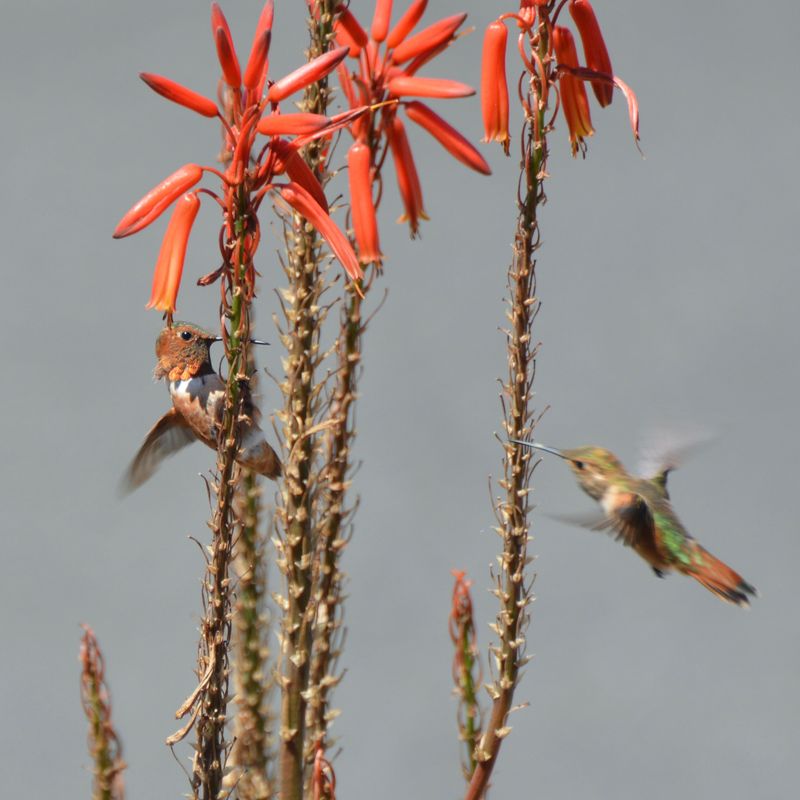
Few plants put on a midwinter show like aloe. Just when the rest of the garden looks sleepy, tall spikes shoot up and open into coral, orange, or yellow tubes from about January through March.
For hummingbirds, that timing matters a lot. Cold mornings burn through their energy fast, and a cluster of aloe spikes acts like a reliable snack bar.
You may notice one bird claiming a patch and chasing rivals away, which is surprisingly entertaining to watch over coffee.
Aloes are not Arizona natives, but many are well adapted to low-desert conditions and sip very little water. Coral aloe and Aloe ferox types are popular choices around Phoenix.
They prefer filtered afternoon shade in summer, since the harsh sun can scorch leaves to a reddish tint.
A few practical tips help them thrive:
Plant in gritty, fast-draining soil or a raised mound. Water deeply once or twice a month in summer and rarely in winter.
Cover tender types with frost cloth on the rare freezing night.
Bonus perk: aloes multiply into clumps, so one plant can become a whole hummingbird feeding station over a few seasons without you buying more.
3. Baja Fairy Duster
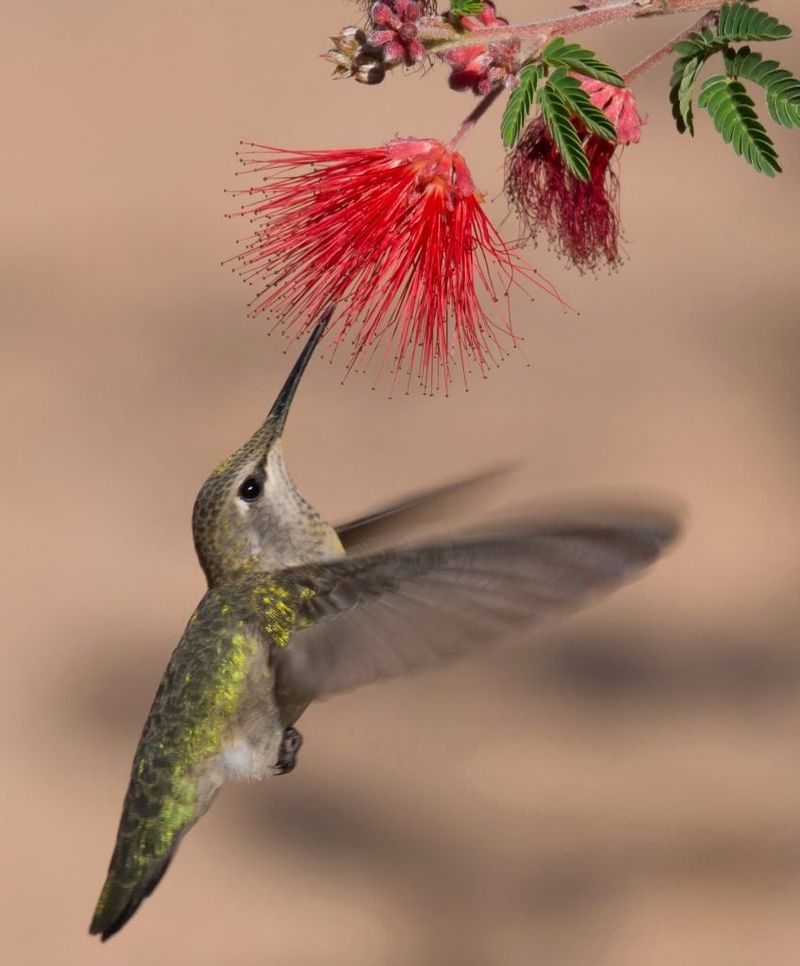
Fuzzy red puffs that look like tiny fireworks? Yes, please.
Baja fairy duster is one of those shrubs that makes neighbors stop and ask what you planted.
Your Arizona Garden Changes Every Week. Your Plan Should Too.
Gardening in Arizona changes quickly throughout the season. Every Friday you’ll receive a simple weekly plan showing exactly what to plant, prune, fertilize, harvest, and protect so you never miss the right timing.
Those puffballs are actually clusters of long stamens, and hummingbirds work them over eagerly. The plant can flower off and on through much of the year, often staying colorful into fall and winter in warm Phoenix and Tucson neighborhoods.
That long season makes it a steady partner for resident Anna’s Hummingbirds.
It handles reflected heat from walls and driveways better than many flowering shrubs, so it fits those tough spots near the house. Full sun brings the most blooms.
Once roots settle in, deep watering every week or two through summer usually keeps it happy, with much less needed in the cool months.
Size runs around four to five feet tall, with fine, ferny leaves that give a soft look against stucco. Prune lightly in late spring if it gets leggy.
One caution: a hard freeze in the low 20s may nip it back. In most low-desert yards it recovers quickly in spring, so a little frost cloth on chilly nights is a smart move rather than a must.
4. Autumn Sage and Mexican Bush Sage
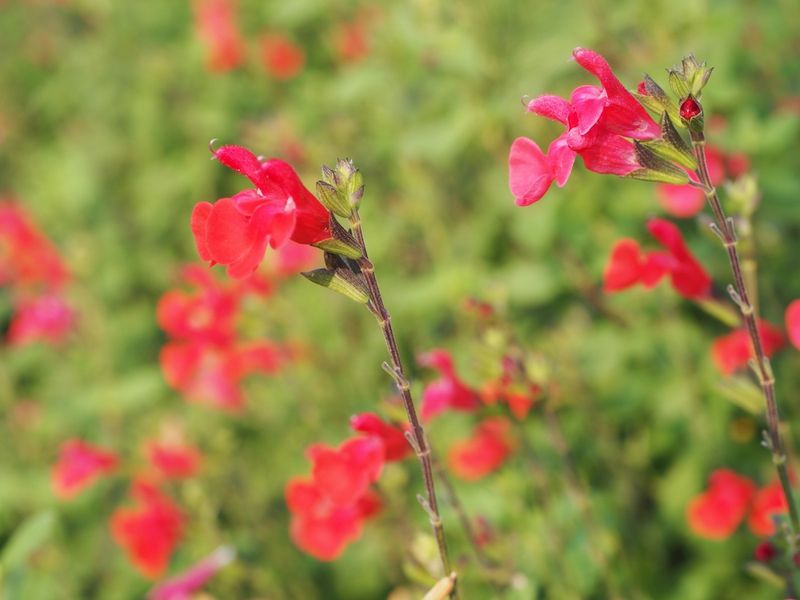
Sages are the friendly, easygoing members of the hummingbird garden. They forgive beginner mistakes, bounce back after a trim, and keep reblooming when given a little care.
Autumn sage, or Salvia greggii, comes in red, coral, pink, and white, and it sends out flushes of small tubular flowers in spring and again in fall. Mexican bush sage adds velvety purple spikes that often peak in fall and can linger into early winter.
Plant both and you create a color relay that keeps nectar coming as temperatures drop.
In low-desert Arizona, these sages appreciate a bit of afternoon shade, especially on west-facing sides. Well-drained soil keeps their roots healthy.
A deep drink once a week in summer, then less often in winter, is usually enough after the first year.
Here is a trick experienced gardeners use: shear autumn sage back by about a third in late summer. That encourages fresh growth and a strong fall bloom right when hummingbirds start arriving in bigger numbers.
Their aromatic leaves also tend to be less appealing to rabbits and javelina than tender plants. That means more blooms for the birds and fewer chewed stems for you to stress over.
5. Desert Honeysuckle
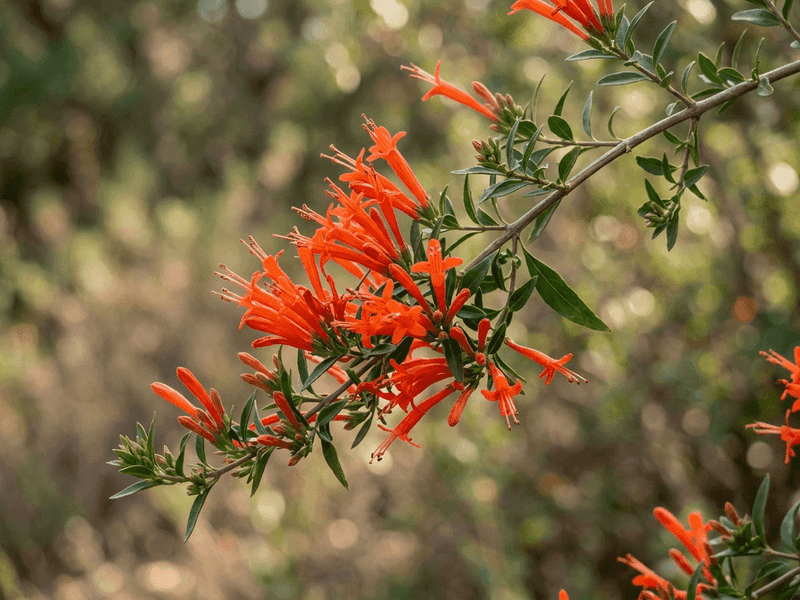
Some plants show off for a few weeks. Desert honeysuckle, also called flame acanthus or Wright’s desert-honeysuckle, keeps going for months.
From early summer until the first frost, this deciduous shrub covers itself in slim scarlet tubes. That stretch bridges a tricky gap, feeding Black-chinned Hummingbirds before they head south in early fall and then welcoming Anna’s Hummingbirds as the weather cools.
It is like having a nectar source that refuses to clock out.
Toughness is its middle name. Desert honeysuckle tolerates heat, alkaline soil, and dry spells once established, needing a deep watering roughly every week or two during the hottest months.
Full sun gives the best flowering, though it handles a little shade.
Expect a loose, airy shape about three to four feet tall. When leaves drop after frost, cut the stems back hard in late winter.
New growth sprouts quickly in spring and blooms on that fresh wood, so the haircut actually helps.
Fun detail: the small seed capsules can pop open and fling seeds, so you may find a few volunteer seedlings nearby. Share them with a neighbor and help build a hummingbird corridor down the whole street.
6. Parry’s and Firecracker Penstemon
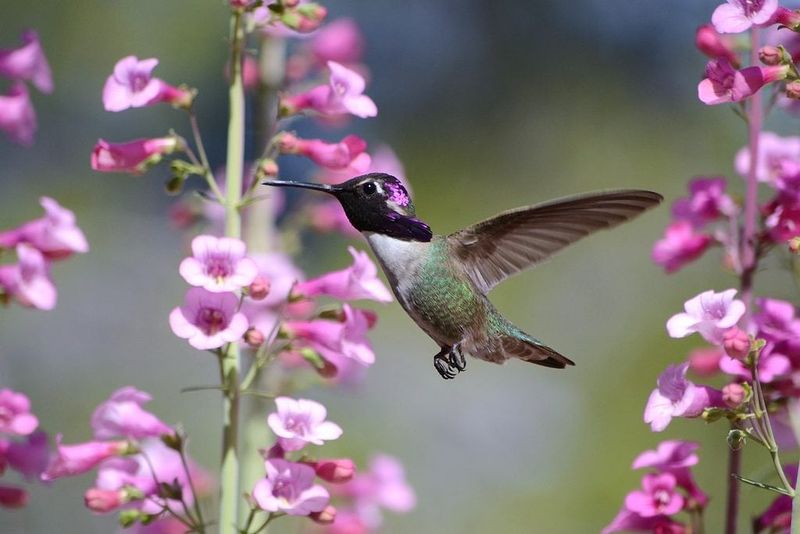
Late winter in the Sonoran Desert has a secret signal that spring is near: hot pink spikes rising from Parry’s penstemon. Costa’s Hummingbirds seem to know that signal well.
Parry’s penstemon is a true Sonoran native, blooming roughly February through April. Firecracker penstemon adds bright red tubes on a similar early schedule.
Together they offer a burst of nectar just as Costa’s Hummingbirds settle in and Anna’s Hummingbirds start nesting, when energy needs run high.
Penstemons love lean, gravelly soil and hate wet feet. Plant them in fall in full sun, ideally in a slightly mounded area or along a rocky border.
Too much water or rich soil can shorten their lives, so go easy with the hose once they are rooted.
Think of them as short-lived but generous. Individual plants may last only a few years, yet they reseed readily when you leave a few flower stalks standing after bloom.
Over time, a small patch can grow into a lively drift.
A clever approach is to scatter penstemons among boulders and low groundcovers. The upright spikes add height, and you get a natural-looking desert scene that feeds birds without extra fuss.
7. Ocotillo
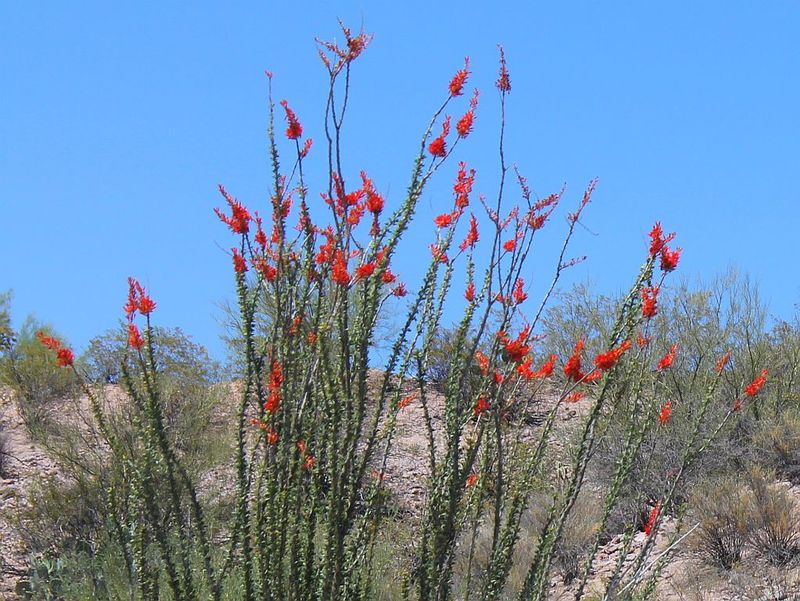
Tall, spiny, and a little wild-looking, ocotillo is the dramatic one in the group. Most of the year it resembles a bundle of thorny sticks, then suddenly its tips light up with flame-red flower clusters.
Blooming usually starts in spring, though in warm spots it can begin earlier, giving migrating and resident hummingbirds a bright target. Birds often perch on the upright canes between sips, so you get a front-row view of them resting and guarding their territory.
Ocotillo thrives in the hottest, harshest corners of a yard where other plants struggle. It needs almost no supplemental water once established and grows happily in rocky soil.
Rain triggers fresh leaves that appear within days, then drop when things dry out.
Planting tips matter here:
Buy nursery-grown or legally salvaged plants with proper tags. Set them at the same depth they grew before, and water occasionally until new leaves show up, which can take months.
Beyond hummingbirds, ocotillo makes a handy living fence when planted in a row. The spiny canes can discourage foot traffic along property lines, adding a practical bonus to a plant that already feeds wildlife.
8. Evergreen Roosting Shrubs
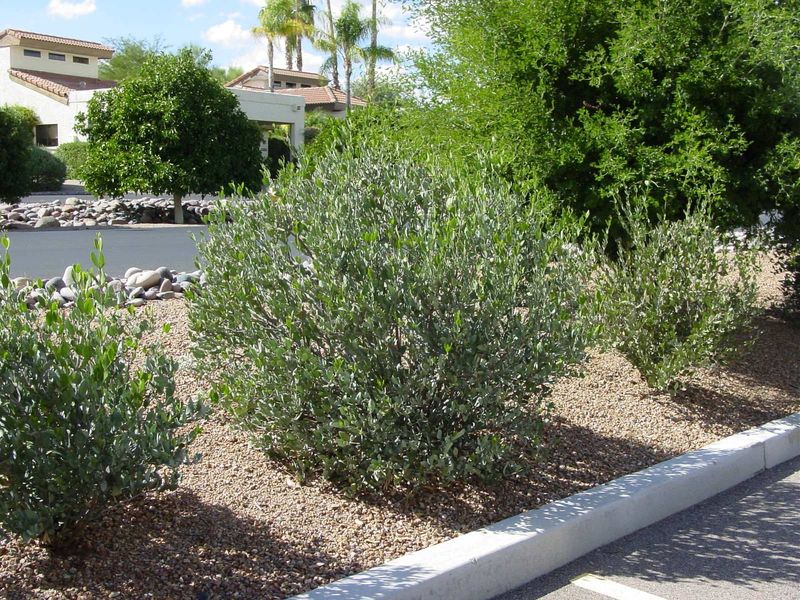
Here’s something many people miss: hummingbirds spend most of their day sitting still. All that zipping around takes huge energy, so they need safe perches to rest, digest, and keep watch.
Low, evergreen, moderately dense shrubs with horizontal branches make ideal hangouts. Jojoba, Arizona rosewood, and Texas ranger all fit that description in low-desert yards.
They offer cover from hawks, shelter from chilly winter winds, and a lookout point near flowers and feeders.
Jojoba is a Sonoran native with tough, gray-green leaves that barely need water once established. Arizona rosewood grows into a tidy screen that works well along walls.
Texas ranger adds silvery foliage and purple blooms after monsoon humidity, which bees appreciate too.
Placement makes a big difference. Try planting a roosting shrub within about 10 to 20 feet of your nectar plants or feeder, so birds can dart out, eat, and return quickly.
Resist the urge to shear these shrubs into tight balls. Natural shapes leave open interior branches that hummingbirds like for perching and, in spring, sometimes for tiny nests.
A relaxed pruning style means less work for you and better habitat for them.
9. Moving Water
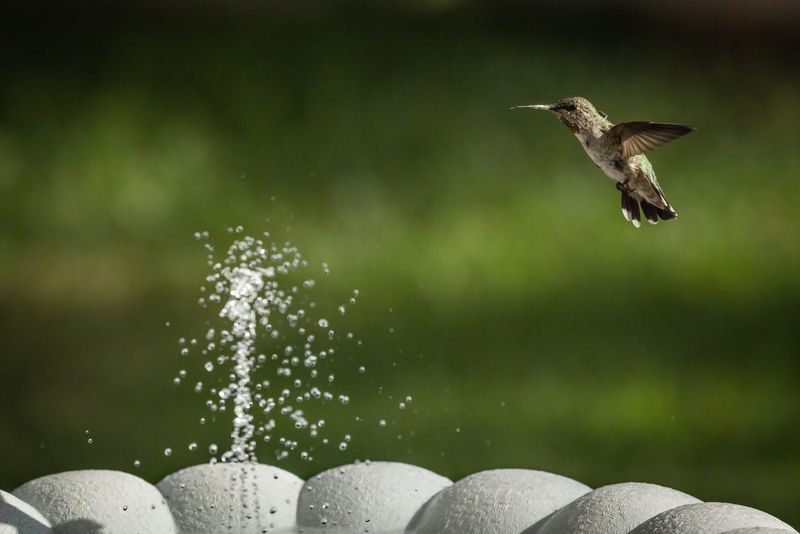
Ever watched a hummingbird take a shower? It flutters through a fine mist, rolls its feathers, and zips off looking freshly polished.
That little moment shows why moving water belongs in a hummingbird yard.
Hummingbirds rarely sit in deep birdbaths. They prefer shallow, moving water such as a slow dripper, a bubbler over flat stones, or a light mister.
Clean feathers help them fly efficiently and stay insulated on cold desert mornings.
Good news for water-wise households: these setups use very little water. A small recirculating fountain or a drip line feeding a shallow dish can keep things splashy without raising your bill much.
Solar pumps make it even easier.
Keep these tips in mind:
Place water near shrubs so birds feel safe. Scrub surfaces weekly to keep algae down.
Keep water moving, since still water may invite mosquitoes, while circulation makes it less inviting for them to lay eggs.
Winter adds one more reason to bother. Natural water sources can be scarce between rains, so a reliable drip may draw not only hummingbirds but verdins, finches, and other desert birds that make your yard feel truly alive.
10. A Clean Sugar-Water Feeder
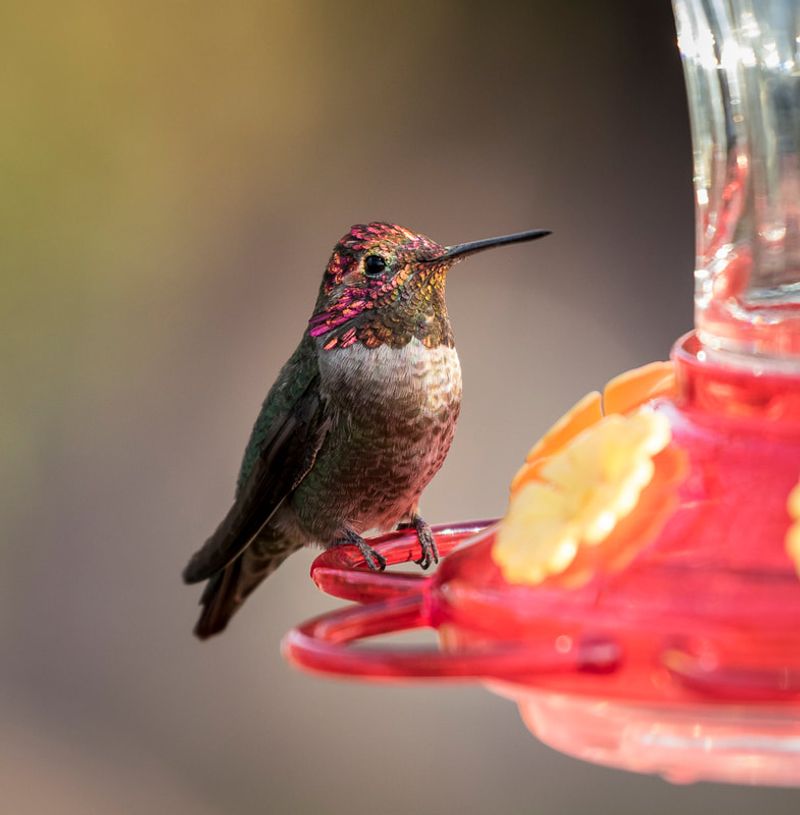
Flowers do the heavy lifting, but a feeder can fill the gaps. On a cool week when blooms slow down, that simple bottle of sugar water may keep a hungry Anna’s Hummingbird coming back day after day.
The recipe could not be easier. Mix one part plain white table sugar with four parts water, stir until dissolved, and let it cool.
Skip the red dye, since feeders already have red parts that attract birds. Avoid honey or brown sugar, which can spoil quickly.
Cleanliness is the real secret. In cooler winter weather, empty and wash the feeder at least once a week with hot water and a bottle brush.
When temperatures climb in spring, change the nectar every two or three days.
Hang feeders in partial shade, near a roosting shrub but away from spots where cats lurk. If one bossy bird hogs everything, add a second feeder out of sight from the first.
Think of a feeder as a supplement, not a substitute. Pair it with native bloomers, and you build a yard where hummingbirds find nectar, insects for protein, and shelter all in one welcoming place.