Is Bougainvillea Right for Your Front Walkway? A Practical Arizona Guide
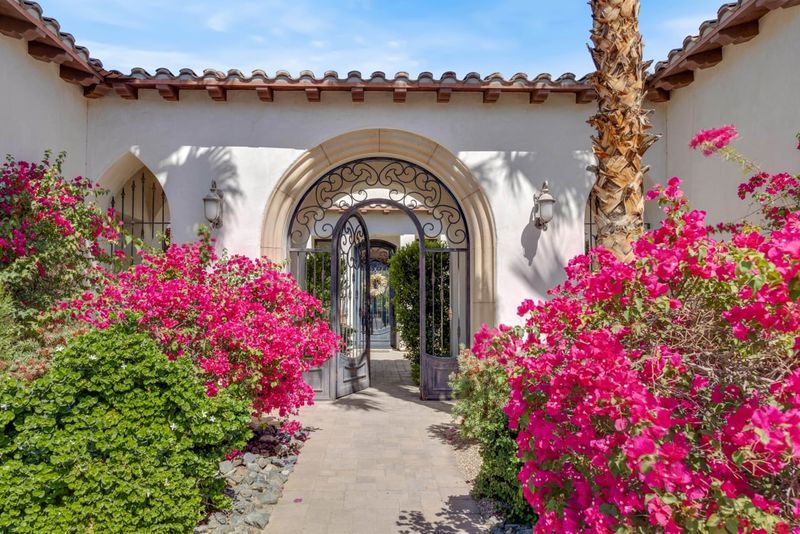
Bougainvillea turns heads with its electric bursts of color, and it is easy to see why Arizona homeowners are curious about planting it near the front door. Classified as a low-water-use vine for the low desert, it sounds like a natural fit for Phoenix and Tucson yards.
Before you dig, though, its thorny, sprawling growth and frost sensitivity make placement a real decision, not an automatic one. Getting the site right will save you pruning headaches and keep your walkway safe for everyone who uses it.
Choose a site, not a trend
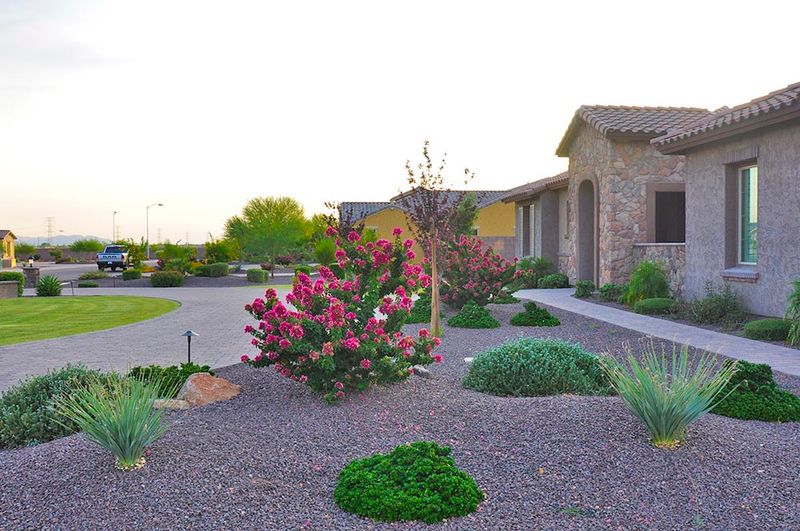
Before picking up a shovel, ask the practical question: does bougainvillea actually suit your front entrance, or does it just look appealing in a neighbor’s yard? No representative homeowner survey or planting-sales data confirms a rise in Arizonans putting bougainvillea along walkways, so the real starting point is your specific site, not a statewide trend.
The ornamental case for the plant is genuine. Its bracts erupt in shades of magenta, orange, red, and white, and the University of Arizona Cooperative Extension vines guide classifies bougainvillea as a low-water-use vine commonly seen in Arizona’s low desert, noting that it is fast-growing and sprawling and needs sun to perform well.
That combination of color and listed water efficiency explains its appeal in Phoenix and Tucson landscapes.
Low-water-use classification is not a guarantee that the plant will thrive anywhere you put it. Sun exposure, available space, proximity to foot traffic, and local frost risk all shape whether a given spot is a good match.
Treat the classification as a planning advantage, and let the following sections help you decide whether your entrance has what the plant actually needs.
Match its sprawling growth to the available space
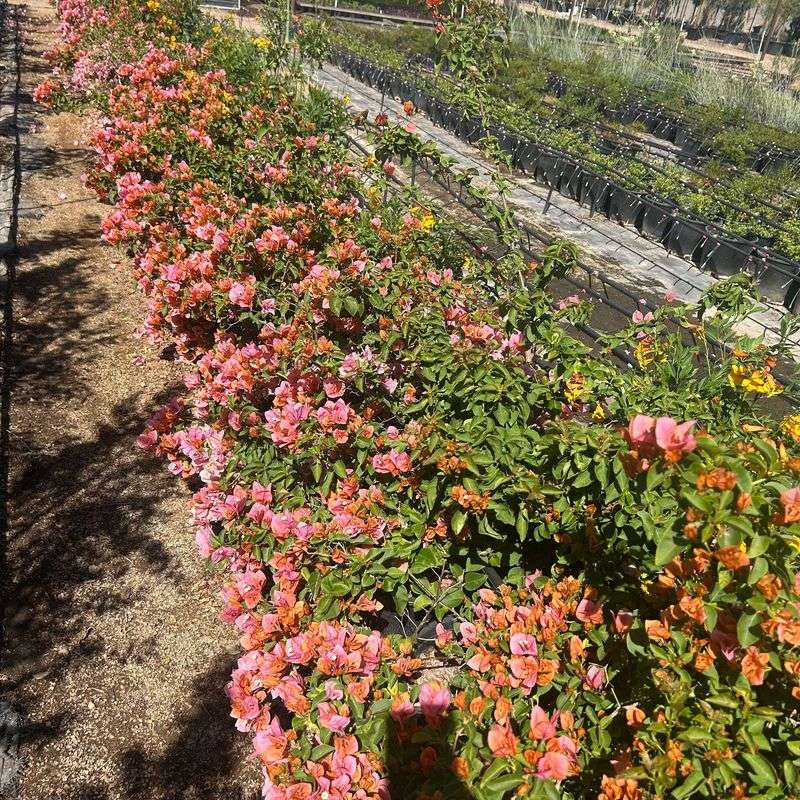
Arizona Cooperative Extension guidance on bougainvillea applies specifically to low-desert conditions found in places like the Phoenix and Tucson metro areas, not to higher-elevation parts of the state where climate and soil differ considerably. Within that low-desert context, the plant demands two things above most others: full sun and plenty of room to spread.
The University of Arizona vines guide lists a mature-size range of 15 to 50 feet, depending on conditions, support, and pruning history. That range is a planning reference, not a promise that every plant will reach 50 feet, but it signals that a narrow planting strip beside a four-foot walkway is a poor match for what the vine wants to do.
Comparing potential mature size against your actual available space before planting is the single most useful step you can take.
The University of Arizona container planting guide reinforces this point by recommending that gardeners match a plant’s eventual size to the space it will occupy. A bougainvillea planted where it cannot spread will need constant heavy pruning to stay in bounds, which increases your contact with its thorns and can stress the plant.
A wall, a large fence panel, or an open slope gives the vine somewhere to go without crowding the path.
Your Arizona Garden Changes Every Week. Your Plan Should Too.
Gardening in Arizona changes quickly throughout the season. Every Friday you’ll receive a simple weekly plan showing exactly what to plant, prune, fertilize, harvest, and protect so you never miss the right timing.
Keep thorny growth clear of the walkway
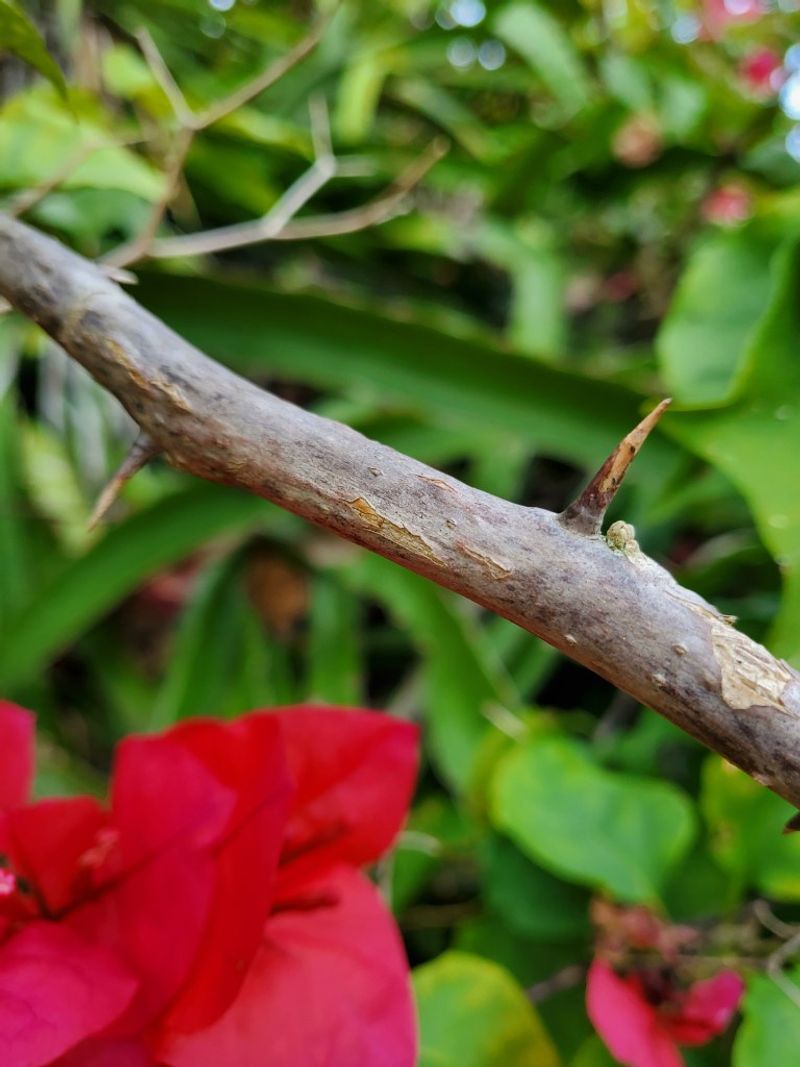
Bougainvillea stems carry stiff, sharp thorns, and when a vine arches or droops over a path, those thorns can catch clothing, scratch skin, or poke an eye at exactly the wrong moment. The University of Arizona vines guide confirms that stems are thorny and require support when the plant is trained as a vine, which means unsupported growth near a walkway is not just an aesthetic problem.
UC Cooperative Extension notes that thorn punctures from bougainvillea can cause dermatitis in some people, making contact more than a minor nuisance. Keeping the plant’s active growth well clear of foot traffic is the straightforward fix.
A planting strip that is too narrow to maintain safe clearance is a sign that a different location, or a different plant, is the better call.
A University of Hawaii extension guide advises keeping bougainvillea at least four feet from walkways because thorns can catch passersby. That specific distance is Hawaiian guidance, not an Arizona-validated spacing standard, but it offers a useful frame of reference when you are sizing up a planting spot.
Whatever clearance you choose, build in enough room for the plant to fill out laterally without reaching the path, because regular hard cutting to maintain a tight border means regular close contact with those thorns.
Use a wall or fence to manage its growth
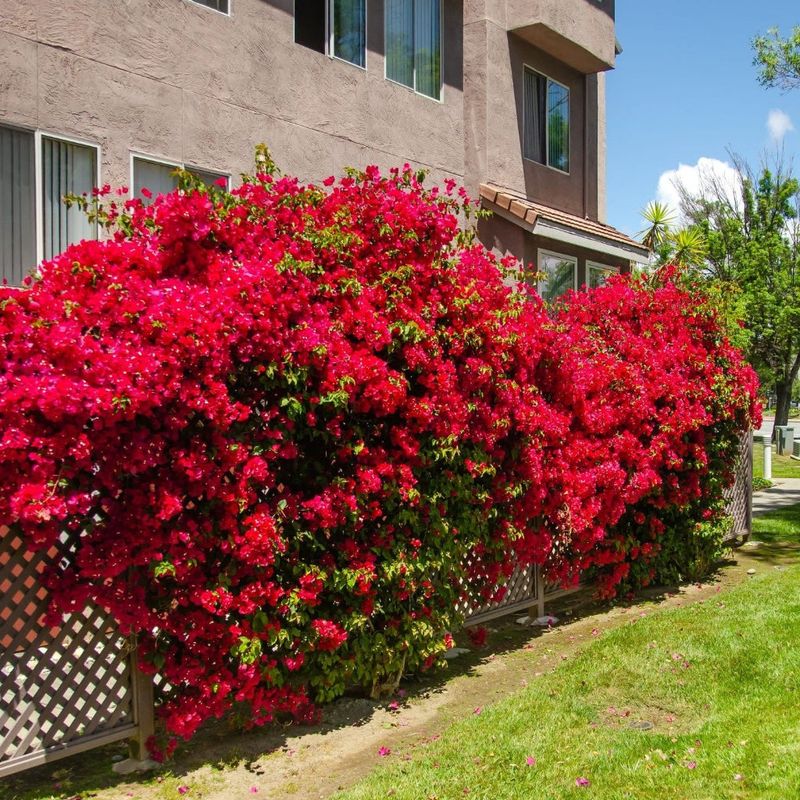
A sunny wall or solid fence gives bougainvillea a structure to lean against and a visual backdrop that makes its color pop. Readers who have the right amount of space can train the vine across masonry or wood by tying canes to anchor points, directing growth upward and sideways rather than letting it sprawl across a path or lawn.
Training and pruning are ongoing commitments, not a one-time fix that makes the plant safe to ignore. The University of Arizona vines guide notes that bougainvillea needs support to grow as a vine, and UC Cooperative Extension is direct about the safety side: thorn punctures can cause injury and dermatitis.
Every pruning session and every time you tie in new growth puts your hands and face close to those thorns.
Wear thick leather or puncture-resistant gloves, a long-sleeved shirt, sturdy closed-toe shoes, and eye protection every time you handle the plant. Rushing through a quick trim in sandals and a T-shirt is how puncture wounds and scratches happen.
Pruning after the main bloom flush, when you can see the structure clearly, makes the job more manageable. With consistent shaping and the right protective gear, a wall-trained bougainvillea becomes a vivid, controlled accent rather than a sprawling hazard.
Treat fall planting as conditional
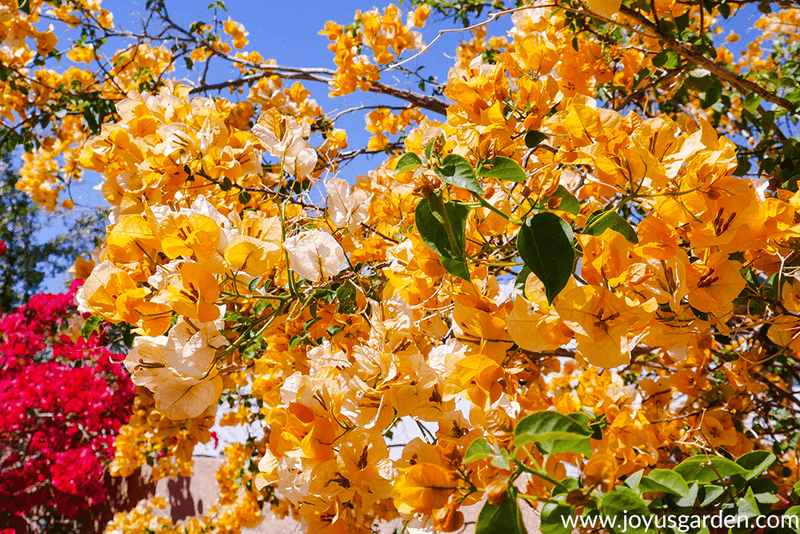
The University of Arizona’s bougainvillea-specific guidance recommends planting in spring, after frost danger has passed. That recommendation exists because bougainvillea is sensitive to cold, and putting a young plant in the ground when freezing nights are still possible sets it up for stem damage before roots have a chance to establish.
General University of Arizona shrub-transplant guidance offers a somewhat different lens: shrubs transplant best when temperatures are above freezing and conditions are not too hot and dry. In some low-desert Phoenix or Tucson locations, early fall can briefly fit that description, when summer heat has backed off but nighttime temperatures have not yet dropped toward freezing.
That window is real in certain microclimates, but it is narrow and site-specific, not a reliable statewide fall planting season for bougainvillea.
If you are considering an early-fall planting, check local forecasts and know your site’s frost history before committing. Do not wait until overnight lows are approaching 32 degrees Fahrenheit, because a newly transplanted bougainvillea with shallow roots has little buffer against a freeze.
When there is any doubt about the timing, the spring recommendation from the bougainvillea-specific Arizona guide is the safer default, giving roots a full warm season to anchor the plant before its first cold exposure.
Low water use does not mean no establishment watering
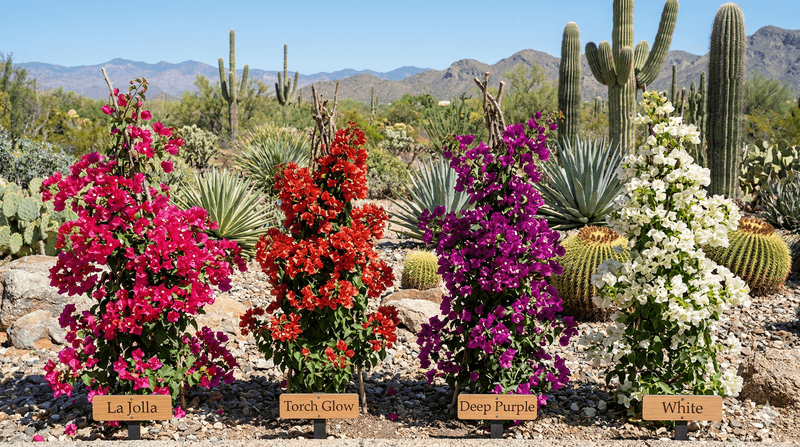
Being classified as a low-water-use vine in Arizona’s low desert is a meaningful advantage for a landscape plant, but it describes a mature, established bougainvillea, not a freshly transplanted one. The University of Arizona container planting guide explains that new transplants need water every few days initially, with intervals gradually lengthened as roots establish and as weather conditions shift.
That is general transplant guidance, not a fixed bougainvillea-specific schedule, so adjust frequency based on heat, wind, and how quickly your soil drains.
The Arizona vines guide adds a caution worth keeping in mind: overwatering or overfertilizing can actually discourage flowering. Once a bougainvillea is established, backing off on water tends to push it toward blooming rather than leafy green growth.
The goal during establishment is to keep roots alive and growing, then gradually transition to the leaner regime the plant prefers long-term.
UC IPM characterizes bougainvillea watering needs as moderate to regular, especially during bloom periods, which reflects a somewhat different framing than the Arizona low-water-use listing. Neither description gives you a universal weekly schedule, because local conditions, soil type, pot versus ground planting, and season all affect how quickly soil dries.
Watch the plant and the soil rather than following a fixed calendar, and remember that the low-water classification is an earned status, not a starting condition.
Check local frost risk before choosing a site
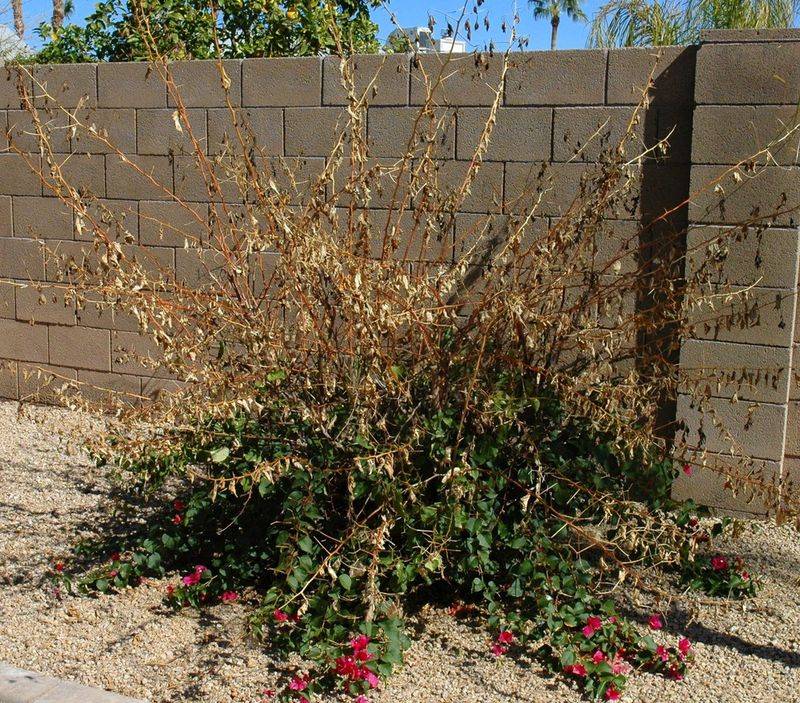
Frost dates across Arizona vary widely with elevation, location, and microclimate. Low-desert Phoenix and Tucson-area yards experience very different cold exposure than high-elevation communities in the same state, so advice that fits one area can be wrong for another.
Applying low-desert bougainvillea guidance to a site at 4,000 feet or higher is a mismatch that can cost you the plant.
The University of Arizona vines guide states that bougainvillea stems may die back near ground level when temperatures drop below 32 degrees Fahrenheit. Established plants can sometimes regrow from the base after a freeze, but that regrowth is not guaranteed, and a young plant with shallow roots has less stored energy to draw on for recovery.
The University of Arizona’s frost protection resource reinforces that frost dates shift with microclimate even within a single county, so knowing your specific yard matters. A spot against a south-facing masonry wall that holds daytime warmth into the night is a meaningfully different environment than an open front yard exposed to radiative cooling.
Before placing bougainvillea anywhere on your property, check local frost history and identify whether your intended site has natural protection or unusual cold-air drainage. Choosing wisely at the start is simpler than replacing a plant that did not survive its first Arizona winter.
Give it room or choose another planting
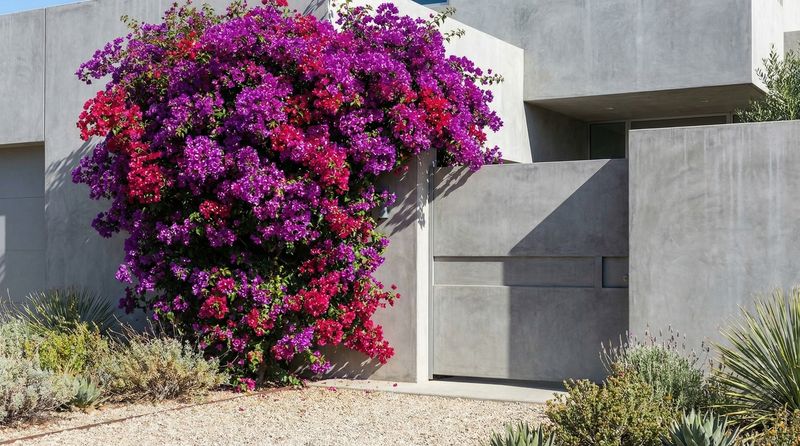
Bougainvillea earns its place in a low-desert yard when the site checks the right boxes: full sun, enough room for the vine to reach mature size, safe clearance from foot traffic, a wall or fence for support, reliable water during establishment, and a frost history the plant can survive. A spacious spot near a sunny wall or fence satisfies most of those conditions far more reliably than a narrow strip beside a front walkway.
If your entrance planting area is tight, shaded for part of the day, or heavily trafficked by kids and guests, a lower-growing or spineless desert-adapted plant is a more practical choice. The decision should come from your site’s actual conditions, not from a sense that bougainvillea is the popular thing to plant right now.
Color and low listed water use are real advantages, but they do not override the need for space, clearance, and structural support. A plant that fits its site looks good and stays manageable; one that does not will demand constant intervention.
Choose the right spot first, and the color will follow.