Meet The Carnivorous Plant Found In Only Three Alabama Counties
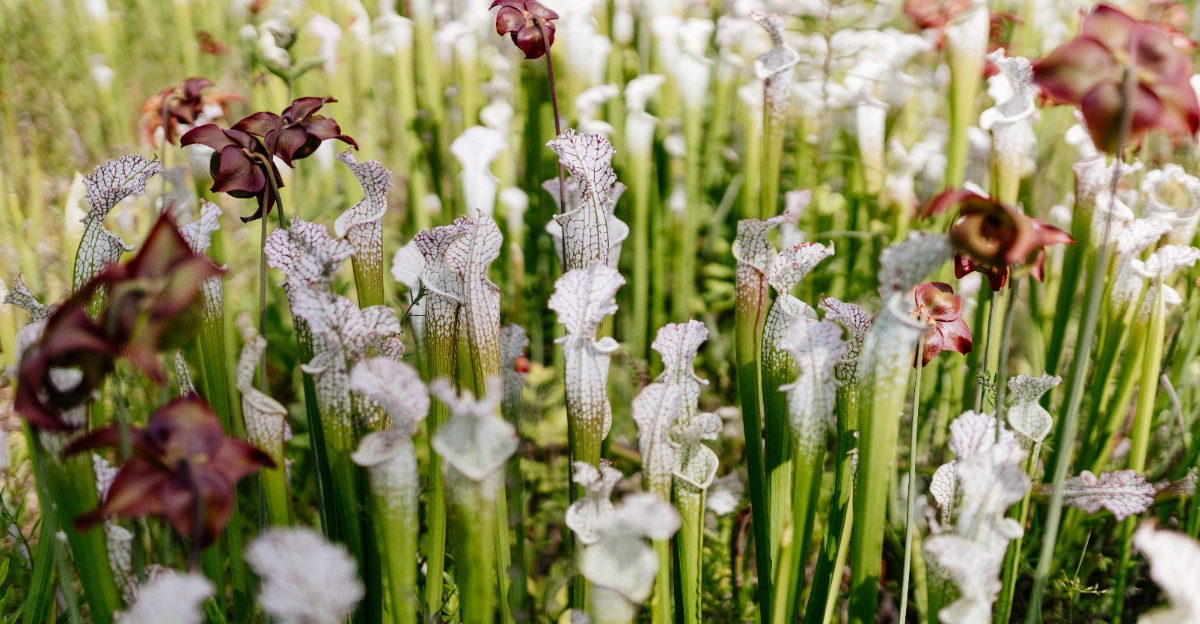
Imagine a plant that survives by trapping, drowning, and digesting living insects inside its own body. Right now, you are standing at the edge of one of the rarest botanical stories in Alabama.
Scientists have tracked its wild population across Alabama for decades, watching it retreat into scattered bogs. Inside those bogs, pitchers work like precision traps, luring prey with scent before dissolving it in acidic fluid.
Few people outside these wetlands have ever heard this plant’s name, but you would recognize its urgency the moment you learned how close it sits to disappearing. Every parcel lost brings it nearer to vanishing from existence entirely.
Nothing about this story unfolds slowly anymore, since drainage, development, and shrinking habitat push forward faster than you might expect. Losing this plant would erase an evolutionary lineage that took an immense span of time to shape.
You will not read this story and simply move on, because what happens to this plant next depends entirely on people paying attention now.
The Canebrake Pitcher Plant Survives In Only A Few Alabama Counties
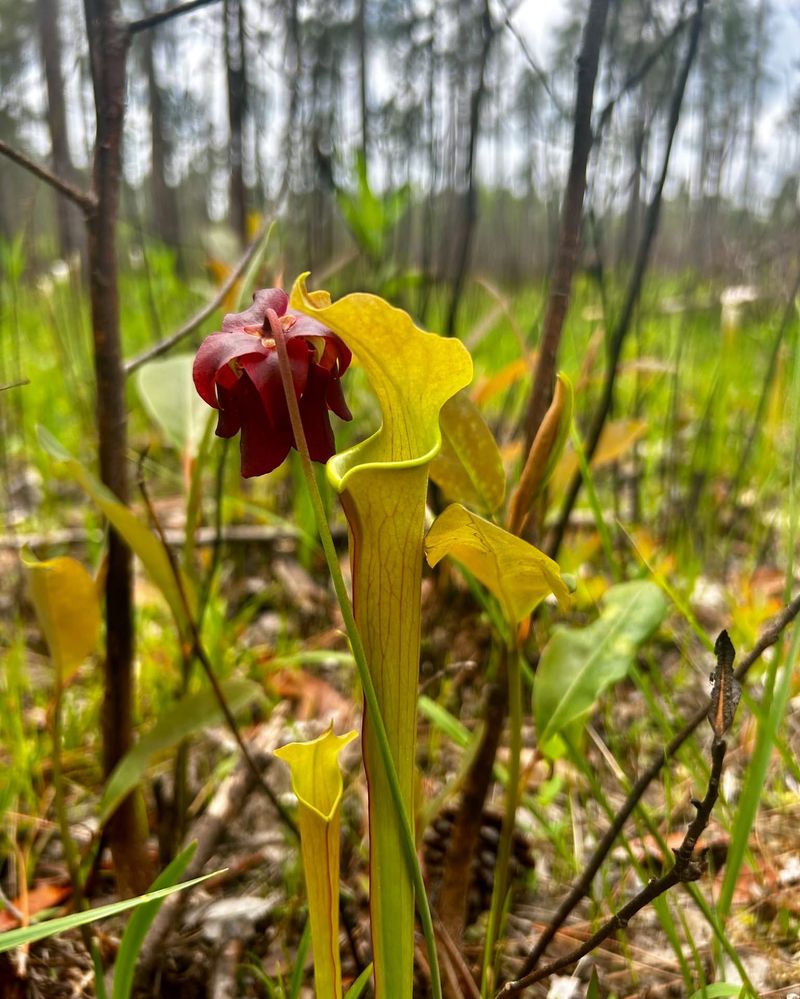
No other plant on Earth has an address quite like this one. The Canebrake Pitcher Plant, known scientifically as Sarracenia alabamensis, grows in just a few counties in central Alabama.
Autauga, Chilton, and Elmore counties host nearly every known population. That is an astonishingly small slice of the planet for any species to call home.
Recent surveys have documented roughly a dozen surviving sites, and only a handful of those hold populations considered truly stable. Fewer than half of the historic locations recorded decades ago still support the plant today.
Scientists believe this plant evolved in isolation, adapting to the specific chemistry of local bogs over thousands of years. Its range never expanded far because its habitat requirements are so precise.
The pitchers themselves are striking. Tall, pale green tubes with deep red veining and a hooded top make this plant look almost architectural.
Each pitcher fills with rainwater and digestive enzymes. Insects that slip inside rarely escape.
What makes the Canebrake Pitcher Plant so fascinating is not just where it lives. It is how completely it belongs to that one narrow strip of Alabama landscape.
Botanists who study it describe a plant perfectly tuned to its environment. Remove it from that environment, and it struggles to survive.
Understanding its geographic limits is the first step toward protecting it. This is not a metaphor. It is a biological fact of extreme habitat specificity.
Bogs And Seeps That Narrowed Its Range So Severely
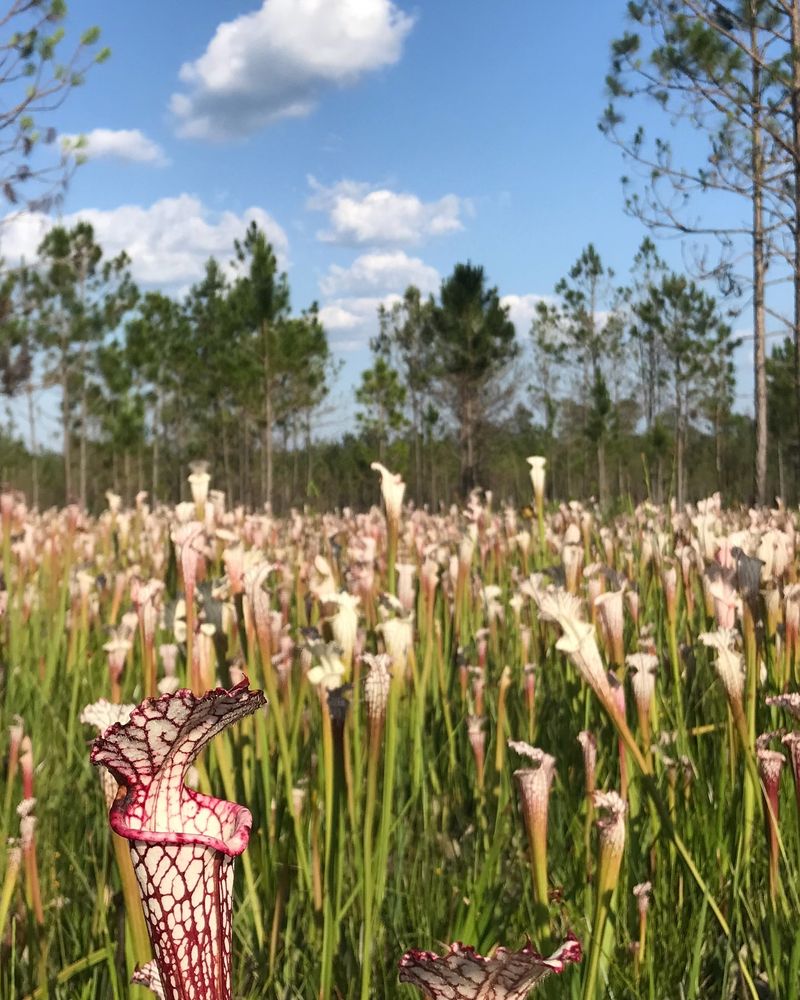
Bogs are moody, mysterious places. They are waterlogged, acidic, and almost completely lacking in the nutrients most plants need to survive.
For the Canebrake Pitcher Plant, that hostile environment is home. It thrives precisely because other plants cannot compete in such tough conditions.
Seeps are slightly different from bogs. They form where groundwater slowly oozes out of a hillside, creating a constantly wet patch of ground.
Both habitats share one key trait. The soil is nutrient-starved, which is exactly why carnivorous plants evolved their insect-trapping strategy in the first place.
Your Alabama Garden Changes Every Week. Your Plan Should Too.
Gardening in Alabama changes quickly throughout the season. Every Friday you’ll receive a simple weekly plan showing exactly what to plant, prune, fertilize, harvest, and protect so you never miss the right timing.
Alabama’s geology created these wet, acidic pockets in very specific locations. The underlying rock and clay layers channel water in ways that produce ideal pitcher plant habitat.
But that same geological specificity is part of why the range never grew. The right combination of moisture, acidity, and open sunlight only appears in scattered spots.
Fire also plays a role in maintaining these habitats. Without periodic burning, shrubs and trees crowd out the open, sunny conditions pitcher plants need.
Historically, natural fires kept bogs open. Today, land managers must sometimes mimic that process intentionally to preserve what remains.
The bog is not just a backdrop for this plant. It is a partner in survival, and without it, the Canebrake Pitcher Plant simply cannot exist.
Trapping Insects Is How It Feeds In Nutrient Poor Soil
Forget everything you know about how plants eat. The Canebrake Pitcher Plant skipped the whole photosynthesis-for-nutrients playbook and went carnivore instead.
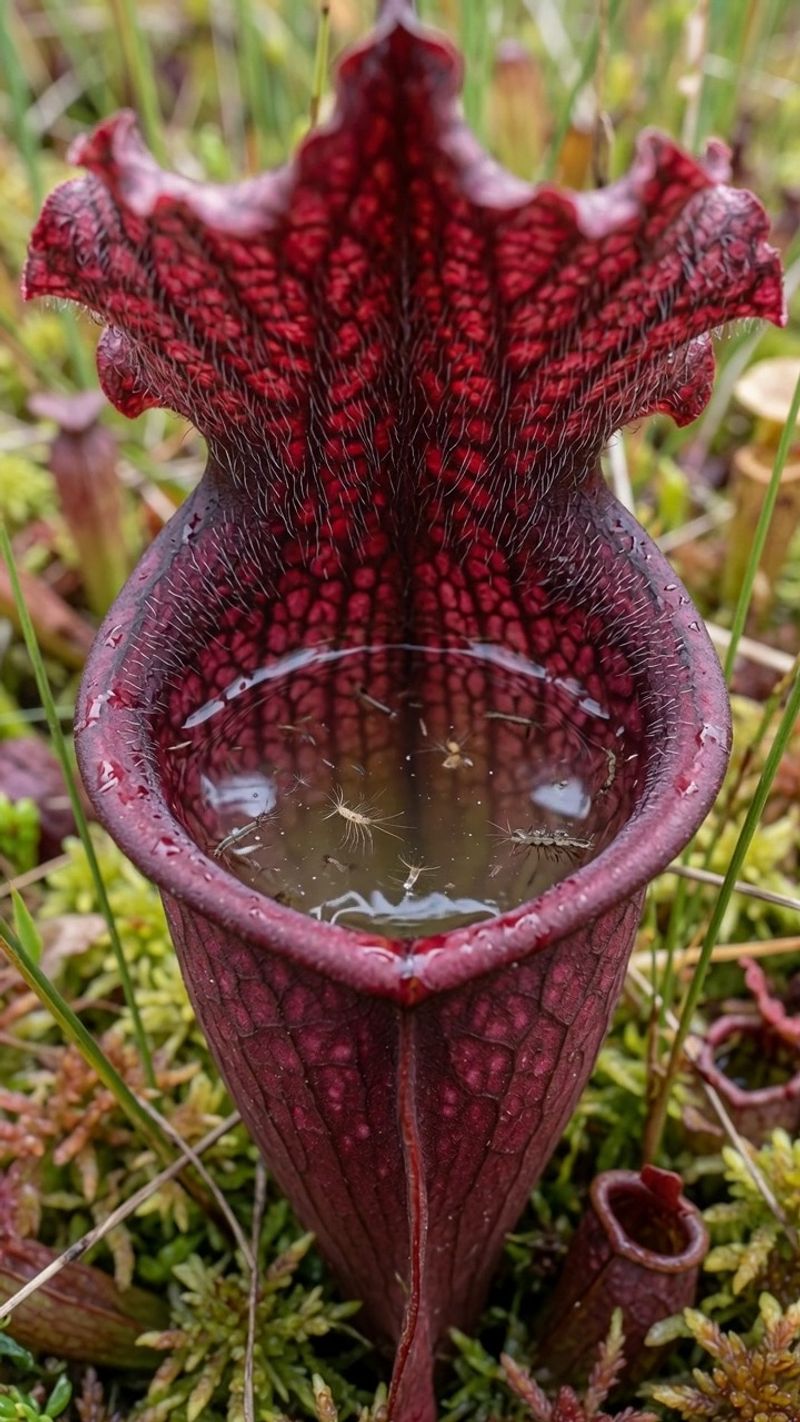
Its tall, tube-shaped pitchers are traps. Insects land on the rim, attracted by nectar and bright coloration, then slip on a waxy surface and fall in.
Downward-pointing hairs inside the tube prevent escape. The insect eventually drowns in the liquid pooled at the bottom.
That liquid is a mix of rainwater and digestive enzymes produced by the plant itself. Over time, the insect breaks down and the plant absorbs the nutrients.
Nitrogen is the big prize. Bogs have almost none of it in the soil, so the plant evolved a way to pull nitrogen directly from animal protein.
A single pitcher can trap dozens of insects over its lifetime. Ants, flies, beetles, and even small wasps have all been found inside.
The plant does not rely on insects alone for energy. Photosynthesis still happens in the green tissue of the pitchers and leaves.
Carnivory is a supplement, not a replacement. Think of it like a plant that mostly eats salad but occasionally needs a protein boost.
That feeding strategy is what allows it to survive where almost nothing else can. Tough soil made a tough, creative plant.
Federal Protection Status And The Rules That Come With It
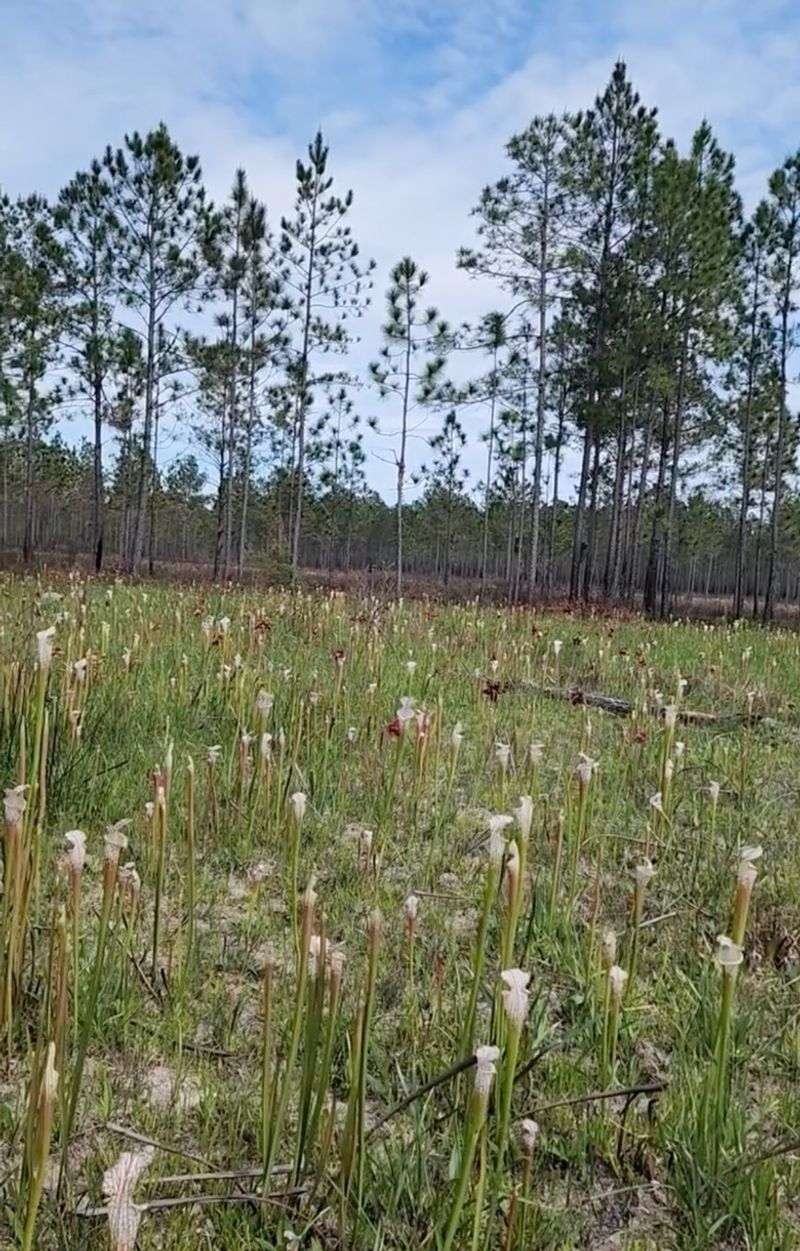
The U.S. government stepped in to protect this plant in 1989. The Canebrake Pitcher Plant was listed as endangered under the Endangered Species Act.
That listing changed everything. It meant federal agencies had to consider the plant’s survival before approving any projects that could affect its habitat.
Land developers, road builders, and farmers working near known populations must now check whether their plans could harm the species. Permits and reviews are required.
The U.S. Fish and Wildlife Service oversees enforcement. They work with state agencies and private landowners to monitor populations and manage habitat.
A recovery plan was developed to guide conservation efforts. That plan outlines specific goals, including protecting existing sites and potentially restoring others.
Federal protection does not mean the land is automatically off-limits to everyone. Private landowners can still use their property, but certain activities near pitcher plant sites are restricted.
Removing, damaging, or selling wild plants is strictly prohibited. Violating those rules can result in serious fines or even criminal charges.
Some landowners have voluntarily enrolled in conservation agreements. Those agreements provide incentives in exchange for managing habitat in ways that help the plant.
Protection under federal law gave this species a fighting chance. Without that legal shield, the remaining populations would face far greater pressure from human activity.
Habitat Drainage Reduced The Population To A Handful Of Sites
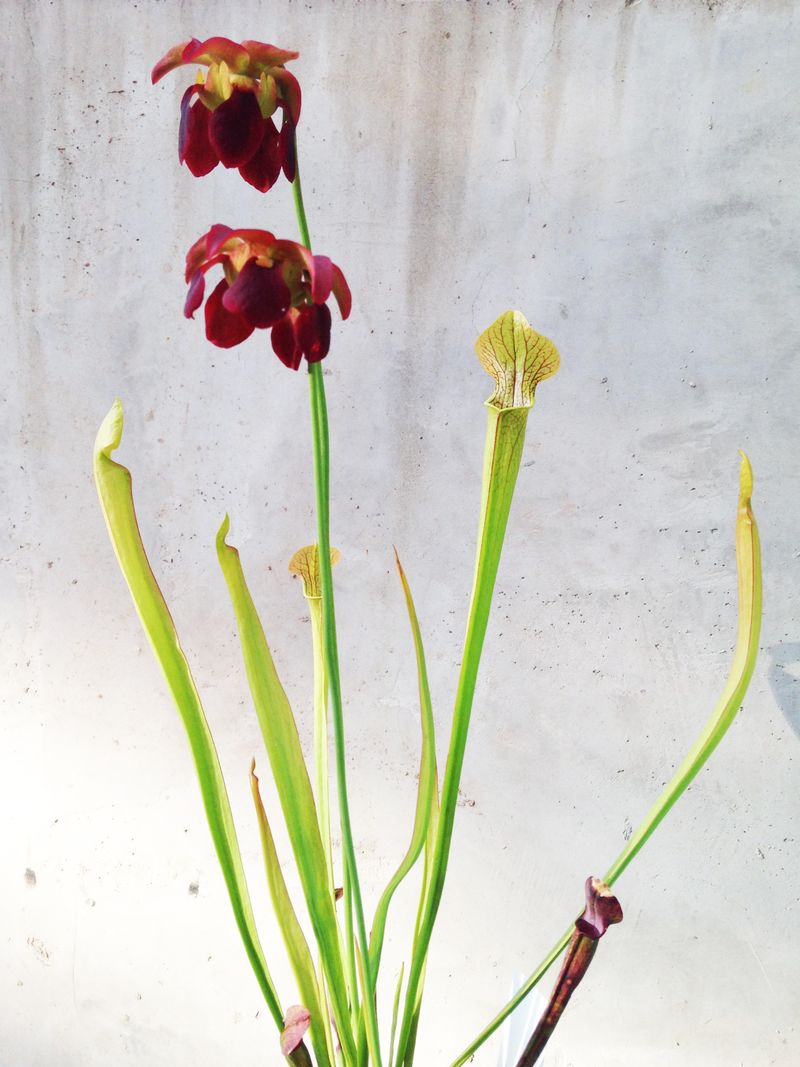
Draining a bog sounds like a simple engineering task. For the Canebrake Pitcher Plant, it was a near-fatal sentence.
Throughout the 20th century, wetlands across Alabama were drained for agriculture, timber production, and development. Thousands of acres of bog habitat simply disappeared.
Pitcher plants cannot pick up and move. When their bog drains, they dry out and die off within a single season.
By the time scientists fully documented the species, populations had already collapsed. What once may have been dozens of sites had shrunk to roughly a dozen.
The species has lost the majority of its historic range. That kind of habitat loss is staggering for any plant.
Ditching and tiling farmland was especially destructive. Those practices rerouted groundwater away from seeps, cutting off the moisture supply that bogs depend on.
Even indirect drainage causes harm. When surrounding land is altered, the water table drops and bogs begin to dry from the edges inward.
Road construction also fragmented habitat. A single highway can cut a bog in half, isolating plant populations and preventing natural seed dispersal.
The remaining sites are now closely monitored. Conservationists are working to restore hydrology at some locations, hoping to expand the habitat that supports this irreplaceable species.
Collecting From The Wild Carries Real Legal Consequences
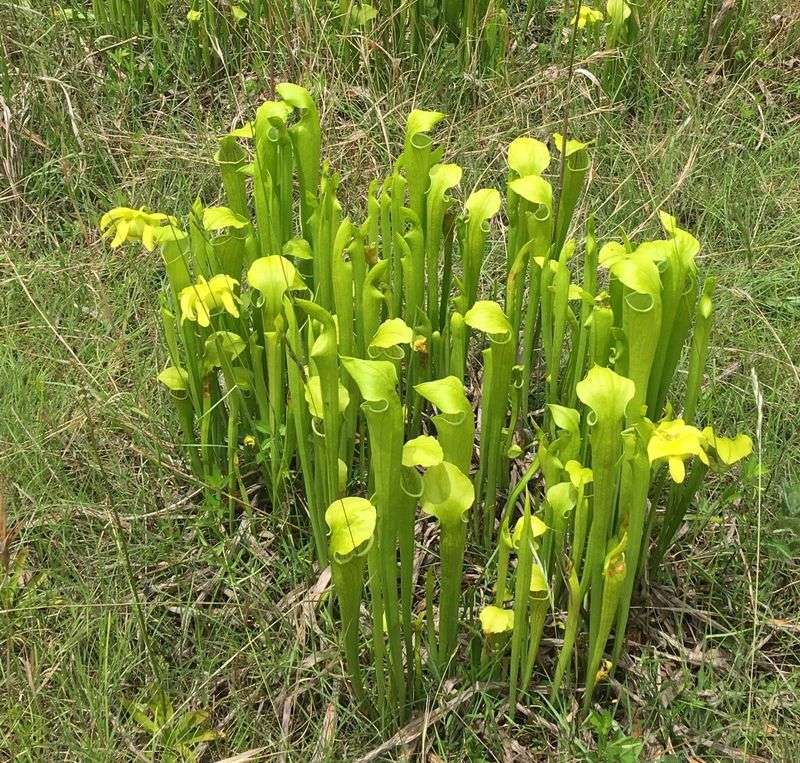
Some people see a rare plant and think “souvenir.” That impulse, when acted on, can result in federal charges.
Digging up or collecting a Canebrake Pitcher Plant from its natural habitat is illegal under the Endangered Species Act. No exceptions exist for casual or recreational collectors.
The penalties are not symbolic. Fines can reach tens of thousands of dollars, and repeat offenders have faced criminal prosecution.
Law enforcement takes poaching of protected plants seriously. U.S. Fish and Wildlife Service agents have investigated and prosecuted plant collectors in similar cases nationwide.
The damage from even a single collection event is significant. Pitcher plants grow slowly, and removing mature specimens sets back a population by years.
Photographing the plants is completely legal and encouraged. Scientists and nature lovers visit known sites regularly to document and enjoy them without causing harm.
Sharing location data online, however, is controversial. Some conservation groups ask that GPS coordinates for rare plant sites not be posted publicly.
Poachers have used crowdsourced location data to target vulnerable populations. Keeping site locations off social media is a genuine act of conservation.
If you encounter one of these plants in the wild, the best thing you can do is admire it, photograph it, and walk away. Leave it exactly where it belongs.