Mushy Agave or Aloe After a Storm? What to Check
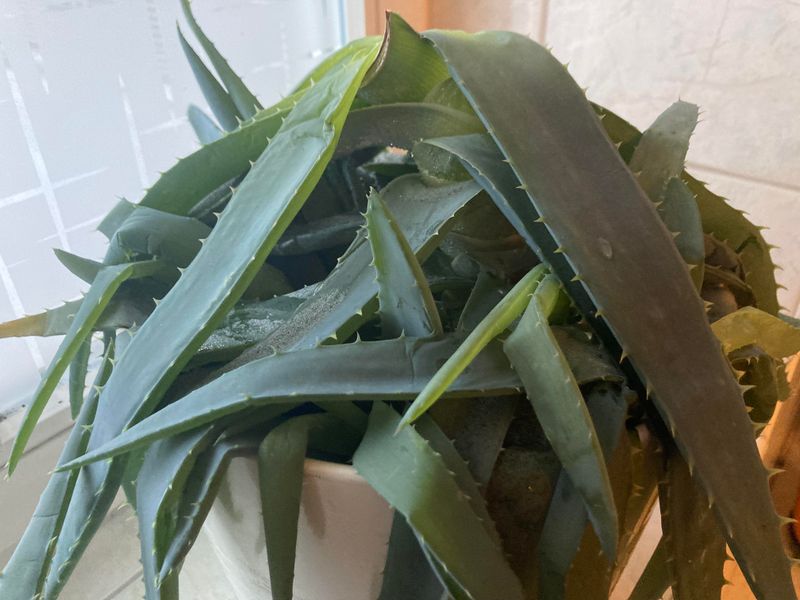
A soft, floppy agave can look alarming the morning after a storm. Before you grab the pruning shears, it helps to slow down and look closely.
Soft tissue is a symptom, and several different problems can cause it. Here is how to check the plant, the soil, and the damage so you know what you are really dealing with in your Arizona yard.
Mushiness After a Storm Is a Clue, Not a Diagnosis
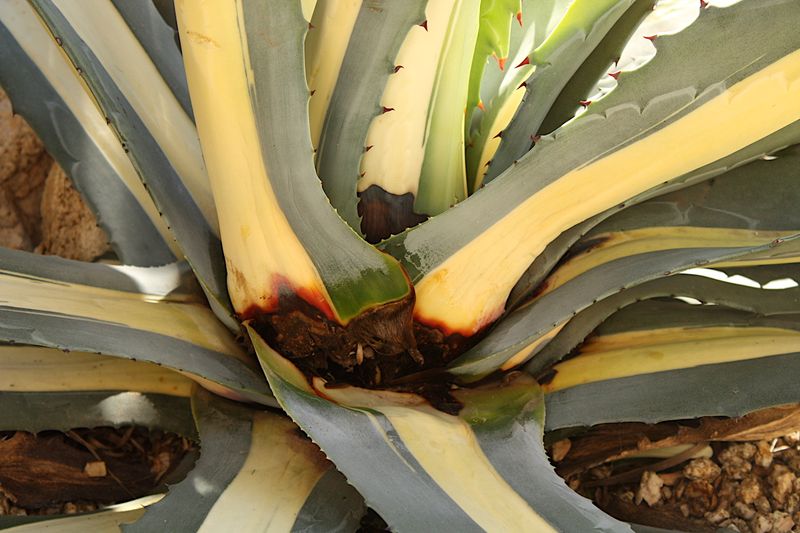
A soft agave the morning after a storm sends your mind straight to rot. That jump is understandable, but the timing alone proves nothing.
The plant looks mushy after the storm, and that is all you can say so far.
Several things can cause the same look. Soil that stays soggy, root or crown problems, hail wounds, and other stresses can all overlap.
University of Arizona Extension notes that stress signs like wilting have many possible causes, so it pays to inspect conditions before treating anything.
The same goes for agaves versus aloes. The Arizona bulletin on agave, aloe, cactus and yucca covers succulent care broadly, but its detailed disease notes are about agaves.
They are not a blanket answer for every aloe or every soft leaf.
So treat the mushiness as a reason to look, not a verdict. The next few steps walk you through what to check, starting with the ground under your feet.
Check the Soil Before You Water
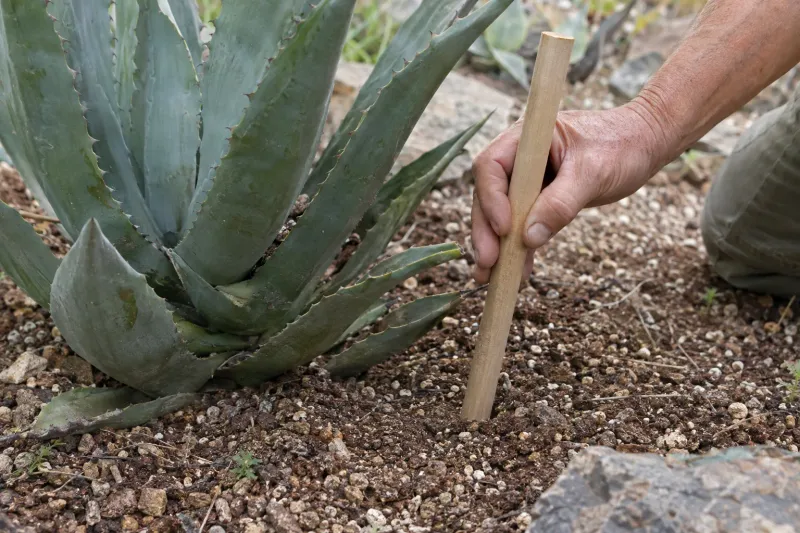
Your finger or a trowel will tell you more than the calendar. Push it two to three inches below the surface near the plant.
If that soil feels damp, the root zone is still wet, and the irrigation timer should wait.
Surface soil can dry fast in the sun while the layer below stays soggy. That is why a quick look at the top is not enough.
Also check whether water is pooling or lingering around the base of the plant.
University of Arizona guidance on healthy landscapes cautions that plant bases should not stay wet for long periods after rain. If you see standing water, look at the grading and any spots where runoff collects.
Watering needs depend on the species, soil, site, and recent rain. Arizona Extension advises letting the root zone dry between irrigations, and its general summer interval is not a rule for every yard.
Test the soil first, then decide.
Inspect Soft Roots and the Plant’s Crown
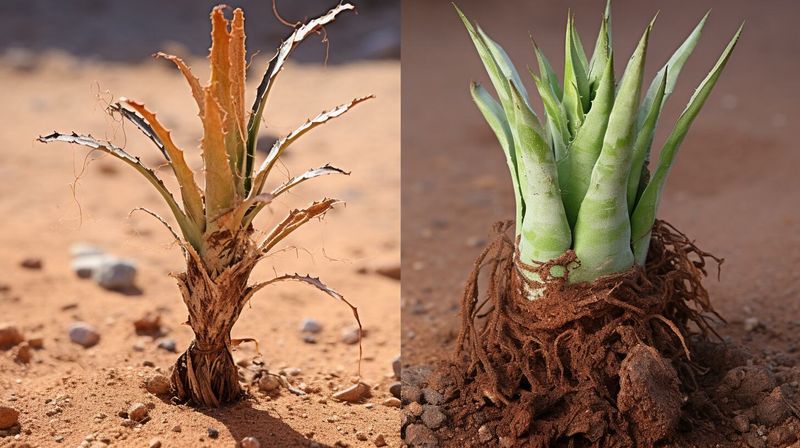
Soil that stays wet with poor drainage can set succulents up for root-rotting pathogens. When that happens, the roots and the base of the stem often tell the story.
Dark, soft, or decayed roots and stems are warning signs.
They are not proof, though. Leaf symptoms can come from several causes, and plant disease specialists at the University of Florida suggest checking soil moisture and, when appropriate, examining the roots.
Brown or black soft roots are a red flag, but similar leaf problems can have other sources.
Look at the crown, where leaves meet the stem. Note whether it feels firm or sinks when pressed, and whether any dark, wet-looking tissue is spreading.
Only dig up a smaller plant or container plant if you need to, since digging can stress it further.
Inspection helps, but it cannot always confirm a diagnosis. If the crown is collapsing or symptoms keep advancing, ask an expert to take a look.
Make Sure Container Water Can Drain
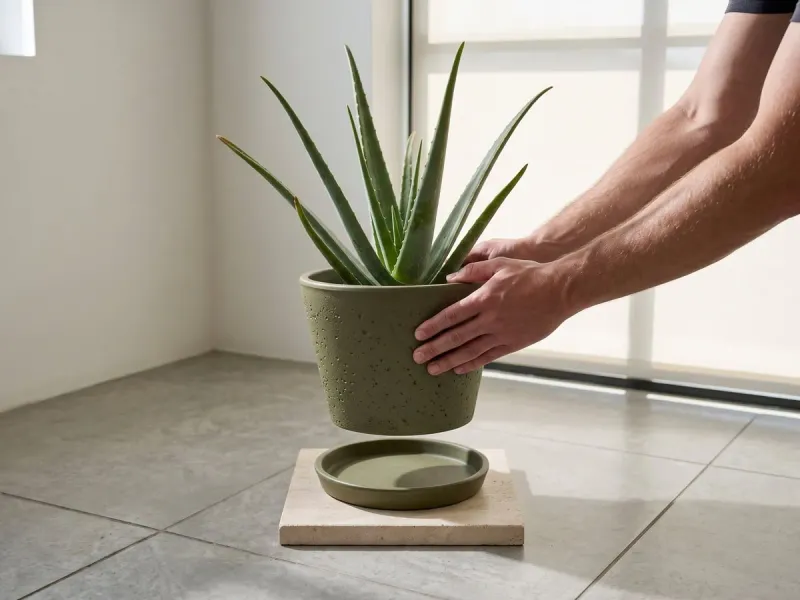
Potted plants play by different rules than ones in the ground. After a storm, a pot can fill like a bucket if the water has nowhere to go.
Tip the pot and make sure the drainage holes are open and excess water can escape.
Roots need oxygen, and soggy mix pushes air out. University of Arizona Extension explains that native desert soil can drain slowly in containers, so a pot filled with it may hold water longer than you expect.
Skip the old trick of putting gravel or stones at the bottom of the pot. Extension advises against it.
Use a potting mix suited to the plant instead, and keep the holes clear of debris or a saucer full of water.
If the mix still feels wet a few inches down, hold off on watering. A pot that sits in a puddle under a downspout may need to be moved to a spot where it can shed water.
Look for Hail Wounds on the Leaves
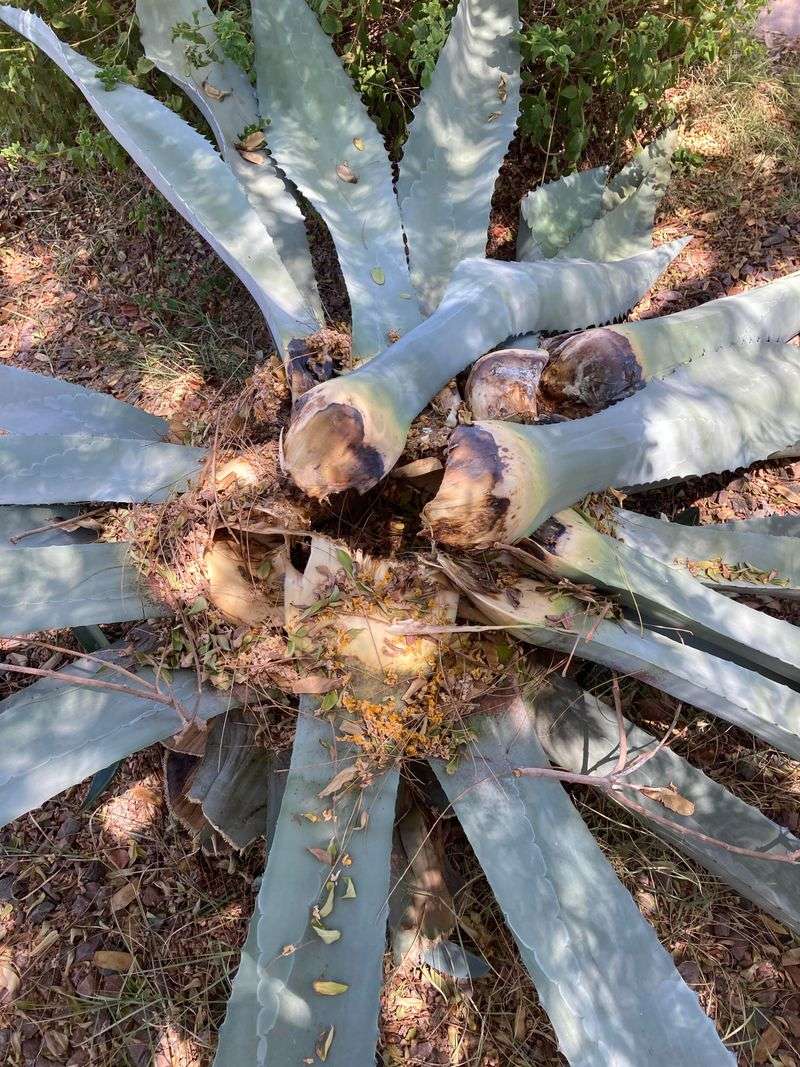
Hail leaves a different kind of mark. Instead of a slow, spreading softness, you may see holes, punctures, or bruised patches.
The Arizona Extension bulletin says agave leaves may be perforated by hail.
When hail comes with strong wind, the damage can pile up on one side of the plant. Walk around it and compare the sides.
A lopsided pattern points toward impact.
Wounds like these can happen without any rot at all. They are physical injuries, and they are a separate issue from moisture-related disease.
Still, an open wound can be an entry point, so keep an eye on it over the following weeks.
A plant can also have both problems at once, such as hail damage and soil that stays wet. That is why checking the soil and the crown still matters, even when the hail marks are obvious.
Assess Agave Lesions Without Assuming a Cure
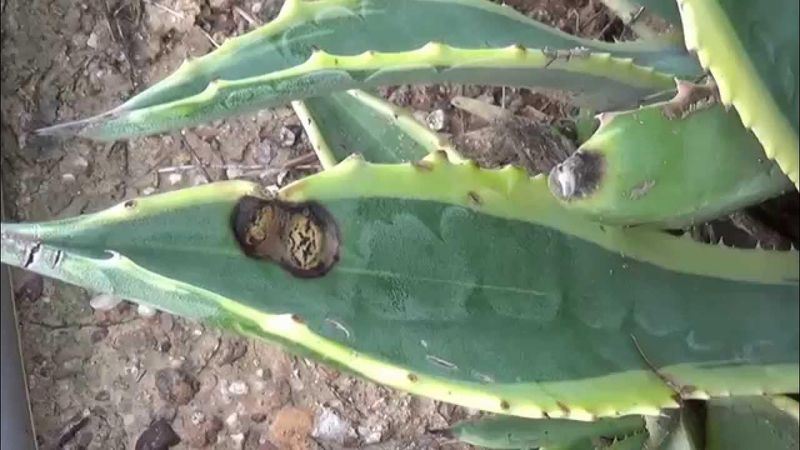
Some soft or spotted agave tissue may be anthracnose, a fungal problem. The Arizona bulletin describes it as producing lesions on leaves or the crown during moist conditions.
This guidance is specific to agaves, so do not stretch it to every aloe.
The bulletin advises removing leaves with active lesions and avoiding overhead watering where the disease has occurred. Those steps are about limiting moisture on the plant, not about promising a rescue.
Fungicide is not a proven fix here. The same bulletin says its efficacy for agave anthracnose had not been established, so it should not be your first move or your only hope.
Spots alone do not confirm a diagnosis, either. Note where they are, whether they are spreading, and what the soil is doing, then get a second opinion if you are unsure.
Treat Agave Collapse as a Reason to Investigate Further
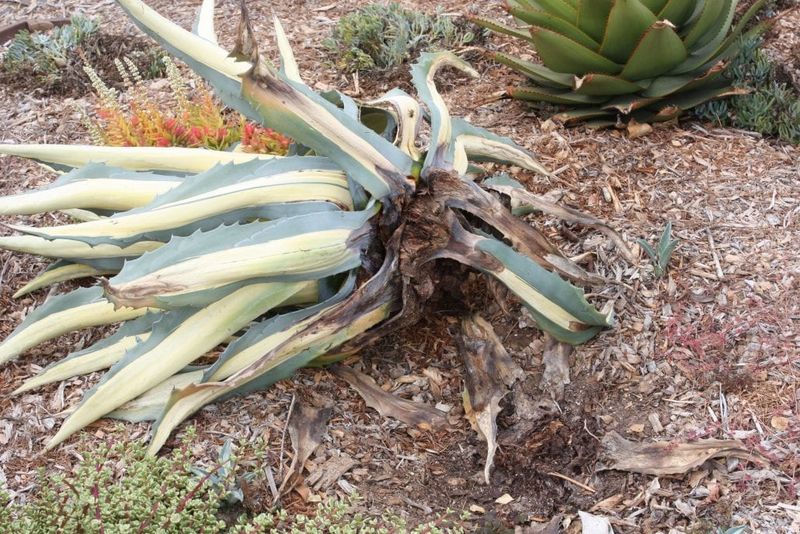
A collapsing agave deserves more than a guess. The Arizona bulletin discusses root and crown rots linked to soilborne pathogens, and it notes that agave-weevil feeding can be involved too.
Rain may not be the whole story.
According to the same bulletin, control can be unavailable for some root and crown infections once pathogens have entered. That is a sobering point, and it is why careful looking matters.
Check the base for injury, tunnels, or signs of pests. Then act on what you actually see, whether that is poor drainage, wet soil, or physical damage.
If the crown is collapsing or symptoms keep advancing, call your county Extension office or a qualified plant professional for diagnosis. A careful look beats a quick cure every time.