Native Ohio Plants That Feed Goldfinches When Seeds Ripen In July
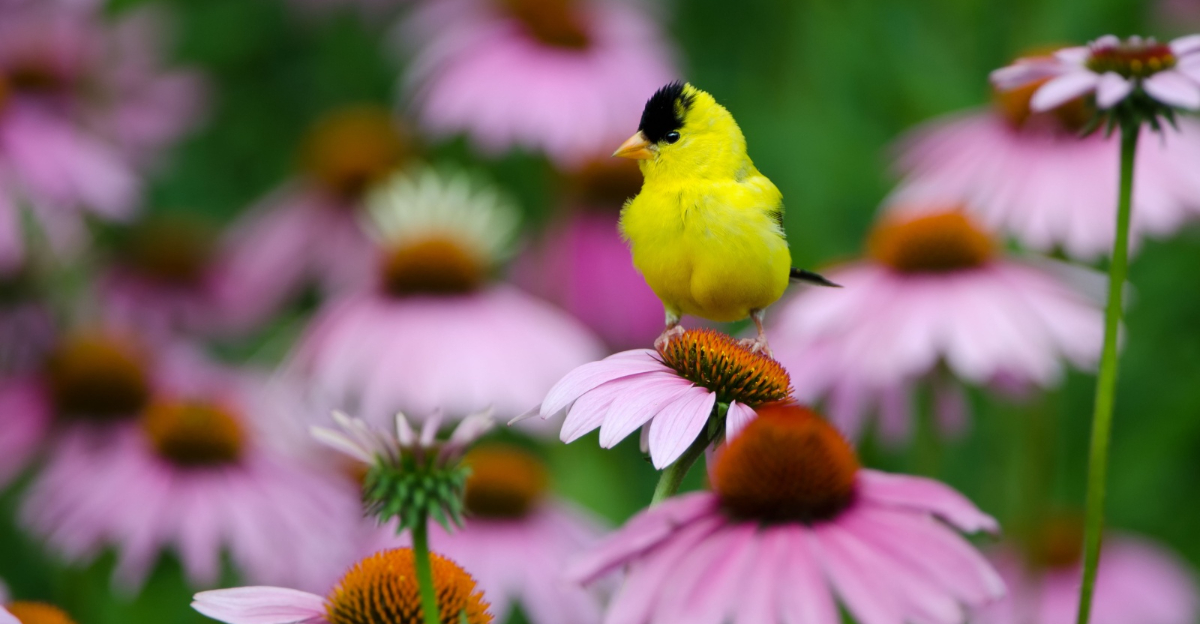
American Goldfinches play a pretty good vanishing act in spring, barely showing up in Ohio yards while everyone is busy admiring the early bloomers.
Then summer hits, native seed heads start forming, and suddenly there are bright yellow flashes everywhere you look.
It is honestly a great plot twist. From July into late summer, plants like thistles, coneflowers, sunflowers, goldenrods, and Rudbeckias start producing exactly the kind of small, oil-rich seeds goldfinches cannot resist.
The timing shifts a bit depending on the plant, the site, and the weather, but the pattern holds across Ohio backyards every year.
Here’s the easiest tip of all: resist the urge to cut everything back right away. Leave some spent blooms standing and you are basically setting out a buffet these birds will actually show up for.
1. Field Thistle Offers Prime Goldfinch Seed
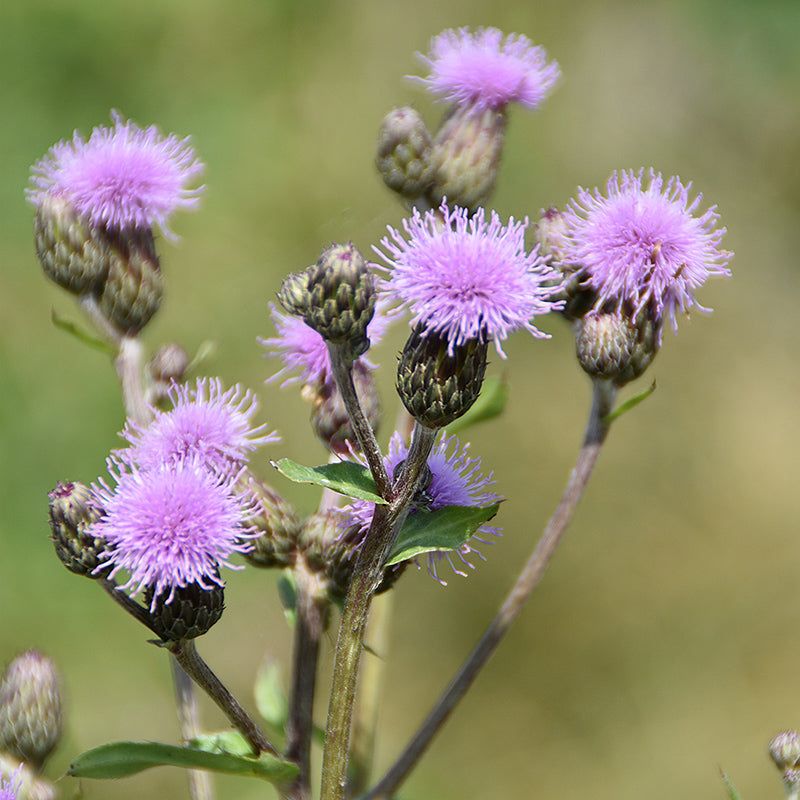
Watching a bright yellow goldfinch cling to a tall thistle stem is one of those backyard moments that feels almost too good to be real.
Field Thistle is a native Ohio plant, and it holds a special place in the goldfinch world because these birds use nearly every part of it.
They eat the seeds eagerly once the fluffy white seed heads begin to open, and they also gather the soft thistle down to line their nests.
Field Thistle tends to bloom from midsummer into fall across Ohio, meaning seed heads can begin forming and ripening from late July onward depending on conditions. It grows well in sunny borders, roadsides, and open meadow-style yards.
Many gardeners overlook it because of its spiny leaves, but it is genuinely native and genuinely valuable.
Leaving even a few Field Thistle plants standing in a back corner of an Ohio yard can attract goldfinches reliably as the season moves forward.
The plant supports pollinators during bloom and then shifts into seed production mode just when goldfinches need it most.
Resisting the urge to pull it early is often worth the reward.
2. Black-Eyed Susan Holds Summer Seed Heads
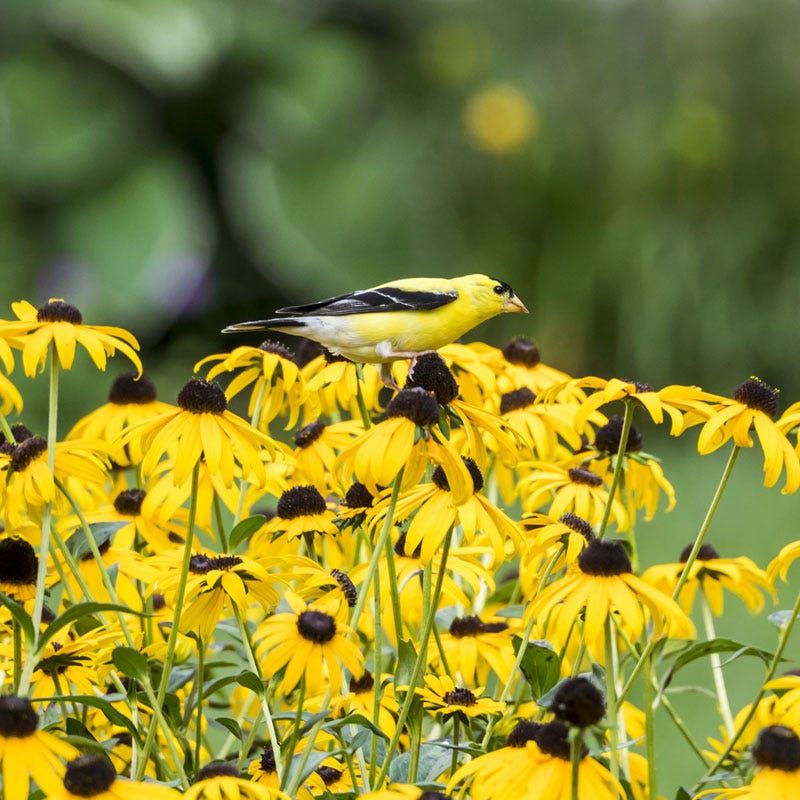
Sunny July borders across Ohio are often dotted with the cheerful yellow petals of Black-Eyed Susan, one of the most familiar native wildflowers in the state.
What many gardeners may not realize is that once those golden petals drop, the dark central cone becomes a small seed-packed structure that goldfinches find worth visiting.
The seeds are tiny but nutritious, and goldfinches are well-equipped to extract them from the bristly cone.
Black-Eyed Susan blooms from roughly June into September in Ohio, so seed heads begin forming and maturing as the season progresses. Earlier blooms may offer ripe seed by mid-to-late July, while later blooms carry food into August and September.
This extended window makes it a reliable plant for supporting seed-eating birds over a longer stretch of summer.
In a backyard setting, Black-Eyed Susan fits easily into pollinator beds, cottage gardens, and sunny foundation edges. It spreads gradually over time, which means more seed-bearing stems with each passing season.
Leaving the spent flower heads standing through late summer and into fall instead of deadheading everything gives goldfinches repeated chances to forage close to home in Ohio yards.
Your Ohio Garden Changes Every Week. Your Plan Should Too.
Gardening in Ohio changes quickly throughout the season. Every Friday you’ll receive a simple weekly plan showing exactly what to plant, prune, fertilize, harvest, and protect so you never miss the right timing.
3. Purple Coneflower Draws Seed-Eating Birds
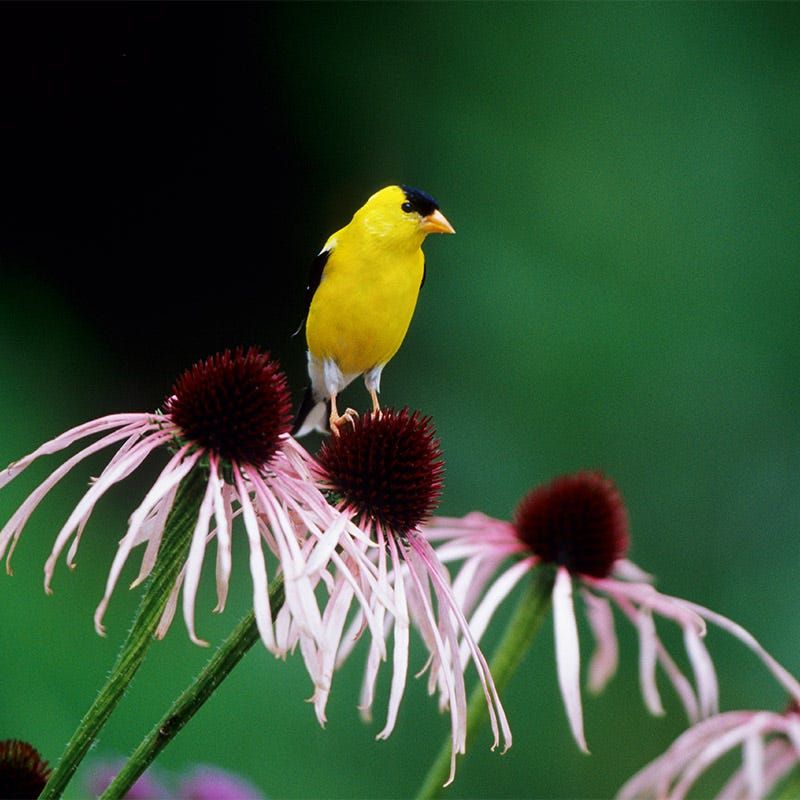
Few native Ohio plants have earned as much love from both gardeners and wildlife as Purple Coneflower. The spiky orange-brown cone at the center of each bloom is not just decorative.
Once the lavender-pink petals fade and the cone matures, it fills with small seeds that goldfinches and other seed-eating birds seek out from late summer into fall.
Bloom timing for Purple Coneflower in Ohio generally runs from late June through August, so seed heads begin developing as July moves along.
The cones do not release seeds all at once, which means a single plant can provide foraging opportunities over several weeks.
Goldfinches often cling directly to the cone, picking seeds from between the spiny bracts with impressive precision.
Purple Coneflower works well in almost any sunny Ohio garden space, from raised pollinator beds to informal cottage-style plantings along fences and driveways. It handles Ohio summers reasonably well once established and tends to spread gently over time.
Skipping the fall cleanup on spent cones and leaving them standing through winter can extend the food source well beyond the growing season, benefiting goldfinches and other small birds during leaner months.
4. Gray-Headed Coneflower Feeds Late-Summer Visitors
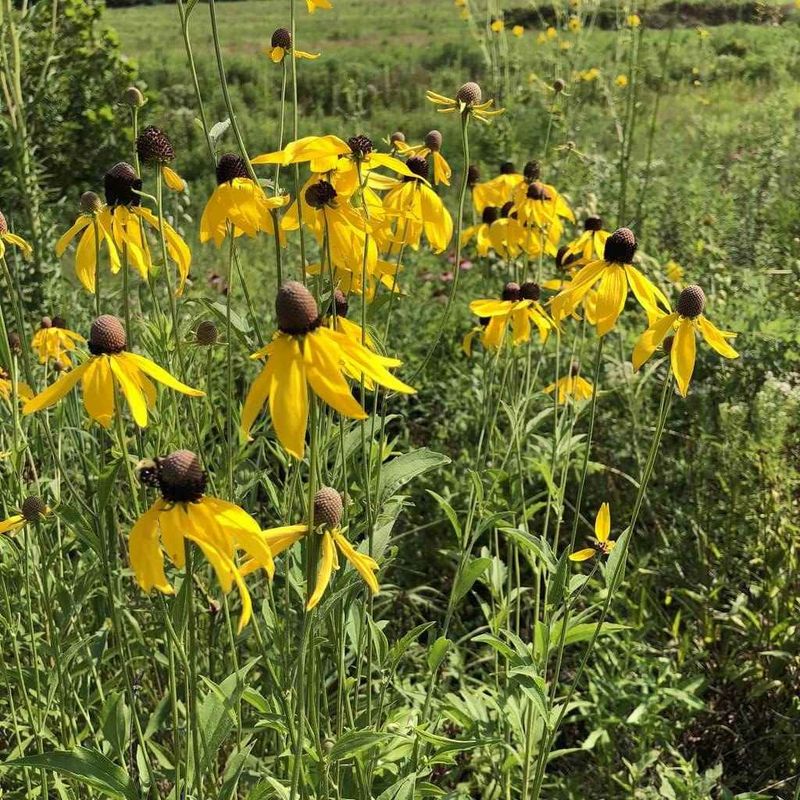
Not as widely planted as its purple cousin, Gray-Headed Coneflower brings its own quiet charm to Ohio native gardens and offers real value for seed-eating birds as summer moves into its later weeks.
The flower has drooping yellow rays around a distinctive grayish-green cone that gradually darkens and fills with small seeds as the season progresses.
Goldfinches tend to visit once those seed heads are mature enough to offer a worthwhile meal.
In Ohio, Gray-Headed Coneflower typically blooms from July into September, placing its seed development squarely in the late-summer window when goldfinches are most active at seed sources.
It thrives in full sun and tolerates a range of soil conditions, making it a practical addition to meadow-style yards, rain garden edges, and open borders where taller native plants can grow freely.
One appealing quality of this plant is its height. Stems can reach four to five feet, giving goldfinches elevated perches from which to forage.
Planting it alongside shorter coneflowers and Black-Eyed Susans creates a layered seed buffet that keeps birds returning throughout late summer and fall.
Leaving the stems and seed heads standing after bloom fades is a simple step that pays off for Ohio backyard wildlife.
5. Cup Plant Adds Tall Seed-Bearing Stems
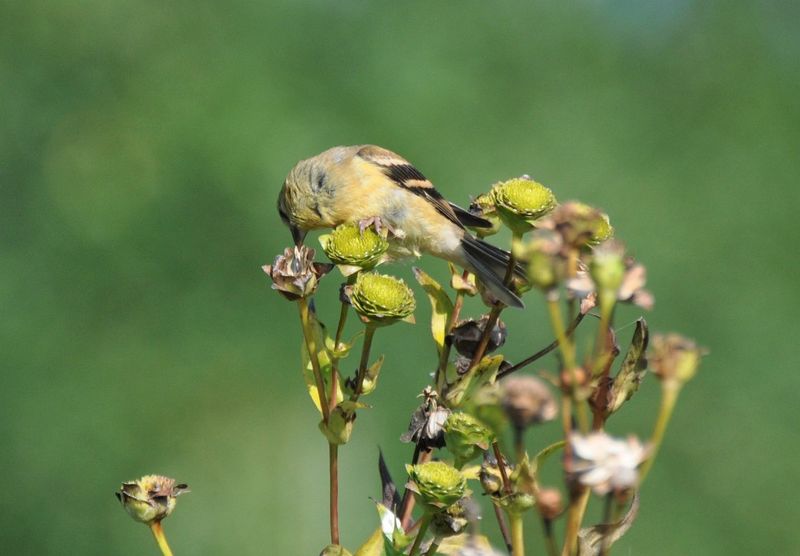
Towering over most other plants in a native Ohio garden, Cup Plant earns its name from the way paired leaves wrap around the stem and collect rainwater.
That quirky feature aside, it is the cheerful yellow flowers and the seed heads that follow which make it genuinely useful for goldfinches as late summer arrives.
The seeds are relatively small and packed tightly into the mature flower centers.
Cup Plant blooms from roughly July into September across Ohio, so seed development begins during the heart of summer and continues as temperatures start to ease.
Goldfinches may begin visiting seed heads before they are fully ripe, working the developing cones with patience and persistence.
The tall stems also give birds an elevated vantage point, which many seem to prefer when foraging.
Because Cup Plant can reach six to eight feet, it works best toward the back of a border or in a larger meadow-style area of an Ohio yard. It spreads over time and can form patches if given space, which ultimately means more seed-bearing stems per season.
Resisting the urge to cut it back before seed heads have dried and matured allows goldfinches to make full use of what this impressive native plant has to offer.
6. Woodland Sunflower Supports Busy Foraging
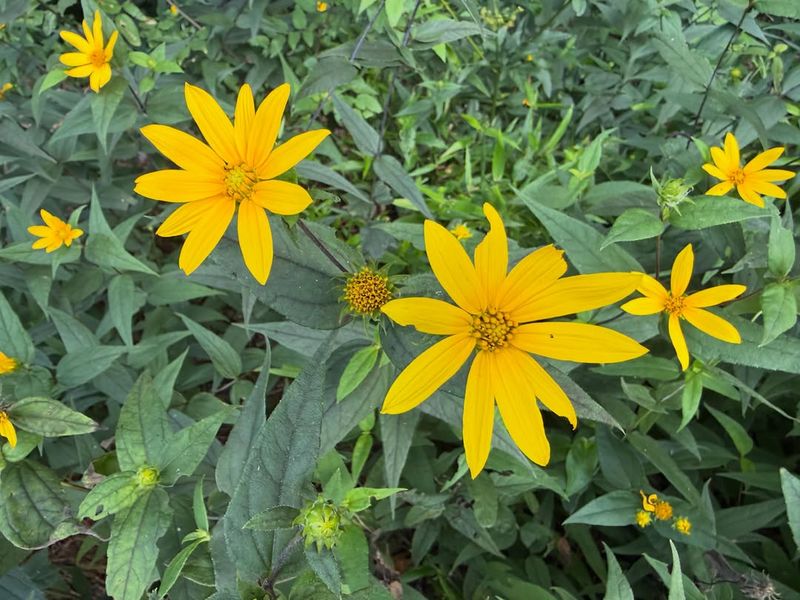
Along the shadier edges of Ohio yards where full-sun sunflowers might struggle, Woodland Sunflower steps in as a native alternative that still delivers seeds worth seeking.
Its smaller yellow blooms appear on branching stems from roughly July into September, and once the flower heads mature, the seeds attract goldfinches and other small birds looking for a reliable late-summer food source.
Unlike the large-seeded garden sunflowers most people picture, Woodland Sunflower produces many small flower heads per plant, which translates into a larger overall number of seed-bearing structures.
Goldfinches tend to work through these efficiently, moving from head to head along the stem in a way that looks almost methodical.
The branching habit of the plant means there is usually more than one ripe seed head available at a time.
Woodland Sunflower fits naturally into partly shaded Ohio borders, woodland garden edges, and naturalistic plantings under the canopy of taller shrubs or trees.
It spreads by rhizomes over time and can fill in an area steadily, which suits gardeners who want more coverage without replanting every year.
Leaving the spent flower heads in place through fall gives foraging birds continued access to seeds even after the blooms have long since faded.
7. Oxeye Sunflower Brings More Native Seeds
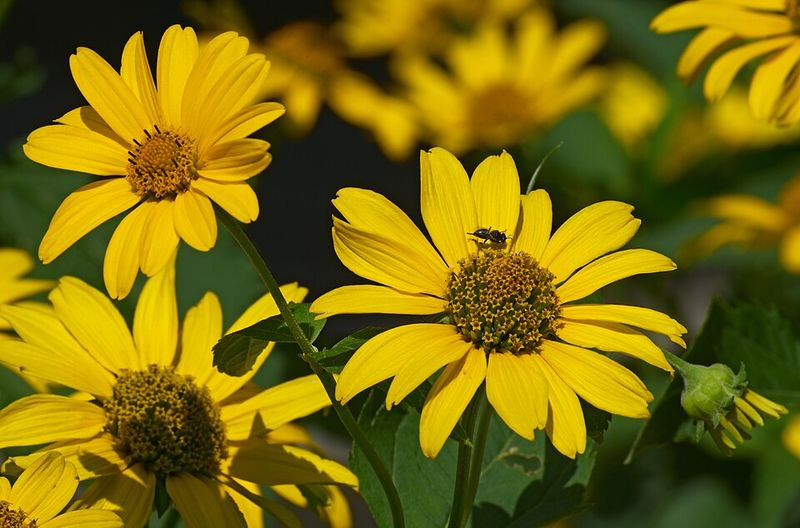
Bright and cheerful in the way that sunflower-family plants tend to be, Oxeye Sunflower is a native Ohio perennial that starts blooming earlier than many of its relatives and carries that energy into reliable seed production.
The flower heads are smaller than a garden sunflower but numerous, and the seeds that develop in each dark center are exactly the kind of small, energy-dense food that goldfinches favor.
Oxeye Sunflower typically blooms from June into August across Ohio, so its seed heads can begin maturing earlier in the summer than some other native plants on this list.
That earlier timing makes it a useful bridge plant, offering seed-foraging opportunities as July gets underway while other species are still in full bloom.
It thrives in sunny locations with well-drained soil and handles Ohio summers with reasonable ease once established.
In a backyard setting, Oxeye Sunflower works well in pollinator beds, along sunny fence lines, and in cottage-style plantings where a somewhat informal look is welcome.
It spreads moderately over time, gradually expanding into a larger patch that produces more seed heads with each season.
Leaving those spent heads standing rather than trimming the plant back too early gives goldfinches a better chance to find and use the seeds as they ripen.
8. Early Goldenrod Extends The Seed Season
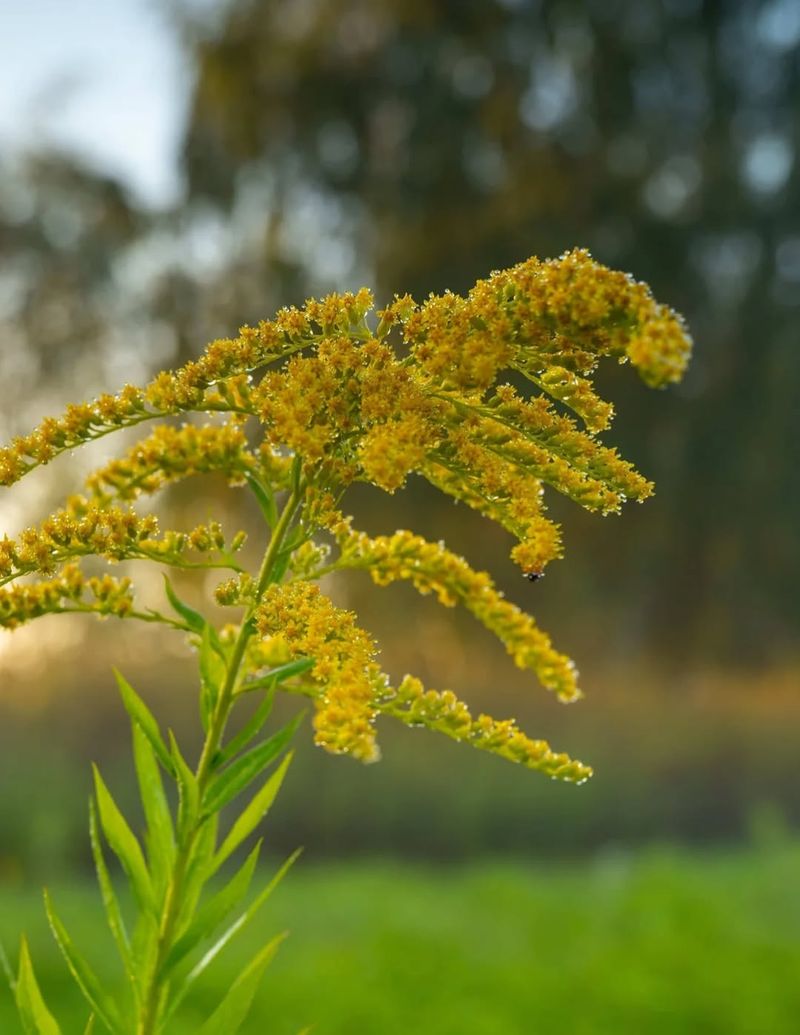
Goldenrod has a reputation problem in Ohio. Many people blame it for hay fever when the real culprit is ragweed, which blooms at the same time and releases wind-carried pollen.
Early Goldenrod, by contrast, is a native Ohio plant with heavy pollen that insects must carry, and its seeds are small, light, and attractive to goldfinches once the plumes mature in late summer.
Early Goldenrod, as the name suggests, tends to bloom ahead of other goldenrod species, with flowers appearing from July into August in many Ohio locations.
Seed heads develop as the plumes fade, and goldfinches may begin foraging on them before the seeds are fully dry.
The plant grows in sunny spots and tolerates a range of soil conditions, making it adaptable to many Ohio yard types.
Planting Early Goldenrod in a pollinator bed or meadow-style border serves double duty. It supports bees and butterflies during bloom and then transitions into a seed source for birds as summer progresses.
The feathery seed plumes also add texture and movement to the late-summer garden. Leaving goldenrod stems standing through fall and into early winter can extend foraging opportunities for goldfinches and other small seed-eating birds in Ohio yards.
9. Brown-Eyed Susan Carries Food Into Fall
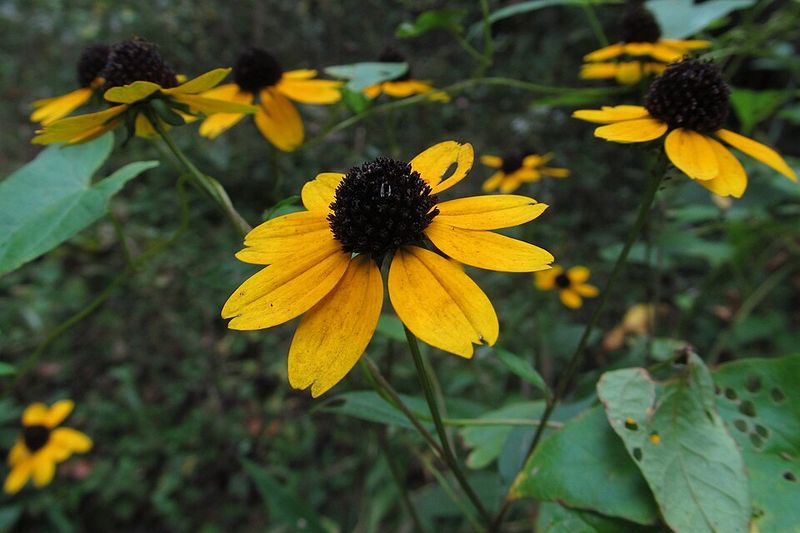
If one native Ohio plant deserves more credit for supporting goldfinches into the cooler months, Brown-Eyed Susan is a strong candidate.
Related to the more familiar Black-Eyed Susan but distinctly its own species, this plant produces an almost startling number of small yellow flowers on tall branching stems.
Each dark center cone develops into a compact seed head, and with so many blooms per plant, the total seed output can be impressive.
Brown-Eyed Susan blooms from roughly July into October in Ohio, which means its seed production extends well past the peak of summer.
Goldfinches are still actively foraging as temperatures cool in September and October, and the many small seed heads on a mature Brown-Eyed Susan plant can keep birds busy for weeks.
It tends to be a biennial or short-lived perennial that self-seeds readily, so a patch tends to renew itself naturally over time.
In Ohio yards, Brown-Eyed Susan fits into sunny borders, naturalistic meadow areas, and informal cottage gardens where its somewhat wild branching habit is welcome rather than out of place.
Letting the plant go to seed fully before any fall cleanup preserves the food source that makes it so useful.
Goldfinches foraging on a tall, seed-laden Brown-Eyed Susan in October is a sight that rewards patient Ohio gardeners.