Possible Reasons Peace Lily Leaves Turn Black: Clues for Arizona Homes
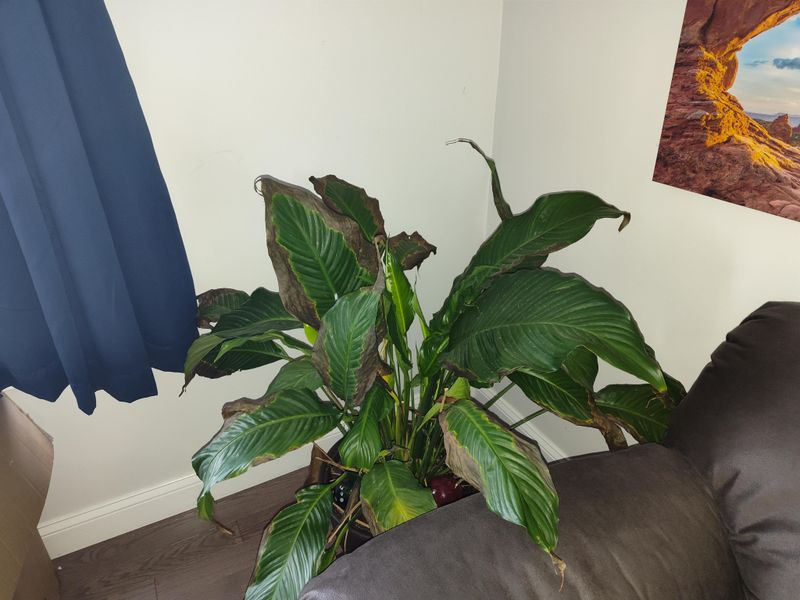
Black tissue on a peace lily can look alarming, but the color alone tells you very little. I have stared at a few sad leaves myself and wanted a quick answer.
Sadly, the plant rarely hands one over.
The better move is to read the clues. Where the dark patch sits, how it feels, and how fast it spreads all matter.
Your home’s temperature, light, and watering habits add more pieces to the puzzle.
Arizona homes have their own quirks, like strong sun and air conditioning. Still, no evidence points to one special Arizona cause.
Think of this as a checklist of possibilities to investigate.
So grab your plant and a bit of curiosity. Which clue will your lily give up first?
Read the Pattern Before You Guess
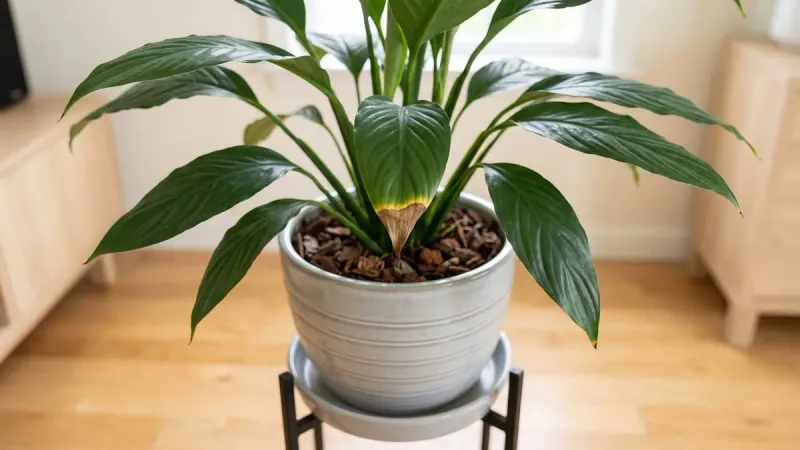
Before you change a single thing, take a slow look at the damage. Black tips or margins, a whole leaf changing color, and separate dark spots are three different patterns, and they point toward different possibilities.
UC IPM houseplant guidance stresses that one symptom can have several causes, so color alone will not settle it.
Write down a few details. Is the tissue crisp or soft?
Is it creeping inward or staying put? Did anything change recently, such as a new spot near a window, a fresh bag of fertilizer, or a different watering habit?
None of these clues gives a guaranteed answer, but together they narrow the field nicely.
One more check saves confusion. The showy white structure on a peace lily is a spathe, not a true flower, and Clemson Extension describes it that way.
An aging spathe can fade or darken, but that does not explain black leaves, so keep the two apart.
Cold Injury Can Turn Leaf Edges Black
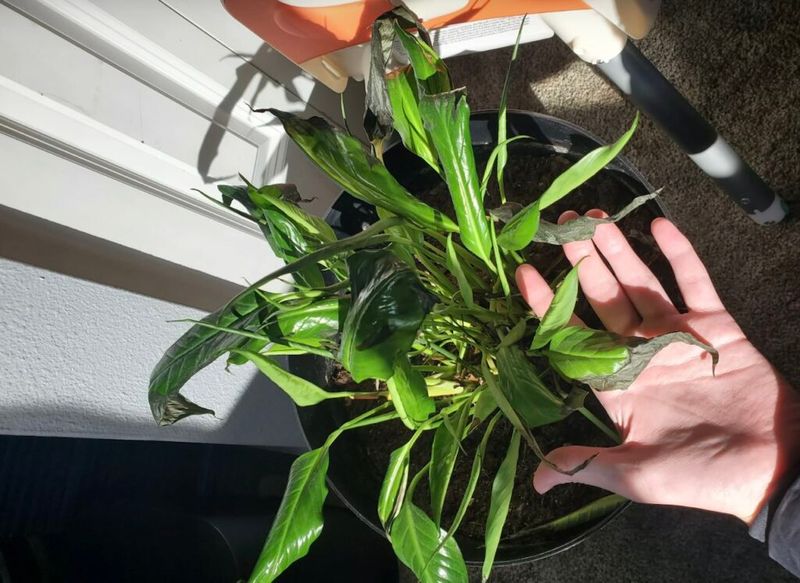
If the black begins at the very tip or edge and creeps inward, cold is the best-supported suspect. University of Florida research on chilling injury in Spathiphyllum reports that injured tissue can turn black, and that cultivars differ in how sensitive they are.
Because of that variation, I would not chase one magic temperature number. Instead, look at where the plant lives.
A pot pressed against a chilly window, sitting near a cold door, or parked in a drafty hallway on a cool night is worth a second thought, even in a desert state.
Treat this as a strong lead, not a verdict. Cultural notes from UF/IFAS production guidelines also point to avoiding cold exposure.
If a cold spot fits your story, move the pot somewhere steadier and watch whether new growth comes in clean.
Water Stress and Poor Drainage Can Overlap
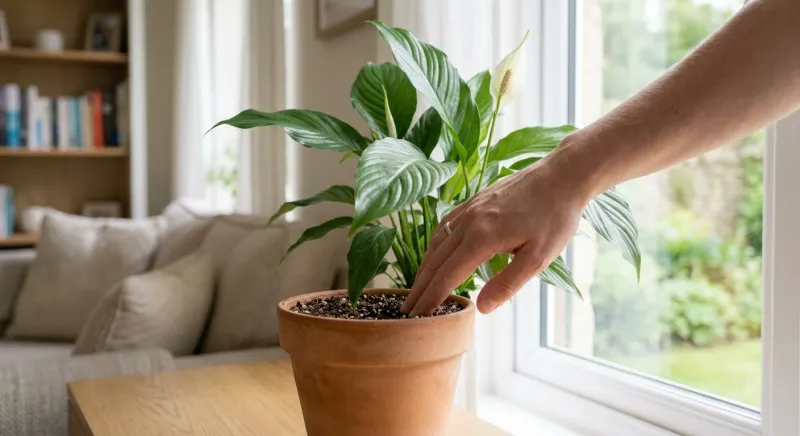
Water problems are sneaky because too much and too little can look alike. Soggy mix, a pot that drains poorly, and soil that dries out too far can all leave a peace lily looking unhappy.
That does not mean black leaves equal overwatering or root rot, so skip that shortcut.
Skip the calendar, too. Press a finger into the mix and see how it feels.
Clemson Extension suggests keeping the mix moist but not soggy and letting it dry slightly between waterings.
Check that water can actually escape the pot, and empty the saucer after watering. University of Arizona Extension also advises matching water to the plant’s needs rather than a fixed routine.
Repot only if you find a real reason, like roots circling or mix that stays wet.
Dry Air and Vent Exposure Leave Different Clues
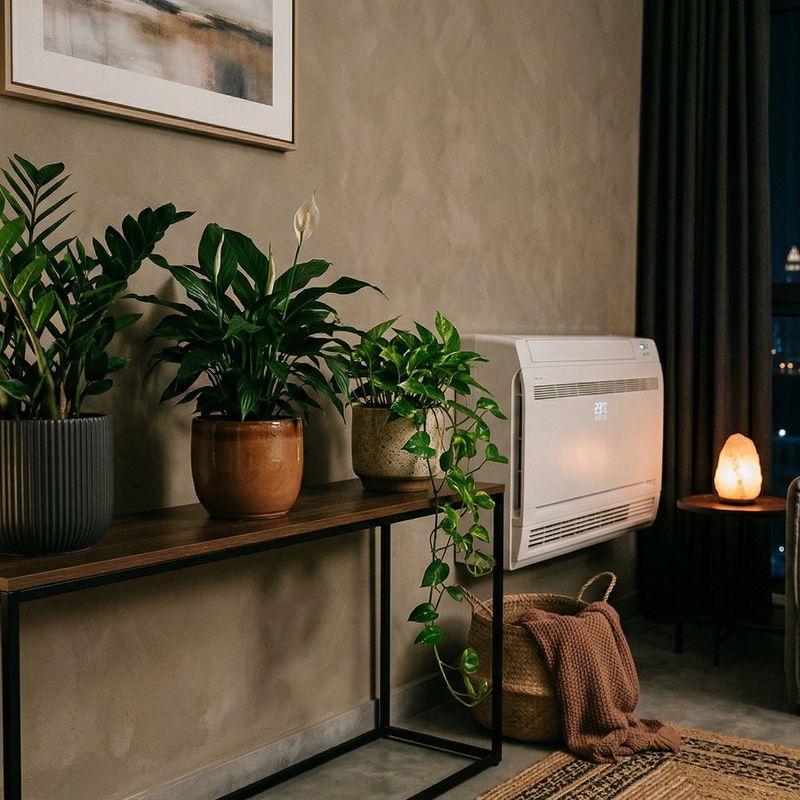
Indoor air in a desert home can run dry, and air conditioning adds to it. University of Arizona Extension notes that dry indoor air can cause brown tips or margins on tropical plants.
Notice the word brown. Dry air is linked mainly to brown, crispy edges, not to black leaves, so it is a clue to weigh rather than a stand-alone answer.
If your plant sits right in the path of a vent, that blast of air is worth a look.
Reasonable fixes are simple. Slide the pot out of direct airflow, or run a humidifier nearby if the room feels very dry.
The UA indoor plant care guide covers these basics. Think of them as helpful nudges, not guaranteed cures.
Direct Sun and Heat Can Injure Foliage
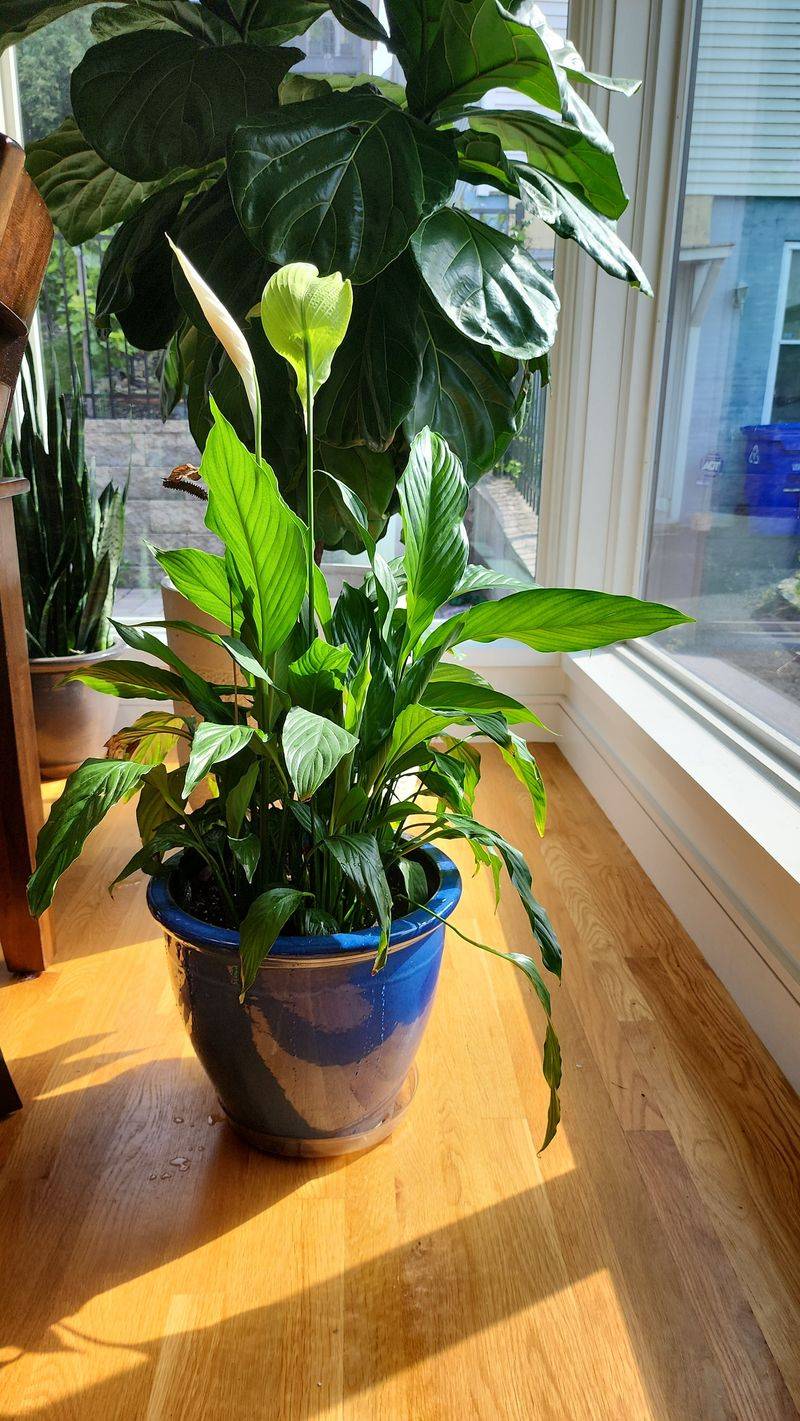
Peace lilies like bright light that is gentle, not harsh. Clemson Extension recommends bright, indirect light, which makes a sun-blasted window ledge a questionable home.
Review where the plant has been sitting lately. A west-facing window in the afternoon, or a spot near a hot vent, can injure foliage.
University of Arizona Extension also advises thinking about light and placement for indoor plants.
Keep this separate from cold injury. Sun and heat damage tends to show on the leaves that face the light, while cold damage follows the cold source.
Sun or heat damage does not always turn leaves black, so look at the whole picture before moving anything.
Fertilizer and Soluble Salts Can Scorch Tips
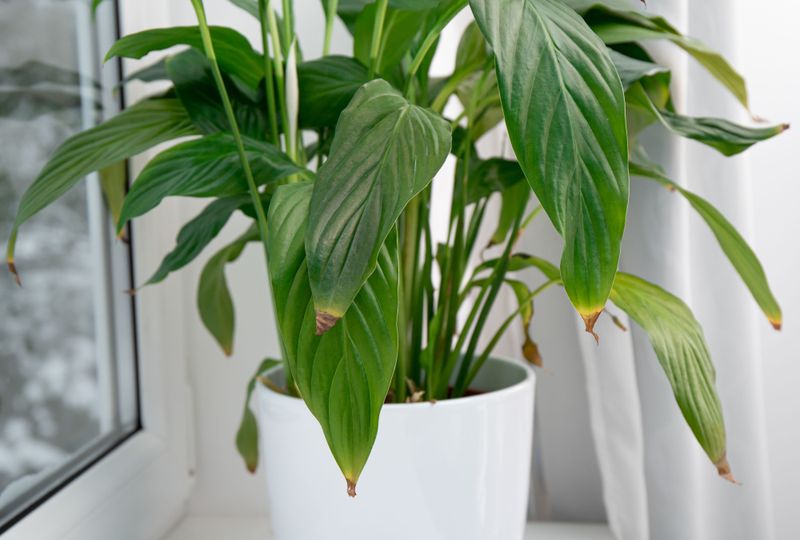
A little extra feeding can backfire. Overfertilizing and a buildup of soluble salts can burn leaf tips and margins, as noted in UF/IFAS cultural guidelines.
That is tip and edge burn, though, and it does not prove a whole leaf will turn black. Think back over the past few months.
Did you feed often, use a strong mix, or add a boost because the plant looked tired?
If overapplication seems plausible, pause or reduce fertilizer and follow the product label. NC State Extension offers plant notes worth a look.
A stronger dose is not a quick fix, so resist the urge to feed a struggling plant more.
Fluoride Is a Possibility, Not an Arizona-Wide Answer
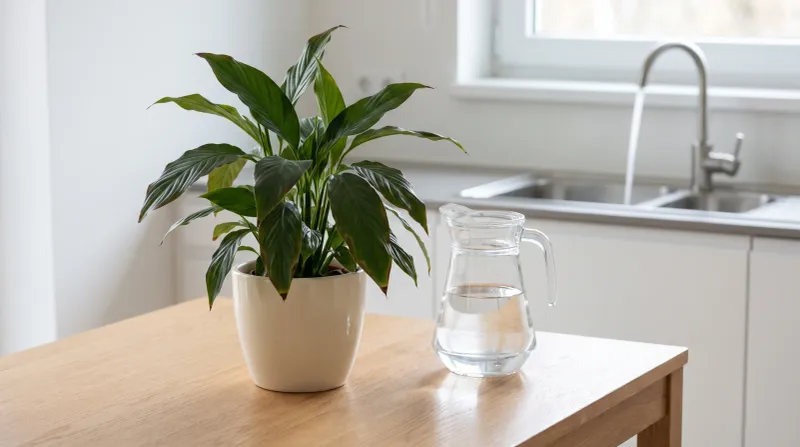
Peace lilies are known to be sensitive to fluoride, and UF/IFAS guidance ties that sensitivity to tip scorch. It is not a firm explanation for whole leaves turning black.
Water gets attention in Arizona, and Phoenix Water Services reports adding fluoride to its water. Still, that does not mean every household has the same water, or that fluoride caused your plant’s symptoms.
Check your own utility’s water report before making any claim about local water. Distilled or bottled water is not a universal cure either.
Look at the pattern of damage first, and only then consider changing your water.
Spreading Dark Lesions May Need a Closer Look
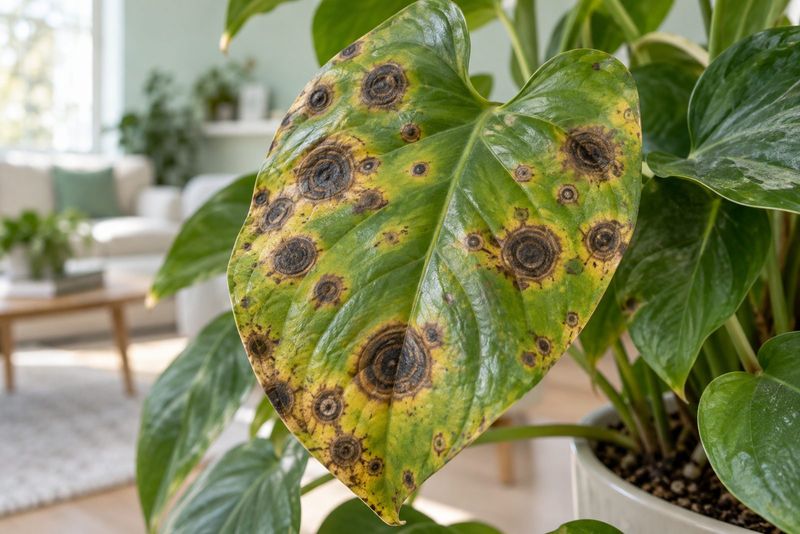
Separate dark spots are a different story from burned tips. Lesions that are expanding, water-soaked, or angular, especially with yellow margins or soft tissue, are reasons to consider leaf-spot disease.
Consider is the key word. University of Maryland Extension describes bacterial leaf spots on indoor plants, but similar symptoms can have noninfectious causes, so color alone cannot name a pathogen.
If you suspect disease, remove affected leaves with clean tools and avoid wetting the foliage. Then watch closely.
UC IPM is a handy reference, and if lesions spread or the plant declines, seek diagnostic help from a local extension office.
Check the Pattern, Then Change One Thing
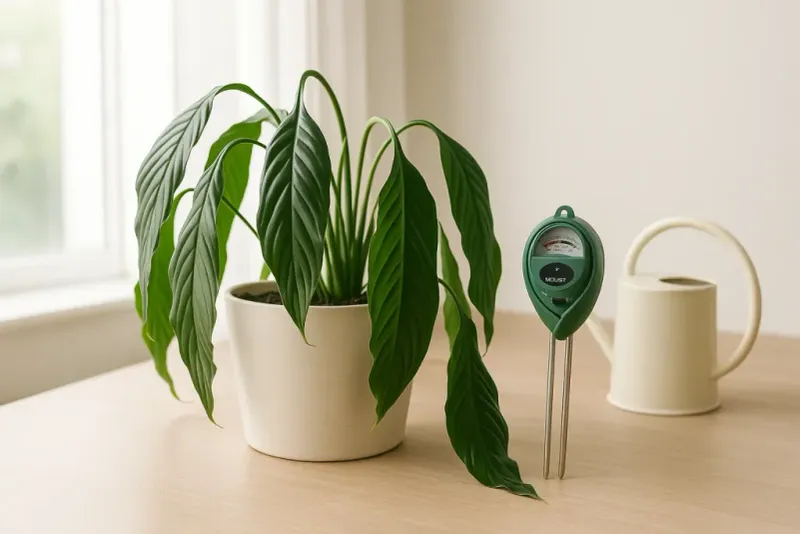
Start with the tissue itself: tip, margin, whole leaf, or distinct lesion. Next, check soil moisture and drainage, then review recent temperature, light, airflow, fertilizer, and water.
Pick one measured adjustment and give it time. UC IPM and University of Arizona Extension both support careful, plant-specific care.
Watch whether the damage stops spreading and new leaves look clean.
A peace lily usually tells its story slowly, so patience pays off.