Shredded Green Pulp Under Indiana Hedge Trees Has A Furry Culprit
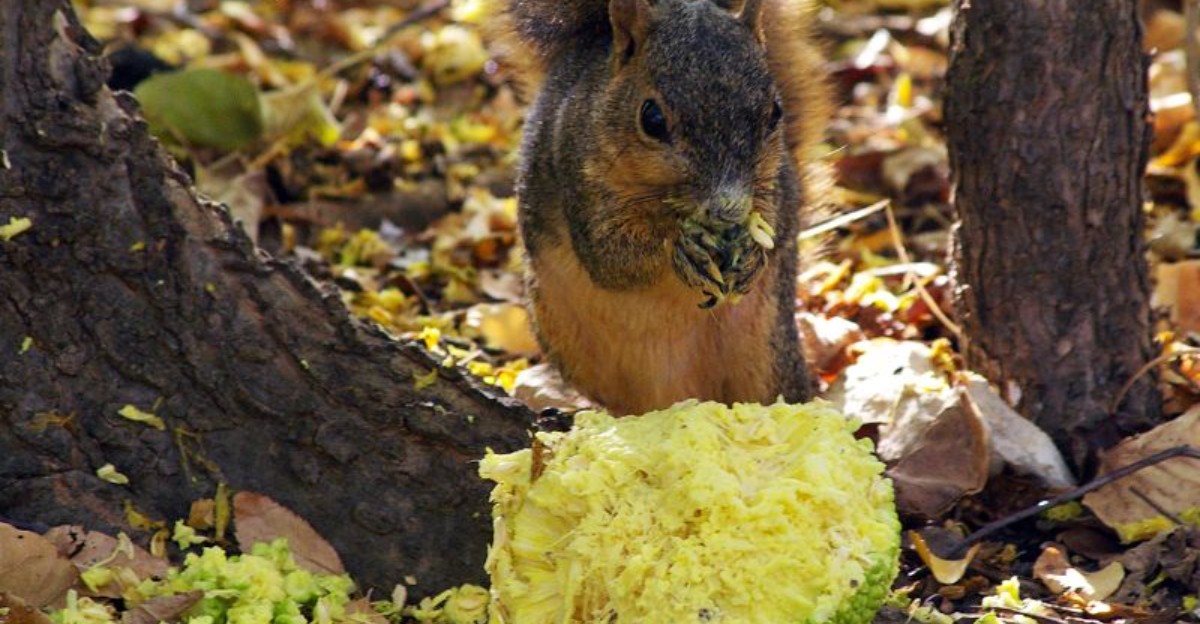
Something out there is turning green softballs into confetti, one bumpy fruit at a time. I found the mess on a cool fall morning, a ragged ring of shredded green chunks under a row of old fencerow trees.
The fruit itself looks like a brain wearing a lime-green sweater. Cut one open and it oozes a sticky, milky sap that clings to your fingers like glue.
I’ll be honest, my first guess was a bored teenager with a pocketknife. Across Indiana, though, plenty of folks find the same pulpy scene every September and October, often under the same trees year after year.
The real diner leaves clues everywhere. Tiny tooth marks, scattered pale seeds, and a shockingly messy eating style all point to one furry neighbor with serious patience. So who would chew through all that gooey green just for a snack?
Those Bumpy Green Hedge Apples Are Getting Torn Apart For A Reason
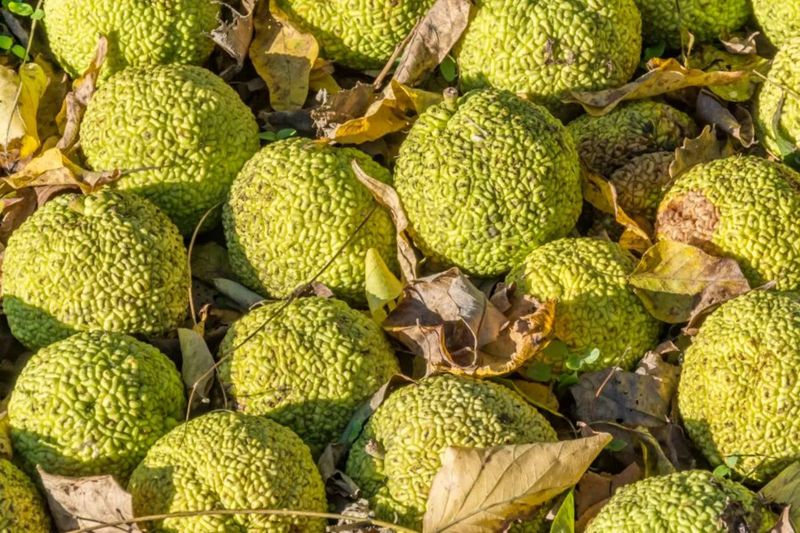
Nothing about that green mess is random. The trees most Hoosiers call hedge trees are Osage orange, and the wrinkly green balls they drop in fall are hedge apples.
Each fruit is about the size of a grapefruit, often 3 to 5 inches across. It feels heavy and hard, and it smells faintly like citrus or cucumber when you break it open. Inside, a dense mass of fibrous green tissue hides dozens of small seeds.
Here’s what gets me. The pulp itself offers very little that most animals want to eat. It’s tough, bitter, and full of a sticky white latex that gums up everything it touches.
So when you see a hedge apple chewed into ragged chunks, something worked hard for a reward buried deep inside. That reward is the seeds, which are packed with fat and protein.
The pattern tends to repeat each autumn. Fruits ripen and fall from roughly September through November, and the shredding usually starts soon after. You’ll often see the most damage right at the base of the tree or on a nearby stump, fence post, or log. Those raised spots make handy dining tables for a diner who likes to keep watch while eating.
Tooth Marks And Scattered Seeds Tell The Hedge Apple Story
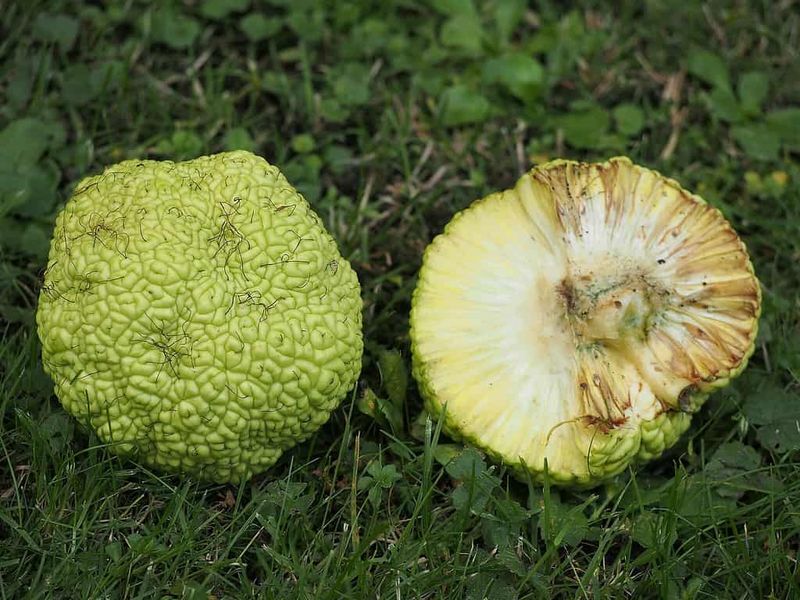
Play detective for a minute, because the evidence is easy to read once you know what to look for. Pick up a chewed hedge apple with gloves and turn it over.
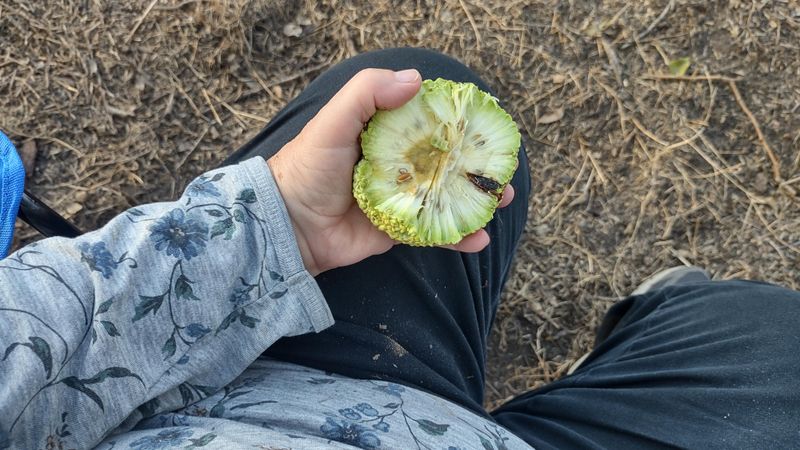
Squirrel-worked fruit usually looks hollowed or broken into rough wedges. The edges show small, ragged gnaw marks rather than clean cuts. You may spot pale, flattened seeds or empty seed spots scattered through the stringy green fibers.
Location matters too. Squirrels like to eat from an elevated spot, so check stumps, fence posts, low branches, and the tops of woodpiles. A pile of shredded green bits on a post is a classic calling card.
Groundhogs, rabbits, and voles do show up in garden damage reports, but their signs look different. Rabbits leave clean, angled cuts on twigs. Voles gnaw bark near the soil line and leave narrow runways in grass. Neither one typically tears apart heavy hedge apples for seeds.
Timing gives you one more clue. Fresh pulp turns brown and mushy within days, so bright green shreds point to a recent meal. If new piles appear every morning, you’ve got a regular customer with a standing reservation under your tree.
Fox Squirrels Are Shredding Osage Oranges To Reach The Seeds
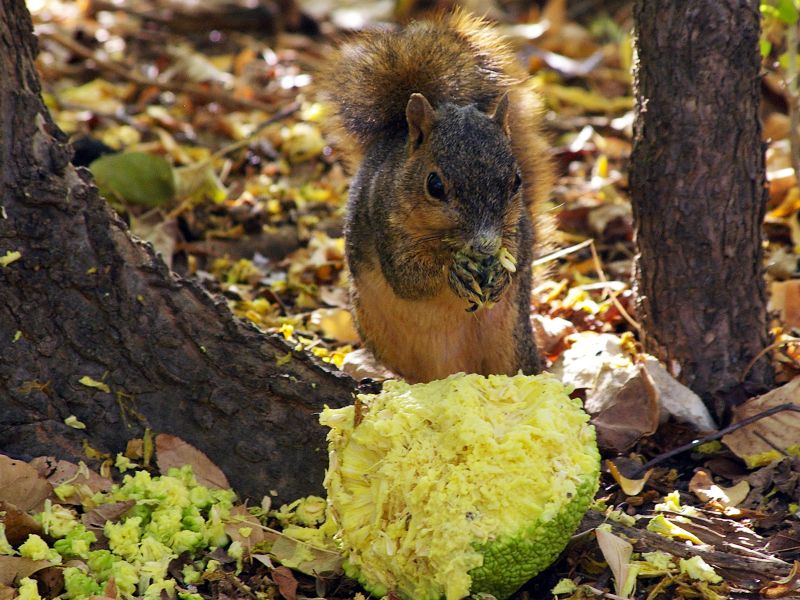
Meet the messiest eater in the neighborhood, at least in my opinion. Squirrels, especially big rusty-bellied fox squirrels, are the main culprits behind that shredded hedge apple pulp.
A squirrel usually grabs a fallen fruit, carries or rolls it to a safe perch, and starts chewing. It tears the tough green flesh into strips and flings the pieces aside. The goal is the small seeds tucked throughout the fruit, and the squirrel digs them out one at a time.
Honestly, it looks like a lot of effort for a tiny payoff. Each seed is small, and a squirrel may spend a long stretch working through a single hedge apple. The seeds are rich in energy, though, and fall is when squirrels bulk up for winter.
Fox squirrels are common in open woodlots, parks, and fencerows across much of Indiana. Their love of field edges puts them right where old hedge rows still stand.
Want proof? Sit quietly near the tree in early morning or late afternoon with a cup of coffee. Squirrels are active during daylight, so you have a decent shot at catching the chef at work. Fresh green chunks with wet edges mean the feast happened recently.
Old Osage Orange Hedgerows Have A Wild Backstory
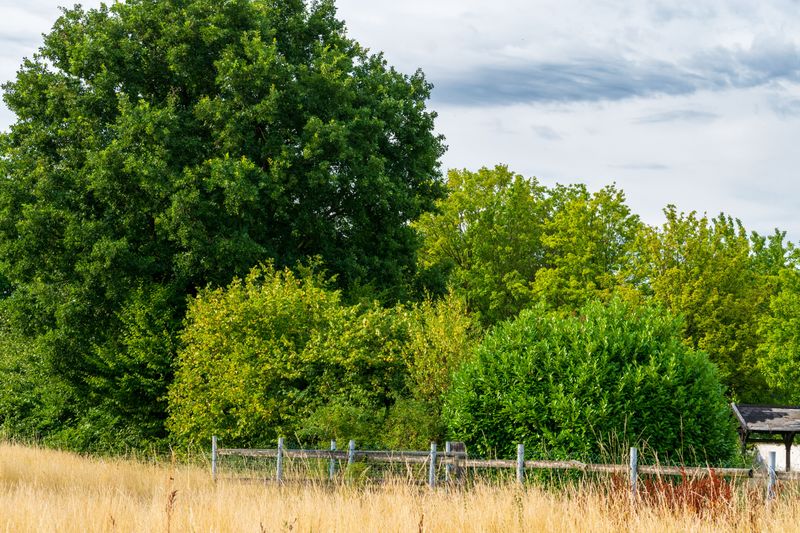
Long before barbed wire showed up in the 1870s, farmers needed fences that didn’t cost a fortune. Osage orange became the answer across the Midwest.
The tree is native to a fairly small area around the Red River region of Texas, Oklahoma, and Arkansas. Settlers planted it in tight rows, then pruned it hard so the thorny branches grew into a dense living fence. The saying was that a good hedge was horse-high, bull-strong, and pig-tight.
Plenty of those old rows still line Indiana farm fields today. That explains why so many folks call them hedge trees and the fruit hedge apples.
Here’s a fun bit. The wood is incredibly hard and resists rot, so it was prized for fence posts and wagon wheels. Some Native American nations valued it for bows, which is how the French name bois d’arc, meaning bow wood, came about.
Scientists have also wondered why such a big fruit has so few eager eaters today. One popular theory suggests huge Ice Age mammals once ate and spread the fruit. That idea is still debated, but it makes those patient squirrels look like the last fans standing.
Gray Squirrels And Deer Sometimes Join The Hedge Apple Buffet
Fox squirrels get most of the credit, but they aren’t the only ones poking around. Eastern gray squirrels also open hedge apples for seeds, especially where woods meet yards.
Gray squirrels tend to favor shadier, more wooded spots. Fox squirrels lean toward open edges. If your hedge tree sits near both habitats, both species may take turns at the same pile of fruit.
White-tailed deer occasionally nibble hedge apples too, mostly when other food runs short. Livestock like horses and cattle sometimes take a bite as well. Their chewing usually leaves broken chunks rather than the fine, scattered shreds squirrels produce.
Mice and other small rodents may pick through leftovers after the main diner moves on. Birds rarely bother with the fruit itself.
So how do you sort it out? Watch the size and style of the mess. Fine strips and seed fragments on a raised perch point to squirrels. Big crushed pieces on open ground, along with hoof prints, suggest deer.
A cheap trail camera aimed at the tree for a few nights can settle any debate. You might get a funny highlight reel of squirrels arguing over the best fruit, which is half the fun.
Those Hedge Apples In Your Basement Probably Won’t Stop Spiders
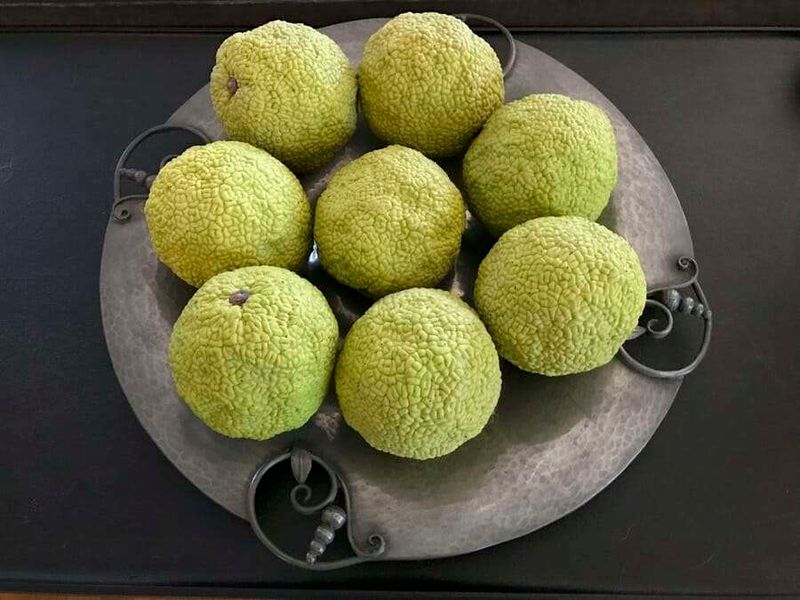
Don’t laugh, but I once lined my basement windowsills with hedge apples. My grandmother swore they kept spiders and crickets away, and plenty of Midwest families still believe it.
The science isn’t quite on her side. Researchers have found that certain compounds extracted from Osage orange fruit can repel some insects in lab tests. A whole fruit sitting on a shelf, though, doesn’t release enough of those compounds to make a real difference.
Iowa State University Extension and other university experts point out that whole hedge apples are not a reliable pest control method. They also tend to rot within weeks indoors, which can attract the very bugs you hoped to chase off.
So what actually works for basement spiders? Seal gaps around windows and doors, cut down on clutter, and run a dehumidifier. Vacuuming webs and egg sacs regularly helps more than any fruit bowl.
Honestly, the squirrels in your yard probably have better plans for those hedge apples than your basement does. Leaving a few under the tree gives them a fall snack and saves you from cleaning up a soggy, moldy mess later.
Grab Gloves Before Raking Up Squirrel-Chewed Hedge Apples
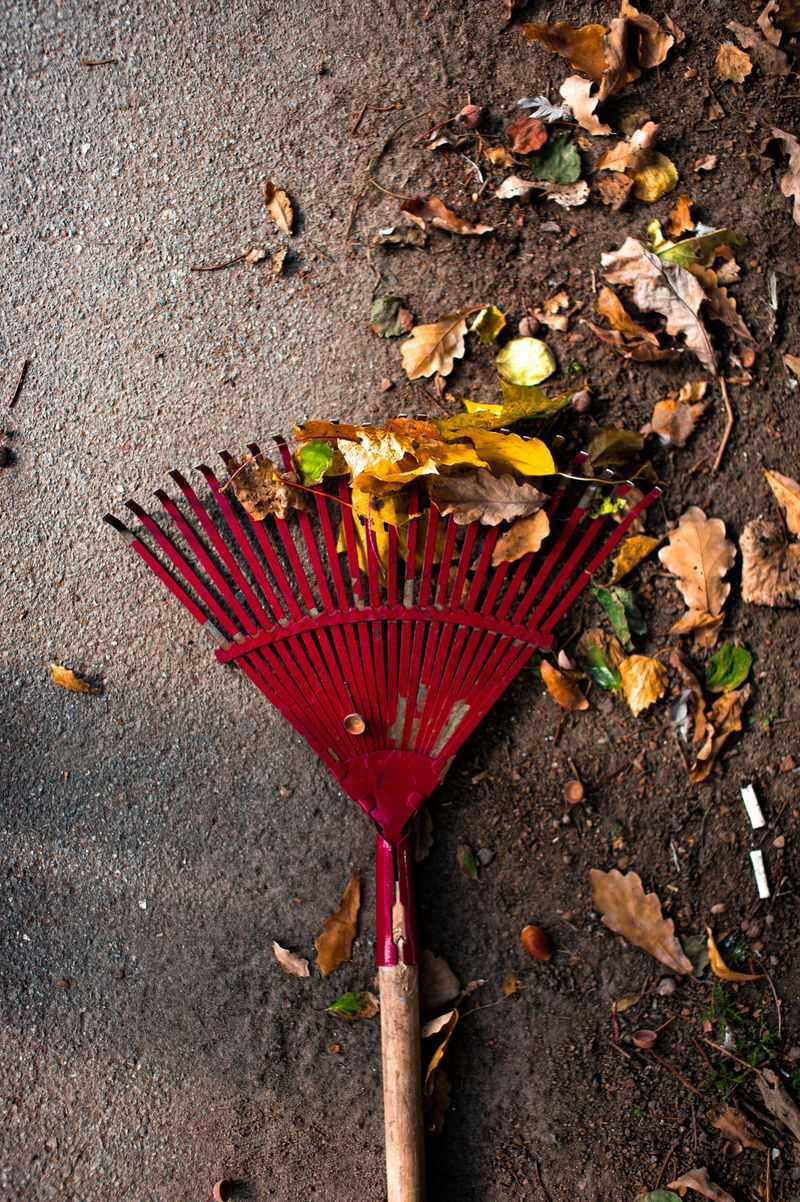
Trust me on this one, bare hands and hedge apple pulp are a sticky combination. That milky sap can irritate sensitive skin, so pull on a pair of gloves before cleanup.
Small piles of shredded fruit can stay right where they are under a tree in a natural area. They break down fairly quickly and return nutrients to the soil.
In a lawn or walkway, rake up the mess every week or so during peak drop. Whole hedge apples can also damage mower blades and roll underfoot like bowling balls, so collect them before you mow.
The pulp can go into a compost pile. Breaking the fruits into smaller pieces helps them decay faster. Some gardeners add them to a brush pile at the edge of the yard, which keeps squirrels fed away from the patio.
Planting a new hedge tree? Choose a fruitless male cultivar like ‘Wichita’ or ‘White Shield’ if you want the tough wood without the falling fruit.
The bottom line is simple. Those shredded hedge apples are a normal fall sign of busy squirrels, not a pest problem. Clean up where it bugs you, and enjoy the show everywhere else.