Skip Monkey Grass Around Your North Carolina Mailbox And Plant These Natives That Pull In Butterflies
You pull up to the mailbox on a July evening in North Carolina, and there it sits, the same stiff ring of monkey grass every neighbor planted twenty years ago. It does its job, sort of, holding the mulch in place and asking nothing of you. But nothing shows up for it either, no wings, no hum, no motion at all. Swap that tired green collar for a few native plants, and your mailbox turns into a roadside diner for butterflies, all summer and straight into fall.
Here are nine North Carolina natives that earn their spot far better than liriope ever did.
1. Butterfly Milkweed
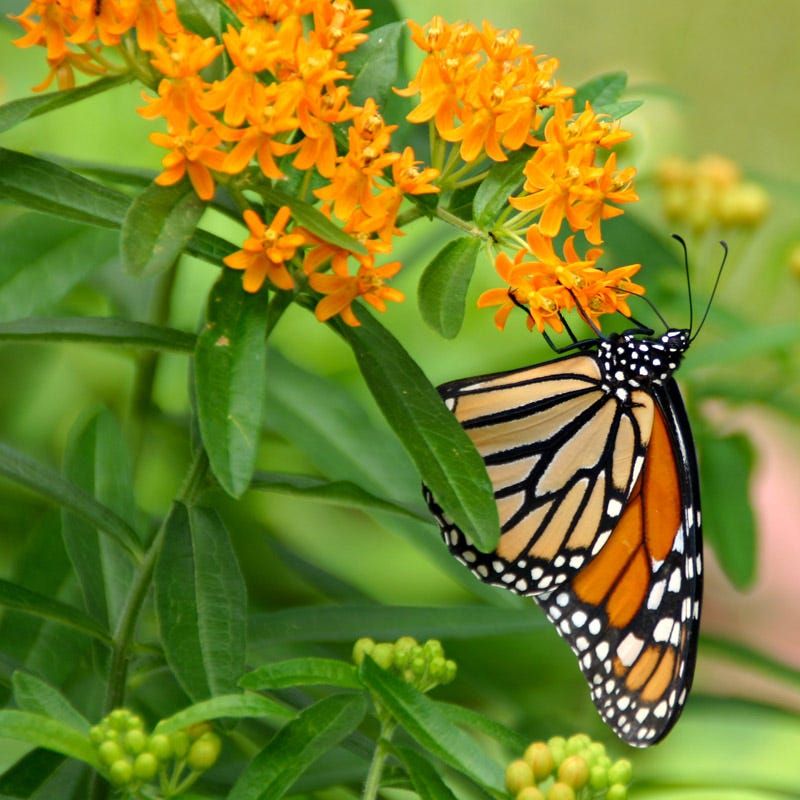
Picture a fist-sized cluster of orange blooms glowing against your mailbox post in late June, so bright the school bus kids point at it. That is butterfly milkweed (Asclepias tuberosa), and it is doing something monkey grass never could. It is feeding monarch caterpillars.
Here is the turn most folks miss. Monarchs cannot raise their young on just any flower. Their caterpillars eat milkweed leaves and nothing else, so every patch you plant becomes a nursery for the fall migration that sweeps through the Piedmont in September and October. NC State Extension names milkweed the single most important plant for monarch recovery.
The good news for our red clay is that this one actually prefers lean, dry, gritty ground. Dig a hole near the mailbox where the soil is worst, space plants about 18 inches apart, and water them the first summer only. After that, leave them be. The taproot goes deep and does not like to be moved.
Do not panic when caterpillars chew the leaves to stems. That is the whole point, and the plant bounces back. By August you get orange flowers, and by fall you get monarchs lifting off from your own mailbox, headed for Mexico.
2. Eastern Purple Coneflower
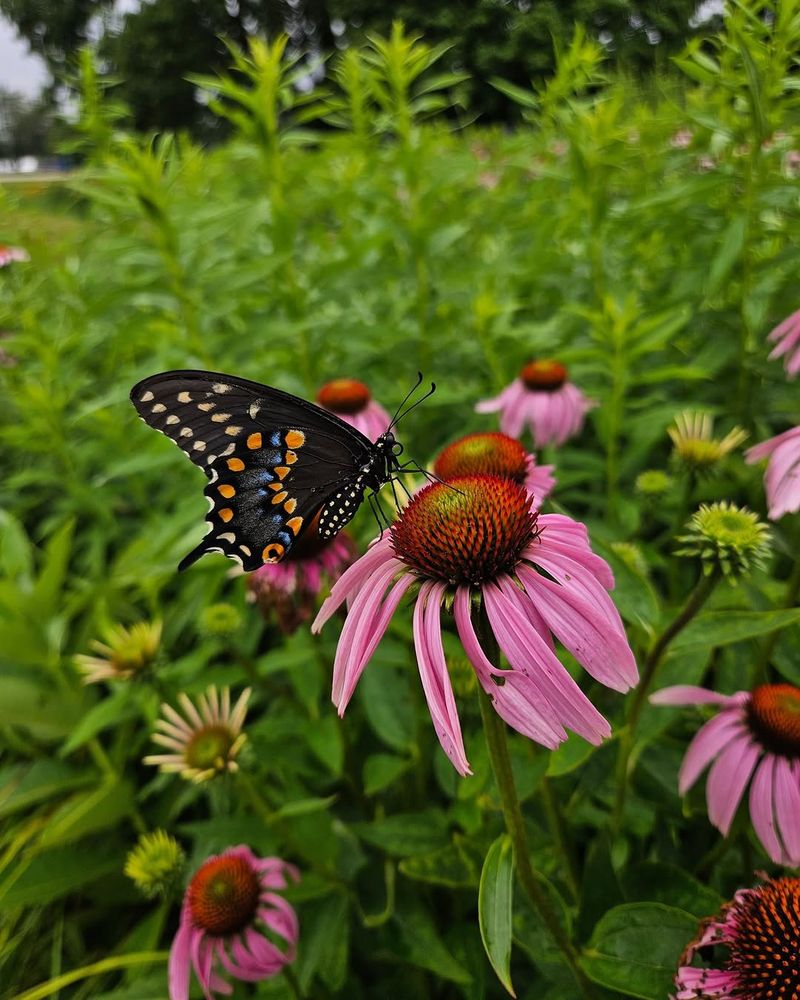
Some plants ask for a lot. Purple coneflower (Echinacea purpurea) asks for almost nothing and still puts on a show from June clear into September. The pinkish-purple petals droop back from a spiky copper cone, and that cone is the whole story.
Butterflies land on it because the flat flower head gives them a sturdy landing pad, and swallowtails work it all afternoon. Then, after the petals fade, goldfinches show up to crack the seeds out of the dried cone. So one plant feeds two rounds of wildlife across two seasons.
For a Piedmont mailbox, coneflower shrugs off heat, drought, and the compacted clay that kills fussier flowers. Set plants about 18 to 24 inches apart in full sun, meaning at least six hours a day. Water weekly the first summer, then step back.
Leave the spent cones standing through winter instead of cutting them down. They feed birds in January and reseed themselves gently, so your one dollar plant slowly becomes a whole patch. Come next June you barely lifted a finger, and the mailbox is buzzing again.
3. Black-Eyed Susan
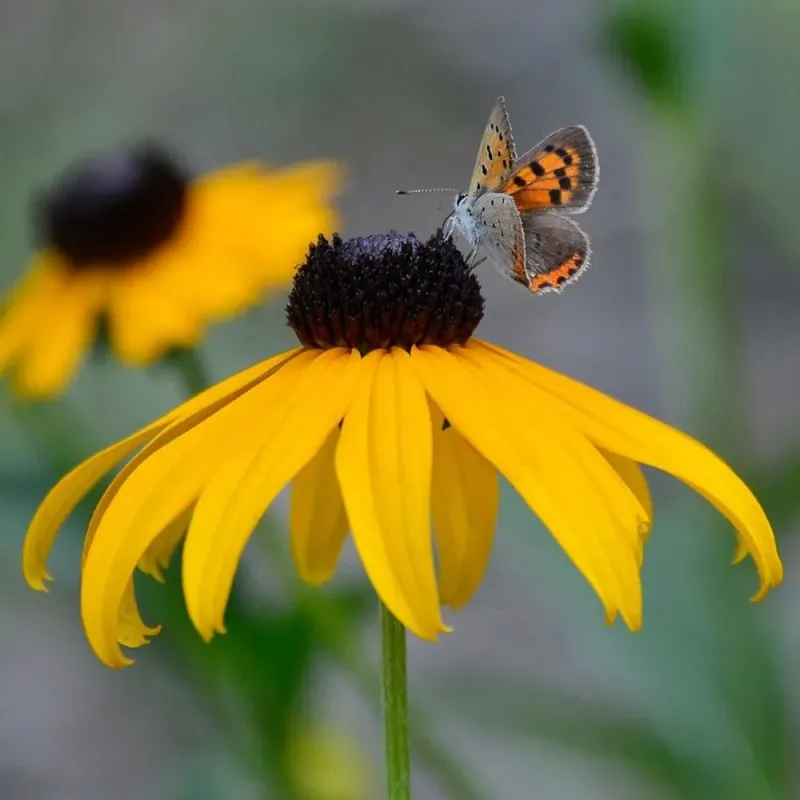
Drive any back road in the Sandhills in July and you will spot golden waves of them in the ditches, thriving where nobody planted a thing. Black-eyed Susan (Rudbeckia hirta) is that tough, and that cheerful, and it belongs at your mailbox.
Your North Carolina Garden Changes Every Week. Your Plan Should Too.
Gardening in North Carolina changes quickly throughout the season. Every Friday you’ll receive a simple weekly plan showing exactly what to plant, prune, fertilize, harvest, and protect so you never miss the right timing.
The dark button center sits surrounded by gold petals that read like a bullseye to a passing butterfly. Fritillaries and skippers work the blooms through the hottest stretch of summer, when a lot of prettier flowers have already quit on you.
What makes this one a mailbox winner is its forgiveness. It handles poor soil, blazing sun, and the reflected heat that bounces off pavement and mulch near the road. Space plants about 12 to 18 inches apart, water them through the first dry spell, then trust them.
Many Coastal Plain gardeners let it self-sow into a loose drift, and it reblooms if you snip the faded heads in midsummer. It is a short-lived perennial, so let a few seed heads stand each fall to keep the patch going. Low cost, low fuss, high traffic. That is the trade you want.
4. Joe Pye Weed
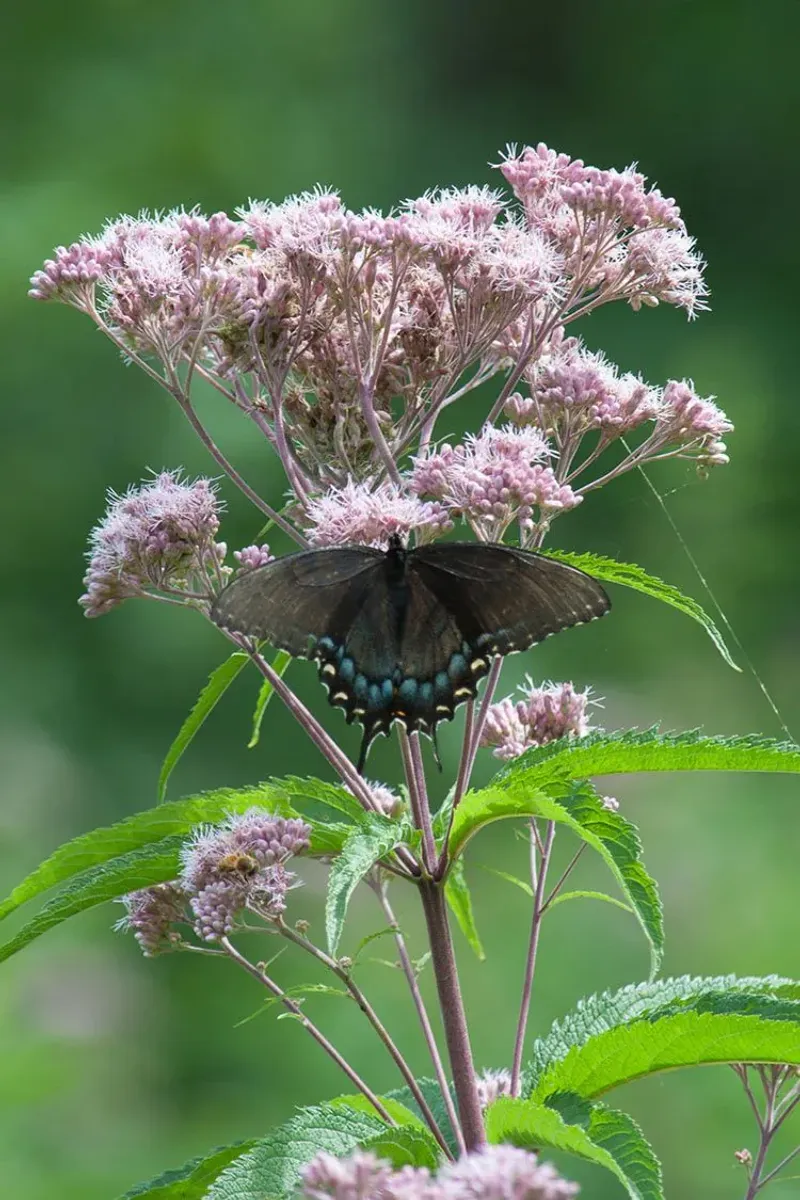
Do not let the word weed scare you off. Joe Pye weed (Eutrochium fistulosum) is a five to seven foot native that tops out in late summer with dusty mauve flower clusters the size of a dinner plate, and butterflies pile onto them like a buffet line.
Here is where it gets good. When August turns muggy and the afternoon storms roll through the Piedmont, most flowers look tired. Joe Pye is just getting started, and swallowtails, monarchs, and fritillaries all crowd the same head at once.
Because it grows tall, tuck it behind the mailbox or off to one corner rather than right at the post where it might block the numbers. It likes a little more moisture than the others here, so choose a low spot that catches runoff. Space plants about 24 to 36 inches apart in full to part sun.
Cut the stalks down to about a foot in late fall, but wait until spring if you can, since the hollow stems shelter native bees over winter. One clump anchors the whole planting, and its late bloom bridges the gap right up to the fall monarch push.
5. Butterfly Weed’s Cousin, Swamp Milkweed
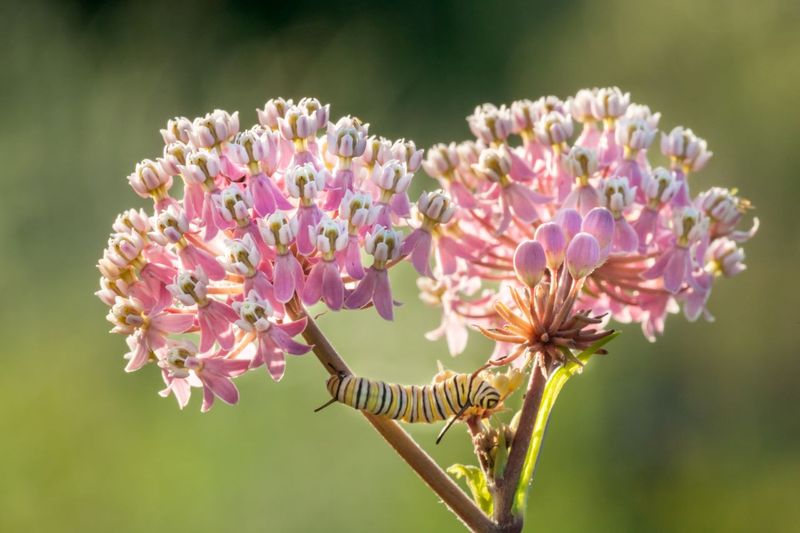
Ever have that one spot by the mailbox where water pools after a storm and nothing wants to grow? Swamp milkweed (Asclepias incarnata) genuinely wants that spot. Where butterfly milkweed loves it dry, this cousin thrives in the soggy ground that drowns most flowers.
The blooms come in soft pink clusters through July and August, and they carry a faint vanilla scent on a warm evening. Like all milkweeds, it feeds monarch caterpillars, so you get the nursery benefit plus nectar for the adults working the flowers overhead.
For those clay yards that hold water after our summer downpours, this plant turns a problem into a feature. Set it in full sun, space plants about 18 to 24 inches apart, and skip the worry about overwatering. It handles wet feet better than almost anything native we grow.
It stands three to four feet tall, tidier than Joe Pye, so it works closer to the post. And it draws a slightly different crowd than its orange relative, which means planting both spreads your monarch appeal across dry and damp ground at the same mailbox.
6. Aromatic Aster
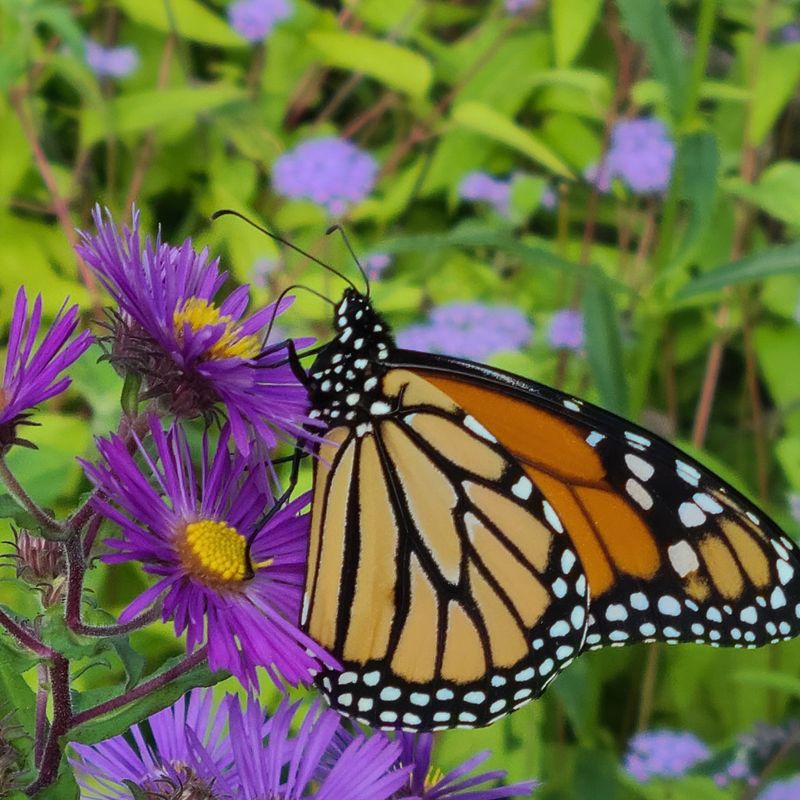
By October, when the milkweed has gone to seed and the coneflowers stand as bare cones, one plant lights up purple right when the butterflies need it most. Aromatic aster (Symphyotrichum oblongifolium) is the closing act your mailbox has been missing.
Timing is everything here. Migrating monarchs passing through the Carolinas in fall need fuel for the long haul south, and late nectar is scarce. A mound of aster blooms exactly then, feeding monarchs, painted ladies, and sleepy bees fattening up for winter.
The plant forms a tidy dome about two feet tall and wide, no flopping, so it holds its shape right at the base of the post. Give it full sun and lean soil, space plants about 18 inches apart, and pinch it back once in early June for even more flowers.
Brush the foliage and you catch a light herbal scent, which is where the name comes from. It shrugs off our mild winters and surprise cold snaps, then returns bigger each year. Plant this one for the grand finale that keeps your mailbox working long after the neighbors’ flowers quit.
7. Lanceleaf Coreopsis
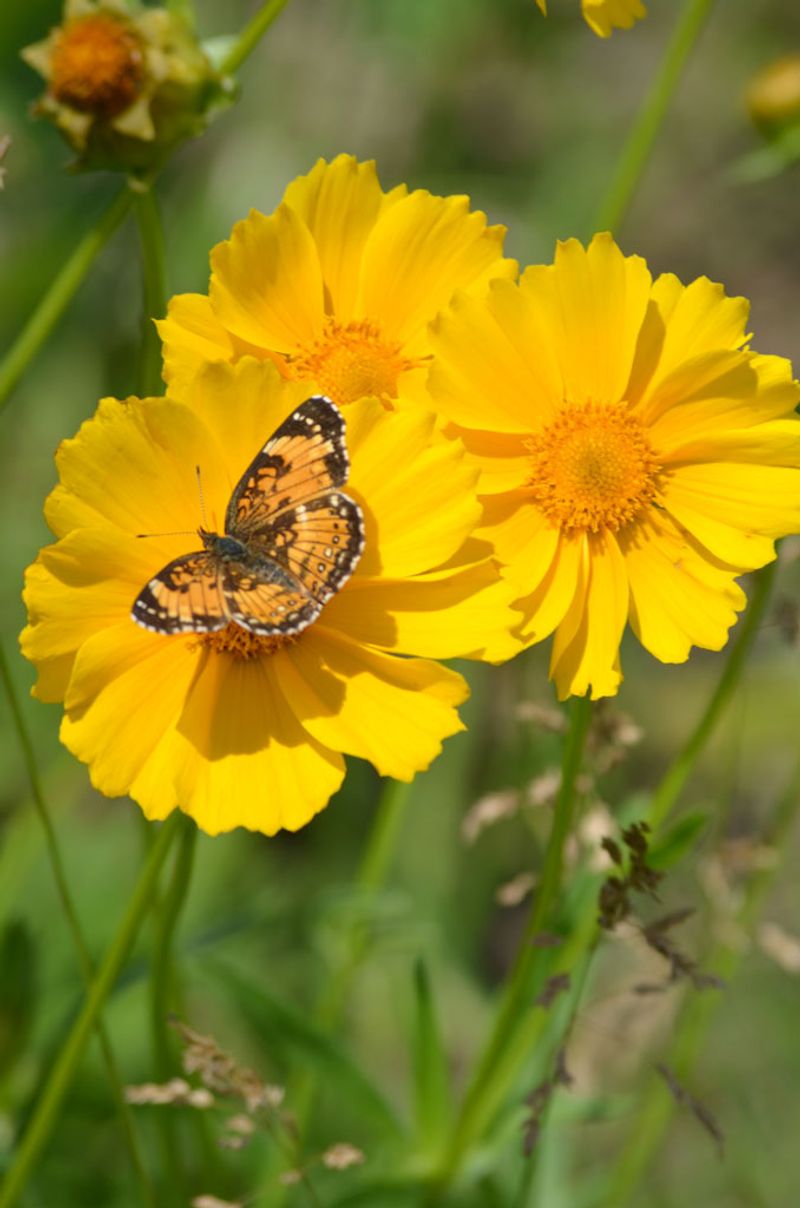
North Carolina thought enough of this one to make it part of our official state wildflower group. Lanceleaf coreopsis (Coreopsis lanceolata) throws out bright yellow daisies on wiry stems starting in May, earlier than most of the others on this list.
That early start matters. When the first swallowtails and skippers wake up in spring, they need something open and full of nectar, and coreopsis is already going while the coneflowers are still leafing out.
For a hot, dry mailbox strip in full sun, few plants are easier. It tolerates the sandy soil of the Coastal Plain and the baked clay of the Piedmont alike, asking only for good drainage. Space plants about 12 to 18 inches apart and deadhead the spent blooms to stretch flowering into July.
It spreads by short runners and gentle seeding, filling in around your other natives like a golden mulch that happens to feed bugs. Cheap, cheerful, and native to the ground under your feet. Hard to argue with that at the base of a post.
8. Blazing Star
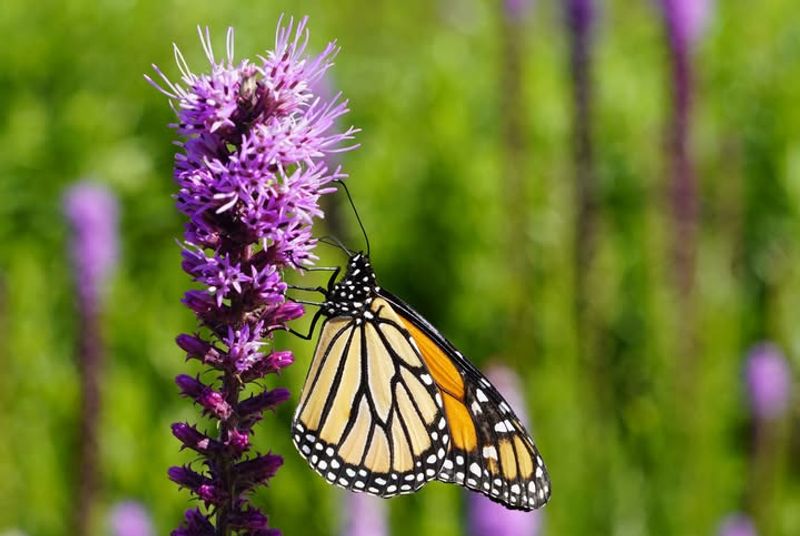
Most flowers open from the bottom up. Blazing star (Liatris spicata) flips the script and opens from the top down, sending up a two to three foot purple spike that looks like a bottle brush dipped in grape jelly. Butterflies cannot resist it.
Monarchs and swallowtails work the spike in July and August, and because it grows straight up instead of out, it packs a lot of nectar into a narrow footprint. That vertical shape is exactly what a cramped mailbox bed wants.
Plant the corms, which look like little flattened bulbs, about two inches deep and space them roughly 12 to 15 inches apart in full sun. It handles our clay as long as the spot does not stay swampy, and it laughs at midsummer drought once it settles in.
Come fall the spent spikes turn tawny and feed goldfinches, so leave them standing. Tuck a cluster of blazing star among your shorter natives and you add height, motion, and a color that stops traffic, all from a plant that shrugs off the North Carolina heat.
9. Goldenrod
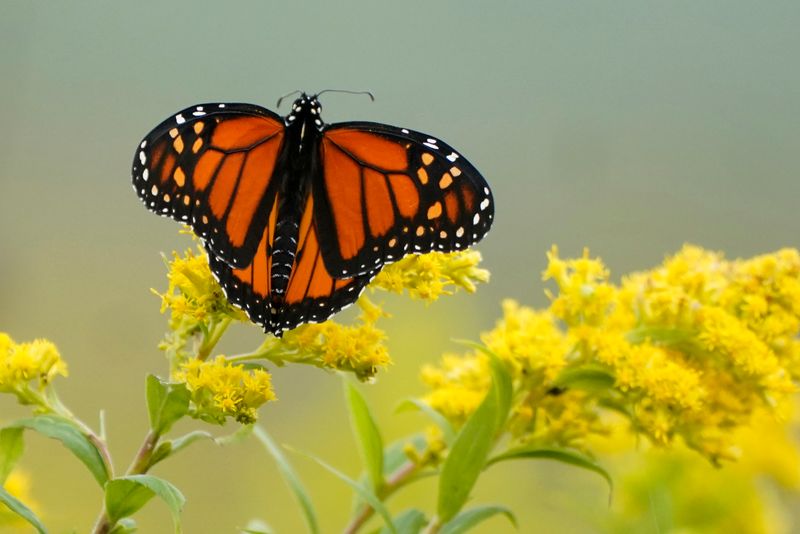
Goldenrod gets blamed every fall for the sneezing that ragweed actually causes, and that bad rap keeps a genuinely great plant out of too many yards. Wreathgoldenrod (Solidago caesia) and other native goldenrods bloom in September and October in golden sprays that feed the fall migration.
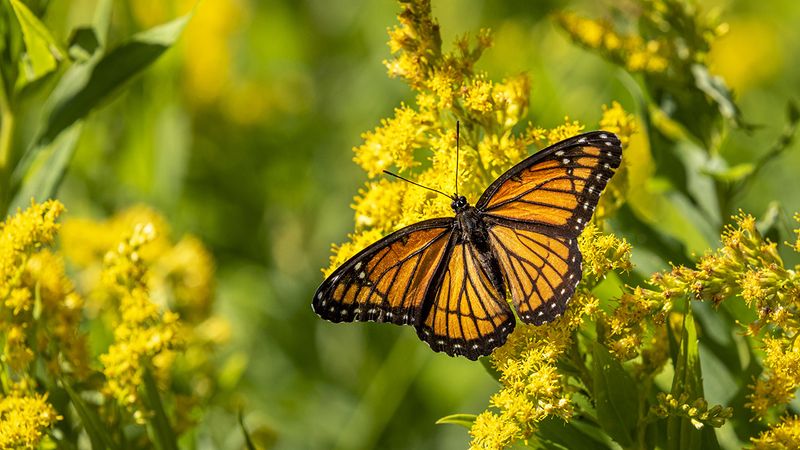
The truth is that goldenrod pollen is heavy and sticky, meant to travel on insect legs, not on the wind up your nose. So plant it without fear, and watch monarchs, buckeyes, and a parade of native bees crowd every plume.
Reach for a clumping type rather than the aggressive kinds that colonize a whole field, and it stays put beside the post. Give it sun to part shade, space plants about 18 to 24 inches apart, and it thrives across the mountains, Piedmont, and coast with no fuss.
Pairing goldenrod with the aromatic aster gives you a purple and gold finale right when the monarchs pour through North Carolina. Leave the stems up over winter for the birds. Your mailbox closes out the season in a blaze of gold, and you can honestly say you skipped the monkey grass for good.