That Blue-Tailed Lizard Darting Across Your Arizona Patio Is Quietly Eating The Bugs You Hate

Catch a flash of blue streaking across your patio on a hot Arizona afternoon and your first instinct might be to look it up. That small, quick lizard visiting your yard is likely one of several native Arizona species, and while it may not be the exact blue-tailed creature you imagined, it probably has an appetite for the insects you least want around.
Before you reach for a spray can or try to catch it, here is what the evidence actually shows about what these animals eat, where they live, and how much pest-control work you can realistically expect from a single backyard visitor.
A blue tail does not identify one Arizona lizard

Spotting a bright blue tail in your yard feels like a clear clue, but blue coloration alone cannot tell you which Arizona lizard just darted past your chair. Several species and age classes produce that vivid color, and the exact animal depends on far more than the shade of its tail.
Juvenile skinks, for example, carry bright blue tails, but the two Arizona skink species are not typical low-desert visitors. The Western Skink in Arizona is restricted mainly to the Kaibab Plateau and higher Arizona Strip elevations, making it an unlikely identification for most Phoenix or Tucson patios.
The Mountain Skink retains its blue tail into adulthood, but its Arizona range centers on southeastern sky-island mountain ranges and moist, rocky or riparian habitats, not the low-desert neighborhoods where most metro residents live.
Whiptail lizards add another layer of possibility. The Arizona Striped Whiptail also displays a blue tail, yet field records list only three known populations in Graham and Cochise counties, so it should not be assumed to be the common blue-tailed visitor across the Phoenix metro area.
Blue coloring can also appear on the belly, throat, or sides of male spiny lizards and side-blotched lizards, meaning the blue you noticed may not even be on the tail at all.
A photograph taken from close range, combined with the precise location, elevation, habitat type, and a description of where on the body the blue appears, would support a more confident identification. Until then, “one of several native Arizona lizards” is the most honest working description you can give your patio visitor.
Why an Arizona lizard may use a patio

Patios, walls, fences, and building exteriors offer something lizards genuinely need: warm, flat surfaces for basking. In the low desert, where morning temperatures can climb quickly and shade disappears by midday, a concrete slab or stucco wall holds heat in a way that suits a cold-blooded animal trying to regulate its body temperature.
National Park Service accounts from central Arizona monument sites describe lizards using rocks, trees, walls, and open ground for basking and foraging. Those observations come from specific park settings rather than urban Phoenix or Tucson neighborhoods, but the underlying behavior, seeking warm surfaces, cover, and prey, applies broadly to desert lizards.
A patio with potted plants, a block wall, and gravel mulch offers many of the same structural features.
Your Arizona Garden Changes Every Week. Your Plan Should Too.
Gardening in Arizona changes quickly throughout the season. Every Friday you’ll receive a simple weekly plan showing exactly what to plant, prune, fertilize, harvest, and protect so you never miss the right timing.
Lizards also move through yards in search of insects hiding in soil, leaf litter, or beneath shrubs. A patio situated near a garden bed, a drip-irrigated planter, or a light that attracts moths at night provides a reliable foraging corridor.
The lizard is not patrolling your house on your behalf; it is following prey and microclimates that happen to overlap with the spaces you use.
Recognizing that overlap helps set realistic expectations. The animal showed up because your yard offered something useful to it, not because it has appointed itself your pest manager.
That distinction matters when deciding how to respond to its presence.
Many Arizona lizards eat the arthropods homeowners notice

The helpful-ally premise in the title has a real foundation, even if it needs some trimming. Arizona lizards are broadly insectivorous, and field diet records document prey that overlaps significantly with the insects most homeowners would rather not see.
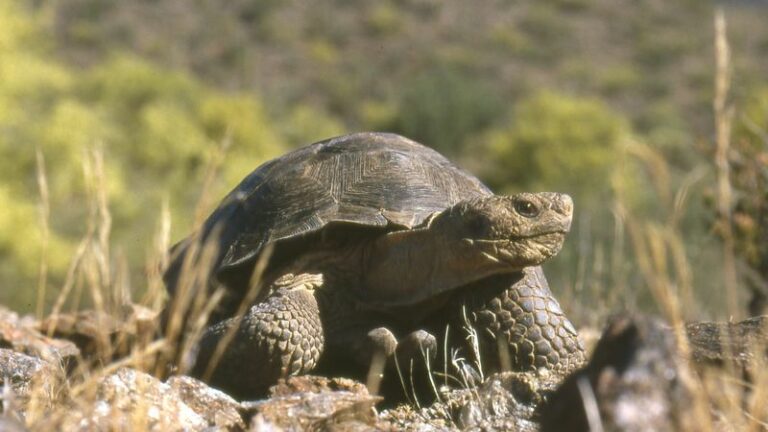
Desert spiny lizards, one of the most common lizards on urban walls and fences across the Phoenix and Tucson metro areas, consume ants, beetles, caterpillars, spiders, and centipedes, along with occasional plant material. Their diet shifts with what is available seasonally, so the insect a lizard eats in June may be different from what it targets in September.
Field records for the desert spiny lizard also include small lizards, which shows that these animals are active, opportunistic hunters rather than specialists on any single prey type.
Clark’s spiny lizard extends the list further. Documented prey for that species includes beetles, ants, grasshoppers, aphids, cicadas, crickets, moths, wasps, and spiders, a roster that covers many of the insects a low-desert homeowner encounters near outdoor lights or in a garden.
Whiptail lizards add a different foraging style: they actively search through soil, plant debris, and beneath shrubs, turning up insects, spiders, and centipedes that other lizards might miss.
What the diet records do not show is how many insects a single lizard removes from a yard per day, or whether its presence changes the overall number of pests a homeowner encounters. Knowing that a lizard can eat a cricket is different from knowing it will reduce your cricket problem.
The evidence supports the first claim, not the second.
Natural predation does not equal pest control

A patio lizard may snag a cricket or beetle every time it forages, and that counts as genuine, if modest, predation. What it does not do is measurably reduce the population of crickets, cockroaches, or other insects living in and around your home.
No reviewed source documents a measurable drop in household pest abundance linked to the presence of one or a few backyard lizards.
Cockroaches deserve a specific note. Diet records for common low-desert lizards show beetles, ants, grasshoppers, and spiders as regular prey, but cockroaches do not appear as a documented major food source for the species most likely to visit a Phoenix or Tucson patio.
Presenting a lizard as a natural roach solution would go well beyond what the field evidence supports.
Scorpions are where the picture gets most complicated. Some reptiles do prey on scorpions, and that fact circulates widely among Arizona homeowners hoping for a natural solution.
The relationship runs in both directions, though: scorpions also prey on small reptiles in some circumstances. University of Arizona Cooperative Extension guidance on scorpions focuses on exclusion and habitat management rather than relying on predators, and no reviewed source shows that a patio lizard reliably reduces the scorpion count inside or around a home.
None of this diminishes the lizard’s value as part of a functioning backyard ecosystem. A yard that supports native lizards, birds, and other predators is generally healthier and more resilient than one that does not.
The correction is simply that ecological value and effective pest control are not the same thing, and homeowners who need to manage a real infestation should not rely on a lizard to do it.
Build habitat thoughtfully in a water-wise yard

Welcoming native lizards does not require a major landscaping overhaul. Small, deliberate additions to an existing yard can make the space more hospitable without creating conditions that attract nuisance insects or other unwanted wildlife.
Flat rocks placed in sunny spots give lizards a surface to warm up on in the morning before they begin foraging. Crevices between rocks or beneath a low wooden feature offer shelter from midday heat and a place to retreat from predators.
Woody debris and native or desert-adapted shrubs provide both cover and insect habitat, which in turn supports lizard foraging. The Arizona Native Plant Society’s backyard lizard habitat guide recommends combining rock or wood features with varied native plants to provide food sources, cover, and basking locations in a single compact design.
A few cautions apply. Dense ground cover and irrigated planting beds can attract the same insects and moisture-seeking wildlife you are trying to manage.
Habitat placed near a doorway, a child’s play area, a sleeping porch, or a pet run deserves more careful thought than habitat at the far edge of the yard. Scorpions and other desert arthropods can use the same rocks and debris piles that lizards favor.
Putting out water dishes, food, or lights to draw lizards to a specific spot is not recommended by reviewed sources and can attract insects and other desert animals instead. The goal is to make the yard broadly suitable, then let the lizards decide where they want to be.
Outcomes vary with temperature, surrounding development, pesticide use, and prey availability, so treat habitat improvements as a contribution to backyard biodiversity rather than a guarantee of more lizards or fewer pests.
Use exclusion and monitoring for household pests

When crickets are loud at night, cockroaches show up in the kitchen, or scorpions turn up in a shoe, the most reliable response involves structural fixes and sanitation rather than hoping the lizard on the patio handles it. Exclusion and monitoring address pests more directly and consistently than any single predator can.
Start by identifying which pest you are actually dealing with, because the right response differs by species. Seal cracks around the foundation, utility penetrations, and gaps where pipes or wires enter the wall.
Replace worn door sweeps and check weather stripping around garage doors, since scorpions can enter through openings as thin as a credit card. Reduce clutter near the exterior of the house, including stacked wood, cardboard, and debris piles, which serve as shelter for cockroaches, crickets, and scorpions alike.
Prune tree branches and shrubs that contact the building, since these act as bridges for insects and arachnids moving from yard vegetation onto the structure.
University of Arizona Cooperative Extension guidance on integrated pest management recommends identifying and monitoring the pest first, reducing food and shelter sources, applying structural sealing, and using pesticides only when needed and strictly according to the label. These steps are generally more dependable than relying on a lizard, though they are not universal guarantees either.
Persistent infestations, particularly scorpions in a home with children or medically vulnerable family members, may require targeted professional treatment. A licensed pest control operator familiar with low-desert Arizona conditions can help develop a plan that addresses harborage, entry points, and treatment timing.
Sanitation, exclusion, and monitoring remain the foundation regardless of whether you also choose a targeted chemical application.
Protect the lizard and keep your distance

The best thing most homeowners can do when they spot a blue-marked lizard on the patio is simply watch it. UC IPM guidance on lizards advises against catching, handling, or relocating wild lizards: an unidentified reptile may bite when cornered, and Arizona wildlife collection and handling are regulated activities.
Leaving the animal alone costs nothing and avoids stress to both parties.
Pesticide use near a lizard or its foraging area poses a real risk. Lizards can absorb chemicals through direct contact or by eating contaminated prey, so spraying around a lizard to eliminate its food supply harms the very animal you may want to keep around.
If pest treatment is necessary in an area where lizards are active, use the most targeted available option, follow the label precisely, and allow treated surfaces to dry fully before the area is used again.
For identification or questions about a specific animal, Arizona Game and Fish is the right contact. Do not assume every blue-marked lizard is harmless; Arizona also has Gila monsters, and any wild animal may defend itself if grabbed.
Let the lizard hunt on its own terms while you manage the house through sealing, sanitation, and monitoring. A yard that supports native wildlife and a home that keeps pests out are not competing goals.
They work best together.