The Common Reasons Georgia Boxwoods Turn Brown In Summer And What To Do
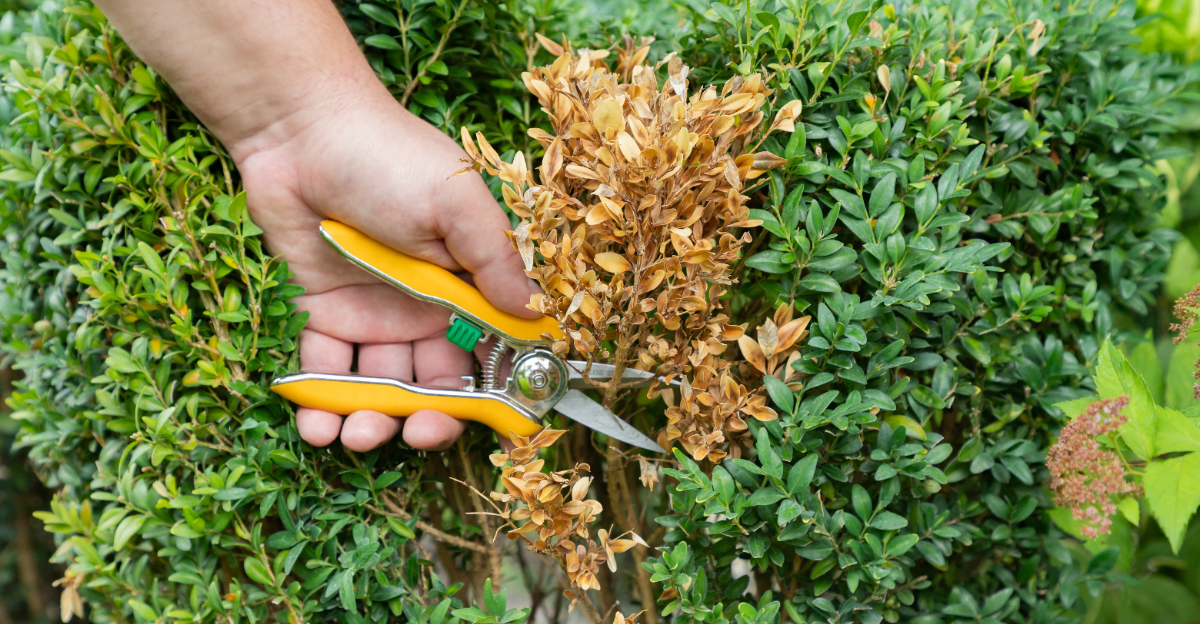
Brown leaves do not always mean your boxwood is dying, even though that is what many people believe first. Replacing the shrub too quickly can cost money and solve nothing.
Give yourself a chance to figure out what the plant is trying to tell you before making that decision. One small clue often points you in the right direction.
The color, the pattern, and the time of year all matter more than most people realize. Paying attention now can save a healthy shrub that still has plenty of life left.
Summer brings several challenges for boxwoods, and Georgia gardens often deal with more than one at the same time.
Heat stress, watering problems, pests, and disease can all leave similar brown patches.
Learning the real cause first helps you choose the right solution instead of wasting time on the wrong one.
1. Heat Stress Can Scorch Boxwood Leaves
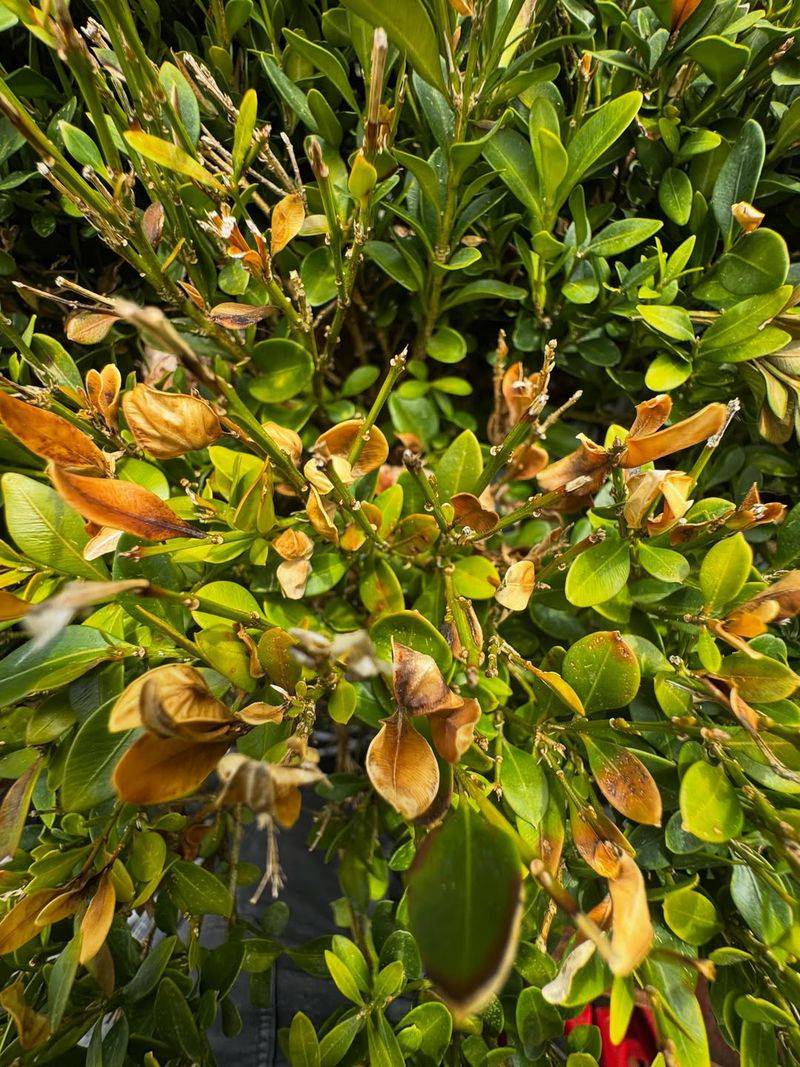
Scorched tips and crispy brown edges on boxwood leaves are a common sign of heat stress.
Boxwoods planted in full sun can absorb intense heat during the hottest hours of the day, especially from late June through August. Leaf tissue simply breaks down faster than the plant can recover.
Afternoon sun is especially harsh. Shrubs facing west or south get the longest exposure.
That direct radiation raises leaf surface temperatures well beyond what most boxwood varieties can handle comfortably.
Moving a boxwood is not always practical, but adding shade cloth during peak heat can reduce stress noticeably. Even a nearby tree casting partial afternoon shade makes a real difference over time.
Avoid fertilizing during a heat wave. Feeding stressed plants pushes new tender growth that scorches even faster.
Hold off until temperatures drop and the shrub shows signs of stability.
Watering in the early morning helps plants stay hydrated before the heat peaks. Avoid evening watering if possible, since wet foliage overnight can invite fungal problems.
Consistent soil moisture is more protective than occasional deep soaks during heat waves.
Choosing heat-tolerant varieties suited for the Southeast also helps. Some cultivars handle high temperatures better than others and show far less browning even in tough summers.
2. Boxwood Blight Spreads Quickly In Humid Weather
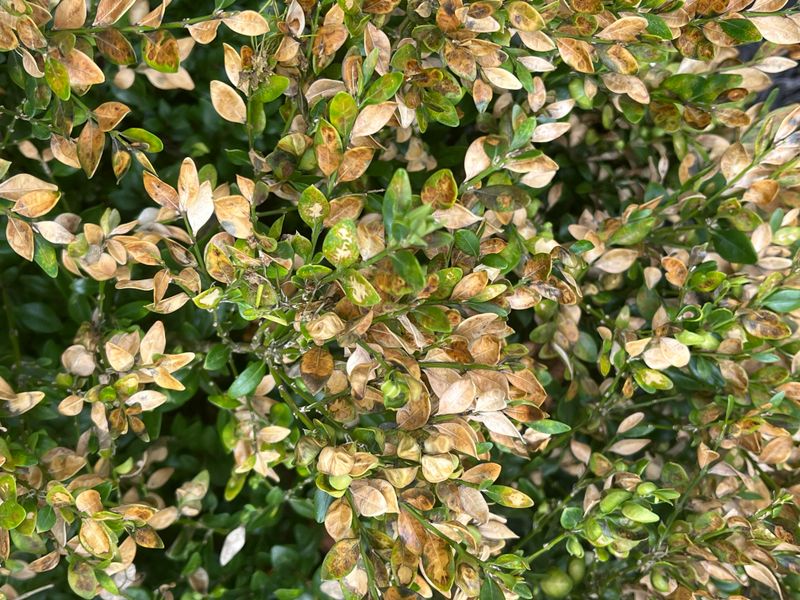
Boxwood blight is one of the most aggressive fungal problems a gardener can face. It spreads fast, especially during Georgia summers when humidity stays high for days at a stretch.
Infected leaves develop dark spots, then drop quickly, leaving bare stems behind.
Look for circular brown spots with darker borders on individual leaves. Stems may show dark streaking near the base.
Once defoliation starts, it can move through an entire shrub within a week or two under the right conditions.
Blight spreads through splashing water, contaminated tools, and even clothing. Avoid working around boxwoods when foliage is wet.
Clean pruners with a diluted bleach solution between cuts to reduce the chance of spreading the fungus from plant to plant.
Fungicide applications can help slow the spread but work best as a preventive measure rather than a cure. Copper-based or chlorothalonil products are commonly used.
Your Georgia Garden Changes Every Week. Your Plan Should Too.
Gardening in Georgia changes quickly throughout the season. Every Friday you’ll receive a simple weekly plan showing exactly what to plant, prune, fertilize, harvest, and protect so you never miss the right timing.
Timing and thorough coverage matter significantly.
Remove and bag infected plant material immediately. Do not compost it.
Leaving fallen leaves on the ground allows spores to linger in the soil and reinfect nearby shrubs the following season.
Resistant varieties are available and worth considering if blight has been a repeated issue. Switching to a more tolerant cultivar reduces the long-term risk considerably and saves a lot of frustration over time.
3. Root Rot Can Weaken The Entire Shrub
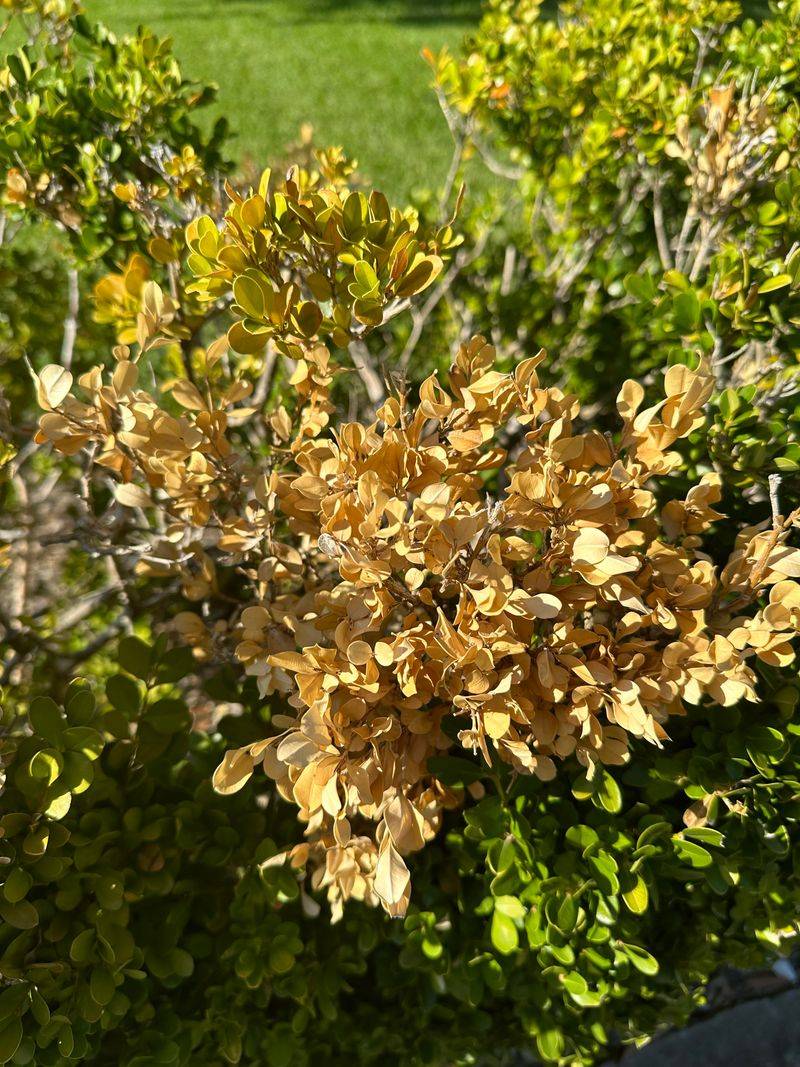
Root rot does not always look dramatic at first. Shrubs may just look a little off, slightly yellow or dull, before browning sets in across the entire plant.
By the time foliage turns, the roots may already be severely compromised.
Phytophthora root rot is the most common culprit in heavy clay soils. Water sits around the root zone instead of draining away.
Roots suffocate and lose their ability to pull moisture and nutrients up through the plant.
Ironically, a rotting root system makes the shrub look like it needs more water. Gardeners water more, which worsens the problem.
Checking the soil moisture before watering is a simple habit that prevents this cycle.
Improving drainage is the most effective long-term fix. Raised planting beds, amended soil with coarse material, and avoiding low spots in the yard all reduce standing water around roots.
Even a slight grade adjustment can help significantly.
Pull back mulch from the base of the shrub to allow the crown to dry between watering sessions. Mulch piled directly against the trunk holds moisture against the bark and encourages rot at the soil line.
Severely affected plants may not fully recover. Removing them and improving drainage before replanting gives new shrubs a much better start.
4. Water Deeply During Hot, Dry Weather
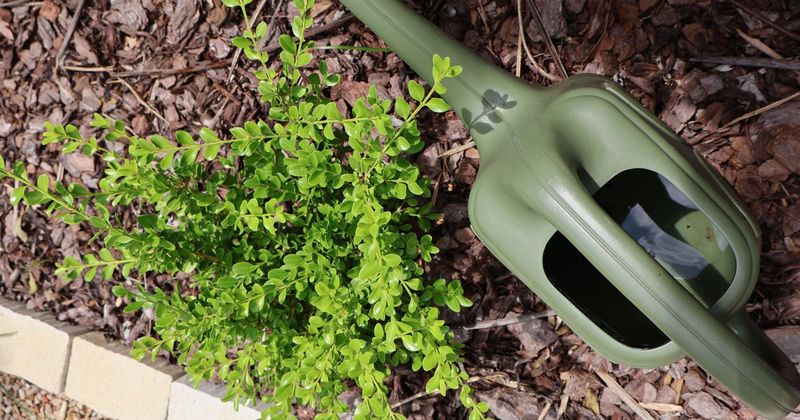
Shallow watering is one of the sneakiest problems in summer boxwood care. Gardeners often water frequently but lightly, which only wets the top inch or two of soil.
Roots never get the deep moisture they need to stay strong through a heat stretch.
During dry periods, boxwoods benefit from slow, deep watering directly at the base. A soaker hose works well because it delivers water slowly without wetting the foliage.
Wet leaves in humid weather create conditions that favor fungal problems.
How often to water depends on your soil type, sun exposure, and recent rainfall. Sandy soils dry out faster than clay-heavy ones.
A simple finger test, pushing into the soil two to three inches, tells you whether the root zone is actually dry.
Newly planted boxwoods need more frequent attention than established ones. Roots have not spread far yet, so the available moisture in the immediate planting zone runs out faster.
Weekly deep watering during summer establishment is a reasonable starting point.
Established shrubs are more drought-tolerant but still show stress when conditions are extreme. Browning on the outer tips of newer growth is often the first visible sign that the plant is running low on available water.
Watering in the early morning gives plants the best chance to absorb moisture before midday heat peaks.
5. Improve Airflow Around Each Shrub
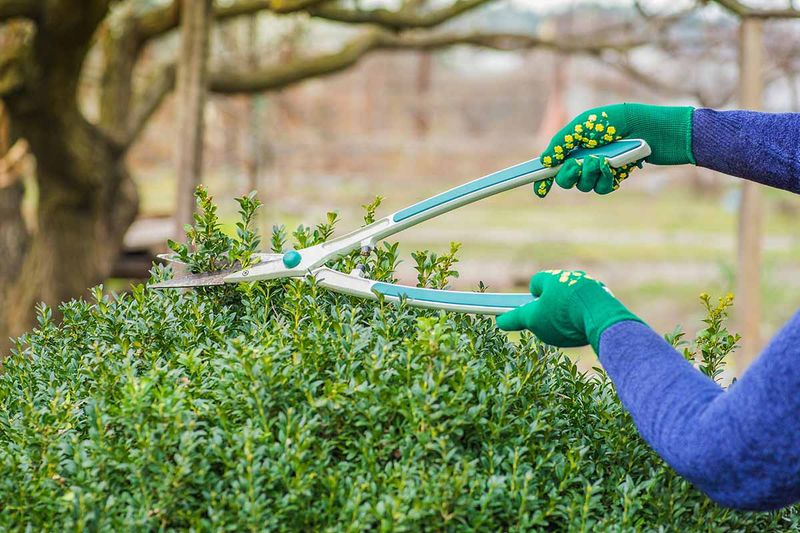
Boxwoods packed tightly together trap heat and humidity inside the canopy. That warm, still air is exactly what fungal spores need to spread.
Improving airflow is one of the most underrated steps in summer boxwood care.
Thinning out overgrown interior branches lets air move through the shrub more freely. It also allows sunlight to reach inner foliage, which helps dry moisture faster after rain or irrigation.
Drier conditions inside the shrub slow fungal growth significantly.
Spacing matters too. Shrubs planted very close together restrict airflow between plants.
If existing shrubs are overcrowded, selective removal of the weakest plants can improve conditions for the remaining ones without requiring a full redesign.
Avoid shearing boxwoods into perfectly dense balls during summer. Heavy shearing encourages thick outer growth that seals off interior air movement.
Light, targeted pruning keeps the shape while maintaining some openness in the canopy structure.
Fences, walls, and dense plantings nearby can also limit airflow. Evaluating what surrounds your boxwoods helps identify whether the location itself is part of the problem.
Sometimes a simple gap in a nearby hedge makes a noticeable difference.
Gardeners across the Southeast find that shrubs with better airflow tend to hold their color longer through summer.
6. Refresh Mulch To Keep Roots Cooler
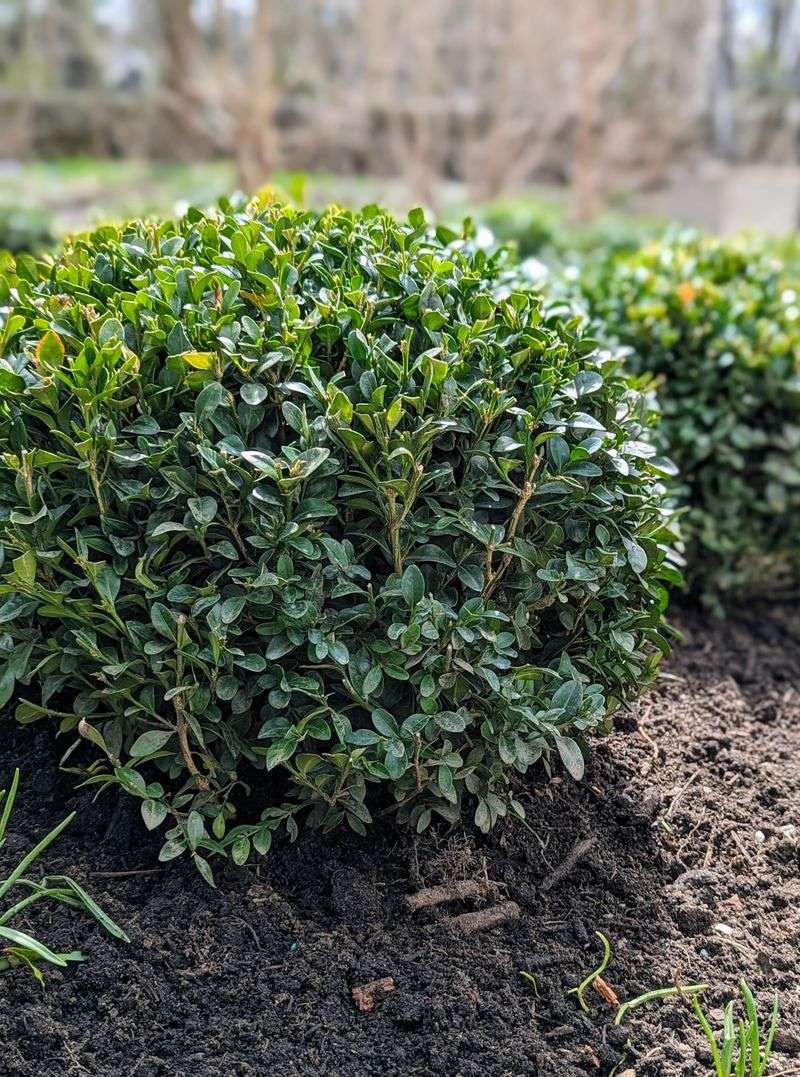
Old mulch breaks down over time and stops doing its job. A thin or compacted layer barely insulates the soil, leaving roots exposed to the full impact of summer heat.
Refreshing mulch each season is a simple fix with noticeable results.
A two to three inch layer of organic mulch around boxwoods helps regulate soil temperature and slow moisture loss. Wood chips, shredded bark, or pine straw all work well.
Each material has slightly different characteristics, but all provide meaningful root protection.
Keep mulch pulled back about two inches from the base of each shrub. Piling it against the trunk traps moisture against the bark and can encourage rot or pest activity at the crown.
A small gap makes a real difference in plant health.
Mulch also suppresses weeds that compete with boxwoods for water and nutrients. Fewer weeds mean less competition during the dry, hot months when resources are already stretched thin for the shrubs.
In Georgia, summers are long and intense. Refreshing mulch in late spring, before temperatures climb, gives the layer time to settle and begin doing its job before the worst heat arrives.
Waiting until mid-summer means roots have already been stressed for weeks.
Check the mulch depth periodically throughout the season. It breaks down and compacts over time.
7. Remove Damaged Branches With Clean Pruners
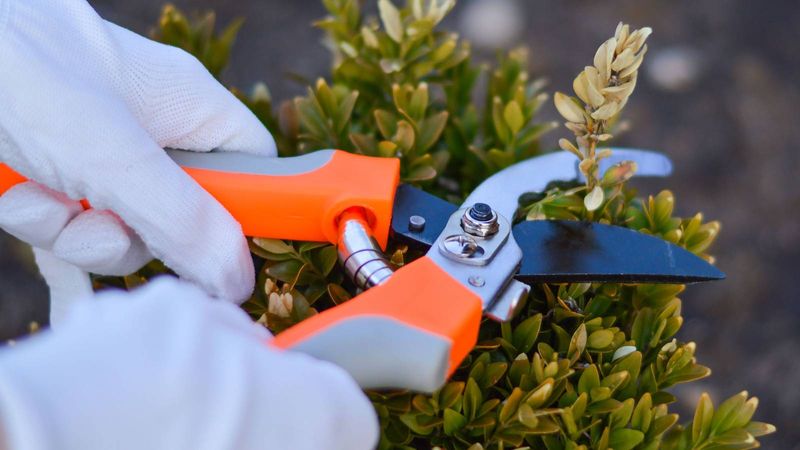
Leaving brown, damaged branches on a boxwood does not help the plant redirect energy toward healthy growth.
Cutting them out promptly gives the shrub a cleaner start and helps prevent disease from spreading through weakened growth.
Sharp, clean pruners make better cuts than dull blades. A ragged cut stays open longer and is harder for the plant to seal over.
Keeping pruning blades clean between plants helps prevent fungal spores from spreading from one shrub to another.
Cut back to healthy green wood. Do not leave stubs, since they can become entry points for pests or pathogens.
Cutting just above a healthy leaf node gives the branch the best chance of pushing new growth.
Timing matters. Avoid heavy pruning during a heat wave.
Freshly cut tissue is vulnerable, and high temperatures can cause new wounds to dry out before they seal properly. Wait for a cooler morning or a mild stretch of weather when possible.
Bag and remove all pruned material from the area. Do not leave clippings on the soil surface or in the mulch layer.
Diseased material left on the ground can reinfect healthy plants through spore dispersal or soil contact.